Paul McGowan: Episode 307
Read the full transcript
Paul McGowan
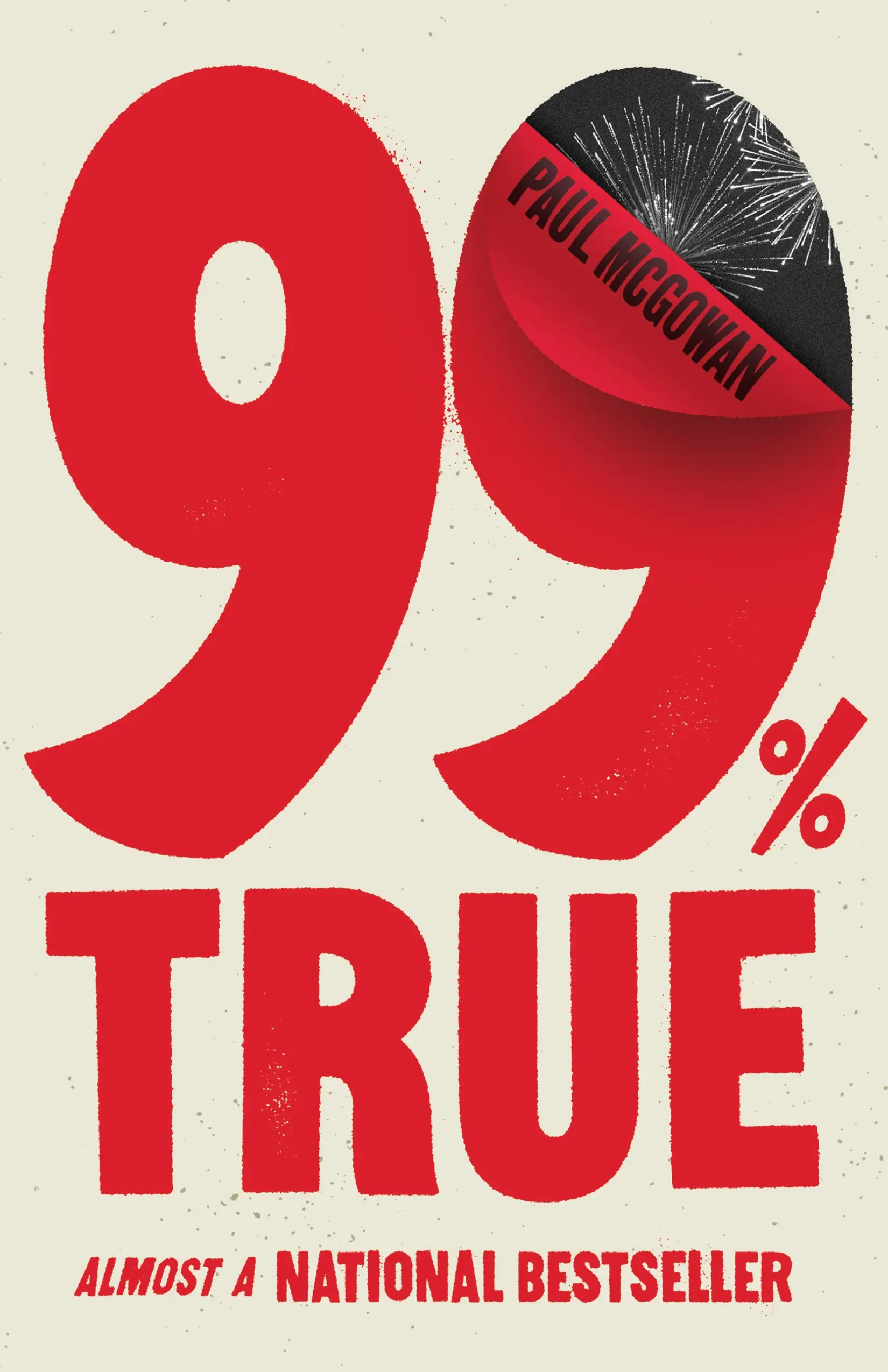
Paul McGowan is a committed entrepreneur, audio engineer, YouTuber, and the founder and CEO of PS Audio, a leading consumer electronics manufacturer. Known throughout the audiophile community for his frank, unfiltered advice on home audio and music, he has built a devoted following of viewers and customers. In his memoir 99% True, he shares the story of a life shaped by invention, risk, and reinvention, from growing up in the shadow of Disneyland in the 1950s to his struggles to build a thriving enterprise.
📚 Books by Paul McGowan
Transcript
[0:00:16] RW: Hi, everyone. It’s Rae Williams, host of Author Hour, where I interview authors about their new books. Our next guest had me so entertained. He is just a mix of wisdom and humor and his book, 99% True is sure to captivate you. In his book, Paul tells all and then some of his misbegotten success, from his not so innocent youth growing up in the shadow of Disneyland and summer evenings and the innocent 1950s to his dope smoking, snake eating draft dodging, looney bin misadventure through Europe. He shares with us a bit of that plus his struggles to build a thriving enterprise from a stack of dusty albums and how he took 50 years to become an overnight success. Here’s our conversation with Paul.
[0:01:04] Paul McGowan: The actual impetus for the book was my friend Seth Godin. And Seth and I have been friends for a number of years and when we got talking about books, he knew that I was in the middle of writing a thriller that has yet to see the light of day. And I was really struggling with it and Seth said, “you know, why don’t you start with something else? Why don’t you start with a subject you’re far more familiar with, like you?” He said, “I know you’ve had a really interesting life and why don’t you take a stab at writing about that? Get your writing chops down and go from there?” And so, that was sort of the start of the book. But then I had another motivation which was audiophiles of which I am one and have built a company based on audiophiles are pretty much unknown, they’re sort of like this mystery group inside of the culture of the world and as you know, maybe there’s a couple of hundred thousand of them throughout the world. And so, part of my motivation was trying to figure out a way, how do I tell an interesting story about my crazy life and then suck people into the story and in so doing, also help them understand audiophiles. Those were basically the two motivating factors that got me thinking about writing such a thing.
[0:02:33] RW: All right and so, tell me a little bit about your background and your topic. Why did you decide to write a book which is so hilariously titled? Tell us a little bit about that.
[0:02:45] Paul McGowan: Why did I decide to write about my crazy life?
[0:02:49] RW: Yes.
[0:02:51] Paul McGowan: Well, it’s something most people have not – I think, you know, everybody’s life is really interesting if you get down and talk to them about it. But I think few people have ever had anything as nutso as mine. I mean, we go from getting thrown in jail to dealing dope to learning all about electronics by the seat of my pants, with working with Elton John and Giorgio Moroder, to bamboozling the army. I mean, I’ve had quite a run during my crazy life. And I think another part of the motivation is – now that I’m an old fart, I can look back on it and see that despite everything that happened, I was able to get back up on my feet and figure out a way to attack it again with as much energy and resolve to succeed, despite the fact that I continued to fail time after time after time after time. It took me years to figure out that I’m a classic entrepreneur. Once I discovered that, I really wanted to share that with people because I know so many aspiring entrepreneurs who you know, they stumble once, they stumble twice and they figure, “well, you know, maybe I’m not cut out for this.” And when I look back over my life and realize that it took me 40 years to become an overnight success and dozens and dozens of failures that most people would have stopped. I thought, “you know, why don’t I share that with the world? Why don’t I help other people who are aspiring to get somewhere, who are like me? Try and see a path. Towards doing that.”
[0:04:41] RW: All right, there’s a couple of things that you said that I want to touch on. And I, in the beginning of this will read the introduction of the book and not the introduction, but the back of our copy of the book. There’s just a couple of things that I’m going to ask you about that stand out, but before we get to those, including the snake eating and the looney bin misadventures through Europe, we’re going to ask about that. But before we get there, you said something about taking 40 years to become an overnight success, what do you think is your advice, number one and within the book, the actionable item that people can move on today to achieve the same thing. Even if it takes 40, 50 years?
[0:05:25] Paul McGowan: Well, I guess the biggest take away for me was all throughout my misbegotten youth, I kept having this idea that if I could just reach out and grab that brass ring, you know, there it was, shiny, whether it was success or whether it was making money or coming out with a new product. Whatever it was, it seemed like success with just within my grasp. And if I could only climb that little piece or if I could only move in that direction, I might be able to grab the brass ring because it looked to me like successful people around me, people that I was envious of and thought, “you know, wow, you’ve really made it.” It must have just been something quick for them. It must have been something where they – maybe they worked hard for a couple of years and then bingo, there was that success. And I think what I’ve learned over the years is it may happen to some people, but for most, for the vast majority and certainly myself, it just doesn’t happen that way. It’s a drip, drip, drip, long, hard, put your head to the grindstone and you know, if you take a wrong path, if you get off, be able to say, “okay,” and change directions and move along and keep your spirits up. It doesn’t happen overnight and I just always laugh when I see the latest person who’s just made it big and you think, “ wow, I’ve never even heard of that person or all of a sudden, they’re a huge success.” Well, in most cases, I think it took a lot of hard work and in many cases, years. That would be a big take away for me.
[0:07:14] RW: All right. So, I would love for you, without giving away too much of what’s in the book, I would love for you to tell me your top two or three, I’m going to call them adventures. Your top two or three adventures and what you learned from those that you applied to your life and that others can apply to theirs as well? So, kind of narrowing it on – I know we’ve got the bigger picture of the advice but kid of narrowing it a bit on the specific lessons from specific adventures.
[0:07:41] Paul McGowan: You know, I don’t know that I have anything like that for specific adventures to share. I mean, the number of times we nearly went bankrupt, you know, as far as specific stories in the book. The whole first half of the book is how I kind of got to even get to the point of starting a business. I think, well, maybe one instance was when I had become enamored with musical synthesizers. I had gone to a concert in Munich, Germany and it was in the Circus Krone, which is this huge round theater and I had been invited – I worked as a disk jockey for the army in Munich. I had routinely, every weekend or so, I was interviewing people like Elton John or Emerson, Lake and Palmer or Humble Pie, all those old rock stars. So, I would go interview them for the radio station. I would usually wind up getting tickets to go see their performance and this one evening, I had been given a set of tickets for Emerson, Lake and Palmer. They were an up and coming rock band at the time and it was a life changing event for me. I had never seen a synthesizer, a Moog synthesizer. I kind of heard, it but never really paid any attention to it. I sat there with 10, 15,000 stoned German fans in that evening and I saw Keith Emerson do battle which is synthesizer and it just lifted me of the seat and it changed my life forever. And it was at that concert that I decided, you know, “I got to figure out how that thing works. That thing is magic.” It was the most mind-blowing thing I’d ever see. At that point, I decided, I’m going to make my life about figuring out how to build my own synthesizer and learn about them and start manufacturing them. And that led to a whole series of things like my learning about electronics, not only how synths work, but what was wrong with them and I wound up over a couple of years developing the world’s first polyphonic synthesizer, way back when since you could only hit one key on the keyboard of a synthesizer. I designed a way to use 10 keys, so you could actually play it like a piano. I sold the first one to Walter Carlos who many of you younger listeners won’t know who it is. But he did an album at the time, it was the most famous classical music album called Switched on Bach. I mean, this is going to turn way too long over story, but just to cut it short, I developed a little company based on one, got an investor and promptly gave all the money that I had, it was a whole $10,000, but at the time it was a lot of money. I gave it all to a subcontractor who six months down the road, ran off with all the money and there I was left with a great idea and flat broke again. So, I’m not sure exactly what I learned out of that but that was just one of the many crazy failures, you know, for what I thought were great ides.
[0:11:01] RW: All right. If you, you know, hindsight is always 20/20, but if you had to look back at your journey, especially the entrepreneurship part of it. But obviously coming out of that story, you’re not sure what you learn, but if you had to go back and kind of do some things over, would you and what would you do differently to inform your success and your story today?
[0:11:25] Paul McGowan: You know, that’s a good question. I don’t think I would change much of anything and I’ll tell you why. I think a lot of people look back and say, “you know, god, I wish I was 20 years younger or I wish.” Here I am 71 years old and I’m still pretty healthy and all of that, but you know, I’m not 30 years old anymore. My gut’s growing out, I started to creak a little bit and I think, man, I’d like to go back to when I was 40 or 35 years old. The problem is, you can’t go back – well I mean let me put this in a different way. The problem is what we really want is to go back to that younger age with the knowledge that we have in our heads right now. So, I don’t want to go back to being 35 again and just doing it all over. You know I have been there and done that. So, I think that is kind of a false promise that people put in their heads because that is never going to happen, but if I had to go back and change anything, I think I would have wanted to be a better listener. I would have like to have learned some lessons about business earlier on and not have been such a big-headed male, with a giant ego feeling that I can do, “I am good at this. I am probably good at everything.” What a bunch of crap but I just think when I look at that, I had to live it. I had to make those mistakes because it was those mistakes that led me through pain to figure out what really worked. People can’t tell you that stuff. I mean they can but what good does it do? Unless you experience it yourself and you know, “oh man that really hurt. I don’t want to do that again.” So, I think in answer to your question, I don’t think I would change a thing.
[0:13:27] RW: All right, so now you’ve found a success. You have started your company. You are well-known in the audiophile space as you said, what are some of the top things that you would I wouldn’t say pass on or give advice necessarily, but that you think are essentials for running a business and for being entrepreneur?
[0:13:48] Paul McGowan: Well, those are two very different questions. I think in my case, it was as I just mentioned, the idea that I was good at everything. The only reason – I mean I have got a lot of great ideas. I am a good engineer. I do really well at products and marketing and I do our community outreach, which has really been the success of our company and we can talk more about that because I am pretty passionate about how that interaction with community is really the key to our success. But more than that, in terms of business to your specific question, the team of people that work here really made this fly and it was my letting go and realizing, “I am not very good at that,” and then it was like peeling an onion. The more things I peeled off the onion and those things being the stuff I thought I was good at and realized I am not and then adding people to the company that really were like someone. We have a president to our company now. Who actually runs the place because he loves that and I am almost to the point of ADD. I flip back and forth, get bored easy, hate routines and I hate stuff that is disciplined. It’s just not me and you need that kind of discipline and business sense to actually run a business. You don’t need a nut job like me in there are trying to manage 50 people. So, I guess part of it was realizing what I am actually good at and the scary part about that Rae, the scary part about that is I started with this basket full of things I thought I was good at. And things got better and better as I continue to empty the basket and at one point, you are going, “what the hell am I good at?” And I think that was scary. Fortunately, at the bottom of the basket there is one or two things that were left which I think I am pretty good at and once I got over all of that that really was the point of our success.
[0:16:08] RW: All right, so talk to us about that community outreach and why it is important, why you are passionate about it and feel like it is a large component of your success and what you do?
[0:16:18] Paul McGowan: Well the traditional model for any kind of business where you are making a product and you are selling it is, let’s say if you have a dealer model, the dealer is your customer. So, you make products. You communicate through reps or through phone calls or however you want to communicate with those dealers and you sell to those dealers. I mean imagine a company like Sony, big electronics company. So, Sony considers their customers to be their dealers and distributers and they’ll go to Best Buy. And they will go to XYZ stereo company and they do whatever it takes to sell them the Sony products and then rely on those dealers and distributers to sell the final product. What we realized early on is that those people aren’t our customers. They’re intermediaries. So, from as far back as I can remember, we realized that our customers are the end users. Those are the people that we really focus on and care about and to do that, you have to communicate with them. So how do you do that? How do you reach out to the individual people? Well it isn’t through interruption-based marketing. By placing an add or going on to the Super Bowl and interrupting everybody’s viewing that is a miserable way of doing it. That is impolite. What we do is we offer something that people want like for example, we print a once monthly newsletter. Now most newsletters for companies are filled with trite stuff about the company. Joe got a raise, this new thing, it is basically is an ad. But we don’t do that. We have one little piece of news about PS Audio and then there is all these articles of things of interest to customer. Or for instance, I do a daily YouTube video and I have done that for a few years now and every single day, you can get on board and watch me blabber on about something about stereo, but it is not selling our products. It is actually communicating with our community with people like us. That are interested in stereo and high-end audio and I answer people’s questions, “how does this work? How does that work?” I write a daily blog post and have done that for seven years without ever missing a beat. And those are again, they are about things people actually want to know. So, our community invites us into their homes and into their lives because they want to know the stuff that we want to tell them and that is the most effective marketing that I’ve ever found.
[0:19:20] RW: All right, awesome. So, if you had to issue a challenge so to anybody and you could pick your audience for this challenge or it can be general, but a challenge that people can use to improve themselves, improve their lives and find the success that they want, what would that challenge be?
[0:19:38] Paul McGowan: A challenge, well that is a really hard question. I don’t know if I could tell you a challenge to them. I mean not everybody is an entrepreneur. So, I can pretty much relate to entrepreneurs and I have trouble relating to people who are more comfortable just going and doing a nine to five job. I mean that is not something I can do. So, I am not sure, I guess if I focus it onto the people who have that entrepreneurial spirit. That idea that I have something to offer to the world and I am just busting to get it out there and to be heard. I think the challenge I would present to those people would be, are you stepping up to the plate and putting yourself out there without fear? Or not fear, but without worrying about how you are going to appear. I think that the hardest thing people do or their biggest challenges are to attack a problem. Let us say you are an author because we are talking about books. Well, it is really scary to put your book out there because you are going to get criticized. There is going to be some people who love it and some people who hate it and that is really tough. So, a lot of people hide behind all sorts of mechanisms and then in my case, putting out a memoir that is really hard because you know, that’s your shit out, there right? I mean that’s you that you are talking about and if somebody doesn’t like you, so I think that is hard. I think maybe the challenge is, are you willing to step up to the plate and take a risk and realize that not everybody is going to love you and you are okay with people going, “eh, not for me.”
[0:21:36] RW: All right and how can people contact you if they want to say hi, if they want to learn more, if they wanted to have a chat with you about business, what is the best way to get you?
[0:21:47] Paul McGowan: Well, you can go to paulmcgowan.com, which is where the book site is or if you are interested in stereo or high-end audio kind of stuff, I am really easy to get, it is paul@psaudio.com.
[0:22:01] RW: All right, awesome. Thank you so much, Paul.
[0:22:03] Paul McGowan: Yeah, thank you.
[0:22:06] RW: Okay, so unlike Paul you may never get picked up by the secret service or carry the shame of bankruptcy, but you might just see yourself in his repeated failures or in his refusal to let life keep you down. Pick up 99% True on amazon.com right now. Thank you so much for listening to Author Hour. We’ll be back soon.
Want to Write Your Own Book?
Scribe has helped over 2,000 authors turn their expertise into published books.
Schedule a Free Consult