Kevin Getch: Future Proof Your Marketing
Read the full transcript
Kevin Getch
Kevin Getch is the founder and director of digital strategy at Webfor, a digital marketing agency. He began his marketing career more than sixteen years ago and has been quoted and published on sites including Forbes, Huffington Post, Search Engine Journal, and Mashable. He serves on the board of directors for SEMpdx, a nonprofit focused on connecting and educating the digital marketing community, and he received the Vancouver Business Journal's Accomplished and Under 40 award. Kevin lives in Vancouver, Washington, with his wife and two children.
📚 Books by Kevin Getch
Transcript
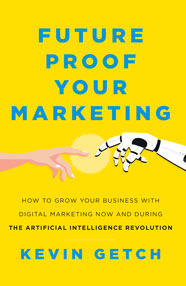
[0:00:32] CH: What’s up everybody, you’re listening to Author Hour where we interview authors about their new books. Today’s episode is with Kevin Getch. He is the author of Future Proof Your Marketing. Now, as an entrepreneur, you're expected to know how to market your business. But, the truth is that marketing is technically and creatively challenging. It’s getting even more so. With new technologies like AI, the complexity is daunting for even experienced marketers. Now, you want to make marketing a priority but you might not be sure where to focus your efforts. That’s what Kevin is here to help you with. Kevin Getch is the founder of Webfor and he’s their director of digital strategy. He actually started his career in marketing over 16 years ago. In this episode, Kevin is going to give you the tools that will take you inside the minds of your customers and enable you to build a winning strategy that can evolve along with your business. If you’re ready to make your marketing future proof, this is the episode for you. Now, here’s our conversation with Kevin Getch.
[0:01:50] Kevin Getch: Honestly, I work with businesses every day, sit down with executives and small business owners and marketing managers. I’m constantly seeing the need from their side to have a better understanding, not only of the current marketing landscape and really understanding how to measure everything, that’s a big thing we hear a lot is how do I measure and actually know what’s effective across all these different marketing channels and how do I set the strategy that actually kind of encompasses these things and really know my client. I just see all the time, so much opportunity when I sit down with these businesses that I’m like, it kills me, it’s like there’s just so much opportunity left on the table and so for me, I wanted to really share the way I look at things because when I sit down with these people and I kind of walk through everything then they see it. They see, gosh, okay, we are missing all these opportunities and we’re doing this and we’re not doing that and we should be doing XYZ and I wanted to really provide that value to more people. I wanted to be able to kind of put that in a book. That was one aspect. The other aspect was there’s so much change coming in the next five to 10 years. I’m concerned about a lot of businesses being able to adapt and evolve. What’s exciting about it is there’s a tremendous amount of opportunity. My fear is that there’s going to be a lot of businesses that don’t adapt in time and are left behind. I’ve seen that happen when we went from print media to more digital media, a lot of businesses that did not adapt went out of business and we’re going to be going through another transition and are already in that transition now and so I wanted to help give people a little bit of guidance so that they didn’t end up on the wrong side of the evolution there.
[0:03:32] RW: All right, the sub title of your book actually is, talking about just the artificial intelligence revolution. How to grow your business during that. What exactly is the artificial intelligence revolution? How will it be affecting businesses and therefore need us to change the way or examine the way that we market?
[0:03:52] Kevin Getch: The artificial intelligence revolution is, it’s something I think we’ve heard and talked about for many years that there’s going to be this artificial intelligence and it was kind of like flying cars, right? It was like, there’s this things going to happen in the future but is it really going to happen and all of a sudden, in the last about three years, there’s been this exponential growth in AI technology. Machine learning, deep learning, the ability for machines to process massive amounts of data and be able to utilize that to make decisions is in short what they’re doing. The ability to do that is very helpful for all aspects of business and marketing, obviously, there’s automation aspects that can improve efficiency at processes. There’s also a lot that has to do with just the marketing, customer service, customer experience in general as well. As this technology is increasing, there’s actually a number of factors that are going along this exponential growth trajectory. Because as AI improves, it improves AI even more exponentially. It’s one of those things where it’s not like, okay, this is going to grow 10x this next year, it’s like well, if that grows 10x this year then that means maybe 100x next year because the technology that just grew is going to actually increase our ability to grow that technology that prior year. It’s just compounding exponential growth that’s happening. In the last three years, we went from not really some just basic – I think Microsoft did something that turned horribly wrong on Twitter with AI that was using AI to cuss at people and do all the stuff. Now we’re to the point where if you use something like Google photos and all your photos are uploaded to Google photos, you can literally do a quick search by just voice search and say hey, in fact, I use this example in the book was this is what blew me away and this was probably a year and a half ago. I just searched for an elliptical machine because I was going to sell the elliptical machine because it was sitting in a garage. I thought, well, maybe there’s a photo there somewhere and it will recognize it because I was having a hard time finding it. It automatically populated this elliptical machine which was only half of the actual elliptical machine and it was in a garage among a bunch of other things, right? That’s part of AI and being able to visually process images and understand what an image is. We have natural language processing. Obviously there’s the visual side, there’s the auditory side, there’s all these different elements that AI is growing in. How that’s going to actually impact businesses is that the macro trends in marketing are what I call the three P’s. They’re personalized, predictive and proactive. These are the macro trends that are kind of driving, marketing in general across a broad range of channels and industries. It’s becoming more personalized, Where AI is really coming in is all three of those areas. AI is allowing us to personalize our marketing more effectively. It’s allowing us to on the fly predict a consumer’s needs and proactively go in there and maybe change the messaging to better fit that specific client’s needs. Right now, this is something that is really in the beginning stages, it’s really cutting edge and not that many people are utilizing it to that extent. Some people are using base personalization by name and things like that. But that’s going to change in the next five to 10 years if you think how much it’s grown in the last three years in the next five to 10 years, we’re going to move into different stages where one of the biggest areas I think is going to be a surprise for a lot of both businesses and consumers is the proactive side. To me, that’s one of the largest changes we’ll probably see in our lifetime and marketing is going from a reactive state to a proactive state. I think that is going to be a big surprise for a lot of people. A lot of consumers, a lot of businesses is the proactive side.
[0:07:48] RW: All right, given that, what do you think is the one unique kind of idea from your book that people will be able to take action on?
[0:07:58] Kevin Getch: I don’t know how unique I would say this is but I think it’s really important to understand that while many of us that are obviously good businesses and focus on creating our best product and service, really have a high focus on the customer experience. Right now, customer experience, when you actually think about some of the different algorithms that go on, whether it be search engines or social media, email, ecommerce, all the different areas. It’s definitely a portion of like if you go into a search engine and you’re looking for a specific type of service or business. It comes into play. The customer experience and the user experience are definitely have increased exponentially and I’ve been saying this for years is that search engines are going to be doubling down on user experience, customer experience. Customer experience basically for the foreseeable future, will continue to see that. I think what people don’t understand is that – maybe I think is really important for them to understand is that customer experience is going to be one of the single determining, biggest factors that affect the success of their business or not. While I feel like that should already be the case in a lot of businesses, there’s a lot of businesses that stayed under the radar with different things. In the future, it’s going to not only make or break your business from a reputation standpoint but it’s going to affect how you rank in search engines, significantly it’s going to affect whether you show up or not because the simple analogy I often use with business is if you were referring someone to another business and you were referring your friends and they weren’t having a good experience, how long would you do that for, right? For a search engine, this is their whole businesses. Referring their customers to other businesses, right? That’s the main aspect of their business. Sharing, whether it be information or services or whatever it be. They want to make sure that the customer’s having a really good experience. From our standpoint. When we talk about strategy, looking at that, we talk about customer centric strategy. I think the biggest thing that someone should take away is understanding that rather than falling in love with our product or service, they should be falling in love with their customer and really focus everything on them really understanding and developing a customer centric strategy. In order to be able to kind of continually change as the consumer trends change. They need to basically have like a feedback loop with that customer where they’re always listening and learning from the customer so that they can adapt and change and hopefully get to the point where they can anticipate the customer’s needs prior to them actually changing it. So that they know the customer so well that they know what the customer wants even before the customer knows what they want. I think if we can get to that point, right? As a business. We can not only thrive in the current market but we can thrive in the coming market and make sure that we adapt as our customer and the market adapts.
[0:10:32] RW: All right, as we talk about the coming market, you have a chapter that’s called “The new digital assistant”. Can we talk a little beta more about what that is and how we utilize that?
[0:10:41] Kevin Getch: Definitely. I’m very excited about this, there’s a lot of people that are – I would say, worried and I think it’s anytime there’s a new technology, people are worried about this new technology, whether it was phones back in the day. People thought that the phone was going to steal their soul. Whether computers were invented and people had computer phobia, there’s so – every time a new technology comes around, people are fearful. There’s some reasons that they are. For me, I think the digital assistant in its current stage is kind of fun, it’s helpful but I think in the next five to 10 years, what we’re going to see is basically with the growth of artificial intelligence with the quantum computing and the ability to – the processing power of quantum computing is and some of the other things growing, we’re going to be able to see in that next timeframe, we’re going to be able to see the ability for this digital assistance to process massive amounts of information. This is a really important aspect because AI needs massive amounts of information and this is one of the areas. I’ll tie it all together by kind of bringing back the proactive aspect. When I think about digital assistance, the analogy I often use is if you were going to hire this executive assistant to work for you, would you want them to not get to know you just sit there and kind of wait until you actually requested something and when they did request something, they just gave it to you. It wasn’t really personalized and my guess is probably not especially if you are paying them but when you hire a good assistant, a good assistant is going to get to know you. They’re going to get to know your needs. They’re going to get to know your likes, your dislikes, what kind of food you like, how you prefer your meeting scheduled. If you want to be notified a certain time before a meeting, you know all of those different things, right? They are going to actually predict your needs and then you are going to proactively take care of some of them for you. So right now, our digital assistant is in the infancy stage of the ability of what they can do but in the next five to 10 years, what we are going to see with technology’s growth, we are going to move more towards that proactive side. Where they’ll be basically like an always on mode, right? So what I mean by that is right now our technology is very reactive. If I want to search for something, I open up my phone and then I go search for it and if I am looking for a convenient store, I can just say convenient store. In the future that will change. They’ll be on always on mode where I can have my phone always on and like any good digital assistant they’d be listening for opportunities to be of service, right? So I might be having a conversation with a friend and talk about how I want to learn how to fly a plane and it is one of my goals to take flying lessons and learn how to fly a plane over the next eight years and we can be having that conversation. My digital assistant notes that as something that is important that maybe they could remind me about or surface information up. So then I get a notification after I’ve done with that conversation. Well, here is more information on learning to fly, whether it is right for you and of course, here is ads for flying lessons. So this I guess is a good example to show where it is going but it is really just the beginning because from a business standpoint, assistance will be utilized in meetings. So that they can take notes of everything and then come up with action items and tell everyone afterwards that these are the action items that we had, right? They’ll be used in obviously retail situations when someone is coming up to make an order and this is why there is some fear around digital assistants because it is going to drastically not only digital assistance but AI in general is going to drastically change the job market just like the industrial revolution did back in the day when we went from human powered or animal powered things to we went to steam powered. And so now, we’re in the AI revolution, which is going from humans owning intelligence to now a computer having the ability for intelligence. So that is scary to a lot of people but from our standpoint as businesses that are looking to be able to market, if we understand what’s coming, we can better prepare and make sure that we are creating a solid foundation to basically take advantage of these coming terms.
[0:14:53] RW: All right and so what happens specifically to people who are not adapting, so who are not moving in the direction of being proactive with their marketing and stuck in the old world ways of doing it as it will be in a couple of years. What have you seen happened or what do you think will happen if we don’t adapt?
[0:15:11] Kevin Getch: It’s unfortunate but what will happen slowly is though we are wondering why businesses is slower than usual and numbers are down a little bit and unfortunately if they are not adapting they’re probably going to blame it on market trends rather than them not innovating, right? Unfortunately, that’s often the case when these things come around is like, “Man, maybe it is just the market.” Maybe these things are happening and they’re not actually adapting. They are stuck in this mindset because it is very easy to get in this mindset of “I have done it this way for years and it’s worked and so now it is just not working anymore” but they just keep doing it the same way. So what’s important to test and innovate and adapt and constantly be pushing the limits a little bit from a business perspective and a marketing perspective to see how can we add more value to our customers. Whether it be in the process, whether it can be in our marketing. Better connect with our customers, honestly I’d say 95% of businesses out there, their marketing doesn’t resonate with their customer. They haven’t sat there and actually thought like what psychological needs are we actually meeting for our customers and then they are not actually getting those messages in front of them in the right places because what is happening is, for someone who might have been doing these things in a certain way for a long time, that is because where their customers were. But when their customers change and they’re no longer on that same journey, on that same path, are now taking different paths to the information that they are looking for or the things that they are doing then they are not seeing your information. They are not seeing their messages. So the short answer is that unfortunately, they’re going to become less profitable and if they don’t adapt at some point or another that will catch up to them. Cash flow will become a problem and they may go out of business and that is just the unfortunate life if we don’t adapt and if we don’t innovate, we’re going to obviously end up on the wrong side of that change.
[0:17:06] RW: All right and then do you have any examples or case studies or just any kind of applications of just these principles that you can tell us about? Whether it is with your clients, your company or just prominent companies that we know?
[0:17:19] Kevin Getch: Sure, there is a lot of different examples and I will give you one because this is top of mind and we recently won an award for this specific element. It is very linear because it looks at one aspect of the overall strategy but it is important to understand and it does communicate the power of really understanding your customer and understanding your product and understanding the assets that you have in order to do that. So we worked with a company called DiscoverOrg that has been growing substantially. Gosh, this is a really amazing story. Henry Schuck, the CEO of that company and what they’ve done in the last I think it’s 11 or 12 years now and we just started working with them when they announced that they were purchasing one of their largest competitors and they came to us and said, “Hey, we could use your help and basically we are going to bring that brand underneath our brand and we’re going to incorporate everything in there.” And they have this large web property, which at the time had 2.3 million URLs on that site. So different pages on the site and they wanted to basically bring that all under their current site. For us, this was obviously a huge massive undertaking and often in these situations what we are looking to do is not lose traffic, not lose value because here is this great successful company, now you are taking their website and all of their content and you’re moving it over. So how do you make sure that those customers get to the right point that all the positions and all the searches and keywords that you showed up for in the search engines are still showing up and that all the people who are taking action on your website are now on the new site taking action there. So we worked with their internal marketing team, which was fantastic and it was one of these things where, not only did we basically analyze all of the pages on the site. And basically recommend, “Hey this is the content that needs to be migrated over, these are the pages and how they need to be redirected to the new site”, we also looked at some of the information and architecture that they had, looked at the directory basically of people and companies that they had and we helped recommend them transitioning that over. When all was set and done over the transition was done, everything went over not only did we not lose any traffic or conversions. We actually grew traffic by over 400%, which was unheard of in that type of project and we also more than double the number of conversions. The people taking action on the website from the combined sites. That is like one sliver of what we do in the big scheme of things, right? That is one small aspect. We were also working on the onsite SEO for their current site and they had a whole strategy that they were working on creating content and social media. And they had email campaigns so they had a lot of that aspect already in place. For other clients, we’ll sit down and we’ll actually come up with the entire strategy. One of our clients who actually is a good sized client, they actually started experiencing a dip. Google had made some algorithm updates and they are called the bracket updates because it is around March madness. So they had made some updates in 2018 and you could see a significant drop in the traffic to their website. And of course, the number of conversions. People actually requesting more information or acquiring about their services and when we looked at them, they didn’t even know that this has happened really. They’re just like, “Business is a little slower” so we were able to first identify the problem and then come up with a strategy in order to basically get them back to where they need to be and within I think it was about six months, we actually exceeded where they used to be. So we recaptured all of that lost traffic and grew them above that and that’s not something that’s just, “Oh it’s just one element” it takes a comprehensive strategy of understanding. Understanding the user, understanding what type of content is going to be valuable for them, making sure that that content is created in a way that is friendly for search engines, that is sharable on social media and then there is a lot more aspects that go into that. So that’s a couple of examples that I can think of off the top of my head.
[0:21:28] RW: All right but if you had to issue a challenge, so whether that’s to your listeners, our listeners now, your readers just people working towards moving into that AI landscape that is coming or the changing of marketing, what would you challenge them to do?
[0:21:43] Kevin Getch: Honestly I would challenge them to come up with a strategy and not just what most businesses do, which is, “Oh I heard about this one tactic I need to be doing SEO or I need to be doing social media or I need to be doing email” that’s great and you probably need to be doing some of these things but you need to start with a strategy and that strategy needs to be customer centric focused. You need to start by really diving in and getting to know your customer. What do they want and what are their fears? What are their uncertainties? What are their desires? How do they make decisions? If you really know your customer and you know them better than anyone else, that is your competitive advantage to being able to deliver that and deliver it in a way that not only excites them that not only meets the psychological needs that they are looking to fill but that is going to make a customer for life. And there is no better marketing than a satisfied customer, right? So I would challenge them to come up and develop a customer centric strategy and what they can do to basically protect themselves and adapt the coming changes is to make sure that they have a feedback loop in place and that they are constantly are learning more about their customers and looking at how the market changes adapt because we can get lost on focusing on the next biggest thing. But we have to be always managing kind of two businesses. We have to be understanding what works now and then we have to look at who do we need to become and what do we need to do in the future in order to be successful and if we don’t manage both of those, we’re going to fail. So that is what I challenge them to do is focus on developing a customer centric strategy, make sure you have a feedback loop in place so that you are constantly listening to your customers and then just make sure that you’re also thinking about the future and that you are adapting.
[0:23:27] RW: All right, awesome and then how can people contact you if they would like to learn more?
[0:23:31] Kevin Getch: Yeah, people can contact me through our company website at webfor.com. They can also connect with me on LinkedIn it’s a great place as well. I connect with a lot of people there or they can reach out via social media, send smoke signals, whatever, I’ll answer back.
[0:23:52] RW: All right, awesome. Thank you so much, Kevin.
[0:23:55] Kevin Getch: Well, thank you, Rae.
[0:23:57] CH: Thanks again to Kevin Getch for being on the show. You can buy his book, Future Proof Your Marketing, on amazon.com. Be sure to check out authorhour.co for show notes and a transcript of this episode and be sure to leave us a review on iTunes if you are enjoying these episodes, we love to hear from you.
Want to Write Your Own Book?
Scribe has helped over 2,000 authors turn their expertise into published books.
Schedule a Free Consult