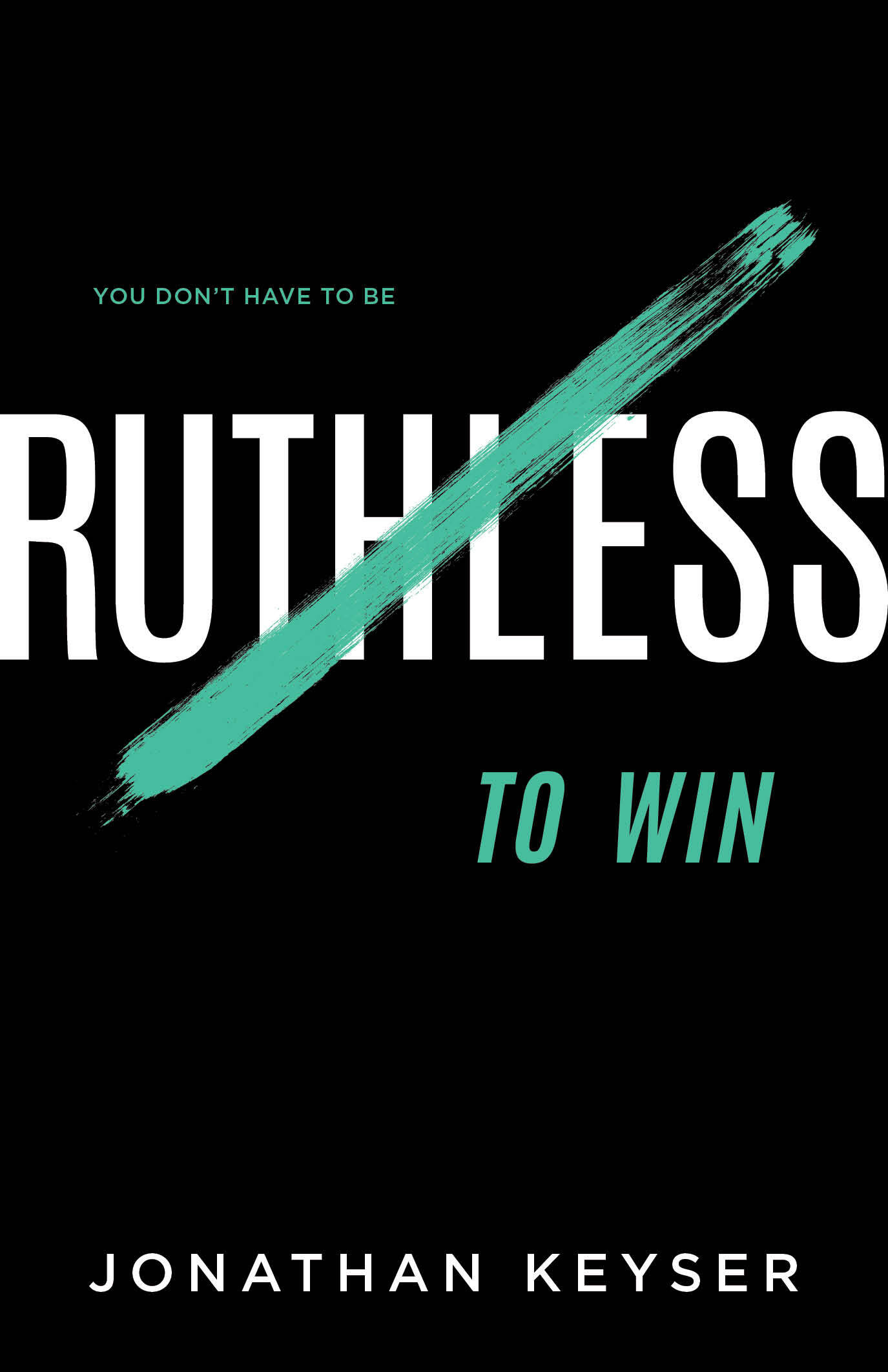
Jonathan Keyser: You Don't Have to Be Ruthless to Win
Read the full transcript
Jonathan Keyser
Jonathan Keyser is the founder of Keyser, a Scottsdale, Arizona commercial real estate brokerage he launched in 2013 to reinvent the industry through selfless service. When he first entered the cut-throat world of commercial real estate, he realized he was sacrificing his values in pursuit of success and chose to reinvent himself as a selfless leader, an approach that grew his firm into one of the largest tenant representation firms in Arizona. With nearly thirty years in the industry, Keyser is a keynote speaker and a supporter of the Conscious Capitalism movement. He is the author of You Don't Have to Be Ruthless to Win: The Art of Badass Selfless Service.
📚 Books by Jonathan Keyser
Transcript
[0:00:17] CH: What’s up everybody, you are listening to Author Hour, the show where we interview authors about their new books. Today’s episode is with Jonathan Keyser. He’s the author of You Don’t Have to Be Ruthless to Win. When Jonathan entered the cutthroat world of commercial real estate. He became the worst version of himself and he hated himself because of it. Then one day, Jonathan decided that he’d had enough, he realized he was sacrificing his values in pursuit of success and that he needed to stop. He stopped being ruthless and reinvented himself as a selfless leader which skyrocketed his brokerage firm to eight figures. In this episode, we’re going to go into the ferocious world of commercial real estate and see Jonathan transition. But this episode isn’t really about him, it’s about you. By the end of this episode, you’ll learn how to activate selflessness in your life and you’ll know why this counterintuitive strategy can create huge long-term success for you and your business. And now, here’s our conversation with Jonathan Keyser.
[0:01:41] Jonathan Keyser: When I was a kid, I was raised by my parents to love and serve and give and that was pounded into my head from a very early age. And the problem was, we were very poor. So, in my mind, there was this direct correlation between selflessness and being broke. I didn’t like being broke. I spent a part of my life overseas as a kid and when I got back, I realized in the sort of flash of unhappy epiphany that everybody else had stuff and I didn’t have stuff and I wanted stuff. So, I decided at an early age that I was going to be successful. I got into commercial real estate after college because a buddy of mine said that I’d be good at it and that I could make a lot of money. Again, at commercial real estate and I realized really quickly, wow, this is a ruthless industry. Everybody’s scratching and clawing and fighting and I said, “okay, if this is what it takes, I want to be successful and I don’t want to be poor like my parents were, I want to make money.” And so, I became ruthless and I became good at being ruthless. I was arguably one of the more ruthless commercial real estate brokers out there. But I was miserable, Rae. I was misaligned with my fundamentally I was misaligned with my core values. About 14, 15 years ago, I go to this conference and this guy gets up and he starts having a conversation about success through helping others succeed and I had never heard anything like it and I was fascinated and I tracked him down after the break out session and I said, “hey, is that really true?” “Do you actually do that or is that just a cool schtick that you say in front of groups?” And goes, “no, this is actually how I built my business.” How’s that possible, how come I’ve never heard about this before? That started this journey of looking into whether or not that could be possible for me and I made the decision to reinvent myself around this idea of succeeding by helping others because it resonated with me at such a core level. Before, you know, I felt trapped, I didn’t realize that it was possible to be successful in a ruthless industry by just helping others, that concept had never been crossed my mind. I got to work doing that and it was a long hard road, one of the answers he had given me when I said, “how come nobody else is doing this?” And said, “because it takes too long.” He likened it to planting seeds versus hunting, right? A lot of people that are in some sort of sales organization, they know about hunting and they know they get up and they go make a call and they try to get some business and it close the piece of business and they go get some more. That’s the typical commercial real estate model. This was more like planting citrus trees that you nurture and water and prune and over time, I have a citrus tree in my back yard, this lemon tree. When it was a little kid, it like just didn’t yield any lemons in for a while and I thought it was kind of a waste of space. Now, today, after taking care of it for years, it has grown and it’s almost annoying how many lemons come off that tree. That was the concept that I employed in the market place and it grew and today, we launched my own firm in 2012 with the idea that you know, we want to change the industry, we want to prove that all this was possible for me. I said, “what if this could be scaled. What if this could be done better? What if I could teach other people what I’ve now learned on how they could create success for themselves through selfless service?” And so today, we have the largest firm of our kind in the state of Arizona and one of the fastest growing in the country and it’s all around this idea of success through service. To answer your question, I wrote the book because I believe there’s a better way. I believe that a lot of people wish that they didn’t have to be ruthless in whatever their respective industries, but like me, they feel like there’s not a better path and they feel like there’s not a better way. And everybody kind of knows that you’re supposed to do the right thing but there’s a big difference between knowing you’re supposed to be doing the right things and acting the way that our parents taught us and actually being successful doing it. And so, the whole point of the book is you know, we have a movement that we’re at the helm of, to change the industry and prove that you don’t have to be ruthless to win. And that you can create extraordinary success even in a ruthless industry just by helping others succeed
[0:06:10] RW: All right, before we get into some of the details of the book. What would you say is the key message in this book in terms of something that people can take action on?
[0:06:22] Jonathan Keyser: That’s a great question. One of the things we teach in the book is thee three levels of reinvention. The book is designed as one, a path of here’s how you can do this yourself and is packed with tidbits around how to do it and so built into that is the three levels of reinvention which is starting with yourself, change starts from within, you have to be the change you want to see in the world to quote Gandhi and then it’s outward, it’s a company culture that you transform through service and then it’s all your clients and collaborators. So, it’s an inside out revolution where we teach through Keyser’s 15 cooperating principles, how a company can create success for themselves and a culture of selfless service through utilizing these principles.
[0:07:14] RW: Jumping in a little bit to the book, you have the book in two parts. Part one is kind of your journey a little bit of which you described for us a while ago and then part two is about how to recreate that. So, diving a little bit more into your actual journey and that first part of the book, what would you say is the most difficult part about the life you were living and what was the hardest part about transforming yourselves? What’s the hardest part of the transformation?
[0:07:40] Jonathan Keyser: That is a great question Rae. The hardest part for me about living the old way, the ruthless Jonathan Keyser was the fact that I felt so misaligned with who I believed myself to be and how I was raised. I felt like I was trading my soul for money if that makes any sense. I felt like I was selling out, I felt like I was doing whatever I needed to do because I thought I needed to do it, but I wasn’t staying true to how my parents raised me. And again, I think that’s not an uncommon feeling, a lot in business, it’s purpose especially in hyper competitive businesses. The hardest part about making the transition was one, it took forever so it wasn’t some instant gratification overnight, I wasn’t some overnight success. For five years, I was laughed at, mocked, criticized, questioned, pretty much everyone around me decided that what I was up to was idealistic and nice to hear, but not realistic because I wasn’t delivering on revenue creation. So, being able and willing to withstand the negative scrutiny was definitely extraordinarily hard and that scrutiny, I had my own doubts as I was going through it to think, “man, maybe I’m doing this wrong or maybe this really doesn’t work, you know?” Some of the voices that were outside of me kept sticking in my head as well. Yeah, at the end of the day, it was something where to make that transition, the time involved the lack of revenue in making that transition and the kind of withering criticism from all around me made it challenging. Add to that the fact that there was really no other examples outside of the individuals that told me about it, around me, so II felt very much like I was on an island. But I could feel it, Rae. I could feel like – I felt like there was – I could feel it happening. I could feel that every act of service, that’s what I did, I started just helping everybody in the community with whatever they needed. Sometimes they would ask me to connect them with potential clients, so I’d do that. Sometimes they ask me to help their kid get a job or sometimes I’d help them get a job. I would just become this like a concierge for the community, helping as many people as I could. And I could feel, one it felt great to do that but two, as I did that I could feel their gratitude and as I did that more and more, people started talking more and more about me and what I was doing and I went from trying hard in my old life to convince everybody I was a good guy and nobody really thinking I was, to just serving as many people as possible and having everybody talk about me like I’m a great guy and try to make introductions for me to help me. So, there’s this really neat process but it was not for the faint of heart and the main reason was just show long and how people want to feel like they’re included. They want to feel like they’re part of the club or the team and here I was speaking completely different from anybody else in my industry, doing things completely different and not having the financial success to demonstrate that it was actually working.
[0:11:17] RW: All right, you have a chapter in your book and it’s called The Work that Led to Balance. What was that work and what kind of balance did you achieve, what is that chapter focused on?
[0:11:31] Jonathan Keyser: Part of my journey was coming to grips with the fact that even as I was doing this new business model, and even as I was helping as many people as possible. The reality was, is that I was still doing it manipulatively. That was not something that I was even aware of. I was really just looking at it as if it was a different kind of sales tactic so to speak. And I ended up hiring a coach and that coach helped me see that I was just doing this in a manipulative way and once I saw that Rae, I didn’t want that anymore for my life. I didn’t want to just be doing yet another thing to manipulate, I wanted to actually be helping people. And so hiring the coach was a big, big part of it but also being willing once I saw that to make the change and fall in love with serving. And once I stopped keeping track, you know? Because before, I would keep track in my mind, who would I help, they wouldn’t reciprocate, I’d be like, “that person’s a taker.” But once I fell in love with service, I stopped keeping track, I stopped caring and all I would do is just help everyone that I could. It was that transformation that helped me really – that is when the success started, that is when the happiness started. It really embodied the philosophy fully and once that happened then everything changed.
[0:13:17] RW: So, diving in a little bit to how we can apply this for ourselves if we want to use your method to change our businesses, to change our lives, what are the beginning steps? How do we apply the kind of Keyser experience?
[0:13:31] Jonathan Keyser: So that’s what I love about what we’re doing here, Rae. This is not complicated stuff I mean at the end of day, is there nuance in it? Yes, but what this really is, is the stuff that you and I really know. It is what our parents taught us, it is what we teach our kids, it is we don’t know how to love. We don’t know how to serve. We don’t know how to be selfless. The only question is are we doing that when it comes to business or are we just keeping that in our homes? Why is it that in our homes, in our social lives, with our friends it comes pretty naturally for us to do this? Yet when we get into business, we put on our top suit and we get to fighting and so what we – the reason I wrote the book the way that I did was number one, this concept sounds a little crazy. Success through service, success by helping others succeed, you know not having to be ruthless to win, all of these things particularly in commercial real estate brokerage sound a little bit unrealistic and utopian to the average Joe. But the reality is that if somebody could see my story and how I went from being ruthless to creating success through service and then showing them and detailing for them how we built an entire organization around it and leaving them with the three levels of reinvention that they can implement in their own lives, it becomes and extraordinary opportunity for the reader to take this on and not only get excited about it conceptually, but also give real practical steps for how they can do it. And so that’s what the book was really designed to do starting with, “here is my journey,” so you can see that it was actually possible and I spared no self-criticism and it is – I have been told it was one of the bravest books people have ever read. I don’t know if that is true or not but you know I am very clear with all of the ways that I was ruthless and I spare no self-criticism and then walking people through how they can do this themselves. So that by the time they’re done reading the book, they have everything they need for how they can go create this selfless service mindset and culture within their own respective organization.
[0:15:49] RW: All right, so let us touch on two of the topics that we have here maybe one other, but two of them that caught my attention where to be a 100% coachable and be a 100% present. Tell us a little bit more about that.
[0:16:03] Jonathan Keyser: Sure, one of the things I think is essential for selfless leadership is the willingness to take any and all feedback and really put it to work in your own life. It doesn’t mean that what anybody says you don’t – you just take it at face value. Sometimes people give you bad advice, etcetera but it means being open for any and all feedback particularly from your team. And what I see most leaders doing is not wanting that. They choose instead to use their dominant position as a bully pulpit to intimidate and silence people around them. And so, being 100% coachable to me means that anybody within the organization even the most junior newest person can approach me and is encouraged approach me and share areas that I could improve and that is the culture that we’ve created. So, it’s being excited about other people’s feedback and taking it un-defensively without arguing and just listening to it and taking it and trying to figure out how that could be true instead of discarding it. So, for us, coachability is everything. It’s one of the key tenets of our firm and it is part of why we have such a happy environment here because everybody knows they can be authentic; they can be truthful and other people are welcome the feedback that they can provide. On 100% present, one of the things that’s pervasive in today’s world is the 18 different things going on in a person’s brain while they try to do one or looking at their cellphone every three minutes or whatever the case maybe. We believe that being 100% present brings the best of each of us to whatever we do and we want to make sure that we are fully present in every action and interaction that we partake and participate in. So, it is this idea. It is a mindset of the only person I’m with is everyone that is everyone to me right now and I am not worrying about what’s tomorrow. I am not thinking about what I did this morning. I have my phone away, I am staring intently at the person and my whole focus is, “how can I serve this person in the moment as I look at them?”
[0:18:22] RW: All right awesome. Another thing that I wanted to touch on is care for yourself with exercise and proper nutrition because I feel like that is something that people don’t take into consideration in terms of running a business. So, talk to us a little bit about how that changed you and how that should be a part of your routine.
[0:18:39] Jonathan Keyser: Yes, I see so many people and myself included that over the years I have prioritized success over health and the reality is that’s a young person’s game and you can’t play it very long before it starts to catch up with you. And so, part of what we’re all about is to be all these other things. To be 100% coachable and one team and to have fun and all of these things require health and so not prioritizing your health is a recipe for having to prioritize it for the later years of your life and if you can have those later years. And so as we’re trying to be of service and grow and organization to have health a center piece is critical for us now. It is not some – we are not doing weigh ins or something ridiculous like that. It is a mindset, right? Like all of these principles, they’re are mindset. It is a focus on taking care of ourselves, keeping ourselves healthy, prioritizing health, which in the generation that I grew up with is not the case.
[0:19:50] RW: So, if you now had to issue a challenge to your readers, to people who are looking to use your method, to transform their lives and their business, what would that challenge be?
[0:20:03] Jonathan Keyser: Here’s the challenge that I would give is a lot of people when they hear about this business model and they hear me tell about how we created an entire firm where we’re referral only because all we do is serve other people, to them it sounds like such a stretch from where they are today that it almost couldn’t be possible. So, my challenge would be start at the beginning. Just decide that you are going to do one act of selfless service a day to someone. Just one, when you wake up in the morning decide, “I am going to do something for someone else that has nothing to do with me that is just giving.” I think what you’ll find is that it creates an extraordinary opportunity for things in your life that you never thought possible. I believe that success through service is the greatest business principle of all time and again, you don’t have to go all in like I did. You can start at one a day and if you want example of good things we could do, go to the ruthlessbook.com website. And there is a vault there and you can download all kinds of tips on how to do that but the idea is start small and then just grow that. So maybe the next week you are doing two a day and the next week you are doing three day. The ultimate goal is to get that in every interaction with another person, you are selflessly looking for ways to serve them not because you think it is the right thing to do, although I do believe that it but because you believe that it is the greatest way to create an extraordinary relationship that leads to success. So again, at the end of the day I am not some guy up on a stage that is talking about do the right thing. I had that shoved down my throat all my life. That is not what this is. This is a guy who has lived as a ruthless broker, has changed his strategy to just serve others and now has much greater success than I ever had before. So, the idea is success through service and showing people that you can actually create extraordinary success for yourself by helping others succeed. Part of what is exciting about what we’re doing is we’re rolling out the Keyser Institute and the Keyser Institute is designed to help people that want a little bit of additional assistance beyond reading the book on how they could actually do this for themselves and how they can realize success for themselves and for their organization and we have some neat products relative to that at the Keyser Institute. But at the end of the day, what we are looking for is this is a movement, this is a movement of people that want to be part of this mission of changing the business world through self of service and proving that you don’t have to be ruthless to win. You don’t have to behave adversarially. You can actually love and serve people and have extraordinary success. You can have your cake and eat it too and that is what we’re all about at Keyser.
[0:22:56] RW: All right, how can people get in touch with you if they would like to learn more?
[0:23:00] Jonathan Keyser: So, the best place to go is ruthlessbook.com. That’s r-u-t-h-l-e-s-s-b-o-o-k.com, again there is a vault on that site. I would also order the book. So, reading the book I think would be a good first step, you can get that on Amazon. We’re launching it end of July so it is about to be released and at the end of the day, you know I also do a lot of speaking. So, if somebody would like to have me come and talk at a conference, have talk in front of lot of big audiences. Telling them about this and it is part of what we do here is part of our mission and at the end of the day, you know what we’re trying to do is help organizations, help companies, you know we help companies with their real estate. We are a commercial real estate brokerage firm and we’re bringing transparency. We are bringing authenticity; we are bringing integrity to that process in an area where people really haven’t thought that way of commercial real estate brokers in the past. So, for those commercial real estate brokers out there that are sick and tired of being sick and tired of their traditional firms, call us. We’d love to talk to you. You go to keyser.com, k-e-y-s-e-r.com and engage with us and we’re looking to do a national roll out. So finding those individuals to build off. This is around in various markets. It is a big piece of what we’re building for as well.
[0:24:21] RW: All right, awesome. Thank you so much Jonathan.
[0:24:24] CH: Thanks so much again to Jonathan Keyser for being on the show. You can buy his book, You Don’t Have to be Ruthless to Win, on amazon.com. Be sure to check out authorhour.co for show notes and a transcript of this episode and take a minute to leave us a review on iTunes. It means a lot.
Want to Write Your Own Book?
Scribe has helped over 2,000 authors turn their expertise into published books.
Schedule a Free Consult