Lorenzo Gomez: Episode 357
Read the full transcript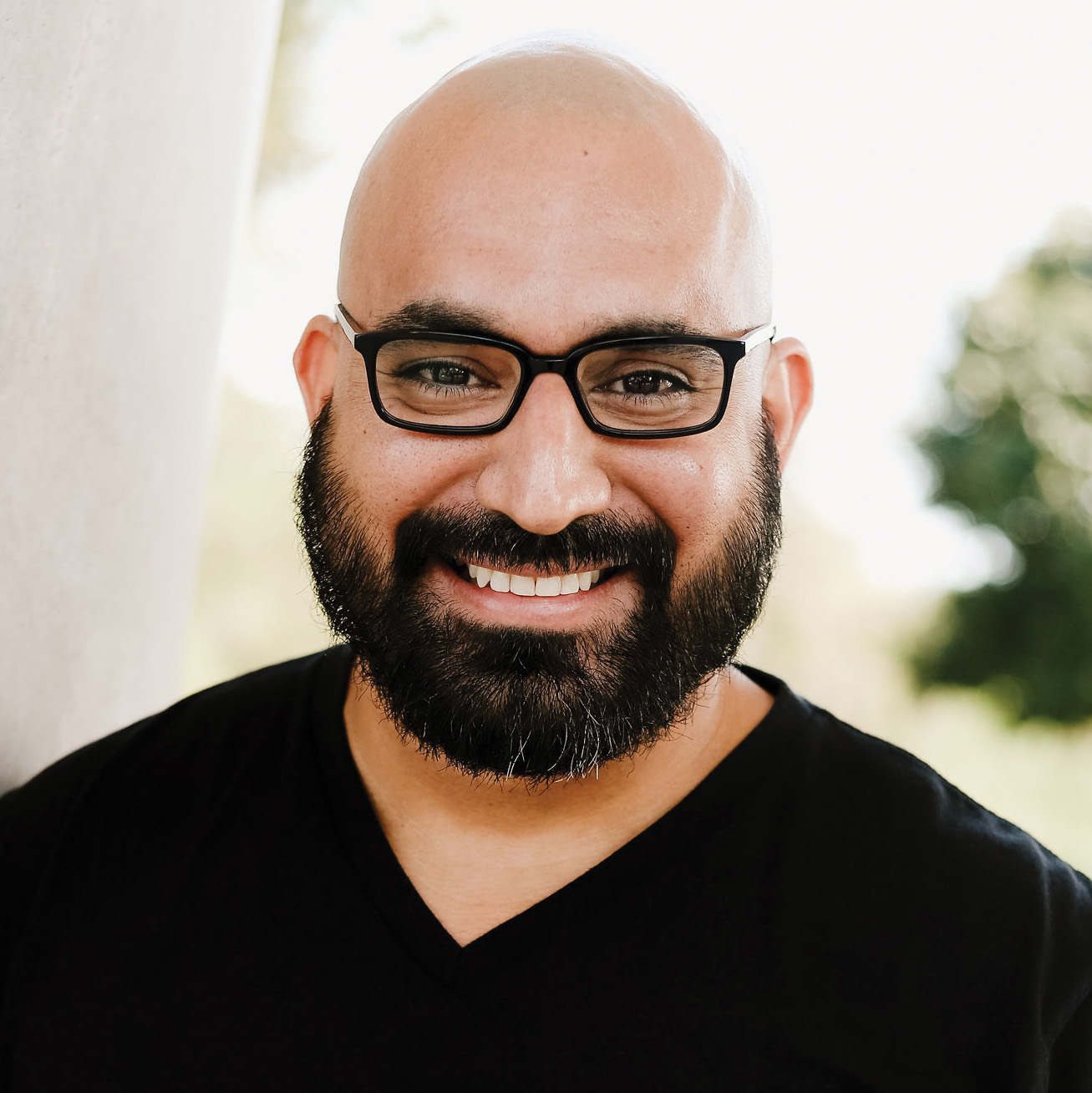
Lorenzo Gomez
Lorenzo Gomez III is a San Antonio author, entrepreneur, and public speaker. He spent ten years at Rackspace before helping to lead the city’s growing technology community, and he has served as chairman of Geekdom, San Antonio’s largest coworking space and startup hub, and of the 80/20 Foundation, a philanthropic organization focused on building the local tech ecosystem. He is also a co-founder of Tech Bloc.
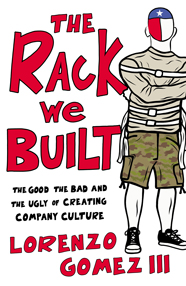
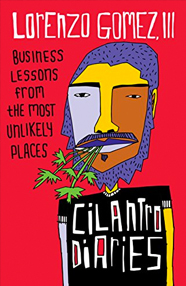
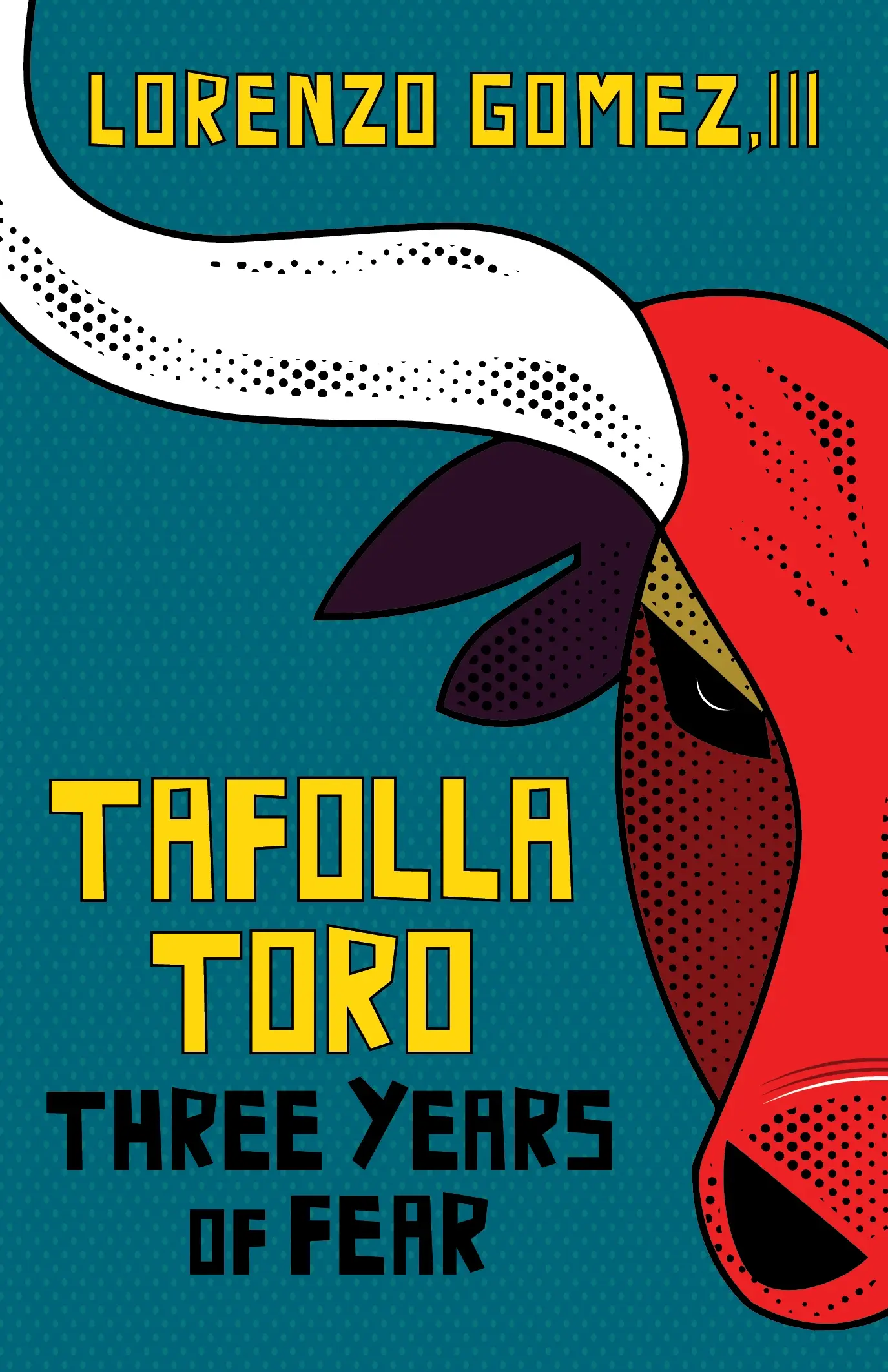
He is the author of The Cilantro Diaries: Business Lessons From the Most Unlikely Places, which traces his path from the stockroom of a grocery store to the boardrooms of two private companies without a college degree, and Tafolla Toro: Three Years of Fear.
★ Scribe Case Study
Lorenzo Gomez’s Journey from Grocery Store Bagger to Geekdom CEO and Published Author
When Lorenzo Gomez started writing a book about his journey, he had no idea he'd become a role model for young Hispanic people across Texas and beyond.
📚 Books by Lorenzo Gomez
Transcript
[0:00:30] NVN: Middle school was a pivotal traumatic time for Lorenzo Gomez. Fear, anxiety and hopelessness are all words that come to mind when he describes the three years of his life, he spent at San Antonio’s Tafolla Middle School, which was located in one of the city’s most crime ridden neighborhoods. Now in his late 30s and his new book Tafolla Toro: Three Years of Fear. Lorenzo looks back at this time in his life through a series of letters to his 12-year-old self. Through this, he demonstrates how we can all reclaim our minds and senses of worthiness by dealing with what is true and dismantling the lies we tell ourselves that lead to self-deception. At the end of the day, this is a book about differentiating between mental health and mental illness and demonstrating to readers that mental health is an issue that affects not some but all of us. It also serves as a reminder that mental health should always come at the top of our list and that everything else is contingent upon it. Lorenzo, welcome.
[0:01:35] Lorenzo Gomez: Thank you for having me, I’m so excited to be here.
[0:01:39] NVN: I’m so excited to have you. You have such a unique story, let’s start by letting listeners know who you are and where you're coming from.
[0:01:50] Lorenzo Gomez: Sure, my name is Lorenzo Gomez and I’m a San Antonio native that sort of stumbled and fell into the tech world for about a decade and a half. And then I switched to working on the city and doing very civic minded things and helping to start and ecosystem. And then you know, somewhere along the way, I decided to start writing the stories that have been really impactful to me and the book that we’re here talking about today has been especially important to me because it’s as topic that I feel like is finally going to have its moment, its day in the sun which is mental health. The book is called Tafolla Toro: Three Years of Fear and is basically a mental health book about my middle school years.
[0:02:34] NVN: So, okay, there’s lots to unpack just there. First of all, I mean, your career didn’t exactly take what we think of as the natural trajectory. So, talk to me a little bit about how you got from point A to point B.
[0:02:48] Lorenzo Gomez: Yeah, my first book which is called the Cilantro Diaries: Business Lessons From the Most Unlikely Places, sort of kind of maps out what happened to me. And so, I grew up in the inner city of san Antonio, very economically segregated, you know, majority Hispanic and I did not have anything that the business world valued. I had no connections, I had no money, I had no skills. And so, the first book I wrote was about how I acquired the tools to get into the professional world and then later the tools to make it and succeed. The summary of it is really just kind of anything I did that was my own idea was an utter and complete disaster and anything I did that worked was because someone more wise and generous saw my potential and said you, “hey, should probably do it this way.” You know, I went from bagging groceries at a grocery store here locally in Texas called HUB and then my best friend who I went to high school with kind of got me into the computer store and then there, we met our first professional sales guy who got us into this – what he called at the time a really crazy startup that was probably going to go out of business called Rackspace. And so I was a receptionist that is computer store and I left to go be one of the first seven account managers, one of the first hundred employees at this “crazy company” that was probably going to go out of business and ended up you know, ended up being a publicly traded company. Sold for two billion dollars and just really changed my life. And that’s not hyperbole, it changed my life, put me on the second plane ride of my entire life to London. I ended up moving to the UK to work in their office and just taught me you know, Rackspace was my BA, my bachelor’s degree, my MBA, my PHD was all those things because I never went to school. I sort of did one or two semesters at a community college and then I dropped out. And so, Rackspace really gave me all the things that I didn’t have, it gave me a network, it gave me skills, it gave me experiences that I just could not have afforded by myself. And really, mentors and counselors, you know. One of the big ideas in my first book is this notion that everybody needs a personal board of directors and I was very, very fortunate to stumble upon that and ran into people that really saw my potential and went out of their way to help me. The book – my first book was how do I pay it back to all the people that invested in me? So that more people can do more faster than I did.
[0:05:17] NVN: This book is fascinating to me because – I have a two year old daughter and the first thing when I thought literally, one of the first things I thought when I got pregnant was, “oh my god, my kid’s going to have to go to middle school at some point.”
[0:05:36] Lorenzo Gomez: Yeah, it’s treacherous.
[0:05:37] NVN: Yeah. I’m so far beyond that. I’m in my early 40s and yet, of all the things I could have thought of, that was one of the first ones. So, to me, I mean, I’m a limited sample audience here, but you’ve hit upon something that’s really hot button because middle school seems to live on in terms of being important in our life and where we’ve been and where we’re going. So, talk to me a little bit about why you landed on writing about this specific time period?
[0:06:08] Lorenzo Gomez: So, the journey in this book is really interesting because it started with, I got divorced, you know, a couple of years ago. But in the last two years of my marriage, like a lot of people, I started going – my ex-wife and I went to counseling. And like a lot of people, I experienced, you know, some counselors that were really terrible. I just didn’t find value in them at all. And then I found a counselor that I just – a therapist that I loved and I remember sitting in this therapy session with my ex-wife and I thought to myself, “this guy’s so great, he’s so helpful that even if my marriage doesn’t work out, which I hope it does, even if it doesn’t work out, I’m still going to come to this guy because it’s so helpful.” That was sort of the start, the official start of my mental health journey, you know, I go to a nondenominational church and my pastor has always said this great line which is, “everybody’s in need of recovery to some degree.” I just really loved that because it’s kind of the level playing field. But when I went to this therapist, this specific therapist that I found, he’s a psychotherapist and he is a practitioner of a specific form of psychotherapy called TA, Transactional Analysis. In transactional analysis, there are three ego states, the parent, the adult and the child. And really, the basis of it or the basics of it is you need to figure out who is driving the bus at any moment and who should be driving the bus. And so, when I was going through therapy, I realized that most of my most unhealthy attributes were my inner child, having a lot of dysfunction and feeling afraid. And specifically, I realized that all of that fear came from this really condensed time period of my life which was middle school. And so, working with a psychotherapist to kind of unpack that has really changed and I just realized that, “oh, my gosh, mental health is like going to the gym. I need to work on this every day.” And I’ll give you an example. The first couple of times I met with this therapist, I would be talking and he would stop me and say, “hey, can I respond?” And he would say, “you know, you have a lot of negative self-talk and I would like you to repeat the sentence you just said. Only take the negative self-talk out.” And I would say, “you know what? I come from a big Hispanic family, we just have a temper. Hispanics have a temper.” And he would say, “you know, you just put a lot of space between you and your problem and you need to own it and you need to reframe it.” I would say, “well, in the past, I’ve lost my temper, but today, I’ve decided that I need to work on not losing my temper, I need to work on having more patience.” It happened so many times in the first two sessions that I went home and I thought to myself, “man Lorenzo, he just stopped you 10 times in a one-hour session. How many total words do I say in a given day? What percentage of those words are me talking trash to myself and really putting myself down?” And it really bummed me out and I said, “you know what? This is so worth it because just like a trainer at the gym, gives you exercises and stretches to do when they’re not there.” It was the same thing with this therapist and he gave me tools to really rewire my brain. And it just felt so great and so the core of this – of my therapy really centered around these three years in middle school and I had always wanted to write a book about it because I thought you know, I had sort of disassociated it and so I viewed it like a movie. I thought, “man, you know, it’s really messed up but it’s a really great movie.” Once I found therapy, I thought, “actually, it can be helpful now because now it can turn it into tools that anybody that struggled with fear and anxiety can use because that’s what I struggled with.”
[0:09:54] NVN: Okay, so obviously, all of this is a longer story that’s in the book but for listeners right now, let’s sort of pan out the sketch of I mean, three years of fear, that is an intense subtitle to your book. Let’s sort of paint the sketch of what that looked like for you?
[0:10:16] Lorenzo Gomez: The book is titled Tafolla Toro: Three Years of Fear. Tafolla is a school. It’s part of the inner-city district of San Antonio, it’s on the west side of San Antonio in a zip code numbered 78207, I believe. The reason I say that is, this zip code is one of the most economically segregated zip codes in the entire country. And it’s the number one in all of San Antonio and Bexar County. I’m just going to paint a backdrop for 12-year-old Lorenzo. I got accepted into this – so this middle school had this really special program, it was the first of his kind and it was called the multilingual program. And if you got accepted, you would get bussed in from the normal school you would go to and you could learn a foreign language and so I got accepted and I thought, I had gotten to Harvard. Matter of fact, the principle at the time used to refer to it as the Harvard for Middle Schools. And that is not how I felt after the first day let me tell you. I was bussed into the school and the school is on the west side of San Antonio which is I mean, 99% Hispanic population. It shares a street so you walk across the street from the school to one of the oldest housing projects in the country. It’s called the Alazan Apache Courts. It’s so old that Eleanor Roosevelt had to help get them built because it was a union dispute, she had to help up solve. In addition to that, at the time that I went which was the early 90s, all the tallest building in all of the west side that you could see from anywhere in the west side was the county jail. It wasn’t till in the late 90s when they built the university of Texas San Antonio built a downtown campus. In the late 90s when they built that, that supplanted the county jail as the tallest building that anyone could see from the west side. And it just had this eerie psychological effect on your brain where you could see the jail from anywhere you were. In addition to that, I once read a story that the Peace Corps used to send people to this area to simulate third world conditions before they would send them abroad. So, this is the backdrop, also, one last point. The year that I went to middle school was I believe the start or the second year of an eight-year period where San Antonio experienced its highest level of gang violence and drive by’s in its history. And so, all of that is really the backdrop for 12-year-old Lorenzo getting on the route five bus and stepping of the bus to enter middle school. And I just didn’t understand and I didn’t know any of these things. I was confronted with a whole bunch of violence and poverty and just trauma, things that I saw that I just wasn’t prepared for and I didn’t know how to process them.
[0:12:59] NVN: I mean, wow.
[0:13:01] Lorenzo Gomez: Sorry, I felt like that was a little too intense.
[0:13:04] NVN: No, it wasn’t intense at all but I see what you’re saying. I mean, all the symbolism and everything there, it’s – that is made for a movie. In fact, it seems more like it belongs in a movie than in real life. So, let’s talk about how all of this continued to impact you beyond just the three years where you were there?
[0:13:24] Lorenzo Gomez: Yeah, you know, when I went back and started writing this book, you know, that’s whenever the idea of the letters came out. And so what happens in this book is, the reader is going to read nine or 10 chapters of just crazy movie-esque stories that middle school Lorenzo experienced. What I do as a hopefully helpful device is I write a letter after every chapter from adult me to 12 year old me. Every letter contains at least two mental health principles. Now, the reader won’t know it, but there is a lot of TA. Even the adult me to child me is straight pulled directly from Transactional Analysis. So, it’s adult ego state writing to child ego state. The reader won’t know it. My goal is, as an example. I’m going to talk in a letter about negative self-talk but I will not call it by its clinical name. I’ll say something like, “this letter is about the power of words and the story we tell ourselves. Let’s talk about that really traumatic thing you saw in this story, in this chapter and let’s break it down and I’m going to give you a new frame on how to look at it.” And so, for example, in the first letter of the book, I talk about the things that you can’t control and one of them is your environment. And so, I go through a list to 12 year old Lorenzo and I say, “hey, in life, there’s a bunch of things you have no control over, you don’t control what year you’re born, who you’re born to, what environment you’re born at, you know, you have no control over the people that are in your surroundings and you experience a lot of trauma on your first day of school but if you think that any of it was your fault, that is a lie that you have told yourself.” “And you need to tell yourself the truth. The truth is, you could not control those things. All you can control is how you react to those things.” You know, one of the lies that I told myself, you know, in the first part of this book was that my parents shouldn’t have sent me there and so I had a lot of resentment and guilt, sorry, resentment and bitterness towards my parents. But when I went to therapy, I realized that they were trying their best. I mean, when I think back, I go, “this was the most special school of its kind, at the time, and they found it and got me in.” I think I have to reframe that and say, “hey, that’s true. It is not true that they were trying to hurt me, it was not true that they wanted me to go experience all this trauma, the truth is, they found the most special school at the time and went out of the way to get me into it.” And I need to remind myself of that truth. When I am writing this letter to 12-year-old Lorenzo, I want someone else who struggled with that to read it and to put themselves in the chair and say, “you know what? Maybe I’ve been telling myself a lie too. Maybe I need to remind myself of what is true.” That is one example of how I’m going to try to – I’ve been saying, put the pill on the meatball. So, I want to have very helpful clinical psychotherapy skills and tactics in the book but I do not want the reader to know that it’s happening. I want them to be a very pleasant experience, storytelling and then almost like a big brother talking to a little brother.
[0:16:29] NVN: Yeah. What strikes me is so helpful about that is I think it’s part of the human experience when we’re parsing through our own life and experiences and trying to make sense of them through a different lens, there does get to be this cognitive dissonance where like you are talking about, your parents were doing the best that they could, but it’s still easy because you were at a point in life where you didn’t have complete control, to place some of the blame there. But I can see how if you are able to remove the emotion from that by watching someone else’s experience, some of the cognitive dissonance can go away if you are able to apply it to your own life.
[0:17:12] Lorenzo Gomez: Yeah and I also think that I haven’t found a better term. It is really a marketing term, but the whole notion of reframing and so in chapter one, there is a lot of really crazy stories. So, I got bullied in the cafeteria first day of school and I just dump my tray and I never ate lunch again at school until I was a senior in high school. You know the first time I went into a public bathroom there, I was like, “nope, never again.” So, there is all these kinds of things that happen on my first day. And so in my first letter to chapter one, one of the reframes that I have to tell 12 year old Lorenzo is, “hey, life is an adventure,” and part of being young is having the child like curiosity to explore the world. And you explored it and it scared you and you stopped and I am here to tell you that you have to dare to be adventurous again. You have to keep exploring the world. And what I happened is I stunted myself by stopping the exploration of the world. And so, when I am writing that letter, I am writing to anyone else who has done that to say when you explore the world that is when learning happens. That’s when relationships are formed. And you need to start doing it again even if you explore it once and it bit you, right? If you turn around and bit you like a snake, you need to keep going. And so that took me as another reframe that I try to do as an example on the story.
[0:18:34] NVN: Talk to me a little bit about how the process of writing this book has impacted you.
[0:18:41] Lorenzo Gomez: It was so therapeutic because these stories have always been hidden in the darkest parts of my heart. And when I was two thirds of the way done, I was so excited because I thought I never thought in my entire life that I could take this trauma and say, “actually it is going to be used for good. These stories will now be used to help someone, at least one person.” And that is so exciting to me and so it’s been so great to work through these and pick which ones are the most helpful and pick the skills that I have learned the most through therapy. And also, I think that I am very proud of the notion that there is an opportunity for a book like this to rebrand what it means to be mentally healthy. Because I think that mental, I think a lot of people out there especially where I come from in my neighborhood, mental health is not a word, is not a term I never heard growing up ever, but if I did hear it, people would automatically assume that it was a mental illness, right? So, you would either be your normal or you’re crazy. And what I realize is there’s an opportunity to rebrand mental health and say, “no, you know mental health is the start actually.” You can’t have your nutrition, your fitness, your work, all stems from this first actually. You know if you’re not mentally healthy your wash board abs are going to go away because you are going to over eat or your work life is going to deteriorate if you don’t have your mental health game put together. And so, what I’ve realized is I think as a society we are now becoming more comfortable with talking about mental health. And so, I am really excited that the book is coming out at this time. I think it might be perfectly timed to help take the stigma away.
[0:20:25] NVN: Absolutely, so it sounds like you probably just touched on some of your answer with that last answer, but I still want to ask you directly, what is your hope for readers? What do you want them to walk away from this with?
[0:20:39] Lorenzo Gomez: Well, I think that my very first hope for the book is that there is some person. When I was writing that, “oh I just hope it’s a young person.” But actually, you know I found great value in therapy as a 36 year old. I am 38 now. But I think that if one person reads it that has struggled with fear and anxiety and they say, “I do not feel alone anymore. Someone understands how I feel,” to me that is the win number one. Win number two for me would be if someone says, “you know what? I was embarrassed to say that I was thinking about therapy or heck even embarrassed to say I went to therapy,” and for someone to say, “you know what? It is worth it for me to invest in my mental health and I am going to go start talking to these things and looking for a way to sort them out and really work through them,” that would be the second win for me. I think the third win for me would be if someone reads it and they think about someone in their life that they know they are struggling and they say, “hey, this is a book I think can help you go through what you are going through.”
[0:21:38] NVN: Okay and then the last thing I want to ask you is today, you are a speaker at local schools. So, what do you want to say to kids who are in this right now and obviously, your situation was extreme but regardless of what their situation is, if they are in that same age bracket and just struggling?
[0:22:02] Lorenzo Gomez: I think what I want young people to get from this book and you’re right, I do a lot of public speaking, I want someone to look at my story and say, “hmm that neighborhood, that family, all of that just feels familiar to me. And if this guy can go get therapy and he’s functioning and he’s doing things and he’s really happy with his job and he is investing in himself, then maybe I could do that too. And maybe it is not weird and maybe it is not crazy but maybe it is something that I should consider putting into my everyday life.” And so, when I speak to kids, I think that all they’re going to remember is the story. I’ve just found the stories are just so viral. They stick in someone’s head and so I want someone to read the story and go, “man, I remember that story and it made me feel understood. They made me feel like I was not alone in the world,” and that is really for me the credentials or that is really the price of admission for them to consider this the next step. Which is, “and maybe I should do the things that this person recommends.” And so, I can spend most of my time just hoping to get credibility enough for someone to consider doing the things that I talk about in the book. But I think that the story is the Trojan Horse for me. that’s the way I am going to get in and hopefully the story is relatable enough and I don’t want to say exciting, but attention getting enough to where they’ll consider what’s after it.
[0:23:28] NVN: I agree with you. I think that it can be easy to think on an individual basis that our stories don’t matter, but it is really those glimpses into people’s specific lives that I think most powerfully conveyed these big topics and where do you stand with therapy? Do you think that this will be an ongoing process for you? Is there an end point?
[0:23:51] Lorenzo Gomez: You know I would not say that I am – I wouldn’t look at it as a cured or not cured, this very binary thing. I look at going to therapy like going to the gym and having a trainer. And so, I went through a lot of really intense therapy where I spent a lot of time especially after my divorce. But now, I really just check in. So, I go in and for me, it is about using the tools and so I have been very lucky to get tools from therapist that I use every day. And so, it’s going in, just doing the tune up, making sure that if I am struggling with something then I am thinking about it correctly. But the last couple of times that I have been to therapy is really just been the check in and I am just very thankful that I have the tools in my toolbox now. And it is very similar to going to the gym, right? I used to have a trainer or actually I do have a trainer and the first thing I realized was my form was wrong in so many things. It was like, “oh my gosh I am going to pull a muscle, I’ll hurt myself.” And so now, I have great form on things and I am doing the exercise and the stretches and I feel better and it is the same thing with therapy. There is so many things that I didn’t know, simple blocking and tackling. Things that did not require you to go through a course that you can do that really have a big impact. You know in my friend group, one of the most common and just to give you an example. One of the most common tools that has spread in my entire friend group is this phrase, “in the past I have blah-blah-blah and today, I have decided.” And it is so funny to me because I can name at least 10 or 15 people in my friend group that now have adopted this terminology because of my therapist. But it is such a powerful tool because in the past, as soon as you say in the past you have just put it on a boat and you have let it sail into infinity, right? It is in past. But right now, I have decided to take action. Right now I have decided to change my mindset and it could have been five seconds ago and actually I think that this is when my therapist was walking me through he said, “hey this is a tool that a lot of addicts or drug addicts use because you might have relapsed five seconds ago but if you decide right now to clean your house out, empty all the alcohol and go for a walk that is actual change,” right? That is actual good behavior and it doesn’t matter if it was five seconds ago, what you decide in the moment is so powerful. And that was such a fascinating liberating notion for me to go, “oh my gosh, I can feel a bunch of guilt and shame about things but if I decide right now and declare it and go do anything else, I am actually moving forward.” And so, I think that these are the things, these are the little nuggets that I hope to pass out through these stories.
[0:26:38] NVN: I love that. That is such an empowering point that you just made. I think it is easy to get stuck in our past or feel like we are obligated to it in certain ways.
[0:26:49] Lorenzo Gomez: That’s exactly right.
[0:26:50] NVN: Yeah, amazing. Lorenzo, is there anything I haven’t asked you that you want to be sure listeners hear?
[0:26:58] Lorenzo Gomez: Hmm, let me think about that. Well, I’ll just touch on a couple of things. So, one of the devices that I use in the book, it has nothing to do with therapy, but it is just about storytelling is there is a lot of music and it was funny because there are a lot of stories that I had hidden well in my mind and it was hard for me to recall them. And so, what I did is I kind of made a playlist of all the songs I listened to back then and so when I would listen to it on my Spotify playlist, it would bring back all the memories. And it was very important also that you will see a lot of music referenced in the book and I think that two-fold, one is I realized how important it was to me in that timeframe in middle school, but I also realized that nothing’s changed. Kids still listen to music and so it was a device that I had deployed hopefully so that they could relate to it and if I encouraged one kid to start listening to Social Distortion or New Order, I will feel like that is the ultimate price for me you know? But it was something that was very important to me because music is one of my refuge, a place of refuge for me where I felt safe and where I could go into my own world. And so, you’ll see a lot of music references and movie references, comic book references and I feel like those things have come alive again in today’s age.
[0:28:20] NVN: I love that and that to me seems particularly poignant in this book because I think so many of us come online to music around that time and if that music sticks with you forever.
[0:28:32] Lorenzo Gomez: Yes, absolutely and so I think what I will do probably later whenever I put them in the right order is I will probably kind of publish my Spotify playlist if anybody who wants to see the soundtrack to the book.
[0:28:44] NVN: Yes, very cool and listeners can also do that for themselves too. I mean I feel like that I a great little exercise to take away.
[0:28:52] Lorenzo Gomez: It is a great exercise, absolutely because it is almost like watching your movie, but also it gives you your sound track to go through with your own pace and remember these things. And I think that we know I think it is very important for people to go through their story and really find the places where they need to go in and put it in its right place. Because all of us are telling ourselves a story and some of the things are technically true, the facts are true, but the story isn’t true. Like what I was saying about my parents and I think it is a great exercise for everybody to go through and say, “hey, what was the story I was telling myself and is it in fact true or was there some nuance I need to go back and reframe?”
[0:29:33] NVN: Love it. Lorenzo, you are a delight. I’ve taken seriously so many things away from this conversation that I can’t wait to think more about or apply. This just sounds very powerful to me.
[0:29:46] Lorenzo Gomez: Well I am so honoured. Thank you so much and I am just so honoured to be on the podcast because I am so – part of me is very – this is probably the most sensitive I have ever been writing something because it is very vulnerable for me and these are the skeletons in my closet, but I think that being on your show and having an opportunity with the book to get the ideas out there is so worth it so I am just so thankful for the opportunity.
[0:30:10] NVN: Yeah, that sounds like freedom to me, in the long run.
[0:30:14] Lorenzo Gomez: It is. Yes, I hope so.
[0:30:16] NVN: All right, really, really great. That was exceptional. Yeah thank you for – you are just such a light voice and I always love it when there is a light voice to accompany topics that can be a little bit heavier, I think that is so powerful.
[0:30:34] Lorenzo Gomez: Yeah and that is one of the worries with the book and I think Barbara really helped me identify where the humor needed to go in and so I do have a lot of funny stories in there. Well hopefully funny stories that I think will break it up but yeah, I am so excited about. You know it is funny I sent the draft to a woman who works for the district that I went to that Tafolla is in and she works for a charter network that’s part of the district now and she texted me a couple of days later. And said, “oh my God, I love this book and it is the number one topic everybody is talking about and we want to buy a thousand copies and do an event for you.” And I was like, “what?” And so it’s been really well received just by the couple of strategic beta readers that I have sent it to and so I am – and also what is happened is everybody that I tell that I send it to you, they call me and they immediately start telling me their story. And I think that that’s also really interesting how people crave, I think that people want permission to tell their stories. It is really rewarding.
[0:31:34] NVN: Yeah that is exactly the word I was going to use and going back there for this purpose with your book and giving a talk, I mean that’s something to add to your movie script right there. Like talk about the victory music playing in the background. I love it.
[0:31:49] Lorenzo Gomez: I know. I know. I try not to get too excited about it but I will tell you the greatest obstacle has already been overcome, which is I have to have my mom read it because my mom demanded to read it and I was super worried. I was really worried that she is going to think that some of the things that happened were her fault. I was really worried about that and she loved it. And one of my beta readers came back and said actually, of course she loved it. She is one of the heroes of the book. And I thought and I said, “you know what? You’re totally right.” And so now that its mama Gomez approved, I actually just feel really good about it.
[0:32:22] NVN: My god, I actually felt myself get a little lump in my throat just hearing that. It is so beautiful, how amazing.
[0:32:29] Lorenzo Gomez: Well, thank you so much, Nikki, I really appreciate your time and having me on the program.
[0:32:35] NVN: Thanks for joining us for this episode of Author Hour. You can find Tafolla Toro: Three Years of Fear on Amazon. A transcript of this episode as well as previous episodes is available at authorhour.co. For more Author Hour, subscribe to this podcast on your favorite subscription service. Thanks for joining us, we’ll see you next time. Same place, different author.
Want to Write Your Own Book?
Scribe has helped over 2,000 authors turn their expertise into published books.
Schedule a Free Consult