Allie Brazas: Episode 370
Read the full transcript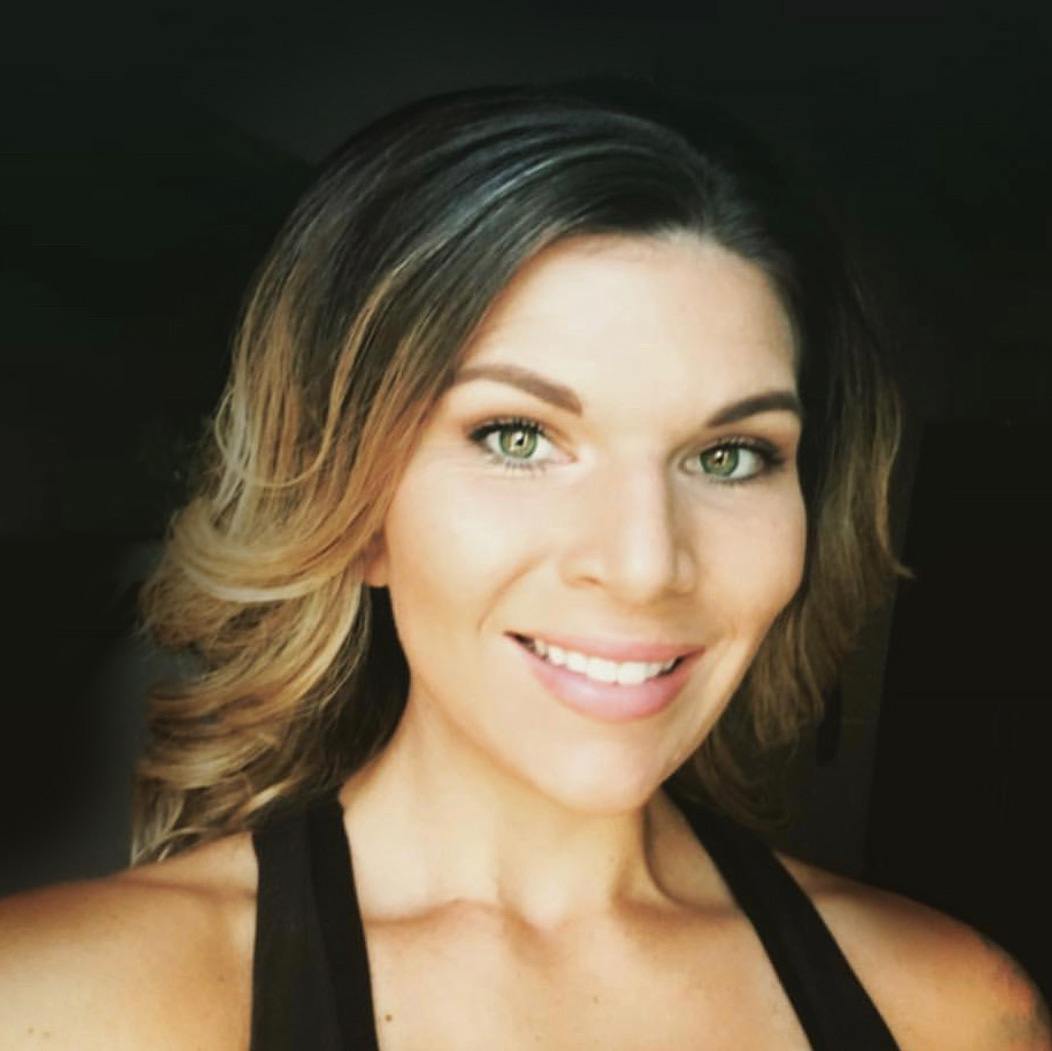
Allie Brazas
The first time Allie Brazas was sexually assaulted, she was seventeen.
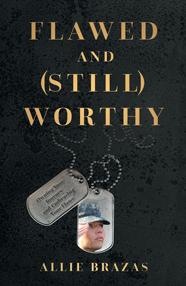
📚 Books by Allie Brazas
Transcript
[00:00:27] NVN: At only 30 years old, Allie Brazas has certainly packed enough life in to write a book about it. In her new book, Flawed and Still Worthy, Allie shares her journey from joining the Navy on a whim at age 19, to the sexual abuse she survived at the hands of her superior, to how she fought that abuse despite the system working against her. Allie also shares her story about finding love at a young age and then losing it shortly thereafter and her ensuing journey through grief and healing. She talks about the pressure she felt to present a perfect façade, even in the midst of all of this. In this incredible and inspiring interview, Allie talks about her journey so far, why it was so important to put it down in book form, and what she has learned and hopes to share in the process. Allie, let's start by giving listeners an idea of your background and what brought you into the Navy in the first place.
[00:01:24] Allie Brazas: Yes. So, my background is I graduated high school super early. I was 17 at the time. I went from high school into to college, and I got my medical assisting certificate. After that, I was working for a doctor before I could even sign my own legal documents. I mean, I was 17. So, that was fun. Then one day, I was just driving home and I felt kind of like nostalgic, maybe stuck. I was 19. I’d been doing medical assisting for 2 years. My friends were graduated by this time, and everyone’s starting at universities and choosing their career paths. I felt like medical assisting was great while it was great, but I needed to do more with my life, like I was selling myself short. I was literally just on my way home from work one day, and I passed a recruiting station, and I just said, “wow! What a great idea. I think I’m just going to pull in there and go check that out.” So, I literally made a left-hand turn right into the parking lot, and I walked right into the Navy recruiting station. Of course, they loved me, because I was clueless and I did no homework. I was like, “yeah, I want to join. I love boats. I love to swim. I was a lifeguard in my younger years, so this looks like a great fit for me.” I signed my contract that very day.
[00:03:00] NVN: The symbolism does not get much richer than literally taking a left turn into a Navy parking lot, because you saw a sign.
[00:03:09] Allie Brazas: Yeah. I mean, everyone always has these grand stories like, “my grandfather served, and I felt a call to serve, because it runs in my family.” Mine is like, “you know, I saw it and I went for it all in the same day.”
[00:03:27] NVN: The other thing I love about that story is hindsight is such an interesting thing. That at 19, which is so young and you had done so much by that point, you were feeling like you were behind the curve and had to take some kind of action.
[00:03:41] Allie Brazas: Yeah. That was actually a common theme in my life and in my book actually, is just this constant need to strive for more. Nothing ever really felt enough in my life. The second I’d stop and catch my breath, I felt like I needed to keep going, and what's the next thing, and what’s the next thing. It was kind of a perpetual cycle for me for really the majority of my life. So, yeah. I mean, it just kind of went right along with where I was at.
[00:04:11] NVN: Do you have any idea why that is or where that came from, or if it's just you?
[00:04:16] Allie Brazas: Yeah. I am the daughter of parents who grew up in the Midwest. They were born and raised in Iowa, in a small, small little town. So, we are just by blood like blue-collared workers, hard workers. We just strive to continuously be the best versions of ourselves. And so, I think it’s just something that was kind of ingrained in me from a small child through adulthood.
[00:04:43] NVN: As an aside, I'm so excited every time I stumble into someone from Iowa, because I think it's one of the most beautiful states in America, and people are completely unaware of that. It’s such a cool place.
[00:04:57] Allie Brazas: Yeah. It’s absolutely beautiful there. That’s just – Well, I always joke when I take my friends back home. I always tell them, “if you stay awake for the first 10 minutes in Iowa, you’ve seen the whole thing, because it’s just cornfields after cornfields.” But it is. It’s truly the most beautiful place that I’ve ever been in to this day, and I’ve been a couple places. So, yeah, I love it.
[00:05:20] NVN: Yeah. You have now. There's something very majestic about those cornfields.
[00:05:25] Allie Brazas: Yeah, and the way the sun sets on them. Yeah, it’s pretty incredible.
[00:05:31] NVN: Totally. Okay. So, after you made that spur of the moment decision, you took the left turn and signed up for the Navy. Did you have any second doubts about that, or were you fully on board and this was the direction you are going in now?
[00:05:46] Allie Brazas: No. I was fully on board. That’s kind of my MO. Once I decide to do something, it’s like a balls to the wall kind of attitude that you’ll get from me. And so, yeah, as soon as I made the decision, there was no looking back. There was no second guessing myself. It was just, “this is my path now, and I’m going to run it into the ground until I succeed.” And that’s what I did.
[00:06:09] NVN: Amazing! So, let's talk about what that experience was like. I’m particularly interested in your perspective, because I'm guessing you went into the Navy without a lot of expectations. You didn't have much time to think about it, it would appear.
[00:06:25] Allie Brazas: You’re absolutely right. I did not have time to really think about it. And because of that, I didn’t have much time to have a big expectation I guess you can say. And in that sense, I think that I had an upper hand of other people who were in my same boot camp class, because everyone kind of arrived already terrified and had already looked at all the boot camp videos of the screaming and yelling and had read the horror stories. And so, I didn't really have an expectation. So, I went in with an open mind and just kind of wherever this is going to take me, it’s going to take me.
[00:07:03] NVN: So, what is boot camp like from a first-hand perspective? Especially as a woman, what is it like?
[00:07:09] Allie Brazas: Yeah, so, boot camp is difficult as in it’s a mind game. So, there’s a lot of screaming, and there’s a lot of yelling, and there’s a lot of that going on. But I kind of had this mindset that like this is part of the game, like they’re breaking us down to build us up. So, once you figure that out, you figure out that this is part of it. It’s a mind game. They’re literally playing with you mentally. It makes it all so much easier to handle and to deal with. Instead of taking it personally, you just know it’s part of the process. As women, I think it’s even more – I think boot camp is more intimidating as a woman definitely, because we’re kind of held to like a higher expectation. Because they know, once we go out into the fleet with the rest of our brothers and sisters in arms and we’re serving and we’re out there doing our jobs, we’re going to have problems that our male counterparts might not experience as often as we will. For instance, there is sexual harassment. There is favoritism in the workplace. You’re a good-looking female that you might get this job or that job or stand these good watches or those good watches, and you’re definitely objectified. So, had they not been harder on us in boot camp, I think we would have been even worse off going out into the fleet than if they hadn’t been.
[00:08:39] NVN: So, this is interesting. Please correct me if I'm wrong, but it sounds to me like what you're saying is that there is a bias. But it's actually a bias that’s there for a reason and arguably necessary, even if the reasons why it's necessary should not exist in an optimal world obviously.
[00:09:01] Allie Brazas: Yes, exactly that. It’s an unspoken thing. It’s not like you go into boot camp, and they’re like, “hey! You’re a female. We’re going to be way harder on you. Get prepared.” It’s more of something that’s unspoken that happens and that you don’t understand why it’s happening until you get out into the fleet, and they’re like, “oh! That’s why my instructor told me this story. That’s why he made me do pushups, because I flirted with that guy. That’s why.” You start piecing these things together as you serve and continue to serve. You start kind of passing that down to the people below you, the females below you. You start laying foundations like that and start kind of getting in front of that a little bit. It’s sad that that’s the way it is, but that’s just the reality.
[00:09:49] NVN: What was the ratio of women versus men in your experience?
[00:09:54] Allie Brazas: So, in boot camp, there was about the same. A division kind of has about the same amount of males to females. So, boot camp, you really didn’t see a big, I guess, difference. There wasn’t a huge contrast there. Then you kind of go out into the Navy, and you’re like, “wow!” It kind of hits you like, “wow! We are definitely outnumbered here.” So, there’s a huge difference out in the fleet, but you have enough people on a ship to where you still feel like you have a team of women serving with you. It’s not like you feel like you’re 1 of a million, but there is definitely a difference.
[00:10:36] NVN: Okay. I am about to show my ignorance here, which is extreme, but can you explain to me how the filtering system works in such a way that the women are pretty equal in boot camp, but then that shifts once you actually move into the Navy.
[00:10:52] Allie Brazas: Yes. So, I’m not really too sure how they structure a kind of boot camp and putting together your class, so to say, that you go through boot camp with. I’m not sure kind of how they do that. So, I’m not sure how to answer that. My assumption would be that they wait to have enough females to fill a class, and then they put a male and female kind of group together to form a class. I don’t know it they have classes that are just males in boot camp. I’m not really sure, just because when you’re in boot camp, you really can find the group that you’re in boot camp with.
[00:11:32] NVN: Got it.
[00:11:33] Allie Brazas: So, I’m not sure what other groups looked like if that makes sense at all.
[00:11:37] NVN: Totally, yeah. And I’m not trying to make you dig down into the minutiae. I just, again from a very uninformed standpoint, would have assumed that the number of women entering in the first place was much lower. So, I was surprised to hear that it was pretty equaled out in boot camp.
[00:11:54] Allie Brazas: Yeah. I was surprised myself. I mean, I didn’t expect going to boot camp that there would be so many women that I would be going through boot camp with. So that took me by surprise. Just because you do hear it all the time that it is male-dominated, which it is, but no. I think part of it too is that females, once you get out into the fleet, you get pregnant, right? A lot of females get pregnant, and they choose to administratively separate. So, then they separate from the service. So, you have kind of these other multiples going on with females that you don’t have with males. So that’s kind of – That you’re filtering out kind of as you go as well where –
[00:12:41] NVN: That makes sense.
[00:12:42] Allie Brazas: If that makes sense. Yeah.
[00:12:43] NVN: Yeah. Okay. Gotcha. All right. So, you make it through boot camp. What happens from there? Also, can you give me an idea of what timeframe we’re looking at, so I sort of understand what's happening politically at this time also?
[00:12:57] Allie Brazas: Yes. Let’s see here. I went to boot camp in 2009. It was January of 2009. Boot camp is 8 weeks. So that’s kind of the time period of that. And then from there, I complete school and I go out into the fleet. So that’s kind of what happens next is I get my duty station, which is in Bremerton, Washington. I get assigned to a ship. It’s called the USS Emory S. Land. It was a submarine tender. So, our main job was to go out and supply submarines with fuel, with supplies, everything that they need while we’re out on deployment. So, that’s kind of was the next step from boot camp.
[00:13:41] NVN: And did you enjoy that?
[00:13:43] Allie Brazas: Yeah. I went there with big hopes and dreams. I thought I would be headed to Bremerton, Washington. Then in my head I was like, “and then we just like leave for deployment, and I’m going to be in the middle of the ocean, and it’s going to be this like incredible experience, and it’s going to happen fast, and I better prepare.” Then I got there, and my ship was actually dry docked. So, it’s literally on stilts, like no water at all. It was dry docked, because the hole needed repairing. So, there was no deploying anytime soon.
[00:14:17] NVN: I hope not.
[00:14:18] Allie Brazas: Yeah.
[00:14:19] NVN: Not on that boat, at least.
[00:14:21] Allie Brazas: Yes. So that was quite a shock. But outside of that, I did enjoy my time on that ship. There was a lot of growth that happened on that ship. There was a lot of experiences that happened that I wasn't prepared for. I had a lot of growing into the Navy to do when I was on that ship, and it showed, if that makes sense.
[00:14:21] NVN: Absolutely. I mean, I’m trying to imagine myself at that age and that position, and it would be a disaster. So, lots of respect to you. Looking back, what do you think was your biggest take away from that time after boot camp and in the early part of your career with the Navy?
[00:15:06] Allie Brazas: My biggest take away from that time in my life, like that period of time on that ship would be to never sell yourself short, and that’s what I did over and over and over and over again on that ship is I played little with myself. In doing so, I protected myself from even attempting things that would provide growth. So instead, I just played small and played cutesy and just kind of, “oh, no. I don’t know what that is.” I played dumb, and I missed a lot of opportunities because of it.
[00:15:41] NVN: Was there any moment that snapped you out of that or that sort of gave you the motivation to reach beyond that?
[00:15:50] Allie Brazas: Yeah. What made me really snap out of that was the moment that I got pregnant with my daughter while I was on that ship.
[00:15:58] NVN: Wow! That was an immediate shift, and this isn’t funny anymore. It’s not cute. It’s not getting you anywhere. It’s pathetic. Now, you’re pregnant, and if you want this career to work, you’re going to have to start to step up to the point. That was kind of the turning point in my career was the moment I found out I was pregnant. And how old were you at that point?
[00:16:26] Allie Brazas: So, I was 20 years old, very young.
[00:16:29] NVN: Wow! 20 years old in the Navy. Your family’s in Iowa?
[00:16:29] Allie Brazas: They were in Arizona. So, we’d moved from Arizona when I was younger. From Iowa to Arizona. So, they were in Arizona, and I was in Washington, so still very far away from each other.
[00:16:48] NVN: That’s so much for any age really. I'm assuming that you stayed in the Navy as you were pregnant and had your daughter. Is that right?
[00:16:58] Allie Brazas: Yeah. That’s absolutely correct. In fact, you have to stay on the ship. When you get pregnant on a ship, you have to stay on it until you’re 20 weeks pregnant. So, by the time I was pregnant, our ship was now in the water. So, it was rocking, and it was all the things, and I had to stand watch, just like every other sailor. So, I’d have a watch that went overnight, and I was expected to stay awake and perform. You’re treated like any other sailor while you’re pregnant and on the ship for that entire 20 weeks. Then you’re removed from the ship and put on shore duty. It’s no longer safe to keep you on board. So, yeah. So, I stayed in the Navy, I did my 20 weeks on the ship, and then I reported to my duty station shore side, which ended up still being in Bremerton, Washington. It was actually the base that our ship was attached to. So, I reported there.
[00:17:56] NVN: Okay. I just want to interject here for any men who are listening or any women who are not mothers. That is so hardcore to spend, especially the nauseating first trimester months, on a rocking ship. I can't even begin to imagine that. That's like defying the laws of biology right there.
[00:18:20] Allie Brazas: Yeah. Yeah, it was interesting. It was difficult, but the cool thing about it was that I was on board, and they call it a berthing where you sleep at night on a ship. I was so lucky that I was in the berthing with all those other females for the first 20 weeks and had so much support and love that I might have missed out on had I not spent those 20 weeks on there. So, I definitely – I wouldn’t recommend it. But if it happens, the extra love was a plus.
[00:18:54] NVN: That is an upside definitely. So, was the father around or were you doing this alone?
[00:19:00] Allie Brazas: Yes. So, he was attached to a ship in Everett, Washington. So, it was quite a distance from me, and he was on deployment with his ship. So, yeah, it was me by myself. Yeah, just me.
[00:19:18] NVN: Wow! Talk to me about becoming a mother at that point in your life.
[00:19:23] Allie Brazas: So, having Addison – My daughter’s name is Addison. I ended up having a baby girl. Her name is Addison. Becoming a mother was the biggest blessing that ever happened to me in my entire life, to this day. She changed my life and the entire course of my life for the better. I was young. I was 21 when I ended up pushing her out. So, I was very young, but it makes you grow up quick, and I needed that. So, it was good.
[00:19:23] NVN: All right. So then fast-forwarding a little bit from that point, I believe when you were three years into the Navy, you experienced sexual abuse at the hands of your commander. Is that correct? Do I have the timeline right there?
[00:20:14] Allie Brazas: Yes. So, it would’ve been 2 years. Actually, it was like a year and a half into the Navy. It was when the abuse started, and it was abuse by my acting command master chief. So that was –
[00:20:28] NVN: Sorry. I’m still a little confused. Was this after your daughter was born or before she was born?
[00:20:34] Allie Brazas: The abuse started when I reported to shore duty, so this was after I was 20 weeks pregnant. I started working for the command master chief after I reported, and he was amazing and incredible. His name is Master Chief Fahrney. I learned a lot from him. He really helped my career and helped me grow as a person. Then when I was about, I would probably say 7 months pregnant, Master Chief Fahrney got an opportunity to further his career in Japan. So, we had kind of a gap in the billet, and the billet is like the job. We had a gap in the job that Master Chief Fahrney filled. So, for that gap, we put in an acting command master chief who was actually a senior chief. This senior chief took Master Chief Fahrney's role, and that is when the abuse started. So, I was about 7 months pregnant.
[00:21:37] NVN: Wow! 00:21:38] AB: Yeah. So, how did you deal with that? What does that look like when that's happening in the Navy? Did you speak up? Did you have resources?
[00:21:48] Allie Brazas: Yes, I did. I did speak up. So, what happened was it kind of started off with just physical abuse. So, it would be he would come in the office and come up to me and start play, hitting my arm. Then all of a sudden, he’d take my arm and like twist it behind my back and bend my wrist as if to like try and break it. Then before I knew it, I’d be on the floor and I’d be like, “I tap out! I tap out!” He would just get off at like seeing me pretty much begging for mercy like, “please, stop. This hurts.” So, it kind of started off at that, and then it kind of moved into things of a sexual nature. So, from just pure physical abuse to sexual abuse. And when it made that shift, I was scared out of my mind, and I reported it to a person who was like 2 pay grades above me. So, she was an E-5, and she was a friend of mine, and she worked in my command. One day, I just finally went down there. I was like, “hey, I have to tell you what’s going on. I am getting abused, and this is what’s happening.” I’ll never forget. She looked me dead in the eye and was like, “Allie, I am so sorry this is happening, but welcome to being a woman in the Navy. This is what happens, and I wish that I could do something to stop it. But this happens, and you’re going to have to learn to deal with it, and it’s only a 6-month-gapped billet. Before we know it, someone else is going to be in here to fill that job, and so you just have to hang in there,” which is like my pep talk. And so, then I stuck with that answer for a while, and the abuse continued to happen. The sexual abuse just kind of kept getting turned up a notch and turned up a notch and turned up a notch. And so, finally, I reported it again. I decided to report it to a chief this time, which is an E-7, and chiefs are like leaders. They are pictured as a manager, but even above that. I guess like the supervisor over managers. And so, I reported it to him, and he told me he would talk to him for me. That didn’t go over well. Of course, I just would up being – Now, I’m in an office with a pissed off senior chief, so that didn’t help. Then finally, one day, there was a huge kind of sexual incident that hadn’t happened before. It was like the highest the volume had ever been turned up, and I kind of separated myself to get some space from him. I was downstairs, and I was just kind of – I ran into another E-5, and I just kind of started rambling off things that were going on up there and just rambling off my frustrations. “And, I just can’t believe that this behavior is accepted in the Navy and kind of going on and on.” I’d become so accustomed to this abuse that as I am rambling, I’m not even realizing or grasping the gravity of what I’m saying, because it just had become so routine. And I was so lucky that this E-5 took what I said, and he reported it to a department head and to an admin, the admin chief of the base. They were kind enough to actually believe me and call in NCIS and launch a formal investigation into it. That’s kind of how I got saved from that.
[00:25:21] NVN: Wow!
[00:25:22] Allie Brazas: Yeah, I got very lucky, and this is typical in the Navy. This isn’t something where the ball got dropped. In my case, it just wasn’t taken as seriously as it should have. No, this is the normal of how sexual assaults are handled in the Navy and in the military. It’s very sad. It’s very, very sad.
[00:25:42] NVN: Do you have any idea of whether or not things have evolved beyond this, or if this is still status quo?
[00:25:50] Allie Brazas: Yeah. It’s funny that you asked that. It was probably about a year ago. I had one of my sisters in arms contact me who was still in the Navy, and she was asking me how I reported my situation and how I actually got heard, because she was going through something similar, and she couldn’t get anyone to listen to her or anyone to take her seriously. It was the same exact thing, just the cycle repeating itself. From what I have seen, I do not think that this has gotten better. I do not think that there’s been progress on this front, and I do not think that the Navy or the military takes sexual assaults serious.
[00:26:34] NVN: I am curious about how this affected you as a woman and also how this impacted you as a mother, especially to a daughter.
[00:26:44] Allie Brazas: As a woman, it impacted me greatly. I had PTSD from it. I was diagnosed PTSD after this occurred and I got help. So, I was having anxiety attacks at work in the military after. I would go in a closet with a brown paper bag, and I’d have to breathe into it to like calm myself down, because male leadership, men in the military would just – It was like a hot button for me. They would come in, and they would be like the most innocent thing that they needed to talk to me about or they needed to ask me to do something. And it would just send me to a full-blown panic attack. It impacted me sexually in my sexual life as far as sex goes and all of that. You have these flashbacks, and being touched in a certain way reminds you of that. So, you can’t be touched like that. It’s a constant balance and struggle with dealing with how that affected you and pushing yourself to get better, so you’re not holding yourself back. So, you’re kind of playing with the fire a little bit to make progress, but then also not pushing yourself too much to where you’re fully triggered and having an episode. So that’s how it affected me. As far as being a mother, I’m extremely protective of my daughter. She’ll be 9 in October, and she’s never had a sleepover, ever. She’s never been to like her friend’s house at school. They have to come here. I'm just very – which I think all mothers are protective, but I have a fear of something happening to her because of what I went through, and I try to do what I can to make sure it doesn't happen.
[00:28:25] NVN: I get that. It's so easy to judge parents before you have a kid, and I remember thinking, “oh, it’s so weird how parents that they won't let their kids go to friends’ houses.” Now that I have a 2-year-old, I’m like, “yeah, no way.” Like, “there’s no way that’s going to happen.” Especially coming from your situation, you do start to think about those things.
[00:28:49] Allie Brazas: Yeah, absolutely.
[00:28:51] NVN: Did you ever consider leaving the Navy after that point?
[00:28:56] Allie Brazas: No, I didn’t. I didn’t because that whole situation really fueled my career, actually. What happened was not only did I make sure I got heard and I reported it to NCIS, but I followed through and went – I took my perpetrator to court-martial, which is just a military court. But it has all the same jurisdictions. I mean, if you go to court in the military, the charges don’t stand in the civilian world. So, I took him to court-martial. He was found guilty of sexual assault and several other things. He, to this day, has a register as a sex offender, and he was dishonorably discharged from the Navy after 22 years of service. So, kind of seeing that through to the end and seeing the amount of people that helped get justice because I followed it through fueled my career, because there were 19 – I think it was 19. Don’t quote me on that, but I believe there was 19 other females that came forward from his [00:30:03] previous duty stations that he had done the either the same things too or similar things too. Those women didn’t get justice until my court-martial. They testified and all of that, so that really drove me to stay in and fight.
[00:30:21] NVN: You are a hero. I have so much respect for you, especially because it's required you to buck such a systematic thing. That is incredible, absolutely incredible.
[00:30:33] Allie Brazas: Thank you. Yeah. Those women were my heroes for sure. I mean, to come out of the woodworks after that long and say, “no, I am going to testify, and I’m going to relive this even though it’s been 6, 7, 10 years. I’m going to do this.” I mean, that took strength.
[00:30:49] NVN: Yeah. Okay. So, you go through all of this, and then you meet someone.
[00:30:56] Allie Brazas: Yeah. Actually, I met Sean while the court-martial was going on for the sexual assault case. So, yes. So, I just ended up one day just coming in to work as usual. I’d always hit the gym and then head into work in the mornings. I was just on my way into my building, and this incredible guy holds the door open for me, and it was just – I’ll never forget. He held the door open. I’m walking up the stairs to go up to my office in my building, and I just kept feeling like these eyes on me like somebody’s watching me. I think we’ve all had that feeling like somebody is just really watching you, kind of creepy. I just will never forget like turning around, and the guy that held open the door and just watching me walk up these stairs. I’m just like, “can I help you?” Just kind of snippy like, “can I help you?” He was just like, “yeah. Um, can you point me in the direction of the admin office,” which was like literally just left. It was like, “if you just looked and glanced to the left,” he would have seen it. I’m like, “yeah, it’s to your left.” He asked my really good friend, Amy Abbott, who the girl upstairs was, and Amy Abbott is like, “oh! That’s actually my best friend, Allie.” And it was just kind of history from there. We swapped numbers and yeah.
[00:32:19] NVN: So, he wasn't a creeper after all.
[00:32:22] Allie Brazas: No. He turned out not to be a creeper. Thank goodness.
[00:32:29] NVN: So, let’s explain to listeners where your relationship went from there.
[00:32:29] Allie Brazas: Yes. So, I gave him the opportunity to take me on a date. And by this time, I had had my daughter. What I didn’t explain before with that is that the Naval hospital that delivered her ended up making an error, and I had to get a complete hysterectomy, so I don’t have like ovaries, uterus, fallopian – I mean, all of it removed. So, by this time, I had that hysterectomy when I met Sean, so I couldn’t have kids. No more babies ever. So, we went on our first date, and I remember telling Sean, “hey! I just want to be straightforward. I have had a hysterectomy. So, if that’s a deal breaker, please let me know now. I just don’t want to get months down the road and then have this conversation. Have it be a deal breaker.” He’s like, “no! Absolutely not. That is not a deal breaker to me. I love you regardless of that. I love you as a friend, and I hope to further this one day.” I was like, “okay. Cool. Whatever.” And so, it ended up being a month later, we were on another date, and things were going well, and I just felt so connected to him. We had this chemistry that was just so natural. It’s like I knew him in another life. I mean, we just – Our connection was electric. And so, we were connecting, and I told him. I said, “I just can’t thank you enough for being okay with me not being able to have kids at such a young age.” I’m 21. He was 24. So, it was like, “you’re 24 years old. You know, you should be able to have babies, and the fact that you’re kind of putting it all on the line for me, I can’t thank you enough.” He’s like, “what? What?” I was like, “what do you mean what? I told you I had a hysterectomy on our first date.” He’s like, “oh, I didn’t know what that meant. I thought, you know. I knew you were really nervous to talk about it, but I had no idea what that meant.” I’m like, “yeah, I can’t have kids.” So, we took a week-long break. It was like – He’s like, “I got to figure this out.” I’m like, “yeah, you do. You should’ve figured this out.” So, we took a week-long break, the hardest week of my life. Finally, as you’ll read in the story, I kind of had to give him an ultimatum like, “either you’re going to be with me or you’re not going to be with me. But I’m not going to halfway in, halfway out.” So, he’s like, “nope. Let’s do it.” So, we ended up dating, and then he proposed to me on Valentine’s day. It’s Valentine’s day of 2012, and I said yes. And he was set to deploy May 1st of 2012, so we decided to do a courthouse wedding and then do a large wedding when he got back from Afghanistan. So, we did a small courthouse wedding with just a few of our friends. We didn’t tell anybody about it. We didn’t tell our family. We didn’t tell anyone from back home, just because we were really doing it for the sole purpose of if something should happen. That was always his big thing. If something should happen to me over there, us being fiancés doesn’t do anything for you. I have to know that you’re going to be taken care of if something happens.
[00:35:52] NVN: What was your take on that? Did you feel similarly or where were you coming from?
[00:35:57] Allie Brazas: Yeah. At first, I was like, “I don't think we should do that.” I love my parents so much, and I have such a great respect them. And so, the thought of going behind their back and getting married just left a pit in my stomach. But once we sat down and we really kind of talked about it, I mean, this was a conversation we had to rehash several times. Once that we just got down to the meat and potatoes of our why, our why was so much bigger than I think anyone could’ve really understood at that time. So, the fact that he was so adamant about taking care of Addie and I if something should happen to him, it was just kind of something to where it was like, “you know what? You’re right. If this is what’s going to make you feel okay to go over there, to know that like we have this piece of paper signed by a judge, then let’s do it.” I know I’m going to spend the rest - Me spending the rest of my life with him was never a question. It was just going behind our parents’ backs. It just felt so wrong, but I understood his reasoning. I think had we not done that; he would have had an even harder time going over there to Afghanistan. So, I’d glad I did it. I’m glad we did do it. And obviously, I’m more grateful than ever, because we didn’t know what was going to happen or we didn’t what actually happened was going to happen.
[00:37:28] NVN: So, what your feeling when he went to Afghanistan? I mean, I’m assuming that being in the military, this is part of your reality is that people are deployed, and they come and go. Did you have any thoughts about him leaving, any real fears or concerns?
[00:37:47] Allie Brazas: Yes. So, in the Navy, it’s really common to deploy on ships. It’s really common to do that. As far as being boots on ground in a war zone, that’s kind of special. We send what’s called the Individual augmentees, which are we don’t deploy with a unit to Afghanistan for boots on ground. We send like 1 person to go fill a job that’s needed over there. So, we basically attach to like an army unit that’s over there or a marine unit. So, Sean being a K9 handler and going to Afghanistan, I was concerned. But you never think it’s going to happen to you. So, I was concerned, and he was very concerned. He’s like – He would talk late at night, “if I don’t make it back. If I –” He’d start talking like, “If I don’t make it back,” and I’d be like – I wouldn’t want him talk about it. I’m like, “no, we’re not going to go there. You’re going to make it back,” There was – The day I said goodbye to him, there wasn’t a single doubt in my mind that like I’d see him again. I knew I’d see him again. I knew he’d come home. And so, I never once thought when he left that he wouldn’t make it back.
[00:38:55] NVN: Okay. So, this is very well detailed in your book, and I want to give listeners a chance to discover that through the book. But let's give sort of an overview of what happened when you went into work the next day.
[00:39:09] Allie Brazas: Yeah. For a brig overview, I mean, I think what’s important to note is that like May 30th, the day that he was killed, it just was like any other day. I mean, it was – I got up. I ran errands. I talked to my command. I did what I was supposed to be doing. Then I reported in for work. I mean, it’s just like anybody else getting up and going into their place of work. I mean, it was just so normal and mundane and just – So, yeah, I went into work and reported for duty. As I entered in my office, I just kind of noticed the ambiance was a big weird. Just my coworker had tears in her eyes, which was weird. My command master chief was pacing his doorway, which was weird. Everything just kind of seemed off. So, I found out briefly after that that something was off, that my husband was killed in Afghanistan.
[00:40:09] NVN: When you – I know that there may not be an answer for this question, but I’m curious about just sort of your thoughts over time. When you look back on Sean and how concerned he was about taking care of you and Addison and how adamant he was that you get married, do you think on some level and some part of him, he knew? Or do you think that's just the nature of being boots on ground in a war zone?
[00:40:37] Allie Brazas: Yeah. It’s funny you mentioned that, because that’s something like no one’s ever asked me before. But, yeah, I absolutely – Hindsight is always 20/20. But I do believe he knew. I feel like I think he had a feeling and a gut feeling, and it just ended up being right, unfortunately. So, yes, I do believe he knew.
[00:41:00] NVN: So, I don't even know how you would put words to this. Although you've written a book about it, so I assume that you can. But tell me what it's like to be a 24-year-old widow.
[00:41:13] Allie Brazas: Being 24 years old and being a widow, there’s no – It is really hard to put it into words, but it was like – I think what’s different about being 24 and a widow versus being 50 years, 60 as a widow is there’s this part of yourself that you haven't figured out yet. So, you don’t know how to navigate deep waters like this, and you’re kind of trying to figure it out as you do it. And then you have these standards that like being so young that just comes with being young, meaning you want to look – You look a certain way. You act a certain way. You want to seem like you’re pulled together. You want to seem like you have it all. You want to see strong. You want to seem graceful. So, being 24 years old and just losing my husband, it was like, “how do I navigate such deep waters that have gone unchartered in my life and then the lives of everyone I knew? How do I navigate that while still keeping up appearances and still keeping up this idea that I need to so this perfectly?” At 24 years old, perfection is still very real. Especially being a woman in today’s society, a young woman, there’s this need to do things perfectly. So, I think being a 24-year-old, that’s like unique to that. By 50, you figured it out. There’s no way to perfectly be a widow. You can’t do that perfectly. But at 24, you’re thinking there's a way. So, I think that that was unique to being a 24 and a widow.
[00:42:57] NVN: God, that is so true. I mean, I think I've given up on perfection so thoroughly that I've sort of forgotten about that phase. But you're absolutely right. That is a real thing when you're that age.
[00:43:11] Allie Brazas: Yeah. Of course, it doesn’t help that you're trying to keep this act. All the while doing it, everyone is complimenting it. They’re like, “God, you’re handling this so gracefully. God, you – How do you stay so strong?” You just want to scream like, “I’m not. I’m like literally dying.” But you keep going. So, yeah, it was frustrating. It was a very hard time in my life. It was the greatest pain I’ve ever felt in my whole life, and then I hope to never feel it again. But to answer your question, that was what was unique to the age.
[00:43:44] NVN: Those are exactly the kinds of comments about how well you're handling it, that kind of thing that seemed they’re so well-intentioned, but really, really are not helpful, because then it becomes almost like a bar you’ve set for yourself that you have to maintain.
[00:44:02] Allie Brazas: You have to – That’s exactly it, and I talk about that in the book as that bar and just the constant struggle to maintain that. What you really want to hear is, “Allie, this sucks. This is so fucking stupid. I can’t believe he died. What can I do? This is terrible.” You want to hear that. You want to hear, “You don’t always have to be strong. I’m here if you want to –” That’s what you want to hear. But people say things. When they don’t know what to say, they say things that they probably shouldn’t say and I’m guilty of it, and everyone’s guilty of it.
[00:44:36] NVN: Right. So how – What did your healing from that look like? Have you healed from it?
[00:44:44] Allie Brazas: So, it looked like a bunch of hairpin turns, tons of walking in circles, tons of, you know. Healing from that was not a straight path, and it took me a really long time to even be able to say like, “my husband’s dead.” For me, it was always just like. “oh, he's still in Afghanistan.” You can compartmentalize. You can say like, “oh! He’s there, and he’s not here.” That’s what’s kind of what’s going on. So, you tell yourself these lies to make it through the day. “Oh! He’s going to come home.” I did that for a long time. Then from there, it was dealing with the fact that he is dead and that raw feeling of just complete shock. Then it was just a ton of anger for a really long time. I was so angry that he didn’t make it. I wasn’t mad at him. I was angry at the situation, and that anger came out in a million different ways until finally I – Because this whole time, I’m going through all these emotions. I’m still trying to keep up this façade, this image of, “I’m doing fine. Everything’s fine. I’m perfect. Everything’s okay.” Then it wasn’t until I finally got vulnerable and I threw up my white flag and I’m like, “you know what? I’m not fine. I’m actually not okay, and I miss my husband. I want him here. I’m not dealing okay.” Once I kind of got vulnerable and sat in the pain instead of run from it, that’s when the healing started. I think the healing continues to this day. I don’t think it’s something that I’ll ever be truly healed from. I think it’s something that I will just continue to move forward with.
[00:46:40] NVN: Was there a specific moment that allowed you to drop that façade of perfection and drop into vulnerability or was it a series of events that just over time kind of cracked away at the need to pretend like everything was okay?
[00:46:55] Allie Brazas: Yeah. There was a specific event. It’s in the book, and it’s – I had a major PTSD episode where I kind of – It was a huge breakdown. I literally ran down the golf course like screaming like screaming that someone was after me. I mean, it was pretty bad. That breakdown was what cracked it. It was just like, “okay. I’m not okay, and I have to get help.” I did, and I went to counseling. I still go to counseling. Three years later, I’m still going strong. That’s kind of what cracked it was just this major kind of breakdown that happened. And ever since, I started working on myself the very next day. To this day, I’m still a work in progress and I continue to work on myself. And I encourage everyone who’s going through hard times to do the same.
[00:47:49] NVN: Counseling is the best. Life is just so much better when there’s counseling in it.
[00:47:55] Allie Brazas: Yes, exactly. And I have like a really good one.
[00:48:00] NVN: Perfection.
[00:48:00] Allie Brazas: Yes.
[00:48:02] NVN: I'm curious how writing this book, did that play a role in any of this process? I mean, you’ve got obviously some huge events in your life that you were reliving to some degree in the extent of getting this all down on paper. What was that like for you?
[00:48:22] Allie Brazas: Writing this book, it’s funny. My birthday is March 22nd, and my 30th birthday was this last March of this year. So. on my 30th, I wrote a note in the sand, which was write a book. It’s always been a dream of mine to write a book, and so I wrote that in the sand, hoping that it’d come true within the next 10 years before I turned 40. So, I obviously have already fulfilled that.
[00:48:48] NVN: Right. Girl, you don’t mess around.
[00:48:53] Allie Brazas: I wanted so badly to write it, because I felt like I have made such strides from where I was, even 6 months ago, a year ago, 5 years ago, definitely from the days of the Navy, being on the ship and all that. So, I have kind of been reflecting on my birthday of that growth and just kind of how my life was really transformed and changed because of that growth. I wanted to finally like put it on paper. I come far enough to where I felt like I had enough to say to make a book. When I made that decision, I didn’t take into consideration what relieving all of this would feel like. And so, there were times where thoughts super just freeing, and it almost felt like I was like taking a brick off my shoulder by putting it down on paper. And then there were other times specifically till like Sean. Writing about Sean was like a dagger to the heart. I mean, I had to step away from writing for – It was a good week after I kind of put Sean’s story down on paper, just because a tragedy like that you never really get over. You just kind of learn to walk with it, and that kind of came back to me in a way when I kind of wrote that. So, yeah, some parts were great. Some parts were rough.
[00:50:19] NVN: You’re remarried now, which I know because your husband was serving as our tech guy at the top of this interview. What was it like writing about your former husband when you have a husband in your life now?
[00:50:33] Allie Brazas: So, my husband, his name is Christopher. He is incredible, and I would’ve never gotten remarried to somebody who wouldn’t be okay with Sean and the presence that he had in my life and continues to have in my life. And so, I am so lucky that Chris really took that on, and he knew that marrying me that Sean wasn’t going to go away and who’s going to be something that I still would need to talk about, something that I would want to still conversate about and I would want to talk to our daughter about and all of that. So, he has been completely on board from day 1 about Sean and has never shied away from that topic. So, me writing about him really it didn’t make a difference, because Sean is still a topic that we talk about around the dinner table. So, I’m fortunate in that sense.
[00:51:27] NVN: A good guy. I feel like that is one of the things about death that is not talked about very much, and I think it's largely because you don't understand it until you've lost someone who's close to you. But we think of it as this endpoint, specifically in terms of our relationships with people. But it’s not. Obviously, it shifts because their physical presence is gone. But in my experience, the relationship continues despite that.
[00:51:55] Allie Brazas: Yeah. It’s funny that you say that, because I got that a lot a couple years after Sean died, which was people just commenting on, “wow! I can’t believe you're still posting about Sean. I can’t believe Chris is okay with that. I know I wouldn’t be.” And for me, that always angers me when people say that because of that fact. People think that it is an endpoint. We don’t treat other events in life like that. We don’t say like, “we got married this one time, so that’s it. There’s no anniversary celebrations, because you already did that. So, you can’t celebrate again.” We don’t say that when people are celebrating their anniversaries. Death is such a huge life event, and it shouldn’t be something to where we’re just expected to just get over it, because there is no getting over death. It’s just learning. It’s like a dance. One day, you’re okay, and the next day you’re not. And you’re swaying back and forth between this line. It’s a dance that will continue the rest of my life, and his death is something that I walk hand in hand with every single day, and everyday just looks different.
[00:53:09] NVN: So well said. So, your story is obviously very unique, just like everyone's is. What is your hope that readers will take away from this in a more universal sense?
[00:53:23] Allie Brazas: So, I wrote Flawed and Still Worthy for two big reasons. I think the first one was to show people just how damaging the chase of perfection can be. I wanted people to see that to hopefully help break the cycle, somewhere. I hope it just manifests, even if it’s just 1 person that they’re like, “holy shit! I’ve been doing this as well. And wow! She’s so right. Perfection really doesn’t exist. What am I doing?” It’s so freeing to not have to chase perfection. It’s such a freeing thing. So, I wanted to put words on paper to kind of showcase that. And the second thing that I hope people get out of Flawed and Still Worthy is that painful times are going to happen to everybody. Your painful times might not look like mine, and mine might not look like yours. It could be better or worse on either side, but they’re going to happen. It’s really just wanting people to see like, “walk through that fire. Walk through the fire of that pain, because there’s life still left on the other side.” When Sean died, I thought my life was over, and I am so thankful that I didn't give up and I chose to walk through the fire over and over and over again until I finally made it on the other side. Had I not continued to do that and had I not gotten up and tried over and over again, I would have missed so much life here on the other side. I would have never gotten remarried. I never would see Addison’s milestones. I think suicide is a big thing. Mental health is a big thing. When painful things happen, sometimes people choose very permanent things on a temporary emotion, even if that emotion is the size of Texas, which losing the love of your life sure felt like that. But I’m glad I didn’t do that, because I’m here now and I’m able to be in this podcast with you and tell you all about it. So that was kind of the two big picture things that I wanted to put out to the – The reason why I wanted to put the book out to the world was for those two things.
[00:55:38] NVN: I’m so glad you did, Allie. Thank you for writing this and thank you for being so open and sharing so much in this podcast.
[00:55:46] Allie Brazas: Yeah. Thank you so much for having me. I so appreciate your time.
[00:55:50] NVN: My pleasure. Thanks for joining us for this episode of Author Hour. You can find Flawed and Still Worthy on Amazon. A transcript of this episode, as well as all of our previous episodes is available at authorhour.co. For more Author Hour, subscribe to this podcast on your favorite subscription service. Thanks for joining us. We’ll see you next time, same place, different author.
Want to Write Your Own Book?
Scribe has helped over 2,000 authors turn their expertise into published books.
Schedule a Free Consult