Andy Seth: Episode 377
Read the full transcript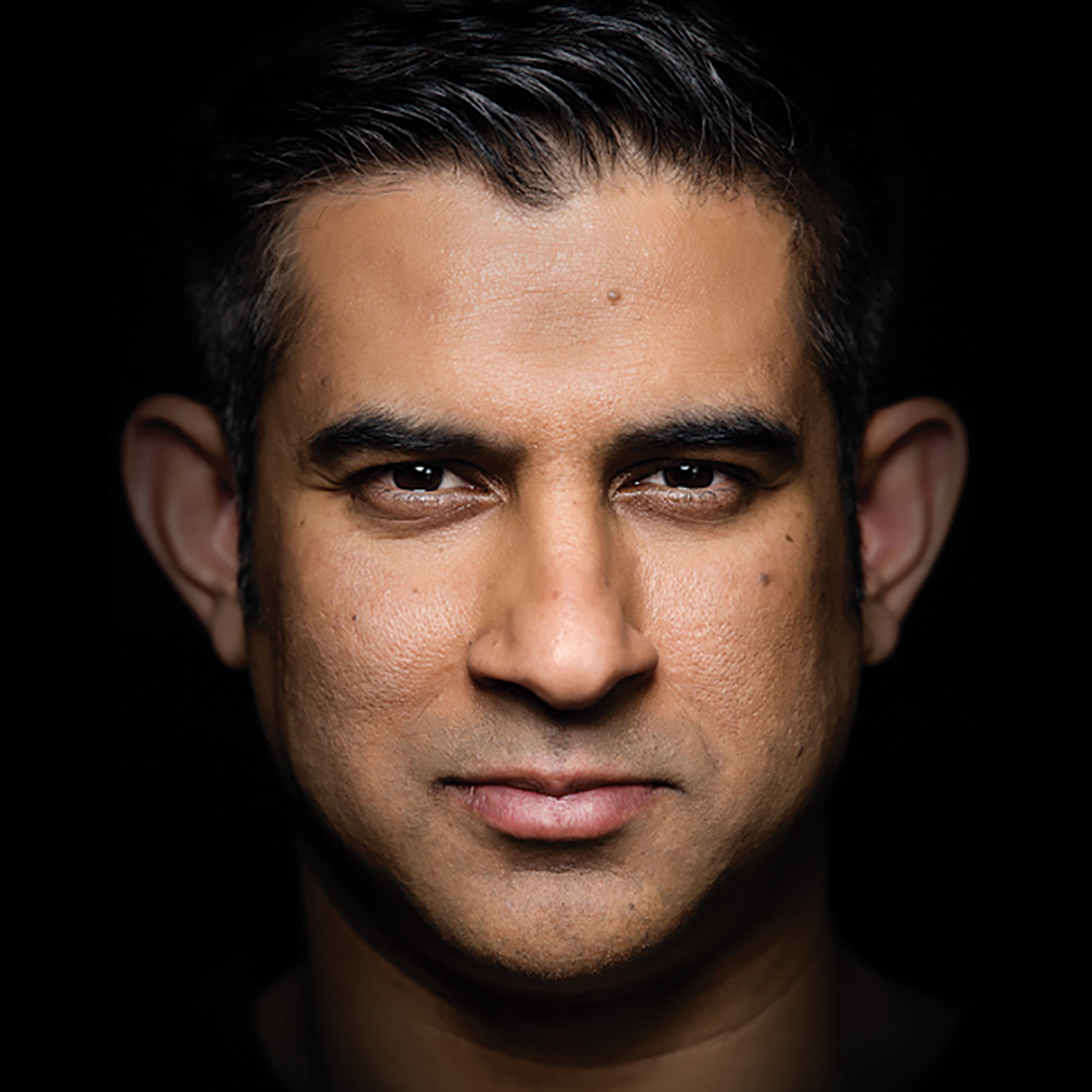
Andy Seth
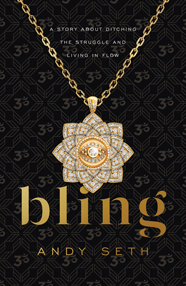
Andy Seth is an entrepreneur, musician, and the author of Bling: A Story About Ditching the Struggle and Living in Flow. He has bootstrapped and sold four businesses and is the founder and CEO of Apprentix. Told as a parable, Bling follows a rapper named A-Luv, a character inspired by Seth's own life, and uses hip-hop as a lens to show that inner peace and joy can coexist with creativity and ambition. Seth spent part of his childhood living in a Los Angeles motel before building his career as an entrepreneur.
📚 Books by Andy Seth
Transcript
[00:00:28] NVN: I wish I had a less generic way of describing author Andy Seth rather than cool and inspiring, but that's exactly what he is. As you’ll hear in this interview, Andy was originally planning on publishing a very different nonfiction book based on lead gen. But at the last minute in the midst of a 90 minute meditation, the parable that ultimately resulted in his new book Bling dropped into his head, and here we are. Despite all of the work Andy put into his previous book, he scrapped it and began not only writing this parable about a rapper named A-Luv who finds enlightenment, but he also created a soundtrack to go along with it, which you can find on any streaming service. In this fascinating interview, Andy talks about a ton of stuff ranging from his childhood, during which he lived in a hotel with his Indian immigrant parents, to how his first successful entrepreneurial effort, included dumpster diving, to his thoughts about how to find joy in life. But you really have to hear it all for yourself.
[00:01:33] NVM: Andy, let’s go ahead and start by giving listeners an idea of your background.
[00:01:38] Andy Seth: Well, my background is that I am the son of two Indian immigrants, and this plays a very important role as we start to understand what journey has unfolded for me. But my parents, sister and I, we lived in a Los Angeles motel from my age of 0 to 14. Even though I like to pretend like we owned it, we did not. We just lived in it. For me, there were two big things that really helped change my life and get out of that situation. One was education and the other was entrepreneurship. So as I became more educated, I earned full scholarships to this high school called Culver Military Academy in Indiana, and then I ended up full ride to Boston College. I was also starting different businesses. As I progressed and grew in what we would consider success in the typical way, that's really where I started to ask some bigger questions, and that's what led me down the path of going into what is now revealed in this book, but I call it a spiritual path.
[00:02:37] NVM: Okay. So I want to just pause for a second, and you mentioned as sort of an aside that something about letting people believe that you own the hotel. Does this mean that during your childhood there was a little bit of flubbing about your situation?
[00:02:51] Andy Seth: Oh! Hell yeah! I faked the funk all the way through. I mean, look, here’s how it went out. Where I grew up, it’s a really small town. It’s called Lomita. Growing up in a motel, it wasn’t like a place that I will bring friends over to or like have invites. I mean, sleepovers would be like, I would be afraid my dad would charge them rent. You know what I mean? If we would have sleepovers, it was just embarrassing thing. Make it sound a little bit better I was just tell people, if they asked, I would be like, “Oh, yeah. Yeah. We own it.” Honestly, it was embarrassing. I’ve been embarrassed about it pretty much like all the way through I’d say like into my early – Well, maybe my late 20s, early like 30s until somebody had told me, “Hey, you know that's a point of strength if you talk about it and people know, like they can relate to it,” and it just never hit me that way. It was just always this embarrassment. Yeah, I used to tell people that we owned it. But it fit the stereotype. An Indian motel owner? Okay. Cool. That was easy enough.
[00:03:49] NVM: So that sounds like a major turning point in your life, like going from feeling like this thing was something that you wanted to hide to seeing it as a point of strength. What did that feel like and how did it change things for you?
[00:04:01] Andy Seth: Yeah. The truth is like I warmed up pretty slowly to it. I wouldn't say that I looked at my background and was like, “Oh, yeah! That's definitely something that I feel strong about.” I think largely because I hadn't done the internal work to get there, and I definitely wasn't going to go present myself externally as though this was something that gave me a lot of strength. But what a friend of mine did for me was she helped me start to understand the kids who I help through like community service through philanthropy, those same kinds of kids that I was. They’re low income youth who are looking to get educational opportunities and I help send them to college. She was helping me understand like, “You know, those are the same kids as you.” I said, “Yeah, that's actually why I help them.” She’s like, “Well, don't you think that they would benefit from knowing that like you came from where they come from?” Then I thought, “Oh, I thought they would want to see me as like this really successful person, not that they would want to see me as somebody that came from where they came from.” That started I think that initial transformation for me, but a lot of internal work had to be done, because the truth was like I had a lot of unresolved conflicts around it. Anytime that I would talk about it, it just wouldn’t feel good. I rarely spoke about how I grew up, where I grew up, etc. Yeah, once I started to do a lot of that internal work, then I became more comfortable with it to the point where I had fully accepted it, to the point where once acceptance was there, I could see from an observant standpoint like how those would be helpful for others to learn but also how to show it to them in a way that they would benefit from. So that's when I started to be a little bit more public about my background in talking about it.
[00:05:36] NVM: Okay. I mean, I just find it so incredible that at such a young age you had so much determination it sounds like, and self-direction, and vision that you are able to earn yourself scholarships and to change your situation. What do you think it is about you that allowed you to do that starting so young?
[00:05:59] Andy Seth: Well, first of all, that’s giving me way too much credit, and I mean that for real. The education drive, if you are a child of Indians, like it is fully expected that you're going to go get an education. My parents came to the states in search of the typical – The American dream. Both of them were actually highly educated. Both my parents have Master’s degrees. It’s something that is very little talked about, but when people come from abroad, their degrees don't actually transfer to the labor market here. My own wife in fact is from India has an MBA, and when she came to the states, it was looked at like, “Well, you have MBA, but is from India.” So my parents were highly educated and expected that of me as well. So I don't think that there was much of a choice. What I did have I think working against me was the environment, and that certainly wasn't like conducive to going and furthering education. I remember lying about – Boy, I’ve got like a lying theme here, but that’s what happened, is I used to lie about getting good grades. See, where I grew up, like getting good grades wasn't cool. When people would ask you, “What’d you get?” I mean, I had a 4.0 coming into sixth grade and I remember being like, “Oh my gosh! That’s not even going to be like – That’s going to be bad for my rep.” I was like, “I made it all right.” I would just tell people like that, because I do want to engage in the conversation. It’s funny, because when I was young and I didn't have all of these worries and concerns about what people thought about me, in my first grade report card I remember Miss Miller, she wrote a note in my report card that said, “Andy needs to stop asking what’d you get.” That used to be my line Nikki. I used to be like, “What’d you get? What’d you get? What’d you get? What’d you get?” I was that kid, because back then I didn’t know. I wanted to know if I beat them. So over time I used to kind of like front, like I didn’t get good grades, because I didn’t want to like not be cool, and it wasn't until I went to high school, when I went to this military academy, Culver, where that completely changed. The cool kids were the ones getting good grades. I was like, “Oh! Finally, my people.” But, yeah, the origin of it is like it was just expected. I mean, Indians, man. They're all about that education and I’m no different.
[00:08:05] NVM: I feel like there’s this sort of universal myth that childhood is like this endless stream of the smell of freshly cut grass and running around free. I mean, I get that there is some element of that, but being a kid, it's a complex thing, man, and there is a lot of stress in figuring things out and navigating and balancing. It’s like grown-ups pretend that that doesn't exist and it’s not a thing.
[00:08:31] Andy Seth: Yeah. Well, the thing is now I think grown-ups are having a harder time pretending like it doesn't exist, because it's so visual and we’re starting to see a lot more people struggling both as parents as well as kids. We’re seeing anxiety, and depression, and suicide rates increasing. In fact, they’re increasing more for people of higher net-worths than for low income. So you start to see like this actually is becoming a major problem. I think part of what came through me in this book is to help solve that, is to sort people out, is to help people sort themselves out, because there's just a lot of pain going on right now and it's not as rose-colored as we imagine it to be.
[00:09:09] NVM: Yeah, I love that you're speaking to that. It’s such important work. I want to dive into that, but before we get there, talk to me a little bit about. So when you sort of made that jump and dived into entrepreneurialism and became successful, what did or didn't that change for you?
[00:09:29] Andy Seth: Well, the first entrepreneurial venture, I definitely didn’t know the word, but I knew what I was trying to do and like how it changed. The first one was actually dumpster diving for stickers, and this isn’t a story I really have ever shared publicly, but it’s like the true origin story of entrepreneurship. My first real business where I actually had an EIN and paid taxes on was as a DJ. But the first thing I ever did that was like hustle was I used to dive into this dumpster at a sticker factory and I would basically go pull the rejects. They had sheets of reject stickers out of there, and I would cut out the rejects and then cut out the ones that were good. These were stickers like Vuarnet and T&C and like all these surf brands, surf and skate brands. I would go sling them at school before for – One for $0.25, five for a buck. That was kind of my first thing. What it changed for me then was a couple things. One was like, I didn't exactly know what this was. I didn't know what business was. I didn’t know what entrepreneurship was, but I knew I could make some money and I could like get things. Not having money, like that's kind of like the immediate focus. It’s not my focus now, but at the time like that’s all I could see was, “All right. How am I going to get this pager?” Because when I got a pager, I can page my friends. I could talk to girls. That was kind of the thing, but like how to pay for the pager. How to buy the pager? Plus, I had to pay for the monthly bill. So just that started to give me access to things that like I would've otherwise gotten. What it ended up doing was teaching me a lot of like – I think a lot of people have this story or maybe not you, wouldn’t know, but there’s like the street hustle and then you parlay it into like corporate, right? Then you turn it into entrepreneurship and you start getting frameworks and stuff, and we didn’t frameworks, man. I was just trying to jack some stuff that I thought I could sell and off I went. That’s what I did. I just made some money doing it. But I started to learn like, “Hey, I can actually make some money,” and like I'm down to do anything. I think people talk about you have to be willing to roll up your sleeves. I’m like, “Roll up your sleeves? I was diving in a dumpster,” and that wasn’t even on me. The real, real – I mean, this is kind of wild, but the real, real is, how do I even know how to dive in a dumpster at 10-years-old? The reason I knew that was because my pops had done it. One time we came home and we had this phone and it had an answering machine and I was like, “What? What is that thing?” He played the tape or whatever and said, “People can leave us messages and stuff.” I was like, “How did you get that?” Because I knew we haven’t had money for something like that.” He didn’t really tell me, but my mom told me. She’s like, “Oh, he found it in the dumpster.” I mean, he used to do that. Dumpster diving, that's a real thing. I think a lot of people's trash is another person's treasure, right? Yeah, for real. That’s how I first started to hustle. For me, the grind, the hustle, all the stuff, that's not like taught. That’s not like, “Yeah, I hustle.” No. I’m saying like, “Jump into a dumpster. Yeah, I'm down. Nothing will stop me.” I feel like I understand to understand that. Nothing can stop me as long as I'm down.
[00:12:35] NVM: Amazing! That's the thing about tough childhoods. They’re tough childhoods, and that's no joke. That can catch up with you. You've already talked about all the internal work you had to do, but I feel like the upside to it is you’re right. You get this whole set of skills that are just innate to you that other people can't necessarily develop, or if they can develop them, it's different to develop those skills than to just be those skills.
[00:13:01] Andy Seth: Yeah, for sure. I mean, I think that, like, to your point – If you think about a lot of entertainers, you think about rappers, you think about athletes. A lot of them come from really like low income backgrounds and they turned out to be like mega, right? Not even just in their sport, but like past their sport, and it’s because they had a lot of that street hustle and they actually grew up on street hustle way past my age. I mean, I stopped at 13 once I went to Culver. For me it stopped early, but people that have done it into their 20s, I mean, as long as they sort of made it out and changed the product – Once they change the product, they tend to do really well with it. There're things that we don't know. I just attended a two-day workshop by a guy who's a professor at the London School of Business and he was teaching these frameworks about how you decide to enter into markets and whatnot. I was like, “What? There’s like a framework for this?” It blew my mind. I was like, “Yo! You didn’t just look at them and be like, “Yo, people need this. I’m going to do this.” It was like, “Well, here's how you can actually resources this and analyze.” I was like, “That have been hot to know eight businesses ago. But thank you. Now I now.”
[00:14:09] NVM: I don’t know. I feel like we’re a little obsessed with frameworks right now, and I'm dubious of them. I like the hustle, personally.
[00:14:21] Andy Seth: You like the hustle? All right.
[00:14:24] NVM: All right. So the book you have just written, Bling, is a parable, and I feel like that's not a common genre. So talk to me about what led you there.
[00:14:36] Andy Seth: Yeah. The truth is I actually had this whole other book. And it was done and I was about to hand it in to get published and I was going through like internal edits with my editor. It was basically ready to roll. And I was meditating, and I meditate quite a bit. I'm up to about an hour and a half a day. I get into some deep levels of meditation and different kinds of brainwave activity. That's different when you're in that kind of deep of a mediation versus when you're maybe in like that more novice phase of meditating. This message like came to me when I was in this meditation, and the message – The best way I could describe it is like I got this message, but not the words. It was like the idea, the theme like kind of came to me, but it was in full. It wasn't like this little nugget. It was like in full, and it was my job when I came out of meditation to like look at it and be like, “What are you going to do with this, man? This is crazy.” So I started to put words to it, and the parable was what came to me. I think it probably came to me in that way, because parables have also touched me very personally. There’s like the – What it’s called? The Go Giver by Rob Berg. There is Raving Fans by – What his name? Blanchard. There's The Fred Factor. There is The Monk Who Sold his Ferrari. There're just like all these really awesome parables that have touched me. So maybe that's why it came to me that way, but I felt like once I started to put words to it, I started to really craft it as a parable as opposed to like the message wasn't going to be an autobiography. I think the influences other people's books have had on me as parables, I just felt like, “Man, that's the way this needs to roll. It needs to have a little bit of this, a little bit of that.” I wanted it to straddle that line and not be pure nonfiction, because the other book I had written is nonfiction. Shoot! Maybe I got to flip that into a parable too. I don’t know. But this just felt like – You know what? The vice of storytelling – I could take more fictional liberties, but I can do like character development and help you understand what different people are thinking and have gone through as supposed to – At least my version of the nonfiction was a little bit more limited that way. It was more like, “Here's what I've done and people that I can demonstrate as examples of the points I'm making.” This gave me some creative freedom, but with the creative freedom, I had to like, make sure I had an integrity too. It wouldn’t be just like wildin’ out and out there. That people read it and say, “Oh, you know what? I'm feeling this. I understand this character. I get what they're thinking, because I got those same questions in my mind.” So it let me have those devices that otherwise aren’t as common in a nonfiction. I certainly wasn't going to go fiction, because that felt like that’s kind of like – I mean, I’m no Salman Rushdie. That stuff is out there. I got mad respect for him. I love reading them, but yeah, that wasn't going to be my thing.
[00:17:23] NVM: Okay. I just want to point out to listeners who have perhaps not written a book, how hardcore it is to be done with a book for all intents and purposes and ditch it. That is so much – I mean, it's so much emotional and mental work. It’s so much literal work. That is hardcore. Was that something you debated or you just knew and let it go?
[00:17:50] Andy Seth: Zero. There was zero debate. When it came to me I was like, “Oh, we need to do this.” When it first came to me, I actually thought it was a speech. I was literally in a speech to this like all black audience. It was at fourth year I’ve done a keynote for them. I’m the one non-black person there, but it’s like always an honor, because I feel like I got good messages for them and I'm trying to help them rise as leaders. So I thought this message was meant to be a speech. A story about a rapper who goes on a spiritual journey to an all-black audience. That felt like where I was going. When I did the speech, when I wrote it, it was like way too long to be a speech. Then later I was like, “Okay. I need to sit down and write this into book.” But I at no point hesitated. What I was worried if anything about was – Not even worried. I just realized like this might not go very well with my publisher. They might not like this, because this is not a pure nonfiction, and that's what we had kind of walked in with. They were already bought into like the process. I will tell you that the folks over at Scribe, who is my publisher, were phenomenal. They definitely said like, “We got to think about it,” because it was out of the norm. When they came back they were like, “Yeah, we got you.” I didn’t blink. The reason is, it’s part of what I teach, is when you have this really strong voice speaking to you through like what I call the soul. The ego is what gets in the way. The ego for me would've said like, “Hey, you already wrote this book. Go get this one. Go get paid on that one.” It was actually like lead gen for my business, but like this didn’t have anything to do with my business. This was a message that I believe is important to share and to tell for people to improve themselves, but I don’t have a business associated with this. But for me it was just like, now, my soul spoke loud. My ego wasn't in the way at all. When that happens, it’s easy to make those decisions and not deliberate and not feel suffering over the vacillation that can occur between having this book or that book. I was just, “Boom!” All systems go. Everybody was onboard. It’s funny. What happens is the universe stars to unfold, bike, “Boom! Publisher was on board.” As I started telling the story to other people, they started opening up about their circumstances, their issues, their situations and like can I help them with that? So like friends, people I’m tight with, people that I’m not even known would come and start talking to me about stuff and I was like, “Yo! I'm not even like a life coach. I’m definitely no guru. What is this?” My uncle who's one of the main characters in the book – My uncle was like, “This is what happens when you start opening up. People will come find you. They’ll find you because they need this help. So it’s good that you’re on this mission.” That’s just the truth of it. That’s how I felt, was like – I’m not trying to get my ego on the way here. Let’s operate from the soul, and this is what it looks like.
[00:20:34] NVM: This is a story I have heard different versions of in different avenues of life so many times about this idea of being able to follow and how things unfold. It just never – I mean, I can feel these stories every single time. There's so profoundly inspiring, and I think that there is such an inherent truth to what you're talking about. That is the way, at least I believe, that life works. But hearing different versions of these stories never ceases to be powerful and a good reminder to me in my life.
[00:21:09] Andy Seth: You know what’s funny? Anyone who's listening to this, I would say, you might hear these words coming out of my mouth and Nikki reemphasizing it, this like, let life unfold. You might hear and say like, “Yeah, I totally do.” But I'm telling you, you might not be. I thought I was too, but I also am – I could admit, I was like a force/function kind of guy. I would use brute force to make things happen, and you can understand, now that you understand my background, why I even have that proclivity, is to like, “No, I’m going to do it. I'm going to make it.” But the reality is, like, you can be super ambitious and work really hard and have that brute force, but the question is like, are you attached to what happens then? Do you expect something to happen? Because when you expect it, that’s not really surrender. That is not letting life truly unfold as it's going to – That’s saying, “I want this thing to happen.” That’s not life unfolding. That’s you placing what you want an expectation of something. What we’re talking about here is still have that grind, still have that work ethic, but can you do it without an expectation, but have a plan? Without an expectation, can you do it without suffering, right? That's the whole thing, is can you experience life where you’re like super chill about it, like everything is feeling good but you're still grinding, you’re still going after it? That's actually to me what I'm teaching through this book, is how do you have both, because what we shouldn’t have to do is trade them in. We shouldn’t be, “Oh, if you’re going to be ambitious, that you're never satisfied, never happy.” Well, I don’t want to do that. That sounds like a disaster. Then the counter sounds like a disaster too. The counter is, well, if you're at peace, then that means you never going to be ambitious, because you're cool with what you got. Well, I don’t like that either. That's a false dichotomy, those two choices. What I know is you can be both. You just have to follow certain steps, and one of them is to let life unfold, you’ve got to be able to surrender the outcome. How do you do that? I mean, how about me opening up a loop right there? That's exactly what I'm talking about in the book. That's precisely the point, is to learn the steps that it takes to be able to get to the point that you could surrender. You can't just say, “surrender,” and like expect people are going to do it.
[00:23:18] NVM: Yeah, you're right. It's one of those things that sounds so easy, but there are so many different layers to it. It’s really difficult when it comes down to it. At least for me it’s very difficult. I can tell myself a whole lot of lies when I’m in the midst of that process too.
[00:23:35] Andy Seth: Yeah, me too. We all do. Yup.
[00:23:39] NVM: So, let’s get into the specifics of Bling. Talk to me a little bit about what the parable is. I mean, I was going to ask you why is that a parable. But since it came to you, it’s sort of is what it is, it sounds like.
[00:23:53] Andy Seth: Yeah. So what this story is about is about a rapper who has reached like, all the levels of success. Has like the status, money and ice, as we call it, right? Has all the things, and had achieved success really young. It’s loosely based on Nas actually, if you're hip-hop fan. Nas, if you know about him, dropped what is now known as probably one of the greatest albums, if not the greatest albums when he was 17, Illmatic. So he reached success really, really early. So does my hero in this story, and his name is A-Luv, the hero of the story. A-Luv as a rapper like, keeps making records, keeps having more success, but everybody's kind of like, “Yo! None of that is as hot as that first one.” Even he knows it. Critics might be saying it, fans are saying about, but knows it, but yet he’s still growing and all these success. At some point he’s just like, “Is this is it? Is this it? I’m just on rinse and repeat. It’s just like the same thing every time.” So he goes to do a concert in India and his agent says, “Hey, I hooked you up with my uncle. He's a jeweler. He'll hook you up.” So A-Luv goes to India. Does his concert, knocks it out. Then he's goes to go see this jeweler in a town called Luchman Jewelets. It's place in India, by Rishikesh. Rishikesh is probably the place most people would've heard of. That’s where like the Beatles went to go when they went to an ashram to go seek enlightenment and stuff. It’s just at the base of the Himalayas where the Ganges starts. So he goes there to go meet this jeweler and instead of scoring a bunch of bling, he kind of opens up to the jeweler about like how he’s feeling inside, and the jeweler takes him down the spiritual path. As he teaches him these five steps, he introduces A-Luv to different people along the way who have also been his students, if you will, and have learned. So they’re also teaching him through that story. At the end, there's a massive transformation for this rapper and it does exactly what I had talked about earlier. It didn't mean he stopped making music. It didn't mean that he stopped doing one thing in order to do the next thing. No. He puts it all together and ultimately has like the accomplishments, but also experiences life just in a completely different level. So that's really what the story is all about. It teaches those five steps through this parable.
[00:26:10] NVM: How much overlap is there here with your own life? Have you been to India? Did you have this sort of awakening experience yourself in this way?
[00:26:18] Andy Seth: Yeah, for sure. So my uncle is the jeweler, and I go back to India all the time to this very place. It's a very spiritual place. Like I said, this is where like the Beatles went, but I mean it’s very famous in the yoga world. Rishikesh is the birthplace of yoga. Let me put it like that. It’s literally the birthplace of yoga. Luchman Jewelet is just a footbridge across the Ganges off of Rishikesh. So it's the same area there. I go back all the time, and my uncle, after I sold my last company, my uncle really helped me. I experienced something very similar. I sold my company as the fourth successful exit and I'm looking at like, “All right, cool. I got the things. It’s cool. Don't get me wrong,” but at the time I was – Whatever, 37 or something, like, “What are you going to do now, man?” It just felt empty in a way, but it was also embarrassing. What am I going to tell people? “Hey, man. I’m feeling kind of bummed out that I’ve made all this money.” You sound like a dick. You can’t sound like this. Sorry. I don’t know if I could cuss on this thing.
[00:27:26] NVM: You are more than welcome to.
[00:27:29] Andy Seth: I’m not going to say that. Especially my boys – If I tell my boys from back at the day. Shit! They’re going to be like, “Fuck you, man! Come on.” I had to talk somebody about it and I'm not into like that gurus, man. I come from the land of gurus. Everybody around there got the robes and the sadhus and the – I'm not into that. I was like, my uncle is a big time successful business guy, and he's the kind of guy that if you took it all away, he would still have the same joy. I kept wondering how is he down like this? He's crazy, successful financially, but he like literally – You could tell he doesn't care. Not like, “I give zero fucks.” No. No. No. I mean, he like genuinely has joy. When I went to see him, I talked to him about it. About what I was feeling, what I was experiencing, and he just started breaking me off. I mean, this is my uncle, my proper uncle. I have known him all my life. He took me to college. My mom and dad didn’t have the money to take me to college. He flew from India and took me to college. That's who he is for me. He starts telling me stuff I’ve never heard him talk about. I was like, “How come you never really told me about this?” He's like, “You never asked.” I was like, “I get it. It’s when the teacher will appear when the student is ready?” I was like, “Yeah, I get it.” He helped me down this path, and I took a lot of the lessons that he had given me. Then I went into a deep study. I started studying a lot of our ancient texts. Our family is from this birthplace of yoga, so like we have a lot of traditions as well. A lot of things that we do as a family. A lot of stories that get passed down. A lot of sayings and expressions, rituals. So I started to like unpack them all to try to figure out how to connect the dots, and with his help I connected a lot of them. Then on my own, I connected the rest of them. So as I connected the dots, that's what started to like work for me as a new operating system. What you'll find inside of Bling is a new operating system. And it takes your old code, and it doesn't scrap the old code completely, but it does rewrite some code. It’s rewriting some code, and it’s the code that doesn't serve me anymore. It’s the code that doesn't serve you anymore. The code that doesn't serve you anymore has to be replaced with better code. Once I stitched it altogether, I started living with that for many years. I think once this message came to me, I knew exactly how to put it together.
[00:29:48] NVM: Amazing. One thing that is inherent in this new code you're talking about here is moving from seeking to finding, which sounds like is at the very crux of this book. That is the book. It was the birth place of this book.
[00:30:06] Andy Seth: For sure.
[00:30:07] NVM: I mean, I don’t even really know how to ask this question, but I feel like this is really inspiring to me, and I'm just curious if you can kind of tether down this idea of finding rather than seeking and what that can look like in our lives on just a day-to-day basis.
[00:30:27] Andy Seth: Yeah, for sure. So seeking to me has much to do with like the self-exploration, the education. For you, for example, if I may. I did my homework on you, girl. When you studied comparative religions, we’re in the process there of seeking. I went to a school in Boston across the river on the dumber side at Boston College, but we were just –
[00:30:49] NVM: You might be surprised.
[00:30:51] Andy Seth: I took a course from a priest actually which was Catholicism compared to Buddhism, and Catholicism compared to Hinduism. When you do comparative religion studies, you start to understand that there is much to learn and you kind of take pieces that you like or you might wholesale adopt a certain philosophy. For me, it was about philosophy more so than a religion. So I don't talk about religion, because I'm not saying I believe in a particular specific religion, but I do believe in philosophies. When you start to go from seeking and that's all the learning process to finding like, “Okay. Now what is it that I'm going to decide on? How does what I’ve decided on – How do I live that way? What are the principles that I need to have?” That comes back to the source code. That's really the transformation we’re talking about. Instead of always looking, looking, looking and having a type of suffering that can occur with that, meaning, “I feel like I should be this, but I'm not yet.” What I'm trying to help people understand is there isn't a different you. The seeking of a different you does not exist. It is bullshit. It’s a façade. That is not real. There is no like, “There is this alternative universe you.” This is the accumulation of all your karma and your decisions and your blessings or what have you. This is it. So let's not be caught up in feeling bad about it, but rather we could definitely feel good about what we want to be, and that's where we go finding, like who is it that I want to be. Then how do you live that person, because I think once you find what those principles are, there is a bit of an endpoint. There is some finite nature to this. I think I don't particularly like the pursuit of anything that is infinite. The pursuit of anything that’s infinite, i.e. money, isn't natural. Nature does have its course. Trees do grow and the leaves do fall and eventually that tree falls. There is something natural. I think finding yourself is a natural part of the process of life, and then living that way. It shouldn't be that life is constantly seeking and never having found. You can constantly seek for new, but you should also realize: what is it that I have found about myself. What is my truth actually there? And live that. But I think there's a huge amount of comfort in knowing there is a finite end to some of these pursuits. When it's just an infinite pursuit, I mean, how can you feel good about that? You’re always like, “I'm not good enough.” You know what kind of bad that talk track is? I’ve had it. That talk track is brutal, man. When you're like, “I'm not good enough, or I’m not worthy.” Fuck all that. That’s like really bad self-talk. But that comes because we’re in a constant pursuit of like, “I could be better. I shouldn't this by now. I thought I would have this by now.” You don't, and ain’t nothing wrong with that. I've never seen like two trees standing next to each other. One is not like, “Yo! How come you so tall?” They just do them. Just they do them. That’s it. That’s nature, man. Nature, we have some finite things. It’s unnatural to have infinite pursuits. It’s very natural to have a finite level of things, and I don't mean finite – Don't give me twisted on this one. I don’t mean finite like your success is like predetermined and fatalistic and this is all nihilistic. No. I'm not saying that at all. I'm saying like you can rise above everything and still make something awesome out of your life. I’m just saying that when it comes the inner journey, there are points of destination, and those points of destination need to be clearly spelled out, understood, so that when you live them, you don’t have to keep seeking them. You’ve got them, and that's what I put in this book that are written in regular words, because all foo-foo stuff don't vibe with me. I don't vibe with all the foo-foo meta this and that. Tell me for real what you’re trying to say. I don’t need you to paint the picture and tell me I have to go discover the art. Just tell me what it is. That's what this book does through the parable. If I had a mic, I had dropped it right now. I do have a mic but I’m not even dropping it.
[00:34:48] NVM: You had me with the trees talking to each other. That was where I reached my peak and I was onboard. What I am hearing you say. I'm hearing you saying a lot of things, but one of the big things I'm taking away from this is it's about finding your truth and then living in that. Is that –
[00:35:06] Andy Seth: Yeah. There are universal truths, not just your truth. There are universal truths. Nature has truths to them, and if you try to fight those truths, you're just going to suffer. So when you accept what is natural, what are the universal truths, right? If I tell you, for example – I’m going to paint this real clear, Nikki, because we talked about surrendering the outcome. Let’s talk about that one. If I say, “Hey, Nikki. You're stressed about this thing, but you know you don't control the outcome, right?” You can be like, “Yeah. You’re right. Of course. I only control the effort I put into it.” Yeah. But you know what? We all say that but none of us believe it. But it’s the universal truth. Variables, there are macro, micro economic variables and momentum that we don't control. So if the formula is X+Y+Z=3, well, that's not really true. It’s X+Y+Z, the things we control, +A+B+C, which are the things we don't control, equal D. We have no idea what those three variables are and how they’re going to impact us, and that’s everyone universally accepts is a truth. We don't control what we don't control. We control the 100% of what we control. Therefore, it is impossible to always have a prediction on an outcome that is accurate. It’s not to say we don't try to predict, but should we suffer for an incorrect prediction? No, and that's a universal truth. We all know that. It doesn’t have to be your truth. If your truth is, “You know what? I can always predict it.” I’m just telling you straight up, you’re wrong. You're wrong. I’m not trying to mince words. You’re wrong on that. It’s a universal truth we don't predict outcomes. We can't predict our outcomes. We can predict them maybe mentally, but we cannot control them. What we control is us. So when we accept that as universal truth, let’s be done with that bullshit then. That’s it. We’re done. We don’t have to talk about that no more. If you accept the fact that you don't control it, you can actually not sweat up what happens as an outcome. The greatest champions have done this. I mean, this is what every great coach teaches, for example, in athletics. John Wooden at UCLA who won all those championships, he taught these of the things that go into being a great athlete and into winning games, but he never judged his teams on their win-loss record, but yet what happened? They won crazy championships. Everyone knows this, but we don't accept it for real, for real. I'm saying like, these are universal truths that we except. They don't need to be your personal truth. They are universal. When you get it, you get it. Let's move on, because it'll help you move on.
[00:37:39] NVM: Yeah. You’ve just done like five mic drops actually.
[00:37:43] Andy Seth: You got me all fired up.
[00:37:46] NVM: I love it. I mean, this stuff is landing. So here’s my next question for you. You talked about the joy you saw in your uncle, just like this innate joy. Do you feel like you've been able to capture some of that in your life?
[00:37:59] Andy Seth: Oh my God! It’s crazy. It’s crazy. It's hard to convey this, because you’d have to know me before. But let's just say the before and after, from everybody, for my wife, to my kids, to my family, to my friends. It is night and day now, because not that – I’m a happy dude. I’m fun, loving. I’m a happy guy in general. But what people didn't see was when I was unhappy, and I was largely unhappy because I expected things to happen that didn't. That was a big piece of it. Of course, I had all kinds of like wik-wak beliefs that were going on in my head and stuff, and like one of them too was: I listen to my ego a lot. My ego is like – My ego, man. He’s like motherfucker that lives in me. I say the ego is the worst best friend, because he just talks and talks and talks. Doesn't shut up. Talks, narrates all of life. I look out the window, he's telling me what he sees. I’m like, “Yo! I already know that is see that. Why are you going to tell me I see that?” He doesn’t stop talking. Then gives me really terrible advice, because it wants to feel good. Then what do I do? I listen. This ego is crazy. It’s the worst best friend to have, and I listen to him. I see stuff like this and I go, “You know what? I need to start separating these two and separate the ego from the soul.” Like, which one are you going to be? Are you going to be that dude? Because I don’t even like kicking it with him. If he was a real person and he sat next to me at a bar. I’d be like, “Yo! Shut the fuck up, man.” I don't want to hang out with him. But my soul? My soul is badass, man. My soul is gangster. That soul is like love, like all love. When I started to see that that could speak to me, not in words. Don’t get this twisted, this is not words, but it could speak like I could hear some messages, I could feel something different. I started listening to that more. I started acting off that more. As I did, that’s where a lot more joy came from, because now I wasn't getting wrapped up in this ego, and the ego's needs and wants. It was just doing the right thing, and that's when we talk about surrendering the outcome. That’s like many steps later, but the intention of all of this matters. My intent started to change. I didn’t need to feed the ego anymore. What I needed to do was feed my soul. That’s where a lot more joy comes and the heart starts to open. As it opens, a lot more love pours out and comes in. As that happens, that’s joy. What else is it? It’s just joy. The key then is to keep it open under every circumstance. Under no circumstance it’s allowed to close anymore. This thing is like an Indian joke, but it’s 7-Eleven. This thing is open 24/7. You come in and there’s going to be love here. But before, you used to close doors. You’re like, “I don’t like you that much anymore, because you did me wrong.” No. You could do me wrong, we ain’t talking no more, but I got love for you still. That's a different thing. That how joy comes. You get hatred and resentment if you start closing up.
[00:40:48] NVM: Wow! Okay. This is a purely selfish question.
[00:40:52] Andy Seth: Shoot me!
[00:40:53] NVM: I got stuck on your 90 minutes in meditation. One thing I know about myself for sure is people meditation tips don't work. I shut down when people start telling me how to meditate and extend that, but I am intrigued about hearing about the experience. Like you talked about how your experience of meditation shifts, because you do it for longer. Talk to me about that.
[00:41:19] Andy Seth: All right. So let me put it like this. First of all, the word “meditation” is like the word “music”. There're different genres, there're different artists, there are different tracks. The word “meditation”, if somebody tells you like, “Hey, you got to try this.” That's like somebody telling me you got to listen to country music. I’m going to be like, “Maybe, but I don’t really get down with that.” So people have different meditations, because it’s just like the word “music” or just like the word “sports”. It’s just this big old umbrella and everybody got their own game that they play and how they play it. So first of all, I’ll say that, and there are different ones that I have used over the course of my journey to get me to this. What is it like? I mean, I'm not trying to put you on blast. So I won’t put you on blast. But let me just ask the audience. Have you ever done any type of lucid dreaming? Lucid dreaming means like you know you're actually dreaming, but you're still dreaming. So it’s like when you know you're in a dream but something’s going down. To me, something really magical kind of happens in that lucid dream, which you can encounter inside of a meditation. What happens is you're aware, but your body has nothing to do with it, but you're aware, and your mind is in a sleep state. So like who is it that’s aware? It ain’t your body. It ain’t the mind. So who's aware? When you become aware of something that's past your ego, which is what's happening inside of a lucid dream, other people by the way experiences on hallucinogenics. If you’re doing shrooms, LSD, ayahuasca, this ego death is literally what people try to experience. They just experience it in a very acute way. Meditation, if you build up to it, happens way slower. So it's good in the sense that you don't have the trip coming back, the coming back off of shrooms and all that stuff. That trip can be hard for people. I've had some like micro those type of trips, and they're not bad. I have definitely experimented with shrooms, and like they’re cool, and they enhanced my meditation, because I have a meditation practice. I could feel like, “Oh, I went past this other phase,” but I've never had a bad trip coming back. A lot of people have that, because it's like too much on drugs. It’s like too much at once. Meditation kind of eases you in. But the best way I could describe it is you start to get a feeling that is unlike a feeling you've ever had. Just like if you feel love. We all know what it is, but at the same time, you can't necessarily see it on someone, if someone's in love let's say. But you know that the feeling is there. It's like that. It's a feeling and you may not have had that feeling at all. You likely haven't. What happens is you feel – The best way any of us can put it and myself included, is you feel a oneness. You don't intellectualize oneness. You actually feel like you're at one with everything. That’s when people, like when they go on trips, for example, or when they are in deep meditation, they start to feel at one with nature. That's why I like doing shrooms in nature is supposed to be really great, right? You feel at one with nature. You feel at one with other people. You feel at one with the universe. There's just this like, other feeling, and it goes from the conscious mind, to the subconscious, to the superconscious. And it’s in that thin layer of the superconscious that you feel like you tap into this like universal, or universe, like the source energy and it’s that feeling like I'm part of all of this. Now, I can say those words to you and you go, “Yeah, I get it. Energy-wise, everything is made of energy. I intellectually get it.” But I'm saying like that's actually a feeling also, and that’s the only way I could tell you is it's a feeling also. Just like you can intellectualize love, it's also feeling. This is the intellectual, like there's oneness. Yes, we all get it, but can you feel it? Have you ever felt it like that you’re at one with everything? That feeling, if you get to a great state of that, is self-realization. You realize that we in fact are all one. But you don't realize intellectually with your mind. You don't realize with your ego. You realize it's with your own energy, with your own soul, and it all connects. That’s the feeling that happens.
[00:45:42] NVM: Okay. That to me is compelling. I love that you pointed out. You get to a place where it's not your mind that’s aware and it’s not your body. So what is it? I mean, that is a great question to stop and think about. A comparison to shrooms really worked for me, because I did them when I was younger and I love them. I know the feeling of oneness you’re talking about from that experience, but the come down. I think I had one bad come down, and that was the end.
[00:46:09] Andy Seth: Yeah, right?
[00:46:10] NVM: That was the end of me and mushrooms.
[00:46:11] Andy Seth: That’s exactly right. Yeah. Actually, I just wrote an article called Marijuana, Mushrooms and Meditation, and I worked with a bio psychologist to work with me on the research for an article. These are the depths I go to just for like, a blog article, because I want to understand what is happening to our brain waves, all of them, the Alpha, Beta, Theta, Gamma. What's happening to all the brain waves under different states, under marijuana, under the different psychedelics, mushrooms being one, but also LSD, ayahuasca, and then under meditation. There is actually different brain waves that happen in different circumstances, but the one that maps identical to deep meditation is ayahuasca. For people that haven't like experimented with it, I haven’t experimented with it, but I definitely know people have. It is an intense trip, like to the point where you have to have like a shaman or somebody facilitate it. And people tend to puke. It's intense. What I'm saying is, meditation with a steady practice gets you the all the good without the bad trip coming back, maybe like you experienced, but you felt it before. You know that feeling, and that's what it is. When people have done shrooms or something like that, they can tell you they felt something different. It's hard to describe, but that's what we can access through meditation, because ultimately what we’re all doing is getting past the ego. We’re getting our awareness to go past that ego and then it sees something else and it can experience something else. What is that? It's the best way we described it, is you just feel oneness with energy.
[00:47:40] NVM: Oh my God! I could talk to you for hours. This is such interesting stuff in every single direction. Awesome! I'm also really happy to hear that after hearing you talk, I'm so happy that you wrote this book as a parable, because you’re right. Hearing about this stiff you are talking about from a prescriptive point of view might resonate on some level, but there's something about that that can become a turn off, because it feels like you're being told to do something. That does not work.
[00:48:13] Andy Seth: Yeah, that’s a great way to put it. I’m going to use that now. It’s preachy and doesn't vibe with me. There're things I want to learn and just tell me. That's why nonfiction is so compelling, because it’s like they tell you. But in this case, this felt like you needed to experience it through the characters, not just be like told, “Hey, you should be doing this.” It’s like, “All right. Well, what if I don’t want to?” But I think through character development, you start to understand how to relate and you start to ask the questions of yourself such that you are open to it as opposed to just being told. That’s a great way to put it, Nikki.
[00:48:45] NVM: Yeah. I mean, if you just think about the parable of all parables, The Alchemist, it’s so powerful. But I just kind of was outlining that as you were talking in my head as a nonfiction book. Probably would not still be around. Awesome.
[00:49:02] Andy Seth: Right?
[00:49:02] NVM: All right. Andy, is there anything we haven't touched on that you want to share?
[00:49:07] Andy Seth: The one thing I think that's really unique about this book is – I wrote a soundtrack to this too and produced a full-on hip-hop album that goes with this book, and this album is matched up chapter for chapter, track for track. And they're not literal. I mean, I wrote them like songs, but there are songs that take the theme of that chapter and there are like dope songs. It’s basically all Indians sounds laid over hip-hop tracks. I brought in a rapper. I brought in somebody to write songs with me. I produced the entire thing, all the music. The idea here is: music is memorable. If you asked me some songs from back in the 90s, Nikki, I promise you I got them. I got them all in the bank. They are all stored away. You could probably even rap some song from way back in the day, whenever, right? They're there, but it's hard to recall books that way. Books are great when you're reading them. You can take notes. You can reference them, but they're hard as a recall device. Music is a brilliant recall device. So I created what I believe is the first, or at least adult soundtrack to a book. I know kids got them, but it’s the first soundtrack to a book. You don’t have to listen them side-by-side, but the music itself, if you listen to the seven tracks, will literally give you everything you need to know that when you read the book, it'll help remind you of those lessons. And the music's fire. So I dropped the first single a couple of weeks ago. Next single comes out October 25th. Next single then is going to drop. The third single drops with the album, so November 8th. Everything, the book album, everything is dropping November 8th. So I would just say, if you're into hip-pop or just music in general, I will say go check it out. It's everywhere, Apple Music, Spotify, SoundCloud, everything. It’s everywhere. So you check out the music too, and that should help you in your journey, because it will help you get like the ability to recall, plus it’s really cool to listen to music.
[00:51:03] NVM: Amazing. Do people just search Andy Seth on Spotify, SoundCloud, all those places?
[00:51:09] Andy Seth: Good point. No. You know what? It’s under my artist name, under A-Luv, which is also the main character's name in the book. A-L-U-V, A-L-U-V. I did my album under my artist name and in the book is under Andy Seth. What's funny is A-Luv in the book goes through this really big transformation. I’m not going to spoil the end for you, but let's just say that A-Luv producing the real album kind of makes sense when you read the book.
[00:51:36] NVM: That's so cool. It’s like the book version flipping on Pink Floyd as you're watching the Wizard of Oz.
[00:51:43] Andy Seth: Yeah! Totally. Whoa! That’s a throwback. Yup. It’s exactly like that.
[00:51:51] NVM: Amazing. There is so much cool stuff going on here. I don't even know where to start, Andy. I love it all.
[00:51:58] Andy Seth: Thank you. Thank you. I appreciate it.
[00:51:59] NVM: All right. Awesome.
[00:52:02] NVN: Thanks for joining us for this episode of Author Hour. You can find Bling on Amazon. You find the accompanying soundtrack by searching A-Luv, A-L-U-V on your favorite streaming service. A transcript at this episode as well as all of our previous episodes is available at authorhour.co. For more Author Hour, hit the subscribe button on your favorite subscription service. Thanks for joining us for. We’ll see you next time. Same place, different author.
Want to Write Your Own Book?
Scribe has helped over 2,000 authors turn their expertise into published books.
Schedule a Free Consult