Dion Stewart: Episode 381
Read the full transcript
Dion Stewart
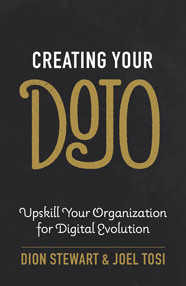
Dion Stewart is a coach, mentor, developer, and international speaker who helps organizations improve how they build and deliver software, from product discovery through DevOps. He is a co-founder of Dojo and Co, which has helped many organizations create dojos, immersive learning environments where teams build new skills in the context of their real work. He first encountered the ideas that became Extreme Programming while working as a Smalltalk developer in the late 1990s, and has since coached teams at Fortune 50 companies and spoken at conferences including QCon, Craft Conf, and DDD Europe. He is the co-author, with Joel Tosi, of Creating Your Dojo: Upskill Your Organization for Digital Evolution.
📚 Books by Dion Stewart
Transcript
[0:00:30] NVN: In their new book, Creating Your Dojo, Dion Stewart and Joel Tosi team up to explain how organizations can upscale their digital evolution. No, this isn’t a book about martial arts but in many ways, the type of tech dojo they’re explaining is similar. It’s an immersive learning environment. In our interview, Joel and Dion explain how these dojos enable teams to learn new skills within the context of their real-world work, Shift the focus from product to value, and shift the culture into one in which team members feel empowered to solve their own problems in the process. If you’re looking for a way to evolve your company’s digital product development, this is a not to miss episode. All right, we have two authors here today, Joel and Dion. I’d like each of you to take a chance to let listeners know who you are, a little bit about your background. Joel, let’s start with you.
[0:01:25] JT: Yeah, sure. The name’s Joel Tosi. Born and raised in Chicago, been in the software industry, going for about 20 years now. Started off as most people, as an engineer writing low latency code, I don’t want to say I was bored by it but I just figured out that there was more interesting things to do, trying to help people make better products and do more extreme things. So, it kind of evolved from there.
[0:01:49] NVN: Perfect. Dion?
[0:01:51] Dion Stewart: Like Joel, I’ve been in software development for over 20 years, my roots are also as an engineer. Back in the 90s, I was doing programming in a language called Small Talk and some of the more modern, current methodologies and processes for delivering software, in a way, grew out of the Small Talk community. There was a methodology, still is a methodology, called Extreme Programming, that I was practicing some of those techniques even before it got codified, the practices got codified into the methods. In the early 2000’s, I switched from being a full-time engineer to helping teams adopt some of those practices and then somewhere around 2007, 2008. I moved into more of a full-time coaching role. For over 10 years now, I’ve been helping organizations try and get better at delivering software products, or products that have some kind of software component to them.
[0:02:48] NVN: How did the two of you link up and ultimately decide to write a book together?
[0:02:53] Dion Stewart: We were both working with a guy named David Hussmann who was based in Minneapolis. He was a coach, he had an organization that did coaching, and Joel and I both coached for David. We got to know each other then and around 2015, there was a large retailer that started this thing called Adojo which I’m sure we’ll get into a little bit more but Joel and I both worked with that organization a couple of years later, a different organizational, large telecom provider asked us to help them start Adojo. While we were kind of at that second place. People started saying, “You two should write a book about this.” Some of our friends. Other people were saying, “Hey, this idea seems to be taking off, we wish there was something out there that would explain how to create one of these dojos. We need to document how to do this, how do we go about creating dojos in our own organizations.” So then, Joel and I started kicking around this idea, took several runs at it, finally managed to put something together that’s coming out soon.
[0:03:57] NVN: Okay, this is an embarrassing question to ask but as a completely non-technical person, when I think of dojo, I think of martial arts. In case there’s anyone else out there like me, can you guys define that word in this context?
[0:04:14] JT: I’ll take that one. Dion, you can clarify for me. For us, a dojo is similar to the martial arts, it’s a place where people come to learn and practice. For us, as Dion mentioned, it’s a lot in the software space but it’s a physical place where teams come to learn new things and practice them together. If you take nothing else, then just think of it that way. Group of people coming together to learn new things. The big part of it is you know – Dion and I by all means come in and help organizations set up dojos, we can teach teams, we can teach people that teach teams. But ultimately, what’s nice about this is it’s the organization owning it. Meaning that over the course of time, it’s their people leading and guiding and teaching inside of these dojos. It’s not us. This isn’t like a consulting ploy. It’s really about getting the organizations, people together, to work and learn and grow together.
[0:05:05] Dion Stewart: Yeah, the only thing I would tack on to what Joel said is the thing that’s really significantly different about the coaching we’ve done in dojos for the past five years versus the coaching that I did for the 10 or so years before that, is the focus is really on learning over delivery. With all the coaching Joel and I have been doing, you know, going on 20 years now, helping teams get better. A lot of the time, the context that that’s happened in is very delivery focused. We’re helping a team on some project or do some type of product delivery. Yes, there’s learning that happens along the way but the focus and the stress and the priority really is on delivery. With a dojo, that kind of gets flipped and teams come in and they do practice, it’s really powerful because they’re working on their real-world products. They’re bringing real contextual problems into the dojo. But the focus inside is on learning over delivery. That’s a conversation we have with stakeholders and leaders for teams and the teams themselves before they come in to make it very clear that this is a place of practice, like a martial arts dojo where you're going in, the focus really is on upscaling, getting better at some particular practices and skills.
[0:06:25] NVN: That is very cool. When I think of tech development, I think of it as being so fast-moving. I’m imagining that this is pretty unique, that people actually have the opportunity to sit down and learn without the pressure of deliverables.
[0:06:42] JT: It’s an interesting comment Nikki. I mean, I think that’s kind of the challenge we’re sitting in as an industry, is that everybody thinks that you just got to keep on going faster and faster and if you just make more stuff, you know, everything else will catch up eventually. I’m not sure how your experience is but I’ve had plenty of horrible technical experiences with various software and it just feels like sometimes people might be sort of better by slowing down and thinking about how they’re doing things and why they’re doing things and have less of a rush to get something out there.
[0:07:12] NVN: I mean, it’s true. We see this even in huge software launches where they’re released in a buggy state and it seems like that’s exactly what it is. It’s just this pressure to launch.
[0:07:23] JT: Yeah, it’s funny because everybody, at least in our space, is talking about innovation. You have to be innovative and you have to be creative, but you can never be wrong about being innovative. It’s this strange thing and we’re just trying to get people to slow down and say like, “What are we learning and how are we getting there and how do we know we’re doing the right things?” Sometimes it’s that intentionality is what we’re lacking.
[0:07:42] Dion Stewart: Yeah, the other really cool thing about this is the level of investment that organizations are now making in their employees, helping them upscale. I think for a long time, the expectation was simply that you had to upscale on your own time. You had to read and go through tutorials, learn new technical practices and new tools. On your own time in the evenings, or on the weekends, and maybe your company would send you to a conference once or twice a year, or maybe they would send you to some kind of two-day workshop once or twice a year again. And that somehow, within that sort of setup, their employees were going to keep current and I think a lot of organizations are finding that that’s really challenging. Then they’re faced with the question of “Well, do we continue to try and upscale our own employees or do we try and hire new people?” If you go out and do any kind of search engine query on that kind of thing, hire versus train, there’s all kinds of articles in all the major magazines and newspapers on that topic. For about at least 30 organizations that we have line of sight to now, they’re trying this new dojo model, which is a significant investment if you think about it. Having their own people go into one of these learning centers and kind of the standard model, the length of time for that is six weeks. Teams are bringing their real-world work in, they are getting work done but for six weeks, the focus is on learning over delivery. It’s a huge investment and it’s really cool, to see organizations investing in their people like that.
[0:09:15] NVN: Yeah, along with that, I would guess too, that in addition to what they’re learning, there also is probably this information sharing that wouldn’t happen in other environments, is that accurate?
[0:09:27] JT: That’s totally accurate, especially in the IT space because what happens in IT is, organizations are so large so they just assume that once they write it down that now, all the knowledge is now instantly accessible by everybody inside the organization. The things that we’ve observed through the years and this is kind of why we think that dojo is working so well, is for the things that are more complicated or more unique or more complex, you can’t just read it and have it make sense. You have to experience it and so this idea of experiential learning is actually making a difference. That’s at least been our experience.
[0:10:00] Dion Stewart: there’s a real aspect of the dojo spaces that I think is not to be overlooked. One of the questions we often get is “Well, can’t we do this kind of immersive learning but just send coaches or mentors to work with the teams where they normally work?” The answer is of course, yes, you can do that but there’s a benefit that you get from having a dedicated space where people go to learn that is you just can’t underestimate the importance of the value of it. If you think about spaces, I’ll say it maybe this way, we’ve all been in libraries or really amazing cathedrals or something like that and you know that those places have sort of an aura or a vibe to them. On a sort of a smaller scale, people often go to work in coffee shops because they like the energy and the vibe in the room and sort of the certain optimal level of background noise that helps them concentrate. With a lot of the dojos that these organizations are creating, there are many teams in there at one time. There’s this vibe and this aura and this energy and this buzz that gets happening when people are all going through this learning experience together. People make connections in the dojo with people who work on other teams that they normally wouldn’t make outside the dojo. There’s just a lot of sort of secondary benefits besides the direct learning that happens within an individual team in terms of cross-sharing of knowledge, new network connections inside the organization. People understanding who has certain skills, who they can go to for help outside the dojo even, and all those benefits.
[0:11:37] NVN: Yeah, you know, I feel like whenever you bring people together in ways like this, for whatever the underlying reason is. It seems like as adults, there are so few opportunities to just be in a room with people who you wouldn’t normally be in a room with, and to be interacting with them and learning together. I just feel like those experiences are very sticky, and exactly what you said Dion, there tends to be a lot of secondary things that are taken away from that also.
[0:12:06] Dion Stewart: Absolutely.
[0:12:08] NVN: So, let’s paint a clear picture for listeners of what this looks like. Dojos are created within organizations, but they happen in a separate space, and other organizations may be present at the same time, am I getting that right?
[0:12:23] JT: I say half right and a little bit to tweak there. They happen inside organizations but like an organization might have hundreds of teams. There will be a space inside the organization that other teams from within the organization will come in to. It’s not necessarily another organization. It’s the organization that owns the space for all of their teams and then at any point in time, they might have six or eight teams inside the space at a time but all from the same organization.
[0:12:48] NVN: Even better. You’re bringing the company together in a way that probably normally wouldn’t happen.
[0:12:54] JT: Yeah, it’s interesting. Sometimes, when we get these teams together, the first couple of days when they’re actually learning together, it’s awkward because they’re actually not used to like looking at each other, it’s a strange dynamic where like, we actually stress it, we’ll help organizations even design the space, like Dion was mentioning. We don’t want cube walls, we want people looking at each other, we want people talking to each other, we want them to draw, we want them to like share ideas. We want everybody working together on the same thing. For some people, they just get freaked out the first couple of days where it’s like, “I don’t want to look at you.” It’s uncomfortable at times.
[0:13:30] NVN: Yeah, I love that. That sounds like very honest commentary. I mean, talk about something people really need to break out for their overall health, that’s great. You guys talk about how transforming digital product development can overwhelm even seasoned leaders. Can you break down for listeners why that tends to happen?
[0:13:53] Dion Stewart: I think it tends to happen for sort of the reasons you eluded to earlier in that there’s just so much to learn these days. When I started doing software development, the sort of world view that I had, my world started when the project kick-off meeting happened. There was a whole bunch of activity that went on before that that other people did that I wasn’t even asked to care about. Whether I did or not. Then, sort of my world ended once my code was committed somewhere that other people could deploy, whether it was to a test environment or to production itself. Now there are newer categories of practices, things like DevOps which is a set of practices on sort of the tail end of that, so instead of just checking code in somewhere for other people to deploy. Now teams kind of own their own deployments, and not only their own deployments but their own monitoring and ensuring the health of the products while they’re running in production environments. On the front end, at the beginning, instead of just being invited to a product kick-off meeting, a lot of teams now are being asked to really get deep understanding of the customer and do product discovery. You look at that entire sort of life cycle of what it takes to deliver a product, what is being asked of teams these days is to own more of the entire life cycle if you will. On top of that, the technology is changing really rapidly and quickly. Organizations are moving to the cloud and a few years ago, it wasn’t just about moving to the cloud but running in the cloud in a way that was somewhat familiar to the way teams were running, you just had virtual versions of things like servers and environments. Now, there are whole new technical architectures. There’s Serverless and Amazon, for example, with Amazon Web Services, AWS. It seems like they release new services every week. There’s always all this new technology available. As soon as we get a handle on something, it seems like there’s something else new that comes along. People are now talking about AI and ML and blockchain and all these new technologies. There’s always more information, more new ways of building products to keep up with and it seems like teams can. If you imagine being a leader of these kinds of teams, the question is, how do you keep your team up to date on all these skills that are necessary to compete in today’s marketplaces? That’s where the dojos can really help teams upscale quickly and sort of keep current with their skillset.
[0:16:31] NVN: That makes so much sense. Sorry Joel, were you about to say something?
[0:16:35] JT: Yeah, a lot of the leaders that we talked to and by leaders, think like senior executives, those types of people, they are either brought into organizations or they are tasked with this idea that they feel like they are not competitive in the marketplace. Either they are not delivering the right things at all, or they’re delivering the right things and it is taking too long, or the quality is poor, and they are having all these challenges around trying to get the right talents and they create the right culture. And all of these things are happening and at the same time, you want to call it the gig economy. A lot of workers, if they are not happy, if they don’t feel like they are a part of something, they just don’t want to be around, and they go other places and so I think that is an aspect of it too. There’s all these things to learn but at the same time there’s this real people aspect of it and the product side of it that if we are not thinking about, it just doesn’t work. And so, the stuff that we are trying to do is saying like your company has the right people. Don’t shortcut the people. Let’s just give them a vehicle to be a part of something interesting and let’s help them along the way.
[0:17:34] NVN: So, there is a culture element to this too it sounds like.
[0:17:37] JT: Yeah there is most definitely a culture element to it. I think that is something that a lot of organizations don’t think of when they are starting this off. They are thinking about, “We need to get better at X. We need to get better at product, we need to get better at quality. We need to get better at quicker at delivery.” The thing that happens when this happens and it goes well, all of a sudden, people start to feel like they are connected to something. They start to realize that their work has a purpose and they have a voice and all of a sudden, they get connected to other people and now work becomes a little more interesting. An interesting friend of ours would say things like, “Culture is a shadow, you can’t create a culture.” The culture is the shadow of the organization. It is the byproduct of how you work and by changing the way people work, and how they work together, you end up creating a better shadow and I think that is just a really cool thing that we are seeing happening.
[0:18:24] NVN: That is a great analogy, I like that.
[0:18:27] JT: Yeah, I don’t get the credit for that one, but I think it is pretty good.
[0:18:30] NVN: You’re fine to get on that one.
[0:18:32] JT: Yeah, there you go.
[0:18:33] NVN: So you know a couple years ago, productivity was what everybody was all about and so from all of this discussion that we’ve had as a culture, about productivity, I am going to guess, and please correct me if I am wrong, so if companies have reservations about the fact that employees are going into this environments not to develop but to learn. So, there is that time that is allocated for learning. I would presume that that time is made up for over the long term because they have been able to come together and have that learning. Have you guys seen that play out in your experience?
[0:19:13] Dion Stewart: We have seen it play out and there is a lot that we could unpack in there. The one thing I’ll say right away is, this whole idea of productivity, it sort of this very output-oriented mindset and one of the sets of practices that we work on in the dojos with teams is these product discovery practices that help them get more focused on the value that they are delivering, rather than just output. So, in kind of traditional project management, we celebrate success when teams hit schedules, and they stay in budget, and they deliver the scope that was originally identified when the project was launched. There is not a whole lot of attention paid to how successful that product is in the marketplace. So, if you imagine instead getting very focused on the value that you are delivering, maybe even to the point where you’re saying, “It is okay if the output goes down a little bit because after all who cares if we’re delivering products that no one uses?” It doesn’t matter how much output you’re creating or how many new features you are adding to a product. It is really more about the value that you are delivering. Those conversations start right away the first week the teams are in the dojo and we get them kind of focused more on the value that they’re delivering than the output. So, it is in some ways it is a shift away from a productivity mindset. Now having said all of that, we have seen teams that over time start delivering more value. One way that this played out really interestingly was one team that we worked with had an old complicated legacy product, testing was really cumbersome, and their testing cycle was taking a week. So, if you imagine trying to verify new changes or get new features out there, every time something new was added to their system, their product, it was a week of testing. Working with them in the dojo over the course of six weeks, they got that testing time down to hours. So, if you can imagine moving away from a week-long testing cycle, to a length of time where that was happening within hours, imagine their ability to put new product out, to get new product deployed into production, to test new ideas, to get feedback on new ideas. It made a huge impact on that team’s ability to deliver value to the organization.
[0:21:32] NVN: Wow that is impressive, from a week to a few hours. So, obviously all of this starts from the top. I am curious as you guys go on and begin to have conversations with organizations, how difficult is it with the higher-ups to discuss this idea of value rather than product? Is that a tough battle? Or do you feel like people are beginning to get that and sort of moving in that direction, particularly if they are open to the dojo idea?
[0:22:03] JT: Do you want to start Dion? I am trying to organize my thoughts here.
[0:22:06] Dion Stewart: Sure, I will try and take a crack at it. Most of the time when we’re brought in, the people who are bringing us in are already thinking along these lines, or at least are open to this kind of thinking. I think a lot of upper-level executives get this. You hear things like, “Switching away from a project model to a product model,” or “Moving to product,” or simply, “We are adopting a product model,” kind of statements. I think with upper-leadership, the conversations are pretty easy. They get it, they understand it. It is about delivering value to their customers. I think where the problems come into play more is with sort of the middle-tier of management and leadership, and it is not because they don’t understand it. It is just that in large organizations there can be so much inertia around incentive programs, the way things are funded, staffing models, etcetera, that even though they know that that’s the direction they want to go in there’s a lot that needs to change. If there is resistance, and maybe resistance isn’t the right word, but if there are challenges, it is more with the constraints that exist at sort of that level. That is one of the other things that we work on with organizations that are creating these dojos. It is not just about coaching the people on the teams inside the dojos. It is also working with all levels of leadership and management to understand why it’s important to make these kinds of shifts. And ultimately, what teams are going to be able to deliver to the organization by going through this kind of learning activity?
[0:23:42] NVN: I like that idea about inertia. That makes a lot of sense. Joel, do you have anything to add to that?
[0:23:49] JT: Well I would say, the only thing I would add is, like Dion mentioned, when we’re brought in people are already buying into the idea. You asked the question earlier on around with so much happening and with leaders being overwhelmed, I think what’s happened is a lot of people realizing they’ve tried this approach in the past few years where it is hire some big consulting company and they come tell you to do this big framework, and they guarantee rainbows and unicorns at the end. Then it turns out, you know, the rainbows and unicorns are just devils, or something that isn’t nice as rainbows and unicorns, and they just realize that it is not making a difference. So, first of all, they want something different and then second of all, they realize one of the points of Dion’s mentioned earlier on of why we did this book, was people are asking us how to do this. This book; our goal was people can just pick up the book and do this. I mean it sounds like a horrible marketing idea for us just to say, “Hey, here is all the ideas and kind of go to town.” But I mean that is the reality. We believe in this and so you know if you tried all these other big approaches before and they haven’t worked and you want something different, you know grab the book and we believe it is going to give you a good outcomes.
[0:24:54] NVN: Great. Dion do you have something to say?
[0:24:57] Dion Stewart: No.
[0:24:58] NVN: Okay, perfect guys. I’m wondering if in your experience you have any sort of transformation stories that really stand out to you.
[0:25:09] JT: Yeah, well there is, at multiple levels. When you asked that question, it is interesting because a lot of people always ask us, “How do we judge success, how do we know this is working?” And kind at that utopic, idealistic level we want to say, the organization is better off. We probably can’t name the first organization, but I am sure they know who they are, and everybody knows who they are when we started this off with them. If you would ask people back then when we were starting this off, a lot of their employees didn’t think they were going to be around. They were pretty sure they were going to be bought by a pretty large online company and so the fact that now that they are thriving, it speaks volumes to the power of this approach. I am not saying this was the whole end all be all. They had a lot of good ideas that happened along the way, but this was a very instrumental aspect of it. So, at that organizational level, you know, we’ve had companies that were on the brink of non-existence that went into this and then invested in their people and they really turned things around. We’ve had examples where it’s at that team level, where Dion gave you that great example where a team was consistently and continuously testing stuff because things were just so fragile and the cycles were so broken, and then they learned better ways and it changed the team’s life, which is pretty great. There’s been times where the teams didn’t get the best for a variety of reasons, but even in those situations, we’ve had great conversations. Where like one person would come up to us or two people would come up to us and say, “Man, you know, I know the teams didn’t get as much out of it as I did but you really made a difference for us.” And so, whether it be a person getting a different view of the world and how to think about problems and making like learning a part of everything they do. Or be an organization surviving and thriving and we’ve had great experiences with multiple levels of that kind of evolution.
[0:26:54] NVN: That is compelling.
[0:26:55] Dion Stewart: On the individual team level, we’ve had a lot of success stories. So it is really hard to “transform” an organization and Joel and I even balk at the word transformation at times because transformation implies that there is a clear starting point and there is an ending point and when you reach that endpoint you are done. I think the reality is there’s always new stuff to learn, improvements to be made. We like to use this word evolution more than transformation because it implies this ongoing process. So evolving organizations to get better at digital product delivery, is sort of a never-ending thing, having said that, at the team level, as I started to say, there has been some really good stories and even though earlier I was stressing that the dojo was about learning over delivery, we’ve actually had teams come through that have failed to deliver a certain product or an idea, or feature for that product. And in six weeks inside the dojo, they were actually able to pull it off and do it. In one case, there was a product idea that required coordination across multiple teams and the business had been asking for it for two years. For whatever reason, the organization wasn’t able to get it delivered. It took a little longer than six weeks. I think that took about eight weeks, but they did deliver it. Even there, some of the learning goals got kind of subsumed to some of the delivery goals. Although there was some learning along the way, everyone thought it was a wild success because of the delivery. There was one other team that I worked with, and this was a team in an organization that had a lot of traditional old school silos. So, what I mean by that is the testing group were completely separate and isolated from the development engineers. The people who did the early product discovery kind of figuring out what features the product should have worked completely separately. And their ideas were sort of given to the development engineers through an intermediary. In the first week that they were in the dojo, we had all of these people working together and collaborating together. About three weeks in, one of their leaders happen to be in the dojo and he witnessed this exchange between one of the testers and one of the development engineers, where they basically communicated with each other, “Hey there is new code available to test.” The tester ran some automated test that they’d learn how to create in those first few weeks, turned to the developer in five minutes and said, “Hey there’s a problem here, here and here” and within 15 minutes the problem was fixed. When that leader saw this exchange and how quickly that got resolved and the level of collaboration that was happening, they took a step back and decided to re-org the entire division of the company, so they created these more cross-functional teams that allowed for that quick kind of collaboration rather than keep the organization siloed as it was. This isn’t a new idea, people have been talking about creating cross-functional teams for decades now. It is a core part of implementing any kind of agile method or process but there are still organizations who haven’t done it. I think there is a big difference between sort of hearing, “This is what you should do or could do or this is what has worked in other companies.” Versus actually seeing it work in your organization and kind of the power behind that, that the dojo can help deliver, or implementing a dojo can help deliver.
[0:30:27] NVN: 100% that makes perfect sense. All right guys, my last question for you, is there anything we haven’t gotten to yet that you want to make sure listeners are in the loop with?
[0:30:39] Dion Stewart: Organizations have been trying to figure out a way to become learning organizations for a long time. There are books that have been out there for decades on how to become a learning organization. While we do want to stay gainfully employed and we really like this immersive style of learning called dojos and this model, we also are sort of walking this line between wanting to stay gainfully employed but really promoting this method of immersive learning in the community. And as Joel kind of eluded to, one of the goals for the book was that someone in an organization could pick it up, read it and start a dojo inside their organization on their own and we truly mean that. There are other people who have – this style of immersive learning has been around in other guises before, not quite exactly like the dojo where you are bringing multiple teams and concurrently in one space but where you are giving teams sort of a separate learning experience from their normal work environment. It seems to come up and then fade out because it does require a big investment and it is counter-intuitive to a lot of leadership styles but I think if you really do want to invest in your employees, you really want to become a learning organization for the long haul where continuous improvement becomes part of the culture of the way your organization works, dojos are a really effective way to get there.
[0:32:00] NVN: That was great, a perfect way to close it out. Thanks for joining us for this episode of Author Hour. You can find Creating Your Dojo, on Amazon. For more Author Hour, hit the subscribe button on your favorite podcast service. Thanks for joining us, we’ll see you next time. Same place, different author.
Want to Write Your Own Book?
Scribe has helped over 2,000 authors turn their expertise into published books.
Schedule a Free Consult