Tom Breeze: Start with the User
Read the full transcript
Tom Breeze
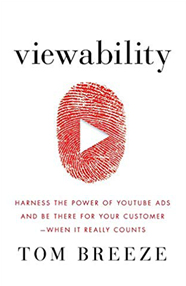
Tom Breeze is the founder and CEO of Viewability, a performance-based YouTube advertising agency he launched in 2011 that works with international brands. He holds bachelor's and master's degrees in psychology from the University of Leeds and the University of Surrey, and he applies that background to help businesses understand viewer behavior and build effective video campaigns. A sought-after speaker and consultant, he is the author of Viewability: Harness the Power of YouTube Ads and Be There for Your Customer When It Really Counts.
📚 Books by Tom Breeze
Transcript
[0:00:20] Charlie Hoehn: You’re listening to Author Hour, enlightening conversations about books with the authors who wrote them. I’m Charlie Hoehn. Today’s episode is with Tom Breeze, author of Start with the User. If you’re a business owner, you’ve probably realized that there is a massive audience on YouTube and a lot of them are ready to engage with you and potentially buy your products. All you need to do is keep them from hitting the skip ad button and that’s where Tom comes in. Tom is the CEO of Viewability, a YouTube advertising agency that’s built thousands of successful campaigns for clients like Frank Kern, Neil Patel and Brendon Bruchard. Here’s the cool part. Tom takes all the risk and his agency only gets paid when they deliver results. By the end of this episode, you’ll know how Tom gets his clients to that special moment where every dollar they spend on YouTube is bringing in three or $4 to their business. By the end of this episode, you’ll know how Tom gets his clients to that special moment where every dollar spent on YouTube ads is bringing in $2, $3 even $4 to their business. Now, here is our conversation with Tom Breeze. If you had to pick like, if you could fill in the blank. “If you liked… blank” Then you’ll love my book Start with the User. In the blank can be a book, it can be a documentary, it can be anything pretty much.
[0:02:17] Tom Breeze: That was a tough one for me. I think that like if you are really into kind of understanding your customer. It’s such a difficult one. I don’t think there’s necessarily a book out there or a documentary that I’ve watched just yet. There’s a certain – a lot of sales people that take a different approach to take a side and say, “Hey listen first.” And that kind of resonates with my message but it’s still, I don’t get to listen and dealing with people, like can see one ad so it’s difficult. I think if you’ve read anything by Ogilvy. The advertiser that’s no longer with us unfortunately. That’s kind of been a big influence. If you’ve liked Ogilvy’s s books. In particular, Confessions Of An Advertising Man, I think that that would resonate.
[0:03:00] Charlie Hoehn: There we go. Tom, you are the CEO of Viewability and your book Start with the User, it is about the time-tested tips and secrets of YouTube advertising and you’ve worked with a bunch of impressive clients. How did you get started down this path? How did you learn so much about YouTube ads, where did you get your start?
[0:03:26] Tom Breeze: I think I got my start when I was at university. That being – going to university I studied psychology and that was for three years. Went on to do my masters as well in psychology and the whole kind of five years whilst I was doing that, I was like literally every single day, learning more and more about humans, why we think the way we do, how we behave, how we act, how we feel. I think that really set me up for understanding people in general. Just understanding how people tend to think and understanding how we can change that sometimes as well.
[0:04:03] Charlie Hoehn: What were the lessons that stood out during that time that you still remember?
[0:04:09] Tom Breeze: I think that one of the things I really remember is that – it’s as the person that’s looking to understand, so it’s understanding their landscape in their mindset. How someone else thinks is going to be always different to how we think and that’s maybe because of the way that their environment is setup. Maybe what they’ve learned from the past. But everyone thinks differently. I know it’s obvious thing to say but when it actually gets down to it, when we think of even like, let’s say for example, we think of creating an ad these days, a lot of people go into that like, what would I think? How would I advertise and I think that’s a bad thing to do. I think it’s much better to understand what is your market doing. But understanding it’s a population of people you’d be advertising to but understanding each one of those population. It’s an individual and it’s not a number. It’s not a data point, it’s actually a person. A person with a background, a person with, they’ve been through some experiences, they’re going to think in certain ways. It’s not right or wrong, it’s just different. If you can understand that everyone’s landscape, where everyone’s perception of the world is slightly different and we can tap in to that and get to know those general trends of how a certain type of person will be thinking. It makes our lives so much easier when it comes to advertising. I think a lot of people with, when it comes to creating an ad think that from the outside looking at the advertising industry, people might be thinking, “They got to be really clever when it comes to sales and they got to be really effective when it comes to their communication.” Whilst that sometimes can help, it’s more a case of a foundation and understanding how people think and how we can interact with that.
[0:05:38] Charlie Hoehn: How do you do that?
[0:05:39] Tom Breeze: It’s not trying to convince someone something. It’s more tapping into their existing mindset and really, at that point, being helpful. That’s really the crux of the book is to say, all we’re doing here when it comes to advertising is when someone’s in a position of need, we’re going to be there. That’s the first thing we’re going to do. Be there, get in front of them, there’s so many different ways of doing that but we got to make sure we show up when our customers are potentially looking for what it is that we can help them with. Then secondly, when you do get in front of them, we just need to help them, we just need to say, okay look, how can I be of service? How can I give you something? This is actually going to be really valuable to you. It doesn’t have to be kind of like a whole half an hour program or a half an hour video or anything like that, you’re just going to say, “Hey look, in your situation right now, let me give you something that’s actually going to genuinely help you. It’s going to be relevant to you. It’s going to be helpful.” And it makes that person think, “That was really cool.” If you can get them to think that was really cool. If you can get them to think that, the next logical step they’re going to say is, “Well what’s next?” That’s where your brand and what your company slots in perfectly. That’s when the sales message – you’ve opened their mind for that idea that saying, “Great, well maybe at this point, let’s come see your business, find out a little bit more and turn from a prospecting to a customer.”
[0:06:50] Charlie Hoehn: Right.
[0:06:51] Tom Breeze: If you start from that perspective, it makes life so much easier.
[0:06:53] Charlie Hoehn: Yeah, you know, I like you already Tom because I think a lot of people have a real strong resistance to marketing in sales because they don’t want to feel sales-y. They don’t want to feel manipulative but if you have that mindset that’s service mindset, of people have problems, they’re looking for solutions, you can be the person who helps them solve a problem and contribute a real positive impact to their life. In fact, you may even have a responsibility to do that, right? If you are a doctor who comes up with the cure for a disease and you don’t know how to market the solution, you are doing a disservice to all the people who have the disease, right?
[0:07:40] Tom Breeze: Exactly.
[0:07:41] Charlie Hoehn: I think you’re spot on and I love that. I actually, I learned to be comfortable with marketing form Seth Godin who preaches the same thing. The godfather of online marketing. I think you’re totally on point. We veered a little bit off so you were studying psychology in college, how did you get down the path of YouTube advertising? Were you doing your own experiments, were you working as a freelancer, what was going on?
[0:08:10] Tom Breeze: Yeah, I finished my formal education. I was at university for five years, finished my master’s. At that point, I decided to learn how to become a therapist basically. I trained in NLP, hypnotherapy, timeline therapy.
[0:08:25] Charlie Hoehn: Is NLP bullshit?
[0:08:29] Tom Breeze: I think that a lot of people think that and I can completely understand because there’s so many people that practice NLP that haven’t – have a spiel that is just terrible and I think that that’s, it’s the person behind that, not the actual NLP kind of like framework.
[0:08:46] Charlie Hoehn: Explain NLP real quickly?
[0:08:48] Tom Breeze: Yeah, I there’s so many explanations of what NLP was or is. For me, I feel like it’s – what NLP is like an umbrella or a collection of all the best types of interventions and strategies. NLP, when people say “I hate NLP.” It’s like saying like they hate the best stuff from what we’ve learned about therapy. I was like, “Well that’s crazy” but I do believe…
[0:09:10] Charlie Hoehn: Well, can you really dumb it down for like, if you had to explain it to a five-year-old, like, what is NLP?
[0:09:17] Tom Breeze: That’s difficult. I mean, it’s a great framework in understanding how the brain works and how people think and how to then work with that.
[0:09:30] Charlie Hoehn: Like what’s an example?
[0:09:31] Tom Breeze: Okay, one of the favorite techniques that is a classic NLP technique which is probably taken from a different type of therapy all together is something called parts integration. That for me, whilst people will kind of be like, “I hate that therapy” or “I hate that idea.” Really, for me, the idea behind this is like, you know, sometimes in your head, you’re completely in a dilemma, should you do A or should you do B? Or I’m feeling A but I’m also feeling B, like I’m feeling anger but I’m also feeling this other emotion that you can’t – It feels like you're two people all at once. There’s a really effective strategy where you can just bring a lot kind of like – you can bring that together. A lot of people when it comes to – I used to train people who had a fear of public speaking. So people would be absolutely hugely anxious at speaking in public. I used to work with those people who it would almost be a phobia for them. Deep down, there’s nearly always that one part of their mind that’s saying, you know what? I’m just completely fearful of the worst happening. “I can just picture it really clearly, I can imagine myself failing completely.” But there’s this other part of their mind that’s saying, “I really want to do it because it’s going to really help my career. I’ve desperately got to do it because I’ve got this presentation coming up next week. Whilst I’m fearful of it I’ve got to do it and at the same time I want to be really good at it.” I’d have these like conflicting mindsets at the same time. Like a thing like parts integration would like bring those two things together. Make their mind understand itself almost and form a new part of them. So that they then can go on and start learning how to do it without having this part of their mind thinking this is crap, this is bullshit, this is whatever you want to call it. It allows the brain just to be a lot more together. When it’s like that, it is so much easier to form a new thought pattern, a new belief about yourself. I think it’s a misunderstanding about what NLP is and it’s a nice thing to hate, right? Everyone loves to hate one type of thing and I think something like CBT, cognitive behavioral therapy, we’ll look at it and say, “NLP is this really crap thing that –“ I get that. I’m well away from it, you know what? The stuff works, I’ve used it time and time again. It’s just some people out there that are just doing a really bad way and giving a bad name. I don’t concern myself with that, it’s not my biggest thing in the world. I’m not too fussed about the perception of how people think about it. I’m sure I do. I apply NLP to everything I do on a natural daily basis.
[0:11:54] Charlie Hoehn: At this point, it’s just integrated into who you are and how you go about stuff, you don’t really consciously think about it?
[0:12:00] Tom Breeze: Yeah, exactly. There’s certain times we’ll all think about it but I mean, it’s taking that responsibility. I know every decision I make is down to me and every future decision I’ve got is down to me as well. I get to consciously choose. It’s not like I’m going to say, “because of this, I am now going to go and do this.” I know I’m in that equation.
[0:12:19] Charlie Hoehn: Right.
[0:12:20] Tom Breeze: A lot of people don’t believe they are in that equation, they just allow something to happen and therefore they react in a different way. That’s a difficult place to live and because you’re just completely reactive to our environment. I know with advertising it’s like, if I’m going to run this ad, I know it’s me that’s chosen to create this ad in this way to target the audience in this way. If it doesn’t work, it’s kind of down to me. So I take that responsibility on any time on an ad. That is – it helps me know that I’m in control.
[0:12:44] Charlie Hoehn: Yeah.
[0:12:44] Tom Breeze: It’s not like I’m out of control. It’s little things like that where I’m – I feel like that’s given me a great foundation to advertising. Yeah, I know that when I drop the NLP word, it kind of causes a lot of fluctuations in how people think and feel about the whole concept.
[0:13:00] Charlie Hoehn: Yeah, I think my first exposure to it was either through Tony Robins reading one of his books. Or I think through like The Game, one of the characters I think uses it to be manipulative toward women he’s trying to seduce and stuff. I’ve always kind of bristled at that word but not really had a deep understanding of how it works. Anyway, I keep getting off course, my apologies. Bring us to the first time that you were really into YouTube advertising like what were you spending, what was the subject, what was the scenario, paint the picture of that moment?
[0:13:38] Tom Breeze: Yeah. When I came out of university, I studied all these therapies. Then went to go to work in London. I wanted to be an entrepreneur, I wanted to give it the best shot I could, I was already in a hideous amount of debt from university anyway so I thought, “What’s a little bit more.” Then I started up my practice but I was – I knew that I was like 24, 25 at that time. It wasn’t like I was going to be a life coach. I had the self-awareness that I hadn’t really experienced life just yet. At that point, I said to myself, “You know what? If I can help with one specific thing. If I niche down and just be really good at one thing, be that expert.” And that’s what I did, I helped people with the anxiety around public speaking. Fear of public speaking, presentation skills, any meetings, interviews, that type of thing. I’d really help them get confident for those scenarios. I started doing like these breakthrough sessions. So it’d be like, “Come and see me for half a day and we’ll work through everything, might be three, four hours or so but we’ll work everything out.” I used to kind of guarantee, like a money back guarantee if it didn’t work. I got ridiculously good at it. I can now help people overcome that fear of public speaking very quickly. Just a few techniques and a few kind of – help with the presentation itself and people can be very confident. I was running my company and the way that I was trying to get in leads in the first place was I started using like Yellow Pages. I spent quite a large part of my bank loan that I had when I first got started on Yellow Pages and I got – like literally the phone didn’t call once. I was like damn, that didn’t work at all. Then I got a leaflet that came through the door from Google and it said, “Would you like to spend 30 pounds on us on our new advertising platform called Ad Words?” I was like, well, I got nothing to lose here. I got 30 pounds to spend which is about $45 or so. I tucked in, I set up my account and tucked in my voucher that I had with them and on the first day, I spent all the money that I had as that freebie. I managed to get two clients’ call and I booked them in. Now, a session for half a day for me was at the time, 250 pounds which is about $350. I made almost like $700 from advertising 30 pounds, $45. The mark up that was ridiculously huge, it was not viral video, it was just text. It was basically any time that someone typed in public speaking fear or public speaking anxiety or something along those lines. My ad would appear in the search results. They would click that, go to my website and go and book in. Phone call and then I’ll book them over the phone. That worked incredibly well. I was like, “This is working really well.” The next day, I did the same thing. I got one more client the next day but still, incredibly profitable. It was in the good old days of Google Ad Words where it was really cheap. I was just in at the right time. I almost like fell in love with Ad Words because it built my business, my first business and it went ridiculously well. I didn’t have the business sense but I kind of had learned how to advertise my business. It was easy at that time but I got better and better at it over time. I built the agency, built my business doing that. Then I was trying to work at how to improve my website and do a better job there and going to look at some marketing things. I had met someone who said to me, what I should do is create a video and put it on my homepage. That’s a little crazy, I didn’t even know how to do a video. So I kind of remember putting it off for a few weeks. I thought, hey, look, I’m in the public speaking world, maybe I should do a video of me kind of teaching or talking at least to camera and see if I can promote myself. I went down to my parent’s house, got their old camcorder. I remember having to kind of like setup and I was just, it was terrible and my first video was horrendous. I stuck it up on my website and prior to putting this video there, my website would normally convert at right about 7%. Then, when I ran my existing ad straight from Google to my landing page with this video on, my conversion rate went to 22%, so it tripled overnight. No more spend, no different in the ads, it’s just a different website page that I’ve been promoting instead. At that point, I remember waking up the next day in the morning and being like, my god, something’s gone wrong because all of a sudden I spent a huge amount of money, it must have been something on that switch ad account and no, I haven’t spent anymore. It was just that the video was that powerful. It got three times many people contacting me. It made a massive difference to my business. I was teaching people the fear of public speaking, they were coming in in groups now. When I used to work with people, there was one point at which someone said, “Hey look,” it was halfway through the first day and they said, “It’s part of this three-day conference.” They said, “Hey, look. I’d love for you to teach me how to speak on video because I don’t have that many public speaking engagements but I am asked to speak on camera quite a bit to the internal office.” I remember just saying to the rest of the group. “Well, if I teach this for half an hour, will everybody be interested in doing it?” Everyone’s like “Yes, desperately, I’d love to learn how to be really good on camera as well.” I taught everybody how to be good on camera and it just snowballed from there because I have these videos of them. Then they know like, “Well how can we promote them?” And so I kind of ended up getting into YouTube and teaching them how to kind of promote their videos on YouTube. The business grew really quickly in the SEO routes. How to get their videos ranked on YouTube and sometimes in Google as well, we got some big clients, it moved very quickly. I remember just getting to a point, well, this video thing is really taking off and everyone’s loving the video side of it. Less about the public speaking side but the video thought side seemed to be really attractive. It was a lot more profitable for me as well. It was also this sort of thing that I could do a lot of more kind of like, get a lot more revenue in different ways because it’s the fear of public speaking. I have to work one to one and my time is limited. Where if it was with a video, they would like pay me for a lot more around that video as well. I remember just getting a lot of clients doing the SEO for them. I remember just Google changed the rules pretty much overnight around SEO, it was like a few updates like a Hummingbird, Panda, Penguin update. There’s loads of different updates that happened and basically just changed the whole world around SEO. And at that time, I didn’t know what to do, my clients were paying me good money. I had a team of people doing all the SEO work and I realized, I hadn’t turned on advertising for any of these videos and YouTube advertising looked like this new thing. I was good at video, I was good at producing video now. I thought, well, I know how to do Ad Words because I’m doing it for my existing business already. Let’s see if I can just do it for these videos for clients? Because the SEO results dropped so I ended up spending some money on advertising for one of my clients. I just looked at the numbers, I was like, this is crazy, this is much easy to get better results for my client through advertising than through SEO.
[0:20:20] Charlie Hoehn: What were the numbers? What was the difference?
[0:20:24] Tom Breeze: It was difficult to work up the exact numbers in terms of difference of costs because we were like one staff to run the SEO. It was a hidden cost almost but we knew we had these overheads. Compared to the advertising, it would be like, for every dollar we’re spending, we’re making a few dollars back.
[0:20:37] Charlie Hoehn: Wow.
[0:20:38] Tom Breeze: We’re like, this is crazy and the great thing is it’s a computer. I can just scale it up, spend more money if I want to. Obviously it’s going to be fluctuations and say go, but I was like this is much easier. I don’t have to have all these staff to have to handle it and things, it’s like it’s just me and a computer. Over the space of three or four months, my business completely transformed. We’d lost a few clients because not every client works with YouTube advertising. But a lot did and so we took on all the clients that did work really well. I just started scaling up. But the beauty of the whole process is that, when I first got started, because I had this issue with the SEO. I decided to spend my own money on promoting my clients. Just to see if it would work or not. I’ve held that model ever since. Now, when we run the agency and I’ve got a lot of clients promoting for every single day, it’s me that I spend my money on the clients and they pay me for the results they get. It worked incredibly well because that’s completely risk free for them. There’s no out lay cost at all or anything like that. We have a much closer relationship, we have like a – it feels like a partnership on the phone or emailing them at least every single week and constantly in contact. I have a real close relationship to clients and it means that it’s just grown agencies so much more rapidly that way. Of course, I take in a lot of risk which is one thing. It’s allowed me to go and explore. Go and test that stuff because I can spend my own money on tests. But I can’t spend the client’s money on tests because it might not work. So it allows me to learn very, very quickly and coming from that psychological background. I have a very scientific brain. So everything we do is constantly tested, I can see all the numbers in front of me and you can just learn so quickly around what works, what doesn’t work. While I also have kept this all to myself with the agency and as a team, now we’re up to 10 people in the agency so far. We’re all very closely knit and we know our stuff but we keep it within the agency. This is the first time I have started to release some of this information in this book about how to do it well. So that’s why this book.
[0:22:35] Charlie Hoehn: Yeah, so before we talk about some of the ideas in the book, I am curious what kind of clients do you work with? Do you have a certain threshold that they have to hit in order to buy their spend or anything like that?
[0:22:50] Tom Breeze: Yeah, so I think when it comes to our agency clients, we now get to a point where we’re spending quite a heavy amount per month on a client.
[0:22:56] Charlie Hoehn: How much?
[0:22:57] Tom Breeze: I think some of our lower end clients will be spending around about $20,000 a month. But the vast majority are much, much higher than that now That is just the natural progression because I end up having, we try to say “no” to as many people that it wouldn’t be right for. So if you can’t scale quickly, we are not going to be a good agency fit. Just because our agency is not one of those agencies where we have hundreds of clients. We have a smaller number of clients, we’re up to about 50 I think at the moment. But we tend to just focus in on the ones that we can really help and grow with. Someone that is spending $500 a month is not going to work out. It is difficult to get to work like that. But that’s what we’ve build out the agency and throughout the academy as well because it allows people to learn some of this stuff themselves. Apply it and see their own results as well. Because for me, I know when I first started, I didn’t have the money to invest in training. I had to learn it for myself and that’s a similar pathway where I don’t want people to feel like it’s just for the exclusive few. I feel like YouTube is such an exciting place to be but that day where you get – so you are spending a certain amount and you are getting more back in return. That is such a special day because it’s a realization that you have worked it out. You’re in a situation where you’ve got this reliable system for putting one dollar in and then getting more than one dollar out. It liberates your business, you can start building and growing and scaling. You can grow a proper business, you can realize your dream of building what it is you want to build and it transforms a life. For the business owner, it transforms the life of a lot of people and so I feel like that is something that’s – right now YouTube is completely untapped. But it is such an exciting place to be as well. I want people to have that moment where they have this situation. Where they put one dollar in and they get more than one dollar out and they can scale that.
[0:24:49] Charlie Hoehn: Author Hour is sponsored by Book in a Box. For anyone who has a great idea for a book but doesn’t have the time or patience to sit down and type it out, Book in a Box has created a new way to help you painlessly publish your book. Instead of sitting at a computer and typing for a year, hoping everything works out, Book in a Box takes you through a structured interview process that gets your ideas out of your head and into a book in just a few months. To learn more, head over to bookinabox.com and fill out the form at the bottom of the page. Don’t let another year go by where you put off writing your book. Let’s talk about that moment a little bit more. There are a number of authors who listen to this podcast to get the inside scoop on how they can scale their business as an author. I talk to a lot of authors who mostly they’re just like, “How do I market my book?” Can they get to that moment by advertising their book on YouTube where they are making more than they’re spending?
[0:25:59] Tom Breeze: Of course they can, pretty much anything as long as you have people out there looking for what it is that people have to offer. Like say for example, people have a certain query or they are looking to know something or do something or potentially buy something. If your customers are going out there and doing that and you can get in front of them, which you can with YouTube when you are searching and you have a good message. Then you can turn that viewer into a buyer and it is just a case of the economics then because can you get it one dollar to turn into more than one dollar. When you are selling a book, there is going to be a certain threshold in people’s mind, maybe $20, $25 might be the maximum that people would be willing to pay for a book. Let’s say for example somebody like Amazon or a website. There is going to be certain threshold. People aren’t going to spend $200 on a book even if the content might be good enough for them. So more than that, it is just a threshold that people wanted to go past and so you’re going to be maxing out at a certain price point. So it’s going to be difficult to turn an ROI from that unless your book sells at $6, for example. Then you’re good. Go for it, go crazy. But it’s unlikely, unless you know a topic which is completely untapped and there is no competition there whatsoever and all that sort of stuff – the realistic thing is if you are selling a book for example, you’re going to want to be selling things after the book sale. So should someone by it, you want to incentivize them to then take your next offer, whatever that might be. So say for example, you’ve got a marketing book, upsell them to a course. Hopefully a course or a training course or maybe if you are selling a book that is more about – whatever content. Maybe you can do like an interview with the author that can just bump on, or the audio book version for example. Anything that can bump on just to increase that order of value. So people are spending more money with you per transaction, if you can increase that. Also if you have other things to sell them in the weeks to come or the months to come for example. It’s a case of like I like to try and break even with the marketing, with an advertising campaign within 48 to 72 hours. It’s not always easy to do that but when you can do that, it gives you the possibility to scale and that is the difficulty. Say for example you can sell a book. And then in six months’ time, they might come for a seminar and spend $5,000 on your next biggest thing for example. You’ve still got that six month window where it may be costing you money prior to that six months. So that is a cash flow problem so you’re just going to be a bit careful about that. It’s a case of making sure you can breakeven as quickly as possible. So anything that you can put in there that would make people feel that it would be valuable is an added bonus that allows your ad spend to breakeven, if not make a bit of a profit. Then you’ve got all these leads and prospects that are likely to go on to buy your bigger programs. Then you are in a place where it’s very exciting.
[0:28:34] Charlie Hoehn: What is the best sustainable ROI that you’ve seen? Because there might be a campaign where you spend 50, make 5,000 back because you are selling an event and that event is over and done with. What is the best sustainable ROI that you have seen make that amount for six months or more?
[0:28:53] Tom Breeze: Yeah, so I think that the ROI that you can expect to get, if you wanted to run a campaign for like, an evergreen campaign. The best stuff that we’ve seen is probably about 400 to 500%. For every dollar you spend you get about four or $5 back and that can be scaled as well. Normal campaigns like that will be things like webinars. They tend to work pretty well with the ROI and your ability to scale because you can normally – If someone goes to a webinar that might last an hour or something that means that people have the dedication to say, “Yes you can have an hour of my time.” It’s like going to the cinema. Very few people actually leave an hour early even if it is not a great film. But if you can get someone to psychologically commit to a webinar, you’ve done quite a good already. When they’re there you can have an hour of their time to really sell them something really valuable. And then you can sell a much higher ticket item and of course there, you can get a very high ROI because you might spend let’s say seven to $8 getting the mass of the webinar. Then if you got a high show up rate and then people actually buying for $1,000 products for example, that’s the sort of thing that can scale very, very quickly indeed. Also have a very good profit margin. So something like that, 400 to 500% ROI is not like every day but it can be as well.
[0:30:09] Charlie Hoehn: Let’s talk about your book. What is the one unique idea or story that you want listeners to remember from this podcast and either take action on this week or share with their friends? What would you pick?
[0:30:26] Tom Breeze: The one thing that I think is really important for the message of this book, is to say that your customers are going through moments every single day. We go to YouTube or we go to Google and we’re typing in stuff because we are searching for something. We are looking to know something or we want to do something, we potentially want to buy something. We go to YouTube and Google and type in those things. Now when that happens, if you learn how you can get in front of them. You can get in front of those people and that’s the real big thing – is that we can be there when our customers are searching for us. At that point if you are useful then it becomes very easy to turn one dollar into more than one dollar. Because you’re turning up exactly the right time, getting in front the right person for your business because you can choose that as well. And then your video that you put in front of them can be let’s say two minutes of just really good value. Good content, good value, because you know what they are looking for. When someone types in, and we talk about this in the book, if someone types in “How to run a marathon” for example. You know that they are probably going to be running a marathon quite soon. So you can get in front of them if you have marathon related products. Let’s say for example you are selling trainers. For example, you could say, “Hey look, if you are thinking about running a marathon, here are the top 10 trainers or the top five trainers of 2017 and we will walk them through with you.” Then you could walk them through and if you had a particular brand or you are selling lots of different types of brands, you can say “So now you’ve got much more information, why don’t you come to our store and find out more.” Or, “Download this free brochure.” Or “Fill in, go to our quiz so you can find out exactly what shoe would be right for you,” for example. Anything that would incentivize them at that point. What we’re doing is we’re getting exactly the right message in front of the right person at the right time with the right offer. It’s those four things. But it’s getting the right person and having the right message with the right offer at the right time. If you can be there when they are looking and you can be useful in your ad – that’s really what it is all about. It’s just identifying that customer moment. It’s that what are they doing? What are they looking for? Let’s identify that and tap this thing and that’s really the key to that.
[0:32:34] Charlie Hoehn: Okay so let’s get personal. Let’s do a real example. So I created a series of YouTube videos. Six YouTube videos to help people who struggle with anxiety and I did this years ago to promote my book because for the past several years, I’ve been the top result for when you Google “anxiety cure” or “cure anxiety.” So I get a number of people coming to my site and I wanted to have these YouTube videos as well. What do you think is the minimum amount I should spend on an ad on YouTube, to promote one of these videos and to test it out?
[0:33:17] Tom Breeze: So I’d start with the user as the book would go. So what I would do is I would sit there for maybe, it could be a day. But I would probably just do this over half an hour or something and really imagine what your customer is actually going through. Like why would they ever go to Google in the first place? Why would they go to YouTube? And tell me like now, I know a few things. I had a business doing anxiety related issues as well. But would that be an anxiety that would be very bad?
[0:33:48] Charlie Hoehn: Yeah, I think GAD, Generalized Anxiety Disorder.
[0:33:54] Tom Breeze: Okay, perfect. So GAD, perfect so then when they type it in they might not necessarily type in that to begin with. Because that’s what you know being the expert. But then it’s like –
[0:34:04] Charlie Hoehn: On a pure panic attack so like, “How do I stop a panic attack?”
[0:34:08] Tom Breeze: Yeah, perfect. Okay, “How do I stop a panic attack?” Perfect, how do I stop a panic attack? Okay, cool so if anyone goes to Google or YouTube and types that in, we know we can get in front of them. That’s like you have targeting options inside of Ad Words. We can get in front of people when they type that in on either Google or YouTube. Now if they type that into YouTube. Or eventually if they type that into Google and eventually get to YouTube, then we can get our ads to show to that person. So we know they have recently typed in, “How to overcome panic attacks?” or “How to stop a panic attack?” Now the ad that we need to create is about that particular issue. So if someone is typing in “How to stop a panic attack?” Your duty is to create a video as an ad that actually helps someone with that particular question. So you create a video that answers that question perfectly, “How to stop a panic attack.” And such good content. And I think “That’s the best thing I have seen all day. I have been searching this for the last hour or so.” So good in fact that at the end of it, I think “That was so cool, what do I do next?” And you say, “Well great. If you want to find out more about getting rid of this anxiety for good, click this button on the video right now and I’ve got a complete video series that’s going to show you step by step how to overcome any anxiety forever.” The chance of them clicking and going through is very, very likely at that point because you just delivered amazing content and amazing value to them. At that point, once they have watched a few of these videos, I presume you ought to be selling that video course or that video series or have something else that you can sell to them afterwards. At that point, you would know how many of those people go through to buy. Let’s say you do a test. You put $100 aside and you say, “Okay I am just going to focus on that for now.” Don’t worry about everything else to do with the anxiety. Don’t care about that for now. I just want to deal with the panic attack issue that someone is having, “How do I stop a panic attack?” You create the ad perfectly for that, you target people when they type that keyword in. You get them to go to your website that has a product directly relevant for that and you sell them the next upgrade to go and buy the course and how to deal with their panic attack. That is the perfect experience for that user. That’s exactly what they want. Now if you spend a $100 testing that as an ad. I’d be very surprised if you could turn it into more than a $100 and there would be something fundamentally wrong with the process. Maybe the website is awful or whatever it is, it doesn’t work. But you would be able to analyze that anyway. You could see all the data points anyway to see where it might not work. But work at how to make that work, hone it in, maybe spend another $100. But once you’ve turned it so you can spend a $100 and turn it into a $150. At that point, it’s not a case of budget any longer. It’s more of a case of how much money can you spend because then you’re going to be like, “Great, well once I spend” – let’s say for example and you’re quite easily in this sort of niche – spend a $1,000 a day say, “Okay cool. I’m going to spend a $1,000 on panic attacks a day.” On that sort of topic per day. I am going to keep on measuring and making sure that it’s still working and maybe you can generate $1,500 a day. Great now you’re making $500.
[0:37:05] Charlie Hoehn: Now you’re making a $180,000 a year.
[0:37:07] Tom Breeze: Yeah, exactly and then you go to the next stage and say, “Oh great, how much can I spend on this panic attack niche still profitably?” You hone it and hone it and hone it and hone it, optimize it and scale it and build more. You just really hone it in and master panic attacks and no one can touch you at this point because you’ve really just done it absolutely perfectly. You’ve mastered it, it’s become evergreen because it’s not the same person looking at panic attack stuff. It’s new people every single day looking at panic attack problems. You keep them getting honed in, maybe you can spend $3,000 a day and make another $1,500 every single day. At that point, let’s say for example you’re starting to get to that point where you can’t go any bigger. You probably could but let’s say, for example, you can start with anything. This might be I am getting to the 80-20 here. The more work I put in doesn’t return me any more profit at this stage. You say, “Great, well that’s built. That’s perfect. What is the next issue that people have?” Panic attacks is done, we feel that we’ve nailed that one, what’s the next one? Well the next one would be public speaking, great. Okay public speaking is the next big anxiety thing. Now we are going to master that one and so you just keep on moving to all anxiety related problems and you cover off every single one. You master it, you hone it in, you get it scaled up and you’re like, “Great. That’s all working perfectly. Let’s move on to the next one.” You have different options at that point because if you have loads and loads of customers at this point, you might say, “Well I might release a new training for those people because I’ve got 20,000 people who have already bought. The chances are I can just release one training and then everyone is going to go and buy that again.” So there are other things that you can think about. But my advertising mindset would just be like go from one problem to the next problem. Just keep on helping people. When it comes to any platform or any problem related to anxiety, keep on helping them. Then if you’ve got this you might say, “Well let’s go into depression.” Let’s go into the next problem that you can help fix. All of this becomes really easy because you’re not becoming this sales person as you go. Instead what you are doing is just being damn helpful. Just being really, really helpful to the user when they are looking and getting them to come through to an actual training product, that they actually want it and they don’t have to be sold it. They actually want to buy it and that’s the difference here. We are just setting up so we are starting with the user, thinking about what they would want and then give it to them. Of course, there’s going to be some sort of financial exchange at some point.
[0:39:17] Charlie Hoehn: So invaluable Tom. Thank you so much for doing that. I hope everybody listening who has any sort of information that can help people, is excited at this point and can think of maybe testing this out this week. Going and giving this a shot. I think the beauty of YouTube is people are used to imperfect video. You don’t have to shoot this stuff in a studio. You don’t have to have $10,000 worth of lighting equipment and cameras and stuff. You can just take a video on your phone and speak genuinely and then run that as an advertisement. So that was really valuable. So thank you so much Tom. How can our listeners connect with you and follow you, or even hire you to do this for them?
[0:40:04] Tom Breeze: Yes, so we have viewability.co.uk. That’s the website that pretty much everything in my life happens on and there I have the agency there. We also just are releasing our academy which is our training side of things and so that will be available as well and all my social media links are there as well. I don’t tend to be too active in anywhere but YouTube and Facebook. I tend to be active when I am there. So that’s probably the best way to find me is the website, viewability.co.uk and also on Facebook I’m there as well. And of course on YouTube as well.
[0:40:37] Charlie Hoehn: Love it. Thank you so much Tom. This was awesome.
[0:40:41] Tom Breeze: Thank you so much. It’s been great to be here.
[0:40:44] Charlie Hoehn: Many thanks to Tom Breeze for being on the show. You can buy his book, Start with the User, on amazon.com. Thanks again for listening to Author Hour, enlightening conversations about books with the authors who wrote them. We’ll see you next time.
Want to Write Your Own Book?
Scribe has helped over 2,000 authors turn their expertise into published books.
Schedule a Free Consult