Spencer Sheinin: Episode 414
Read the full transcript
Spencer Sheinin
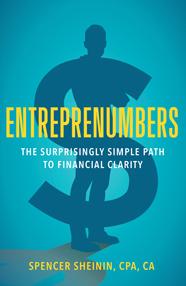
Spencer Sheinin is an entrepreneur and Chartered Professional Accountant with more than 20 years of experience. He is the founder and CEO of Shift Financial Insights, which provides simplified accounting and financial insights for growing businesses. He has worked as an investment banker and has owned businesses in manufacturing, construction, cold storage, and real estate. He is the bestselling author of Entreprenumbers: The Surprisingly Simple Path to Financial Clarity and teaches for the Chartered Professional Accountants of British Columbia. An endurance sports enthusiast, he has completed ultramarathons, IRONMAN triathlons, and marathon swims, and he lives in Vancouver.
📚 Books by Spencer Sheinin
Transcript
[0:00:39] NVN: Spencer Sheinin might be an accountant but he doesn’t just talk in numbers. He talks in stories and in his new book, Entrepre Numbers. Spencer teaches entrepreneurs how to think about their businesses accounting and numbers in a new, simpler and more resonate way. As an entrepreneur himself. Spencer believes in the power of entrepreneurs to change the world and this book is a powerful tool to help their businesses be more successful. Spencer, thank you for joining us today.
[0:01:10] Spencer Sheinin: Yeah, thanks so much. Appreciate you having me.
[0:01:12] NVN: We’re here today talking about your new book, Entrepre Numbers, and I’d like to start by having you explain to me how you serve as a translator between accountants and entrepreneurs. I think that’s such an interesting way of putting what you do.
[0:01:29] Spencer Sheinin: Yeah, thank you. Well, I’m both an entrepreneur and a CPA. I’ve been a CPA for almost 20 years and most of that time, I’ve also been an entrepreneur. I had operating businesses in manufacturing, in construction and in cold storage over about a 15-year period. Not only do I have the financial background and understand accounting and financial statements and all the accounting stuff. I also think more like an entrepreneur. I find that to be a pretty natural bridge between the two.
[0:02:03] NVN: What I really enjoyed as I was bringing myself up to speed on your book is – you’re talking about numbers and business but it seems to me like you're doing it in such a human way where you’re addressing the fact that many entrepreneurs have fears about working with numbers, where they have blockages and – or that too. I love you to just talk to me about the human element of it and what you’ve seen there?
[0:02:31] Spencer Sheinin: You know, I think a lot of entrepreneurs, you know, imagine you start a business, whether you start it, maybe you inherit it, maybe you end up owning a business by accident. Most people do that out of like a love, a passion, necessity but it’s not because they came up with any business or accounting training. They end up with this business and it just keeps getting bigger and bigger, if all goes well, it gets bigger and bigger. They’re kind of being ignoring this accounting because really, accounting is its own language. You know, I went to school for three years to learn how to write, create, interpret financial statements. Where most entrepreneurs didn’t. It’s this kind of black box of confusing information. By making it actually accessible, the way an entrepreneur thinks, again, I wasn’t entrepreneur, it’s how I thought, it’s how I wanted my numbers presented even though I was an accountant. To actually like you say, humanize it, you know, turn it into pictures, turn it into the data visualization where you know, picture’s worth a thousand words where you can look at something and instantly know what’s going on without having to have an accounting degree to dig into the numbers. The books are dying to tell you a story. Let’s turn it into a story that actually resonates with the entrepreneur and they really know what’s going on in their books instead of it just being this source of blah, grossness that they avoid.
[0:03:52] NVN: I love that. Talk to me about how we can turn numbers into stories, what does that look like in practice?
[0:04:01] Spencer Sheinin: For me, there’s a couple of pieces, there’s – you know, I break accounting down into the hygiene of accounting, just the stuff that everybody thinks of as accounting and the transactions, the reports, kind of all the stuff you just have to get right in the business. And then, how we turn it into stories and bring it alive is I call the financial insights of the statement. The way I like to turn it into a story is by identifying the top three issues facing the business, through a financial lens and rank ordering it by impact on cash or impact on profit and putting out on a really simple one-page chart. Because there’s so many things pulling at the entrepreneur all the time and because it’s so confusing and there’s so many things happening to just know that your three biggest issues are number one, your labor is too high and it’s costing you $82,000 a year. Number two, you have too many small jobs and that’s costing you $50,000 a year. The entrepreneur can look at a chart that has three negative numbers on it, see which one is the most negative and again, just instantly and intuitively understand what’s going on. There’s a story behind each one of those and that’s where I think it’s the accountant’s job to deliver that information to the entrepreneur and it’s the entrepreneur’s job to solve it. So much for entrepreneurs, especially emerging entrepreneurs, especially those who can’t afford like a bookkeeper and a controller and a CFO and those are just going it alone with a book keeper. They’re not getting that story. They’re not getting the element of what are the biggest issues facing the business through a financial lens.
[0:05:37] NVN: What I really love that you’re doing there is it sounds to me like you're taking these meaningless or overwhelming numbers and framing them in such a way that entrepreneurs can look at them through their entrepreneurial lens. What they’re strength is presumably, which is looking at things in a new way, finding solutions to problems, rather than just looking at a listing of numbers.
[0:06:03] Spencer Sheinin: Well, it really calls out the biggest issues and you know, I do a fair amount of speaking on this topic as well and you know, I always kind of ask the question like if let’s just say your office expenses are high by $2,500 over budget but your labor’s off by 80,000. It’s not that I don’t care about the office expenses being over 2,500. But because that’s like an easy one and because entrepreneurs see that and they panic that we have too many pencils in the stationary room. It takes them off track. By looking at those top three. Those top three, there’s a lot of work that has to go into figuring out those top three. We’re talking about looking at budget variants analysis. We’re talking about looking at trend analysis. Looking at ratio analysis. Benchmark data against other people in the industry so t here’s a lot that goes into creating that simple story. That’s a lot to ask of the accounting team but it’s the difference maker from the accountants getting a reporting package and it being a pain for them to being something that they invite so that they can actually take action on their business and move the needle the best way they can.
[0:07:06] NVN: Talk to me a little bit more about identifying those top three issues. This is something, if I’m understanding correctly, that will fall to the accounting team or book keeper, is that correct?
[0:07:19] Spencer Sheinin: Yeah, pretty much, everything I talk about is actually the responsibility of the accounting team or the book keeper. What I’m offering in this book is to empower the entrepreneur, to learn how to confidently direct their accounting team. Because right now, the accountant’s probably sitting off in a corner somewhere maybe quietly, probably quietly, most accountants are quiet. I make fun of accountants in the book, I should apologize but I am an accountant so I’m just making fun of myself too so it’s okay.
[0:07:45] NVN: You're allowed to.
[0:07:46] Spencer Sheinin: Yeah, thank you. You know, the accountant’s off in the corner, kind of doing their own thing and the entrepreneur may not have the confidence to say this is what I need. This book is really empowering the entrepreneur to direct their team to get them what they need. When it comes to figuring out this top three, it is a very technical, numbers heavy approach like I said, you know, a few of the things would be a budget variant analysis. Trend analysis over the last couple of years, looking at profitability, things like slicing and dicing the data in a way that you know, maybe you slice it by segments if you have I don’t know, in construction, new homes versus rentals, versus tenant improvement. Where were you actually making money in your business and which of those segments, if you grew would have the biggest impact on the business? Things like that, looking at the customer list, you know, I looked at one example that I liked to use a lot and this is legitimate data, one of our clients had in the prior year had done 97 different jobs and 60% of those jobs, nearly 60 of those jobs provided 8% of their revenue. Imagine, 60% of your work gives you 8% of your value. That type of analysis completely changed what type of clients they went after and transform their business. Those are the type so insights where just entrepreneur’s eyes light up when they get it in a clear, easy to understand way. Not in a typical accounting way which is buried in a spreadsheet.
[0:09:19] NVN: Yeah.
[0:09:20] Spencer Sheinin: Hopefully there wasn’t too much in that answer there because I went off a bit.
[0:09:23] NVN: No, not at all. It actually made me think that’s what the pause was because I was sort of turning this back on my own life and thinking, how intimidating it can be in instances when I don’t have a firm understanding of something to direct the person who is a specialist in that thing. I love that you’re giving entrepreneurs who aren’t necessarily interested in the intricacies of accounting or well versed in it, tools so that they can direct their accountants.
[0:09:57] Spencer Sheinin: And to know if their accountants are actually on track for them or not. Because that’s another kind of black box. “I don’t know, is my book keeper doing a good job? I have no idea.” There is some test in the book really basic questions that can be asked. “Can you show me this?” “What do you mean you don’t have it?” Just some offering some subtle ways of determining if the team is on track and there’s a couple of checklists that allow you to kind of take that to the team and say, “Bring me back this checklist, let me know where we’re at.” None of this is up to the entrepreneur to do. This is all for the entrepreneur to drive their team.
[0:10:32] NVN: Excellent. Let’s give listeners some examples of that, what are some common, just a couple of common things that business owners should be in the loop with in terms of their numbers but that accountants may be overlooking?
[0:10:47] Spencer Sheinin: Are you talking about like, just getting the quality of the accounting to a point where the hygiene can be done? Is that a couple of examples in there?
[0:10:53] NVN: You were talking about how you may not even know if your accountant is giving you the information that you need. That’s kind of what I’m looking for here, are things we need that we might not be aware of and should be testing for?
[0:11:08] Spencer Sheinin: There’s a couple of really simple ones and these are kind of like accounting 101. You know, if you’re an entrepreneur, you just go to your book keeper and say, “Can you show me the latest bank reconciliation?” Today, we’re recording this, it’s January 27th, the December bank reconciliation should be absolutely complete. If it’s not, that’s a bit of a red flag and even if you don’t know what a bank reconciliation means or looks like. You're going to know if they’re like, here it is, it’s done versus they get kind of like, they start making excuses, “I’ve got the October one done.” That was three months ago, four months ago. That’s one of them. Another one that I really like is asking, “Can you show me our accrual’s for the last few months?” I don’t use a lot of accounting terms but this one I think is a good one to ask the book keeper. An accrual basically means, there’s a difference in accounting perspective on when something hits the bank versus like say you’re collecting a deposit from a customer. When you put that deposit in the bank, you haven’t actually earned it yet, you should actually be accruing that deposit, you only earn it when you do the work. Pretend you’re a marketing agency and you’ve got a $100,000 project and you're lucky enough that you can charge a 50% deposit so you get 50 grand in your bank. But you don’t start working on it until February. Well, you haven’t actually earned that money in January. Your bookkeeper accounting team should be recording these accruals and they should have a list of them which you know, matches when the work is done versus when the money is received and same thing for payments out. If let’s say you pay your insurance once a year and it’s 20 grand, well, say, 24 grand to make the math easy, you should be experiencing $2,000 a month in expense because even though you may have paid it in a single check, really, you’re incurring the expense over time because that you paid for a year’s worth of insurance. Those are a couple of examples of accruals so when you go to your bookkeeper and say, can you show me the accruals that they kind of loo up sheepishly and haven’t done any accruals, that’s a bit of a red flag that they may not be on top of things at the level you need. If they hand you one, even if you don’t know what accruals there should be, the fact they’re doing any is at least a sign that they’re doing some of the basics right. Just a couple of little indicators there.
[0:13:28] NVN: Perfect. Let’s talk a little bit about what is at stake here. Why is this such an important topic that you invested your time and resources working on this book?
[0:13:44] Spencer Sheinin: Yeah, great question. I believe entrepreneurs can change the world. I see my role is to help them through their financial blind spot. Not every entrepreneur is going to change the world for the better There’s some that don’t have the best of intentions but all in all, I think entrepreneurs can solve a lot of the world’s biggest problems and I am hoping they don’t get stuck around driving so they don’t get stuck in a financial blind spot and even if changing the world means employing five, 10, 20 or 30 people all of a sudden if you are employing 30 people and creating a good environment and those 30 people have family. Let’s say it is a four-person family on average, you are impacting the lives of a 120 people by being an entrepreneur and providing those jobs. So, I think entrepreneurs can change the world and I get really excited and inspired by that. And if I may just one more second, the other thing that I think is at stake is I believe entrepreneurs are driven to increase profit for one of two reasons. Either A, for personal lifestyle reasons, they want a bigger house, a bigger car or they want their kids to grow up better than they did. They want more free time, whatever that side is that is the personal reason and the second reason is the impact reason. A lot of entrepreneurs I know really do want to have that impact and by increasing the profit, it actually allows them to have a bigger impact because there is more available to invest and reinvest into whatever project they’re working on. That to me is what’s at stake.
[0:15:19] NVN: You are so clearly, Spencer, the person to write this book because in that answer you just took numbers and turned them into a story. You gave me a lot of insight in how your mind works that was perfect.
[0:15:31] Spencer Sheinin: Thank you. Hopefully it didn’t scare you.
[0:15:33] NVN: No. So you’ve been doing this for a long time and I am guessing that you were able to identify some patterns and red flags. Obviously, I think that whether an entrepreneur is compelled to work closely with numbers, whether they like looking at them or not, they want to their business to succeed and they are taking some steps toward that I would imagine. Are there any common practices you see where entrepreneurs think that they are doing something helpful for their accounting but it actually works against them in some way?
[0:16:12] Spencer Sheinin: Yeah, interesting question. So, two things pop to mind on that. Number one is I think just recognizing the difference between how entrepreneurs and accountants think. Now I am going to generalize and I will apologize in advance what I am going to say for accountants but generally, you know what people would say about accountant they’re boring, they’re in the box, they are rule following, they are risk averse, etcetera, etcetera. And entrepreneurs are the creative out of the box, rule breaking kind of mindset people. So, one thing that happens is when an issue is identified in the business, entrepreneurs and accountants look at that issue with such a different lens. Like we got a cash flow crunch coming up, the entrepreneur is like, “We’ll figure something out” and the accountants are like, “What are we going to do?” and the entrepreneurs are like, “Well let’s go try this initiative over here.” Accountants are, “Well, we don’t even have enough money for what we are doing now. How are we going to start another initiative?” and so there is a bit of a banging heads and because entrepreneurs tend to have a very dominant personality, it’s pretty easy to shut down an accountant who’s maybe trying to get you some good information. So, number one is just understanding the difference of the mindset and trying to gather like what is the root that the accountant is trying to get. “What are they telling me and should I dismiss it or do I need to actually listen to them?” Because accountants actually bring some value. I know most entrepreneurs think they’re a pain in the butt but they bring lots of value. And then the other thing is that and I don’t know if this is a block or something that the successful ones that I see, there is often that person who is the bridge between accounting and the entrepreneur. There is always questions, there is always how to handle this, there is always a lot of things that the accountant needs to follow up on and if they are going directly to the entrepreneur especially if you are a small business and the entrepreneur is handling everything, the thing that will always fall to the bottom of the list is responding to the accountant on what was this invoice for or how much do I invoice this client for or I’ve got this receipt. But there is no back up like what’s going on. Very few entrepreneurs are disciplined enough to do the process that the accountant need but a good business needs that rigor. So, having somebody in place to be the buffer between the crazy entrepreneur and the stuffy accountant I think is a big win and in our business, we outsource a lot of accounting. We outsource accounting departments for emerging business. That is one of our qualifying questions if there isn’t some sort of office administrator or general manager or somebody who can be our lead point of contact other than the entrepreneur, we tend not to take the business because the entrepreneur is usually too scattered.
[0:18:59] NVN: That reminds me of how we started this interview talking about you being a translator between accountants and entrepreneurs. It sounds like having that same sort of translator within the company if possible is important.
[0:19:13] Spencer Sheinin: I mean I wouldn’t call that so much as the translator as much as like the doer. I mean an EOS terms if a lot of entrepreneurs might know entrepreneurial operating system. It is the role of the integrator, a different book but they talk about the difference between a visionary and an integrator. Usually the entrepreneurs, the visionary and there is some sort of right-hand person who is the integrator who integrates all of the other departments together. You could consider that like a VP ops or president or something like that. So, it is really that person and it’s not so much that they are translating the numbers. It’s just making sure the process procedure is being followed because if the business doesn’t have discipline, which usually the entrepreneur doesn’t, the business needs the discipline in order to actually get the basics right and you need the basics right to inform the insights because without the basics the insight is garbage in garbage out.
[0:20:03] NVN: Got it, okay. Now without asking you to violate any sort of confidentiality or anything like that, I am curious if in all of your years doing this, working with companies, working as a speaker, is there any story that really stands out in your mind of a way that the principles that you’re talking about in this book have really made a positive very noteworthy impact on a company and perhaps made the difference between succeeding and not?
[0:20:34] Spencer Sheinin: Yeah, a couple of examples come to mind and one thing that I see a lot of and again, we tend to deal with businesses up to 10 million in revenue. Once they get bigger than that I often recommend that they have a team in house, depending on the complexity of the business, but one thing I see a lot with prospects in particular is their financial statement, their income statement, their profit and law statement can be called either – Can be like 200, 300, 500 lines long. We are dealing with one client whose income statement is 32 pages long. Now these are all relatively small businesses and GE might need an income statement like that because they are so big and have so many divisions but for a small business that is doing two, three, four million in revenue, you know an income statement that’s 50, 60, 70 lines long should be absolutely enough to get the data they need. So a couple of the real wins has been just restructuring how the financials are presented because again, that is what informs the insight and when you have an income statement that’s 300 lines long for a small business it is so granular and so messy that it is really hard to pull the stories out. So, you know one example again, without getting into the specifics, we took somebody who had this really, really long income statement, we restructured it and by doing that and by setting up – This is a really boring part of accounting the chart of accounts right and the mapping to different classes and that type of thing that the dorky accounting stuff, we were really able to drive out where their profit drivers were in the business. So, one client literally let go of a whole whack of business that wasn’t making money and it created space for a whole bunch of new business that was profitable and I mean they went from struggling to break even to being a very, very nicely profitable business. Just because they change who they were going after in sales because the story and because they got their basics sorted. So they can get better stories, yeah I mean they’re – it was literally a swing of almost a $1 million in profitability.
[0:22:47] NVN: That’s amazing.
[0:22:48] Spencer Sheinin: Yeah that was a real win, we are really happy about that one.
[0:22:52] NVN: Let me throw one thing out there. You mentioned that there is a website with some accompanying materials. Is there anything there that you want to talk about that might make this more interactive for readers or anything like that?
[0:23:03] Spencer Sheinin: Sure, so on the Entreprenumbers.com website, one of the key downloads that I think is one of the big value takeaways from reading the book and it is also what I giveaway on my talks is a sample of what we call the gold standard reporting package and what that does is it’s designed very specifically to address both the hygiene that’s the regular accounting stuff and the insights, which is the stuff that is usable for the entrepreneur. So, it starts off with a lot of that data visualization, those charts, those stories in picture form for the entrepreneur and then gets into the more technical accounting stuff and I’ve mentioned that entrepreneurs and accountants often approach the same problems through such a different lens. Those are actually specifically put together in that package where it speaks to both of them. So, if something doesn’t look right in the picture, the actual hard data is there as well. And the entrepreneur and accountant can actually talk through it together. So, there is that sample package there as a download, which is something that a lot of people have told me they get a lot of value out of having that reporting package.
[0:24:09] NVN: That’s cool, I love that you have the information presented there in both ways.
[0:24:14] Spencer Sheinin: I wanted to put it in the book but it is actually a fairly detailed package and it just didn’t really fit in a paperback size book. So, I figured it wasn’t even legible and I should say there is some examples in the book where I know they aren’t legible. I just wanted people to get the mental picture on their mind of what the page looks like and then it just refers to the website for a free download. It obviously doesn’t cost anything to download it.
[0:24:38] NVN: Okay, anything else?
[0:24:41] Spencer Sheinin: Let me just share a real quick story. So one of the challenges I think entrepreneurs also have is they don’t intuitively understand what an accounting department looks like and the best way I describe it and there is a story in the book, if you picture building a house, let’s say you are building your dream home and your contact is probably somebody who’s got a title like general contractor or a builder or something like that. And on-site they got a bunch of skilled trades. Be it an electricians, plumbers, carpenters, etcetera who are doing the technical work on the job site and then there is going to be an often depending on the size of the job maybe a couple of guys hauling lumber or carrying concrete, sweeping up and they’re called the laborers. So, we all know that intuitively and we don’t have to explain it but what’s often missing from the entrepreneurs is a very similar stack exists in an accounting department. So, at the bottom kind of the laborer equivalent is a bookkeeper. They are a really critical part of the job of course and they handle all of the transactional functions. So that’s like your payables and receivables and payroll, etcetera, etcetera and in the middle is the reporting and compliance function. That is the equivalent of the sub-trades, those are going to be your controller, senior accountants and they obviously handle the reporting but they also handle the compliance. And that is your operating procedures, your SOP’s if you will, picking the right software, setting up the chart of accounts that boring stuff I’ve already mentioned and then on the very top of the stack is usually somebody called a CFO or a VP of finance, director of finance and they are the strategic function. So, they handle things like what happens if we change our pricing structure? What happens if we open another store? Do we have enough money in five years to continue running the way we are? They are usually sitting at the senior management table, helping look at the business strategically through that financial lens and the moment where – the “aha moment” for entrepreneurs especially again those who are doing one, two, three, four, five million in revenue, if you are running your entire business with just a bookkeeper, it’s kind of like building your dream home with just a laborer. They’re a critical part of it and I am not belittling laborers or bookkeepers in anyway. But they are only a part of it and they don’t necessarily have the skills of the reporting and compliance or the strategic function. So, when entrepreneurs get stuck and don’t know how to move or aren’t getting the right information or it’s coming wrong, it’s often because they’re assuming the bookkeeper can build their entire house. They’re going to the wrong place for the wrong thing.
[0:27:15] NVN: Beautiful. I can tell you’re a speaker, you have such a great way of explaining things. I wish everyone could break things down like this, thank you.
[0:27:24] Spencer Sheinin: Thank you that’s the translator in me. I try and make it easy to understand.
[0:27:28] NVN: All right, Spencer let’s talk about where listeners can find you. So, the book is Entrepre Numbers: The Surprisingly Simple Path to Financial Clarity, which is available on Amazon. Where else can they find you?
[0:27:42] Spencer Sheinin: Right, so Entreprenumbers.com has not only some additional downloads and supporting information for the book. All my contact information is there and then my core business is shiftfinancial.co, not dot com, dot co and there’s additional resources and contact information there as well as where I can be found for speaking engagements. I’ve spoken all around North America. I have actually spoken in a few different countries around the world as well. So, I am happy to do that and we of course have a blog that is fairly active and you know if you Google me, there is a number of podcasts out there that I have done that you can find me just by googling Spencer Sheinin. Those will bring you at the top of the list of a number of podcasts for different industry groups that I’ve done a similar podcast for.
[0:28:29] NVN: Excellent, thank you for joining us today, Spencer.
[0:28:33] Spencer Sheinin: Yeah, my pleasure. Thanks so much, I really enjoyed it.
[0:28:36] NVN: Thanks for joining us for this episode of Author Hour. You can find Entrepre Numbers, on Amazon. For more Author Hour, hit the subscribe button on your favorite podcast service. Thanks for joining us, we’ll see you next time. Same place, different author.
Want to Write Your Own Book?
Scribe has helped over 2,000 authors turn their expertise into published books.
Schedule a Free Consult