Julie Wald: Episode 431
Read the full transcriptJulie Wald
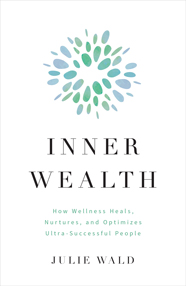
Julie Wald is the founder, CEO, and Chief Wellness Officer of Namaste, which since 2003 has consulted, curated, and delivered personalized fitness and wellness solutions for individuals, families, and organizations. With more than twenty-five years of experience as a clinical social worker, yoga and meditation teacher, Thai bodyworker, and Reiki Master, she has advised and coached a clientele of high-performing business leaders. She holds a master's degree in social work from New York University. In Inner Wealth, she offers a framework for integrating the most impactful wellness practices into a busy life in a way that feels natural and doable.
📚 Books by Julie Wald
Transcript
[0:00:28] NVN: As the founder, CEO, and chief wellness officer of Namaste New York, author Julie Wald has dedicated her life to helping people live healthier, happier lives. With 25 years’ experience and various modalities under her belt, including, as a clinical social worker, yoga and meditation teacher and reiki master, Julie has identified four pillars of wellness. In her new book, Inner Wealth. Julie explains what these pillars are, why they’re so important and how we can bring various practices in to our lives to combat burnout and generate health, wealth, and freedom from the inside out. Julie, thank you so much for joining us to talk about your new book Inner Wealth today.
[0:01:13] Julie Wald: Thank you for having me.
[0:01:14] NVN: Let’s start off by explaining to listeners what inner wealth is.
[0:01:21] Julie Wald: The idea of inner wealth is about how we cultivate an experience of inner abundance. Often times, in our society, we’re so focused on what we can cultivate and create externally in terms of resources but we don’t pay a lot of attention necessarily to our internal resources and when that happens, we feel the opposite of inner wealth, we feel quite poor inside and so. Really, inner wealth is about cultivating health and wellbeing from the inside out.
[0:02:04] NVN: With that in mind, you’ve written a book about inner wealth and are also the founder and CEO of Namaste New York which has a mission to help people live healthier, happier lives. Obviously, this is an issue of great importance to you. I’d love to hear why that is?
[0:02:25] Julie Wald: Well, you know, I started my career as a clinical social worker and I worked with some of the most disenfranchised human beings in New York City, in the country. While I was doing that work, I realized that I really needed to figure out how to take care of my own mind and body so I could optimize that as a tool, to support other people. I dove deeply into the work of yoga and meditation and all different kinds of eastern practices and eastern wisdom and really cultivated my own toolkit and started to moonlight as a yoga and meditation teacher to people in New York City who were really ultra-successful. High performers, people who had achieved a tremendous amount in their career and I found myself in this really funny interesting scenario whereby I would spend most of my day working up in the Bronx with clients who were struggling mentally and sometimes physically. I would book end my days in the early morning and in the evening’s with my yoga and meditation clients who were really primarily these high net worth and ultra-high net worth people living very different lifestyles than the people up in the Bronx. One of my biggest takeaways was that these two demographics were actually in many ways, aside from sort of extenuating or extreme situations, you know, dealing with similar levels of happiness and misery, right? It were dressed up in different outfits but they all had similar struggles in terms of worrying about children or aging parents or their health, or substance abuse or relationships. Really, it was about having and cultivating internal resources that was universal for both of these groups of people. I just became deeply fascinated with what were the ingredients to cultivate this experience of health and happiness and wellbeing and you know, my laboratory for many years became these ultra-successful people. Primarily because they were very bleeding edge, this goes back to 2003 or before that actually. They were bleeding edge in their thinking and they had the resources to really experiment with a lot of mind/body practices to figure out what was most supportive. With them, you know, we and I, learned a tremendous amount and then quite frankly, have had the ability to bring that to all different kinds of populations.
[0:05:36] NVN: What a fascinating experience to be able to see two worlds so close together that are really grappling with the same human thing despite a pretty big difference in circumstances it sounds like.
[0:05:51] Julie Wald: Totally, absolutely. That’s not to minimize really the – some of the issues and struggles that are related to sort of lack of education and lack of resources and all of those baseline social and socio economic issues that were really creating huge challenges for the population of people that had less. However, you know, if you were to sort of just spend an hour with these two different populations side by side, in terms of how they showed up at the door, their mood, their affect, their you know, sense of strength or competency or fulfillment, it was actually a lot of similarities.
[0:06:35] NVN: So interesting. Along with all of this, one of the specific audiences that you're gearing this book toward, which I believe is pretty much all of us at this point is people who are feeling burnt out and sort of disconnected because of that. I’d love you to speak to what you see in terms of burnout these days, and how it’s impacting people?
[0:07:02] Julie Wald: Yes, people come to Namaste all the time. Sort of you know, really saying to us like, “Where did I lose the plot here,” right? “How did I end up in this situation where I’m not okay and I have a great education, I have in many cases,” you know, “Wonderful family, a great support system. I have a good job but yet I’m overwhelmed with stress, with anxiety, with sort of a feeling of disconnection from myself and what brings me joy and fulfillment.” “I’m not quite sure how to break what feels like very debilitating cycle and situation,” and so you know, very outwardly successful people often times are struggling with a real disconnect between the vitality and abundance that they feel on the inside, you know, compared to sort of their big fancy house and all of their external riches so to speak.
[0:08:09] NVN: It’s such a – I mean, burnout for all of us, regardless of socio economic class, is so dangerous on so many levels which you can speak to more than anybody but, you know, it strikes me as particularly debilitating within these populations where people have put in all of these work to achieve their dreams, whatever that looks like to them and even with all that work and all of that human investment are still not able to be present to enjoy it.
[0:08:42] Julie Wald: That’s it, you just hit the nail on the head and I think, sometimes, it’s people who are, you know, are maybe approaching their life from a more balanced perspective and less achievement oriented that find themselves in the situation and a little less extreme way. Sometimes, it’s the people that you know, are so focused on high achievement that end up realizing that they’ve put kind of all their eggs in one basket and haven’t taken the time to cultivate other areas of their life that may prove to be deeply fulfilling, whether that’s investing in community or spiritual life or you know, friendships or relationships. That bring them a lot of joy and sustenance or their most intimate relationships, right? They could turn around, you know, 10, 20, 30 years later and say, “I forgot to have meaningful conversations with my children or my parents or I was so busy doing, doing, doing, that somehow, you know, I’m left feeling a sense of emptiness.”
[0:09:56] NVN: Which is pretty tragic.
[0:09:57] Julie Wald: Yeah, absolutely, and again, you know, this doesn’t mean that stress and burnout isn’t an issue for everyone. I mean, I just – I happen to have had a lot of experience with this specific demographic or actually, I’ve had a lot of experiences kind of the extreme demographics you’ll say but I do see and experience it in my own life personally how this 24/7 digital lives that we’re all living have created just a sense of total sensory overload, mental overload, it’s really that people almost have no choice but to figure out how to tune out at a certain point because of over stimulation.
[0:10:38] NVN: Yeah, it’s interesting, you know? I found myself rewinding to this oddly specific scenario that I used to go through every day where I would walk to work, this wasn’t about 2005 and I’d have my Discman and I remember carefully selecting the CD I was going to listen to every day because I knew that I was stuck with it for the entire walk to work and back home again. It had to be a good one and it would get frustrating to me sometimes being with that one CD but now, I think about it and I’m like, “Man, that would never happen now,” just like in that simple example of music. We have every song we could ever want at our finger tips at all times and little things like that, I mean, it’s just incredible.
[0:11:26] Julie Wald: Yeah, and our ability to sit with discomfort has become really nonexistent because we have this constant instant gratification. I was in a restaurant waiting for a friend and the friend was running late, she was running like 15, 20 minutes late, she wasn’t showing up and she sent me a message and she said, “I’m stuck in traffic, I’m going to be really late.” “No problem,” I’m just sitting there, kind of banging out emails, getting so much done. I really and truly could have cared less that she was late, I had so much to do. I was getting stuff done, she was going to show up, we would have lunch, maybe a little bit of a shorter lunch than I had originally hoped but the waiter walked by and he looked at me and he said, “When you have your phone, you’re never alone.” I had this moment of just realizing that you know, back up, rewind to before I was sitting there with my phone and I don’t even know what year that was at this point but – or even, you know, a smart phone, without a smartphone, that I literally would have had to sit there in the restaurant, with all of the emotions of thinking, is my friend going to show up? Or not going to show up and I would have been angry and I would have been worried and I would have been wondering whether I was in the wrong place or I got confused. Or, was this the right day and you know, I would have literally had to sort of sit with and figure out how to navigate just a whole host of emotions in that moment, just within my own little being but I didn’t have to do that. You have to think that as a society, as a culture, our ability to sit with and be with and navigate, you know, the simplest frustrations like this isn’t the song that I want to listen to because I want a different CD to you know, much larger more painful sort of situations that we find ourselves in. It’s really – Our muscle for that is pretty weak I think at this point.
[0:13:24] NVN: Absolutely. What a great example because you’re absolutely right, we all do that and it’s getting really difficult to imagine what we did before. How did we used to sit in the restaurant quietly, what would that look like? With that in mind, let’s talk about the four pillars of wellness that you’re including in your book?
[0:13:47] Julie Wald: Totally. You know, the interesting thing is that – well, I’ll get to that in a minute because I want to get back to what you just said which was kind of –
[0:13:57] NVN: Please do.
[0:13:58] Julie Wald: But just like, it doesn’t actually go right now, it goes later on but I don’t want to forget which I probably will forget. But this concept of, what would we have been doing otherwise because I think that one of the reasons why we have to be so intentional about wellness and about self-care and about these four pillars is because they’re actually not built into our life naturally anymore. When I started off on sort of this ‘wellness journey,’ it was back in like 1992 or something like that and you know, the people that were taking the classes and doing the things and learning what I was learning were really seekers, they were really spiritual people, they were really sort of out of the box, not mainstream. But today, and as evidenced in my book. All of these practices and the four pillars and how we’re talking about them is really geared towards everyone, towards a very mainstream population and part of the reason is because the behaviors and the aspects of life that used to just be normal, natural aspects of life that would cultivate a sense of mental health and wellbeing are really not there anymore. Now we have to have pillars and structures and framework for them because they’re just not naturally occurring. The four pillars are movement, stillness, touch and connection and nourishment. Movement is obviously exercise but it’s also all kinds of movement. It’s taking a walk, it’s really just incorporating a sense of embodiment into your day so that you're not just a talking head all the time and movement can be you know, really planned movement such as – or plan isn’t quite the right word. It’s really more like a longer workout session, larger movement practices, and movement can also be integrative. You know, small things: like, “I am going take the stairs instead of the elevator or I am going to walk over to the water cooler or I am going to get up and go have a conversation with somebody instead of sending them a message.” Stillness is sleep, it’s meditation, it is relaxation, it’s all different kinds of restorative practices. It is really the other half of movement. It is the balance to movement. It’s what we would have been practicing in the restaurant in an integrative way had I not had my song. I wouldn’t actually just having to sit there in my breath, in my mind, in the state of stillness, kind of be – that is what people do when they meditate. So because we don’t have those types of moments anymore, we need to formalize them even if we are not a “seeker” or if you are on a spiritual path. It is really just about sort of mental health and wellbeing as I said. So stillness can be larger meditation practices, highly intentional, and it can also just be really about taking a moment to take a deep breath throughout the course of our day, to stop for a moment. So again, it could be very planned, very integrative. The third is touch and connection and that’s about physical touch but it is also just about human connection. So it is about relationship, it is about the fact that, you know – a formal example of that would be something like getting a massage once a week, which is obviously a touch practice. If it is therapeutic touch, it is super supportive mentally and physically to our body. An integrative example of that would be holding our partner’s hand when we are walking down the street for example instead of holding our phone maybe. And then last pillar is nourishment, which is food. It’s nutrition but it is also art and music and community and all of the things that nourish us as human beings. The things that fill us up mentally and physically. So, you know, that is really a quick overview of the four pillars and really at the end of the day, these are the ingredients that enable a new born baby to thrive. They need movement, they need stillness, they need touch and connection and they need nourishment. And if all of those ingredients are in place unless there is some extraneous variable, this baby, this young child will thrive. As we get older, these variables kind of go out the window. In this day and age even children, for children these variables go out the window because of the lifestyle that we’re living and so, often times people come and they say, “I don’t know why I am not okay. You know I work out, I go to spin class seven days a week.” And then you find out that, you know, maybe they have the movement box checked but all of these other variables are sort of grossly out of alignment and then once you start to play with these different variables in a really conscious way, the human being, just like a baby, starts to feel more in balance like they might have the opportunity to thrive.
[0:19:15] NVN: Yeah, that’s interesting on so many levels. I mean first of all in terms of framing these as our innate needs, which you are absolutely right about and also specifically with movement I think a lot of us have fallen into this where it becomes just another item on our to-do list. So we are really not getting so many of the other benefits that we should be getting out of it because you are still going full boar sometimes when you are moving regardless of what that looks like.
[0:19:45] Julie Wald: Absolutely. In fact we had a client not that long ago who we were doing a wellness plan for because a lot of people come to us really looking for support and coaching around how to implement practices that are really best for them because it is important that you feel that the things that you’re doing resonate with you. It is not about force-feeding people practices that aren’t authentic feeling but she came and she was doing so – You know movement was such a chore. You know she had so many classes and so many things going on and I said to her, I said, “You know, you need to take a walk with a friend in the park. You don’t need to sign up for anything. You don’t need to even break a sweat if that is not what happens. You just need to take a walk with a friend in the park and that’s going to help to begin to balance the situation out” because you are absolutely right, it becomes just another thing on the to-do list, which is not necessarily the solution to the problem.
[0:20:43] NVN: Right. So let’s talk about what listeners can expect to find in this book and basically how you hope that readers interact with it.
[0:20:55] Julie Wald: In the book is really a description, a much more in depth description of each one of these pillars as well as stories of many of the successful, engaging, really quite wonderful clients that we’ve had the opportunity to work with since 2003 and their journeys towards cultivating greater health and wellbeing and I think even though these people are quite elevated in their career paths in different areas of their life I think they’re all – You know at the end of the day, they’re just people and so therefore I think the stories are actually quite relatable and universal and through those stories, we learn how these practices can be so powerful mentally and physically if they are integrated into our life in a really natural, authentic, and organic way but you know all that said, it definitely has to be intentional at this stage of the game to make it happen and we have to figure out how to cultivate an environment in our lives that is conducive to the four pillars in a way that is more natural and less forced feeling and so the book talks a lot about ways to do that. It also gives a lot of tips and examples and actual practices that you can integrate into your life. So the hope is that people would really walk away quite inspired about the power of simple practices that while behavior change is hard, very hard, I don’t want to underestimate or undermine of how challenging it can be to change behavior, the other side of that is that small things can make a really big difference.
[0:22:48] NVN: I love that. Tell me one of your favorite stories. So in the years you’ve been doing this, is there any particular transformation that really stands out to you?
[0:23:01] Julie Wald: Gosh, there are so many stories. That is a great question. You know, one of the things that we have really begun to do more of and just have done for many, many years and are doing more and more of most recently, is supporting people who are navigating a stage of life that can feel scary and overwhelming whether it is because of a chronic disease or something more acute and again, these are high performers just like we talk about in the book but as I mention, people are people. So everybody’s got a whole host of things on their plate and recently we have been working with an older population and that has been really incredible because I think an older population of people are often times very invisible to sort of health and wellness world that people don’t think that huge transformation or change can take place in somebody’s 70’s or 80’s and so because we’ve been in business since 2003, we’ve had the opportunity to work with people through the prime of their career. And then navigating getting older and some of what comes along with that and we have one incredible client who is an older gentleman and he is an academic. He is an intellectual and he works for a major medical institution and he is somebody who’s been just a hyper cerebral human being his whole life and really not incorporated much fitness or exercise ever and he started to feel pretty unsteady on his feet and actually then took a fall and this became really stressful for him and for his wife. They were very, very concerned about as you probably know, once you hit a certain age and you start falling, this can be the beginning of a very dangerous downward spiral and this is an esteemed prestigious gentleman who really was not done working, was sharp as a tack or is sharp as a tack, the task was how do we support him in number one, managing the stressers of sort of embarking on this chapter of his life as you know through the aging process. And then the other was how do we support him in staying physically strong and improving his balance so that he felt more empowered by his ability to have control over this situation and so he started working with a trainer, a really incredible female trainer who is this salt of the earth sort of very much in her body, not super cerebral, although incredibly smart woman who would come work with him on a really consistent basis in terms of building strength and working on balance. And in between sessions, he did a lot of work on his own and then she also started to weave in some breathing and some mindfulness work to support just his ability to be totally present, which very much helps with balance and avoiding falls and to watch the way that he transformed at his stage in life. I mean his wife used to call us when this happened, which is not that long ago and really just she couldn’t believe it. It was his whole mood, his whole outlook on this chapter. In his 70’s and 80’s and this stage of life that he was in flipped on its head. He went from feeling incredibly overwhelmed and depressed to feeling totally strong and empowered and his falls completely stopped happening. The people that he worked with really couldn’t believe how his mood and his overall presentation and his level of vitality changed, he started taking walks at lunch time, which he had never ever done before. He was kind of head down working all day long, would barely move and something so simple just changed his entire mental and physical experience.
[0:27:33] NVN: I love that and it’s such a testament to our ability to change at any point by just making that decision and being intentional. Okay, so I am sure that like me, many listeners at this point are thinking about how they can begin to turn their lives in this direction. So keeping in mind that this is a practice, is there anything that you would advise people to do as a first step?
[0:28:03] Julie Wald: I think that it’s important to think about – because everybody is different. Wellness is a personal thing, it is a personal issue. There is no one size fits all for everybody or one secret cure for everybody. We all need something a little bit different. So I would encourage people to think about the four pillars, movement, stillness, touch and connection and nourishment and think about what areas they feel really connected to and really strong in and where they might feel a little wobbly. And if they can identify which pillar they need to start cultivating one small habit in then it is really about – for example, if stillness is your issue, if you don’t sleep that’s a great place to start because before we do anything, we need to get you sleeping and so if you think, “Oh, stillness, sleep, that’s not something I’ve got under control at all,” then let’s think about starting off with a bedtime or putting your phone in the kitchen at a certain point. Plugging it in and really giving yourself some downtime so that you can begin to get some rest. So it is really dependent on the person about what that one thing is. You know for some people it’s take a walk every day, for other people it’s drink more water, for other people it might be take a day or two and try not eating any sugar or figure out what happens if you leave the house without your phone and you are with your partner and you can just spend a day together without your phones, with somebody that you love and care about. So, depending on where each person feels they need a little strength will depend on what makes the most sense for them.
[0:29:57] NVN: I love of simplicity of every single thing that you just cited there with the exemption of a day without sugar, not to let my personal bias creep in there but that really speaks to what you have been saying and yeah, that this just getting back to basics and our innate needs.
[0:30:16] Julie Wald: Totally, a hundred percent.
[0:30:19] NVN: All right Julie, thank you so much for joining us. The book again is Inner Wealth: How Wellness Heals, Nurtures and Optimizes Ultra-Successful People. Julie, outside of this book where else can listeners find you?
[0:30:33] Julie Wald: They can find us on our website, which is namasteny.com. We are also actually known as namastewellness.com because we do a lot of work outside of New York City. We have an amazing blog where we provide a ton of evidence-based wellness information. So we call on research and we figure out what is really worth people’s while and how can we make sure that the advice that we are giving people is based in scientific findings. And so our blog is a wealth of information that you can find just a lot of empowering ideas and tips and tools and for some people seeing that research is what really helps motivate them.
[0:31:22] NVN: Beautiful. Julie, thank you so much for joining us today.
[0:31:26] Julie Wald: Thank you so much for having me.
[0:31:29] NVN: Thanks for joining us for this episode of Author Hour. You can find Inner Wealth, on Amazon. For more Author Hour, hit the subscribe button on your favorite podcast service. Thanks for joining us, we’ll see you next time. Same place, different author.
Want to Write Your Own Book?
Scribe has helped over 2,000 authors turn their expertise into published books.
Schedule a Free Consult