Sheila Mac: Episode 450
Read the full transcriptSheila Mac
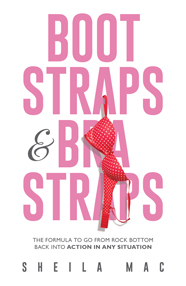
Sheila Mac is an entrepreneur, speaker, and author who coaches business owners and working professionals on building companies and wealth while living their best lives. Her work spans launching and growing businesses, marketing strategy, and building lasting wealth through real estate and strategic planning. In her book, Boot Straps & Bra Straps, she lays out a formula for going from rock bottom back into action in any situation, and she hosts a show based on the book.
📚 Books by Sheila Mac
Transcript
[0:00:18] NVN: All of us will have difficult points in our lives. Even a time perhaps when it feels like we’re hitting rock-bottom. When you find yourself in the midst of one of those moments, it can be difficult to know where to turn or how to get yourself back onto solid ground, let alone, back to a place where you’re thriving. In her new book, Bootstraps & Brastraps, author Sheila Mac offers both reassurance and a proven way out from darkness to light for those who need it. She shares with readers her tested BOOTS formula, as well as other resources, support and words of encouragement for when it’s needed most. She also covers a variety of situations, from finance, to relationships, to career, to addiction and so much more. As bestselling author, Terri Levine, put it, “As you read this gem of a book, you will learn the BOOTS formula that will help you create a new identity, reinvent yourself and produce more income while having a balanced life.” As you’ll learn in this interview, Sheila Mac’s own life is in fact a testament to all of this. Sheila, thank you so much for joining us on Author Hour today.
[0:01:22] Sheila Mac: Oh, it’s great to be here. Thanks for having me, Nikki.
[0:01:25] NVN: Sheila, the title of your book is Bootstraps & Brastraps, which I love. The subtitle is The Formula To Go From Rock Bottom Back Into Action In Any Situation. I feel when it comes to topics like this, generally speaking, authors are writing about them because they've been through some version of that experience in their own lives. Is that the case here?
[0:01:49] Sheila Mac: Yes. In going through my own rock bottom situations, which we've all had a few, I was alone and we have our fair weather friends. I thought about the fact that I wanted to be there as the friend that shows up and a resource. In my life, I've had many ups and downs, rock-bottom situations and I lost my home to the Ventura fire, December 3rd, 2017. I mean, not only did I lose my home that I had just put all my money into, but I rescued my cat and then we went to this little mobile home cabin, teeny-tiny 400-square foot place. The cat got out that same week, got eaten by a coyote. My car got crashed by one of my six children. I hit a rock bottom really fast. The weird thing was I was able to get out of that rock bottom faster than most of the people, because it hit everyone. We couldn't really get the help that you normally would even, because we all lost our homes. I was back on track so fast, even I was amazed. That's what made me write this book.
[0:03:11] NVN: Wow. I mean, that is one heck of a story right there. Wow. You talked about how your gift is your innate ability to see lightness even when a situation seems completely dark. Do you feel that played into this situation and that's how you are able to get from where you were just 2 years ago, to being on a new path today?
[0:03:37] Sheila Mac: Yes. I think I had quite a bit of training. I travelled 7 years and did all the Tony Robbins leadership and programs and worked with that group, so that's one of the things you learn to do even more and something I did most of my life getting through my ups and downs. That was one of the things that I put into my formula. I have a whole formula called BOOTS that go through the steps. I had to coach myself, because there was no one through that. I got out a rebounder, which was one of the things I had at this little mobile home, this little cheaply, dinky rebounder. I'm out there doing affirmations. The smoke is still everywhere. Fires are still burning and my neighbors are – this is now a mobile home park that I'm ending up at, they're looking at me like I am out of my mind. This lady has gone crazy. I’m like, “This is going to work. I know it.” I had to know beyond a shadow of a doubt and look at the gift. There's got to be a gift in this. What is the gift in this? There has been so many gifts. I just bought a beautiful new home. It's my dream home, much better than the home that I lost and it hasn't been that long. I've had so many gifts and blessings and new friends and everything worked out far better than I could have imagined, but I had to put in that belief and that little seed of hope was what got me through too at those first few days. In my book, there's lots of stories of different people, not just me going through these things and giving somebody resources and seeds of hope, so that they can get started over again and rebuild to have an even better life than they ever imagined.
[0:05:28] NVN: I love that idea of seed to hopes. One of the things I want to ask you is this idea of gifts. I agree with you that that is such an important ability to cultivate. I think some people are born with it and it's more innate. To be able to look back at the circumstances that are really difficult and create a straight line from the past to the future, to demonstrate to yourself how in the end that actually moved you in the direction that you needed to go, or where there was some benefit. I'm assuming though that for some people, this is more difficult to do than for others. How do you walk people through that, through being able to identify those gifts, even in times of darkness?
[0:06:15] Sheila Mac: I think the way that I do that through the book is I'm going through stories of different things that could happen. We go through different areas of life. You would go to the chapter that relates to maybe an area that you're working on in your life at this moment, right? Then I go through the BOOTS formula. With that, it's as if you're my best friend, the reader is my best friend and I'm like, “Okay. Right now, we're going to sit down together and we're going to get through this formula.” The formula is called BOOTS. It's being. Who are you being in all that you're doing? It's who are you being now in the beginning of this as this is happening and who do you need to be? Who do you need to show up as in order to get to the next step and get out of this situation, or get back on track? That's the first part of BOOTS. Then the next part is orientation. In the orientation part, we're looking at the problem as this is where we're at on the map, okay? You're in Los Angeles, you want to go to New York. You need to know exactly where you are. You weigh X, you want to weigh O. You have so much in the bank, or you used to and now you don't. Whatever it is, you have to know exact reality. This is where we're at. It's not better than it is. It's not worse than it is, but we need to know the exact reality of where you are in the map. That's your orientation. That's the second letter in BOOTS. The next is the next O. That's order of operations. In that, then we need to set up a plan and you need to do that in a certain order. You're not going to be able to go buy the new swimsuit, unless you lose so many pounds, or whatever it is. I'm giving you different examples, but there's certain things you have to do, first, second, third in order to get the best results. That's where you're going to design the order of how you're going to do this step by step. There's something that's magic that happens when you have this type of a plan and you start to put it in these little steps, because when you're moving forward and you have order to this, you have direction, you have order and you know who you need to be already in the first part of BOOTS, you're already starting to have something to do. That gives you purpose and hope and reason and you feel you're making something happen, okay. The next thing is your thinking. You have all this and this is where you need in order to keep going every day with these little steps is your thinking. That means your mindset. You need to put in your mindset and that's where my affirmation example on the rebounder, where everybody thought I was crazy, that's where thinking comes in, that's where putting in the thoughts where you're going to have – your fairweather friends are going to be like, “You're wasting your time.” You're going to have people that that may not agree with what you're doing maybe and you're going to have to go with your thinking and keep your mindset focused, because sometimes you're going to put in some work for weeks, or months and you're not going to see the results in a day. It's going to take some time. That's where the thinking is going to come in really strong. The last in BOOTS is S and that's stepping up. That's stepping up and stepping into your life. That's where you're stepping into what happens as you do this formula and you start living into it, what's going to happen is you finally reach this point of equilibrium and that's where all this comes together and it gets easier. Then things start to show up and it's not as hard. Finally, you're not in survival anymore. You get to a peaceful place. Then it gets easier and you start seeing results. Then you can have more results. How do you go from your house burning down and losing just about everything, even your car, everything, to buying your dream home and having so much success and many blessings, being able to write a book to help people? All that in a very short period of time, because it goes exponentially. That's the BOOTS formula.
[0:10:32] NVN: I would love it if you could walk me through – I know you gave some examples throughout, but I'd love to hear what this looks like in practice, whether it's the example of you making it through the fires to where you are now, or if it's a client whose story really stands out to you, confidential of course. I think it would be really powerful to hear about this in action.
[0:10:53] Sheila Mac: Okay. I think a good thing to do would be to get out a piece of paper and what you're going to do is you're going to title it with – so this is what I literally did for me, okay. I had to sit down and I had to say, this is where I'm at right now. I sat down and I talked about write down a column of what I had left. I did a slight inventory of my house. This is where I have to live. My bank account, this is what I have left. In one column, I have what I have right now and what I can work with and what are my possibilities. I wrote that down. Then I had another column, so now we're doing four columns and we're going to write about what we're going to do, so we're going to write our action steps of what can we do with that. What I did, for instance I got a beater car. I had a beater car from one of my kids and that went in one column. I was able to take a very small amount of money to get the brakes to work and that one in another – fix the brakes. Then I went to the dollar store and that was my thinking on that car. In that, I put all these beautiful stickers on the car inside and it was all positives, like blessing and gifts and all these things and I got a really fancy steering wheel cover. My son said, “Oh, you souped up the car.” I mean, it was such a beater car that you literally had to roll the window down by hand, okay. It was really bad. I was used to driving very nice cars. I had to go through those steps. In each piece, you're going to write down, “Okay, this is where I'm at now. Now I have a beater car and who do I need to be? I want to be at this level of being at a beautiful place, even in this car, because this car doesn't define who I am. This is just transportation until I get back to the car that I want to be in.” Then it's the orientation. Okay, so this is where I'm at ,okay. Then there's order of operations. What are the steps I need to do to get to the other car? I took those steps. First thing, I'm going to put those stickers. I'm going to make it the best beater car on the planet, but I'm also going to do some certain things in my other businesses. I have real estate. I've always been in real estate on the side, and so I amped that up and got a team and got sales going and was able to get a new car really quickly within a few months, so that kinda thing. There was that order of operations, so I had to do that. Then there was my thinking. How am I going to put this thinking? The stickers, I think those were huge, because it had to be – how am I going to be in a good mindset when I have to deal with a very different car and lifestyle? Mobile home, this is not my lifestyle. It didn't fit, but it was where I was at and it was a challenge, yes. I'm going to keep my thinking really positive. I had to go through the people at the mobile home park laughing at me, “Oh, who does she think she is? She thinks she's going to get through this? How is she going to get back on her feet through this? She's crazy,” jumping up and down doing the affirmations. It's not going to happen. Well, it happened. I think I didn't listen. I kept my thinking focused on what I wanted to do. Then I was stepping into it everyday, working long hours. I had to rent cars on Toro and rent cars on, because I couldn't afford the regular rental cars. It's like a discount car rental program. I went to take clients out to see fancy homes, because the beater car just wasn't going to cut it.
[0:14:52] NVN: They wanted the stickers.
[0:14:55] Sheila Mac: No. It was hard. My credit got totally crashed. I have a whole chapter on how to clear up your credit and rebuild from scratch there on finances. Because whenever you're hit with one rock bottom, it tends to affect so many other areas of your life. You have to clean everything up and that happens. Yeah, I couldn't even buy a vacuum, probably at that time. It took a while to get insurance and get everything and then they just paid off your debt and you lose a lot of the money you put into things and you have to start over. This is how to start over. My book is really about life, how to get through these things. I don't have all the answers, but I also have a huge resource list at the back of the book and then a website that has even more resources, because my goal is that if somebody needs help in these areas, that they're able to get help quickly and easily.
[0:15:52] NVN: You've said so many things that I just love all in a sequence. One thing, but first of all, I love the stickers, because that's such a small little thing. To use something that small and achievable, no matter what point you're at to completely change your mindset is a really powerful thing.
[0:16:13] Sheila Mac: It was silly, but it really – I mean, even my – one of my sons. Like I said, I have six kids and they're all grown. My son was like, “You souped that car up.” I was like, “Yeah,” because I needed that mindset. I needed to have it in front of me, because the car was bad. It drove to the side a little, needed about – it doesn’t work and it just –I just fixed the break so I would survive going up and down this canyon road. I mean, it was bad and embarrassing. It was like, “You know what though? I'm going to make the best of what I have to deal with. I'm going to be the best today and tomorrow will be better.” Sometimes, that's what we have to do in life. It gets better because we're bringing that energy into it and showing up our best self today.
[0:17:05] NVN: Yeah. That is an offshoot of the other thing that really struck me too. You're talking about how when we hit bottom in one area of life, it seems like the other areas of our life get rocky too. When you were initially telling your story, one of the elements of it that got me the most was the part about your cat, because it just – even hearing that, it feels like, why this on top of this other huge loss? It seems to me that there's a fork in the road there for a lot of people, where you can either go into victim mode at that point, or you can do something like what you're talking about, which is to take control of the situation and begin to shift things from there.
[0:17:45] Sheila Mac: Yes. I don't know why. It does tend to happen in life, where I just talked to someone who lost a father and a sister in the same year. Now that was last Christmas and now it's Christmas. It tends to happen like that, where things all happen at once. Then it was a financial issue, because then they paid for everything. It tends to happen and I felt terrible for the cat, because well, we loved that little kitten so much and everything. You just think you have to just keep going, because it's not always going to be that way. The good also shows up in numbers as well. There's going to be our seasons in life. When I was a little girl, I was about five-years-old, at this point I was living with grandparents. My grandmother had all these lady friends that were her age, so they were all grandma age and they were all business women, yet very feminine and they had gone through things. Some of these women were like – I had a survivor that was in a concentration camp. I had another lady that she had escaped from Iran with all this change of government and they lost their home and everything and barely made it to this country. All these different ladies came in and they had these stories. I'm just a little girl, just while they're having coffee and they talk freely and I'm sitting there listening and I thought, “Oh, I wonder what my story is going to be.” I knew listening to their stories that I too was going to make it and that one day I'd have my own stories and that was life. I often have their stories with me and that carries me through and lets me know that yeah, life is going to be like that and we're going to make it through.
[0:19:48] NVN: What an incredible lesson to soak in when you were still a kid. That is amazing to me. I didn't realize I was consciously doing this until after the fact, but it took me until I was about 40 to get out of the mindset. I kept thinking I was headed toward this state of perfection, like there was some point in life where all of a sudden, I was going to pass some cosmic test and things would be easy and how I wanted them to be from that point out. It sounds ridiculous saying it out loud, but I think I really did believe that. It was actually very freeing once I realized, “Oh, no. This is life,” like you were saying, except you got it several decades earlier than I did. We just all have a story. It's easy to say once you're out of these difficult moments. I mean, I think most of us can attest to the fact that it is through these really rock-bottom moments that we discover who we actually are and find our power and become more appreciative. There are just so many gifts after hitting that rock bottom.
[0:20:55] Sheila Mac: Then think, when we get to perfection, perfection of what society wants and then there's the perfection of the perfect magic moment gifts that happen whether it's a rock-bottom time in our life, or the best time of our life where we've got to grab every single magic moment in life and just enjoy that and enjoy those moments. Me jumping on that rebounder with the smoke all around me, or the gift in a magic moment and my son loving the souped-up car. Those were magic moments that are magic memories now. Even in the midst of what's going on that's not perfect, it's just loving and living into those and not focusing on the things that we can't fix right at the second, but then going towards something better toward the future, but enjoying every little thing instead of waiting for one day, waiting for one day like you said. I think maybe it's a society thing – wait until you graduate, wait until this, wait until that. Holy smokes. And then we're dead. We're still –
[0:22:06] NVN: Still waiting.
[0:22:07] Sheila Mac: It’s like, don't define happiness even in another person, place or thing. I'm going to be happy when I'm X amount of pounds, or when I graduate, or when I marry perfect person, or when my kids grow up, or when this, or that, or they get into this college or that, or I win the lotto, or something happens. Be happy. Maybe that was part of the magic is that I chose to be happy despite it. I just chose to take those magic moments now. I wasn't going to wait.
[0:22:40] NVN: Yeah. The other thing that seems inherent and what you're talking about is that there is not a scientific formula to happiness. In other words, the amount of happiness we feel is not gauged by the gravity of the thing that happens. It can be just from stickers, or from bouncing on a trampoline, or whatever the case may be. There's lots of happiness in that.
[0:23:03] Sheila Mac: Yeah. Just playing your music. I mean, I was rocking some music in that car.
[0:23:10] NVN: Windows pulled down with the manual window roller.
[0:23:16] Sheila Mac: I'm going to make it the best out of this. Who cares what people think? It's how do you feel, because how you feel affects the energy you're able to give to all the work you might have to do. Yes, I had to put in a lot of work, tons of hours to get back on track. It didn't magically show up, but I needed those gifts of energy and time and fun, little, I guess breaks from it that I could give myself in order to refuel enough to keep going and get through that. Yes, I gave myself time to grieve over the cat and over the loss of the house and different things and help neighbors. I donated what little I had left to other people that had less than I did. I gave time to helping out with people that were – they didn't even have a mobile home to go to. I couldn't complain. That was part of helping me refuel, giving back and all those different things that I needed to do also. We need to honor all those emotions, but it's not waiting until you get the dream home, or the better car. It's enjoying every moment now.
[0:24:28] NVN: I don't usually do this, but one of the things that really strikes me about your book is that you touch on such a wide array of topics after providing the BOOTS formula. You're hitting on all these different types of dark holes people can hit. You have grief here, relationships, abuse, finance, careers, parenting, parenting your parents, addiction. I'm just really fascinated by all of the different facets that you've covered here. Can you speak a little bit to that?
[0:25:03] Sheila Mac: In all those topics, I do have quite a few stories of my own life. Like I said, I raised three children of my own. Three are mine, three I fostered, to adopt. As a child, I was in foster care. I was homeless for three years and then found foster care. I emancipated when I was very young. I went through a lot of ups and downs. I took care of every single relative, grandparents. I took care of and helped with elder care. I went through a lot of the grieving process that way. I've had quite a few of my own. It's a book about life and getting through that and how to go through these ups and downs and not be alone and have resources that when I was 23-years-old and I had grandparents in two different hospitals and a father dying of cancer and I had no clue about different elder care options, or resources that I needed. Nobody knew either and obviously, my friends most of them didn't know. My parents were not healthy enough to take care of their parents. I was taking care of them also, and so I had to find out the hard way and I want people to be able to go to this book and say, “Okay, here's a guide, here's some stories, here's the BOOTS formula. Also, here's resources.” So that they can get as much help as they need quickly and easily.
[0:26:28] NVN: This seems like another through line in your book, which I feel is really resonant. You have spoken a few times about how important it is to have some form of support when you're at these rock-bottom moments and how you've had periods where you've felt in it alone. I think a lot of people have felt that sense of isolation when they're really in the thick of it. Can you just talk to the importance of having some form of support around during those times, and maybe ways people can reach out, regardless of which side they're on?
[0:27:04] Sheila Mac: Yeah. I think it is the most important thing, because people tend to – not everybody, but for the most part, people will isolate when they're depressed, or feeling down, or wanting to give up, or just overwhelmed. That's the time when we need to reach out and maybe we don't want to ask for help, or let's just say for a mom, you're the one that's helping everybody in your family and yet, you need some help. We've shown up as moms for everybody else for a relationship, our kids, our careers. Now, here's a time where maybe we need somebody to show for us and then there's nobody there. To have a support group where as women we can come together and support each other through these different things that happen in our lives, like that beautiful group of women that my grandma had having coffee and tea together, that's something in community that we need. Going through the different things in the book, yes, there's massive action that sometimes you need to take if it's an addiction or something more serious, where you need lots of support groups. Then there's just having a group of peers, women that can connect and get together and just be there where you're not a burden on your family and friends, or maybe they just can't relate to what you're going through and you can talk with other people that have gone through and walked in those shoes, or going through it at this moment and can say, “Okay, but I'm a little bit couple steps ahead of you, or you're a couple steps ahead of me. Together, we got this.” I think that's really important. I do have a Facebook community called Bootstraps and Brastraps and that's a forming community that people can get together and do this more and help each other through the different parts of the book that they're going through.
[0:29:00] NVN: I love that. I love that there is a form of support built right in there. That's great. You seem like such a wonderful spotter of happiness. What is making you happy right now?
[0:29:13] Sheila Mac: Well, there's something about just the thought of getting this book out, okay. I just got my book, my book with this library code. I know this sounds crazy, but I just want it to be able to be accessible for all and to be able to help as many people as possible with it. That was a big deal to me. I don't know. It’s library code, but I thought it was pretty cool.
[0:29:38] NVN: It's a sign of it becoming real in the world. I completely understand that.
[0:29:43] Sheila Mac: Yeah. That was, yeah.
[0:29:44] NVN: Excellent. All right Sheila, so you've mentioned a few places where people can find you, but let's go ahead and share them all with listeners right now, so that they have one spot to pick up all of these great places for support and more information.
[0:29:58] Sheila Mac: Okay. They can go to www.sheilamac.com and that's the main website. Also, find the Facebook community and that's Bootstraps and Brastraps on Facebook.
[0:30:12] NVN: Perfect. The Facebook community is open to join?
[0:30:15] Sheila Mac: Yes.
[0:30:16] NVN: All right. Thank you so much for joining us today, Sheila. I can feel a spot of sunshine coming through my mic talking to you. I have a great vision of you and your car. I wish you would pull up to me at some point and that would be my spot of happiness for the day.
[0:30:30] Sheila Mac: Thank you. Bye-bye.
[0:30:35] NVN: Thanks for joining us for this episode of Author Hour. You can find Bootstraps & Brastraps on Amazon. For more Author Hour, hit the subscribe button on your favorite podcast service. Thanks for joining us. We'll see you next time, same place, different author.
Want to Write Your Own Book?
Scribe has helped over 2,000 authors turn their expertise into published books.
Schedule a Free Consult