Sheila Mac: Episode 489
Read the full transcriptSheila Mac
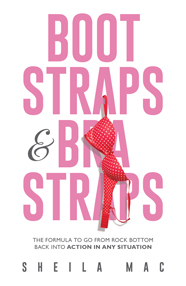
Sheila Mac is an entrepreneur, speaker, and author who coaches business owners and working professionals on building companies and wealth while living their best lives. Her work spans launching and growing businesses, marketing strategy, and building lasting wealth through real estate and strategic planning. In her book, Boot Straps & Bra Straps, she lays out a formula for going from rock bottom back into action in any situation, and she hosts a show based on the book.
📚 Books by Sheila Mac
Transcript
[0:00:25] MR: If life has you knocked down, get ready to pick yourself back up and give your problems the boot. That’s right, when Sheila Mac tells you to pull up your boot straps and bra straps, it’s time to take action. Whether you’re a new mother or a seasoned business woman, Sheila guides you from starting over, to creating the life you always desired. Her voice is that of a mentor or a life coach, an entrepreneur but it’s all rolled up into the feeling of being a best friend. As you’ll see in this episode, Sheila walks the walk. Whether it’s overcoming the death of loved ones, losing everything in a fire or being in an abusive relationship, you can get your life back on track no matter how many times you hit rock-bottom. In this episode, Sheila shares with us her Boots Formula to help you find a way forward, build a new identity, produce more income and create a new life for yourself. And Of course, we discuss her new book, Boot Straps & Bra Straps. Which is packed with actionable information to pull your life back on track no matter the struggles. During a time like this, her message has never been more important. Enjoy. Hey everyone. My name is Miles Wrote and I am excited to be here today with Sheila Mac. She is the author of Boot Straps and Bra Straps — The Formula To Go from Rock Bottom Back into Action in Any Situation. Sheila, I’m excited you’re here, welcome to the Author Hour podcast.
[0:01:53] Sheila Mac: Thank you, its’ so good to be here Miles. I really appreciate being invited on.
[0:01:59] MR: You’ve been helping women level up their lives for about 25 years now. Why don’t you tell us a little bit about that and your background and what inspired you to write this book?
[0:02:11] Sheila Mac: It kind of happened with me just helping myself out and figuring things out as I’ve hit my own rock bottoms in life and then starting to help friends and family and getting a lot of training in helping other people get through things. But, what started this book and everything out to really take shape was I had gone through many rock bottoms in my life on and off but always landed on my feet in one way or another, going from an abusive family and then moving on to being homeless from the age of 10 to 13 and a half, going into foster care, I ended up graduating high school early and going off to college on my own and really providing for myself. Things were great. I raised three of my own children and then I fostered two, adopted three more children. I had a bunch of gift stores that I opened and had a big program to help all of these kids that were in foster care, they were emancipating and nobody wants to hire them and so I had a whole training program. And that’s one of the secrets that I share in the book is that as you give back, you receive. It’s not in giving to receive, it’s when it’s coming from that intention that everything shows up for you. Now, those people are adults now and a lot of them went into their own business as entrepreneurs. After all that, I was really blessed to invest in properties and I had passive income, I ended up renting the buildings out when I had all these children at a certain point. When they were old enough, I traveled for seven years straight, studied with the top people that you would want to study with on the planet and learned so much. And then I came back and I had one thing after the other and I finally, I had a vacancy in a property and another vacancy, we had gone through at different times. I was getting on my feet and I bought this beautiful home for my daughter and I, in Ventura. I actually closed [inaudible] on November 3rd and then on December 3rd, I had set everything up, you know, you take about a month to move over and get everything nice, put your furniture, all my belongings were in there and that week, I drove home on December 3rd late at night and this was 2017 and I saw the Ventura fire which went for miles and I was able to pull my cat out and a couple of other things and lost the house and just about the power was already out by this point so I lost all my belongings and then I ended up having this little actually mobile home, pre-fab cabin kind of thing that I had been renting out on a vacation rental platform. The little side shed was 400 square feet with running water. A little bathroom but no kitchen, it was very small. I ended up staying there and then the cat got out, got eaten, I lost my car, all within a few days. I have always been one to just be able to get up and go start again but I know I was getting into a bit of a depression. The fires continue for about a month and within a few days, I realized that I needed to make a shift. I started doing the rebound, affirmations and the neighbors in these little cabin, pre-fab mobile homes, they’re there and they’re looking at me like I’ve lost my mind because this is a terrible time and I’m like, "No, I need to do this." I managed to get one of my children to loan me a beater car and I fixed it up and I made it the best car, I mean it was like, you had to roll the windows down and it kind of drove sideways a little bit toward one side and it was obviously, all my money had been put into this house, I put a big deposit and everything and I didn’t have any liquidity really with all this loss of the car and the house and it was just terrible and I said, "Okay," I went to the dollar store that was opened and I bought these little stickers and they were like, 'blessed', and 'happy' and all these pretty little positive words and I put them inside the visor and everywhere in the car and I bought a fancy steering wheel cover and one of my sons he said. "Mom, you really suped it up and I’m like, that’s right. I’m going to make the best. If I’m going in a beater car, it’s going to be classy. It’s going to be positive and it’s going to have good energy and the neighbors are like, "She’s never going to figure this out, you know, she’s lost her mind." I was leading online classes with real estate agents at the time also and that was my main thing in doing consulting still. I got invited to work at a new office in Beverly Hills and I made a bunch of commissions and I would have to – because of that mindset, the mindset is a lot to do with it. I would have to rent these cars and my credit wasn’t great because I had just done the house and you know, it was just really bad. I was like, "Well, okay, I’m renting these cars and I’m paying over a thousand a month to rent cars to take my clients out to buy homes," or whatever and it was really expensive. At one point, I had a friend that actually was moving to Beverly Hills and she said, "I need help, I need to get a home, I need to get it this weekend, I’m going to fly in. I’ll rent a car but I can’t drive," she was from Virgin Islands and so she’s like I can’t drive in America yet, you drive and I’ll rent the car and so she rented this Mercedes and she said, "That looks good on you," and I was like, "I got the beater car." Because she’s my friend and my clients so I’m telling her everything. It was maybe this intention and then I had another client once I finished, she got her house, I got a commission from that. Then I had another client and I needed to rent another one of those cars and that car broke down. I thought, "My gosh, it’s hot, I’m stuck in this car that I rented out on a commitment for like $600 for the week and it broke down. Now what am I going to do?" I look at my phone and I get this random email from a car that’s not a car that maybe would really work for a real estate agent and it was for sale, it was one of those things where you come in and you drive the car and you get $100 gift card, like a Visa Card and I said "Well, I could use a $100 for groceries." And because the cars are costing me so much to rent and I was a paying debts off and paying things off and getting straightened out. I went in and that’s something about humbling yourself and saying, "Okay, I’m going to go look at this cars, they don’t even fit." But the beater, it was really bad, it needed brakes, it needed so many things fixed that it was on its last leg and it was upside down. I had to actually pay a three or 4,000 to get out of it. To clean the slate of that car. You know, something one of my kids and I helped them up. I go to this place and I go to this dealership and there in the lot, you know, there’s all these cars that aren’t the right fit, they’re like, you know, something, they’re newer cars but they’re not the style for a real estate agent in Beverly Hills, okay? There on the lot is one Mercedes, it had some miles but it was the exact car that I had drove that my friend rented out that felt really good that weekend and I told the guy, I said, "You know what? You could pull your credit score yourself." I said, "Here’s where I’m at because all this happened and if you can get me into that car, I have this much cash to put down, I would love that car because that’s the one I really need to do my job and not have to rent a different car." I got that car and I thought, "Wow, what a beautiful thing." And then the man that they show you how to use the car. You know, all the buttons that they have and he comes in and he looks like my father who had passed away and I just thought, "Okay, this has got to be a gift." I’m like, "Okay, somebody, I’ve got an angel watching over me, this is a miracle gift." Now, this is a few weeks after my house burns down. With this changed state and you know, then I moved over to Beverly Hills, I cried all the way home in this car, I was so grateful, I still have the car and a few years later, it’s great. And I move over, I stayed at a friend’s place and rented out in Beverly Hills and then I got my own place and I kept doing well and I finally went back to that little cabin house when they finally said you can’t do your vacation rentals there anymore and I decided to sell it. When I went back, I saw that most of the people there were still in the same place I left them. In that mental state. They were still in the fire in their minds, they hadn’t progressed and people get stuck really easily in life, when something happens, because you don’t know what to do next. That was when my book was born or the idea of the book. I sat down and I said, "Wait a minute, I’ve done something really different here. Compared to most of the people around me," what was it? I went to and I wrote down this formula and I said, "Now, I was all alone, none of my neighbors could help me, none of my friends could help me." Because they all lost their homes too or their job kind of like this year, you know, there’s always something. I was all alone and I thought, you know, I would love to be able to take and write something out that if it was my best friend or sister, relative, whoever, and they were going through something, I could say, "Hey, I’m going to hold your hand and we’re going to go through these steps and you’re going to get back on track in no time." That’s why that book was born. For whoever out there needs something.
[0:12:48] MR: I love that and I think that story is such a great metaphor for what the book represents. As you mentioned, you had already had so many different rock bottoms and struggled through it and came out on the other side and then yet again, you buy what essentially is like your dream home and then it burns down and it feels like everything is taken away again and yet you still found a beater car, put all the stickers on it and ended up upgrading and getting a different car, again, you came back stronger. That’s really what I think this book represents and a lot of people get stuck in the stage of what do I do now as you mentioned. It is hard to figure out what to do and one term that you mentioned in your book is emergency mode when people hit rock bottom and how it’s like you can’t function as a regular person. Instead, you need something to grasp on to that makes sense. And the formula that you offer in your book which I love is BOOTS and if you could break that down for us and walk us through what that means and take us through being able to be in that position and then find your way out using this formula.
[0:13:53] Sheila Mac: That boots formula is what I came up with and it’s really, B is for being, it’s about who you’re being and all that you’re doing and who you need to be during this situation, whatever it is for you. For me, I had to decide who I needed to be in order to get out of losing everything within a week and to get back on track. That’s the being part, the B in boots is for being. The next thing is to know your orientation. I had to really sit down and look at my finances, my credit obviously, different pieces of where am I living now, I’m in this little shed, I have to go to a gym to take a shower. Crazy stuff. I don’t have a kitchen and it’s this little 400 square foot thing and you know, it wasn’t quite working. I said, "Okay, it’s not better than it is, it’s not worse than it is. This is the reality." And you have to be so honest about where you are on the map in order to say, and this is where I want to go and the goals may change so for instance, this year, 2020, whether you’re playing this later in the future, 2020, everybody had their new year’s resolution and didn’t see we were going to have a world wide pandemic and different rules and things we’d have to follow. We had to course correct and in order to really stay on top of things, we had to say, "Okay, this is where we are now in March when things started closing down." And our goals may have changed or had to change. That’s our orientation, that’s the O, the first O in boots. The next O is order of operation. With order of operation, also, now I know who I need to be, what the new reality is, with the house fire. Now I need to decide what needs to be done first, second, in order to get on track because the order in which you do things can make all of the difference. I had to make the commissions in order to pay down the debt, in order to get the credit enough to qualify for that car in order to get back on track and stop spending so much renting cars and then move over and I had to go in a certain order. It would work, you know you can’t go and do one thing without the others and so that’s the second O. Then the T is for thinking and that is where my mindset came in and that was in that moment that I decided that no matter where I’m at, a little shed, in a mobile home, in a cabin in the hills with not even all of the things you need to really have an operable home, I need to have my mindset that I am going to make my environment beautiful. I am in a beater car for a minute that is okay. I am going to make it the most beautiful happiest little space I can, because it keeps my mindset where it needs to be. People can feel that, even in business, you are running a business, your clients or you’re the manager of your home. Now you’ve got your kids homeschooling this year, whatever is going on, your thinking is like you’re the leader of your business, your work environment, your home environment and how you show up in your mindset, your thinking creates the space and energy and models it for everybody else around you and then the S in BOOTS is for stepping up and that is taking action. That was renting the cars and grabbing everything I could out of the house and making things pretty and then actually going out accepting new work opportunities. I loved the office in Beverly Hills and everybody was so friendly and wonderful and I thought, "Wow I didn’t imagine I’d be moving here and doing all of these amazing things," but what I gift that I had to be willing to step into going into a new environment and also being humble enough to go to a used car sales place. That wasn’t even in the right part of town because I needed the groceries and I thought, “Okay, you know I don’t know if I should do this.” But I had to step into it and because I did, it was like there is the car that you really need and want and guess what? Because it was in a rough neighborhood, it wasn’t the nice part of town and they had thought they were going to buy this Mercedes to resale or pre-owned and those who wanted to buy it there because it wasn’t the neighborhood for it. Do you know what I mean? If I would have gone to the other dealers — so I got it like, I don’t know, six or $7,000 under bluebook because they were like, “We just want to get rid of this car.” and I was like, “This is the car that I need.” And my payments I did have to get into payments. I paid what I could down and my payments were so much lower than what I was spending on the rental that I was saving money. It was perfect and so that was stepping into it and stepping into it was sometimes doing things that we don’t like to do or rolling up your sleeves. And doing the work yourself or taking that risk for the new job to a new area when you are not sure. You feel alone that is stepping into it and those other pieces in BOOTS have to be there in order for you to be able to step into it with confidence and knowing that you have different courses of action you can take.
[0:19:34] MR: Right, yeah along the way to get you there. To paraphrase, the way that you break it down in your book is where B is being and who you are. S is about stepping up to become who you want to be and I think that’s such a great way of looking at it but as you said, there is so many things that happen in between and part of what happens in between and what you have talked about is the importance of asking and you sort of eluded to that already right now. And also in your book you talked about how you applied for NASA’s Jet Propulsion Lab and to work there and how you actually got that job. Can you tell us that story and just your experience with the importance of asking?
[0:20:13] Sheila Mac: So there I was, I was a young girl. I was going to college 17 and a half-ish and then I got a programming certificate back in the day when we were on DOS and we were doing database 3+ and all of these programming things and honestly, I literally I had graduated high school with 15 and emancipated and I was on my own and I had to check out a book at the library to figure out how to do algebra to do the programming. It was that kind of programming, we actually did math and so I was the student in that class that did extra hours. I did the computer labs they had for I get there early in the morning and stay late at night and because I really wanted to be able to pay for my needs, although there were students that were far smarter than I in programming because we all have our gifts, that was not my talent or gift. It was something I learned and so you can learn anything. I was the good C student. I never cheated. The teacher says, “Oh Sheila, I know you never cheated because it took you five pages to write out this program that everybody else wrote out on one page.” And she caught a group that cheated and it was like, “But not you, Sheila because I know you got to the right answer. You just took a really long way around.” And I was like, “Okay, well I passed.” And I decided to go – I said, “Well, where is the best place near where I live to go get a job.” And it was Jet Propulsion Lab. And so I ended up working by the time I was 18 until I don’t know 22, 23 something like that until I opened my gift stores pretty much I worked at the jet propulsion lab in the engineering department and did programming and handled all of these accounts and the reason they hired me, I didn’t have a degree. You know, I had a certificate, I wasn’t the straight A student but I knocked on the door and so one of the things I put on the book, the secret is to knock on the door and ask.
[0:22:20] MR: Although it took you so long to get to the answers of things, one thing you talk about in your book is it doesn’t have to take that long and that there are tools that we can use to get to where we want to go and the format of your book, you take different rock bottom moments in your life and you apply this formula to it and show exactly how it works out and from relationships, intimate relationships to abuse, you really share something that I feel like resonates with almost everyone that something that they’ve been through in some way. So can you share a little bit about the exercises and the things that you have in your book that really helps people take practical action on these things and they are not just conceptual but there are things that you can actually do?
[0:23:09] Sheila Mac: Okay, yes. So for each chapter, our life especially for moms and women, we wear so many hats as parents. I have chapters on the grieving, on finances, on career shifts, relationships, parenting, parenting our adult children even, parenting our parent with elder care, dealing with abuse if it is your own situation or someone you love is in an abusive relationship or situation. We get into relationships, dealing with addictions and then lifestyle redesign on your terms. And with that, in each chapter, depending on the topic there are different activities that a person can do, that help them walk through the BOOTS formula and also learn for instance for grieving, we learn the seven steps of grieving and the process and how to get through that and different things you might need to know or connections that you might need to make. So there is lots of references to connect you to what you don’t know exists out there. For instance with elder care there is many ways to get help with elder care that are free and low cost that people aren’t aware of and I actually took care of my grandparents and parents until they passed away and so I had to learn those things on my own and I wish that I had a manual to go to where I could get these resources and get the answers that I as a young person I didn’t know, taking care of my elders. I had to find out the hard way and sometimes overspent or made choices based on the little bit that I knew about what to do when I didn’t realize there was all of these free resources that would help. Each chapter has its own formula based on the BOOTS formula but then activities based on that. So for parenting, there is like a contract you might make with a young adult or maybe you’re a young adult and you are trying to move out of your parents’ home but they still treat you like a child or you could be 55 and your parents still treat you like a child. And so there is activities to help you through that. But you know, we wear so many hats nowadays and it is just to have this formula to go through and these activities really can make a difference.
[0:25:31] MR: Yeah, one of my favorite is the relationship agreements that you have between two parties, where you sign an agreement saying, “Hey, here is what we’re deciding upon for our relationship.” And although at first it may feel a little bit strange. It can add so much value to the relationship and get really clear about expectations and everything and you provide all of these things on your website, if you purchase the book and then all of the resources are free and available. Which is something that I really love. But writing a book is no joke and congratulations on doing it and if readers could take away one or two things from your book, what would it be?
[0:26:07] Sheila Mac: There is always a solution to every problem and sometimes when you find that one solution it gives you 10 other solutions. And with my book, one of the things that kept me going my whole life is when I was a little girl, I had my grandmother and she had these ladies that were her age group, these ladies that were I don’t know, 60s, 70s and they think and this is the Los Angeles area California and so they were very diverse. I had a lady that was in a concentration camp when she was little and lost all of her relatives and here she was, running a business and had her own home. Another lady was from Greece and her husband passed away and back then it was taboo for women to run a business but she took over the restaurants and she ran these beautiful restaurants and travelled the world. Another couple, the lady and her husband lost everything because there was a different ruler in the country where they lived. And they didn’t speak a stitch of English when they moved over as our neighbors and they made a successful life for themselves and I thought this little girl, maybe four years old you know I thought, “Oh my gosh, everybody goes through something and they have these stories.” My grandmother was alive during the Spanish flu pandemic and the great depression. So I had all of these rich stories but what it gave me was that together in community the women were able to support each other through. And that we all can make it even if we are in a tough situation there is a future and a hope and so the other thing I designed along with my book I designed a community. So that whoever is going through, this is a free Facebook group community. And whoever is going through, this is a free Facebook group community and whoever is going through the steps, whether they get the book or whatever, there’s a community of other women that together we can support each other, so that we’re not alone and we can share our stories as a community. That’s something that I thought, because those women and their stories carried me through, we all have incredible stories and ways to connect and support each other through whatever thing that we need to reboot from.
[0:28:33] MR: Such an incredible story and for it to make such an impact, I knew at such an early age and for you to carry that with you your entire life and then be able to give that back to people is really a beautiful thing. Where can people find you online or in that community or on social platforms if people are looking to learn more about you and what you do, where can people find you?
[0:28:52] Sheila Mac: My website is www.sheilamac.com. MR0:29:10.2] MW: Perfect. Sheila, this has been such a pleasure, I’m so excited for people to check the book out, everyone, the book is called Bootstraps & Bra Straps — The Formula to Go from Rock Bottom Back Into Action in Any Situation. Sheila, thank you so much again, this has been so much fun, everyone, check out the book and check out Sheila online. sheilamac.com and we appreciate you being here and thanks for stopping by. Thank you.
[0:29:36] MR: Thanks again for joining us for this episode of the Author Hour Podcast. You can find Sheila’s book, Bootstraps & Bra Straps — The Formula to Go from Rock Bottom Back Into Action in Any Situation on Amazon. You can also find a transcript of this episode, as well as our previous episodes on our website at authorhour.co. For more Author Hour, subscribe to this podcast on your favorite subscription service and thank you again for joining us. We’ll see you next time, same place, different author.
Want to Write Your Own Book?
Scribe has helped over 2,000 authors turn their expertise into published books.
Schedule a Free Consult