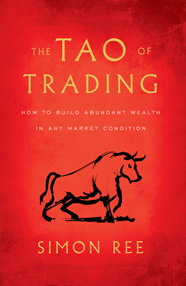
Simon Ree: The Tao of Trading: How to Build Abundant Wealth in Any Market Condition
Read the full transcript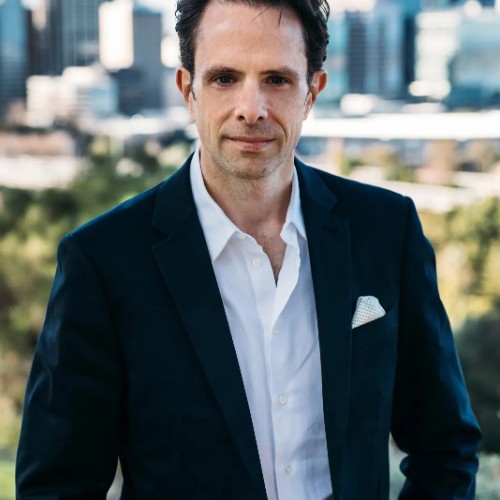
Simon Ree
Simon Ree has more than 30 years of experience as a trader, investor, and financial markets professional. He began his career as a futures broker in 1992 and went on to found and lead the markets desk at Goldman Sachs in Sydney before holding senior positions at Citibank in Singapore. In 2017 he left the corporate world to focus on options trading and education full time, founding Tao of Trading, an online education company. He is the bestselling author of The Tao of Trading: How to Build Abundant Wealth in Any Market Condition. He is also a certified Jeet Kune Do instructor and a Reiki master, and he lives in Singapore.
📚 Books by Simon Ree
Transcript
[0:00:15] CH: Deep down, you know that sticking your money in a bank account or some random mutual fund won’t get you into the fast lane of prosperity. Sure, successfully playing the stock market can help you become wealthy but where do you start? Not only does it have an intimidating language of its own but as we live through such turbulent times, it’s normal to feel hesitant to invest. Plus, can we actually make money from the stock market as a beginner? Today, I sit down with Simon Ree, author of The Tao of Trading: How to Build Abundant Wealth in Any Market Condition. With his 28 years of experience as an active trader, investor, and financial markets professional, Simon shares with us how to make money from the stock market regardless of whether stocks are going up or down and regardless of your level of expertise. He doesn’t hold back and he shares the most powerful secrets in trading. Breaking down the complex language of the stock market into simple language that you can understand. In this episode, you’ll learn how buying options is like renting an air BNB and how playing the stock market is actually kind of a lot like sex. Plus, Simon dispels some of the most common myths of trading in the market and how to build wealth and manage risk at the same time. If you’re looking to make more money and learn more about the stock market without feeling overwhelmed or intimidated, this episode is for you. Hey everyone. I’m excited to be here today with Simon Ree, author of The Tao of Trading — with the subtitle, How to Build Abundant Wealth in Any Market Condition. Simon, I’m excited you’re here, welcome to the Author Hour podcast.
[0:02:03] Simon Ree: Thank you so much, I’m really excited to be here.
[0:02:06] CH: Yeah, let’s start by giving our listeners a bit of background on who you are and what inspired you to write this book?
[0:02:12] Simon Ree: Sure. I’ve spent most of my life in and around financial markets. So, I graduated university with an economics degree and my first job at a university back in 1992 was as a future broker. I sort of went on from there, worked as a creative analyst for a couple of years and then worked for 14 years at Goldman Sachs where, before I left, I was the founder and head of the market’s desk which is a division that was responsible for looking after equity derivative transactions, credit transactions, foreign exchange transactions for the group. I left Goldman in 2010 to move up to Singapore to get a position with Citibank, where I work with some of the wealthiest and most successful families and business people across Australia and southeast Asia and then I sort of ‘retired’ from the corporate world in 2017 — with a desire to help people who really need the help. I realized that I had spent the better part of my life, predominantly, helping people who were already extremely wealthy and I really wanted to share my knowledge and the experience and the talents that I’d been able to develop with people who really need that help. These sort of people who are never going to get the love and attention they might want from a private bank or a Goldman Sachs for example. That’s when I decided to focus on my own trading and share my knowledge on trading with people who want to learn how to do it for themselves.
[0:03:39] CH: Beautiful. You have such an interesting title. Most people wouldn’t think to mix Tao with trading, so Tao, T-A-O, can you share a little bit more about that title and how it encapsulates this book?
[0:03:54] Simon Ree: Yeah, I’d love to. The inspiration for the title of the book was from the Tao of Jeet Kun Do by Bruce Lee. In addition to being a trader, I’m also a Jeete Kune Do instructor and Bruce Lee’s philosophy on life is something that I’ve really taken on board both as a trader and Jeete Kune Do instructor. I mean, there was this old thing in Chinese Kung Fu that the Kung Fu master would never reveal everything to his student, he’d always keep some secrets back. And Bruce lee thought this was all bullshit and he was like, “No, we’re going to share this with everyone, I’m going to teach everyone everything I know and I’m even going to teach gweilo. I’m even going to teach the white man how to do this.” Which made him actually very unpopular in the traditional Kung Fu community. But I take the same approach in trading, when I teach people how to trade, I don’t hold anything back, I don't want to give them everything I’ve learned in nearly three decades in the trenches in the market. My approach to trading, it’s a lot more than looking at numbers and looking at charts. I take a more holistic view of — it’s very important to develop yourself and develop who and what you are as an individual if you want to get the most out of your trading experience and your trading journey. I try to cover all of that in the book.
[0:05:06] CH: I love that approach and the Tao too, it means, doesn’t it mean the path?
[0:05:13] Simon Ree: The path or the way, yeah.
[0:05:15] CH: Right, yeah. Do you feel as though, in this book, do you try to walk people down that path of what it’s like to trade in the market?
[0:05:23] Simon Ree: Absolutely. Because I talk not only about the mechanical stuff, the nuts and bolts stuff, trends, and price section. I talk about the emotional aspect of it as well. The fear and euphoria you can feel as the trader and how to control that and how to be self-aware that you're having these emotions and how to be able to tell if your emotional brain has hijacked your logical brain when you’re making trading decisions. These sort of more psychological aspects to trading are really what separates wannabes from consistently profitable professional traders. I thought it was really important to get those messages across.
[0:05:59] CH: Yeah, I read in your book, and one thing that I think it’s important to clarify and also may seem counterintuitive, it’s the idea that you shouldn’t necessarily try to be right and when it comes to trading and how that can actually get you into some hot water. Let’s dive into that a little bit, why is it important not to necessarily try and be right when it comes to trading?
[0:06:21] Simon Ree: That is such a great question Miles and thank you for asking because it really is a real pitfall for aspiring traders. The problem is, right? As humans, from the day we turn two years old, we’ve spent our whole lives trying not to stuff up, trying not to make a mistake. If you make a mistake, your parents would yell at you, your teachers would scold you, your boss would yell at you, your friends would make fun of you and so we spent our whole lives trying not to make mistakes. If we do make a mistake, maybe we don’t even admit it to ourselves, we’re trying to cover it up, we’re trying to lie about it but most people would rather drink bleach than admit they were wrong or admit they’d made a mistake. This sort of philosophy will really trip you up in trading because as a trader, you’re gonna be wrong 30 to 40% of the time. Even with a great trading method like the ones I teach, I’m wrong, at least 30% of the time in my trading. Am I wrong 30% of the time in real life? Probably not but my wife might disagree but you know, my career would probably suggest otherwise but in trading, absolutely. The thing is, you're going to have trading losses — and if you didn’t have trading losses, trading would literally become a risk-free way of printing money and governments would have outlawed it years ago. I don’t know. People, they think if they made and lost, they’ve made a mistake and it’s not a mistake, it’s just part of trading, it’s a business expense. What I encourage people to do is to think of their trading losses with the same amount of passion they would think of buying paper or toning cartridges for their printer. It is just a business expense. Now, like any business owner, you want to keep your expenses to a minimum but you can’t avoid them all together and that is I think the right attitude to take with trading losses and being wrong.
[0:08:12] CH: I love that, there’s so much I want to dive in here. I know too, in your book, you talk about our subconscious and how that can also lead us down some dangerous areas and you know, a lot of people when it comes down to trading, we also want to — I think there’s the level of what you’re speaking to where it can be scary to be wrong and therefore people can feel intimidated by it or feel as though they’re doing it just incorrectly. When that’s just the natural part of how it works but also, people trying to put their beliefs on to what they're actually trying to trade and trying to justify their beliefs in the markets and how that can be dangerous, can you talk a little bit about that as well?
[0:08:52] Simon Ree: Absolutely. I mean, I think the current state of the economy and the stock market is a great example of this. We’ve just gone through a global lockdown as a result of the pandemic. We’ve had an economic collapse, right? Around the world, in the US, China, throughout Asia and Europe, the economies have just fallen off a cliff. What have stock market’s done? The NASDAQ is at a new all time high as we speak, the S&P 500 is not that far away and yet most people would have thought that given the woeful economic news and then the lockdown and businesses and horrendous unemployment figures that the stock market should be falling. What they’re doing is they’re imposing their beliefs and what they think should happen rather than listening to the market. Instead of trying to predict and make forecasts, what I’m doing is I’m responding to what I see in the market. It looks like I’m making short-term forecasts and I guess I am. But really, what I’m doing is I’m just seeing which way the wind is blowing, looking at which the river is flowing and just making little course corrections along the way. Rather than trying to impose my will on it and saying, “nope, that the riverhead be flowing this way.” You know? Which is how a lot of people approach the market.
[0:10:09] CH: Yes, no, absolutely. In your book, you talk about — really, it’s based around no matter if markets are going up or going down, you have a set of strategies and ways to play the market and come out profitable regardless. Let’s talk about that a little bit, what does that look like? Being able to, regardless of if it going up or down, still being able to be profitable?
[0:10:33] Simon Ree: I’m a big proponent and a big fan of trading options. Options are the most flexible financial instrument in the finance industry and they offer a really important feature and that feature is limited downside, limited risk, and unlimited upside. This type of payoff even has a name, it’s called an asymmetric payoff. Asymmetric just meaning not symmetric, one side is different from the other. There are two types of options, only two kinds, there are call options and there are pull options, call options increase in value when the underlying stock price increases in value and put options increase value when the underlying stock price falls in value. The put option — it's like insurance, it’s like taking out an insurance policy and when do we buy insurance, we buy insurance to protect us from something bad happening. And in the case of the stock market, that something bad is falling stock prices or a bear market or a stock market crash — and you can make a lot of money in those environments as an options trader. I think it’s a really important skill to develop because February, March, were two of my best months ever.
[0:11:42] CH: Wow, another thing that I love about your book is you take these complex things and you describe them in such simple ways, even with options, for example. Can you share with us your analogy of options being like the Airbnb of the finance industry?
[0:11:56] Simon Ree: Absolutely. If you’re considering, maybe you want to stay in a French chateau in the lower valley but you know you can’t afford to buy one, it’s going to cost you millions of euros, so you don’t extend that idea any further. But what if you could rent one for a week or two and just pay a few hundred dollars for that, a few hundred euros? All of a sudden, the idea seems plausible, you know? This seems doable, this seems like something you could afford. What happens if you rent or Airbnb, whether it’s a Malibu beach house or a French chateau, you get all the benefits of ownership for a fixed period of time without the significant capital outlay that would occur if you owned it. It’s a little bit like if you want to buy Google shares, if you want to buy a hundred shares in Google, that’s going to cost you about $200,000. But maybe you could buy a call option in Google that would cost you only $5,000. Might only cost you $2,000. What you end up doing with the call options is you end up effectively renting Google stock for a fixed period of time. If Google stock rises, you could stand to make almost as much as you could have if you spent the $200,000 on the stock if Google stock falls, well, you only stand to lose potentially a fraction with the amount of options that you paid. It’s an analogy I like to use when we’re buying options, buying call options on a stock, we’re not making money by buying stock, we’re making it only by renting them because you just got control of them for a short period of time.
[0:13:31] CH: Yeah, it’s really helpful, especially the stock market in general, the language even can seem so daunting, it feels like speaking another language with a lot of these terms. I love how you’re able to break this down in such simple ways. What’s the difference trading today and things going on today with the stock market as supposed to 30 years ago? I know in your book you talk about how before it was most important to have funnels of information and now, investors need to have the best filters of information. What do you mean by that?
[0:14:06] Simon Ree: If you go back 30 years ago, the smartest investors in the room were those that had access to good information because information pre the internet age was not widely available. You had to know where to go and who to get it and it was expensive to obtain. What the internet has done is it has democratized the availability of information. Anybody with an internet connection can just be deluged in information. But not all that information is good. In fact, a lot of it is actually quite unhelpful if you’re looking to money as a trader. What you need to do as a trader is be grateful and thankful that you’ve got free access to a huge amount of information that 30 years ago would have cost you millions of dollars to have access to. But you’ve got to know how to filter the signal from the noise because most of it in fact is noise.
[0:14:56] CH: Do you feel as though now, people have more of an opportunity to get into this than the past, given the fact that everyone has access to this information?
[0:15:04] Simon Ree: People have certainly got more opportunity, it’s never been easier to open a brokerage account and it’s never been easier to start trading. But that doesn’t mean it’s never been easier to make money, all right? Now, there’s been a lot of talk in the press lately about the so-called Robin Hood traders. Robin Hood is a brokerage firm that — I think that it was last year that they reduced their commissions to zero and in 2020 alone, they’ve opened up over three million new accounts and a lot of this is being attributed to people who are kind of bored in lockdown. There’s no sports betting going on, let’s have a crack at the stock market. Look, they’ve done very well, okay. By all accounts, they’ve done well over the last couple of months but there’s another analogy I use in the book. People will often mistake luck for genius, all right? Anybody can make money in a rising market but how do you fare when markets start crapping themselves again as they did in February and let’s face it, that could happen again in the future. It’s easy to have beginner’s luck. It is easy to have some quick wins. It is just a bit like how anybody can throw a basketball through a hoop once, anybody can do that but it is how many times can you get that basketball through the hoop on the next one thousand shots. That is what’s going to determine your long-term success and trading is no different. It is all very well having four or five profitable trades but can you replicate that over your next 1,000 trades and so every trader’s goal should be consistency.
[0:16:27] CH: And so what would you recommend to someone just starting out and so they don’t just try to strike that beginners luck but they strike that consistency? What are some things that they can do?
[0:16:37] Simon Ree: It is all about having a plan, having a method, having a process and becoming wedded to that process. Having a process that gives you an edge and an edge is something that puts the odds in your favor every time you come to the market and that edge is a good entry system. A good exit system that tells you when to get out of trades and above all else, something that teaches you how to manage risk, manage your money that is really, really important. And when you combine that with having the right mindset and the right psychology, you got an extremely good chance of being profitable over the long term being consistently profitable month in and month out and if you want to make a living from trading that’s what’s really important — not having a few big wins and then potentially giving it all back six months later, which is a path so many traders follow and it is because they don’t have a system in place. They don’t have a process.
[0:17:28] CH: And that system and that process, it goes back to what you’re saying earlier too about not necessarily trying to be right but really having these systems in place to guide you as opposed to your own opinions guiding it.
[0:17:42] Simon Ree: Absolutely. So you literally getting into trades when the system tells you to not when your gut tells you to. You are getting out of trades when your system tells you to not when your scaredy cat emotional lizard brain tells you to and you are taking small-sized bits. You are not betting the farm or backing up the truck when what you think looks like the best trade in the world comes along because markets are literally — they are designed to take money off novice investors. When you are sitting in the market and then the market is moving it is almost like you were doing the headlights a little bit. You can be a little bit paralyzed by all of the fast moving numbers and the flashing lights and if you haven’t got a system in place, it will entice you to make suboptimal decisions. So if you just bought up a position and you see the market fall and you’re an inexperienced trader, you can feel a little surge of regret or maybe even fear. And that can be enough to shake you out of a perfectly good position that you’ve bought. If you are not in the market and you are watching a stock that you have been looking at start racing away from you, you can be tempted to jump in even though the move is well underway and again, you are getting in at the wrong time. So the market will try and play on your emotions to get you to sell at the wrong time and to get you to buy at the wrong time and that is what happens to most people who don’t have a process.
[0:19:07] CH: Yes, speaking of that in your book, you talk about several myths that exists out there when it comes to the stock market and I think you’re touching on it now really that people who are novice, they believe in these myths and you dispel a lot of them. Can you share a few of your favorite myths with us and how they’re not actually true?
[0:19:28] Simon Ree: Well yeah, I mean there are many, many myths. So there are five that I cover in the book. They are all important actually but probably the biggest myth of all is the one that high risk equals high return. This is the one that kind of — I just really roll my eyes when I hear this. The finance industry at large has kind of got us all to believe this theory that if you take on more risk, you will achieve higher returns. You’ve got to sit back and ask yourself, what actually is risk? What does risk mean? Well, risk is the probability of losing, okay? It is the probability or the possibility of a permanent loss of money, of capital. And so what the finance industry wants us to believe is that to increase our chances of winning, we’ve got to be prepared to increase our chance of losing. Now how does this make any logical sense whatsoever? So, the correct theory is that if we want to win more, we’ve got to lose less, okay? We need to be taking strategies that are less risky. Now what does the finance industry want us to believe this? So they can sell us a whole bunch of finance products and charge us exorbitant fees on them and then you basically sit there and cross your fingers and toes and hope that things work out the way they need to for you to be able to make money. Whereas if you can take these matters into your own hands, learn how to trade, learn how to read the markets and follow a successful and rigorous process, you can trade profitably and take far less risk than you ever would have believed was necessary.
[0:21:01] CH: Yeah and this sounds like it is touching on the reason why you wrote the book of seeing how the novice traders can get preyed upon by the industry and wanting to dispel these things and help people out.
[0:21:14] Simon Ree: Well the industry is just not well positioned to help out your average middle class investor who wants to get ahead. I mean, if you are earning, I don’t know, $60,000 a year and you are saving a bit of money, earning 10% per annum on that money is probably not going to be terribly helpful to you, all right? And yet Wall Street has convinced everybody that that is a fantastic return and it isn’t but the reason they’ve convinced everybody that it’s a great return is because if they can achieve these pretty crappy returns for you, they can then go back and charge you a whole bunch of fees for generating what are in effect pretty ordinary returns — but you don’t feel like you’re being fleeced. You don’t feel like you are being cheated. Now, if you want to generate extra returns, that there is some effort required, that there is some learning required, you do need to up skill yourself and you do need to follow a diligent process. But once you have learned the ropes, it will even take an awful lot of your time. I mean, once you got these dialed in, it can literally take 30 minutes a day. Now there is a learning curve, don’t get me wrong. You are not going to start trading and spend 30 minutes a day from day one and be widely successful. You’ve got to pay your dues so to speak in terms of learning material. Once you’ve got it dialed it in, which need only take a few weeks, it could literally you’d be done in less than an hour a day.
[0:22:29] CH: And once people start to get to that point, one thing that they may not — and I didn’t until your book but then I noticed the theme, one thing they may not correlate with trading and getting good at this and becoming involved in this industry is gaining a sense of self-empowerment. I have recently watched my girlfriend get involved in trading and it’s been amazing to see how much it’s empowered her, especially being a female and I think this topic is often overlooked. Do you find that when people first start getting into trading and getting the hang of it starting to speak the language that it gives them a sense of self-empowerment?
[0:23:06] Simon Ree: Definitely because as you’ve eluded to earlier, there is an entire language that the finance industry world straight up concocted and it’s been done deliberately, okay? It’s been done to make people outside of the industry feel like outsiders and feel like they are at a disadvantage, all right? But once you start to learn what it all means and once you realize that none of it is actually really that complex or that mysterious, absolutely, it’s empowering. And one of my greatest anecdotes was, I had a student in Australia. She lives in Queensland, she’s a 79 year old lady and when she first started with me, she didn’t even know how to open up a second tab on her browser and within a few weeks, she was placing profitable trades and has been going great ever since. So trading is eminently teachable and to your point it is so empowering once you get it and you’re right, it can even just be starting to learn the lingo and the terminology. It can just open up a whole new world for you.
[0:24:05] CH: Yeah, I totally agree and it can feel intimidating even for me still but I am already seeing how that can be the case. One thing in your book that stood out was how you compare trading to sex. Let’s dive into that.
[0:24:21] Simon Ree: Well, it’s all about expectations, all right? If you are involved in an intimate situation with another person and you’re very, very focused on what you want to get out of that situation it is probably not going to be that enjoyable for either of you, all right? Whereas if you just throw yourself in and enjoy yourself and have fun without any expectations as to what the end result is going to be, chances are you’re both going to have a pleasing end result and trading is very, very similar in that regard. If you go into trading and you’re just focused on how much money you’re going to make, well guess what? Profits are illusive and in that regard, trading profits are like orgasms, all right? Because the more you focus on them, the more they seem to go away and it is all about focusing on the process.
[0:25:09] CH: Right, the process not the outcome.
[0:25:11] Simon Ree: Absolutely, yeah you’ve heard Tony Robbins talk about it. This is one situation where trading does mirror real life. It’s really about focusing on, enjoying, getting good at the process. You do that and the pleasing results will come whereas if you focus on the end results that they will remain elusive.
[0:25:29] CH: Yeah and another crazy crossover with trading and life and one of the things that just really blows my mind is how the stock market can reflect universal principles like the golden ratio or the Fibonacci sequence. Can you share some of that and how that’s the case or why that’s the case or I don’t even know if anyone knows how that is the case but I think it is fascinating.
[0:25:53] Simon Ree: I’m going to start answering that question by saying — asking ‘why?’ in trading is often just an exercise in futility. A lot of this stuff works and I’ll be honest with you, I don’t know why it works. I just know that it does and there is a certain amount of trust involved when you are first starting to learn these techniques because you are going, “All right, these is all a bit weird” and it is a bit weird and I still get goose bumps occasionally when I am drawing Fibonacci ratios on a chart. I’m like, “Dang! How did that all come together again so precisely?” but you’re right. The Fibonacci, the golden ratio appears throughout nature and it appears throughout financial markets as well but going back to your question why does it work, I mean it’s a bit like when I switch on a lamp in my house, I don’t know how electricity works, you know? I know it’s got something to do with the movement of electrons or something. I don’t know how it works but I just know that it does and things like Fibonacci is the same. I don’t know why they work but I just know that they do.
[0:26:54] CH: Yeah it is so fascinating and it is a bit like quantum mechanics and quantum computing I would say as well.
[0:27:00] Simon Ree: Yeah, absolutely. I mean it is stuff that you could just lose yourself in for a lifetime studying it and still not get the answers but you know the book that I have written, it’s really written from a practical point of view. It’s written from the point of view of a practitioner. It’s not highly theoretical. So, I’ve really just tried to get people information that works and that I haven’t gone too deep into the why.
[0:27:22] CH: Yeah and you are so right. I just want to underline that statement for everyone that is listening. This book really breaks everything down that feels complex and intimidating in such simple ways and it feels as though all of the fat has been trimmed off and you really just get to the meat of the matter and for people like me who know very little about the subject exactly what I need to know. So, writing a book really is no joke at all. So, congrats in getting this done and if people could take away one or two things from this book, what would it be?
[0:27:54] Simon Ree: Okay, I think the two things that I would urge people to take away from this book is trading. It is not all about setups and indicators and so forth. That stuff is important but that stuff is like your golf clubs, all right? If you want to learn how to become a golfer, you need a set of golf clubs. All right that is a prerequisite and that’s what a trading system is like, it’s like a set of golf clubs. So, it is necessary and it is important but is it going to make you a great golfer? No, what is going to make you a great golfer is learning your techniques, spending hours at the driving range and getting your mindset right and realizing that at the end of the day, golf is pretty much like trading, it’s 90% a mental game and it is no different with trading. Yes, you need a good system just like you need a good set of golf clubs. What is going to make you a great trader is your self-development and your practice and working on yourself and your mindset and your psychology.
[0:28:47] CH: I love that and it is such a good approach that I feel like is so overlooked in this world. So, thank you for writing this book and really not only distilling the information that is needed but underlying what is most important which is the mindset and relating it to these things. So, Simon this has been such a pleasure and I am so excited for people to check this book out. Everyone, the book is called, The Tao of Trading: How to Build Abundant Wealth in Any Market Condition and you can find ir on Amazon. So besides checking the book out Simon, where can people find you?
[0:29:21] Simon Ree: So they can find me at my website. I own a company, it’s also called The Tao of Trading. So, the website address is www.taooftrading.com that is where people can learn more about me and more about learning how to trade.
[0:29:36] CH: And just to remind everyone, Tao of Trading, Tao is spelled T-A-O. So thanks again Simon, this has been so much fun and everyone check out the book.
[0:29:46] Simon Ree: Thank you Miles, it’s been a real pleasure.
[0:29:48] CH: Thanks for joining everyone for this episode of the Author Hour Podcast. You can get Simon’s book, The Tao of Trading: How to Build Abundant Wealth in Any Market Condition, on Amazon. You can also find a transcript of this episode and all of our other episodes on our website at authorhour.co. For more Author Hour, subscribe to this podcast on your favorite subscription service. Thanks for joining us. We’ll see you next time, same place, different author.
Want to Write Your Own Book?
Scribe has helped over 2,000 authors turn their expertise into published books.
Schedule a Free Consult