David Craig: Semitruck Wreck: A Guide for Victims and Their Families
Read the full transcript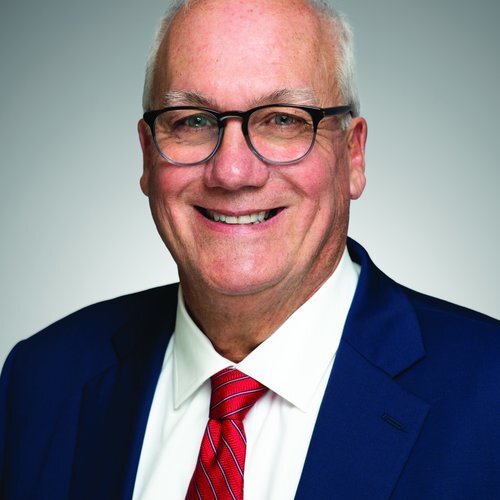
David Craig
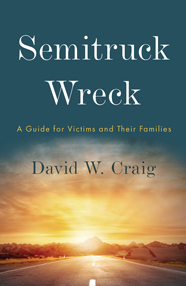
David W. Craig is a nationally recognized personal injury attorney who focuses on representing victims of semi-truck and other commercial vehicle wrecks. He is a founder and the managing partner of Craig, Kelley and Faultless, an Indiana-based personal injury law firm established in 1999. Board certified in truck accident law by the National Board of Trial Advocacy, he has been named to Indiana Super Lawyers every year since 2011 and recognized among the Top 100 Trial Lawyers by the National Trial Lawyers. He hosts the After the Crash podcast and wrote Semitruck Wreck to guide victims and their families through the aftermath of a serious crash.
📚 Books by David Craig
Transcript
[0:00:21] MW: If you’re the victim of an accident involving a semi-truck, the fallout is unlike anything you’ve ever experienced. Whether you’re mourning the loss of a loved one or dealing with catastrophic injuries as a survivor, the way forward is not always clear. You're left with a ton of questions. How do you find out why the wreck occurred? Should you pursue legal action? How do you choose a lawyer with the right type of experience? In other words, you need a guide book. Written by someone with decades of experience, representing truck accident victims — to explain what happens next. Semitruck Wreck: A Guide for Victims and Their Families is that book. In today’s episode, the award winning truck accident attorney, David Craig explains the nuts and bolts of the process and what to do if this tragedy strikes. David is the managing director at the law firm of Craig Kelly and Faultless LLC. He is board certified and truck accident law and has helped victims receive more than 10 million dollars after accidents with semi-trucks. With over 30 years of experience, as well as being the recipient of the Thurgood Marshall Fighting for Justice Award, he’s here with us today to explain how to make the best of a terrible situation. Hey everyone, my name is Miles Wrote and I am excited to be here today with David Craig, author of Semitruck Wreck: A Guide for Victims and Their Families. David, I’m excited you’re here, welcome to the Author Hour podcast.
[0:01:53] David Craig: Thanks Miles, I love being here, appreciate the opportunity.
[0:01:56] MW: Yeah, of course. Let’s start by giving our listeners a little bit of background of who you are.
[0:02:03] David Craig: Well, I’m an attorney, I live in Indianapolis Indiana, I’ve been practicing injury law for over 30 years. Board certified in truck accident law, a heavy focus of my practice is representing victims of semi-truck wrecks and other commercial vehicles. I’m married and have three children, two of whom are attorneys in my office and one of them is a professional videographer.
[0:02:27] MW: Wow, wasn’t your dad an attorney as well?
[0:02:31] David Craig: No, my dad was a psychologist, which is probably better because I grew up with a dad who actually worked and helped people and the great thing about my dad was that you know, he taught me to see the good in everybody.
[0:02:43] MW: Yeah, in the book you give, several anecdotes about your dad which is touching and how he inspired a lot of your journey, isn’t that right?
[0:02:51] David Craig: He did. You know, when you grow up as the son of a psychologist, you see him helping people, he worked for the state of Indiana. He didn’t do it for the money. He did it because he loved to help people. It was a different perspective and I think not all attorneys have that perspective. I went into the business of law not unlike why I went into the business of psychology which was to help people. Make a difference.
[0:03:15] MW: Yeah, speaking of that, what inspired you to write this book? Semitruck Wreck is perhaps not a book for everyone, necessarily, but an important book nonetheless. What inspired you — after a 30 year career in this field to say, “you know a book about this needs to be written and I’m going to write this book.”
[0:03:34] David Craig: You know, after 30 years, I represented the victims and I took a lot of pride in being able to help them, not only financially but help them through the process, explaining the process to them. Treating them the way I’d want to be treated. You know, I had a lot of clients come up to me afterwards and said “You know, god, I wish I had known certain things in the beginning. Thank god I picked you and your law firm.” You should write a book. I also saw folks not long ago, I had a client who had another attorney and he picked the other attorney — the attorney represented him for a year. The client couldn’t get the attorney to answer his questions, nothing was being done, no evidence was preserved in the case, no lawsuit was filed. The client eventually fired the lawyer and came to me after being recommended and referred to me. The client you know, within the first two weeks, we had done more than the other attorney had done in a whole year. It was just the difference between a lawyer who knows truck wreck law and one who didn’t. But the scary thing, the sad thing was, this guy didn’t even know what to ask, after I talked with him, explained things to him and educated him, he’s like, “My god, I didn’t know what I didn’t know. I didn’t know what to ask, I didn’t know what to expect.” You think about that and a semi-wreck is a catastrophic event. I mean, the family’s lives are turned upside down. They’re not thinking straight to begin with but even if they were, how would they know what questions to ask? It’s not like any other life experience, they’ve never been through anything like this and they’re going to wonder; “Do I need a lawyer? How do I pick a lawyer? What’s the process? What should I do? Should I trust the trucking company?” there’s just so much they don’t know and I sat down and for 30 years, I focused on my clients but not the people who were not my clients and I thought, you know what? This is an opportunity for me to share my knowledge with the general public. So that other victims of truck wrecks — whether they hire me or they don’t, at least, they’re going to be informed and empowered to ask the right questions and they’re going to know things that they need to know to help them get through this process.
[0:05:45] MW: Yeah, I can’t imagine after going through something that traumatic to then be able to figure out how to get your life back on track. It must be so overwhelming just to deal with the trauma in general. And it sounds like there’s some even some psychology aspect of this of dealing with your — with clients and helping them along that journey. What is that like? When you do speak with someone who has just gone through something that’s traumatic. What is that experience like for both of you? And what do you do to help put their life back together, so to speak. I would imagine that you’re the first person that people turn to after a lot of these terrible situations.
[0:06:25] David Craig: We certainly hope that someone talks to the family and tells them they need to talk to somebody like me. Hopefully you get in early. But you're actually right. I mean, the families are devastated. Sometimes they’ve lost the loved one, sometimes they’re dealing with catastrophic injuries and the families usually hunker down in a hospital somewhere. Or at a family member’s if they’ve lost family members or at a house somewhere. And you go in and there’s nothing you could say that would make it better or make it right. You know, what I do is I listen, I tell folks that, look, I can’t bring your folks back or I can’t make the injuries go away. I guarantee you the trucking companies and their insurance carriers are immediately working hard to protect themselves. I mean, they take steps immediately but before the wreck has even been towed away, the cars and the vehicles have been towed away. They usually have people at the scene, including lawyers. I tell them, you know, you need to worry about taking care of yourselves and let me protect you. You need somebody who knows how to do this and has got the skill set, the knowledge and expertise to start protecting you while you heal.
[0:07:36] MW: I imagine, I mean, is there a lot of that like almost maleficence with whether it’s the insurance company or whether it’s the truck company that goes in and basically tries to cover their butts so they’re not responsible, do you see a lot of that going on?
[0:07:52] David Craig: Yeah, I mean, trucking companies are in business to make money. Unfortunately, there’s going to be a certain number of truck wrecks that happen, they know that. They have rapid response teams ready to go as soon as there’s a wreck. I spoke at a conference recently and I was a defense lawyer who represents the trucking industry, who also spoke. And she talked about a part of her contract with the trucking companies is that she has to be at the scene of a wreck within a certain number of hours. Can you imagine that? I mean, a wreck happened, a truck driver calls 911, hopefully before he calls dispatch but sometimes they call dispatch before 911, the trucking company on notice and there’s this rapid response team that’s immediately set out and are maybe an attorney involved as well and they’re there to protect their client and protect the trucking company and the insurance company.
[0:08:44] MW: And then you come in to protect the victim, it sounds like. How common are these semi-truck accidents?
[0:08:52] David Craig: I mean, unfortunately, a lot more common than what we hope for. Right now, with overnight deliveries, with the way that we’re doing all of today, you know, the days of going to the malls are dwindling and you’re seeing people order stuff online. So you are having a lot more packages and items shipped so you have more trucks on the road than ever. You know, not all truck drivers are bad, not all trucking companies are bad. But unfortunately, those who are, just do a massive destruction.
[0:09:23] MW: Have you noticed an increase in wrecks since you know, these overnight deliveries? There’s so many other factors like cellphones now, so many more distractions, are you finding with that kind of culture, there tends to be more wrecks in general?
[0:09:40] David Craig: Yeah, I think overall, distracted driving is huge. I mean, when I first started practicing over 30 years ago, what you would see was drivers that were driving too many hours which you still see some of that, you had paper logs which were easier to cheat on than electronic logs. You saw some drivers that were abusing drugs or alcohol. But today, I would say the leading cause of wrecks that I see are caused by distracted driving. I mean, they got a lot of electronic equipment inside their trucks, cellphones. They’re using, not for cellphone uses necessarily, but also for GPS, as a computer for all types of things. There’s a lot more distractions than ever. I would say distracted driving is the number one cause that I see day in and day out. In addition to that, I see drivers would fall asleep or they’re not mentally alert because they have sleep apnea or they’re not getting enough hours of sleep, probably before they get behind the wheel.
[0:10:41] MW: Let’s say this did happen to someone or someone in their family. What do you recommend is the first thing that they do?
[0:10:49] David Craig: First of all, when somebody’s family has been involved in a wreck like this, usually, it’s hard to count on them to take steps to protect themselves. I mean, I’ve never met a client who has been going through this whose first thought is, “I need to call a lawyer.” What you’re hoping for is someone else in the family, a little more distant or a friend or reach out to them and say, “I know what you’re going through is hell but you need somebody to protect you.” You need somebody to protect the survivors. You hope that they contact an attorney that has experience in this area. If they call you, then what you do is you go meet the family, but then you immediately start taking steps to preserve evidence. I mean, like I said earlier, the trucking company already has their people at the scene, interviewing witnesses, they’re talking to the police, they’re looking at the equipment and it’s imperative that your team gets started as quickly as possible. The first thing I do is I figure out what kind of case is it, and what kind of team do I need? I usually hire private investigators to go to the scene immediately. I mean, one of the things you see today that you didn’t see 30 years ago is surveillance cameras, they’re everywhere. I once had a truck run over some folks and it was all captured by surveillance. Sometimes the trucks have cameras in their cabs or cars have cameras and so you’re seeing a lot of footage, a lot of evidence that’s there and so you send your investigators out to see, “Okay, do any buildings nearby have surveillance cameras that might have captured the wreck?” You send out your private investigators to talk to witnesses? Find out where the truck is and you get a court order, keeping them from moving the vehicle or altering it or doing anything to it. We’ll send a preservation malevolence letter out which basically says, “Please do not alter any evidence, if you do, it could be used against you”, more importantly, when you get a court order and the court order says, “You can’t touch it unless my people are there as well.” And then you coordinate a date that their experts in, your experts go in and there’s what’s called electronic control modules and most of these semi’s that will tell us how fast the vehicle’s going, what type of breaking, what type of throttle. There is a whole bunch of information and so our experts will download that in order to help us reconstruct the accident and then you do other things — like we’ll use drones to go up and video the scenes. We’ll do what is called cloud point scanning, which will help us actually recreate the scene digitally that will have every measurement and so it is exact. And we can actually reconstruct the wreck within the computer. And so there is just a lot of things that have to be done on the front-end because if you don’t do it quickly that evidence is gone. I mean, I got hired in a case over by Colorado. It was in Kansas where a semi had hit somebody and the family hired us pretty quickly but by the time I got hired, within just a few days, the truck had been moved two states away and it was heading out of it further. The trucking company was moving it and by the time I got a court order to freeze it, it had already started repairing it. Now the trucking company had said, “Well we had to repair it in order to get it back in service.” But you know, it was convenient that they had moved it out of state so it is harder to find and we see that all the time. I had another case where it was an Indiana wreck and the trailer came disconnected from the tractor. So there is a fifth wheel which is what holds the tractor onto the trailer and we didn’t know if that was defective or what but the tractor came disconnected and my client hit the trailer. It was at night and there was no lights on the tractor or the trailer and my client hit this trailer that had been disconnected from the tractor. And again, another lawyer got the case and hired us pretty quickly to assist but by the time I got involved it was within a week, the client was still in the hospital that tractor and trailer had been moved down to Texas from then. So it moved from Indiana, northern Indiana, all the way to Texas within days. And so then the fifth wheel had been taken off. So you know you have to move quickly on these kinds of cases.
[0:14:58] MW: Yeah, it sounds like you are always working at a deficit even if you get the call right away, you know that their team is already out there trying to potentially cover things up and move along as though, “There is nothing to see here,” kind of thing. And it sounds like you have to devise all of these different strategies and technologies to be able to seek justice for the victim.
[0:15:19] David Craig: Absolutely. I mean the trucking company has a head start and again, some trucking companies are better than others. Some are more honest than others but I never know when I get hired what we’ve got and my job is to protect my clients and help them get some type of justice at the end of the day.
[0:15:35] MW: So you mentioned finding a lawyer. I imagine not every lawyer is suited for this. You mentioned someone — with having trucking experience or truck wreck experience, what does that look like finding a lawyer who does have experience in this field?
[0:15:49] David Craig: You know I think it is extraordinarily tough. I mean you go on the website of almost every lawyer that does injury work and they all say they’re truck lawyers and if you don’t know it, again, if you have never been through this, you have no idea what they ask. And so that is one of the things with my book is I am hoping that people can read it and they can figure out what questions to ask. What should they be looking for and then narrow down to three lawyers or so and then go and interview them. And my book will help them ask the questions during the interview but you want to look for a lawyer who actually has experience with truck cases and experience means more than just handling one case. Have you ever tried the case? Have you ever taken one all the way to the jury trial? Because there is a difference between settling a case and taking the case to trial. You want to know somebody that they are already familiar with the rules and the regulations and statutes that apply to semi-cases. The semis are regulated by what is called the Federal Motor Care Safety Regulations and not every lawyer understands or knows about those or knows what is in those. So every driver has to have a CDL. I mean a CDL is a commercial driver’s license and there is a manual in every state that’s basically the same where the driver has to know and pass before they get their license. Not every lawyer understands and knows what those rules are. So you need a lawyer who is familiar with it and the best way — and I put this in the book, the best way is to find somebody who is board certified in truck accident law. Board certification is something that is relatively new to this particular area of the law. There are less than 50 lawyers I think right now in the whole country that are board certified. Board certification is that somebody has done the work for you. They, as an independent company that’s approved by the ABA. It is the National Board of Trial Advocacy and they are approved by the American Bar Association and what they do is they look and see, are you experienced? Do you have that prerequisite? Do you have the knowledge? Do you have the experience? Do you have the expertise and they not only look at that, look at your background. You have to prove how many hours you’ve worked on these cases. You have to prove that that is a big chunk of your practice — is truck law. And then you have to give them names of lawyers who you’ve been against. You have to give them judges names who you have been before and all of those people that are approached and they give anonymous responses. And on top of that, you have to pass a comprehensive exam. So if you pick a board certified lawyer you got a great head start because you got somebody who's already been vetted by an independent organization.
[0:18:27] MW: So let’s say someone finds a good lawyer and it’s vetted and they’re working through the case and I am sure you have worked with so many people who, after the accident, had to then eventually adjust back to a new normal way of life. What does that look like for someone after something that traumatic? And maybe if you have any tips for people who would adjust back to their normal lives after something like that.
[0:18:51] David Craig: The first thing I tell people is that you know your life is never going to be the same even when the lawsuit is over or the claim is over, the case is settled and you have the money, your life is never going to go back to the way it was. So that is a given. So now the question is, “How do I make the best of it?” And there’s been certainly things in my experience that does that. I believe in giving to people, I believe in giving and that is one of the reasons I wrote this book was that I want to give knowledge to folks. To help empower them. We take parts of our fees, oftentimes, and use those fees to try to make a positive difference. So for example, we had a client who was killed by a distracted driver and we took part of the fee and bought four really high level simulation machines. We gave two of them to the fire departments and then we kept two and we use those to train, like we had given them to driver’s Ed. classes and we use those to help teach people the dangers of cellphone usage and distracted driving. We’ve had a lot of other things. I’ve had parents give money for scholarships. We have made dangerous conditions safe by putting that as part of the settlement but you just do things that hopefully can give the family something powerful, positive that can come out of a really horrific situation.
[0:20:07] MW: Yeah, you know, I have never been involved in a semi-truck accident but even as a kid, I still feel like I have some leftover, I don’t know, trauma as a kid where I woke up one car ride coming back from vacation. I remember it so distinctly where we got ran off the road because of a semi-truck. And fortunately there was no guard rail, there was no nothing but it was the scariest thing ever as a kid — being, just, with no choice — run off the road and into essentially like a field. And feeling like I was almost going to die. You know for the future with these things, do you feel with simulations and other things that you are doing or whether it is truck automation, with driving, do you feel like in the future there is going to be a better scenario where these happen less or do you think given all the distractions and everything else going on that this is something that could even get worse?
[0:21:01] David Craig: Yeah, I don’t see it getting better. I think it would be different but I don’t see it necessarily getting better. I hope so, I hope it does. I’d be happy to practice another type of law but unfortunately what I see is that it continues to be worse. Even with automation, I mean, the way I handle a truck case today is completely different than the way I handled it 30 years ago. Technology and everything else is available but there are certain things that haven’t changed. The things that haven’t changed is that the truck drivers and the trucking companies often don’t want to accept responsibility. What hasn’t changed is that they hired some of the most skilled attorneys to represent them and fight for them. What hasn’t changed is that it is a difficult process to take care of your clients and so that hasn’t changed regardless of the technology. They can come out with driverless trucks but yet there is still going to be trucks on the road way and it is dangerous. Now most wrecks involving trucks — maybe not even caused by the trucks — but those that are, are devastating.
[0:22:02] MW: Right yeah, oftentimes it can be, like, you gave the example of the trailer. It could be part of the trailer that was not manufactured correctly and it is the fault of the trailer and it has nothing to do with the truck.
[0:22:14] David Craig: It could be the equipment, it could be the driver, it could be the trucking company. All of those things are things that again, we look at early on to try to decide who is responsible. Is it the trucking company that puts profits ahead of safety? Is it the truck driver who’s just pushed to the edge and pushed too hard? Is it just a bad truck driver? You know, occasionally we’ll get in a case and we’ll find out it is the car’s fault not the truck’s fault. You know in those cases you can’t help the victims and you don’t know until you get involved in it.
[0:22:44] MW: Yeah, well my favorite part of the book is when you do talk about the healing power of giving and how that often can help people find their way again and I just wanted to thank you for the work that you are doing because I know this is hard work and someone’s got to do it. So they say. But I know it must be difficult and as you said, you’d like to move into even a different field but the work that you are doing is important and also writing a book is no joke. So congratulations on that, if readers could takeaway one or two things from your book David, what would it be?
[0:23:16] David Craig: I think that the most important thing is that you need help, you can’t do it all on your own and by reading the book, you know it will empower you. It will give you the information you need to make the decisions and to help guide you through the process.
[0:23:32] MW: Excellent. David this has been a pleasure. Everyone, the book is titled, The Semi-Truck Wreck: A guide for victims and their families and you can find it on Amazon. Besides checking out the book, where can people find you?
[0:23:45] David Craig: They can look at our website, Craig, Kelley & Faultless, which is ckflaw.com. You can reach out there. We’re also, you could look us on Facebook. Again, it is Craig, Kelley & Faultless and you are welcome to call our office as well.
[0:23:59] MW: David, thanks again. We appreciate you being on the Author Hour Podcast. Everyone, check out the book, Semitruck Wreck: A Guide for Victims and Their Families. Thanks again David.
[0:24:09] David Craig: Thanks Miles.
[0:24:11] MW: Thanks for joining us for this episode of the Author Hour Podcast. You can get David’s book, Semitruck Wreck: A Guide for Victims and Their Families, on Amazon. You can also find a transcript of this episode as well as all of our previous episodes on our website at authorhour.co. For more Author Hour, subscribe to this podcast on your favorite subscription service. Thanks again for joining us, we’ll see you next time. Same place, different author.
Want to Write Your Own Book?
Scribe has helped over 2,000 authors turn their expertise into published books.
Schedule a Free Consult