Jennifer Byrom: Episode 498
Read the full transcript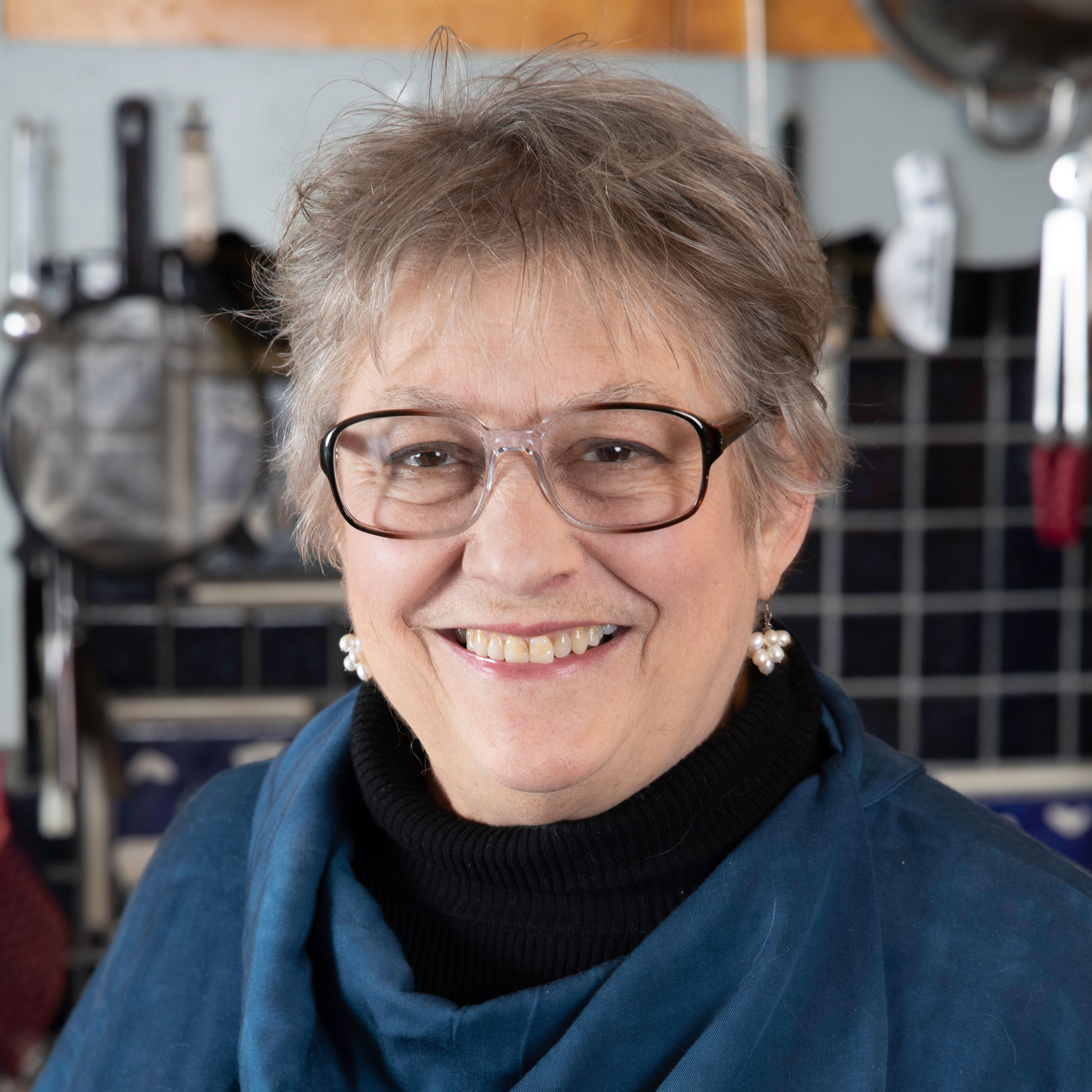
Jennifer Byrom
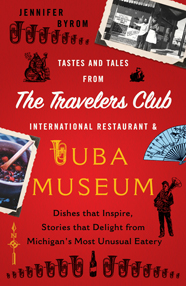
Jennifer Byrom is the retired co-owner of The Traveler's Club International Restaurant and Tuba Museum in Okemos, Michigan, which she ran for twenty years. Today she leads Miss Jennifer's School of Practical Arts, where students of all ages explore food, culture, and textiles, and she is a partner in the clothing design business Spencer Brooke Designs. Her book, Tastes and Tales from the Travelers Club International Restaurant & Tuba Museum, is part cookbook and part memoir, sharing guests' favorite recipes and stories from the restaurant's years in business.
📚 Books by Jennifer Byrom
Transcript
[0:00:30] MR: It’s not often you hear fellow diners playing the tuba while you decide between stir fry and baba ganoush, but this was actually normal at the Traveler’s Club International Restaurant and Tuba Museum in Michigan. Whether you are an out of town musician trying one of the vintage tubas or a local stopping by for the third time that week, the Traveler’s Club offered you more than just great food, it gave you something to look forward to. A unique and authentic experience. For 20 years, the Traveler’s Club was Jennifer Byrom’s respite for customers and employees alike. In her new book, Taste and Tales from the Traveler’s Club, Jennifer shares the recipes and philosophies that took a tiny hole-in-a-wall-building on a sleepy street corner to a statewide treasure and you’ll learn how Jennifer makes her famous falafel, the ingredients that should always be in your pantry and why the rules of her recipes are meant to be broken. And in today’s episode, Jennifer shares her passion for food, her experience living in Iran as a child and how it all led to opening one of the most unique restaurants and tuba museums in the country. Enjoy. Hey everyone, my name is Miles Rote and I’m excited to be here today with Jennifer Byrom. Author of Taste and Tales from the Traveler’s Club International Restaurant and Tuba Museum. Jennifer, I’m excited you’re here, welcome to the Author Hour podcast.
[0:02:02] Jennifer Byrom: Thank you.
[0:02:03] MR: There’s so much to talk about. I loved your book and how it’s organized and it’s so interesting. First, tell us a little bit on, just your background, and how you got into opening up a restaurant and tuba museum to begin with?
[0:02:19] Jennifer Byrom: Right, okay. At no point in my previous life had it occurred to me to own a restaurant. Cooking was definitely what — I called it my default. I’ve been thinking about food and cooking since I was a young teenager. It didn’t include the idea of owning a restaurant and I had always heard that running a restaurant, much less owning one, was critically difficult and it just didn’t occur to me to think about it. But I grew up being interested in food, for some reason, I’m from — but I’m from Oklahoma, southern Oklahoma. All of my family are from. I had two grandmothers who were very good cooks but real basic foods, you know? The one grandmother interacted with most, did start making fun of me by the time I was a teenager and playing with more than just your basic ingredients. But that didn’t seem to phase me, it’s like, I was — food was my track and I never did vary from it So we traveled when I was a kid, we moved to Iran when I was eight in 1957. That seriously disrupted our food habits. We were a family from Oklahoma, we drove around the country in the summer camping but we did not have international experience. When we went to Iran, I was the youngest of two kids and my father got a job as a consultant, education consultant in Iran in 1957. Which is an amazing time to have been abroad. There weren’t very many Americans abroad. We all went and there was no such thing as grocery stores. And so we hired a woman who became our housekeeper for the three years we ended up being there. She did most of the cooking and you know, I don’t really — I don’t recall eating anything except her food. And it was mostly lamb and rice and it was really good. And our palettes expanded significantly but like I say, there were no grocery stores so your meat came from a carcass hanging on a hook. Vegetables from a fresh, somebody. The water was not sanitized water so we boiled everything. It was early times in Iran in developmental times. I am guessing I had been a picky eater prior. And then after that, I didn’t have much choice. We learned, coming form Oklahoma, we’ve never eaten rice. I don’t think anybody in our family had ever eaten rice and by the time we returned, that’s all we ate was rice. We were considered pretty odd by our family. That was a huge turning point and I just was really interested in — everything I remember from the time we started traveling, had to do with food, whether it was markets, where the food was.
[0:05:17] MR: Even before, it sounded like —
[0:05:19] Jennifer Byrom: Like I say, it’s my default and I am as much interested in how food gets to be what it is, as I am making it. I love other people’s stories of their families and how their family cooked food.
[0:05:32] MR: Okay, let’s fast-forward. You leave Iran and you're interested in food and have been for a long time and now, of course, you’re interested too in just travel and international and people from different parts of the world. Having that experience when you’re a young kid which must have been invaluable. What happens next? How do you find yourself in the Traveler’s Club International Restaurant?
[0:05:59] Jennifer Byrom: When we returned from Iran, my father didn’t want to go back to Oklahoma State so he got a job at Cal State Northridge in Los Angeles and we moved to California. And I grew up there, went to college at Cal State Northridge and then up to UC Davis and was always interested in food. And then, got married and moved to Michigan and which is where almost, most women my age, the reason they are where they are is because they went with a husband. I ended up in Michigan. By then I was a serious explorer of food. I liked, I just wanted to know there was — I wanted to know how to cook and make everything and I basically went all the way through Julia Child’s books and then I went through the Joy of Cooking and then I started asking people how they cooked and then I got to the point where I liked just being in the kitchen by myself for hours and hours at a time. After my divorce, I hooked up with a man named William White and we started having parties that we called feasts. We would just invite anybody there was to invite. William would walk down the street and invite people and so we would have maybe 50 people gather at the house and I would have spent two days making Moroccan food, I think was the first big feast.
[0:07:19] MR: Wow.
[0:07:19] Jennifer Byrom: I had a friend who had a birthday and I asked him, I would cook a meal, where did he want it from and he said Morocco. So that’s how I learned and continued to learn by jumping in feet first. I say that about my life in general that a great deal of my life, I had spent holding my nose and jumping in. Which has some good and bad qualities to it.
[0:07:41] MR: Yeah, definitely.
[0:07:43] Jennifer Byrom: When we decided to open a restaurant, well, I talk about that in the book and it’s because there was some property for sale, commercial property, and I thought it would be a good property to put my clothing design business in. I was designing clothes at that point. It was an old ice cream parlor and it really wouldn’t make do with it to be anything but a restaurant-like place and so William said, “Well let’s start a restaurant,” and I said “Well, I hear it’s really hard.” We had a thousand dollars to start with, to start up money and the rest was just sweat and toil. For me, it was just a launching point, it’s like, whenever I got to buy ingredients and make them and people bought them. “Well, I can make anything then.” People ate it and liked it and I kept going. I became very fluent in most food languages and I’m very proud of that. You know, how when you're learning a language when you start — you know you’ve learned the language when you start dreaming in it. That’s the way it has been for me with food is when I can design in that country’s cuisine. I’m on the way. That’s been a joy for me.
[0:09:01] MR: What was that like that first time when you’ve had these feast now for a while in these parties and now you open your restaurant and you cook food for people and they’re paying for it, what was that like? That first moment of “Wow, people are showing up and eating my food and paying for it?”
[0:09:18] Jennifer Byrom: I don’t think I thought of it that way. I think I thought of it — was, “Oh, I need to cook food for people because they’re coming in and asking me to do it.” I didn’t have a sense of the bigger picture at the time. It was just, oh, new task, take it on, let’s do it. I don’t think the “wow” came in for a long time. I tend to be that way. I just start something up and do it.
[0:09:42] MR: You jump in feet first and then come back to the surface and then there is maybe a moment for the wow. This wasn’t just a Traveler’s Club International Restaurant, this is also a tuba museum. How did those things come together and why tubas?
[0:09:59] Jennifer Byrom: It didn’t start out that way, we were going to just have a restaurant and it had to include the ice cream parlor because it was an iconic ice-cream parlor. It was going to be ice cream and sandwiches and some international food rotating specials. And William was a musician as well as a business man and he often, he played tuba in school. He often was carrying — he often had a tuba with him and he would leave it around because after work, he was going to go off and play with the polka band or something. And people took notice. We tended to be pretty casual about — we didn’t decorate, things just — it was a very organic growth where things just appeared on the piano because I didn’t have a place to put it. An awful lot of our décor was accidental. And then it became something people wanted to keep, it was interesting to watch people look at what we had hanging around the walls. And so the tubas began to take notice and William was very serious as a collector. He didn’t just pick up band equipment. Each tuba that he had was, he had it labelled specifically who made it. What made it different from other tubas and he put a label under each one that he hung up and people of all kinds, you know, we had a very huge clientele. Varied clientele. We had lawyers and doctors and we had little kids and moms and pops and we had folks from the state legislature. And they would sit at the counter and look at the tubas and read the signs. That became a moniker and commonly, I would get reports back, especially from employees, and they would say well I was out in another town and somebody said where he worked and he would say “I work at the Traveler’s Club,” and they would look puzzled, and then he said, “You know, the Tuba Place.” More than that, we were known as the “Tuba Palace,” the “Tuba Temple,” the “Tuba Place,” the “Place with the Tubas,” yeah, it was — that gave me such an insight to almost anything that people do, there is a subculture related to it. And there is a sizeable tuba subculture in the world, that was very interesting to learn.
[0:12:26] MR: And even people that are interested in tubas, there’s that group that are interested in tubas and then there is the group of people who don’t realize that they’re interested in tubas as well, you know? They’re sitting there having lunch and they see the tuba on the wall and they’re suddenly interested.
[0:12:42] Jennifer Byrom: Yes. Sure, and by, you know, as the tubas increased in quantity then so did photos of tubas or posters of tubas or paraphernalia that William would collect. And tubas became his second identity. He named a character Tuba Charlie and he got that. And so, Tuba Charlie just became a living thing. So then, when he started brewing beer, it was Tuba Charlie’s Beer and I heard him more than once, later in our — in the relationship with the restaurant, I heard him saying if someone said what do you do, he would say, “I own a beer pub and we serve some food.” And I would just kick him because it was, “No, we have a restaurant that has tubas in it and we serve beer.”
[0:13:39] MR: Yeah, that’s amazing.
[0:13:42] Jennifer Byrom: It was a presence of its own. And the smashed tuba that you know, so that alone, became an icon so the whole thing was a remarkable human experience that —
[0:13:55] MR: Yeah.
[0:13:55] Jennifer Byrom: That I treasure. There are a lot of tuba stories and there’s lots of Traveler’s Club stories. Whenever somebody mentions the Traveler’s Club on Facebook, there starts being all kinds of input of people saying “Yeah, I did this, I saw that or whatever.” It was quirky place.
[0:14:11] MR: Share some of those with us, what are some of your favorite Traveler’s Club stories?
[0:14:19] Jennifer Byrom: One of my sons was visiting with his kids recently and these are two major stories that I tell in the book but they just make me laugh still to this day, you know, 20 years later. One was ‘the smashed tuba’. William was a very creative person and who knows where he came up with this idea but East Lansing was refurbishing its streets one August. Some of the main grand river was closed off so that they could reapply new asphalt and I don’t know, he must have checked in with the Department of Transportation but he got permission for us to take something down there and put it on the road and the steam roller would roll over it. None of us knew this until that day. And he’s coming in with the tuba over his shoulder and he says, “Let’s go smash the tuba and get down there.” You know, it’s an ordinary August day, there were just people wandering around and not much traffic because the road is closed and there’s a big steam roller and it’s hot and this was a throw away tuba from a band — a junior high band or something. He shows up, I went with him and he had a camera, an old fashioned movie camera, and he lays it down in the middle of the road. And you know, steamrollers are really big things so the guy sitting on it is just as tall as an elephant, so he’s way up there and William lays the tuba flat down on the road and whoever is there, we’re all kind of standing there quizzically. And the guy turns on a steam roller and moves forward very slowly and you know, and at first, there’s not enough friction so the object moves forward. And then, little by little it caught on and the steamer rolled right over that tuba and when it passed, I mean we were all leaning in, staring at this flattened thing in the asphalt. And then he rolled back over it and then he rolled it forward over it and then he rolled back over it and then we had a very flat tuba. We went home and then he found an artist who embedded it in a big piece of cement and it became — you know, it was next to the front door. So when you came into the restaurant, you passed the smashed tuba. And I loved it so much that I started having fantasies of doing it with other foreign instruments and making a wall of them.
[0:16:40] MR: Wow.
[0:16:41] Jennifer Byrom: So there was that one and the other favorite one of mine is definitely dated because an awful lot of people listening to this won’t know the musical, The Music Man. But I loved it and played it and a high school band played. The orchestra would put on a play. One day at some point, well the MSU tuba line in the band is famous for being such a good line of tubas playing band music, And they travel around the States giving exhibitions. So the community knows the tuba line, some members of the tuba line called him up and said they were in town early because the band always comes back early before the students do, in order to practice. Could they come over and get some ice cream at the restaurant and play their tubas and William put, I kid you not, I don’t think it was even two lines in the classifieds in the newspaper that said, “MSU Tuba is at Traveler’s Club at Sunday 2 PM” that was it. Sunday is the worst day to run a restaurant that is open for breakfast, lunch, and dinner and it is my shift. And by 4:00 on a Sunday, I am out of that building. And I was sitting next door because I lived in an apartment in the house next door. And I am sitting on the porch just relaxing and not even thinking of the restaurant and I start seeing a slow traffic of people walking down the sidewalk towards the restaurant, every kind of people. You know people dressed in suits, people dressed in shorts and flip-flops, kids, everybody, and I had a bad feeling that it was getting crowded in there and so pretty soon William calls me and he says, “Can you can come over? We’re really, really busy” and I said, “Nope I am not coming over.” And he persuaded me too. It was several phone calls and I have the ability to lower the temperature, just as some people do. So I finally went over and it was a madhouse. And everybody was eating ice cream and they were all eating food and they were all waiting for the tubas and where were the tubas? And none of us knew. So I just helped out with the staff and then I kept looking out of the door to see — I had no idea what they were going to look like. And after a while, directly across the street from us, was an iconic Ace hardware store. It had been there for a long time, long before us. I look out the window and a band pulls up and some guys get out. And they’re in cut off shorts and flip-flops and very polished tubas and I turn around in the door and I say to the customers, “The tubas are here” and it erupts. The whole place erupts standing and cheering because the tubas are here. And they lined up at a line of I think there were eight of them, they lined up in two lines across the street and trotted over to our door with their tubas and went in. I mean, it was just a scene out of a movie. People were cheering and clapping and then the tubas didn’t know, they played the tuba line. They played the baseline so they didn’t know the main melody of the ‘fight song’, which they were going to play. So they just ‘tuba’d’ the ‘oom-pah-d’ all around the restaurant — around and around inside, everybody is cheering. And then they got their ice creams and honked and went home. But I thought, you know, I could easily have had started an annual downtown parade of tuba parade and it has the energy.
[0:20:16] MR: And it seems like music was a big part of the restaurant because you had a piano there as well and even offered free coffee to people who would play competently.
[0:20:28] Jennifer Byrom: Right and if someone came regularly like every Monday at lunch time, they got a free lunch.
[0:20:35] MR: Oh wow, that’s amazing.
[0:20:37] Jennifer Byrom: Music that was one of the things that attracted me and William to each other first was music and food. I grew up playing, I learned to play piano but I played flute all the way through school in college and in marching bands. My mother in particular was very — always pursued folk art and so that included folk music. And so wherever we went in the world, we found venues of people playing local music. So I grew up very appreciative of traditional music wherever the culture was. And really was very knowledgeable of Michigan. Traditional Michigan music is unique to Michigan and so he was friends with elderly man who had homemade fiddles who had been lumberjacks up in the UP and others. So when I first got to know him, we explored all the bars in Michigan that had immigrant musicians playing there. For both of us, food and music always went together. So the restaurant had to include music and it did.
[0:21:44] MR: That’s so great, yeah from food to international food and community and music, it is such a great combination to create a culture of people coming together.
[0:21:56] Jennifer Byrom: William was and is a remarkable musician native skills and he was capable, always, of picking up any instrument from any part of the world and within 15 or 20 minutes understanding enough to play on it. And to play traditional melodies, which is remarkable. So he had a nose for anybody out in the community who was an interesting musician.
[0:22:26] MR: That’s amazing and so in your book, it is really cool the way it’s laid out. You do a really cool job with it as far as just telling stories and anecdotes and then there are a lot of recipes as well, of course. And there has to be with your passion for food. What are some of your favorite recipes?
[0:22:45] Jennifer Byrom: I had a friend who had just, I sent the book out by PDF to a number of friends and this friend wrote back and said, “I don’t find galloping horses” and she was really upset. Galloping horses was a Thai pork and peanut recipe and it is basically pork, either baked or broiled, and then sauced with this really good peanut sauce that we became really famous for. And I laughed because we mailed out a quarterly menu as well as our regular menu, then we made specials from around the world each month. And so, January was Africa month and May was one of the Asian months and we would mail out to people who had signed up at the notebook on the counter, if they wanted to get a mail. Or they could sign up for it. And so we would mail this mailer that would say, “Here is the four months’ worth of food specials we are offering.” There are people who own every one of those we ever sent out. And people put things on their calendar. So every May there were people who came for galloping horses. So that was a big, the peanut sauce was just — and what everybody liked about galloping horses was the pork and peanuts. Well so, then the peanut sauce was really good, how can I incorporate that into having it always on the menu? Not the pork and peanut but the peanut sauce and I learned a lot. You know I knew nothing about running a restaurant, inventorying and all of that. So I learned that you can’t just add one item that is going to require special ingredients all by itself. It has to be able to be used on other dishes as well. So it took a long time before I came up with the stir fries. And peanut stir fry was, I’d say, top of the list of people who would always recite — the peanut stir fry.
[0:24:37] MR: That’s great, yeah and it is so cool too having, I don’t think I have ever heard of a restaurant. I am sure they exist but a restaurant that each month has dedicated to a different type of cuisine, it is such an amazing idea. And this is why you have to check out the book. As far as thinking about a restaurant through the lens of every month being a different cuisine, tubas, and the museum there and all of the decoration just being totally organic and all of the style, organic.
[0:25:10] Jennifer Byrom: And the ice cream. And the ice cream was big.
[0:25:12] MR: And then the ice cream part — that is exactly where I was going with this to top it all off with a cherry on the top, was there was an ice cream parlor that you guys were really well-known for.
[0:25:22] Jennifer Byrom: Yes and could not, not have traditional ice cream. So you know most people now only know ice cream is soft serve and the traditional milkshake where you put your two scoops and your syrup and blend them is going away. And there were people my age and older who would sit at the counter and if they would order an ice cream soda, you had to make it right because they knew how to make it right. And there was only one way to make an ice cream soda. So that was a lot of work, the waitresses had to work a lot harder at our place because they had to take the orders, they had to take care of the customers, and then they had to make desserts. And adding the ice cream to the labor component was a serious interruption in their workflow but it was good and people loved it. So I learned a lot about that culture.
[0:26:19] MR: What would you say was your favorite aspect of the restaurant? Was it being able to cook for people? Was it the food you made? How people felt being there, having ice cream, the music? If you could put your finger on one thing that you just cherished the most, what would it?
[0:26:38] Jennifer Byrom: The fundamental is learning about food, I mean that still is my heart talking about food but knowing that I can go to somebody else’s country and speak about their food with them and enjoy it and get pleasure out of how their family grew up in that country and that still is just probably the absolute top. But then there is the wonderfulness of working with customers and employees and running it my way, which is not the most efficient way but it made sure everybody was treated as a human and that included the employees. And so they came to me, you know it was just really interesting people and I encouraged that. So the conversations that we had throughout the years, and I am still friends with a number of the early employees, who now have kid’s graduated college, it is a joy.
[0:27:35] MR: That is so amazing and I am so happy you were able to write all of these down into a book and save all of these magical experiences over the years that you’ve had. And I highly recommend people check out the book and if they could take away one or two things from the book, what would it be?
[0:27:54] Jennifer Byrom: It would be what I start out within the book, which is equality. The things that are so important to me that I will just get in people’s faces is that we are all equal. Everybody deserves respect, everybody deserves to be as different as they are and to love them. I had so many people come through the door in so many ways and I cherish every one of them because they gave me so many rich memories. When I started to write the book I knew that a lot of the book really needed to be telling the stories of people who came into the restaurant as well as the employees. And it took me a long time to put it together. I am very proud of the way the publishers really understood me and created the format. I think it’s excellent. It's like I couldn’t have drawn it out better. They just really got how I wanted to be presented. So, everybody’s life is full of threads and it is not just you go to work and you go home. You got home life and you got tragedy and you got love and you got a world. I just have this sense of embracing the world.
[0:29:05] MR: Yes, you’re right. There are so many different threads and it is amazing to see the thread of empowerment through your book wrapped up and embedded in all of these different things. And it is really cool to see and it really shines. So Jennifer, this has been such a pleasure and I am so excited for people to check out the book.
[0:29:25] Jennifer Byrom: Thank you.
[0:29:26] MR: Everyone, the book is called, Taste and Tales from the Traveler’s Club International Restaurant and Tuba Museum. You can find it on Amazon. I love reading that title every time I do it, it is just like there is so much there it makes me happy.
[0:29:41] Jennifer Byrom: Yeah.
[0:29:42] MR: Besides checking out the book, where can people find you?
[0:29:45] Jennifer Byrom: They can find me at my email, which is byrom58@gmail.com. I have started finally working on Facebook. I have avoided doing social media and I can’t avoid it any longer. So I have created a page on Facebook and it includes — because the food then is also part of the rest of my life, which is Miss Jennifer’s School of Practical Arts and a clothing design business. So they are all there and so I am hoping our local bookstore Schuler’s will carry it. And then we have a — William has kept the website from the Traveler’s Club open and thetravelerstuba.com. And he will be selling the books there along with spices that I created and t-shirts and other memorabilia that were hot topics for a long time. People meet each other across the world and see someone else wearing that Travelers Club t-shirt and they identify with each other and so they can order directly from me and then I will figure out other methods and keep people posted on my Facebook page.
[0:30:52] MR: Amazing and for everyone listening, Byrom is Byrom and Travelertuba.com is the website.
[0:31:00] Jennifer Byrom: Correct.
[0:31:01] MR: All right, perfect. Jennifer, thank you again. This has been so much fun and keep inspiring people and keep doing all of the eclectic and amazing things that you do.
[0:31:12] Jennifer Byrom: I am at age 71. I just turned 71 and I got a lot ahead of me. I am looking forward to it.
[0:31:20] MR: Jump right in, feet first.
[0:31:22] Jennifer Byrom: Yeah.
[0:31:24] MR: Thank you everyone for joining us on this episode of the Author Hour Podcast. You can get Jennifer Byrom’s book, Taste and Tales from the Traveler’s Club International Restaurant and Tuba Museum, on Amazon. You can also find a transcript of this episode as well as our other previous episodes on our website at authorhour.co. For more Author Hour, subscribe to this podcast on your favorite subscription service and thanks again for joining us. We’ll see you next time, same place, different author.
Want to Write Your Own Book?
Scribe has helped over 2,000 authors turn their expertise into published books.
Schedule a Free Consult