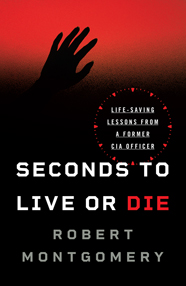
Robert Montgomery: Seconds to Live or Die: Life Saving Lessons From a Former CIA Officer
Read the full transcript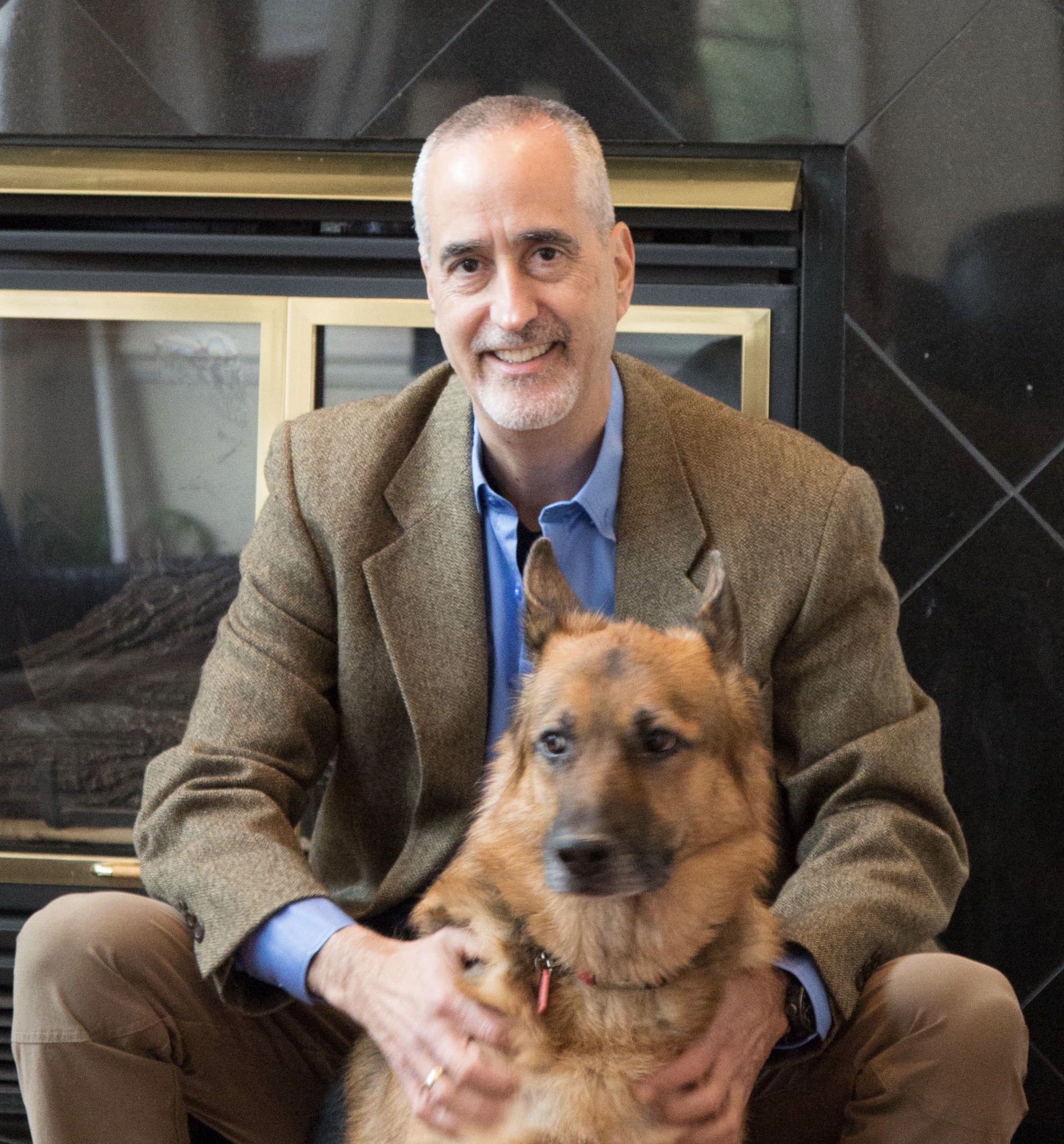
Robert Montgomery
Robert Montgomery spent thirty-four years as an operations officer in the CIA, serving in some of the most dangerous places in the world. A former Marine, he is the founder of Guard Well Defense, LLC, where he teaches self-protection courses such as Combatives for Women, Improvised Weapons, and Street Smarts for Students and Business Persons, all designed to help ordinary people prepare for and respond to unexpected violence. In Seconds to Live or Die, he draws on his career in the field to share proven methods for protecting yourself and your family at home, on the street, and abroad. He is the father of six children.
📚 Books by Robert Montgomery
Transcript
[0:00:25] MR: We never know when the worst case scenario may actually become a reality. It could happen at home, in the workplace, at school, anywhere. Crime, sexual assaults, threats to our children, and terrorist attacks are real things that exist in the world every single day. Of course, for the most part, people are good and, day-to-day, most of us aren’t in regular danger but that doesn’t mean we shouldn’t prepare for the worst. A simple drill with your family or a few seconds of preparation can make the difference between life and death. In his new book, Seconds to Live or Die, Robert Montgomery draws upon his 34 years experience as a CIA officer to provide readers with practical advice and strategies to prepare for the worst while hoping for the best. And in today’s episode, Robert shares with us what to do when experiencing fear, who should and shouldn’t carry a gun, personal stories from his career and so much more. Enjoy. Hey everyone, my name is Miles Rote and I’m excited to be here today with Robert Montgomery, author of Seconds to Live or Die: Life Saving Lessons From a Former CIA Officer. Robert, I’m excited you’re here, welcome to the Author Hour Podcast.
[0:01:49] Robert Montgomery: Yeah, thank you kindly Miles, it’s a great pleasure for me to be here.
[0:01:53] MR: Yeah, let’s jump in to you and your background and your experience in the CIA, what was that like? I think you served what, 34 years?
[0:02:03] Robert Montgomery: Yeah, exactly. Retired in 2018, I joined in 1985. I was the operations officer for the preponderance of those years and worked and served in many places all over the globe, including some of the more dangerous locales in the globe. I spent over a couple of years in Afghanistan, I’ve been in Pakistan, spent many years in South East Asia, and places like that. As I was kind of going through my career, I’ve had the great good fortune to have had some excellent training, but I’m probably getting ahead of myself, go ahead.
[0:02:41] MR: No, I don’t think so. Yeah, I would love to hear, I would love to just hear about your experiences there and basically what really inspired you to write this book, with 34 years experience in the CIA, traveling around the world, being involved in some major missions. What was it that made you feel like you should write this specific book?
[0:03:02] Robert Montgomery: That’s a good question. I was getting ready, a few years ago, I was getting ready to go back again to Afghanistan for another assignment. Typically, as you can imagine, when you’re getting ready for an assignment like that, there’s like a million to one things that you got to get done, right? You got to make sure the will is up to date, that the insurance is up to date, that your wife knows where all the bills are, that you got the automatic payments going on, that everything’s in order, that you’re saying goodbye to relatives and friends, and try to spend family time. Then of course, the agency makes you take various trainings for an assignment like this, and some of which are very good and some of which are quite onerous. You're trying to do all these things and we were down at Costco one day and I saw that they had Arlo cameras for sale and I thought, “Well, you know, I’m going to be gone for many months, it’s – why not, maybe I’ll just pick up a couple of these cameras.” I didn’t really think that we needed them. We live in a beautiful college town with crime is virtually unheard of. Got back a couple of days before I was supposed to leave, my son was an army lieutenant at the time, was like, “Hey, Dad, when are you going to run this drill that you’ve been talking about?” Because I had intended to run a drill for my wife and my children. I had at the time three children on the age of 10 and one teenager, and I wanted to run a drill that simulated a home invasion at night. I had talked about it and it just kept getting pushed back, pushed back, but now it was getting down to crunch time. So I’m like, “Yeah, you’re right, let’s do this.” We ran a drill, we spent about 20 minutes, I had purchased a shotgun a few weeks earlier than that, and we’ve been out in the woods at my friend’s house, and so we had a familiarization fire with that for my wife. We took the Glock pistol that we had and she shot down a half dozen times or so. In our drill, we kind of went over, “Okay, you hear something, what are you going to do?” Well, here’s the shotgun, here’s the ammunition, load it, you’re going to go down the hall, you’re going to grab the teenager, he knows how to shoot. Should we give him one of the handguns? Debated that back and forth, okay, where are you going to stand? Is it better to bring three sleeping kids to our room or is it better to fight from their room? We decided better to fight from their room. The teenager, he was familiar with shooting, should we give him one of the handguns? Yeah, we can do that but, you know, we talked about, if you ever have to shoot inside, you’re going to experience either auditory exclusion, where you hear nothing because of the pressure that you're under, or is going to sound like a canon on the other side. We just kind of walked through this for about 20 minutes. Joking around, having fun, boom, done, on to the next thing. Well, fast forward six months, and I’m in Afghanistan, and I used to like to exercise at lunch time so I come out of the shower and, on my iPhone, I see I have a motion detect from one of my Arlo cameras. In the past, it’s always been you know, it’s a bug or a deer or something like that. This time, when I look, it’s 4:30 in the morning and I look and I see a white Caucasian male, late teens, early 20s, he’s got a jacket with a collar up, a baseball hat, a backpack and he’s using his flashlight to look inside, or using the phone, the light from his phone to look inside of my garage.
[0:06:28] MR: No.
[0:06:29] Robert Montgomery: It’s 4:30 in the morning there, we're in Virginia. A moment later, I got a second motion detect and now I have an African American male, dressed in the exact same fashion, and he has what looks like a light on a pistol and he’s looking into my playroom, TV room, on the back deck. By this time, I need to call my wife, so I FaceTime my wife and it’s 4:30 in the morning, she’s in a deep sleep. She wakes up and I tell her, “Hey, I need you to look at the cameras, there’s two guys outside.” She looks, she goes, "Yeah, I see them.” I’m like, “Okay, go get the shotgun, load it, tell me when you have it.” She goes, “Okay.” She was really calm, I was really impressed. Usually, when you get a call from Afghanistan, you expect, at 4:30 in the morning, you’re expecting bad news, right? I was telling her that the actually the bad news was on her end. I hear her getting up and she’s trying to load the shotgun, she’s having trouble, she comes back, she says, “I’m having trouble.” So I say, “Forget the shotgun, go get the Glock, rack it one time,” because I keep it loaded but nothing in the chamber so you got to rack it one time to put a round in a chamber. She racks it, she’s got it. I said, “All right, go down the hall, grab the teenager, stand in the doorway, call 911. Speak slowly and clearly so they understand what our address is. Anybody comes up the stairs, shoot the shit out of them, and then call me back once you’ve called 911.” She goes, “Okay.” Off she goes. Now, a word about my wife, she’s just the kindest, most gentle human on the planet. Clearly opposites attract here. You know, before she whacks a fly, she’ll apologies to the fly and then she’ll thwack it, and then she’ll explain to me, “Well, the fly wanted to live too.” That’s the type of person she is. But now, her children were in danger and she was all about it, she was all business. I get another motion detect as I’m waiting, now I have two African American males on my back deck, and they still have the guy out at the garage. I got three potential home intruders and I’m watching them testing the windows and the doorknobs. Later we discovered one of them cut the screen to get into the screened porch. At that point I’m like, “Jeez, I wonder if I could just call the police from here?” I look it up on the internet, how to call – I’m way out in the eastern provinces of Afghanistan. I figure out how to make the call, I make the call and I say, “Hey look, I’m in Afghanistan," and they're like, “You’re what? You’re where?” That took like two excruciating minutes of explaining. “What’s your address?” I give him the address and they said, “That’s the jurisdiction of the county. Wait while we transfer your call.” Another eternity later, the county police answer, and I leave out the part about being in Afghanistan, I just say, “I’m out of the house and I can see the camera and my wife’s home alone.” Give them the address and they say, “We have officers on the scene.” I’m like, “Excellent, did you catch anybody?” No, they fled the scene, what we discovered later is that the guy out by the garage finally noticed a camera that was kind of off to a side, and he must have informed the others, grabbed the camera, threw it into the bushes as they ran away. What was interesting about that to me is, the next day, my wife is just utterly cool during this incident. Like any traumatic experience, afterwards, she kind of let her emotions out a little bit about it, and she was very concerned that they had targeted our house because they knew that I was gone and this kind of thing, but we came to find t hat they went down each house on the block. But I started asking myself, here is a woman who has no training, I’m the one that's had all the training. She’s had no training at all other than me showing her how to shoot in the woods and things here and there that I’ve taught her. When it came down to crunch time, she devolved to her lowest level of training, and she did it exactly the way we had practiced it. That got me thinking, if an average person who has no training can give a little bit of forethought to something, to a potential problem, then the chances of mitigating that risk are increased proportionally. That’s what kind of got me thinking. I thought about the things that I’ve done in my career, and situational awareness and this kind of thing, that we take for granted as an operations officer, but it may not be so readily apparent in the rest of the society. I thought, if I could just take some of these lessons learned over the years and kind of digest it down into bite-sized bits, if that could help somebody, that would be a great thing. That’s kind of the genesis of why I started the book, I was inspired by my lovely wife.
[0:11:11] MR: Such an amazing story. I mean, amazing might not be the right word for it, given the circumstances of it all, but the fact that you did do that prep and how it only took, as you said, 20 minutes. You know, it essentially was a tool that can be used, and training that could be used for the worse, and preparing for the worst. This book is all about how to prepare for the worst. Hopefully people, as we go through these different scenarios or different things that you offer throughout the book, hopefully they never have to encounter them but, if they do, having just some preparedness and training can make the difference between life and death.
[0:11:49] Robert Montgomery: Amen to that. You’re absolutely right, I live in a small college town and it drives me crazy, for example, to drive down the street and just about every college girl jogging has earbuds on. Little things like that. If you can just change little things in your life, you can raise your level of awareness. If you give a little bit of forethought about something, you could potentially save your life. For example, you go to a store, the first thing I do when I go to any place is I’ll look for the alternate exit, right? This is the age of mass shootings and things like that. It takes about five seconds to figure out where is the alternate exit. I locate it, I do that with my kids, it’s a game we play. Come in, if the bad man came in, where should we go? The kids look around for a few seconds. Yeah, that exit. A little thing like that, if you give it those 5 seconds, 10 seconds of thought and then, god forbid, something happens, you don‘t want to be thinking about what you should do in the worst 15 seconds of the worst day of your life. You want to have a few seconds of thought at least beforehand, and then you stand a chance of getting to action. That kind of brings me to another aspect about my career is how to deal with fear? Okay, perfect. I mean, we’ve all felt the debilitating effects of fear, all of us, nobody’s immune to it. You know, you were mentioning your police career. God only knows how many times your heart rate went up and then having to deal with various situations. What we find, what studies have shown is that, when people experience fear, our heart rates increase rapidly. If a bomb went off while we’re having this interview for example, here we are just chatting and sipping coffee, resting heart rate, but if a bomb went off, certainly our heart rates would shoot up to, god knows, 220 beats a minute or something. Once it starts getting that high, we lose our ability to think, we lose our ability to use or fine motor skills to like loading magazines or dialing 911. If we can recognize the effects of fear due to increased heart rates, then what can we do to mitigate that? Chances are, you’re doing it now I’m guessing, you are breathing. I would imagine, in your background, you probably heard of Dave Grossman, lieutenant colonel Dave Grossman coined the phrase, combat breathing. It’s nothing more than breathing in for three counts or four counts, holding your breath for a count or two, then breathing out through your four counts. If you do that for a couple of cycles, that starts to lower your heart rate. I you look at any human endeavor, sports, martial arts, god forsaken game of golf, child birth, everything’s enhanced by breathing because breathing relaxes us and enables us to do whatever it is that we’re doing better.
[0:15:06] MR: Yes.
[0:15:08] Robert Montgomery: When we experience fear, our brains kind of go into this three stages of thought here, the first one is, “Oh my god, I can’t believe this is happening,” and then the second stage is, “Man, what should I do?” Then the first stage is actually doing it. You look at terrible events in history, 9/11, the towers, where some of the poor victims spent hours stuck in the, “What should I do?” And the result is – we know the result. That is one side of the scale, but there is others where we come across a car accident and people are just frozen with, “What should I do?” We want to get from, “I can’t believe this is happening,” to “what should I do,” to doing something as quickly as possible. In the best case scenario that can happen in a fraction of a second. I heard a story, I can’t remember if it was a lieutenant colonel Dave Grossman’s book or not, or Loren Christiansen, but it was a story about a woman who was at the movie theater with her child, and she noticed a man who made her uncomfortable in line. Afterwards, she started walking back to her car and she noticed the man was there, following her and her daughter. So now her sensors are really going up. So as she was hoofing her way back to the car, she stared going through her mind, “Okay, I am going to take the key. If he comes near me, I am going to go for his eyes with the key.” She gets to the car, she puts in her daughter. As she is getting around her side of the car, the man grabs her from behind, and now she is in for the fight of her life. Well, she had the key, she had given it five seconds of forethought, she put that key into the guy’s eye and, actually, later on they discovered that she actually got both eyes. So good on her. That is an example of somebody who gave a few seconds of thought to a solution. “This is what I am going to do if this happens,” and it saved her life. And so, when it comes to fear that is my goal it is to teach people what they’re going to feel. We all know it because we all felt it, but how to mitigate it, and then the idea of thinking a problem through. “What would I do?” Just sometimes that very thought could be enough to save your life.
[0:17:28] MR: Yeah, the what-if scenarios and as you already touched on before, we basically fall to our lowest level of training. If you are in that situation and fear takes over, if you still have had that prep before, or the training, or the thought, then you can basically bypass some of that fear. It can still exist but you are not reacting to the fear per se. You are reacting or responding rather to your training, or with your training, and that can be essentially the difference between life or death in that sense.
[0:18:03] Robert Montgomery: That’s exactly right.
[0:18:04] MR: So for the most part you know people are good, but you have already told several stories, of course, where there are predators out there. Even this woman who was in the movie theater being able to spot that person early and being prepared. So what are some ways that people can spot predators?
[0:18:23] Robert Montgomery: So, that is a good question. I hope when people finish the book they are not going to be in a depressive funk because I really talk about the worst aspects of human behavior, and hopefully most of us will go through life and never have to deal with that. So, when I talk about predatory behavior, in my mind I was thinking of my wife and my daughters, because women are by far the most victimized segment of society, and it is particularly women from ages 13 to 22-23. Why is that? I mean there is a variety of reason that go far beyond my educational or professional background but, essentially, women – let’s just accept it that women are the most victimized segment of society. So, I wrote that part thinking about them. In this day and age, there is no person should be coming up to you and saying, “Excuse me, do you have the time? Excuse me, do you have a light? Let me help you with those things.” When a woman is at her car and she is putting something away, somebody comes up and asks her for a light, I mean she should be going on high alert right there, or that kind of thing. That kind of falls under the umbrella of situational awareness and being aware of your surroundings. Now, in the agency, we always celebrate people who again have high situational awareness. You know, what the hell is that and really how do you get it? It is nothing more than just keeping your eyes open and having some common sense. I talked earlier about seeing joggers with ear buds on. Every year woman are killed, jogging, wearing ear buds, and yet people still do it. There was a story I saw about half a year ago of a woman who was on the Appalachian trail somewhere and a bear came crashing through the woods, knocked her over, and continued on past her into the woods again. Well, she never heard the bear because she was hearing her ear buds. You know she is super lucky that she didn’t wind up as part of the food chain that day. So, the most dangerous animal of all of course is another human being. Why would you want to deprive yourself of the key sense, like your ability to hear, when you are jogging, when you are among hundreds of thousands of the most dangerous creatures on the planet, right? So situational awareness is little things like, “Well gee, don’t jog with your ear buds on.” Please remind Erica about that for me again.
[0:21:02] MR: I will. Yeah and there is so many things too to do with situational awareness, which we’ve already touched on, as far as the what-if scenarios. Being able to walk into a room and play the what-if game in your environment of, what if X were to happen, what would I do? Just, each time doing that, then playing that game, each time you walk into a space by default, you will become more situationally aware.
[0:21:30] Robert Montgomery: Absolutely, you know again, if we look at some of the situations that women face, how many times does a door, elevator door open, and the woman sees somebody in there that makes her uncomfortable. Then she’s got this split second decision, “Gee, do I get on? Do I not get on? I don’t want to be rude.” More often than not, they are going to get on. Or they are going to the stairway and there is somebody standing there that makes them uncomfortable, and more often than not they will tell themselves, “I am just imagining it, everything is going to be fine.” That is part of the situational awareness. That is part of, as you say, the thinking through for a few seconds. You know we got to train our daughters and our kids the same thing. We all want our kids to be polite members of society, but there are times where it is okay not to be polite. I would certainly say those are occasions where it is absolutely okay not to be polite. Don’t get on the elevator, don’t go down that stairwell. Don’t go down that subway, that deserted subway tunnel at that time. You got to listen to your instincts a bit, think about it ahead of time. If the door opens and I see somebody I don’t like, I am not going to get on. The book goes far beyond that because I am also talking about how to, in the worst case scenario, how to fight with your hands, how to fight with a knife, how to fight with improvised weapons, and this kind of thing.
[0:22:55] MR: Yeah, there is so many actionable items in the book where you provide real ways to protect yourself, and in different circumstances, and you really do such a good job. I must say Robert it is so well-written, the book, and even talking about some of these things, which can be hard to read or think about. It is so well-written and presented in a way where you almost feel safe as you’re reading it. So I just want to point that to the listeners, it is true.
[0:23:24] Robert Montgomery: I would only be thank you to the copy editor, but we’ll get to that later.
[0:23:29] MR: What about, carrying a gun is very – it can be in the United States at least, very controversial. So what is your recommendation as far as people – should they be carrying a gun? What does that look like?
[0:23:44] Robert Montgomery: Yes, that is a great question. I’ve lived in so many countries where guns were not allowed and, obviously, the number of gun deaths in those countries was far lower than what we have in the US. On the other hand, we have so many guns in society now where literally our society is awash in them, that there is no turning back at this point. So, now you got to ask yourself, “Okay, if I am going to have a firearm,” there are. some critical things that you got to do. You’ve got to get the training. You know, I am sure from your background how many idiot sticks wind up shooting themselves or somebody else by accident? YouTube is replete with these most amusing videos of people shooting their feet or the person next to them or what have you, all by accident. So getting to training is absolutely critical. More importantly than that, I think is you got to have the right mindset. It is a pretty profound thing to think of taking another human life. If you are not willing to do that when in the worst 15 seconds of the worst day of your life, then I would suggest don’t have it. Don’t carry a gun, because it is most likely to be a problem for you. Then of course you got the moral and legal issues that are going to surround the use of any gun, because the minute that bullet leaves the barrel, you are responsible until that damn thing lands wherever it is going to land, right? And just because you say to the police, “I shot in self-defense,” that doesn’t mean anything to them. All they heard is you shot him. That much is true. Whether it is in self-defense or not remains to be proven. So you’ve got to be able to – or willing to A, put up with the moral and legal consequences of carrying a gun. With that said, I personally have a concealed carry permit that I carry all the time. I think it is a good option to have. The other part of that is too many people only have a gun as an option, as their only option, and I can’t even – among some of the hardest people I have ever met, their comments to me about the, “Do I need to learn how to do combat?” is “I don’t need that because I’ll just take out my gun and I will take care of them that way.” Well, that’s great until you’re in the shower or in bed or the toilet or what have you. It is going to be a million to one different scenarios where you don’t have a gun. I think having a gun is only one part of a self-protection envelope that you want to ensconce yourself into.
[0:26:19] MR: Yeah and you bring up such a good point too, as far as only having a gun. You are basically going from zero to a hundred. As soon as you escalate the force up to a level of a gun, now the other person essentially is going to, in that moment, feel as though they have to do everything they can to protect their life. If they have a gun that’s coming out, whereas, you know, there are other levels of escalation that it doesn’t have to be taken from zero to a hundred.
[0:26:48] Robert Montgomery: Amen brother. I think you are absolutely right about that. You know 99.9% of encounters we have with people, you can walk away from. You may not feel manly and you may not feel – you may be embarrassed, or what have you, but you’ll be alive because, again, look at how many incidents do we see in society that starts off as an argument over parking? The next thing you know somebody pulls out a hand gun, and now the person is shot to death. So those types of stupid social encounters, man, you can walk away from. I absolutely advocate that and what I am trying to highlight in my book is only for those worst 15 seconds, of the worst day of your life, when everything else has failed, and now it’s – you are defending yourself and, by defending yourself, you are proactively taking apart the other person.
[0:27:46] MR: And really, I love the motto of your book, “Hope for the best, plan for the worst.” This book really does that and, although, of course, sometimes it deals with heavy content, it really helps readers plan for the worst, which could mean the difference between life and death. So thank you for taking the time, and taking your 34 years of experience, and putting it into a book to really help people in potentially some of the scariest and worst circumstances. If people could take away one or two things from your book Robert, what would that be?
[0:28:18] Robert Montgomery: Love life. You know, I talk about some horrible things in humanity in that book, but I would say, finish each day without regret, because you never know when that day could be your last. Many years ago I had the good fortune of working with a guy named Dave Rutherford in Afghanistan. He is the owner and creator of a company called Froglogic. Dave is the epitome, to me, of what a teacher and a mentor should be. One of his expressions that always stayed with me, was that every day above dirt is a good day, right? And I think he is absolutely right.
[0:28:50] MR: I love that and I love you spreading that message, even with a heavy book like this.
[0:28:56] Robert Montgomery: Thank you and, you know, hopefully a lucky few will go through life and never experience any of the stuff that it described in there.
[0:29:03] MR: Amen, Robert this has been such a pleasure and I am so excited for people to check out the book. Everyone, the books is called, Seconds to Live or Die: Lifesaving Lessons from a Former CIA Officer, and you can find it on Amazon. Robert besides checking out the book, where can people find you or do you want people to find you?
[0:29:24] Robert Montgomery: Yeah, good question. You know coming out and admitting my CIA affiliation, it was like coming out the closet somehow. It was a real – you know because you are living a double life for all of those years. So that really took some getting used to. I do have a small side business, where I do teach people, and the name of that company is guardwelldefense.com. You can find it on the internet, so guardwelldefense.com.
[0:29:51] MR: Perfect. Robert, thank you so much and everyone stay safe out there.
[0:29:55] Robert Montgomery: All right Miles, thank you very much to you too and looking forward to when I can interview you actually.
[0:30:01] MR: Thanks again for joining us for another episode of the Author Hour Podcast. You can get Robert Montgomery’s book, Seconds to Live or Die: Lifesaving Lessons from a Former CIA Officer, on Amazon. You can also find a transcript of this episode as well as our previous episodes on our website at authorhour.co. For more Author Hour, subscribe to this podcast and thanks again for joining us. We’ll see you next time, same place, different author.
Want to Write Your Own Book?
Scribe has helped over 2,000 authors turn their expertise into published books.
Schedule a Free Consult