John Elston: The Remote Revolution
Read the full transcript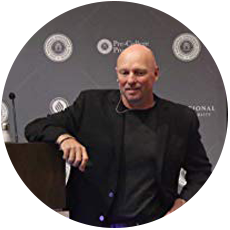
John Elston
John Elston began his career in hospitality, working his way up from bellman to partner in one of the country's largest hotel companies. He continued operating hotels and resorts around the world until 2010, when he launched a successful digital marketing agency. After several years of growth, he took his business on the road to pursue the future of work, spending fifteen months living and working across five continents. His experience working remotely, combined with decades of executing business strategies, has made him a sought-after speaker and expert on harnessing the power of the location-independent workforce. He is the author of The Remote Revolution.
📚 Books by John Elston
Transcript
[0:00:28] Charlie Hoehn: You’re listening to Author Hour, enlightening conversations about books with the authors who wrote them. I’m Charlie Hoehn. Today’s episode is with John Elston, author of The Remote Revolution. Do you wish you could hire more A players to work for your company? If so, this episode is for you. After living in the corporate world for more than 30 years, John decided to decentralize his office. The results blew him away and changed the way his company recruited talent forever. In this episode, John shares his story of taking his company to the next level and how you can ride the wave of remote work into the opportunity of a lifetime. Just a quick note before the conversation begins. There’s a little bit of background noise that you can hear in this episode. John had to rent an office to do this interview because he’s working in another country. Just bear with us, the interview is great. Now, here is our conversation with John Elston.
[0:01:51] John Elston: I, for the very first time is losing A plus talent and I mean, A plus, right in the small agency, started with three people, grew to 20 in a matter of 48 months. I remember very specifically, the day that my superstar came in and said: “Look, I’m 24 years old, I don’t want to drive to LA every weekend. I want to have a relationship, I want experiences and a customer hasn’t been in our office in six weeks. I can do this job from LA.” I didn’t have to think about it, right? I know the audience is probably like, “Of course you don’t have to think about it, you said yes.” I said, “Hell no. That’s not what we’re about, we’re building a culture, we’re doing something here different. You have to be here.” That was the end of the conversation. She left my office and literally 24 hours later, she came back and said, “I really wish you would reconsider” and I said, “I can’t.” She said, “Well then I’m giving you my resignation.” Still, once again, stubborn CEO coming from the corporate world said “Fine, that’s okay.” Then she left and then I lost another A player. I just couldn’t budge off of what I thought was important to the company. Now, fast forward three years later, my company is decentralized by choice because I couldn’t replace that A talent, they were looking for different things, they had different expectations and coming to an office every day wasn’t one of them. Kind of you know, going on about it but that was my “aha” moment where I was like.
[0:03:42] Charlie Hoehn: That was your moment?
[0:03:43] John Elston: Yeah. I need to do things differently. I still had an incredible staff, they were great, it was just the people that had left that I was replacing with, didn’t step up to the same caliber. It wasn’t just young people, you know, the millennials, Charlie. It was mothers with kids at home, it was fathers who needed to get home in time for soccer games. It was an eye-opening experience and even to the day, when I realized that I was going to decentralize the office and hopes of retaining the staff that I had. I thought I was bringing them bad news, right? Because those who were there, these are the people that are happy about this, they want to be here and I went in and I called lunch and we had lunch come in and everybody sat down and I said, “Okay guys, I have some really tough news. It’s really tough.” “I want you to know, it’s going to be okay.” My number one, my senior designer at the agency was sitting at the other end, head of the table opposite of me. I said, “As of Thursday” and it was Monday morning. I said, “We’re not going to come to the office anymore, you’re all going to work from home or a location where you can get your job done and I’m so sorry. “ “I’m letting you guys down, I realize that this is your life and I realize that this is – we’re a family.” Literally, Andrew, from the end of the table was like the old movie groove maker, right? He was like [clap, clap, clap]. People to the left of me, stood up and it’s the first time as a CEO of anything, I got a standing ovation. I was in my office, thinking I’m letting everybody down, looking around the table. I was emotional too. I literally was on the verge of tears saying, “I’m so sorry.” Thursday came and it was amazing. We didn’t lose a single customer, I was able to place ads across the world for people to work for my agency across the country and that was my moment when I said, “This is cool and this is going to get the agency back to a spot where I can compete globally.” “I can compete with wages and I can expand the company because guess what? I don’t need this 5,500-square foot office, right? People will figure out where to play fooze ball. They don’t need a nerf gun armory, right? Come on. They’re figuring it out.” My COO and myself, he was much closer to my age and my tactics of running business at the time, we came in every day because we had a lease to pay and we really – that was still our style but we walked into this huge office every day by ourselves for five months. Until the lease ran out. That’s when I said, “Chris, I am out of here. We need to compare doing. We need to kind of be, you know, we need to be Benjamin Button’s and we need to get to what’s important to us and we need to have a good time, we need to work hard and we need to get things done. But we need to have experiences like they are.” The rest is history. I still – that wasn’t the book, right? This was just – I still had no idea about the book. I had note left – I hadn’t ventured out, I wasn’t accepted in this incredible program that I ended up being selected for. But I just knew that that was the future of work. I knew the future of work.
[0:07:27] Charlie Hoehn: What program?
[0:07:29] John Elston: I applied for a program called, it’s a company called Remote Year. Remote Year was these two guys that started this company, incredible, bright, I say young men. Because when they started the company, they were both in their 20’s and both come from Silicon Valley. One was with Groupon in the early times of Groupon, when I think was doing some type of equity debt raising and somehow they got hooked up. I’ll be honest, when I signed up, when I actually applied. First, I didn’t know that 68,000 people were going to apply for 70 opportunities, right? 68,000 people which is now I think still the only the second lowest of dozens of itineraries that they have out there now. They’re exceeding six figure applicants with every itinerary. Charting my idea was that I was going to vet this business, right? I can do this better than these guys. I’ve been in hospitality, I’ve been in hotels, I’ve been traveling, these are two young kids, I can figure out how to do this business better.
[0:08:36] Charlie Hoehn: They crushed you.
[0:08:37] John Elston: Yeah, no, that didn’t crush me, they selected me. They picked me.
[0:08:40] Charlie Hoehn: Okay.
[0:08:43] John Elston: I had no idea I was going to be picked. I just kept going through the process and the process going, “What’s the business model? I don’t understand this, how are they making money?” Sure, I’ll get to the next hole and I got to all this stuff and they called me. I was with a client on a photo shoot in Hawaii and I was literally standing in the water with a list red and I had it on my stabilizer and my phone rang, I picked it up and they said “John, congratulations, you’ve been picked, you’re leaving in 55 days to live and work around the world.”
[0:09:19] Charlie Hoehn: Sweet, I love it.
[0:09:21] John Elston: Yeah.
[0:09:23] Charlie Hoehn: That was a very desirable program.
[0:09:27] John Elston: For sure.
[0:09:30] Charlie Hoehn: I love what you’re saying John, usually I like to ask and ask questions as much as I can but I want to share a quick story with you because I really believe that you are on to the next big thing. I think if you look at the Forbes 500 list, the best work life ratings from the employees are the ones who are doing the exact thing that you’re describing. Which is allowing their workers to work remotely. Cisco for example, is roughly 98% are allowed to work from home. A friend of mine works for Cisco and I won’t say her name or anything but she told me her cholesterol dropped I think between 50 and a hundred points as soon as she was able to start – The effect that it had on her health, the amount of money that she was saving on stuff like work clothes, her insurance dropped, she was no longer eating out, she was eating at home every day and she was – she got dozens of hours back that were going to the company. It was a massive shift and I believe she said that on average, she told me that companies save – I’m actually looking at notes I took with her during a call, that companies saved $6,000 per year per employee having them work from home. I’m not trying to steal the thunder of your book at all. I’m doubling down on this message. I think it’s a phenomenal one, that’s all I wanted to toss in The Remote Revolution.
[0:11:18] John Elston: It’s amazing. I don’t – yeah, thank you, I don’t disagree with you. I think if anything, those numbers might be short in estimates. I have a similar story. I left on the road May 28th 2016 and packed along with me Charlie was a year supply of high blood pressure medicine, pre-diabetes medicine, sleeping pills and a backup for pain and anxiety. It was ridiculous, right? I also left and came back 28 pounds lighter. Okay? I am now – and I don’t want this to sound like I’m turning into a health study or medical commercial but I lived it, I did it. I did exactly what she’s reinforcing. I even became a better value to my own company because I wasn’t just walking down the hallway to my converted closet or bedroom into my office. I was walking through the streets of Venezuela, I was walking through the streets of Lima Peru, through Bogota, to Meta Ian. I was working every day with incredible talent and I was providing my own inspiration, right? When you run your own company or you are key decision maker, people don’t often give you the positive feedback, you usually get the negative feedback. It’s not very often where you’re hearing the good things, you’re accepting and you’re being reactive to things that are happening and I always thought, “Gosh, this is why I’m so stressed out, this is what I’m doing.” I put myself in this position of carrying all this burden, the reality was, it happened to everybody I was living with. We all felt inspired and we took that pressure off of our companies because companies walk around every day going, my job is to motivate, my job is to inspire, my job is to provide opportunity to create experiences, you know? That’s not necessarily the case today, allowing them and providing them are two huge different things, right? I can see how your friend at Cisco, working at home tele commuting was able to have those type of positive results, not just financially. Imagine if she was also working in Meta Gian and the expectation, I’m not sure where she lives but I was living with people that came from Philadelphia and New York, Chicago, major gateway cities that no longer needed to have a billable rate of $175 an hour. They could literally provide tremendous value with an inspirational output, for a third of the price. Guess what? Most of them didn’t even have to accept the third of the price. They still took their regular price and their regular wage but they had options. They could work less if they wanted to. Thank you for acknowledging that you think that we’re on to something. In the book, I refer to it several times as – I even stumbled around with it as a potential title called The Future Of Work and the reality is, I stayed away from it because the future of work is now. I was afraid that it would be the future of work. The future of work is now. Millions of people are doing this.
[0:14:52] Charlie Hoehn: Yeah, in the title that you picked I think is much better actually because The Future Of Work is – that oddly has a shelf life on it. The Remote Revolution is what’s really happening, it’s much more specific. Let’s say I am an HR policy maker or a CEO or an entrepreneur, who makes hiring decisions. Why does this really matter to me? Let’s say you’re talking to your old self and you’re a little skeptical and you’re like “No, I mean, I still see the value in having a local team come into the office so we can get that face to face.” “We need to have that, it’s faster communication,” whatever you used to tell yourself. What would you say to them, why does this really matter?
[0:15:42] John Elston: Well, because I think if I would have written this book a decade ago or I am going to write it two decades from now. I’m going to still be struggling with talent. When I say struggling with talent, I’m still struggling with finding a point of deferrization for my company and for my people that brings the best talent in the world to my organization. Because I don’t think any human, whether you’re remote or not remote, to go to an office or CEO or an entry level. You know that you do your best work when you’re inspired. Best work as a father, a son, a daughter, a friend, an employee, a CEO, a board of director. When you’re inspired, you do your best work. What I would tell people that are in that mentality or old school practice of we need people to be inspired. I talk to dozens and dozens of HR policy makers over the last year and a half about what they were stumbling against and what walls they were running into. Every word that came out of their mouth was the same word that would have come out 20 years ago when I was coming up through the ranks of the corporate level. They want team players, they want people to collaborate, they want loyalty, they want trust. They want self-starters and they want people that at the same time are good at working on a team and working alone. Those things don’t change. Where those people are at has changed. They’re no longer looking through newspapers looking for jobs, most of them aren’t even going to job postings anymore. They’re freelancing, they’re being 1099 individuals, they’re looking for you know, a gig-onomy. They’re looking for their own gig teams and opportunity to build experiences. I would tell the HR people that if they’re familiar with something that I’m going to talk about VUCA for a second. Do you know VUCA? And that acronym?
[0:17:52] Charlie Hoehn: Yeah, the co-working space?
[0:17:53] John Elston: No, VUCA, yes, ironically yes, that is true, there is co-working space but the VUCA I’m speaking of was introduced by the US army war college back in the late 80’s, right? After the cold war.
[0:18:05] Charlie Hoehn: Okay, I have no idea of what you were referring to then.
[0:18:08] John Elston: VUCA there stood for we’re going to train our soldiers how to perform well in an environment that involves volatility obviously, the V, uncertainty, complexity and ambiguity. We’re going to train our soldiers to deal with volatility, uncertainty, complexity and ambiguity. It was successful. There was no doubt that as soldiers, teaching the soldiers how to manage day to day and live and survive with skills that got you through those primary traits, were successful. Because I was growing up in business at the time, I also understood that adopting those same qualities as many major Fortune 100 companies did, “Hey, if it’s good for the US army and our soldiers, let’s train our people that way.” There are so many human resource experts out there that aren’t – they’re smart, they’re experienced, they’re the best of the best, running large companies but they’re still relying on those old practices of saying, “Well John, aren’t we in a volatile situation with our economy, with our leaders?” “Isn’t there a bunch of uncertainty,” and what I found through this process was there has to be a different way because the talent today doesn’t want to be taught about how to manage through complexity and uncertainty. What they want and kind of what I’m calling VUCA prime and there is a gentleman, believe it or not, wouldn’t this be a great job to have this guy Bob Johansen. Bob Johansen works for the Institute Of The Future. I just love the title. Institute Of The Future. He got on to this early on in the last couple of years and said, “You know, we need to replace the volatility with vision, we need to replace uncertainty with understanding. We need to replace complexity with clarity, we need to be agile, we need to drive agility.” And when you look back today and you say, “I want to come up with a way to find talent that’s driven by vision and understanding clarity and agility.” I’m willing to open up my eyes as a policy maker for companies and the company that I’m running to tell my leaders and the people that are responsible for making this shift and this change in the way we hire people and the way we retain people is we have to have that vision. We have to have understanding of what people want and inside of our own organization, there needs to be clarity about the direction we’re moving. Most importantly, we have to be agile, we have to be willing to change and go where the talent goes. That’s what I am an Evangelist for. As I get up and I continue to talk about where the talent is, how to win the wars, how to have your pods or your point of differentiation. I’m telling these HR policy makers as I do through the book, remote revolution. Shift those thoughts instead of looking at volatility. Focus on the vision, focus on the understanding and the clarity and the agility of your company and it will take you to the talent. It will take you there. In the meantime, I also, because I feel so divided, right? I’ve spent – I still feel like I walk around 80% of my time during the day as a location independent person, right? I’m still living as a remote and a lot less like a CEO. I’m trying to talk to that group too which is now my family and my friends of remotes around the world and telling them, search out and find companies that speak the same language as we do. As you referred to in the conversation you had with your friend, there are amazing great companies that are making this transition and there are still so many companies that have a mission statement of having the world’s best talent. Being open minded, being visionary and they’re just looking and moving in the wrong places and that’s what I hope this book brings to both of those levels, both of the independent location and independent person. Professional as well as the companies.
[0:22:46] Charlie Hoehn: Author Hour is sponsored by Book in a Box. For anyone who has a great idea for a book but doesn’t have the time or patience to sit down and type it out, Book in a Box has created a new way to help you painlessly publish your book. Instead of sitting at a computer and typing for a year, hoping everything works out, Book in a Box takes you through a structured interview process that gets your ideas out of your head and into a book in just a few months. To learn more, head over to Bookinabox.com and fill out the form at the bottom of the page. Don’t let another year go by where you put off writing your book. John, can you give a very brief description of like, here is the solution that’s presented in the book. Is it the VUCA prime concept that you talked about or is like – how could you describe? Here is the solution, here’s what these companies need to start doing in order to go where the A level talent goes and kind of modernize themselves with the times?
[0:23:55] John Elston: It’s a major shift and not just making the decision to say, let’s let people work from home. It’s the entire package of offerings and opportunities. I’ll give you a couple of examples. I think that companies spend a lot of time right now believing like I did, that I knew what my team wanted and what they needed so that might be that they’re going to fight and battle every day with their in-house counsel and their board about benefit programs, about 401(k) programs, about opportunity of internal promotion. All of those types of things. Pretty standard, pretty important still to some degree in varying levels. Pay, you know, we’ve got to be competitive with pay. I’ll tell you from firsthand experience and my takeaway was that the best talent in the world is not looking for their employer to provide the experiences of their life. They’re not looking for the employer to take care of them in retirement. They are not looking for a crude vacation days or paid sick leave. They are looking for flexibility, they’re looking for experiences, they’re looking for a real way to take play and life and work and to tie it together with a team. Charlie, and this is really important but a team that they select right? A team that they are comfortable with that they get along with and not be forced into a meeting room or a conference room with people that are selected by others. The end result is the best talent in the world is really, really good at doing what they do on their own and freelancing but more importantly finding out how they work together with people that they’ve had success with. So they’re taking a big part of the responsibility that we always took on as leaders of feeling this obligation to have to put together teams and they’re creating their own team geniuses. They are creating their own gig teams and they are bringing value to companies so that they can save time for the company, but most importantly for themselves. They are having a bottomless bucket experience. So there is no bottom to their bucket, they are checking of their list and they are doing the best work of their life doing it and when I pitched this book a couple of times before I ran into Tucker, it was publishers had told me, “John this is nothing new.” “You know you’re a corporate guy that climbed the ladder, you were part of taking a nice strong company public, we hear that all the day.” “Oh you are an entrepreneur who started a business during a really tough time and you succeeded, we pick 30 authors a year. This doesn’t fit into the category”. “Oh you’re remote, well you know how many remotes there are right now?” The thing I hope to bring to this book is I have had the chance to literary live and bring all three to where I am today. I understand and I am just sitting there in the middle of both of these incredible opportunities as the remotes and as the independent location person is out there looking for work. And on the other side is the first two chapters or three chapters of my life, all of my corporate Silicon Valley startup, corporate Fortune 100 folks going, “How do we retain this talent? Where do find it?” And that was where the book came from. It was like I know how to get this two together, I just got to get them understanding why companies think the way that they do for the remotes and remotes to think why the companies do. I think I said that backwards but basically bridging those two and bringing them together is the goal of this book and teaching those two how to take advantage of the talent work and come out on top.
[0:28:11] Charlie Hoehn: Tell me your favorite story, a success story, either of an individual, A-team worker or a company that’s implemented the remote revolution ideas into the DNA of their company because it sounds like this is not a quick like, “Let’s allow people to work remotely” this is a holistic change. This alters the DNA of the company. What is your favorite story you’ve heard so far or the implementation of the remote work lifestyle?
[0:28:49] John Elston: I think my favorite story was my first – it took place to me personally. In my first month I landed in the Czech Republic on a Saturday morning after flying from California to New York into the Czech Republic and checked into my first apartment. The next morning for the very first time I got to meet 69 other people. 70 of us from 17 different countries all around the world I was going to live with and I was going to work with for an entire year. It was like walking into this incredible energetic mystery, right? We walked into this rehab warehouse that had been turned into creative space and the energy was so high and everywhere I looked I just saw excitement. I didn’t know, I looked back at the very first picture we took together as a group. There was 70 of us travelling around the world and when I sat there center top of this picture I looked to my left. I had no idea that the person next to me was an incredible videographer. A 24-year-old, out of Philadelphia I am scrapping along and being a part of an agency, on my right was a scientist from Amsterdam who had written a book. I think a takeaway from all of that was the next year has some type of incredible opportunity. I wasn’t sure exactly what it was going to be but within the first 30 to 60 days, I immediately knew that there was an opportunity both on the corporate and company side as well as being this remote employee and this individual there in the room with me. I think what we’re going to have to do Charlie too, all of us showed up with really no expectations of what the next year is going to look like for us as individuals. We were meeting each other for the first time and we all came in with expectations that changed immediately after that first meeting. We knew that we were going to be creators. We knew that we were going to be providers to our companies because our mix of people that were in this room. 50% were entrepreneurs, freelancers and 1099ers and the other 50% worked for Fortune 100 companies. So even though we were there with different missions, we knew that this experience was going to be something really big and I decided to name the book instead of “The Remote Evolution” or “The Remote Transition” I knew I was taking part of a revolution because all of my years in the corporate world and then entrepreneurially starting my own companies I had never been surrounded by such incredible talent all in one room at one time. I just took that and said, “If we’re here in Prague today 70 of us, how many more opportunities around the world are there that can be expanded upon?” And out of this one year of travelling together, there were many startups. There was money that was raised, there were companies that were started. There were collaboration sessions for Fortune 100 companies that took place by this talent, that was being inspired by where they’re living and working that pushed me over the edge to helping solve a problem that I hope this book does. That’s by opening up the eyes of those that can’t get out of the office and live and work in bucket list type places or places where they can afford to live for a lot less money and show them how to do it and if I can accomplish that and reach out to a few small companies, mom and pop entrepreneurs or midscale, or large size companies and have them consider giving this a try, I would be very happy with the results of this book.
[0:33:06] Charlie Hoehn: Love it and as somebody who’s done this stuff myself, I personally am a fan of this lifestyle especially in bursts, when you get caught in the mindset of being in the same place either in your hometown or where you live for too long. You forget the stimulation, the excitement, the curiosity, the open spirit that comes with travel, right? It comes with being in a new place. There is a magic I find in my personality where I’m just much more open and I can connect with strangers better. When I am in a different culture and environment, there is an excitement and joy that comes every time you travel if you allow it. So it’s just a way to enrich your life, it’s a wonderful thing and I understand when people are like, “Oh you know just settle in one place and build your community there.” I totally agree with that strategy as well but you can get this infusion of excitement and zest for life that only comes with this type of routine I feel, so I think it’s great.
[0:34:22] John Elston: I agree and I think companies wrap their minds around it and understand that in that lies the answer of winning the talent war and flipping the paradigm of their benefit programs and their pay scales and things upside down to match that and start saying, “Hey look, you know one of our benefits is you’re going to start.” Here’s an example, you’re going to start with our company with 30 days paid off. Take the first 30 days. Tony Hsieh from Zappos wrote an incredible book, Delivering Happiness and he’s got a great company. His company came on and said, “Hey look” I think it was $3,500, “If you leave within the first 90 days we’re going to give you $3,500. You can quit and leave anytime you want”. I thought what about if companies said, “We’re going to pay first month, go get settled in, go understand what’s like to get situated in another country, get used to the time zone because we believe we picked the right person.” “We are making you an investment and by the way, instead of giving you your 401(k) we are helping you with your visa program. We are paying the fees for your visa, your passport and we’re kicking in an Airbnb and Uber card.” What I just created there by boarding out five or six sentences is a point of differentiation that the talented people of America want to hear. They don’t want to hear, “Hey we are going to move you up from one cube to a side office to a corner office” you know?
[0:35:51] Charlie Hoehn: Right.
[0:35:52] John Elston: They want to hear –
[0:35:53] Charlie Hoehn: That’s no longer the dream.
[0:35:54] John Elston: Yeah, go to Cartagena for the weekend, travel when you are not supposed to be working. Just get your job done and we’re going to help you do it. We’re here to provide that type of environment.
[0:36:06] Charlie Hoehn: And companies are saving money on this. They’re saving money because you can switch to a contractor agreement. You can pay them more.
[0:36:16] John Elston: That’s right.
[0:36:16] Charlie Hoehn: And they live a better lifestyle.
[0:36:18] John Elston: It’s really hard because you know –
[0:36:19] Charlie Hoehn: It’s a win-win-win.
[0:36:21] John Elston: So many of us is ex-corporate people. We live our success by how big our building right? How big is the office we’ve built and we have heard about the skyscrapers –
[0:36:28] Charlie Hoehn: How inefficient are we?
[0:36:30] John Elston: Yeah, I think now a lot of people have boards and very highly paid superstars are worried about going and telling their shareholders, “Hey I’ve got an idea, we’re going to decentralized and we’re going to get rid of this 28-story skyscraper and let our people work abroad” right? I think somehow they know it is important and it’s the way of the future. It’s still hard to make that decision.
[0:36:56] Charlie Hoehn: Yeah, you know I am thinking here. I would love to eventually see your book on Amazon be coupled with, I would love for it to say, “People who bought this book also purchased Let My People Go Surfing” and probably the 4-Hour Work Week.
[0:37:13] John Elston: Yes.
[0:37:14] Charlie Hoehn: The founder of Patagonia has been doing this for a long time. It is a phenomenal book and not to promote more than one book in your episode but I really feel they are tightly aligned books and –
[0:37:28] John Elston: I mean Ralph Potts, you reminded me, Ralph Potts wrote a book Vagabonding. Vagabonding meets Delivering Happiness is the remote revolution. So Delivering Happiness great book, culturally driven, how to start a company and make people work together and then Vagabonding, right? You take those two concepts of great companies like Zappos and then somebody like Ralph Potts and take his book. I hope that those are two books that pop up on Amazon that people also read when they get to The Remote Revolution.
[0:38:08] Charlie Hoehn: Yeah, so John quickly give our readers a challenge. What is the one thing they can do from your book this week that will change their life?
[0:38:16] John Elston: I think the best thing that they can do is wake up tomorrow and realize that they themselves along with everybody that shows up in their office every day, or applies for a job, does their best work when they’re inspired. If they can take that into the office and be honest with themselves and their bosses and people that they may take negative feedback from and shift the paradigm to coming up with practices and plans and strategies to hire people that are surrounded by what truly inspires today’s world’s best talent, I think it is going to lead them directly to location independent superstars.
[0:39:03] Charlie Hoehn: Good man and how can our listeners connect with you and follow you?
[0:39:08] John Elston: Well because of my travels and because I just had so much to share, they can find me and a lot of my imagery on Instagram. My handle is John Elston, very simple. On Twitter it is also the same, John Elston: The Remote Revolution and soon, coming up when the book comes out is going to be my website. It’s called The Naked CEO with the under title of The Bare Truth. So they can find the website, Naked CEO and they could find me on Instagram and Twitter.
[0:39:42] Charlie Hoehn: Thank you so much for being on the show John. This was great.
[0:39:46] John Elston: Thank you so much, Charlie. I really appreciate what you’re doing for authors, for those of us that are breaking into a new career midlife. I couldn’t have done this without you or my team that’s working so hard on the book and it’s really great. Thank you for having me.
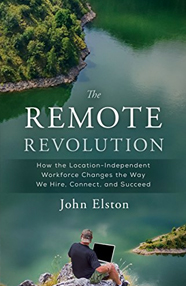
[0:40:05] Charlie Hoehn: Many thanks to John Elston for being on the show. You can buy his book, The Remote Revolution on Amazon.com. Thanks again for listening to Author Hour, enlightening conversations about books with the authors who wrote them. We’ll see you next time.
Want to Write Your Own Book?
Scribe has helped over 2,000 authors turn their expertise into published books.
Schedule a Free Consult