Lindsay Shoop: Better Great than Never: Believing it's Possible is Where Champions Begin
Read the full transcriptLindsay Shoop
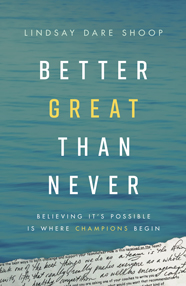
Lindsay Dare Shoop is an Olympic and World Champion rower turned author, coach, speaker, and Emmy-winning broadcaster. She picked up rowing during her junior year at the University of Virginia, became an NCAA Division I All-American within her first year in the sport, and went on to win Olympic gold with the U.S. women's eight in Beijing in 2008 before adding a third World Championship title in 2009. Today she works as an elite performance coach and educational speaker, mentoring athletes at every level. She is the author of Better Great Than Never: Believing It's Possible Is Where Champions Begin.
📚 Books by Lindsay Shoop
Transcript
[0:00:17] MR: We often think of Olympic Gold Medalist as people who have trained their entire lives just for the opportunity to be able to go to the Olympics, and often times, that’s the reality, but not for Lindsay Shoop. After playing sports most of her life, things took a hard left turn when she went to college, she quit basketball, gained weight, and skipped class. Her drive was gone. After a sleepless night and a fateful turn of events, Lindsay made the decision to become her best self. She discovered rowing and the sport became her outlet for transformation. In just one year, she became an NCAA division one All—American. In four years, she broke a world record and won her first world championship and within six years, Lindsay won Olympic gold. In her new book, Better Great than Never. Lindsay shows you how to seize your full potential by removing self-imposed limitations. She demonstrates how to embrace every step, good and bad to find greatness. For Lindsay, life isn’t about winning. As long as you learn throughout your journey, you can never lose. In today’s episode, Lindsay shares with us hard earned lessons. Why it’s important to manage one thing at a time and why we should focus on the things we can control and ignore the things we can’t. Enjoy. Hey everyone, my name is Miles Rote and I’m excited to be here today with Lindsay Shoop, author of Better Great than Never: Believing it’s Possible is Where Champions Begin. Lindsay, I’m excited you're here, welcome to the Author Hour podcast.
[0:02:05] Lindsay Shoop: Thanks Miles, I am incredibly excited to be here, I had to restrain myself from making like — pushing an applause button and be like, “Yeah! Here we are in Author Hour.”
[0:02:17] MR: Well, I’m so excited to talk about your story, you have such a story to tell, and you do such a wonderful job telling it in your new book — but before we even jump into that, tell us a little bit about you, your background and really, what inspired you to write this book.
[0:02:32] Lindsay Shoop: Actually, it’s something I didn’t put in the acknowledgments but when I was in sixth grade, two friends of mine made a little hand made book that was called Lindsay’s life stories because my whole life, I’ve been a talker, I’ve been a story teller, it’s part of who I am, it’s part of how I empathize with people, it’s part of how I connect with people and you know, something that I’ve worked on over the course of my life is not to dominate conversation and not to constantly reflect back to myself but that’s how my brain works. I see patterns and when someone tells me something, I immediately go, “Oh my gosh, that reminds me of this time that I went through this thing,” and it literally fast forward through all of the series of emotions. For me, it’s a way of connecting with other people.
[0:03:13] MR: Yes, no, I totally agree. I feel like I visualize things in the same way, which I’ve never heard anyone describe it in that way so that’s really interesting. So, are you saying then, even since a small child, you felt kind of the urge to write a book?
[0:03:27] Lindsay Shoop: To tell stories and yes, you know, I used to – I honestly didn’t like to read until I was about 26 years old, so to write a book is kind of ironic at this point but now I love reading. I love spoken word. I love written word, because it’s all about I read a quote recently, it’s all about seeing something through someone else’s eyes and it wasn’t until about seven years ago that I really started to voice to other people how much I really did want to write a book because I got into public speaking shortly after the Olympics, trial by fire. Which that story will be in book number two once I get to that one. But people would always come up to me and say, “Oh my gosh, your story is so incredibly, do you have a book?” At first, I was like you know, I’m not a writer and then for every single time that someone would say, do you have a book? You should write a book — I have always wanted to do that and here I am after many years of coaching now, and many years of speaking, and you know, it’s for the rest of my athletic career. I decided yeah, I have a story to tell and I would like to share it with as many people as possible and even if it resonates with even one person, then it’s done its job.
[0:04:42] MR: Yes, you do have quite the story to tell, you won an Olympic gold medal in rowing — and rowing wasn’t something that you grew up doing, really necessarily thought about doing, you were an athlete but according to your book, really didn’t even get into rowing or try rowing until college. Tell us a little bit about your childhood and growing up and playing sports and how you found your way into this world?
[0:05:08] Lindsay Shoop: It’s funny because I am quite tall. I was going to say tall for my age but I’m guess I’m fully grown at this point but you know, I didn’t come from a long line of athletes or anything like that. I was the only girl in kind of the area where I grew up. Most of my friends were boys, I had one older brother and I was kind of joking now that they taught me to throw hard and run fast, you know? I might not be able to be as big and strong as them fully grown but I could certainly be tough and hang with them and it was actually only recently that I learned that I nearly drowned in a lake when I was two and when my mom told me that, I began to realize, the practical nature of sport, right? Getting into swimming lessons as a result to that which by the way, everyone should learn how to swim no matter where you are, it will literally save your life. But, you know, I was put into lots of different sports as a child, mostly because they served a practical purpose like survival or you know, because my parents worked full time and they worked a lot and we lived in the country so they have long commutes and worked full days and so, sports also allowed us to either go to school early or stayed later after school or have things that would occupy us on the weekends that kind of served as part time babysitters as well. Not to mention that you know, it’s something that you as a child, now you’re spending time around other kids, you’re expending energy, you know, I think those are all the pluses that parents, whether they did it on purpose or not, you know, those were definitely pluses that they got from us playing sports. I think part of the reason why I played so many sports was simply because it was like what can we put them in now?
[0:06:53] MR: Yeah, it sounds like this developed out of not only a physical necessity like you said as in figuring out how to swim for survival but also even being socially accepted and as you said, growing up with boys and playing with boys is kind of like the thing that you had to do. And didn’t you also play on an all-boys baseball team as well growing up?
[0:07:12] Lindsay Shoop: I did, and that came about from playing in the back yard with my uncle and my cousins and we were literally just playing baseball in the back yard where I lived and I swung, I hit the ball and the ball went sailing down to the bottom part of the yard and my uncle was just like, “Hey, do you want to play on my baseball team?" That’s a skill we could use. So yeah, you know, I was – I ended up being the only girl on his team. He made a special request to the other coaches, of course, the season had already started and so he said he would have to talk to them first before moving forward and when he did, they found out I was a girl so of course, they were like sure, your niece can join the team. I walked out to our first game and some of the other coaches were like, oh who is that person? My uncle, that’s my niece. I was tall for my age, you know? I was five three and a half or so by the time I was in 5th grade and I wore, when I was in second grade, I wore a size five shoe, you know? I was definitely — you know, growing up awkward and lanky, and sports were a place where that was okay for me. There in that environment, it was special to be awkward and lanky and you could kind of wear a big baggy shirt and it didn’t matter, you know? That’s why I gravitated toward basketball, you know, basketball is a sport for tall, people naturally, I guess. And being there at the time, especially growing up in the 80s and early 90s, they didn’t have clothes that were made, girl’s clothes that were made for tall lanky kind of my opinion, awkward, young women at the time. But basketball jerseys and basketball shorts and basketball shoes were meant to be big and baggy. And so, I could kind of – I guess hide in there so to speak, I don’t want to say, I wasn’t a meek and mild child necessarily but that was a place that I can shine and that I felt more comfortable, especially now, everybody’s wearing the same thing, you're all wearing uniform so there isn’t like, look what she’s wearing, it was all the same.
[0:09:19] MR: Yeah, it’s amazing how those kind of socially constructed constructs can really even affect our decisions to make bigger choices like this to be more involved in sports because we feel accepted because of those different things.
[0:09:35] Lindsay Shoop: Exactly, I mean, we all look for what we’re similar, whether we know it or not, you know, or where we are similar, that community that we have something in common with and basketball was initial place, I played lots of different sports, you know? It wasn’t just basketball, I played field hockey and soccer, you know, I played baseball —like I said, I swam in the summers, all growing up and so my size definitely helped me through all of those sports. And I think, especially when I was through middle school or so, being bigger, you get treated differently in terms of maturity, especially in the school where I went, a lot of other girls on the teams that I’ve played on were a year ahead of me so then that pulled me up a little bit too but – which has its pluses and minuses, you know, you obviously it makes you feel – I must be good at this, I get to work with these people who are definitely older, and cooler, and more mature than you but at the same time, when you meet challenges, all of a sudden, you’re being treated like you’re more mature or knew more than you do simply because you’re bigger, people assume that you’re older and more mature than you are. That was the other piece of being – for a lack of a better phrase, the tall girl growing up.
[0:10:45] MR: Yeah, do you feel like that challenged you to grow up faster so to speak and take on more responsibility and kind of step up to the plate?
[0:10:54] Lindsay Shoop: I think things progressed at a pretty decent level because I was pretty good at the things that I chose to do and that’s actually part of the reason for the title was that I was always good at things but I was never great at any one particular thing. Having an older brother will do that as well. My brother and I are only about 18 months apart, so by virtue of us kind of always being together and growing up simultaneously that you know, pulls you along as well. I think sometimes you can find yourself out of your depth, there’s a level of development that occurs naturally but then there’s a point where you actually have to do more things in order to continue to improve. You know, the novelty concept versus okay now, this one path that I’m on, how do I further develop on this particular path, it takes work.
[0:11:43] MR: Right. Well, you played so many sports as you mentioned but rowing was never a part of it. But there was a moment in your childhood, in August 2nd 1992, if that gives you a flashback where you're a small girl, glued to the television and you’re watching women’s rowing Olympics for the first time and you feel a sense of inspiration so even though you’d never done it and you're playing all these sports, you’re captivated in that moment, tell us about that?
[0:12:14] Lindsay Shoop: Yeah, like I said, I grew up in the country. We only had four, maybe five TV channels or something like that on any given day. A bit cloudy, we would get less and NBC was the channel that came in the best, that was kind of the default place to begin and when I – I remember coming down the stairs at my parent’s house and when I turned on the television, NBC was the first channel I chose, and it happened that it was summer Olympics and the first thing, now that looking back on it, it seems so serendipitous that thing that was on TV, I didn’t understand it at all. I was like what? These people are going backwards and now they’re super up close and all of a sudden the angle changed and now they’re up above, is this the same sport. So then, my brain shuffled through. I know some things about track, and track events are short, maybe that was like nine different events all at once. But no, it was the women’s single and rowing the race itself is 2,000 meters now and over the course of that, you have a bit of time so the commentators folded in a story of one of the women in the race who had basically, was one of the favorites going into that particular Olympics for the women’s single event, and she had suffered a debilitating injury, not long before the games and as they told her story, they basically – she had been told that she may never row again, you know? All these things but she persisted and ended up coming away with a medal at the Olympics. Even though she had been told all of these things were standing in her way and I just remembered thinking, “Gosh, that’s a real athlete, this is so incredible,” you know, and of course, kid me was thinking wow, that’s what a real athlete is like, that set kind of a precedent for what it would take to be what I consider a real athlete. Now, from the ’92 games in Barcelona, you know, I don’t include all of this in the book but I became obsessed with the Olympics, the Lilly Hummer games and Yohan Cost (14:14), I was just obsessed with watching the speed skating and – because that was the winter games and then I put a bumper sticker for the Atlanta games on my door and I was determined to get my family to take us to Atlanta, we ended up not going with notes, Atlanta was a 10 hour drive from where I grew up, it would have been pretty feasible but it’s kind of expensive to go watch the Olympics. It did you know? But then I – as far as rowing goes, I shelved that thought, it kind of got buried in the back of my mind. Went on my way but it definitely was this image planted in my brain a higher level of athletics.
[0:14:55] MR: Did the Olympics also stay kind of embedded within you while you have this idea of – or even passion or draw to the Olympics and did you continue to watch them over the years?
[0:15:07] Lindsay Shoop: Being an athlete, you know, I think most athletes have some sort of a draw when it comes to the Olympics, we at least know about it. Definitely most of the people on the planet know about the Olympics, whether they play a sport or not. I was probably most passionate about watching them until about ’96 and always stayed in touch with the idea of them. I thought, “Oh gosh, if I ever were to go, how amazing would that be,” and at the time, you know, I’d grown up riding horses as well so at first I was, maybe I’ll go and equestrian events, that would be amazing and then as I grew up, and got into high school, I started playing volleyball, that became my favorite sport to be honest. I didn’t play it as long as I played basketball but I absolutely loved it. I had a coach that was just nothing but positive and taught us how to do the basics really, really well. I actually recently went back and had a conversation with her and if you were to ask her, if she was a very good coach, she would have said, “No, I just taught you how to throw the ball in the air and hit it.” I was, a good thing because it set this standard for the importance of consistency and simplicity and doing foundational things incredibly well. As a result of my falling in love with volleyball, I thought man, imagine if I were to go and played beach volleyball at the Olympics, that would be amazing but it was never this real, tangible thing, it was a fleeting dream, you know? If only, imagine. Could you imagine that I could ever do something like that?
[0:16:42] MR: I feel the need to skip around a little bit when I love what you said about your high school coach for volleyball and teaching you, really, the fundamentals and continuing to teach the fundamentals and stress that, how much did that translate over when you were training for the Olympics or when you were in that space, did you have flashbacks even, or was that ingrained in you of high school coaching and really understanding the fundamentals?
[0:17:11] Lindsay Shoop: I think one of the really fun things about writing this book is that it allowed me to see the big picture of all the things and the patterns that that actually came up throughout my life. At the time I didn’t notice it but come to find out all these years later, the way that they played a role. I in fact, and I tell this story very quickly in the book how after a game in high school, our volleyball coach came up to me and made kind of an off the cuff comment about me being miss consistent. That stuck in my brain, it’s a memory that I still have obviously to this day but the first thing the US national team coach said to me, on the day that he told me I made the Olympic team was – well, you’ve been consistent and that was yeah, that was something that just rang true and in both of those moments of I was good at a lot of things but was I ever great at this thing? Well, that is just an underlying understanding of — get as good as you possibly can at whatever it is that you’re’ doing and when you’re young, it was doing a lot of different things because you're working your way down your path of what do I love? What do I enjoy most, and whatever that outlet is, you know, like I said, when you’re younger, might be many outlets but you can hone similar skills throughout all of them and each of them are going to help you and guide you along the way until you kind of find that thing that best fits or that at least enters your life at the right moment where it best fits. And so, then, it’s when you turn trajectory to all of the things that you very organically learned over time — consistency, apparently being one of mine. Then when you start to add that work and one step at a time element to it, that’s when you can go from good to okay, this is a thing that I chose to be even better at.
[0:19:12] MR: Yes, I think that pruning away is so important and you can only really as you’re describing, prune away those things if you’re trying them, if you’re putting yourself out there and exploring different things. Otherwise, you can’t really know. You just described a big takeaway that I had of your book which is you haven’t been training for the Olympics or for rowing your entire life, you had been consistent and you kept showing up and because of that, it led to the Olympics and greatness and the gold medal. And it’s such a great reminder to all of us when we feel intimidated by others who we look at or perceive as great, and feel the gap between where we’re at now and where they are. And as though we could never get there but what you're saying in your life story, it feels like and sounds like is about just consistently showing up and you can get there.
[0:20:06] Lindsay Shoop: Yeah, I tell a few very specific stories in the book of times when I did show up, take a look at the other people out there, compare myself to them, and not give myself enough credit and go, “Oh my gosh, what am I thinking, I’ve never done this before,” or, “Oh they’re already better than me.” And twice in my life, very specifically, I tried to walk out on try out days and ultimately, obviously I’m very glad that I did not do that because you know, it is scary. Everyone has a first day at something and if someone is currently in your mind better than you at something, they didn’t start there, they didn’t just show up on day one, miraculously great at something or good at something. They stuck with it and so then just because you jump in at different point in the game doesn’t mean that you can’t also become that thing, you know? Eventually, I would say that the biggest thing and you're mentioning pruning away and figuring the path that you're on is the idea that you’ll love it and the more that you can become better at being you through your chosen outlet, the longer you will stick with it, the more that you’ll put into it. Even writing this book, I’ve had people say, “Oh I can never write a book,” and I say, “Well, if you really wanted to, if it was deeply meaningful to you and that is what you wanted to do, you would focus your efforts and resources on that thing and ultimately, be able to do it.”
[0:21:33] MR: And what is the – it is not a secret, I don’t want to call it a secret to your success but obviously in such a very young age, you’ve been identified as being consistent and that has consistently carried forward all throughout your life. So what is it to you that inspires you to consistently show up and do that and what advice would you give others who maybe they are considering walking out on the tryouts or the job interview or writing the book and they just put down the pen. What would you say to them to help inspire that consistency?
[0:22:13] Lindsay Shoop: Yeah, I mean there is a big portion of the book that I did walk out on that for about two and a half years. I didn’t think I was good enough to play sports in college let alone go to the Olympic Games. I was 17 and awkward and insecure and self-conscious about my size and my height, and I wandered down two and a half years of what subjects should I study? What should I do with my time? And that is really a big piece of the story in terms of walking out on that tryout was being ready for that next challenge. At the time, I didn’t think I had the skills or the direction or the deciding — I just didn’t know what would help me become the best that I can possibly be and I honestly at the time didn’t even know that there was a best. Who I was then was the best I thought I could be, until I very serendipitously discovered something that encouraged me to take things in a very step-wise manner. The idea of being having the thing be meaningfully tied to you and we call them a why these days when really, I didn’t even realized that we had to create a phrase for it. There being a why, it was just you know, it is just how you operate that for me everything in life really is it boils down to how you want to feel and who you want to be at the end of the day and whatever that thing is that allows you to become that and explore that and figure that thing out is again what will motivate you to do that. Rowing —
[0:23:48] MR: Yes, yes.
[0:23:50] Lindsay Shoop: Entered my life at a time when I needed it to and I was ready for it. Had it entered my life when I was 17, I probably wouldn’t have taken it as far as I did but because I went through those two and a half years of aimlessness and knowing what I didn’t want that was a big piece of it was, “Well, that’s not right. Something doesn’t feel right about this. That’s not the path I want to stay on. This is a different option, let’s do this,” because all I know is of course I didn’t know, “Oh, I am going to the Olympics in this sports someday one day one.” No, it was just different from what I was doing and I knew the other thing was what I didn’t want. It was, “Sure, why not?” Now even having said, “Sure, why not?” On that day I still that would be still trying to run out on the first day of tryouts. That happened after that point. So even when you make that decision to make that change, you have to continue to make that decision every moment of every day because every moment is an opportunity to turn things around. It is also an opportunity to flee and those are decisions that we make. And every decision that you make puts you on some sort of path and for me, this book is all about hopefully inspiring people to at least believe that this person that this possibility exists inside each one of us should we so choose to pursue that.
[0:25:10] MR: Yes and it is not always a pretty process.
[0:25:13] Lindsay Shoop: Definitely not, the book is filled with stories of, “Wow, I am the bottom. I am at the bottom the whole time. I might get cut at any minute.” You know — I tell about my college career and some of the things that I learned through that and when I tell many stories of my national team career and again, the number of times where the national team coach even went so far at one time as to tell my college coach, which thankfully my college coach did not tell me in the moment — But he wasn’t sure if it was going to work out for me just because of how I have been performing. That was in a place where we literary with the best people in the country who are then competing to be the best people in the world at this particular thing, and I was on the bubble for a lot of my career but because it was deeply meaningful to me, because rowing has allowing me to discover new things every day and to be proud of who I was every day, even on the terrible days — When it is freezing rain and your knuckles are cracked because it is so cold and you have another hour and you wish you had another layer and that you hadn’t forgotten your long pants because it was winter in New Jersey and you are in an outdoor sport. You know, yeah, it’s that opportunity to go, “Okay, like, I am getting better every day and this is what I want more than anything in the world.” I absolutely love it. You know I told a group of kids that I was speaking with the other day that it was only when I thought that rowing was being ripped away that it really upset me — but then that showed that I cared that much, which drove me even more.
[0:26:48] MR: Yes and you mentioned too in your book and also in this podcast, you mentioned the idea that before you could feel overwhelmed and feel like you didn’t know how to figure things out or feel like it’s too much but with rowing, it taught you how to manage your needs one at a time and not worry too much about the bigger thing and that really stuck out to me in your book and when you were talking about consistency, it sounded very similar. Where it is really just about managing that thing, getting through that thing and having it lead to the next and not being scared off by the boogie man or the gap between you and that greatness. So could you maybe just talk a little bit about that and how managing your needs in the moment would get you through into the next level or layer?
[0:27:37] Lindsay Shoop: Yeah, I mean our national team coach was really good about simplifying things and to be honest, we didn’t get a lot of feedback. You know I heard the words good job, which good job seems when people like, “Oh good job, what is that anyway?” Well, when you don’t hear it that often it means a lot of things, you know? It means you’re on the right track, it means, “Oh you actually got better,” and not just on the numbers but in someone else’s opinion because sometimes you’re like, “Were those numbers enough?” Well, those are better and when you are putting in time to literally find milliseconds of speed, even milliseconds matter at that level but to being able to focus your mind our coach said and this is what I love my teammates always go, “How do you remember this stuff?” Well, I wrote things down and I just have a weird memory — that has definitely lended itself to writing books and telling stories and making it a sensory experience, rather than just telling you are actually showing the experience — because I remembered what the coach would say: “Look, when it comes to the Olympics, you have to be good enough to win to even hope to come away with the medal.” And then he would drop in things in the same conversation where your preparation is your confidence. You have to be incredibly confident going into this incredibly challenging thing and what does that take? It’s not some inborn skill, it is something that you develop overtime. You know as soon as you feel out of your depth that’s when your confidence wanes a little bit. So put in the work every day, figure out how to get better every day and as long as you learn something and this is something that I tell athletes and individuals that I work with on a regular basis is that as long as you are consistently constantly learning and adapting, you never actually lose. You know you could literally win every race that you ever go into from a start to finish standpoint and learn nothing and then come out of that no better, you know? And eventually someone will get past you but the other thing to go back to our national team coach really said very explicitly and I wrote this on a piece of masking tape and stuck it to the back of one of my training log books, control what you can and ignore what you can’t and obviously if you read that, you might get a little bit confused momentarily and that’s definitely easier said than done but, incredibly important. It’s that whole worry is like a rocking chair. Where if you are able to sweep out the distractions and focus on the thing that matters, which again I say our national team coach was good at simplifying so that you can really focus a ton of energy on very few things and that’s again something else I always tell people is there are only a few things that you can do really, really well simultaneously — and the more things that you add to that pile, then you won’t be able to succeed or be as good at any of them as you would have otherwise had you stripped away the distractions and focused your EMT or full efforts on that particular thing or those few things.
[0:30:46] MR: I think that is such an important message in today’s world where we live in and attention economy where everything is grasping to steal our attention and we have distractions everywhere we turn to the point where it is even changing our brain and rewiring our brain and now it is even hard to focus and read a book for 20 minutes — and I am curious how all of us can get better at that and do you have any tips that you picked up along the way? Given the fact where you, as you mentioned, milliseconds matter every tiny thought can make a huge difference and how you activate your muscles in each moment all matter and you have to have this mastery over those things, which doesn’t mean that you are always controlling every bit of it and thinking about every bit of it. A lot of it eventually you train and it does it by muscle memory, but how do we get to that point and maybe it is not to that point of mental mastery or focus. But how can we get better at focusing on one thing at a time so that we are able to become the person that we want to be and not be lost or distracted by the world around us?
[0:32:01] Lindsay Shoop: This kind of sound strange but a lot of my teammates and I, we sit around and when you change who you surround yourself with, it becomes these very skewed conversations where you’re like, “Well, I only went to one Olympics,” or “I only won one,” you’re like, “Really? Is that… is it even okay to say that?” You know? But you know finding, and maybe I got lucky too, and people would say, “Wow, you seemed incredibly self-aware,” and I don’t know if I was just born with this innate sense of self-awareness. But I definitely know that it became something that we trained to be and do because when you’re in a lead athletics, you immerse yourself in that thing and rowing is a very misunderstood sport. It is a very little known sport. So here is an analogy for it, we trained most of our time on a tiny lake in New Jersey surrounded by trees. Even if somebody wanted to come and watch it would be very difficult for them to be there most days it was dead silent and you would experience nature and the water. And it wasn’t until you go to a once a year race, let alone the Olympic games where all of a sudden tens of thousands play and more than that, people are literally yelling the entire time down the race sports. So you go from pristine, absolute silence to noise and you have to very intentionally tell yourself leading into those situations, “This is my focus. This is my focus. This is my focus. This is what I will focus on,” until your brain finally goes, “Oh okay.” Having contingency plans matter. Going into our Olympic final for instance, we knew that it was going to be incredibly loud and we wouldn’t be able to hear our cockson and who is the small person that actually stirs the wind and the eight. So our boat was whimsy and so there were eight rowers and a cockson and the cockson stirs and guides us and basically helps us stay together because if even one person exerts extra effort without everybody else that person is – Their effort is lost in the boat, right? So you can’t individually lift more than a thousand pounds on your own. It must be perfectly timed and that is where you can see cocksons really shine or fail and Mary, fantastic incredible cockson, that was able to get inside and know when we needed to be brought together and when we were kind of operating in our own flow state at the same time. Well, going into the last 45 seconds or so of the race, we knew it was going to be so loud we wouldn’t be hear her. So she goes, “All right, I can’t hear you. I will bang on the side of the boat.” So when you hear that bang because you can feel the vibrations and “Oh that’s the cue,” rather than a normal cue of her voice. So we have that plan going into it, if this happens this is what we will do then instead. So we made that adjustment in anticipation. Obviously, we can’t always anticipate. You can prepare and prepare and prepare but we can’t always know what is coming next no matter how much experience you have. So being willing to be adaptable and try those new things that are challenging, will help you when the unanticipated things do arise and this is something that I found particularly and maybe it is age related, maybe it’s not, you know typically in terms of novelty of trying something new is that it is important to have things that you own, that you are confident in. Do those things. If you always throw yourself challenges, you are always going to feel like you’re losing and terrible. So it is good to have these small wins and really savor those and that I think is something that you know, continuing to talk to athletes that are still training, continuing to talk to people that are stepping into high level positions and jobs or taking on whatever left demands, kids, moves, all of these stuff is that it is important to be okay to savor, to take the time to go, “Wow, look at the sunrise today. That is really amazing,” so that you know that you do have small wins happening in your corner. If I had never tracked anything and only lived day to day and never had it written down of like, “Man, that is what I really learned this today, that was a great day,” or “I had a really great conversation with so and so,” or “I feel better about…,” whatever it is even if it is just something very small. It doesn’t have to be incredibly detailed — that helps you for when all of a sudden something goes wrong. You missed a deadline, your skill drops and whatever the thing is, because sometimes it can take 10 great things to make up the one off or bad thing or day. And the fact is it’s human nature to grasp onto that and go, “Well what went wrong? How can I fix it?” And when you track things, you are able to go, “Okay, I am doing some things right. This is on its way” and that’s a hugely important piece you know, in the moment and in retrospect and looking back on all of these things. It is honestly there are simple things. It is not a complex series of things that you need to do and the things that I learned during rowing I apply now in life. You know I realized that the more physically fit that I am, the better equipped I am to manage stress, the better that I sleep, more hydrated, properly hydrated I am, the more quality nutritious food that I consume, the better human interaction, social interaction that I have and the more exercise. Obviously there is a breaking point in exercise but enough exercise to keep me healthy as a human being, I am literally more able to manage not just physical stress but mental stress. And that is a huge piece for book number two in terms of my discovery of that. That physical fitness wasn’t just for the sake of physical fitness — that it actually helps us throughout all areas of life.
[0:37:54] MR: It’s so true and it has that compounding effect too of when you are sleeping better, you know you wake up in it, a better mood and therefore you make better choices when it comes to food and when you are making better choices with food. You feel more inspired to work out and go to the gym, which then allows you to drink more water, which helps you sleep better. It all has its compounding effect and I think that was such powerful advice that you gave about consistency and really understanding and even writing down our wins and celebrating our wins. David Goggins has something that he does. He wrote a book called “Can’t Hurt Me,” but it is all about how anytime that he does something that is really hard, he puts it into the jar for later so that when he is feeling challenged to go do something else, he can pull into that jar and say, “Hey, remember that you did this before? So you can do this in the future.” That can help close that gap and is such wonderful advice and really inspiring. So thank you for sharing it and speaking of wins and celebrating wins, you have written a book and that is one if the hardest things to do. So congratulations and if readers could takeaway –
[0:39:07] Lindsay Shoop: Thank you.
[0:39:09] MR: Yeah of course, thank you for putting this out there and sharing your story, I mean it. It is powerful and it can really help people including myself understand that whether it is winning the gold medal or just doing something that’s really, really hard, it doesn’t mean that you are born with it. It is something if you consistently show up and do the work, you can do even if you get a very late start and you don’t even try rowing until college and then find yourself in the Olympics taking home the gold medal, it really is incredible. So if readers could takeaway one or two things from your book Lindsay, what would they be?
[0:39:45] Lindsay Shoop: Possibility is the first thing, possibility that it’s there. You know, it is only when you enter a situation saying, “I could never,” that it becomes a self-fulfilling prophecy and making sure that you know, the possibility is really within something that you truly do want, the other thing is to be patient and positive and determined, right? Stay patient with yourself because it is a one step at a time process. When you take that tiny step even if it’s milliseconds, you know from one day to the next or less, you’ve made progress. And then it is all about doing it again, taking another step and when you own the steps that you are taking, that and you see that progress so you are owning your progress that’s motivation. That’s empowerment and I am incredibly thankful for the teammates, the friends, family, the people that surrounded me because it wasn’t me. I had them to help me along the way. We were side by side taking these steps together. So once we decide to take that step, own it because that’s motivation and empowering and when you surround yourself with other people that are doing the same thing, even more so.
[0:40:56] MR: It’s so true. Lindsay, thank you so much and inspiring us all and everyone, check out the book. I highly recommend it. It’s called, Better Great Than Never: Believing it’s Possible is Where Champions Begin and you can find it on Amazon. Lindsay, besides checking out the book, where can people find you?
[0:41:16] Lindsay Shoop: You can find the book itself at bettergreatthanneverbook.com. You can also find me at Lindsay Dare, yes Dare is my middle name, lindsaydareshoop.com. You can also find me on Instagram and Facebook @lindsaydareshoop, pretty simple. Olympic thing helps, you can Google search Lindsay Shoop rowing and I will most likely pop up for you.
[0:41:38] MR: Lindsay, thanks again and everyone, remember to control what you can and ignore what you can’t. Thanks again.
[0:41:44] Lindsay Shoop: Absolutely, thank you Miles.
[0:41:46] MR: Thanks again for joining us for this episode of the Author Hour Podcast. You can get Lindsay Shoop’s book, Better Great Than Never: Believing it’s Possible is Where Champions Begin, on Amazon. You can also find a transcript of this episode as well as our previous episodes on our website at authorhour.co. For more Author Hour, subscribe to this podcast and thanks again for joining us. We’ll see you next time, same place, different author.
Want to Write Your Own Book?
Scribe has helped over 2,000 authors turn their expertise into published books.
Schedule a Free Consult