Derryen - Plante: Episode 575
Read the full transcript
Derryen - Plante
Derryen Plante set out to become a special investigator for the federal government working on high-level crimes. While completing a unit check at the juvenile prison where she worked, she was violently attacked by an inmate and suffered a traumatic brain injury that led to PTSD, depression, and multiple medical interventions. She earned a bachelor’s degree from St. Lawrence University and a master’s in criminal justice from Boston University, and she works as a principal revenue agent for the State of Maine. In You’ve Got Some Nerve, Plante shares her recovery from an invisible injury to offer strength and connection to others rebuilding their lives.
📚 Books by Derryen - Plante
Transcript
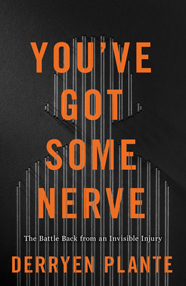
[0:00:31] EG: Derryen Plante had a plan for her life. She was in graduate school and working at juvenile prison all in the service of her life long dream to become a special investigator — but one night at work, an inmate attacked Derryen and the assault left her with a traumatic brain injury that jeopardized her dream. In her new book, You’ve Got Some Nerve. Derryen delivers a raw honest account of what her life looked like before the assault and how it was changed forever on her road to recovery. In our conversation, Derryen shared incredible lessons from living with an invisible injury and learning to love and care for herself more fully than ever before. Today I’m sitting down with Derryen Plante, author of You’ve Got Some Nerve: The Battle Back from an Invisible Injury and Derryen, I’m so excited to talk to you about this story that you’ve written and the impact that you know it will have on your readers.
[0:01:27] Derryen - Plante: Thank you so much, I am so excited to be here and have the opportunity to talk to you and not only to some readers who might have either gone through something similar, have somebody in their life that’s gone through something similar, there’s a lot of different themes in my story that I think a lot of people will be able to relate to in one way or another.
[0:01:51] EG: And the story is an incredible one, you write about your childhood dream of becoming a special investigator for a federal government agency and then you have this really pivotal moment in mid-life that that dream gets snatched away from you when you’re attacked by an inmate at a prison where you worked and you are sustaining a traumatic brain injury. Give me a little bit of a snapshot of what your life looked like before that event?
[0:02:21] Derryen - Plante: Before that event, my life was very goal oriented. For me, looking back thinking about myself and my place in the world, I was not naturally a happy person. I just had to get here, I had to accomplish this, I had to do this and I just had to get there and then I would be happy — and that was what my entire life had revolved around was just getting to this one point and once I got there, I would be happy but I wasn’t generally happy in the meantime. It was just — if I had a summer off between college, it was not a fun relaxing, go out, hang with your friends’ summer. I would have two part time jobs and I would also have two internships, it was always making the most of my time and just driving and trying to get to this one goal that I had in my life so I had gotten a lot done and I had a lot to be proud of but it was never enough. So, at the time of the assault, I was working probably 70 or 80 hours a week, incredible overtime. Just really trying to do everything I could to put myself through school and to get where I was convinced I wanted and had to be.
[0:03:43] EG: Wow, and how did the assault and the aftermath change your goals and specifically this drive that you had toward them?
[0:03:54] Derryen - Plante: It was a change that definitely didn’t occur overnight. Right after it happened. I went into our staff bubble and I heated up my dinner and I told my supervisor I’m fine, I don’t need to go anywhere, I’m not going to let these inmates see me leave and show that weakness and I’d fully planned on being in there the next day, I ended up with a separated shoulder as another injury so I was in a sling and that prevented me from going back to work because of their policies. But I had fully planned on going back and with that, I’ll also say this, before my injury, I had, I will say, very little respect for brain injuries. In high school, we would always take the test for if you have a concussion you would take the test before as a baseline so that if you got a concussion they could use it as a metric to try and asses if you were healing and that kind of thing and I never saw the value in it, I didn’t take it seriously, I had no idea what the impact of a brain injury could have. So right after the assault, the days after were just incredibly painful with the migraines and all of the other after effects of the assault but I was still really convinced that I was going to go back to work and just pick up right where I left off and time went by and more time went by, you know, days, to weeks, to months and they still wouldn’t let me come back until I was 100% and I was not. I just got more and more discouraged. I tried to find other jobs in law enforcement type areas that might be more desk related, just so that I could get back to working a job, to put me back on the path. And I tried for several months and I ended up finding the job that I have now working in revenue and even still then, I had still just wishing and holding on to that dream I was just grasping on to it, I had my claws in it and I was just not ready to give it up and as my injury continued to progress over the next year and a half, my symptoms got more severe. I ended up going through different things, the pain and the hopelessness has led to suicidal thoughts and I just completely lost my will to live at some points when my injury was just at its worse and once I hit that point — once those things were in my medical file, even though a lot of it is related to the brain injury itself, it’s reactive depression. It cans all be tied to this brain injury but just having it in my medical file, for me, felt like that was pretty much the nail in my coffin for not being able to pursue those types of careers. I’ve gone through the application process a few times and they’re very critical with physical and mental health and all of those factors. So it took me a long time to kind of just accept that it likely wouldn’t be an option, I could continue trying but it probably wouldn’t work out in my favor and once I kind of let that reality just sink in a little bit, it was a loss that I had to grieve which was an entirely separate process. I think I knew the whole time that that would be the outcome but I didn’t want it to be, I fought and I tried to hold on to it and it didn’t work out that way —unfortunately.
[0:07:56] EG: Yeah, let’s take a step back for just a moment, you described how the symptoms or the trajectory of your brain injury wasn’t immediately apparent when it happened, tell us a little bit about the timeline of how your brain injury progressed?
[0:08:16] Derryen - Plante: The day after the assault, I was in agonizing pain, there was so much pressure in my head, I could barely open my eyes, all I wanted to do was sleep, lights, sounds, everything that they tell you about concussion or traumatic brain injury, I was feeling it but when I had gone and been checked out, what they had told me was you have a severe concussion, the symptoms will likely last for two weeks and then you’ll be fine but in the meantime, stay in the dark room, don’t watch TV, use a computer, don’t drive and you know, hopefully two weeks, you’ll feel better and end of two weeks, I didn’t feel better. I didn’t feel better after those two weeks and I would go in periodically to check in with my doctor and I would continue to tell her that I didn’t have any improvement in my symptoms. As more time went on, the label was given to me that I had post-concussion syndrome and the thing about post-concussion syndrome is there is no prognosis. They say it can last weeks, months, years and there’s really nothing you can do to alleviate the symptoms besides Tylenol, Advil — there really isn’t anything you can do to be proactive in your healing process. You essentially just have to wait for it to go away on its own which is incredibly frustrating when — if you have any other type of physical injury, you’re usually given a physical therapy program, 12 weeks in a sling, six weeks in a cast, you do some exercises and you’ll feel better. But to be completely helpless in your recovery and not be able to do anything to really make it better is a really frustrating place to be. So, I had post-concussion syndrome is what they told me and months went by, we’re at a year. I’m going to the emergency room frequently, I’d gone about three times and every time I went, just the way that they looked at me, I could feel that they didn’t believe me. I’ve never broken a bone, I don’t have an extensive medical history going to emergency rooms so they didn’t have any reason to kind of look at me the way they were looking at me and my migraines had gotten so bad that I wasn’t able to eat within a month I had dropped probably 20 pounds which was I would say, 10 or 15% of my body weight. Was a significant loss, I was just losing about a pound a day and so I went there and I said, my migraines are so bad, I can’t eat and they just totally brushed me off. So, I kept try ing to advocate for myself because I felt like something was physically wrong. I could always feel specifically where the pain was and I would try and explain that to my doctors and I asked them to do imaging on my neck like something feels like it was wrong and they just didn’t believe me. So eventually, because this had happened at work, the workman’s comp board said that they weren’t going to pay for my emergency room visits anymore. So they had put me in contact with a case manager who essentially became my fairy godmother but the first call that I had with her — I told her what was going on and she believed everything that I said I didn’t feel like I had to justify myself to her, I felt like she could feel how much pain I was in. So, I had these debilitating migraines for about two years and they were all day, every day from the time I woke up until the time I went to bed. Nothing made them better, they were just there all the time. I had tried, if you googled any treatment for migraines, I had tried it. I had done physical therapy, occupational therapy, cranio-sacro therapy, massage therapy, acupuncture, you name it, I had pretty much done it. And, so I had been put in touch with a migraine specialist. We did Botox injections and nothing helped, not even a little bit, and it wasn’t until two years after my injury, I had a procedure done on the back of my head and that had finally alleviated the migraines but it was definitely not the end of my journey through this invisible injury.
[0:13:05] EG: At what point in that arc did you start to experience depression?
[0:13:09] Derryen - Plante: I think throughout this entire experience, I’ve experienced depression at a couple of different points, and it definitely didn’t feel the same each time. I hit my first low the first time I had gone to the ER and I had gone with my mom. And at that point was when the migraines were so bad, I was losing weight and I could feel that my body was just dying. I was – I looked like a corpse. I couldn’t get out of bed and I just could not handle the pain. It was absolutely unbearable. I had, at that point, pretty much lost my will to live, it was just incredibly painful but once I had gone to the emergency room, they were able to give me some anti-nausea meds so I was at least able to eat and build up a little bit of strength and put on some weight and that had managed to bring me a little bit out of the depression that I was in it that time. I also had made the decision to go back to work and accept a job the following month, a lot of the depression I was experiencing at that time, I feel was related to just being isolated and feeling helpless and not being able to do anything for myself. I was able to pull myself out of that one pretty easily. My second real struggle came about two years out, right after my surgery and it was incredibly profound in the way that I’d come out of surgery and I had felt pain relief almost instantly, despite — the surgery was a little bit intense, the surgery, I had a large scar across the back of my head. I couldn’t move my head for about a month, I needed a lot of assistance with things just basic, taking care of myself. But it wasn’t that, it was after the surgery, everything was good. I was feeling good, it went well, it seemed like the problem that I had been complaining about for so long was finally addressed and then out of nowhere, I just got this feeling. I felt somebody close to me had just died, or that I was going through a breakup. It was the most intense depression that I had ever felt in my life and the thing about it was it wasn’t rational at all, there was nothing that I could tie it to, it wasn’t because I was in pain, it wasn’t because I had lost a job. It was scary, it was very scary to go through because there wasn’t anything tangible that I could tie it to and I was having the most intense feelings I had ever felt in my life and thankfully I had done a little bit of research on it and I had read an article about post-operative depression and I had kind of attributed what I was feeling to that but — I am also one of those people and I will admit that at earlier points in my life, when somebody would say they’re depressed — I would be one of those people that would probably say, if you just eat better, or if you just exercise, or if you just do these things or take some proactive steps in making your depression better, that will help. Even in my own experience when I had been depressed, I had been able to take steps like going back to work or going to the doctor and trying to get things fixed and I had never experienced the true extent of what depression really is. Just that feeling of intense uncontrollable grief and not having anywhere to put it, not having anything to attribute it to, it was incredibly profound I would say. It gave me an entirely new respect for depression and I had a third small round — one of the things about me personally is I’ve never been a fan of medication and that was something that was really important to me through this whole thing. I didn’t want any medication. I was tough. I could handle it myself, you know, I didn’t need that and eventually as my injury kind of progressed, I kind of broke down my own wall and said okay, even if it’s for a short time, I’ll give this a go an see what happens and just try and get me through this small window in my life and the thing about medications for anxiety and depression, that is one doesn’t work for everybody, some work better for some people than they do for others. You kind of have to try different things to find what works well for you. While I was in the process of doing that, I was on one prescription that made my depressive symptoms so severe and not in the manner of being suicidal but, my depressive symptoms were so severe, I had so little energy that I could even get up to bring a plate to the kitchen sink. The best I could do would be walk across from the house and find a place to sit. Doing something as simple as going to the grocery store, I had to set a day like once a month so that I could mentally build up enough energy just to go to the grocery store. So I don’t think I would go more than once a month. I don’t think I would do laundry more than once a month because it would just take everything out of me to do something that’s so simple. So that gave me another picture of what depression looks like for different people. So I’ve had the severe emotional dis-regularity where you feel just the intense grief and sadness and I’ve also experienced the side of depression where you’re completely fatigued and immobile and just can’t get out of your own way. So this experience has opened my eyes incredibly to the sheer extent of what depression is and how it can affect people in different ways.
[0:20:02] EG: Wow. Yeah that’s incredible — and at what point did you realize that sharing your story would help people and that that was important to you?
[0:20:11] Derryen - Plante: This journey for me started when I decided that I wanted to write about my story, I’d actually made that decision to try and do it as part of my own healing process. Going back to what I had said before and it has always been really important to me to appear tough and take care of myself and not show weakness. So it had taken about a year and a half after my assault for me to finally admit to myself that I was suffering from post-traumatic stress disorder. For the entire year and a half, I had experienced severe, horrific, vivid nightmares pretty much every night and I had a heightened starter response and if you go down the list, I check almost every box and my therapist kindly pointed that out to me and I had an answer for everything like, “Nope, I don’t have it. It is not my problem. I’m just fine. Just ask me, I’m fine,” and so it took me a year and a half for me to finally look myself in the mirror and admit and say out loud — “Okay, I have PTSD,” and that was something that I would have previously viewed as a sign of weakness in myself. So it had taken me a lot to get there. So once I was finally able to just sit with the fact that, “Okay, this is what I have and this is what I’m dealing with,” I felt that writing this down or getting this out would be the best way for me to process what I was going through and I felt like I had told the story to people a dozen times. People I had worked with or who are close to me. And as I would share my story with people, whether it was going to the emergency room and having doctors look at you like you’re a med-seeker or having these incredible migraines where you have to leave work early or you go home and you just sleep because you can’t even function you’re in so much pain — I found that everyone that I had talked to could relate to my story in one way or another whether it was something they had experienced or somebody in their life had experienced — And in different functions whether it was a separate invisible illness or feeling misunderstood or that they weren’t heard. So I really took that and I was hoping that if I just shared that story with those around me and it seemed that people could relate and could benefit — if I could take my story and put it out there for more people to be able to know and experience with me that it would not only let them know that they weren’t alone — That what their experiencing is real to kind of — to validate what they are going through to let them know that they are not alone, they are not crazy and that other people have gone through the same thing, because that was the same things that was the biggest struggle for me, was that it was so isolating to go through this. And not in the sense that I was home and not able to work and there weren’t people around me, but I would tell people that I was in excruciating pain and I looked fine. So, people begin to think that you’re being a big baby about everything because you are always in excruciating pain and come to find out two years later, there was a legitimate reason that caused my pain and it was addressed through surgery — but in the meantime, people don’t understand. They don’t see your arm in a cast. They don’t see an x-ray that shows that you’ve broke your bone and, “Ohh that looks painful.” You look completely normal and that is a huge struggle. So it’s very comforting to know that there is a community of people that have gone through similar things and can understand what you’re talking about because in my experience I feel like there are so few people who really do truly understand what you are talking about and when you have a conversation with somebody who does, it is just the most incredible connection that you can have.
[0:24:44] EG: What strikes me about this struggle is not just it was an invisible injury to the lay person, to your loved ones and to strangers that you encountered, but this was an invisible injury as well to the doctors that you dealt with and to be so isolated and so alone, I am curious did that challenge your own sense of self-trust in any way?
[0:25:09] Derryen - Plante: I would say, correct me if I am wrong in understanding but I know that other people, if they continuously go to a doctor and doctors tell them that there is nothing wrong with you, that they begin to believe that there is nothing wrong with themselves, throughout the whole process that was something that I held onto. I felt that something was wrong and I felt like I knew something was wrong. Something specific, I could point to where the pain was coming from and I knew it wasn’t all in my head. I really believed that so I didn’t lose my self-trust in that way. I definitely at some point lost hope that anyone would ever believe me or figure out what had happened, what occurred during the assault that right before, I was a normal 23 year old and after, I’m in this debilitating pain 24/7. So I lost hope and faith in getting some resolve but I dug my feet in and I was convinced and I was going to keep trying.
[0:26:27] EG: Yeah, it sounds like a really lifesaving expression of that drive and that ambition that you had. I mean forgive me if am drawing an improper conclusion but you had just this huge drive to have this dream of your career when you are younger and it sounds like that some of that same drive really served you well.
[0:26:44] Derryen - Plante: It definitely did. It definitely helped at different points. It made it difficult though. You go to doctors who are supposed to be experts and they dismiss you or they tell you, you have something that there is no prognosis or treatment plan and you get this news and then you kind of sit with it and you ask yourself, “Okay, well where do we go from here?” Or you sit there and you feel pretty defeated like there is nothing you can do and you feel a little helpless. So it wasn’t all straight forward attack-mode drive you are going to figure out what is wrong with me. There were some meetings with doctors where I left and I felt incredibly hopeless and defeated and I would sit with that for a little while and process what they said and maybe give them a little time but then I would pull myself back together and I would gather myself and I would go back in and I would let them know that, “Hey, it is still not fixed. It’s not in my head,” and try again. And see different doctors — and it was difficult though because you want to advocate for yourself and you want to find out what’s wrong and the more people you go to, the worse it makes you look because you go to people and they say that there is nothing wrong with you and I was convinced, I absolutely knew something was wrong and it’s a double edged sword because you advocate for yourself and you’re trying to find what that missing piece is. But the more people you go to, the more people that say nothing is wrong with you, it almost makes you look bad. It makes you look like you’re a hypochondriac. It makes you look a certain way, and in my experience, I had gone to two specialist who didn’t do any extraordinary treatment on me per se, like they didn’t do any scans or expensive tests but they just had the knowledge to look at my eyes or to touch different parts on my scalp and they were able to draw two definitive conclusions. Like things that I was just presenting with, they spotted it right away like, “Oh, you have this, you have visual mid-line shift syndrome,” which I could not even tell you how many people looked at my eyes — being evaluated for head injury and concussion and this one doctor was able to look at my eyes and he said, “Your pupils are dilating five times faster than what they’re supposed to be. Your nervous system is in overdrive,” and he was able to fix that. And the same thing with the migraine surgeon but it was a long road. It wasn’t straight and I lost faith a few different times but because of that drive I was able to eventually pick myself back up and try again and then try to find out what was going on.
[0:29:56] EG: Wow that’s incredible. Give us a snapshot of what your life looks like now. Where are you now in this journey?
[0:30:05] Derryen - Plante: So far even with COVID I am without a doubt at the best point in my life and it is for a few different reasons. Before the assault, I was very externally driven. I was only focused on my goals and how to get there and what I was going to achieve and I wasn’t happy with myself. I didn’t love myself. I wasn’t any of the things that you want to be in the world. So through all of this when I decided to start working through my trauma with my therapist, you don’t just decide what pieces of trauma you want to work on. You kind of work on the big picture and how it affect you and it’s so encapsulating if that’s the right word. Just talking and working through everything and not being afraid of what to say or how it was going to come out and just be open and get everything out. I have been able to just unburden myself of so much anger that I have been carrying around for my entire life. I have not only been able to work through the issues that are directly related to my trauma — But I’ve also been able to work through some of the ways that I’ve been living for my entire life, some of the negative coping skills that I’ve had developed at a really early age and just be able to build myself into a better person without just focusing on the trauma and fixing those pieces but fixing all of the parts of myself that we just kind of holding me back and I can finally just sit and acknowledge who I am and feel happy about who I am proud and love myself. And there were times especially during my injury that I couldn’t look myself in the mirror. I disliked everything about myself, who I was, how I looked. I had during my recovery process, I had the lowest amount of self-esteem and self-worth I have ever had in my entire life and I would say that that point was about a year ago. So just within this last year, the amount of personal growth and self-love and acceptance has grown so much inside of me. And I’ve just come to a place where I finally just feel good. I feel okay. I don’t feel like I have a million pounds on my shoulders and I can just walk through the world and not be angry and not be afraid in the sense that I’m going to be attacked in a PTSD kind of way but just be — and I’ve come to learn that life happens and even though I am in a great place right now, things can happen and I might not be in a great place at another time. But it is nice to know sitting here right now that I am capable of feeling like this, feeling self-love and good and happy and when those things arise in life whether it is something else that’s traumatic or anything that life has to throw at you that I have developed some skills where I can encourage myself to come back to this point. If I’ve achieved this level of self-love and self-acceptance and just content in my own skin right now, then I can continue to just try and fight to maintain this going forward, no matter what happens.
[0:34:13] EG: Wow, that’s like the most realistic kind of hope I’ve ever heard described Derryen that’s amazing. Thank you.
[0:34:21] Derryen - Plante: It really is though. I’ve gone through some other things in the meantime and I’ve been able to just acknowledge different things and bring myself back to this place and it is not perfect. Life is not perfect. I’m not perfect. I have days where I’m like, “Ooh wow, I could have handled that better,” or you know, “Ooh I am a little feisty today” it’s not perfect and through everything, I definitely had to learn to be kind to myself. I think that is where I started and it didn’t happen overnight. I push myself so hard to try and recover and be determined and just get passed what I was going through and when I wouldn’t get better, I would blame it on myself like if I just worked harder if I did this and it is not perfect. You just have to be kind to yourself through this and you have people around you but when you sit at the end of the day and it’s just you, I actually read something that is really interesting — I believe there is a Japanese saying that people have three faces. There is the one that they project to the world. There is the one that they project to their close family and friends and then there’s your true self and so when you just sit there and it’s just you at the end of the day because that’s all you have is just you, you know you have to just be honest with yourself. Don’t lie to yourself. Don’t be cruel to yourself. Just sit there and acknowledge what you’re feeling and what you’re going through. And what you need and be able to have the strength and courage to let other people know, “Hey, this is what I’m feeling, this is what I’m going through, and this is what I need.”
[0:36:19] EG: That’s amazing. Thank you so much Derryen. There had been so many wonderful lessons that have come out of this discussion and certainly out of your book and I am so excited for readers to check it out. Again, the book is called, You’ve got some Nerve: The Battle Back from an Invisible iInjury and besides checking out the book, where can people find you?
[0:36:40] Derryen - Plante: People can find me on social media. I am also launching a website to go along with my book. It’s www.derryenplante.com. On my website, I will be posting weekly blogs focused on brain injury, invisible illnesses, focused on education advocacy and support. I’m also active on social media, Instagram, Twitter and all of those links to connect with me will be on my website as well.
[0:37:14] EG: Beautiful and just to spell that out, it’s derryenplante.com. That’s wonderful, thank you. Thanks for joining us again for this episode of Author Hour. You can find, You’ve Got Some Nerve, on Amazon. A transcript of this episode as well as all of our other previous episodes is available at authorhour.co. For more Author Hour, subscribe to this podcast on your favorite subscription service. Thanks for listening. We’ll see you next time, same place, different author.
Want to Write Your Own Book?
Scribe has helped over 2,000 authors turn their expertise into published books.
Schedule a Free Consult