Janelle Perez: Episode 580
Read the full transcript
Janelle Perez
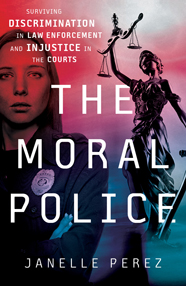
Janelle Perez is the author of The Moral Police: Surviving Discrimination in Law Enforcement and Injustice in the Courts. She graduated from The Pennsylvania State University with a degree in administration of justice and sociology and served nearly seven years as a police officer in Northern California. After being fired by the Roseville Police Department, she sued her former employer for gender discrimination and won a ruling in the Ninth Circuit Court of Appeals. Her book offers an insider's look at life as a female police officer and her long fight for justice.
📚 Books by Janelle Perez
Transcript
[0:00:23] DA: After nearly seven years as a police officer in northern California, Janelle Perez was no stranger to a courtroom. But she never imagined that she would find herself in one as a plaintiff, suing her former employer, the Roseville Police Department. In her lawsuit, Janelle sided gender discrimination and a right to privacy when she was fired for an off-duty relationship with a coworker while separated. In an assertion denied by her employer, and a loss only she endured. Despite winning a ruling in the Ninth Circuit Court of Appeals, Janelle faced defeat when the ruling was suspiciously overturned. In her new book, The Morale Police, Janelle shares the story of her seven year fight for justice in the biggest betrayal of her life, providing an insider’s look at life as a female police officer, Janelle shares what happens when you follow the rules and respect the process in a system that doesn’t respect you. Hey listeners, my name is Drew Applebaum and I’m excited to be here today with Janelle Perez, author of The Morale Police: Surviving Discrimination in Law Enforcement and Injustice in the Courts. Janelle, thank you for joining, welcome to the Author Hour podcast.
[0:01:28] Janelle Perez: Thank you so much for having me.
[0:01:29] DA: Let’s kick this off, can you give us a rundown of your professional background?
[0:01:33] Janelle Perez: Sure, professionally, I have spent most of my time in law enforcement as a police officer. Almost seven years but I also grew up and played competitive tennis. So my first job professionally was a professional tennis instructor. Between that and law enforcement, that has been mostly what I focused on.
[0:01:56] DA: Now, usually I have three or four more questions to set up about the book and the writing story but I found your story so fascinating and furious at the same time that I’d love to hear an overview of it in your own words before we really dig into the detail. Janelle, if you would, can you tell us your story?
[0:02:16] Janelle Perez: Sure, it’s so hard for me to share my story with just a snippet but I’ll do my best.
[0:02:23] DA: Yeah.
[0:02:25] Janelle Perez: I was a police officer in the Bay Area near San Francisco for six years and then I went on to take a slight break when I had children and then I moved on to a new police department called the Roseville Police Department which is outside of Sacramento, while I was there, at the police department in Roseville, I was married but later separated and started dating a coworker. That relationship became the subject of an Internal Affairs investigation because allegations were made that things inappropriate may be happening on duty. Later, it was discovered nothing was happening inappropriate on duty but I was terminated from my job after being there for eight months. And the male officer that I was seeing was not. So my book kind of takes you through what happened in that eight month period of time, gives you a little bit of background on my life prior. Then also the court case that followed which — I felt that I was terminated due to a discriminatory reason and so I did file a lawsuit and it kind of walks you through what happens with that lawsuit. That’s in a nutshell what the book is about.
[0:03:42] DA: Now, why was now the time to write this book?
[0:03:46] Janelle Perez: That’s such a hard question for me because, really, I feel like the time was when it happened. But I respected the court process and I let everything play out. And that was, you know, a seven-year process in the court system. I really wanted to speak about it earlier but I decided to respect the process so I’m speaking about it now because the court case is over. Everything has wrapped up on that end, so now is the time for me to share my perspective.
[0:04:20] DA: When you were writing the book, did you have any learnings or breakthroughs because I know you did a lot of research — or sometimes it just comes from the introspective journey. Or also maybe you just did some really good detective and police work.
[0:04:35] Janelle Perez: I did, I had — I did do some police work, it was — I included a lot of quotes from depositions. So I was able to put some pieces to the puzzle together that way. But, you know, I did learn a lot about what happened to me but also about myself in the process, there was a lot of self-discovery, reflection in this whole entire process so it’s been very therapeutic for me.
[0:05:03] DA: Yeah, how hard was it to dive into all the details, as you say, you have memos from your case. And you went over all of that, what was that emotional toll like, reading over these memos and depositions?
[0:05:17] Janelle Perez: So hard, it was so, so hard to go through everything and replay what went wrong. And how I could have done something differently. It was very challenging. I mean, it was a very emotional journey having to relive the experience more than one time. It was one of the many challenges I faced.
[0:05:38] DA: Did you write this book with somebody in mind who you were writing it for?
[0:05:45] Janelle Perez: There’s really several people that I wrote it for. One, for myself. I was definitely a way that I needed to stand up for myself and share my story. It was very important to me. But I wanted to put this story out there — and I hate to have just this specific category of people but you know, I was a woman that was discriminated against and I hope to share my story with other women who find themselves in similarly situated positions but you know, but not only that, I also feel that it’s important for leaders, men or women, supervisors, managers, and jobs to hear my story and see how they can change things. Then what they can do differently if they see something like this happening. I don’t think that my story is necessarily only for women that are discriminated against. It could be for somebody younger that’s up and coming in a career and things to look out for. I’m hoping that it reaches lots of people.
[0:06:46] DA: How early on did you see the favoritism happening in your department?
[0:06:51] Janelle Perez: I think when I first realized something was off was when I was forced to read a book that no other officers that came on at the same time as me had to read. That’s when I knew something was amiss. I would say, early on.
[0:07:11] DA: Do you think this is a systemic problem in most police departments or just the one you were working in outside of Sacramento?
[0:07:20] Janelle Perez: You know, it’s hard for me to speak to that because I’d only worked at one other agency, previously. But I do think that women in general in law enforcement are a minority. And I think because of that reason, there are going to continue to be patterns, things that — discrimination that you can see against women because there’s so few of women in law enforcement.
[0:07:46] DA: Yeah, talk to us about the ramifications or just the differences when women decide to speak up versus when men speak up in the workplace?
[0:07:55] Janelle Perez: Well, I can speak to my own experience there, you know, I had a very specific example in my book of what happened when I spoke up and stood up for myself versus when the male that I was dating spoke up for himself. Two totally different approaches and two totally different outcomes. So from my personal experience, women and myself, you know, I didn’t want to be judged or viewed as a complainer. But I think that is what you fear when you speak up as a woman, that you are going to be viewed as someone who complains, is a problem, a thorn in their side — versus when men speak up it is, from what I have seen it’s, “They were curious, they had questions.” It is viewed in a different way. From my personal experience, it is hard to speak up as a woman because you are scared of the repercussions.
[0:08:52] DA: Now there were so many highs and lows throughout your lawsuit. First, you lost in a summary judgment. Then you won in Appeal’s Court and then you lost in that same court again. What kept you going throughout all of this and can you talk about those highs and lows?
[0:09:09] Janelle Perez: Yeah, it was quite the rollercoaster. So I was totally disappointed, I don’t even know the right word to use when I lost on a summary judgment because everything was just so crystal clear in my eyes. And then, when I won, you know part of the lawsuit in the Ninth Circuit Court of Appeals, I just felt so validated like, “Okay, I am not crazy. I really suffer discrimination and this deserves to be heard.” And so I was really looking forward to that process. And it was very bizarre to me why there is such a long hold up and it didn’t get to go back to the district court and then when one of the initial judges died on the Ninth Circuit panel and I found out later that it had been reversed. I felt absolutely devastated. I still, to this day, don’t understand how they got away with doing that. We didn’t have an en banc hearing or anything and they just decided to rehear the case, which seemed totally unfair. So I had — definitely the highest of highs and then the lowest of lows when I lost but yeah, it was a rollercoaster to say the least.
[0:10:26] DA: Is that a normal occurrence where they’ll revisit a case like that so soon?
[0:10:32] Janelle Perez: I’m not so well versed in law and, you know, the justice system. I obviously have very personal feelings now as to — there’s, in my case and my instance, no justice in that justice system. And, you know, I was talking with someone who happened to be a lawyer and we weren’t talking about — she knew my story but I wasn’t talking to her because of it. And she had told me that she had never heard of such a thing. That the Court of Appeals could just decide, after it's been decided and I won, to re-hear something. Because, you know, my decision was decided and published and that should have stood. The only thing that in my eyes should have changed that was an en banc ruling, which didn’t happen. So, you know, after speaking with this person, she had asked other people in her office and she said no one had ever heard of it. So, I have no idea if this has happened before or not.
[0:11:35] DA: So you also mentioned similar cases — and you mentioned earlier too, you mentioned in the beginning of your book where women are discriminated against and they bring these suits and a lot of them lose. So, why do you feel like these cases go to court and they don’t get the justice that women are seeking and what do you think needs to change?
[0:11:55] Janelle Perez: That is a very hard question to answer. I think that there needs to be more representation and diversity across the board. I think in the court system, everywhere. And I think what happens or what needs to happen is that collectively, there needs to be women that stand up for themselves because I really truly believe, like, I am one instance of what I perceived to be discrimination against me. But I know that there are other people out there. And I know this because people have shared their story with me after hearing mine. They didn’t go take this to court to what happened to them. They didn’t do these things, for various reasons. And it is understandable why they didn’t. But I think, you know, women need to find that courage to stand up for themselves because I really believe that it is going to take a lot of us to stand up against the injustice in order to change things.
[0:12:56] DA: Now are you working towards any changes now? What is the stage of your lawsuit now? And have you seen any changes on the horizon since this all started seven years ago?
[0:13:10] Janelle Perez: Well, my lawsuit is over. My only other option, we did an en banc request after that suspicious overturning of my case. But that was quickly dismissed. So my only other option at that point was to get to the Supreme Court, which my lawyer didn’t recommend at the time. So the case is over and that’s why I decided to go this route and write my story and share now because I feel like I was shut down for so long and I needed to use my voice for the greater good.
[0:13:45] DA: So what’s next for you now Janelle?
[0:13:49] Janelle Perez: You know I am so excited to share my story. It’s been, obviously, years in the making. It’s been very scary to put everything out there but this book is my truth. And I think it is so important to share and I hope it gives other people courage to stand up for themselves. Or even for other people to do what is right and to stand up for people. I am hoping that my story and sharing it is going to give me the opportunity to hear other people’s stories and give them inspiration and hope, so.
[0:14:28] DA: Yeah, Janelle writing a book especially like this one, which is so real and will help a lot of people, especially who are in your situation, is no small feat. So congratulations.
[0:14:39] Janelle Perez: Thank you.
[0:14:40] DA: I have one last question, I will put you in the hot seat — if readers could take away only one thing from the book, what would you want it to be?
[0:14:49] Janelle Perez: Oh my gosh, just one thing.
[0:14:52] DA: Just one thing.
[0:14:53] Janelle Perez: Got to be sure.
[0:14:54] DA: Everybody cheats and they say multiple things, so.
[0:14:57] Janelle Perez: I would totally cheat right now and say multiple things. But I hope if I can get one thing across it’s having the courage and the strength to stand up for yourself. It is very hard to do, especially when you are essentially, you feel against all odds. But I hope that I get that across to people. But if I could do one more thing, I think it is really important for people to read the story and know that people should be entitled to live their lives the way they want to. I think there is so much judgment in this world and I think we need to do a better job of working on that and not judging people based on decisions they make in their private lives.
[0:15:39] DA: Yeah, well said. Janelle, this has been a pleasure and I am really excited for people to check out this book. Everyone, the book is called, The Moral Police, and you could find it on Amazon. Janelle besides checking out the book, where can people find you?
[0:15:52] Janelle Perez: Well, I have an Instagram page @janelleperezofficial and I do post updates on my book there so that would probably be the best way. And I just set up a LinkedIn, so I am on there too.
[0:16:05] DA: Cool, awesome. Janelle, thank you so much for coming on the show today.
[0:16:08] Janelle Perez: Thank you for having me.
[0:16:10] DA: Thanks for joining us for this episode of Author Hour. You can get Janelle Perez’s new book, The Moral Police, on Amazon. Also, you can also find a transcript of this episode and all of our other episodes on our website at authorhour.co. For more Author Hour, subscribe to this podcast on your favorite subscription service. Thank you for joining us, we’ll see you next time. Same place, different author.
Want to Write Your Own Book?
Scribe has helped over 2,000 authors turn their expertise into published books.
Schedule a Free Consult