Tanner Chidester: Infinite Income: The Eight-Figure Formula for Your Online Business
Read the full transcript
Tanner Chidester
Tanner Chidester is the CEO and Founder of EliteCEOs.com, a company empowering business leaders to take the next step and start their own online company. Building his company with few resources of his own, Tanner created an empire from scratch by teaching himself the elements every business needs to succeed. He has been featured in Forbes and Business Insider and on CBS and CNBC. For more information, visit eliteceos.com and
📚 Books by Tanner Chidester
Transcript
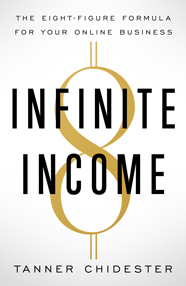
[0:00:28] DA: If time is money, then controlling your time is gold. What if you could increase your income and your control? If you take your business online, this could be your reality. Tanner Chidester built his multi-million-dollar online company from scratch with no budget, marketing plan or business experience. In his new book Infinite Income, Tanner shows you how you can build your own online empire by letting your ambition drive you and newfound knowledge guide you. You’ll learn the basics of starting an online business using the same strategies he did. There’s never been a better time to take the next step towards personal freedom and financial independence. Hey listeners, my name is Drew Applebaum and I’m excited to be here today with Tanner Chidester, author of Infinite Income: The Eight-Figure Formula for Your Online Business. Tanner, thank you for joining, welcome to The Author Hour Podcast.
[0:01:19] Tanner Chidester: Yeah, thanks so much for having me man, I hope I can bring some value today, thank you.
[0:01:23] DA: Let’s kick this off, can you give us a rundown of your professional background?
[0:01:27] Tanner Chidester: Yeah, I grew up in a family of seven kids, very conservative household, I was raised LDS or you know, formerly known as Mormon. From a young age, I was made fun of quite a bit. I think part of it was just, I was in a conservative household so never heard cuss words, you know, never really talked about the bees and the birds and all that kind of stuff and so, got made fun of a lot as a kid. Had two older listeners, they played dress up with me, didn’t really do me any favors as you can imagine. When I hit 12th grade, I got so upset of being bullied and I kind of finally realized my parents couldn’t help me, I started working out. From there, really got into fitness, started excelling at sports, started making good grades, it really built my confidence, started you know, getting girls interested in me and I took that very seriously and probably as serious as I take business today. Well, if not, more. My goal is to play in the NFL, I was training, I mean, ridiculous hours, at the age of 14, I was training nine hours a day during the summer, it was psycho stuff that you wouldn’t believe unless you saw it, right? Got all the way through college and I was about 22 and I’m a petroleum engineer. I have about a semester left, I busted my shoulders out four times so the NFL dream’s kind of done and I’m just super depressed and sitting in class one day and I just got up and left. I was like, “This is not what I want to do. I’m not going to be happy doing this,” so I moved back home for a little bit, got mentored by a guy named David Fry who is married to one of Russell Brunson’s cousins, who is the owner and CEO of ClickFunnels and I started learning internet marketing. From 22 to 25, between door-to-door sales and living in very small apartments and you know, having a 17-year-old car and I basically only made $2,000 in my business from 22 to 25. My family’s laughing at me, my ex-girlfriend was laughing at me, her mom laughed at me, I was about to laugh at me and then at 25, I put some stuff together, I made my first million dollars and then from 25 to 28, you know, at the time we’re shooting this, I’ve done over 25 million dollars in revenue. Wasn’t necessarily the easiest path but I will say, a lot of the stuff I went through prepared me to get to where I am today. So for that I’ll be forever grateful.
[0:03:42] DA: Why was now the time to write the book? Did you have a bit more time on your hands because of COVID? Did you have an “aha” moment or was there something inspirational out there that you said, “You know, I need to put this down on paper.”
[0:03:54] Tanner Chidester: Two answers. One is just as my business has gotten bigger and I have more help, I have more time to do things like this. Where before, it’s not that you don’t have time, I just wouldn’t make time for it because I was all about sales, sales, sales. But now, at the level my business is at, it’s more about me putting myself out there to assist my team and then two, I just had it as a life goal. I thought the easiest way to write a book was just tell my story about where I started and where I’m at and how I did it. I didn’t have to make anything up, I literally just told straight facts and so it was very easy to write and it just seemed like the right time. It’s you know, I’m at a stage in my business as well where I think a book would help my marketing, you know, would help people to get to know more about me and I’m also just more after impact at this point. I mean, money’s great and you know, I obviously I still want to make money but once your financial needs are met and you’re good, it doesn’t really matter, even this year, my goal is to make another five million dollars top line revenue but it’s kind of whatever, right? I want to hit it. But does it really matter if I do 20 million versus 15 million? Not really in the greater scheme, other than the people I help.
[0:05:00] DA: Yeah, now, clearly, you’ve been very successful, you have a lot of experience. But while you were writing the book, did you have any learnings or major breakthroughs, sometimes it’s through doing research, sometimes it’s just by looking back and having an introspective journey in your experience?
[0:05:18] Tanner Chidester: I mean, I’ll say that everything you do in life, it’s usually harder than you think. When I thought about writing a book, I was like, “Oh yeah, just put words on a piece of paper, get an editor, you’re done.” It’s a very extensive process. The benefit I had is I didn’t have to research too much, other than a couple statistics because again, I’m just telling my own story. But it took me, I mean, a good part of this last year. I mean, I started writing this book back in like February or March of 2019 and it’s just about to come out. It’s a long process and there’s a lot of stuff that you know, is just new, right? I think it was more – what’s interesting to me is as you get smarter, right? Or you learn more, you realize that smart people understand how much they don’t really know. Because, when you dive into one subject, it’s crazy how deep it goes. Even when I was an engineer, I was taking math classes that had letters. I mean, there weren’t numbers anymore, just letters. I was like, “Man, if it’s this deep for one subject, imagine how much stuff is out there that we truly don’t understand.” It was interesting to kind of write the book and see how long of a process it is.
[0:06:28] DA: Who exactly is this book for? Is this for people with a million dollars to invest in a business right now? Or is this for the everyman looking to pivot and have a side hustle or somewhere in between?
[0:06:41] Tanner Chidester: Yeah, it’s just anyone who is looking to leave their nine to five or scale up their current business online. My goal, ultimately, is you know, you can write stuff for beginners or for you know, more experienced people. There’s always more beginners. My goal is to try to help as many people as possible and so, a lot of times I think when I put out content, I try to target beginners because there’s a lot less people at a million-dollar level plus, than you know beginner. In fact, I was talking to one of my good friends, Alex Hormozi. He crushes it at a company Gym Launch and you know, I think he told me that, if your net worth is over 30 million which is obviously a large number but there’s only 200,000 people in the entire world. As you get higher levels, it’s going to be less helpful for people so I wrote it for beginners specifically.
[0:07:33] DA: Now, you mentioned when you branched out on your own, you almost quit several times, especially within your first two years of business. What happened to put you in that mindset of wanting to leave and go back to a normal nine to five and how did you get out of it?
[0:07:50] Tanner Chidester: Well, the most disheartening feeling in the world is when you’re trying and it’s not working, you know? It’s almost like, pretend you’re in a marriage and you’re doing all the right things, like you’re sending flowers, you’re sending texts, you’re taking your wife on dates and then you find out she still wants a divorce. It’s very disheartening. That’s kind of how I felt with my business, it was like, I was working six hours a day or eight hours a day, full-time job, paying my rent, busting my butt and then I was working on my business and no money was coming in and you know, it doesn’t sound like that long a time on a podcast, you know, you’re listening to this going, “Two years, that’s nothing.” It’s not nothing when you’re living it, when every day you’re looking at you know, the same 500 square foot walls and you’re giving up partying, you’re giving up girls, you’re giving up all the type of stuff that people enjoy to try to build something that’s not working. That was the first thing. The thing that really kept me out of it, quite honestly, was the fear of being a loser and that’s all relative context and I don’t think money defines you as a person, or it shouldn’t. Because if you take that away, you're not happy anymore or that’s where all your self-worth is tied, it’s not a good place to be. But I left school, I gave us a six-figure salary. I had, you know, 4.0 GPA and people are like, “You’re an idiot,” and it was almost like, I couldn’t let them know they were right and so, I just got to a mindset, literally, where I was like, “I would rather be homeless than not figure this out.” The reason I knew it was able to happen is, I saw other people being successful. Some people look at others and they go, “He’s a scam, he screws people over, this and this.” But I just go, “Okay, well, obviously he’s doing something right, he’s not that much smarter than me, right? So, why can’t I do it too?” Between those two things, that’s what pushed me but I will say that one of the biggest things I try to focus on with my clients is making sure they get success in the first 30 days because I think I have a higher tolerance for pain and suffering than most people. Most people, if they don’t get success very quickly, that’s why they quit. I almost quit. I mean, I think I have a very strong mindset and I was like, “Oh my gosh, is this ever going to work? Is this worth it?” That would be my answer to that question. I hope I didn’t talk too long but I get into it.
[0:10:04] DA: No, no, that’s perfect. When people hit that wall like you did, they oftentimes don’t ask for help. Why do you think that is and what is the fear in asking for help or assistance?
[0:10:16] Tanner Chidester: I think most people just think it’s hard work or they think they already know what to do because they’d read an article on Google. But you know, something I’ve learned over and over again is that if someone isn’t doing something, it’s because they don’t know how to do it. Nobody makes less money on purpose, no one is less happy on purpose, no one wants to be in worse shape on purpose. I think part of it is like a pride factor. I think it’s hard for people to admit they don’t know something and then I think the other part is, they just don’t know what they don’t know. They think like, “Yeah, it’s just like, I just need to apply myself more or I just need to do this more.” But in reality, it’s like, “Man, bro. You just don’t have the right perspective.” Something that’s helped me is like, anyone who knows me, I ask more questions than anybody. I think that’s part of why I’ve been successful because I have no shame, I don’t really care. Because at the end of the day, no one’s going to go, “Oh yeah, remember when Tanner asked that question back in 2017? Even though he was really successful, what an idiot.” It doesn’t really matter and so, something I’ve learned is, ultimately, it doesn’t really matter what people think. The reason people don’t take chances is because they’re worried about what other people think, right? Even being homeless, it’s not like the end of the world, right? You’ll pull out of it, you’re not dead, but it’s just like, it’s the shame feeling, it’s the guilt, it’s like, “Oh my, I’m homeless.” But what I thought about was like, “Man, if I’m homeless, does it really matter? As long as I’m alive, right? It’s not forever.” It’s just humans, we put a lot of pressure on each other to be perfect and we try to put on a façade I think and the more successful I’ve been, the more I realize that that doesn’t really matter. A lot of stuff that we place our values in and that we think will make us happy, I mean, I have everything I can want now, I can pretty much buy anything within reason, right? Besides maybe a jet or you know, the New York Giants or something, right? But within reason, most people would say like, “I’m financially set,” and I’ll say it right on this podcast like, it hasn’t made me any happier. It’s helped me help more people, it’s made my life easier, but most people, they were too worried about what other people think or they just don’t know what they don’t know.
[0:12:18] DA: You could probably buy the Jets right now, they’re selling it at a discount because they’re so bad.
[0:12:23] Tanner Chidester: They’re definitely not the Dallas Cowboys, well, Dallas Cowboys aren’t good either but they’re just valued at more.
[0:12:29] DA: Now, you had all of this success, things changed and you’re having really great years doing online sales. And then you transitioned into becoming a coach and teaching others how to build their own sites and how to be successful. What motivated that change and what did that transition look like?
[0:12:49] Tanner Chidester: Yeah, well, it’s a funny story because honestly, at first, I was adamant. I was never going to be a business coach because I felt that most people were getting into business coaching not because they knew what to do but because it was the easiest, because if you think about it, if I come to you and say, “Hey, I can help you make X amount of dollars,” if you believe me, you’ll pretty much pay me whatever I ask for. I was like, “You know what? I don’t want to be that guy. I don’t want to do that.” And I was pretty adamant about it. What ended up happening is I built that seven-figure online fitness business and then people just started coming to me and they were like begging me to pay me, they were like, “Dude, I’ll pay you like five grand, 10 grand, 15 grand.” I’m like, “Are you serious?” They’re like, “Yeah dude, you’ve been successful, I want your help.” You know, I’m a young kid, I’m like, “All right, this is another seven-figure business,” so within three months I hit seven figures and I was like, “Well, this was four times faster than my last business, I’m going to keep going with it.” It naturally progressed, that is the first reason, I mean, that’s just being straight up truthful and then the second reason is I had a lot of coaching. I have paid about to date, six, $700,000 just in coaching, just in coaches. A lot of the coaching wasn’t very good in my opinion. I think – I don’t want to take anything away, I think everything that happens for a reason and it helps you get to where you need to go, good and bad. I felt a lot of the stuff taught me what not to do versus what to do. I was like, “Man, if I’m struggling with this and I view myself as like a top 1% person, imagine all the other people struggling.” I just wanted to put a product out there that I knew worked, that I knew got me to seven figures without just selling business coaching, right? Something other than that. Then it took off from there and for a short time, I was really trying to run both businesses at a high level but it gets to the point where you kind of have to choose and downgrade one of the businesses. I still sell fitness coaching etcetera, but it is not the same level because it’s like you’re running two different businesses and anyone who’s, you know, CEO in multiple businesses, it doesn’t work out very well. It’s just too much, too many meetings, too many people to manage, too many issues and so obviously, my first priority in life is to try and take care of my family and so when you’re talking millions of dollars a year that made a difference. But then the second thing too is I like talking to people who want to make money because I feel like that’s the best way I can help people, right? Like everyone’s got mental issues, mindset issues, relationship issues, all this stuff but if I can get someone to learn how to make money, they can pay for a therapist. They can pay for a relationship coach, they can pay for counseling. They can go to the doctor, whatever. When you don’t have money, that’s when you’re screwed. In fact, I started going to a therapist this year. They’re expensive, they’re very expensive. I mean if you don’t have a lot of money, you basically can’t get help and so I look at money as the solution for me to help as many people as possible because they can use it for where they need help. That’s kind of my story, I was never planning on being a business coach but it just kind of got thrown on my lap and I ran with it.
[0:15:47] DA: Now, there are a million different business models and a million different ways to run a business and these are your words in the book. Can you tell us how your model is different or how you chose the one that was the most successful and that you are bringing to your clients?
[0:16:02] Tanner Chidester: Sure, I think the first part is just understanding, you know, the choices you make are obviously influenced by something. Your parents, your friends, your mentors and that was the direction I was instructed to go is go online. There’s high margins, there’s low risk, you don’t have to create any products, do any fulfillment and when I say fulfillment, like shipping, so that was the first thing. But then the second thing is it just makes sense. You know, most people who have no money and no experience, within a day you can come up with, “What am I good at? How can I package it? How can I sell it and then start making money?” And when I finally got that down, I made 10k in a week and I was like, “Oh my gosh,” like 10k a week, I thought I was balling. I was going, “Oh man,” you know I thought I was about to go to the club and throw down, right? What makes my program different, I think that was your original question is, why I struggled at least is, all of the coaches I hired were teaching me automated webinars and it’s not that automated webinars can’t work but I just think it’s a lot more difficult and people want something automated because like, “Oh I click a button and I’m rich,” and I think anyone who has been in the online marketing industry knows it doesn’t work that way. One of the biggest things I do is I create ridiculously intense follow-up systems for clients and my beginning students to teach them that, “Hey, you can make as much money as you want as long as you follow these principles and they do take a little more effort but they always work,” versus you ran ads to a webinar, cross your fingers and if it doesn’t work, you’re always guessing what to change and that’s how a lot of people lose money because they pay a business coach five to 10 grand, then the business coach wants them to run five or 10 grand on ads, now they’re 20 in the hole and it’s like, you can’t risk it. Most people can’t so I am going, “If I have one shot to help this person and I am going to charge him a lot of money because I am good at what I do, I got to make sure I give them the highest chance possible to be successful,” and that doesn’t mean everyone will be and that is something I am very adamant with. There’s so many people with so many different skill sets, so many different backgrounds, so many different work ethics. That’s why the FTC has the regulations they have because if even one person doesn’t get the same results, you can’t claim revenue numbers or you can’t claim, “Oh a 100% of my students get results,” or whatever, but I wanted to make a program that would get the highest percentage of people to be successful as possible. As long as you tell people upfront, like I mean, there is risk in everything and so, the most conservative risk you can take is betting on yourself and starting your online business and the way I try to assist my clients and make myself different is just giving them different options than just running webinars or running VSL’s and just crossing their fingers and hoping it works. It’s just kind of how I felt I was coached.
[0:18:46] DA: Now, does every business work online and when you are bringing a business online, do you find it’s better to go super niche or do businesses that serve a more broad audience, are they more successful?
[0:19:01] Tanner Chidester: Whenever someone says always or every, I stray away from that typically because if you find even one scenario that doesn’t match then you can’t say that. I’ll say this, most businesses will work online. You know, unless you physically have to see the client in person, it will work online, but even then, so like let’s say a dentist, he could make a course hypothetically on how to clean your teeth so that you only have to go in the dentist once a year. But is that a little further out there? Yeah but it could work. What I would say is most of the time, 90 something percent of the time the answer is yes. What I found is, super niche can work within reason so let me give an example. My litmus test is, “Can you run Facebook ads to it at scale?” For example, if I am doing a fitness offer and I say, “I only help mothers who have three kids,” it’s too narrow. You just cut out every single mom who has two kids or four kids or any other number besides three. But if you say, “Hey, I only help women,” that’s fine, right? It’s still big enough but you’ve niched down to women and not men, kids, everything. That’s an example of what would work. Something that wouldn’t work would be, “I’m going to sell video games to teenagers.” I mean there’s a lot of people who like video games but I don’t know if that is something you can necessarily run ads to or Facebook ads to. There’s a lot of people but it would be super niched down. To make an even better example would be like let’s just say 8th graders, like you’d have to go through their parents, these kids don’t have money, there’s probably only so many 8th graders. I think a litmus test is, “Can you run Facebook ads to it?” And if you’re not familiar with Facebook ads, you may have to have a little introductory course but Facebook ads have interests, you know such as sports or personal trainer or consulting and so if one of those interests is on there, typically it would be okay. But to finish your question, niching down can be good as long as it is not too narrow and that’s better for beginners because you cut out some of the competition. As you get bigger, you have to get more general. So if people look at my trajectory, I went from a fitness coach to helping personal trainers to now helping everyone. Why? Because as I cross 15-million-dollar mark, online consulting really has about a $30 million ceiling per year. That’s really the ceiling for this type of business. Every business has a different ceiling.
[0:21:23] DA: What do you think the biggest roadblocks are and why are people waiting when they are thinking about starting an online business?
[0:21:31] Tanner Chidester: Because they think they are going to save up or figure it out on their own and the answer is they’re not and the reason I am adamant or passionate about that is not because I am a coach, it’s because of what I went through. You got to understand like, I am not the brightest tool in the shed or the sharpest tool. See, I just proved my point [inaudible 0:21:46 - 0:21:49] l but what I mean by that is I am not just an average Joe. I am coming from division one football. I am coming from petroleum engineering and a 4.0 GPA, got accepted into Texas State, the number two school in the country at the time for engineering and so when I say, “You know, you need a coach,” the issue is that there’s so much information out there. The problem people have is they don’t know which information is correct, I am sitting on an app right now called ClubHouse and there’s a bunch of smart entrepreneurs in the room but they all give different opinions, so imagine if you are a person trying to make a decision and 12 different people give you a different opinion. Well, now you’re even worse off than you were before. Most people, the reason that they wait is because they think they know what to do because they get a bunch of different opinions but they waste a bunch of time kind of trying these things on their own until they finally realize, “Hey, I need some direction,” and then they hire a coach. But I think a lot of people wait because coaches are expensive and they think that they are going to figure it out on their own but they don’t and then they finally do it after you know, wasted time and years, which is what I did. I was 22, I hired my first coach at 25. 22 to 25 I made $2,000. 25 to 28, I made 25 million. Are the coaches the reason I’m successful? No and I don’t think anyone should take someone’s results away from them but they gave me direction. They said, “Do this, do this, do this, do this,” and because I have an insane work ethic, when I put it to work I was like, “Oh this works, this doesn’t work, this does,” and then I was actually able to gather actual data from me doing stuff versus just reading books and it is kind of the difference between, do you want someone to teach you who swam before or someone who’s read how to swim before? That is kind of the difference. To summarize, I just think most people they either, A, don’t have the money and convince themselves that, “Oh I’ll save up to hire a coach,” which usually doesn’t work out because the reason they are in a bad spot is because of what they’re doing or do. They think they know what to do because they Googled something and they think it’s that easy and it usually isn’t because information is everywhere. Information is not the issue, it is execution. It’s knowing like what steps to take, not just knowing every step out there, so I hope that helps.
[0:23:57] DA: Can you talk about the systems and resources you link to in your book that are located on your website and what can someone expect to learn there?
[0:24:06] Tanner Chidester: Yeah, so part of it is just knowing more about me, knowing more about my services and then the other one is a resource link where it just shows all of the things I use in my business. The email responders, the types of platforms that I use to get funnels, what I use to do my fulfillment, just stuff like that so that if they want to go, you know start building their own business, they know the types of things I use. In just a click of a button, they can go get to that and start implementing it.
[0:24:30] DA: Now finally, you asked this question to start the book so I think it’s a perfect question to actually end this podcast and we’ll put you in the hot seat a little bit. If you had unlimited money, what would you do with your time?
[0:24:43] Tanner Chidester: Oh man, I love this. That gave me goosebumps, you know I really thought about this a lot. Two of the people I look up to the most honestly is Mark Zuckerberg and Elon Musk and it’s not really because of like I think they’re great people or like they’re super smart or anything like that. The way I view life at least right now and you know my views can change, right? As you get older, your views change but I kind of view – as I’ve had more success, it’s kind of what I told you, I feel like I’ve had less success in my head. A lot of people may view me and go, “Oh wow, you’re doing 15 million a year, you’re 28, you’re basically retired, blah-blah-blah-blah-blah,” and I kind of look at what I’ve done and I’m like, “Nah, it’s just a blip, it is a little speck in the universe.” And then I see guys like Elon Musk and Mark Zuckerberg who essentially changed the world. I mean they’ve done stuff that like, I mean Facebook changed everything. Elon Musk is over here, you know building out Tesla and trying to do SpaceX and I mean he’s a psycho, right? In a good way and that’s something that I hope I can do. I want to do something at some point that just leaves like, an actual impact because I think what I do is important, don’t get me wrong. I love helping people but I want to do something significant enough to where it can kind of change the world or touch the world and that’s – I know it’s a huge goal to put out there. I mean sometimes I even say and I feel like an idiot because it’s like me when I started doing this business going, “I want to make a million dollars a year,” and I thought it would never happen and this is obviously a much bigger goal but to answer your question, try to do something impactful. Something that significantly enhances people’s lives around the world and you know, some people argue Facebook doesn’t help or makes it worse per se but you can’t argue that it hasn’t significantly impacted things. I think when it’s all said and done, when you take people’s money, you take their cloud, you take their cars, blah-blah-blah, that’s all you really have is what you’ve done and you know, how you’ve treated people and so for me, if I had unlimited time or money more than time because my time is pretty good but money, I’d just try to do something that’s impactful as possible and I don’t have the answer off the top of my head right now. But I do look up to people who have done stuff significant enough to change the world. I mean even Amazon, Jeff Bezos, like it’s just cool what he’s done. He built a company that is everywhere, like just changed things. It just changes the way people think, the way people do things and I don’t know, it inspires me honestly, so I hope that answers the question.
[0:27:08] DA: Well, Elon Musk officially became the richest person in the world earlier today.
[0:27:13] Tanner Chidester: I’ve heard that about 30 minutes ago and I’m not so sure what exactly he did but I did hear that, which is insane because Jeff Bezos is, you know, he’s up there.
[0:27:24] DA: Listen, the question was if you had unlimited funds and I think changing the world is attainable with unlimited funds. Writing a book, especially like this one, which is going to help so many business professionals out there, it’s a great read, is no small feat so congratulations on publishing your first book.
[0:27:38] Tanner Chidester: Yeah, thanks so much man. I hope there’s many more.
[0:27:41] DA: This has been a pleasure and I am so excited for people to check out this book and we really just scratched the surface. There is so much detail in the book itself and the book is called, Infinite Income, and you can find it on Amazon. Tanner besides checking out the book, where can people connect with you?
[0:27:55] Tanner Chidester: Yeah, they can either – you know, shooting me a DM is honestly the fastest way on my Instagram or Facebook or you know, you just go to eliteceo.com to find out more about me. See some of the client success stories and more about what I do and there’s plenty of buttons there for them to click to connect.
[0:28:10] DA: Tanner, best of luck with your new book and thank you so much for coming on the show today.
[0:28:14] Tanner Chidester: Yeah, thanks for having me man. I really appreciate it.
[0:28:17] DA: Thanks for joining us for this episode of Author Hour. You can get Tanner Chidester’s new book, Infinite Income, on Amazon. Also, you can also find a transcript of this episode and all of our other episodes on our website at authorhour.co. For more Author Hour, subscribe to this podcast on your favorite subscription service. Thank you for joining us, we’ll see you next time. Same place, different author.
Want to Write Your Own Book?
Scribe has helped over 2,000 authors turn their expertise into published books.
Schedule a Free Consult