Clint Emerson: Episode 609
Read the full transcript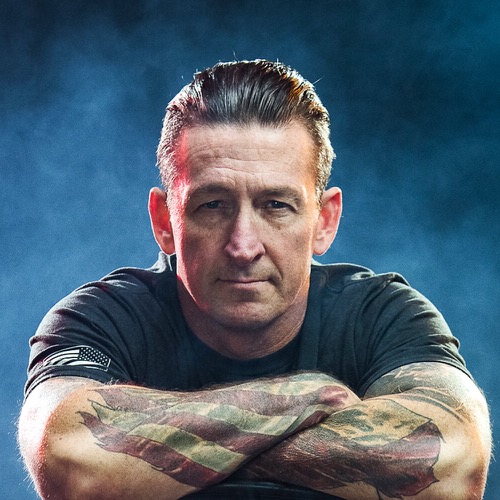
Clint Emerson
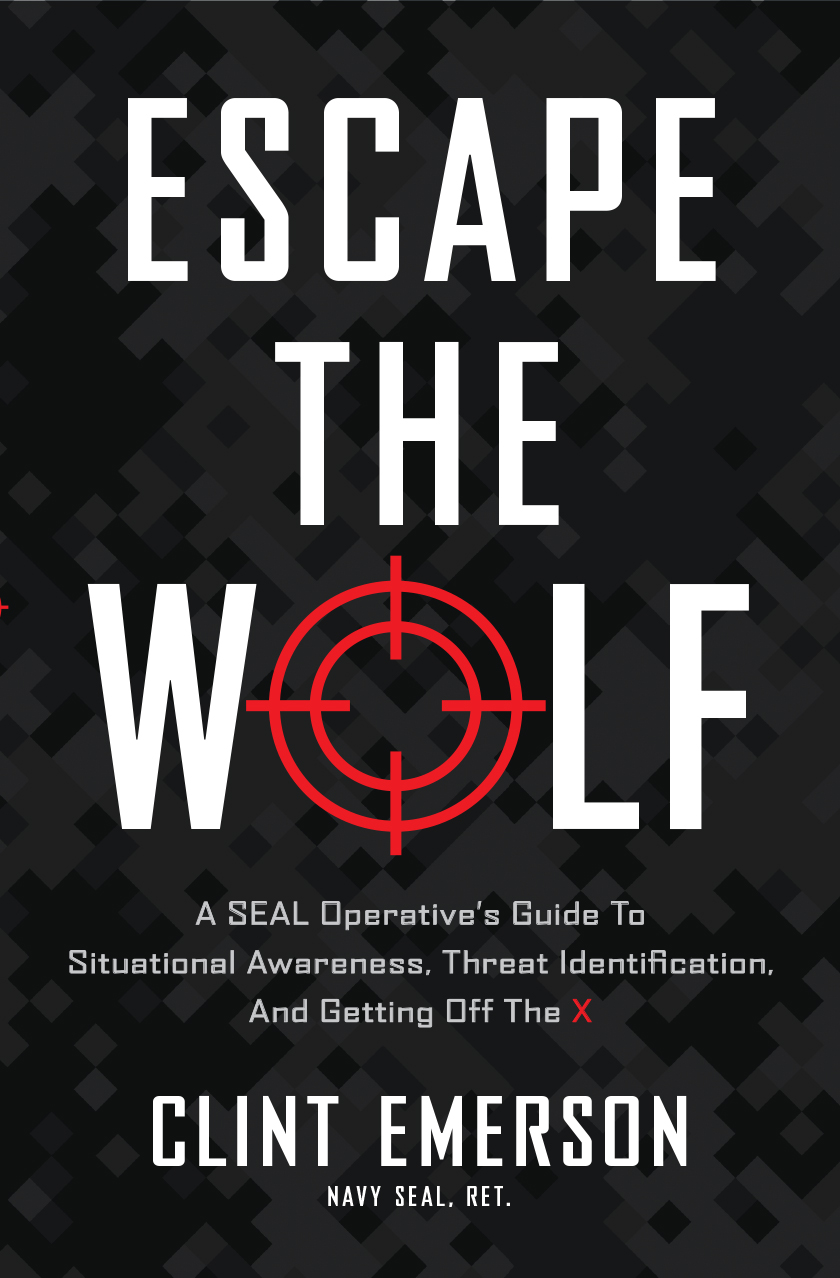
Entrepreneur and bestselling author Clint Emerson is a retired 20-year Navy SEAL, who served with the elite DEVGRU and national government agencies. Escape the Wolf, the company Emerson founded, is a crisis management company providing preemptive, holistic security solutions and crisis management. Emerson is the author of Escape the Wolf and the bestselling 100 Deadly Skills book series.
📚 Books by Clint Emerson
Transcript
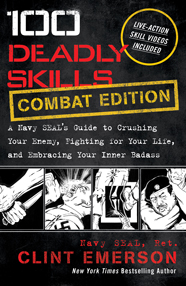
[0:00:30] MR: Clint Emerson, retired Navy SEAL, spent 20 years conducting special ops all over the world. When he retired, he wanted to share the amazing skills and lessons he garnered over the years. His volume of 100 Deadly Skills was born. Since then, Clint’s bestseller series has helped many people learn new skills to protect themselves and even survive unpredictable emergencies like a hurricane or a pandemic. In his newest book, 100 Deadly Skills: Combat edition, Clint has created the most comprehensive on the ground combat manual ever assembled. Helping good people defeat evil, fight for their lives and survive another day. This illustrated manual present 100 skills form some of the deadliest characters on earth. Special ops, outlaw bikers, martial artist, professional fighters. Drawn from an elite collection of experts, each technique is broken down step by step to radically improve your chances of coming out on top. Whether you’re facing an active shooter or going toe to toe with a violent person. One of the best parts? There’s embedded videos that let you visualize the skills, and practice them in real-time. In today’s episode, Clint shares with us why he wrote this book, how de-escalation can be your greatest weapon and how almost anyone can learn combat skills that may protect you for life. Enjoy. Hey everyone, my name is Miles Rote and I’m excited to be here today with Clint Emerson. Author of 100 Deadly Skills: Combat edition. A navy SEALs guide to crushing your enemy, fighting for your life and embracing your inner badass. Clint, I’m excited you’re here, welcome to The Author Hour Podcast.
[0:02:32] Clint Emerson: Yeah, thanks for having me, it’s good to be here.
[0:02:35] MR: Yeah, this book is actually your third installment in your 100 Deadly Skills series. Before jumping into this book, tell us a little bit about your background and how it led to the first two installments?
[0:02:49] Clint Emerson: Sure, I am a retired Navy SEAL, which means I did 20 years or more, which some would say is crazy, but it was a good job and I got to learn a lot, got to do a lot of cool stuff, obviously, overseas against our enemies and had a lot of experiences that I felt like needed to be shared in a more creative way. You get a lot of skill sets and we take those skill sets and you wonder, “Okay, what am I going to do when I get out?” What I did is I just took some of those skill sets and started putting them into books where people can be more self-reliant, more self-rescue orientated. When I started 100 Deadly Skills book one, active shootings were going on, on a regular basis. I felt like people rely on 911 maybe a little too much, the cops can only do so much, they can only be at one place at a time so you’ve got to sometimes be your own first responder and that’s what spawned book one and the idea of giving people digestible skills that they can literally, while they’re sitting on the toilet, learn and then get up and go do, as soon as they get done. I joke that these are the most popular books sitting next to a man’s toilet and some women’s. It is all about skills and it’s all about making people far more self-rescue orientated and self-reliant and that’s really been my goal since I retired five years now, ago.
[0:04:29] MR: I love that, what a cool mission and what a way to take all of the things that you learned in 20 years in the Navy SEALS and be able to package it up so to speak in such a way that we’re able to digest it. These books have done really well and so, the first one you mentioned, 100 Deadly skills, the second one was the survival edition and then this third one is the combat edition. What specifically inspired that combat edition for this round?
[0:04:56] Clint Emerson: Well, it all starts with book one. Book one, I felt like it kind of gives you these sneaky, clandestine tricks of the trade to elude and escape bad guys. The second one gives you all of the skill sets required to escape major crises, whether it's a natural disaster. That thing was published in 2017 and it has a whole chapter dedicated to pandemics, ironically enough. Book two is really about natural disasters, man made disasters, environmental, you name it. Then I was like, “Well, you know, the person versus person issue, when you are confronted with violence, you need to know more than what was touched on in book’s one and two.” I kind of wanted to expand on the world of combatives and give people a very broad spectrum look at all of the different fighting systems that are out there. I reached out to all the experts in varying industries within the fighting world. You have your traditional hand to hand combat guys, you got your pistol guys, you got your rifle guys, you got your knife guys, all of these professionals with years and years of experience in a specific form of fighting is what I wanted to consolidate into one manual that is comprehensive and kind of gives you a little bit of everything. It’s got Jiu Jitsu, it’s got Krav Maga, it’s got Thai Boxing, it’s got integrated combatives, it’s got basic pistol, basic rifle, it’s got knife throwing, it’s got, you know, how to use a knife. But I felt like it also needed to show that the pros don’t go out picking fights, these professionals aren’t going and looking for violence. They all said the same thing and that is to de-escalate, de-escalate, de-escalate. If you have the opportunity to get off the X and run, then you should do that too. The point being is that all the skills in the combat edition are for last resort, very dire, deadly situations where escape or de-escalation is not an option. That’s what makes up now 100 Deadly Skills: Combat edition.
[0:07:38] MR: I love that you brought in experts for each segment that you really wanted to talk about and demonstrate and one of my favorite things about this book is, it has illustrations in it from a graphic novel artist who has worked on things like Batman and The Punisher. The whole time, you’re describing how to engage in all of these deadly skills, you see the imagery that has that graphic novel feel and it feels so clean and clear and also entertaining throughout. Tell us why that was important to you to kind of bring that style in?
[0:08:19] Clint Emerson: Yeah, I’ve grown up as an artist myself and I love drawing or I used to do it far more than I do these days. Definitely not at the level of the artist that I’ve hired for these books but I knew that I wanted to add that creative piece. One, because I feel like folks from my generation, I’m 47, I’m an 80s kid, comic books were certainly very popular then and we all know that there are great movies that came from Marvel and DC. I’m one of those that has been fascinated by all of them since I was a kid and I knew that if I did any kind of project that was book-related that I’d wanted to be illustrated. Every book I’ve put out to include my memoir are all illustrated. I feel like it’s much better than black and white photos or photos of me doing something. I just wanted to take it to the next level, keep people engaged, because we all know that adult learning criteria is much different than what it used to be. It’s got to be entertaining and like you said, also informative, all at the same time, in order to win these days, in order to win someone’s attention, when we know that the average adult can only hang in there for about eight minutes before they get distracted and move on to other things. You have to be creative these days in order to get passed that eight-minute power curve.
[0:09:50] MR: Yeah, no, it’s so true. In addition to being creative, you also just made it extremely accessible. With every single skill that you have here, at least that I’ve seen. You have a QR code, and all it takes is your smartphone, scanning it, you know, just like a photo and then boom, it’s actually a video of you, showing people with an expert, how to actually engage in these deadly skills. Tell us a little bit about that and why you wanted to bring that kind of video component into it as well?
[0:10:23] Clint Emerson: Yeah, with each one of The 100 Deadly Skill books, I knew that the first two kind of followed a template in a format that worked. But I knew that all right, you got to take things to the next level. Number one, I went and hired Tom Mandrake, the illustrator that you referred to. I mean, you’re right, he’s done Batman versus Superman series, he was the guy who created Swamp Thing. He is very well-known in the illustrator world, he’s one of those guys when he goes to Comic Con, people are standing in line to have his work signed by him, I took the art to the next level. Then, on top of that, I wanted to add this integrated training capability, you know? Because the one thing you’ll hear every MMA school on the planet say is, “You can’t learn how to fight from a book.” I kind of wanted to challenge that a little bit and so, adding the QR codes and having them connected to videos with the experts, teaching you as if you were there, how to throw a knife, how to throw a punch, how to do any of the skills that are in this book, I mean, it’s about as close as you can get to learning how to fight form a book. Then the timing of this pandemic and people keeping people locked in, staying home. It seemed like the perfect fit for those that you know, “We’re all trying to do the right thing, you’re staying indoors” what better time than to pick up some new skills, certainly skills that could save you or your family’s life.
[0:12:01] MR: Yeah, and you do even more actually, to help people learn how to fight even from a book, because of the structure in which you lay this out. In addition to having the imagery that’s so helpful, then having the videos integrated within the imagery, the way that you even describe it and lay it out, I’ve never seen anything like it. It’s really, really unique where you actually have a situation where you basically setup the scenario to give people an idea of when this skill would be leveraged or utilized or needed. Then there’s the mission, which is kind of the idea of you know, your goal of what you’re trying to get by utilizing this skill. Then you described how to execute it, how to have support from it and it’s all laid out very concisely. What inspired this actual formatting as far as the content of the book?
[0:12:54] Clint Emerson: Yeah, in the military, we have what’s called warning orders or a “Warno” it’s a short form set of orders that are passed to all of the operators or soldiers involved in a mission. It’s a great snapshot way to deliver information in order for people to understand exactly what it is they’re about to go do and what they need to do to prepare for it. I took that five-part warning order format and applied it to this, to try and simplify sometimes what are complex moves or complex combinations of moves as it relates to the actual fighting aspect of the book. Like you said, it starts with situation. Now, in the military, the situation will be, it will basically lay out the situation. Usually has friendlies in the area, the enemy, the environmental, it’s a paragraph kind of stacked in a certain order that kind of lays out that macro-look at where you're going, what you’re going to do, kind of the five W’s if you will. In the mission, is that short, sweet, “your job is to…”, and then, it’s a hostage rescue situation and are whatever, then it will lay it out right there clearly and concisely so there’s no question to what it is you’re about to do. Then you have execution which is really the how-to portion. Then, service and support, in the military, that tends to talk about the weapons, if you have air assets, medevac, you know all that kind of stuff and then – but for this book, I put training tips and equipment that you may need in order to do that particular skill and then the final piece of this five-part format is command and control. If you compare command and control in the military to each of these skills, it is probably the furthest away in definitions but I tried to make it as close as possible. Command and control is just that in the military. It’s “Okay, what’s your chain of command as it relates to that mission?” and a lot of coms, frequencies and all that kind of stuff like that that you’d be using but for the book, I took command and control and turned it more into a place to talk about situational awareness, mindset and those types of things as it relates to that particular skill. I feel like that way, people have a more holistic idea of each of the skills from beginning to end. Rather than, “Hey, here’s a skill, this is how you do it” it’s like no, let’s give a little bit of background, a context because in the fighting world, it’s like language right? You can see one skill, one move, which kind of got to know the before and the after and some background to it so that it makes sense or else, you know in a very subjective world we live in, people will just tear apart. I felt like a warning order was necessary if you’re going to do a fighting book.
[0:16:00] MR: Yeah, in addition to laying it out in such a concise way and in a way that as you mentioned, really hits on all of these different points so that people can really understand the context in which to use it and when it can be applied. You also just cut out all of the BS. There is no filler in here, there’s no setting things up or you know, bloating your book with language and I think that too often happens in different books that we read but yours really cuts right to the chase and gets right down to it, which I really appreciate. As far as who should read this book and who should try to learn these deadly skills, would you recommend it’s anyone like maybe my sister or do you think that this is reserved for a certain group of people?
[0:16:51] Clint Emerson: No, I think in design, I kept everything basic because when you’re in the SEAL teams and then when you get to tier one commands, national level stuff, we have a saying that if you master the basics you will become advanced. I wanted to highlight basic stuff from a variety of experts so that anyone can learn it. Now, there are certain aspects of this that would require some parental guidance you know? But in the command and control portion and also in service and support, I stress safety, you know where there’s if you are learning how to use a handgun, we all know that dry-firing is a great way to correct any kind of – like if you are anticipating shots or if you’re learning how to sight alignment, you name it — but you got to make sure it’s cleared and safe and you got to make sure you can see daylight down the barrel, through the chamber and through the magazine well. There is an aspect of this that yeah, there are some parts that even kids can do but keep in mind, once weapons are put into the mix then parental guidance is highly suggested but if you are a male, female, when you’re 18 and up, you know you got a good head on your shoulders and you’re a good person then these skills are for you. I’ve also stressed in the book that it’s not for bad people. It’s not for going out and doing harm to someone or to go and just be violent just to be violent. Or if you’re just an immature kid that just wants to test your skills at school then this book is not for you. It’s for somewhat of a PG-matured audience if you had to give it a rating.
[0:18:38] MR: Yeah and in addition to learning new skills, you actually have tips in here as well to get better at other skills. For example, just for the listeners to give some context of different things that are included here, you have a section on how to throw a jab-punch and then there is another skill here that you have of how to strengthen your punch power, which I think is so wonderful that you are able to kind of build on these different elements and take these different elements into account. Tell us a little bit more about that as far as the importance for you to want to also enhance skills that people already maybe currently have in their arsenal.
[0:19:20] Clint Emerson: Yeah, you know that was a big deal and putting this book into an order that made sense was difficult because some of the guys, the skills they provide and I didn’t regulate them so they were able to teach whatever they wanted to teach me when I showed up and so some of them, it’s what I would call a mostly non-lethal skills and then they would, you know, go into some more lethal oriented stuff. It is important to kind of put in the building blocks that would fill the gaps between the lethality of some of these skill sets. But if you look, the beginning of the book starts with the non-violent posture and teaches de-escalation right off the bat because then, you’re going to use that non-violent posture for the rest of the book. You get confronted by someone, you need to determine what your non-violent posture is first. For some people, it’s typical negotiation stance. Hands up, you’re kind of patting at the air and you’re saying, “Hey, I don’t want any trouble.” But what that position is, is a Trojan horse and you are weaponizing your non-violent posture just in case this person isn’t listening to you or they just got violence on the mind and so now, you’re talking about de-escalation but now, you got to talk about, all right, this person isn’t going to listen to you. They want to fight, so what’s the next piece to that equation? That is taking that non-violent posture and leveraging it so that you can always have that upper hand. Because the last thing anything wants to do is, you know get knocked out, lose consciousness and then you lose all call to control. All of it builds on one another whether it has to do with strengthening your punch, zone awareness, right? Most people and talking about the reactionary gap, if I am toe to toe with you, nose to nose and I tell you, “Hey, I’m going to reach out and I am going to tap you on the chest and I want you to block it” I’m going to win every time even though you know it’s coming. That’s the reactionary gap, which means if you are in someone’s face then you better make the first move or prevent them from making the first move because you’re not – even if I tell you I’m going to punch you and we’re face to face, you’re still not going to stop it and so understanding the reactionary gap and then which leads to zone awareness, which is, “Hey, if you don’t want to get sucker punched, then you’ve got to create the space that prevents the reach.” But anyway, it’s more than just the physical aspect to fighting. It’s got mindset, strength and agility, mobility, all of the things that support, you know, the survivability when you’re faced with a violent confrontation.
[0:22:22] MR: I love the framing of it and how it’s set up where you were really trying to de-escalate first and even from the beginning as you lay this book out, that’s still the goal even as someone maybe taking on more aggressive behavior as you lay out, you still take a non-violent posture so they may not be able to see that you are in the position to defend yourself or to protect yourself if needed be but you are ready but to them, they’re not seeing that. You’re not raising the escalation so to speak, you’re not even matching them. You’re still trying to de-escalate and I think that’s such an important frame for people to think about when it comes to these things and not think about as you’ve mentioned a couple of times, this isn’t about being bad or hurting anyone but if the situation arises, this puts you and yourself and your loved ones in a more capable place to be able to defend yourselves and not be taken advantage of.
[0:23:25] Clint Emerson: Right and you nail it. The problem is, if you look at the traditional martial art, it always starts with a certain fighting stance. If you go into a fighting stance in a confrontation and there’s video cameras rolling, you’re going to look like the aggressor right off the bat and there’s no way around that. What martial arts missed was that street piece, right? You have to take into account that number one, we never want to be the aggressor or escalate anything if you can avoid it. Number two, there is no time to be getting into some stance when fists, knives or bullets start flying and that’s why it’s important to train from your non-violent posture and it’s really a bridge to your tools, right? You’ve got this posture that you are using, I mean you leverage it to your next set of tools based on what’s going on in front of you.
[0:24:31] MR: Yeah, because the other party is likely going to escalate it one degree higher than you so if you take a fighting stance, that’s where they may pull out a knife. Whereas if you are taking a non-violent stance, their escalation may be a violent stance but you’re still containing them and you are still protecting yourself even through, you know, not actually executing a deadly skill you could say.
[0:24:57] Clint Emerson: Right, yeah. I mean it’s that simple and the book covers body language and most people don’t know that we communicate. 60% of our communication is body language with one another and it can tell someone that you want to fight or it can tell someone that you don’t and even though you might be a very capable person, the last thing you want to do is tell the person in front of you how capable you are and so you have to put your body language in check in order to ultimately de-escalate or proof-in any violence from happening. That is kind of the premise behind it but at the same time, you’ve got to be ready for anything and that’s the key takeaway is that now, I am not escalating anything but I’m ready once it goes crazy.
[0:25:44] MR: Well Clint, this is such an important book and I’ve never seen a book quite laid out like this so I applaud you for just the simplicity, the ability to really understand the material and as you said, it really can be a book that can teach you how to fight and teach you these different skills and bringing video into it really, really love about this book. Thank you for writing it and if readers could take away maybe just one or two things from your book, what might they be?
[0:26:14] Clint Emerson: You want to avoid any of these violent situations the best you can and then the second piece is, if you can’t avoid it then you’d better know what you’re going to do and if you combine those two together, that’s really just you know, know you are being a more – you are being more deliberate in your preparedness and when you walk the streets because you never know what’s lurking around the next corner especially these days.
[0:26:41] MR: Yeah, it’s so true. I feel like in a more volatile time that we’re living in with everything going on, skills like this seems like it could be a really good thing to learn.
[0:26:52] Clint Emerson: I feel like there is no better time to learn how to protect yourself than now, no doubt about it.
[0:27:01] MR: Clint, this has been such a pleasure. I am so excited for people to check the book out. Everyone, the book is called, 100 Deadly Skills: Combat Edition. A Navy SEALs guide to crushing your enemy, fighting for your life and embracing your inner badass, and you can find it on Amazon. Clint, besides checking the book out, where can people find you?
[0:27:21] Clint Emerson: Instagram is really my main platform along with YouTube but clintemerson.com has my entire ecosystem.
[0:27:29] MR: Awesome. Clint, thank you so much for joining us and helping us better thrive and survive in today’s world.
[0:27:36] Clint Emerson: No problem, thank you for having me.
[0:27:39] MR: Thanks again for joining us for this episode of the Author Hour Podcast. You can get Clint Emerson’s book, 100 Deadly Skills: Combat Edition. A Navy SEALS guide to crushing your enemy, fighting for your life and embracing your inner badass, on Amazon. You can also find a transcript of this episode as well as our previous episodes on our website at authorhour.co. For more Author Hour, subscribe to this podcast and thanks again for joining us. We’ll see you next time, same place, different author.
Want to Write Your Own Book?
Scribe has helped over 2,000 authors turn their expertise into published books.
Schedule a Free Consult