Suzanne Demallie: Episode 613
Read the full transcript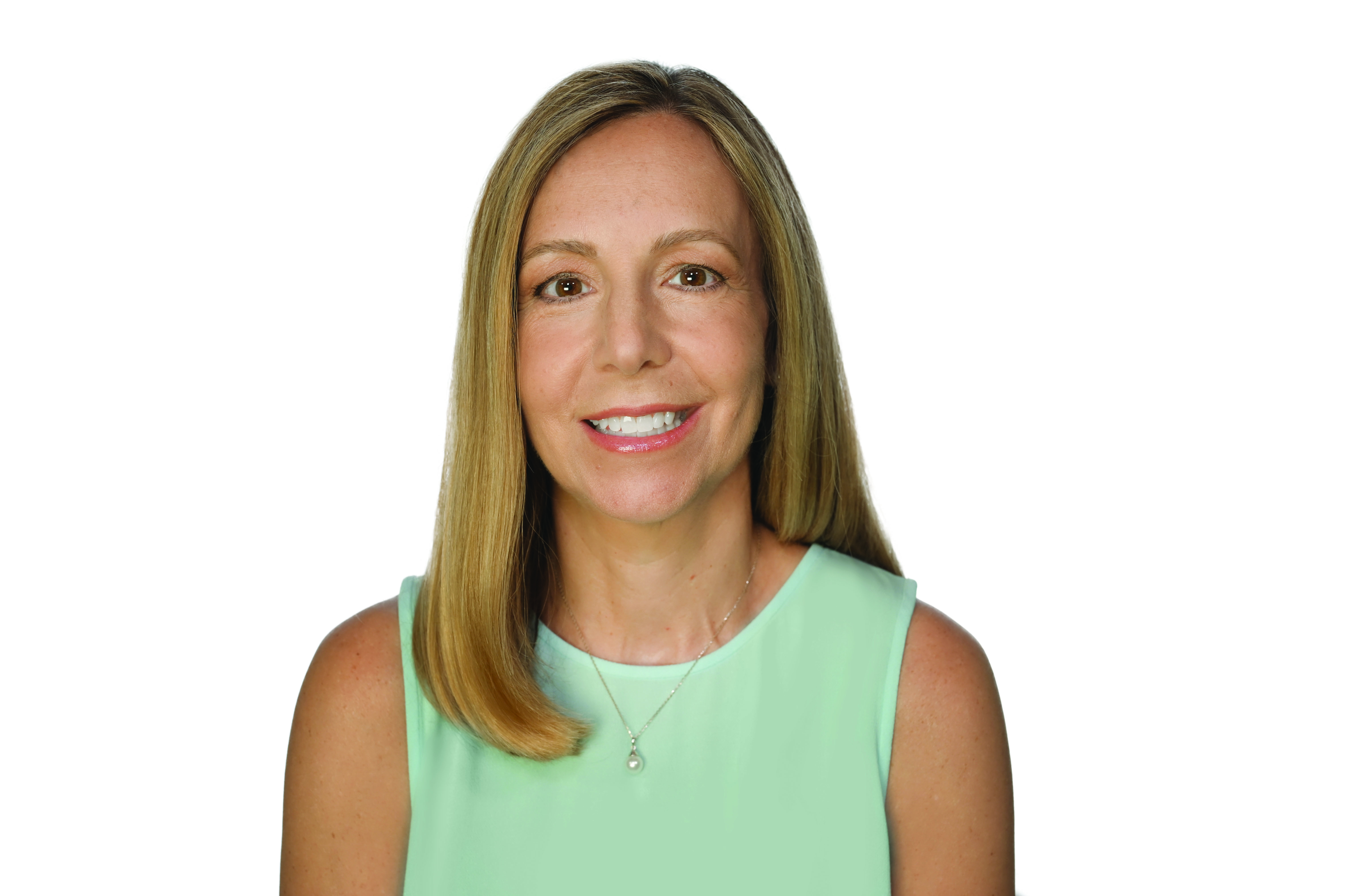
Suzanne Demallie
Suzanne DeMallie is an author, speaker, and education advocate whose career has spanned work as a CPA, teacher, and non-profit director. Research into her own son's learning difficulties led her to author a classroom auditory learning resolution that the National PTA adopted in 2007, the same year she received the organization's Life Achievement Award. She went on to teach elementary math in the Baltimore County Public Schools before becoming a national voice for education reform and a university lecturer. She is the author of Can You Hear Me Now?, which examines the policies and practices that leave many children behind in public education.
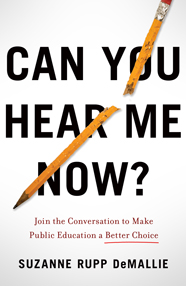
📚 Books by Suzanne Demallie
Transcript
[0:00:18] EG: Suzanne DeMallie’s son was in kindergarten when she realized he was having trouble hearing his teacher at school. To solve this problem, Suzanne enlisted doctors and speech therapists, special education teams and supervisors. But after facing resistance from her son’s school, she ultimately took to the national stage to advocate for her son and for students around the country to get the resources they need to learn. Later, Suzanne became a school teacher herself and grappled with the constraints of an education system that didn’t always align with her students’ needs. She details these experiences and the hard learned lessons she learned from them in her new book Can You Hear Me Now? Join the conversation to make public education a better choice. I’m in conversation today with Suzanne DeMallie, about her book, Can You Hear Me Now? And Suzanne, especially as a former English teacher myself, your book is for teachers and parents and I am so excited to sit down with you and talk about not only what you recommend for starting a conversation around improving public education but also your own experiences in the system and you know, knowing that we’re not alone when we have struggles with helping our children learn.
[0:01:35] Suzanne Demallie: Thank you, I’m really excited to be here.
[0:01:38] EG: Let’s start by giving our listeners an idea of your personal background?
[0:01:43] Suzanne Demallie: My most recent experience has been as a math teacher for the Baltimore County Public School System. Prior to that, I had a non-profit organization that I had founded and directed, whose purpose was really to advocate for auditory reform in our classrooms and before that time, I was a CPA. It’s really been a broad range of experience.
[0:02:09] EG: You also write in the book about your own experience as a parent with your own child and really helping to navigate solutions for him.
[0:02:17] Suzanne Demallie: Yes, that’s really what led me to the world of education. I have three children and my middle child, Christopher, was diagnosed in kindergarten with an auditory processing deficit. I didn’t really know what that meant at the time so I did a lot of research and uncovered that all children in a typical classroom were not given the proper auditory environment to support their immature auditory needs. What this means is that you know, young children in a classroom can miss out on up to a third of what the teacher is saying. During the course of this research, I uncovered a solution to it as well, a solution that had been researched by many people and was being used by some school districts. I wondered, why don’t parents know about this? Why don’t teachers all know about this? Why don’t we have this in our school system? That’s when I really decided to start educating as many people as I could about the issue. First locally and then expanded to a national level. I really made that my mission, to get the education out there that children have very unique hearing needs that are not currently being supported. I really try to advocate for schools to integrate this technology into their classrooms. I did that for about four years and made a lot of progress. I gained the support of the national PTA, authored a resolution in that regards, you know, got some politicians to support it, presented to the National School Board Association about it. After four years, I felt like, you know, I kind of had done as much as I could at that point and I had really developed this passion for education that I just wanted to pursue further. But I decided to take it to a more individual level and that’s when I decided to go back to school and get a masters degree so that I could become a teacher.
[0:04:21] EG: That’s incredible. Of all these experiences, at what moment did you realize, “I totally need to write a book about this.”
[0:04:31] Suzanne Demallie: I think my family realized it before I did. I would come home and tell them stories at the dinner table about my day and about the students that I was working with and just some of the problems that I had encountered with the bureaucracy in the school system and you know, every time I would be telling my family something, they’d say, “You really need to write this down, you really need to write a book.” I heard that for a few years before I actually decided, “You know, maybe I should.” There was one experience in particular that really stood out for me where I said, “Something is wrong here and people really need to know about it and to speak up about, you know, the problems that they see.” I had a student who was really struggling in school, he was well below grade level, far below grade level. I taught 4th grade math and I had gone to my administration at some point and said, “You know, I don’t really think we should pass this child on to the 5th grade. What do you recommend I do?” They said, “Well, you know, start that conversation with the parent, make sure that they are fully aware of your concerns and kind of get them onboard with it.” I did all of that from the very beginning. At the same time, I was also trying to implement research-based interventions with the child to, you know, to see if we could remedy some of the problems and fill in those gaps. I wasn’t seeing a lot of progress on the interventions that I was using. I was really seeing this child’s self-esteem just really decline and the parent was seeing the same things at home and totally agreed with me. The parent agreed with my recommendation to not pass the child on to fifth grade but to instead, have him repeat a year. I took this to a student support meeting where we were discussing, you know, what was being done to try to fill in these gaps for the particular child and I shared my recommendation and the assistant principal that ran the meeting said, “No,” he was going to need to move on to fifth grade. Even though, again, he was, you know, far below grade level in both reading and math and the parent shared my concerns. I just kind of looked at her like, “How can this be, how can we do this to this child?” And her response was that there were just too many other children in the school with needs even greater than his, that would be promoted on to fifth grade. We just couldn’t hold him back if we were going to pass them on. It’s just that decision, just really made me physically ill. Afterwards, I got a phone call from the parent because she wasn’t able to attend the meeting and she asked me, “What happened? What’s the final result on where he will be placed next year?” I told her, “Well, the team made the decision to promote him on to fifth grade.” She immediately got quiet and I could just tell that she was, you know, upset by that decision. She said, “Well,” I actually questioned her on it, I said, you know, “Are you disappointed with the decision?” She said, “Well, you’re the expert.” You know, it really disturbed me because I thought, “I kind of am the expert on this because I worked with this child every day and you know, I probably know this child better than anyone else that was in that meeting and yet, I’m not able to make this decision.” It was just you know, one example of where the teacher is really kind of powerless in being able to make decisions and help students the way she or he feels the need to be helped.
[0:08:20] EG: How frustrating too that you’re not able to hold the standards that you know, your profession asks you to hold in terms of what children should be able to do in your classroom in order to move on?
[0:08:32] Suzanne Demallie: Exactly. You know, this wasn’t an isolated incident, I mean, this is – I was encountering this sort of situation every single year that I was teaching, I was hearing about other teachers talk about the same kind of issues when I would go to professional development classes. You know, basically, we’re passing these children along from one grade to the next without having met the standards. When we’re doing that, you know, we’re giving the parents a very false sense of what their child really knows and how prepared they are for that next grade level. Of course, every time children are passed along with having met the grade level standards, that academic gap is growing. It makes it harder and harder for the teacher at each successive grade level to really fill in that gap. Now, what does this do to the child, you know? To their self-esteem when they’re constantly getting grades back that are showing that they’re failing or they’re not meeting those grade level standards? I just really feel like this is just one area, you know, where something needs to be said about it and we need to make a change.
[0:09:44] EG: What were some of the first moments that you began to speak up with in your school about these kinds of needs, these kinds of issues with the status quo?
[0:09:54] Suzanne Demallie: I spoke up sometimes during an individual, like one-on-one with an administrator or you know, sometimes, I would speak up or really question something during a staff meeting. You know, I never really argued something other than really at this one particular student support team meeting where I really felt very strongly that we were not helping this child by passing him along. But you know, to be honest with you, I think I kind of represent other teachers that are just scared to speak up because you know, we feel like very powerless, “What can be done by raising my voice, other than you know, maybe having my job in jeopardy or maybe having an administrator think less of me or give me a poor evaluation on an observation?” I think the more you gather support from other teachers and from other parents who feel the same way as you do, it kind of – it helps you to develop that courage, it makes it harder for people to not listen when there’s more than one voice that’s speaking up. That’s sort of the purpose of this book, to let teachers and parents know, “You’re not alone, I have felt that way, there are other teachers and parents that have felt the way you do and we really need to support each other and we really need to speak out on the issues that concern us the most.”
[0:11:20] EG: Yeah, in addition to this pressure of like, “What’s at stake if I speak up?” I’m speaking from my own experience as a teacher, there are just a million other things to be attending to in the classroom, right?
[0:11:35] Suzanne Demallie: Yeah, absolutely.
[0:11:37] EG: It just takes so much energy every day. There’s this need to pick and choose the battles and sometimes if the battles are too hard, it’s like, “Okay, well, I’m going to focus on something I can be effective at.”
[0:11:48] Suzanne Demallie: Exactly. I mean, teachers are so overwhelmed with responsibilities now. I really talk about that in the book a lot. You know, I feel like that’s part of the problem with education today is that you know, there’s a lot of problems in society today and we’re really expecting the teacher and the administrators in that school to solve all of them. You know, they don’t have the resources to do it and that’s putting an excessive burden on them, especially not having the resources and they don’t have the time for it. It is taking time away from instruction as well, which I believe is contributing to, you know, low test scores because teachers are losing more instructional time by trying to manage behaviors and teach social skills and just deal with issues that I’m not sure teachers had to deal with 30 years ago. You're absolutely right, teachers are just overwhelmed.
[0:12:49] EG: In the middle of the book, you write particularly about the recent history of education, things like, how the common core standards came to be and you talk about this trajectory of all these different influences that have come together to create the picture of education today. What surprised you in that history? Either learning it when you were a teacher or learning it to do the research for this book?
[0:13:17] Suzanne Demallie: One thing that really surprised me is a lot of new initiatives in education don’t seem like they’re really tested out before we start implementing them. Common core is a great example of that. Those standards were initiated in 2009. By June 2010, they were final and being introduced. They were being introduced into school systems without having really tested them out on student populations to see, you know, how do the different populations, like the English language learners, the below level academic kids, you know, how do they handle this kind of new standards? Curriculums haven’t been properly developed to reflect those new standards, assessments hadn’t been developed. There’s a lot that it seems like, you know, we’re quick to kind of push something out there and try it and it hasn’t necessarily been thoroughly tested, especially again, amongst the very diverse populations that are in our school system. That was really surprising to me. I saw that in my own school district in regards to technology where Baltimore County had come up with this great plan to give every student a one-to-one device and we didn’t have the infrastructure to support it initially and because of that, you know, we were encountering a lot of problems. I was just surprised to see that really on a national level that that was the case as well.
[0:14:52] EG: Yeah, you know, speaking on that fast implementation, I became a teacher the year before common core standards were required to be aligned with curriculum and I was part of you know, a brand new teacher and then immediately part of a team trying to revamp all the curriculum to fit these core standards and it was like, “At what point do I actually learn to master what it is that I’m trying to educate my students on?”
[0:15:19] Suzanne Demallie: Exactly. You know, we had a similar experience in regards to grading practices in my school district where, you know, there was one, at the beginning of an academic year where Baltimore county had said, “We’re going to revamp the whole grading system and implement this, a minimum score of 50% and we’re going to change what materials, assessments and tasks sort of contribute to that overall grade.” And they made this broad change but the teachers didn’t really understand it. They hadn’t been informed about it, the parents didn’t understand it so parents are getting frustrated with teachers, which is understandable. Teachers are frustrated because they don’t have the answers themselves and they’re not getting the answers and you know, that is just a case where we just really need to be making sure that everything is thought through and tested and ready to go before we start implementing these kinds of very, you know, extreme changes in our school system. You know, kids have one chance at each grade level, hopefully, and we have to have it right the first time because if we don’t, I don’t know if they are fully prepared then to go onto that next grade level. I feel like there really needs to be more care and consideration in all of the policies and practices that are developed.
[0:16:42] EG: Pivoting to your experience as a parent, at what point did you realize that this issue you are seeing in your son being able to connect within the classroom, wouldn’t be solved by teachers and administration alone and that you would need to get involved?
[0:17:01] Suzanne Demallie: I kind of saw it early on because at the time that Christopher was diagnosed, he was in kindergarten and he was in a private kindergarten. It was part of the nursery school that was part of my church and so I wasn’t dealing with the public system immediately but in anticipation that he would be moving on to a public school for first grade, you know I reached out to his elementary school and set up a meeting and I realized, you know, early on, first of all I had to go through this whole process just to have anybody recognize that he had a problem let alone to put in a sort of accommodations for him whereas in the private school that he was in, you know as soon as he got his diagnosis, which came with some recommendations from an audiologist and from the psychologist that had done the psycho educational evaluation on him, I handed those over to his teacher and the director of that private school and you know, immediately the next day they moved his seat. They changed things around, they just – everything was really – you know I feel like they did their best to really try to meet his needs at that point and then I found out, well in the public system, it doesn’t work that way. I can’t just talk directly with the teacher and ask that he sit in the front row. I can’t just ask that they maybe repeat a question to him or make sure that he understood what they heard, what he heard. You know, I had to go through this whole process of having a meeting, proving that he had some sort of need that was impairing his educational ability and I turned over all of the private testing that I had done, which was a lot, a lot of information. And during the meeting, you know and this is the meeting with the public school system, they kept focusing on all of the scores that were really good for him and he had a lot of really good scores. You know, he was very visual and there were a lot of things that, a lot of different tests that had been done where they indicated no problem at all but there were a lot of tests that did indicate a problem, which led to his diagnosis. And they just seemed to either skim over those or ignore them and you know, I don’t know if they were just trying to, you know, kind of say he didn’t have a problem because once a school, a public school, identifies that a child has a particular need and they give that child an IEP or a 504, they have a legal obligation then to meet those needs. I don’t know what the reason was but I felt like it was just more of a, I don’t know, a battle that no parent should really have. You know, I was just trying to help my child. I really wasn’t asking for anything significant, some speech therapy and you know, preferential seating, those kind of things but you know, he wasn’t really given any of those opportunities And then I had – at one point, I had also obtained a portable sound system which was like a little portable speaker and then a lanyard with a microphone on it that the teacher could wear so that you know, children could hear the teacher’s voice better and I asked if the school would use it and they would not use it for him and I thought, you know, you’re always hearing from school systems that parents need to become more involved and here I am giving them something that my child needs that I’ve had several people, through private testing, tell me that my child needs and they wouldn’t use it so that was just very frustrating.
[0:21:00] EG: Yeah, what did you learn about what it takes to make the changes that you needed from that experience?
[0:21:08] Suzanne Demallie: I learned that it takes persistence and patience and not accepting “no” for an answer. You hear no then find out why and then try to work around that and just you know, ask someone different then because I realized what a battle it is to make a change in the public system but you have to do it. Your child, a parent is really the only child’s true advocate and you know, parents have to speak up for their children and that’s another thing I guess I am asking my readers to do. Whether you’re a parent or a teacher, we have to speak up for these children. They can’t always speak up for themselves.
[0:21:50] EG: One of the really powerful pieces of your experience as a parent is not only how you solved this problem with Christopher but how that solution also had an impact on the national stage and at what point did you realize that this problem would affect more students than just your son?
[0:22:11] Suzanne Demallie: It was when I first started during the research really to just understand Christopher’s particular problem. You know, when he was diagnosed with an auditory processing deficit, I didn’t know anything about that. To me, if you had a hearing problem it just meant there was something, you know, that was not working within your ears. I never really thought about the neurological component of hearing and so just in my research, again, I kept learning how all children don’t have the full neurological ability to process what they hear until they’re in their teens. What this means is that they really need a better acoustical environment than an adult would need, with normal hearing, to be able to understand everything they’re hearing. It’s not just about detecting sounds, it is being able to identify and comprehend those sounds. I started just learning about this and at the same time, I was learning about other children in the school system with even greater hearing needs, like our English language learners, children with attention deficit disorders, children with learning disorders, children with permanent hearing impairments or a lot of kids have a temporary hearing impairment from ear infections especially in the elementary schools. I kept learning about, that kids aren’t getting what they need in the classroom in terms of being able to hear their teacher and I realized that this is not just a problem that’s going to impact my son when he goes into a classroom. This is something that all kids are really dealing with everyday and you know, some kids can compensate in one way or another and they get by but some kids, there was no doubt in my mind through the research that some kids are not getting what they need and it is impacting their academics and their self-esteem. I really began to feel like, you know, this is a much bigger problem than Christopher and I really tried to, again, first I started with his school but then, I took it to the Baltimore County school board and luckily, I had a school board member on the school board who was just really fascinated with the research and really agreed with what the information I was sharing and he became very supportive and so you know again, I kept just going back and trying to go to all the budget meetings and get the school board to put something in the budget for this technology and then I realized I really need some more people on my side. I joined forces with, initially the local PTA, which led to gaining the support of the national PTA and that really helped me to take it to a national level.
[0:25:07] EG: That’s so incredible. How much of your time would you say, involvement on this issue, is taking in your daily life?
[0:25:16] Suzanne Demallie: It was almost like a full-time job. I spent so much time between the research and then I had created a non-profit organization, so just trying to get the non-profit organization off the ground financially and you know, to build that reputation and I started developing surrogates that would be in different states, I had a teacher in California that ended up helping me and another teacher in Oklahoma and that really helped out because I didn’t have the funds to travel all over very easily and give these kinds of presentations. It was really a lot of time. I considered it a full-time job at that point.
[0:26:01] EG: You write in the introduction of your book that, “This book is the beginning of a conversation that I invite you to join”, what’s your vision for how that conversation might grow and what impact it might have?
[0:26:14] Suzanne Demallie: Well, I’m hoping that the impact is, you know again, if more than one person is speaking up, the chances of being heard are greater and I’m really hoping that this book gets the attention of the media by parents, you know, sharing it and teachers sharing it and talking about some of the policies and practices that I describe in there and then they start maybe talking about other things that they are experiencing that you know, they think should be changed as well. But you know, it is – I do see it as the beginning. It is not the end and you know, we have a long way to go to improve education and there is a lot of changes that need to be made and I don’t expect that, you know, the reader is going to say, “Well I want to do exactly what Suzanne did and I want to spend four years full-time to advocate for something.” I don’t expect that. I have laid out in the second half of the book, I really lay out sort of the steps that I took to accomplish what I did. You know, you can just maybe go to, take it on step one to five if you want or you could just really say, “Nope, I’m really in this for the long haul. I want to go all the way to step 10.” And your issue also, depending on what issue is important to you that you want to promote. You know, some issues are easier to get some reaction on sooner than others. I think that I am just hoping that people will read it and say, “Yeah, you know I am tired of just sort of assuming that this is the way it is because you know, “It is the public system. I don’t pay anything, in regards to a private school,” and just accepting it for the way it is and that they start questioning, “Why are we doing it this way and why can’t we maybe do something different?” And just sort of speaking up and moving that progress along.
[0:28:12] EG: Well Suzanne, congratulations on completing this book, which I know is both the current pinnacle and the beginning of this wonderful journey you have been taking to improve things for your son, for your students and now for parents across the world.
[0:28:28] Suzanne Demallie: Thank you.
[0:28:29] EG: If you wanted people to take away one or two things from the book, what would they be?
[0:28:34] Suzanne Demallie: I think that change is possible. It is easy to feel like, “You know, this is the way it is and it’s not going to get better.” And if you’re a parent, it is easy to think that, “You know, I just have to give up on the public system and then pull my child out, look for a private school, maybe try to get a scholarship.” It is easy for teachers especially I think, you know, teachers are so overloaded with responsibilities. It is very easy to think, you know, to not feel good about your job and to really question your career and think, you know, that you can’t make a difference in the system. But you can, you really, really can. I’ve done it. I am hoping that the book really is a guide for you on how to go about initiating change. I am hoping that the book just really is – I like to say I hope it is a good balance of information and inspiration and you know, we need to do this. Our education system is a reflection on our society. It is the great equalizer of society. It can give a child who is really coming from all kinds of disadvantages, an opportunity for a really good life and we owe it to these 50 million children that are in the public system to make it better.
[0:29:53] EG: Well, it’s been such a pleasure talking to you and I’m so excited about the impact this book can have and your continued work we’ll have on education. The book is called, “Can You Hear Me Now?” And besides checking out the book, where can people find you and your non-profit?
[0:30:10] Suzanne Demallie: Well, the non-profit doesn’t exist as a non-profit anymore but they can find me at suzannedemallie.com.
[0:30:18] EG: DeMallie is D-e-m-a-l-l-i-e. Well, I appreciate you taking the time to talk today.
[0:30:26] Suzanne Demallie: Thank you. I like it, it’s the beginning of a great conversation.
[0:30:31] EG: Thanks for joining us again for this episode of Author Hour. You can find “Can You Hear Me Now?” on Amazon. A transcript of this episode as well as all of our other previous episodes is available at authorhour.co. For more Author Hour, subscribe to this podcast on your favorite subscription service. Thanks for listening. We’ll see you next time, same place, different author.
Want to Write Your Own Book?
Scribe has helped over 2,000 authors turn their expertise into published books.
Schedule a Free Consult