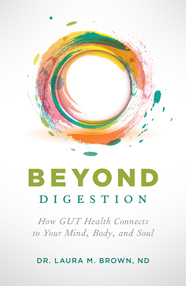
Laura M. Brown: Beyond Digestion: How Gut Health Connects to Your Mind, Body and Soul
Read the full transcript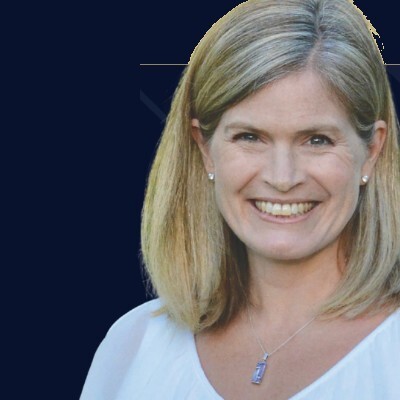
Laura M. Brown
Dr. Laura M. Brown, ND, is a naturopathic doctor and the author of Beyond Digestion. Naturopathic medicine is a second career for her, one she pursued out of a love of science and a drive to solve the health puzzles that conventional care had left unanswered. In her practice she focuses on gut health and the root causes of digestive problems, blending evidence-based nutritional medicine with time-honored, whole-person care. Published in 2021, Beyond Digestion grew out of what she treats most often: it weaves the de-identified stories of her own patients together with well-researched medicine to make gut health approachable for readers and clinicians alike. The book is an Amazon bestseller in the Irritable Bowel Syndrome category and continues to bring new patients and speaking invitations to her years after its release.
★ Scribe Case Study
Dr. Laura Brown's Beyond Digestion Turned a Book on Gut Health Into a Five-Year Compounding Asset
Five years after publishing Beyond Digestion with Scribe Media, Dr. Laura Brown's book still finds her patients, books her speaking invitations, and earns referrals from …
📚 Books by Laura M. Brown
Transcript
[0:00:39] DA: How does gut health relate to the health of the rest of your body, mind, mood and soul? How can what goes on in the rest of your body be related to digestive health. In her new book, Beyond Digestion, Dr. Laura Brown says that even mood can be a reflection or reaction of what’s going on in the gut. In fact, the state of the gut is the root to many chronic health issues. The book aims to help people better digest their food and the world around them and of course, learn how to care for your gut so that it can care for you. Hey listeners, my name is Drew Applebaum and I’m excited to be here today with Dr. Laura Brown, author of Beyond Digestion: How Gut Health Connects to Your Mind, Body and Soul. Laura, thank you for joining, welcome to The Author Hour Podcast.
[0:01:24] LMB: Thanks so much Drew, it’s a pleasure to be here.
[0:01:27] DA: Let’s kick this off, can you give us a rundown of your professional background?
[0:01:31] LMB: Sure, I’m a naturopathic doctor with a functional medicine approach, I have studied with Chris Kresser and his ADAPT level of one training program and also, studied with Dr. Tom and his certified gluten-free program. I’m constantly learning new stuff, we’re always training and learning new things as naturopathic doctors, it just never ever ends and that’s why I’m here and why I love it. I just am fascinated with how the body’s knit together.
[0:01:59] DA: Now, why was now the time to write this book? Did you have an inspirational moment, an “aha moment,” did you have some extra time on your hands because of COVID?
[0:02:09] LMB: So funny. So ahead of meeting up with Scribe, the publishing company. I had about a year or two of thinking about, “I should write a book, maybe I’ll do some writing,” and I’m just not a very good writer so I thought, “This is a ridiculous idea, what am I thinking?” But it kept knocking on my door and then I started to follow some of the blogs that Scribe was putting out with Tucker Max. I’m like, “Oh yeah,” and I started to save it and then he was coming to Toronto and I’m like, “Okay, I live near Toronto,” I’m a Canadian. I had no excuses now, it was like, “Okay, either I’m going to do this and write a book or I’m just going to stop thinking about it right now and get on with it.” I’ve learned so much through reading books and I just love that aspect of being able to pick something up and just open your mind. And I thought, “How do I give back?” This was one way that I could give back and I could also grow through it because I had no idea how to write a book, that was what Scribe had provided me, was that confidence to journey across the pages. The guarantee that you guys would not let me write a bad book. Yeah, so I took the leap and here I am.
[0:03:26] DA: Now, were there any learnings or breakthroughs during the writing of the book? You're a doctor, you're a professional in this space but sometimes by doing some research or sometimes just looking back at your past and your past experiences, you’ll find something new that you didn’t see before.
[0:03:41] LMB: Constantly, absolutely. I mean, this book is a result of life and clinical experience and it’s written from both sides of the stethoscope. As I said before, we never stop learning. I’m always peeling layers and I talk about peeling layers through the book, the physical, the emotional, the cognitive, the spiritual. We’re constantly digging in deeper and deeper and just when we think, “Oh we’ve arrived,” we dig a little deeper and just as if things are continuing to be fed, the layers evolve from the inside out and as I was writing the book and doing research to support things, yeah, learning something like all the time. You have to get – careful not to get caught down the rabbit hole with the research but I did use a lot of scientifically based articles to support where I was going with things, especially in the first half of the book. The second half of the book is reflective more of the wisdom and trusting wisdom. That was an area that was probably a bigger growth for me at this point, was to trust more into that wisdom of knowledge or sorry, I should just say just wisdom because knowledge is kind of the other side of the coin. To really trust more in what comes through in the creative process and just to allow things to flow.
[0:05:03] DA: Now, who is this book aimed for? Did you have a specific person in mind or do you have to have issues with your gut or health problems to be able to take something away from this book or can somebody who thinks they’re relatively healthy right now also take away some new knowledge from the book?
[0:05:20] LMB: Yes, both. If you own a gut, you’ll get something out of this book. Essentially, yes. There’s definitely lots in there because everything starts in the gut. I mean, Hippocrates had said this 2,450 years ago and I don’t think there’s really a whole lot that’s changed and we’re talking not just about digesting food, we’re digesting energy and emotions and things from the environment and the world around us. It’s talking about that side of things too. Helping people better digest their food and the world around them. Because our gut is our primary sensing organ that’s picking things up from the environment, not only through our digestive tract that way but we might as well have antenna sticking out from our gut because we’re picking up a lot of energy and emotions from other people and those things have to be processed too.
[0:06:15] DA: Now, early on in the book, you make a promise. You say, to help – the book is to help you appreciate that your mood and overall health could be determined by your gastrointestinal health?
[0:06:28] LMB: Yes. That’s pretty well done and really, we know, I mean, the stats from – if I were to take the stats from 2019. 70% of people with IBS don’t get treatment but the 30% that do, 50 to 90% of those people have anxiety and depression. We also know that there’s 40 million people in America seeking help for anxiety and depression, that’s 20% of the US population. Things are – I mean, there’s been a ton of writing on books with the gut brain access and how things are going on but your microbiome literally, the trillions of microbes that are sitting in your gut is a huge part of how we make vitamins, how we interact with hormones and the neurotransmitters that are made in our gut. I was just talking a second ago about the antennae sticking out from our gut, like pulling in, our gut being that primary sensing organ. We make, 90% of the serotonin is made in our gut. 400 times more melatonin is made in our gut than our brain. These things are – these other neurotransmitters that are made in the gut without getting all too technical. We’re just making a ton of things down there. Our gut first senses, then our heart has to process that, it feels, then our brain makes sense of what we’re feeling and it labels it. We know that there is a nervous system, there is the Vagus nerve that goes from the brain and into a lot of the digestive organs. We know that there is an Enteric nervous system in the gut. We know the microbes communicate, whether they’re, I don’t think they’re crawling up and down there, maybe they do. But they’re sending information and sending messages, chemical messages most likely, from the gut to the brain and we know that even in some conditions, when that is severed, like in animal models, when that is severed, sometimes you see changes in the anxiety or changes in behavior patterns and then, different from before. We know that lactobacillus, a really common gut microbe bacteria is key for transmitting information back and forth. We know Candida which is a naturally occurring yeast in our body can get overgrown and it actually preferentially feeds itself, it makes us crave sugar and we just wonder how much are these other microbes driving our behavior? There’s a lot of interconnected things going on with the gut microbiome, the nervous system within the gut moving up to the brain, chemical messengers being transported, neurotransmitters being transported, tons of things going on there, yeah.
[0:09:19] DA: Can you talk about a few of the major success stories from people taking control of their gut and seeing some spectacular results?
[0:09:28] LMB: My goodness, yeah, it just goes on and on. I just had a patient this morning, we made some changes to her diet about two months ago. She would come in and she was at her wits end and just feeling like, she’s like, “I’m 42 and I feel like my mother has more energy at age 80 than I do” she was, “What’s going on?” We started by just cutting back on the gluten and the sugar and she has so much more energy, she was feeling so much better. Just kind of a simple thing, I had a fellow in – a few years ago, I’ve seen him now for – that’s actually two years ago. He came in with a really bad tremor. Essentially, the guy had never eaten any vegetables in his life, he was missing a ton of [inaudible 0:10:11], you know, we did some supplementation on some of it but then changed his diet. Tried to get some vegetables into the diet, some green leafy’s and some broccoli and cauliflower, just really simple stuff. Then over the course of time, you know, his tremor’s pretty much gone away, he can pick up a cup of coffee and not spill it all over himself. And people with autoimmune diseases like multiple sclerosis, getting in better dietary stuff now. Slowing down the progression. People being able to think more clearly, I always think of Sam who I talked about in the book, of course, everybody I talk about, the names are actually different, I do that to protect stuff. He came in, walking with a cane, came with his wife. He could hardly even speak to formulate a sentence; his cognitive powers were just not there. He was a man at age 70, a retired surgical – yeah, it just was amazing and he had two daughters with celiac disease and said okay, we did testing and he didn’t come up with celiac disease but he had gluten sensitivity that was affecting his brain. We went on the gluten-free diet and in six weeks, he comes walking in without a cane. It's’ not always gluten, there’s other things going on. People with parasites, feeling like they’re going to crawl out of their skin, very anxious, like heightened, whenever I see anybody with a parasite, heightened anxiety, literally they just want to crawl out of their skin. All I can think of is these parasites kind of crawling around inside of them and then literally, they’re feeling that sensation so strongly. Go through the gut-reset protocol, get the things out of there that you don’t want, get some balance back into the microbiome and they start feeling like themselves again. Yeah, it can be many different things. Sometimes it’s food oriented, sometimes it’s microbiome dysbiosis, things you don’t want in there, not enough of some things, too much of another.
[0:12:14] DA: Now, why don’t traditional doctors talk about the microbiome more?
[0:12:18] LMB: I think gastroenterologists have a pretty good handle on it but maybe not in the sense of some of the testing that we’re doing. I don’t know. Is the research too new? It’s been exploding so it’s difficult for people in full-time practice to constantly keep up to date on the latest science. I mean, that’s part of it. We’re told in medical school that what you learned 10 years ago, half of it is going to be redundant 10 years from now. We’re learning things collectively as society, as time goes on, we do the best with what we know.
[0:12:56] DA: Can we talk in just a big general sense, just so we can understand a little bit more, what is the role of the gut overall?
[0:13:06] LMB: To digest food and to also process emotions. I mean, when we talk about the gut, we’re talking about the big tube that starts at your mouth and basically ends at your bum but we have so many other digestive organs involved, like the spleen and the pancreas and the liver and the gallbladder and then we talk about the whole small intestine and large intestines. There’s so much going on in there. Then you have the trillions of microbes that live in the gut that aren’t even a part of us. I mean, 99% of the genes that we carry around with us aren’t our own. They’re our microbiome and they’re responsible for making vitamins and hormones and protecting us, interacting with our immune system. 70 to 80% of our immune system is in our gut. We also have that as a huge part of what’s going on in the gut, is our immune and how important is that with all of the things, with COVID that we’re talking about lately. Keep the gut strong and that’s going to be helpful because you’re going to keep your immune strong.
[0:14:12] DA: Can you talk about the amount of plastics that are found in our gut? Because the stats you list in the book are incredibly surprising.
[0:14:19] LMB: Yeah, it is really surprising. Plastic is a pretty sad state. I mean you think of the oceans, you think of food, you think of everything that’s made with plastic, we absorb plastic and you know, so what’s wrong with plastic, right? Often, it has the bisphenol A, or the BPA’s in it that really mess with our hormones, so then they came out with BPA-free and it’s like, “Okay but is that any better?” We don’t know. It doesn’t look so good, maybe too early to tell but plastics mess with our hormones. It makes it pretty tough. It makes it pretty tough and because things can be stored up into our fatty cells and our fatty tissue and this can affect usually with females more than males because of the increase of fatty tissue that female bodies typically have and also the hormonal cycles with women.
[0:15:14] DA: Now, there are a lot of misconceptions about drinking alcohol and some people say in moderation it’s great and I think people’s definition of moderation is what sort of gets them in trouble. Some people think a glass of red wine a day is something great. Can you talk to us about how safe drinking is for the gut and what moderation should look like?
[0:15:37] LMB: Absolutely, I smile – you know, it’s individual because of the genetic component. We do know that there are some genes that tie to people that have addictions to alcohol. That could be in their case, nothing, zero is the limit for them, it’s just not for them. We know that alcohol in large quantities is a toxin to all the cells and it can be very difficult and very hard on the gut. We know that if we’re drinking alcohol, it’s really difficult for the gut to heal. We also know that a glass of red wine, you know, even just one every couple of weeks is actually helpful for the microbiome and we see that with gut tests. We see that with research. You know, I always say everything in moderation and then that and you know, moderation in moderation but we know that as you’re taking in alcohol, you’re leaving little room. If you’re always drinking alcohol and having to detox it, then you’re leaving little room for your body to detox other things. Our body is a detoxification engine but if it is always having to detox alcohol and, you know, excess drugs or things like that, it’s not having that reserve to detox the everyday things of life or other things that are toxins in our environment. Typically, what the medical terminologies, you know, one to two drinks a day for women. Two, maybe three for men and I always just say, that would be your daily limit but have some days without. Have some extended breaks without so that you have that opportunity to back away from it. Allow that time for the – you know, instead of always having the alcoholic spirits, have room and give time and space for the holy and divine spirit to come in as you know, one nice way of thinking about it.
[0:17:25] DA: Now, how do some of the more common medications affect the microbiome? I think people are quick to pop something in their mouth these days to solve one problem but are they creating another, potentially?
[0:17:38] LMB: Yeah, potentially and I mean, I hope when people read the book they don’t go, “Oh, I got to quit my Levothyroxine because it might give me SIBO.” No, don’t stop your medications until you discuss it with your prescribing doctor of course, but it is really good to increase the awareness around the different types. Of course, you know a lot of people are aware that when you take an antimicrobial, like antibiotics, for something, you know sometimes antibiotics are necessary to get ahead of a really bad infection but then are you following it with some probiotics to help reseed the gut? Sometimes you need that extra help. Repeated bouts of antibiotics can really deplete the natural flora in the system and the natural microbiome that are down there and can often tend to create a resistance for the bugs that are in there and sometimes it’s the ones that we don’t want that start to grow and get out of balance. We also know that antidepressants, which a ton of people take, can act like an antimicrobial. We know, as I mentioned Levothyroxine, which a lot of people are on for thyroid stuff. SIBO, does that mean you don’t take it? No, not necessarily but maybe once or twice a year or you talk to your functional medicine doctor or your naturopathic doctor to do a preventative for your gastrointestinal tract so that you can prevent SIBO from happening. And then taking a look at some of the other things. We also know that when you’re taking five or more different medications, that can actually alter the whole microbiome. Your microbiome will change in order to properly break down and digest what drugs that you are taking and then we also know that in a drug, in the capsule that they’re making, there can be binders, there can be stuff in the capsule that we might be reacting to. Really, it could be one of those things. Polyethylene glycol, PEGS can be another. Some people are sensitive to the fillers and binders and then you could be negatively responding to those. It goes on a number of different fronts but yeah, it can alter. And birth control. It depletes a lot of minerals and depletes vitamins, so if you’re on the birth control, you really should be on a B-complex and a multi-mineral, multivitamin while you’re on that in order to compensate.
[0:19:52] DA: Are there any big clues that you can name that folks out there might be feeling but they think, “Oh, this is fine. Oh, this is something minor.” Or any big red flags, you know, have a stomach ache every night, are there any clues that, hey, maybe something’s wrong, or something is going on with your gut?
[0:20:13] LMB: I mean irregular bowel movements is one thing but we can have a normal stool that doesn’t necessarily tell us that that’s all, gas, pain, bloating, headaches, joint pain, just feeling dragged out, lack of energy, fatigue, difficulty in concentrating, foggy brain, rashes, you know, things that look like psoriasis or eczema or other types of rashes sometimes can collaborate with the fungal infections because often, I always say fungi is the term for multiple fungus, so I say the “fun-guys” they like to hang out together, so where you have one fungus, you often have another. Typically, if you end up with an overgrowth of one and it is not always candida, that I have seen other molds and fungi on stool analysis tests and it’s really just getting those guys under control. I mean it’s a number of different things but those are some highlights of things that you can watch for.
[0:21:14] DA: Let’s talk about diets and those fad diets that are out there. I know everybody wants to get quote-unquote “healthy” and they assume that it’s by losing weight it’s healthy but do these fad diets, do they end up doing more harm than good and is there one diet out there that, considering the microbiome, is the best one, in your mind?
[0:21:35] LMB: The whole foods diet is probably going to be one of the better ones. Paleo, Mediterranean-style, the things that involve real food is pretty much a good way to go. There’s a lot of fad diets out there. Some of them have been increasing in popularity because they are helpful for some people for a short period of time but no one diet is right for anyone and not necessarily even a diet for life. I look at a way of, how do we feed our gut microbiome? The things that it needs to be healthy because then, really we’ll be healthy as a result and that comes back to just you know, real food without a lot of excess stuff and fresh and prepared with love. Love is always the secret ingredient.
[0:22:30] DA: Now, for the book itself, is this something that someone can read through and you make all these changes overnight? What do you think the first step is to start changing the way and testing what foods work for you?
[0:22:45] LMB: I always say it’s a process of evolution not revolution. Awareness is the first thing. Often, I have people just write down what they’re eating. No judgment, just write it down and don’t think about what you’re going to eat because you have to write it down because then we’ll just cheat. Just write it down just, “Okay, yeah I ate a box of cookies,” or, you know, “I ate some chips today,” or, “I didn’t eat anything but chicken wings today or maybe some ice cream to go with it.” Who cares? Just write it down, just become aware of what you are putting in your mouth and be honest with yourself. Start there. I include in the book some daily diet tips, just some things and you know, if anything that you get out of the book, just eat more vegetables because there’s over 5,000 reasons to eat vegetables. There’s so many different positive things about what they have packed in there for us. I am not pro-vegetarian but I am pro-vegetable. It’s just start getting some color in your diet, start eating some things that are green and some things that are orange and red, that are whole foods, and start there. Maybe you’re taking a highlighter through that diet diary that you’ve made out and you are highlighting in green everything that you ate that was a green vegetable and you can see, “Oh, well I had two things this week.” Okay, well maybe next week, you can get three, right? It’s that kind of thing, so sometimes that slow is better than the fast, right? Like Stephen Covey says, “Sometimes fast is slow and slow is fast,” and it’s so true. Just one foot in front of the other, just little small changes made in a positive direction with the end in mind is often more effective than trying to do things overnight.
[0:24:28] DA: Now, you do mention this in the book and I think it’s because people don’t pay attention to it but you make sure to say, “Hey, this is not woo-woo stuff,” as you call it, this stuff you write about in the book. Can you talk about a little bit of the scientific research behind this?
[0:24:43] LMB: Oh gosh, yeah and I do footnote a lot of the studies that I used while I was putting the book together and I mean it just continues. I have volumes of that beyond what’s in the book and volumes that I’ve made on articles that I’ve written since the book. I use the National Library of Medicine for the majority of the articles that I am sighting and it’s based on scientific research that’s been done around the world by people that are probably much smarter than me.
[0:25:18] DA: Well Laura, I just want to say that writing a book, especially one like this one, which is going to help so many people reset their gut and just become more educated about their health, it’s no small feat so congratulations on writing and publishing.
[0:25:34] LMB: Thanks so much Drew. I appreciate the time to chat about it. Hopefully, if anybody just gets a small nugget out of it, they can read parts of it or all of it, it’s pretty easy to do that. Hopefully, they’ll find something that’s of help for them that they can feel a little better about.
[0:25:48] DA: Now, speaking of a small nugget I have one final question for you. If readers could take away only one thing from the book, what would you want it to be?
[0:25:58] LMB: Just eat more vegetables. I mean with all of the education and stuff, when it boils down to it, yeah, you just look at those vegetables, that’s so important. I mean there is a lot packed into the read and there’s many different parts of what we have but in order to digest, truly we have to rest. We have to allow ourselves to connect more with our food and our environment and with that, connect with the earth in ourselves. I think through this global shift of having to slow down a little bit, we’re recognizing this was a well-needed slow down and we need that because when we are constantly on the go, constantly in that fight or flight, guess what’s turned off? Our digestion. And yes, we need the science-based evidence and the proof to make a point but we also have to take the wisdom that’s been passed on through the generations, that innate knowing, we need to guide our bodies and ourselves so that we can digest our food and the world around us.
[0:27:09] DA: This has been a pleasure and I’m so excited for people to check out the book. Everyone, the book is called, Beyond Digestion, and you can find it on Amazon. Laura, besides checking out the book, where can people connect with you?
[0:27:21] LMB: southendguelph.ca or drlaura@southendguelph.ca.
[0:27:28] DA: Laura, thank you so much for coming on the show. Best of luck with your new book.
[0:27:31] LMB: Thanks so much Drew, it’s a pleasure.
[0:27:34] DA: Thanks for joining us for this episode of Author Hour. You can get Dr. Laura Brown’s new book, Beyond Digestion, on Amazon. Also, you can also find a transcript of this episode and all of our other episodes on our website at authorhour.co. For more Author Hour, subscribe to this podcast on your favorite subscription service. Thank you for joining us, we’ll see you next time. Same place, different author.
Want to Write Your Own Book?
Scribe has helped over 2,000 authors turn their expertise into published books.
Schedule a Free Consult