Cliff Lerner: Explosive Growth
Read the full transcript
Cliff Lerner
Cliff Lerner gave up a Wall Street career to launch the online dating startup SNAP Interactive, which he led as CEO and chairman for eleven years. Under his leadership, SNAP became the first social media company to go public, in 2006, and grew to more than 100 million users; its revenue rose 4,412 percent from 2007 to 2011, ranking it the ninth fastest-growing internet company in the United States.
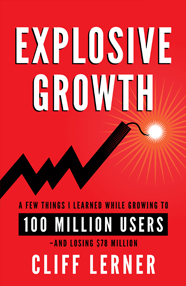
He has appeared on CNBC, Bloomberg, and Fortune, and his work has been featured in The Wall Street Journal and The New York Times. He is the author of Explosive Growth: A Few Things I Learned While Growing to 100 Million Users and Losing $78 Million.
★ Scribe Case Study
Cliff Lerner Turned His Business Failures into the Entrepreneurship Playbook
Cliff Lerner, one of the fathers of online dating, used his $100 million mistakes with Snap Interactive to write the entrepreneur playbook.
📚 Books by Cliff Lerner
Transcript
[0:00:37] Charlie Hoehn: You’re listening to Author Hour, enlightening conversations about books with the authors who wrote them. I’m Charlie Hoehn. Today’s episode is with Cliff Learner, author of Explosive Growth. Years before Tinder and Bumble were popular, there was Are You Interested? The biggest dating app on Facebook. That was Cliff’s startup and he grew it to more than 100 million users. With very little funding, Cliff figured out ways to make his startup go viral. He’s not some self-proclaimed growth hacker, he’s a founder whose strategies actually led to signing up 100,000 new users a day, without spending any money on advertising. Cliff’s startup became so successful that investors like Mark Cuban, Tim Ferriss and Gary Vaynerchuk were approaching him. His company even went public and then Cliff lost 78 million dollars. In this episode, you’re going to get a master’s degree in building a fast growing tech startup. Cliff is going to teach you how to create a remarkable product, how to implement viral growth strategies and how he acquired 100 million users. And, you might notice that Cliff is a bit like Shawn Parker, the guy who founded Napster and helped Mark Zuckerberg make Facebook successful. If you like the movie The Social Network, you’re going to love this episode. Now, here is our conversation with Cliff Lerner.
[0:02:37] Cliff Lerner: I was working on Wall Street at the firm formerly known as Leeman Brothers and lived in Manhattan on 13th and 4th and my job required me to get to the office very early. I remember one morning, I would get – wakeup, go outside and get a taxi and I literally got into a fight, a screaming match with a bunch of drunk kids who were coming out of what was one of the top nightclubs in Manhattan. This is 4:30 in the morning. You know, on one hand, I didn’t want to be that kid but I was at the time about 25 years old and I realized, I went to bed at 8:00 the night before. I’m waking up at four in the morning, fighting these kids for 4th at a taxi at 4:30, this just wasn’t a life I needed to control my own destiny.
[0:03:23] Charlie Hoehn: Wow.
[0:03:24] Cliff Lerner: Yeah, I mean, at that point, I realized, I need to control my own destiny, I have to start to think of a way to build my own business and come up with an idea
[0:03:34] Charlie Hoehn: Awesome, you were working on Wall Street and you were in the cycle of this high-pressure job. How did you start to come up with business ideas?
[0:03:48] Cliff Lerner: I realized pretty early on, just talking to friends and reading lots of books that it really makes sense to start a business of something I was going to be a user with. Something I would enjoy. I was just keeping my eyes and ears open and online dating was just starting to become a thing, this is around 2004/2005. For those who can recall, not to age myself, but Myspace was actually the site that everyone was using for online dating at the time.
[0:04:16] Charlie Hoehn: Right, that’s just when Facebook started expanding into other colleges outside of the ivy league network, right? It was a long time ago.
[0:04:25] Cliff Lerner: Long time ago, Facebook was just a blip on the radar for most. I wouldn’t hear of it for another three years pretty much. I sat in between two very attractive women, their job was in sales and basically their role was to absorb information from the analyst, from the traders all day long and to go out with potential clients or existing clients and share the best trading ideas for the firms and with their business What frequently would happen is, they would have these meetings most nights, it would cancelled last minute and I discreetly would observe that they would spend the last few hours of the work day on match.com trying to get dates because they were all ready to go out, got all dressed up and now they have nowhere to go. They never were successful and it became pretty clear to me, that these very attractive, intelligent women were trying to find dates within a few hours and couldn’t. A, there was a need for it, and B, the best most popular site of the world at the time was not fulfilling that need. Yeah, that’s where I really started to come up with the idea, if I can come up with a dating site or a concept where you can get dates very quickly, quality dates, I’d have my idea and I actually spoke to those women about it and they thought it would be perfect for them. That really got the juices flowing on building a dating site that cater towards busy professionals.
[0:05:57] Charlie Hoehn: Certainly at that time I’d imagine there were other people thinking sort of in the same vein, what’s his name? Pincus? Is he the guy who started Plenty A Fish and that sort of thing?
[0:06:12] Cliff Lerner: Marcus is actually the name of Plenty A Fish. Yeah, you know, it’s funny because all of the dating sites when you look back had something really unique that made them grow. Plenty A Fish at the time was, they had marked themselves as the first free dating site and they got very large based on that and also, he was a brilliant entrepreneur. He basically invented the long tail of search engine marketing, not search engine, of SEO. Search engine optimization. That’s how they were able to grow. But besides that, 2004, 2005. It was pretty much a game of Yahoo personals and match.com just spending money on TV ads with sites that weren’t different from anything else out there.
[0:07:00] Charlie Hoehn: Right. You were really innovative in the space. You were at the cutting edge of a lot of things but take me back to the early days when you were first getting started. How did you start to build the solution that wasn’t available for these women on Wall Street?
[0:07:19] Cliff Lerner: Right, the idea I came up with was pretty easy and the way I was able to come to it specifically was, I spoke to all my friends who were using online dating sites and they agreed that it was such a tedious process to find a date. Back in the day, you would send an email, three days later, there’s a one in a hundred chance that the woman bored you back. Then you’d setup a phone call and three phone calls later and three weeks later, you’d have your first date, that’s how it worked. Really time intensive, very tedious, inefficient. You know, what became clear is if there was a way where you can indicate when you’re free to go out and a product can match you up with people who were free the same time, it would skip all of that hard work. The idea of what’s called I Am Free Tonight, it was basically who, what, when and where. You would say, whether it’s you or you and a friend, your zip code for a location, what you wanted to do such as see a movie, go to a concert and then a date. That was it, then we’d start spitting out emails of people who matched our search criteria who were free to go out. You know, the one other thing I realized too is, I didn’t have really a budget to work with, I needed an idea that would be viral and grow. At first I thought, “I have such a great idea, if you build it, they will come” and I learned the hard way that’s not true but what did work is, I introduced what’s called the wing man concept back in 2005. That people were really scared, this might sound crazy today but people were terrified to meet a stranger they met online at a bar.
[0:09:00] Charlie Hoehn: Yes they were.
[0:09:02] Cliff Lerner: They were terrified, this was the top headlines in the online dating space. Is it dangerous? You know, you’ve just exchanged messages, how can you meet a stranger at the bar? This seemed so bizarre to me because when you go to a bar, all you’re doing is meeting strangers. When you find that person online first, there’s actually a complete digital record of who they are, there’s a very low likelihood that you know, if something terrible to happen, the authorities wouldn’t be able to track them down. That just seemed bizarre to me but I thought, “Okay. If this is a problem, there’s safety in numbers, what if I build a feature where you can actually bring your friend into your profile, have a group file profile and search for others in groups to go out with.” The beauty of this idea was, in order for you to access the wing man concept, you had to bring your friend on to the site.
[0:09:59] Charlie Hoehn: Wow, I mean, it’s crazy hearing about all this stuff because it’s so hard to maintain the perspective that like, back then, none of this had occurred anywhere online, right? People weren’t using iPhone apps to go on dates, they were using their desktop browser. This was all new and innovative and what happened when you integrated that new feature into your site?
[0:10:28] Cliff Lerner: You know, it’s pretty interesting, it started to work in that we saw guys, started to invite their friends to join their profile and build a group file profile. Women did not however. What we learned pretty quickly was, although the feature had a lot of the key concepts to grow virally. We overlooked or learned the hard way one key aspect and the timing simply wasn’t right. Women would not – the taboo of online dating sites was too hard to overcome. Women simply did not want to out themselves to their friends on an online dating site, so they would not use the feature. You know, that actually really lasted until probably I’d argue Tinder where people were still really reluctant especially females to tell their friends or openly talk about they’re using an online dating site. Whereas today, they’re not. I mean, people are pretty open about it, it’s not are you using an online dating site, it’s which apps are you using? But back then, especially women, it was viewed as though there’s something wrong with you and they would not tell their friends about the site. It worked for men but not for women.
[0:11:38] Charlie Hoehn: How did you grow your userbase? I know that worked for you but how many users did that really add to the service and when did you really feel like “Wow, not only do we have traction, we got some real momentum going.”
[0:11:54] Cliff Lerner: You know, in those days, good growth, if you weren’t paying for it was a few hundred users a day. We weren’t getting that. Or, when we did get that, whether it be through a burst of this wingman feature and we were pretty good at getting press. The users wouldn’t come back and that’s when I started to say to myself, “Maybe this idea or product just isn’t as good as I think but the clock’s ticking, the money’s running out. I need something better to grow a lot quicker and really soon.” I just started looking around for opportunities. I cut all of our spending on marketing, I knew it just wouldn’t going to cut it, going to cut it to get –
[0:12:34] Charlie Hoehn: how much were you spending?
[0:12:37] Cliff Lerner: I mean, we only had a couple of hundred thousand in the bank so on the marketing budget was probably about half of that. But I knew that getting a hundred users every day or a couple of hundred, this wasn’t going to do the job. I also saw that users aren’t coming back and it wasn’t clear to me if the network effect was taking in. Meaning, I just didn’t have enough other users on the site to keep people happy or maybe the idea just wasn’t good enough but I knew there was a problem. I basically just cut the burn of the company, how much cash we were spending to buy time and started to look what ultimately, I would term as a growth rocket which is basically some idea or concept that I could massively grow the audience. What happened in 2007 and money was really close to running out. I read about this site that was going to open up what they were calling an API platform and what that meant was, any company can build an app and users can invite their friends on this site and this site was called Facebook. You know, I asked my friends about it, no one had heard of Facebook, it was still really only big on the colleges. I only had one programmer and I was looking at this and reading through the documentation and what became clear was, you had a user who had a bunch of friends and they were giving you the ability for that user to reach out to their friends. I thought to myself, the one thing I had learned in building, I Am Free Tonight is if you can take an action, people are doing in the real world and make it a lot easier for them to do that online, you probably have a great product The way people meet in the real world is generally through friends introducing them to someone else to go out with. Obviously, at that point in time, there was no dating site that – or really, any site that knew who your friends were, let alone a dating site. I had a feeling that there was something here, I called up my programmer, I sent him the link. I said, “I want you to build a Facebook app” and he said, “What’s a Facebook app?” I said, “I don’t know, figure it out.” He locked himself in the bottom of a pasta factory, that’s actually where our office was at the time. For a week, and came back to me and said, “Okay, here’s what I figured out. I put our site, Iamfreetonight.com on Facebook so now users can see it, is that what you want?”
[0:15:11] Charlie Hoehn: I said, “I think so, sounds pretty good” and the next day, we got about 5,000 users. Right. This was I believe around May/June 2007 and the reason we got so many users is, back then, when the platform just launched, there weren’t many apps in the app store and apps were so unique to users, that they were just installing every app on Facebook. I thought to myself, “Holy-Moley. We spent two years building I Am Free Tonight and the best we got was a couple of hundred users in one day. We don’t even know what Facebook is and in one week, we got 5,000 users.” I told him, “Shut down I Am Free Tonight, we’re going all in on Facebook. I don’t know exactly why, I just have a feeling. If we get 5,000 users existing, there’s something special going on here.” To tell you the truth, investors started calling me. I started my company with my brother, my family was involved, they thought I was out of my mind, how do you shut something down you spent two years and invested a few hundred thousand hours in for something you’ve invested a week in? But you know, that’s kind of I think where your gut kind of takes over and when you see something that you’ve just never seen before, you’ve got to go all in.
[0:16:35] Cliff Lerner: Yeah.
[0:16:36] Charlie Hoehn: Was it hard to shut that down for you or were you like, “This is such an easy decision after seeing the growth?”
[0:16:45] Cliff Lerner: It was hard for me to explain it to everyone else including my programmer at that time who have bent the bulk of his two years building that site. Because I didn’t have a great reason as to why I thought this was the answer. What I knew was that we saw a few other apps that weren’t big companies, they were just individual developers, getting 30,000 users a day. I said to everyone, “If I’m worth half of what I think I am and the rest of the team is as well. There is no reason we can’t do what they’re doing and if can get the 30,000 users a day, we are the fastest dating site in the world and I need to eliminate all distractions. And our existing website is a distraction.”
[0:17:29] Charlie Hoehn: That clarity really served you and it sounds like this is a principle from your book is finding the growth rocket, a great growth strategy trumps a great product and you had built a great product but you’d found the growth rocket.
[0:17:47] Cliff Lerner: Exactly. I had seen at that time how the other dating sites had grown and looking back – what’s interesting is you have a lot of users, Tinder, Bumble, Plenty A Fish, Are You Interested, with the app world and we’re referring to, that became the largest dating app on Facebook. Zeus. In all honesty, there really isn’t that much differentiation between a lot of these apps and a thousand other apps. What truly made them great is a brilliant, unique role strategy and you know, I start to figure that out and I thought, as soon as we got on Facebook and all of a sudden we’re getting all these users, we had a growth rocket that could get our site in front of a bunch of people and they were using our features for the first time and coming back.
[0:18:34] Charlie Hoehn: Yeah, I want to stay on your story and your trajectory but a quick side bar I’d like to make, is one of the things I loved in your book is you talked about the growth strategies of your eventual competitors of Tinder, Bumble. Can you break down how they got their start because I thought, it was really intelligent and fascinating that pretty much any startup can incorporate into their marketing strategy.
[0:19:04] Cliff Lerner: Right. I think what makes them all so interesting is that each one was very unique, different, probably can’t be replicated by anybody else but with predicated upon not having to spend a lot of money, but being really creative, hungry and trying a bunch of things that complimented the product. For example, let’s talk – I’ll start with us, Are You Interested? When we put it on Facebook, what made me so excited is the ability to reach out to your friends. That just had never been done on dating, that’s how people met in the real world. One of the very first features we built was the ability to quickly swipe, where you view one profile at a time, similar to the tinder interface right now, we did this all back then and you can indicate very simply, are you interested? Yes or no on each one of your friends. That would send an invite to that friend on Facebook to see if you like them. And we would only reel if it was a match, if the friend liked you back, it’s called a double-blind match in online dating. What happened is, I would go through my list of friends, click yes on every girl, just because I wanted to see if they like me back. They would get an invite, they would want to see if I like them back, so they would click yes on me, we’d all be matched, everyone was on the site, boom. The point being, that functionality was really perfect for the platform of what’s now known as Facebook at that time to integrate your friends. You know, another example is, let’s look at tinder and how really they blew up. They actually were living in obscurity for a little bit, part of an incubator that was shut down, it was the last surviving product and they had this hail Mary marketing plan of I have a feeling, if we throw a party at some college campus, this could work. So many people have tried that but the execution was brilliant. They went around and found the influencers on campus, the most social people, the best looking and they all put them into a room. All the attracted social girls and then invited all the good looking influential guys and said, they had to download the tinder app. Boom, you had a hundred guys and girls download the app at the same time in the same room, everyone’s matching with each other, by the end of the night, the entire campus had it.
[0:21:27] Charlie Hoehn: Wow.
[0:21:29] Cliff Lerner: Yup. You know, what made that work so well is the interface of tinder, the GPS technology of showing people who were closest to you and getting a concentration of people all on at the same time talking.
[0:21:42] Charlie Hoehn: Yeah, let’s distill this into kind of a practical strategic lesson that you could give a startup. Is it simply follow that formula or is there a bigger picture thing that you would advise founders to do?
[0:21:58] Cliff Lerner: Right, I like to first think about what’s not going to work and that always helps me think about because that’s how I talk to other entrepreneur and give them advice about this. What’s not going to work is building a great product and just thinking use the four com. What’s not going to work is building a great product and think the press is going to write about it and users will come. What’s not going to work is spending a bunch of money or copying someone else’s strategy such as tinder’s or ours that did work. What is going to work is saying, I need to get a really large amount of users and only focusing towards ideas that can really grow massively very rapidly and then trying a bunch of things. Because what that does do immediately is mean, anything that cost a lot of money is out the door, because as a startup, you want to have money, you have to be creative. Now, what you saw with us and what you’re seeing with a lot of products is, the first place I’d start and I think the opportunity is going every day, building on top of platforms. Even the large platforms, whether it’s still Facebook, or Instagram or snapchat, there is still so many opportunities and almost every time you read about and expose a product they figured out a way to integrate into the large platforms. I would just advice , those opportunities are growing every day and it’s really just about being hungry and being creative.
[0:23:19] Charlie Hoehn: It’s not just building on top of a platform, it’s going where people already are, where your users, the people who are most likely to use your product are already doing something fairly similar, right?
[0:23:32] Cliff Lerner: Exactly. I think before apps and before most businesses were done online, they used to say, you know, in real estate, in business, location is everything. I think what you say is dead right. In these days, location is where are the users. Go to them, figure out a way to leverage wherever they are and build something that’s interesting for them.
[0:23:54] Charlie Hoehn: Yeah, I mean, people forget that PayPal wasn’t a standalone product, it was originally built to help people on eBay, right?
[0:24:04] Cliff Lerner: That’s a perfect example, exactly. It’s interesting you bring up a product that in today’s terms would be considered ancient but there were platforms back then and PayPal as you just eluded to, many people don’t remember, they were able to – they had to pivot a few times and ultimately figured out by building a feature on top of eBay, they could grow massively.
[0:24:26] Charlie Hoehn: Yeah. Let’s get back to your story. You’re at this point now where Facebook as a platform has made your service take off and now you’re getting 5,000 users a day and I’d imagine that’s growing very quickly. At what point were you like, we have made it.
[0:24:51] Cliff Lerner: Right. Although it was growing quickly, there were other apps that were growing even quicker that had even more users. I knew that this was a mad rush and at some point, something would happen that would make it a lot harder to grow. This just got us hungrier to figure out how do we get such a big lead before the match.com’s of the world we come to this idea. That’s where we really learned, how to take advantage of the opportunities on Facebook to go virally but one of the key things we learned very early on was copy. Meaning, the words that you use to communicate to your users have such a massive impact and I’ll give a very quick example. We’re growing around 5,000 users per day and we started to build at the time, we didn’t know what we were building but what you would call today, a robust AB testing framework where we could easily test five to 10 different landing pages for our users. The way Facebook apps worked then, if you want to grow virally, is you can ask the user to invite up to 20 of their friends. At first, we just were saying, invite up to 20 friends and some people did. Between that and being in the app directory, that got us a few thousand users a day. Then we started running a whole bunch of different tests. We realized that tiny little changes can make all the difference in the world and ultimately, at our peak, there was one little change we made that made us grow from around 10 to 15,000 users a day to 100,000 users a day. The lesson we learned and the change we made was that you need to sell the benefit, not the feature. The feature we started to highlight in our text was invite more friends and get higher results or higher placement in our search results. That was the feature. But what the benefit was, is that by being placed higher in the search results, you would get more matches. By getting more matches, you would get more messages. We started iterating on the text and ultimately said, invite 20 friends and get up to 10 times more matches. Boom, that was the benefit, that hit home to the users. 100,000 users in a day. I think the best example is, when Steve Jobs introduced the original iPod, the slogan he used was 1,000 songs in your pocket, that’s the benefit. Now, the feature was a five-gigabyte hard drive but no one’s buying something because the marketing says five gigabyte hard drive. That doesn’t tell you why that user is getting value but a thousand songs in your pocket does.
[0:27:36] Charlie Hoehn: Wow. That’s really profound and you see it all the time, thinking that they’re writing good copy and selling properly but it’s really just like, this is a feature, there’s nothing really special about this and I’m looking at Facebook’s home page, their signup page. The main headline is, connect with friends and the world around you on Facebook. It’s free and always will be. Share what’s new in your life and you know, it’s not – you can use the add a friend feature or you can use the search bar to enter in your friend’s email address and we’ll find that friend for you, it’s nothing like that. It’s just the clear, what is this person really looking for, what’s the result at the end, right? Is that the best way to explain the benefit is like you have to nail what the exact result that person is looking for?
[0:28:42] Cliff Lerner: Yes, exactly. The way to get at the right answer is to keep asking yourself why. In our example, first we started to say, get priority placement in search results. Why? Well that would get the person’s profile showed more. Why? Because that will get that person more attention. Why? Because that will get them more matches. Why does that matter? Because more matches means more messages. Why does that matter? Because that’s what users wants on a dating site. You know, there’s something called the five Y test. If you keep getting through the Y.
[0:29:21] Charlie Hoehn: Yeah, I’m just thinking, if you keep drilling into the Y, it could lead to some funny answers like they want those messages because they’re lonely. Why? You keep drilling. How do you know when you’ve hit gold?
[0:29:37] Cliff Lerner: it’s funny you said that, we actually went through that exercise and this is jumping around a little bit when we were building our mission statement. We went through that exercise and what we came back with is eliminate loneliness.
[0:29:48] Charlie Hoehn: Yeah.
[0:29:51] Cliff Lerner: You kind of just know, because that’s truly the thing that if the reason your customers or yourself use that product, right? In that exercise for dating, when we came up with get 10 times more matches or 10 times more messages, that’s why I’m using a dating site. Now, of course, you could ultimately extrapolate that even more. Maybe for guys who are 23 is, you’ll get laid more, right? You know, there might be some products where that is the benefit ultimately but if you don’t know when you’ve gotten there, I think you got big problems. But, as you were saying earlier, even a lot of the best products today still have really bad copy and are selling the feature, not the benefit. I think to sum it up, the benefit is, what is that thing that users are ultimately getting value out of your product? You know, make sure you’re making that clear.
[0:30:51] Charlie Hoehn: One of the things that I loved about your book in regards to this topic is you say there is a gold mine in your company and that is your customer service emails.
[0:31:03] Cliff Lerner: Yeah.
[0:31:03] Charlie Hoehn: Can you talk about that?
[0:31:05] Cliff Lerner: Absolutely. I made a habit of reading every single customer service email and I wasn’t sure why at the time except I just – instinctively thought, I want to know what they’re saying, I want to know what they like, I want to know what they don’t like, of course, it’s pretty brutal and I understand why people don’t because even if you’ve got a product that’s doing well, most people simply complain. Especially on a dating site, not many people are going to say hey, it worked, I met someone. I was reading and we would get a few hundred a day and I read one and it said something to the effect of, thank you so much for starting the are you interested app. I was browsing forever and I saw a friend of mine and I liked them, then the next day, I logged in and it said we’re a match that they like me back. Then we were out in the real world, go figure and just catching up and grabbing a drink and they were drunk and they were joking about the fact that they became a match on are you interested. Just by talking about it, one of them kind of said to the other, I kind of do like you, how do you feel? The other’s like, I do too. This person wrote, they now have been dating for several weeks. What I realized is, wow, most of the emails we were getting were basically complaints about features or bugs. Here is someone who took the time to write about a beautiful amazing experience that was really actually hard to happen at the time because friends weren’t treated separately in the search results. They were mixed in with every other user. I thought to myself, how cool is that? That this was a friend in real life and what I then did is I took that information and I said, let’s pull out all the friends from his search result and put them into their own browser. Basically, just called your friends, very simple. There’s a concept, Seth Godden, called the purple cow and it’s basically, your product needs to be remarkable and what it means, it’s literally worthy of remarks, something that makes it so unique and so different that people want to talk about it. I thought, wow, here it is. We have the ability to show just your friends and search results and reveal which ones like you. No product could possibly do that until Facebook came along. That’s ultimately what made this product take off. One of the things that we were testing in the invite flow that also led to 100,000 users is, not only should you invite 20 friends to get higher placement and get more matches but invite 20 friends to see which of your friends like you. That’s really compelling and to actually fast forward, there was an app Facebook bought last week called TBH. To be honest. It became the largest app in the app store overnight. One of the key things they did was going back to that time tested theory of people really want to know who likes them and they made it an anonymous feature, the whole app was based on anonymity where you can see if we crush someone and they give you hints on who liked you. This was the same thing back then. Yeah.
[0:34:29] Charlie Hoehn: Yeah, what I’m noticing Cliff is that it sounds like you had a real hunger for testing things, for giving things a shot and you really love the process of learning what works and what doesn’t and you have like this almost like the light or glee in your voice when you talk about this stuff. You can tell you really loved uncovering these insights that eventually permeated through a lot of the apps and especially the dating apps online. There’s a bunch of stuff in your book that I took notes on but I think it’s hard to capture that in writing sometimes until you hear the person’s voice. I just wanted to comment on that.
[0:35:30] Cliff Lerner: I was going to say, I think I got one other story that even builds upon what you just said.
[0:35:34] Charlie Hoehn: Yeah.
[0:35:36] Cliff Lerner: You’re right, we learned through the testing the copy that the faster we could test, the faster we could learn, the faster we’d grow and beat our competitors and you know, there became a whole movement, the lean startup. I believe in that 100%, you’ve got to be willing to quickly put your ideas and features in front of others but what’s also very compelling about that or what will make that work a lot better is, really empowering your entire organization. We found over and over that the best ideas came from the people who weren’t paid to come up with ideas and you’ve got to provide a way to empower them. I’ll give you a fun little example. We were testing a feature and I was sitting next to our programmer, bulk testing it before we released it. The interface of the app is with similar to the swiping apps today and as we’re testing it, I noticed every single profile result was a beautiful blond hair, blue eyed woman. I said to him, your search results look a little different than mine, am I crazy? He said to me, don’t get mad, I’m like, I don’t get mad, what did you do? He goes, I really am in appreciation for attractive things, especially attractive women and a lot of our users re not the best looking. I built my own filter that only showed me good looking women. I go, that’s interesting, how does this work? It’s actually quite simple. Since the app is based on swiping one way or the other, based on the range show of people who clicked yes versus no, I can pretty very easily tell which users were perceived as physically attractive. I said, that is amazing or the worst idea or most offensive idea I’ve ever heard. I’m not sure, how long will it take for you to put this live because I can get it live tomorrow, I go, great, put live, call it the hottie feature and charge $5 a week. I don’t remember the exact number but it’s very easy, we made a few million dollars off of that.
[0:37:51] Charlie Hoehn: Wow.
[0:37:54] Cliff Lerner: From that, I started to hold a monthly brainstorm that the entire company had to attend that was basically, tell me any ideas you have and nearly every great idea ultimately came from people whose job it wasn’t to come up with ideas.
[0:38:08] Charlie Hoehn: Gosh, that is something I wish every single company on the planet would implement. Because the people at the top lose touch, they forget you know, they’re so close to it or they get so caught up in the day today of maintaining and growing and whatever that you forget that there’s all these opportunities from the people who really care about your product. That’s awesome.
[0:38:33] Cliff Lerner: Yeah, I mean, that is so true, the bigger your product or company gets, the m ore disconnected the decision making leaders are from our customers. When you think about it, it’s so twisted and backwards. Who are the only people in the organization who truly have a direct line and talk to the customers regularly. That’s your customer service team. Guess who gets paid the least amount of money, the customer service team. Guess who has the most barriers and blockades or a lot of the communication to the decision makers, the customer service team. I mean, you have just uncovered a big problem with organizations and the one way we got around it is we actually start requiring every employee to spend on hour a month with the customer service team, reading and responding to emails and listen to phone calls. Another thing I did and which I would urge every founder CEO, entrepreneur were to do is it becomes impossible to read every email as your business grows. But, you can have someone summarize them into the five or six most written about topics each week and then just call out anything unique interesting and summarize it all for you. That’s what I did to make sure I didn’t lose touch.
[0:39:52] Charlie Hoehn: Author Hour is sponsored by Book in a Box. For anyone who has a great idea for a book but doesn’t have the time or patience to sit down and type it out, Book in a Box has created a new way to help you painlessly publish your book. Instead of sitting at a computer and typing for a year, hoping everything works out, Book in a Box takes you through a structured interview process that gets your ideas out of your head and into a book in just a few months. To learn more, head over to Bookinabox.com and fill out the form at the bottom of the page. Don’t let another year go by where you put off writing your book. I love that. Now in the book you lay out three metrics that really matter for startups and these I thought were really, really, I mean just priceless because we tend to – obviously there are important things, super important things like profitability and everything but you called out a few metrics that for tech startups especially that need to grow in order to survive, these are essential. What are those metrics?
[0:41:06] Cliff Lerner: Right and you know, you bring up profitability. Everyone wants to talk about growth but the problems with these metrics is that one, you need to have a lot of users before they matter. Two, when they’re not working, they don’t tell you anything about how to fix it and they’re likely going to lead you down the wrong path.
[0:41:26] Charlie Hoehn: Well just a quick note on that Cliff, just for this particular type of company, right? Like profitability obviously can make sense for companies with just a few clients too but for the types of companies you’re describing, the fast growing startups.
[0:41:42] Cliff Lerner: Right, this is mostly for startups I’m referring to although I would still argue these metrics I am about to mention are crucial for any business but the key thing is they really tell you the why and if you don’t focus on these metrics first, you’ll ultimately going to die and the three metrics are retention, your USP meaning unique selling proposition and the net promoter score and let me just tell you about why these metrics are so important.
[0:42:11] Charlie Hoehn: And by the way, I’ve never heard about the unique selling proposition as a metric before. So this is interesting, yeah go ahead.
[0:42:18] Cliff Lerner: Yeah that is one I came up on my own and it really was inspired again by Seth Godin and his Purple Cal concept because if a product is really going to grow and achieve explosive growth, it’s got to be unique special remarkable which means it’s got to grow through word of mouth. In order for something to grow by word of mouth there has to be something so unique about your product that nearly every user within seconds of using your product comes away with that same message. And I realize that there should be a way to measure this and when are you interested at some point it’s usage starts to decline a little and I went back to my basics and in the early days it became known as the Facebook dating app. It was unique because we did so many things to integrate into Facebook that are common today such as one click and you have a profile, one click and all your photos are imported. You can see your mutual friends, mutual interest. You can match with friends, those were all unique and we became known as the Facebook dating app. So what we did is we asked the question to our users, “In one sentence how would you describe this product to your friends?” and if you’ve truly got a unique selling proposition at least half of the responses will say the same exact thing. In the early days we saw they did. They all said this is the Facebook dating app. When our usage and metrics started to decline, we probably got 80 different answers when we asked 80 different people. So you definitely can measure how unique your product is with that one simple question, “How would you describe this product to your friends?” and if half of the users say the same thing, you’re sitting in really good shape. Your product is unique and it’s going to take off. Now, going to retention this I learned very quote day from I am free tonight. I thought it was the greatest thing in the world. We were getting users but they weren’t coming back and what does retention ultimately say? It basically tells you everything you need to know in terms of what users feel about your product. You can spend money on marketing to get users to sign up. You can spam the crap out of them with notifications and emails to get them to come back once or twice but you can’t spend your way to get them to come back one week 30, 60, 90 days later. The only thing that is going to get them to come back is because they really like your product and so few entrepreneurs they are so obsessed with focusing on growth at the expense of retention. They might win for a little because they are not looking at retention and they wake up and everyone is gone but I can tell you this, if your retention is focused on from day one and people are coming back for your product, you’ll be able to get growth. Whether it’s people start telling others about your product, you can raise money so retention is metric number two and then of course, net promoter score. It’s amazing to me how so few people regularly measure this or even familiar with how it’s measured. I mean the net promoter score is simply asking your users, “On a scale of one to 10, how likely are you to recommend or tell your friends about this product?” and you take the promoters, a promoter being someone who ranks it at eight, nine or 10 and subtract it from the detractor, so someone who says one, two or three. I actually argue you shouldn’t subtract it from detractors. The only thing that matters is what percent of your users are promoters and what this is basically telling you is, do your customers love your product enough to tell their friends and the reason why this is so powerful is you can get this with a few thousand users and your customers aren’t going to lie in a survey like this and if at least 50% of them aren’t giving you an eight, nine or 10 well guess what? If you now go out there and start spending the money on marketing, what you’re literary doing is saying, “Potential customers come check out my shitty product that you’re not going to tell your friends about” right? But I can tell you this, if people are saying they are going to tell their friends about it and your net promoter score is good, game over and kind of going back to your original comments about profitability and such, these things are early indicators and can be solved for well before that. Whereas if you are not measuring if you have a USP, you’re not measuring retention or net promoter score, any profitability you have at some point is going to go away and what you’ll probably going to do is first hiring someone in your marketing department. Cut a couple of cost, thinking you need a better marketing team and your marketing team is going to be sitting there with the critical information because they’ll realize, “Crap! I’m really good at my job but no one wants to use this product because it is shitty”. So these are really the three things I learned very early on. If you could focus on retention whether your product is unique and the net promoter score get these metrics aligned, you are going to be sitting on some explosive growth pretty soon.
[0:47:17] Charlie Hoehn: Yeah, so having that focus in the few metrics that actually mattered was critical but also picking one goal I know was huge for you and your strategy. Can you talk about that and the result it had?
[0:47:31] Cliff Lerner: Are you interested to start to grow like crazy the largest Facebook dating app? And then the world started to change. The dingoes of the world started to raise a ton of money. In our space, Zeus entered the dating world and it raised a lot of money and Facebook made it really hard to grow. They changed the rules of the platform and our performance started to suffer and when things start to suffer, you start to press a little and have all of these different goals and priorities and they’re shifting. And I woke up one day and realized, “Wow, we literary have over 20 different goals on our KPR report”. Our KPR report being in our weekly all hands meeting, we have a little deck that showed our key performance indicators and the goals and we had over 20 and of course naturally, if you’re trying to focus on 20 things, you focus on nothing and we were really desperate and I thought, “There’s got to be a better way to do this” and of course, I started reading lots of books. Jim Collins books are just fantastic for any entrepreneur.
[0:48:37] Charlie Hoehn: His Good to Great.
[0:48:38] Cliff Lerner: Oh man yes, Good to Great, Build to Last. There are so many crucial learnings but it might have been Good to Great, I’m not sure which one but it became clear that there’s generally one particular goal that if you get that right, everything else will fall into line and when I looked at my goals, we were a dating app. One goal was, more time on site, more email clicks, more average revenue previews are on mobile, better SEO on web and all of these things they were all in some way related. And what became clear to me is I started to ask then the why question, the why question, the why question, what really keeps people coming back to our product and what keeps them coming back to a dating site more than anything, at this point in time it wasn’t getting that message which was the case in 2007 when we went viral. This was a few years later, we figured that out. Everyone was getting involved with these messages maybe too many messages. The problem was no one was getting replies anymore and we had optimized so well for messages and I think you see these on a lot of the swiping apps today, one of the problem is I have all of these batches but no one writes back to me. So it became clear to me that if we could get more replies to messages, everything else would fall align. More replies means more quality emails which means people coming back to the site more which means they spend more money, everything is solved. So, I eliminated every single goal and challenged the company very aggressive goal, 90 days, we need to go from 80,000 replies a day to a 160,000 double it. Everyone thought I was crazy, “It’s too aggressive we can’t do it” I said, “This is the only thing we are going to work on and the entire company is going to get involved” and what I did is we put together some really fun prizes and there aren’t a lot of lessons on what prizes actually motivate employees because I learned it the hard way. It’s not money. Apparently I’ve seen the Book of Mormon on Broadway and I gave every team 10% of the site to just test any ideas and 90 days later, we were sitting at 400,000 replies a day. A five times increase simply because we focus by one goal and the entire organization galvanized around that and you know one other analogy I can come up with is, I used to play basketball on high school and when you play sports if you have everyone who’s truly committed to the same goals you’ll probably going to win. But if you have one person who’s trying to stuff their stats, who’s not running the play because they take the shot, toward on the shot clock to get points, everything falls apart and I can tell you one other really interesting thing I learned is that as we’re doing this exercise, I started to ask employees one on one, “What do you think the goals of the company are?” and at that time I had about 40 different employees. I got 40, I got 40 different answers. In my head it was so obvious and by having just one goal, everyone knew what that goal was and all of a sudden the conversations at the water fountain weren’t about, “Did you like the episode of The Office last night?” they all were around, “Okay my test increase replies by 12%, we tried this new feature. What are you guys doing?” and it was a beautiful thing.
[0:52:13] Charlie Hoehn: That’s almost like the unique selling proposition for the customer. They need to be able to know what that is in one sentence. Same with the goal for the company, everybody should be able to know it and rattle it off. Otherwise you are pulling in like you said, 40 different directions. So that’s super powerful.
[0:52:35] Cliff Lerner: And it’s funny, now that you brought up Jim Collins it triggered my memory. What I do remember is, I believed he introduced the concept of a BHAG, a big hairy audacious goal, that every organization should have this goal that’s just so overarching that really gets people passion about it and his example of course was when we announced we were going to get up and land on the moon in 10 years, seemed crazy but we did. Now our goal was not quite as ambitious as landing on the moon but it was so clear, so concrete and it really motivated employees to be excited about coming to work the next day because they knew exactly what they were trying to accomplish and what would happen if we got there.
[0:53:25] Charlie Hoehn: Yeah and now that we were thinking about it, I mean there is nothing more demotivating than feeling like you have nothing really to shoot for, nothing clear like it’s just reactive and doing the day to day like keeping everything afloat but you look at all the companies that Elon Musk is a part of right now, they all have crystal clear goals. They have one crystal clear goal, how they get there varies obviously but it’s very clear what they were all trying to accomplish.
[0:53:59] Cliff Lerner: Right and that’s something we also wanted to route around the right time. Our culture started to decline and besides having crystal clear goals that the entire organization is aware of having a really inspiring vision envision is so crucial. We didn’t have one and I learned again through reading some Jim Collins books that if you have an inspiring mission, it becomes something that employees really have a reason to come to work. It attracts the right employees for the right reasons and instead of someone thinking, “I have a job. It’s from nine to five. I hope I get more vacation time” there is something bigger that they’re trying to solve and as I said earlier, we came up with the mission of eliminating loneliness and that the company became so excited about that. It gave them a much bigger reason to come to work because even in a dating site, the work can get mundane from day to day. At the end of the day, a lot of companies are really who’s better at online marketing, who’s better at PR and what we did to enforce that is every week at our meeting we would read a success story. We would encourage our users to tell us their success stories about finding someone and it really led people to understand there’s a reason I am doing this and it’s actually making the world a better place and probably the best example was our lead programmer, Mike Sheraf. Who was just crucial this entire story, we were at a karaoke party. We always did karaoke for events and there was another group talking to us and I overheard a conversation where they said, “So what do you do for the company?” and without even flinching he said, “I bang on the keyboard and babies are made” and I just thought of that how beautiful, right? I mean that’s the power of a compelling and inspirational mission statement does. You’re not thinking, “I am a computer programmer developer writing thousands of lines of code that needs to be tested and the feature might be poled” no. “I type into my computer and at the end of this people are actually meeting and having babies”.
[0:56:06] Charlie Hoehn: That’s beautiful, I love it and you mentioned Cliff that you guys got really good at marketing and PR and we could dedicate an entire podcast to this alone but in the interest of time, what do you think are – can you tell us one or two of your biggest successes in the PR world and what you learned in order to have that massive result that you had.
[0:56:35] Cliff Lerner: Yeah so that became fun for us and we created a playbook internally where it got to the point where every two weeks we’d have a story that would go viral and before we really came up with is look at your industry, look at your competitors, what is something that is controversial or taboo that people talk about? Maybe it’s a stereotype and then of course what I did is I brainstormed the whole company because again, you’ve got to leverage your organization. The best ideas are usually going to come from people who aren’t paid to do it. So I said to them, “What is something controversial? What is something taboo?” and a bunch of people in customer service said, “Huh, they always say in dating that blondes have more fun. Is there a way for us to measure that?” and then our data guy said, “Huh, yeah that’s easy! We can just see based on hair color how often people get liked or skipped and then you run the data”. And then you look at what is the most interesting or controversial data point and that becomes our catchy click bait headline and in that case, it was “Wow blondes have 28% more fun” it’s true. If you’re blonde, you get 28% more likes than the average hair color. Now what’s interesting for guys is bald is beautiful. Bald actually isn’t a bad thing and that became one of our headlines that lead to a viral story.
[0:58:01] Charlie Hoehn: I know, I saw that in your book. I had recently just shaved my head and I was feeling good about that decision.
[0:58:08] Cliff Lerner: Yeah and you know from that it really became just wash, rinse and repeat. Brainstorm, what is something controversial, taboo or interesting. Okay, let’s run the data. Is there an interesting catchy or something you wouldn’t expect that becomes our headline? And then of course, if something starts to work, you could just repurpose that story on a different demographic. So for example sticking to the hair color, well what if we just ran that by city? Now the story becomes relevant for every single city which has their own local paper and then the answer of course for each city is generally different. So now, we have one story that worked nationally but now we have dozens if not hundreds of viral stories on a city level by just narrowing that story down.
[0:58:58] Charlie Hoehn: And that became the BuzzFeed methodology.
[0:59:03] Cliff Lerner: Pretty much. I don’t think it was BuzzFeed but it was a major similar publication that wrote, “Hey everyone who is in marketing PR if you want to know actually how to do it right, look at what these guys are doing. Come up with interesting data and a good product behind it” and they’ve literary wrote that story of doing a case study of how to have good stories go viral.
[0:59:28] Charlie Hoehn: Man, yeah and that alone is worth the cost of the book which sort of lays out exactly like here’s how you get massive PR for your company and it is replicable across industries. So it wasn’t always an upward trajectory for you and your company though. Obviously you guys took a dive and you personally took a dive but before that happened, you IPO’d. Tell me what that was like?
[0:59:57] Cliff Lerner: Right, so a lot of our story is really about doing things differently and I had a Wall Street background and I knew we need to be different and unique and we went public very early on but not in this traditional sense of an IPO today. There is actually a path to go public that very few people know about. It’s called a self-registration and the problem with it is, when you’ve done it and it took about five months for us, no one really knows you exists because you didn’t have a big investment bank and a bunch of investors behind it. And we basically live in obscurity for a few years even when we had the largest dating app on Facebook and we were growing at a 100,000 users per day. So much so that we needed money to grow. I approached over a 100 investors, zero for a 100, got rejected by every one of them. This was before Facebook went public. They just didn’t know what a Facebook app was. They thought an app was a sad excuse for a website and I just couldn’t believe it. I go, “Do you realize that we are growing faster than match? This is the future of dating. Do you know this thing that you call “the Facebook” is going to be one of the most app in most countries in the world?” and you know the lesson there was, no means not now. I’ll go into one of my favorite investor sightings, investors are like jealous ex-girlfriends. The same 100 investors who rejected us four weeks later begged me to invest at 10 times evaluation they rejected us. And what happened was we had a very favorable article come out that we’re the future of online dating. Our stock went from a nickel to $4.5 making the evaluation go from five million to over 80 million and all of these investors were now begging me because someone else had discovered the story and said we were legit.
[1:01:56] Charlie Hoehn: Wow.
[1:01:57] Cliff Lerner: Yeah, so I mean that’s just wild to think about. A hundred investors say no. I would say the lesson is no means not now. Find one investor, one person who believes in your story and then everyone else will line up.
[1:02:12] Charlie Hoehn: Yeah and you didn’t have small investors coming to you. Who were some of the people that were approaching you?
[1:02:19] Cliff Lerner: I mean this was at the time everyone from major hedge funds. I had Goldman Sachs was desperately calling me on speed dial when they saw the story break. Maria Bartiromo was the anchor of CNBC, this was her lead news story one day whereas the week before I was literary going to my friend of a friend of a friend who makes $50,000 a year and saying as a favor, “Could you put in five grand?” and this is how quickly things can change. I remember it might have been Business Insider but a major publication was talking to me running the story and they say, “So how many employees do you have?” and I said, “About 12” and they go, “Oh so 1200”. I go, “No, no 12. We got Mike, we got Wayne, we got Lizardo, we got Brian, we got Carol” they’re like, “Oh” and so you should never give up. No means not now. Investors are like everyone like Alice, they don’t want to be the dumbest person in the room. Meaning they need to see someone else bite first. So really focus on finding that one investor to get to believe in your story instead of trying to make a bunch of them.
[1:03:36] Charlie Hoehn: Yeah. So tell me, there is another lesson that you learned from this time in dealing with investors and suddenly becoming a huge overnight – not overnight but you know a very rapid mega profitability success or evaluation success. You had an opportunity to get really wealthy, from my memory a few times and you turned it down outright. What happened?
[1:04:09] Cliff Lerner: So I’ve got to bring it up. It’s a little painful.
[1:04:12] Charlie Hoehn: And I know.
[1:04:14] Cliff Lerner: Yeah, so being a public company your stock has a value and you can very clearly see how much your stock was worth. When the story broke and we became a very hot story, the stock became what’s called liquid meaning all of a sudden everyone was trading it. So if you wanted to sell it you actually could whereas before, it literary didn’t trade. I mean when I say it didn’t trade, it didn’t trade in the 10th of the 12th prior days to the story breaking and then it trade $2.5 million in shares the next day. So the stock went from a nickel at a high of $4.5. My paper net worth was about $112 million. At the time I’m 32. Now the Facebook movie hadn’t come out yet but I am thinking to myself literary, “Hey I got the fastest growing dating site in the world. No one realizes how big this Facebook thing is going to be. Why should I sell out a $100 million because I am going to be worth a billion literary” that’s the Shawn Parker quote and fortunately, I did have a few friends. Advisers, mentors who are so important who have been there done that, they’re like, “Don’t be an idiot. You don’t need to sell it all but take some money off the table. It’s going to be no harm and you’re going to say thank you. So just take a few million dollars off the table” so we went out there to raise money and I told them I wanted to sell some of my shares and the banker said, “Cliff we would never get this deal done”. I’m like, “No just a few million dollars”. They go, “Cliff, your stock was worthless last week. Your company, no one ever heard off. This might disappear tomorrow. We need the strongest message possible and if we go to the investors saying you wanted to sell some shares personally the story will die” and I listened to them. Now usually when you do a capital raise like that, the stock will trade down because there are all these new investors and shares flooding the market, your people are diluted. Our stock continued to trade up for several more months and I had – it turned out it was a complete lies and the bankers were completely self-motivated that they wouldn’t even try to tell the investors because they knew at the time they could tell they can bully me. I absolutely could have taken money off the table and of course, I continued as this site ultimately and stopped and declined over the next few years, I remain stubborn because I thought: “Wait it was worth a $112 million, now my stake is only $50 million. I need to get it back” and I had many opportunities to sell and by the time I woke up, it pretty much was too late and nearly the entire stake was lost overtime. So my advice is, when it comes to bankers and other and pretty much human beings in general, everyone is looking out for their own interest. Understand their motivations, they are not going to be aligned with yours and understand that. And in this case, I definitely could have taken some money off the table. I never did and it’s really probably my biggest regret in all of this because if I had done that when the company had money a few years later and we had to take a very difficult financing, I could have been the one who put the money on in much friendlier terms if I had sold back then.
[1:07:31] Charlie Hoehn: And in the book, you basically say, “Look opportunities to get rich are rare and if you have one, you should take it”.
Want to Write Your Own Book?
Scribe has helped over 2,000 authors turn their expertise into published books.
Schedule a Free Consult