Paul Dyer: Episode 692
Read the full transcript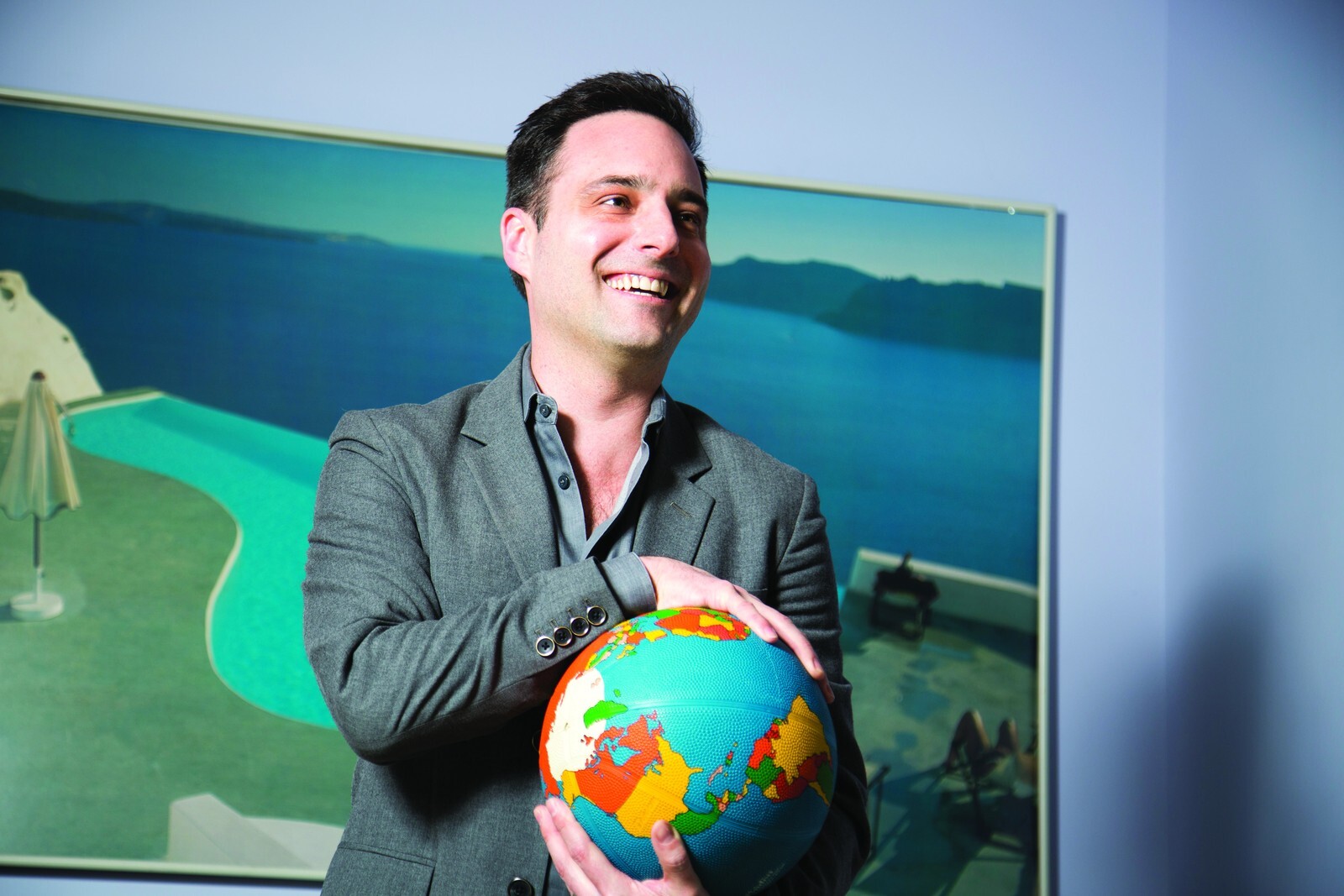
Paul Dyer
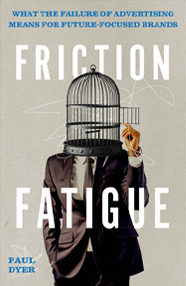
Paul Dyer is the CEO of Lippe Taylor, a digital marketing and public relations firm. An expert at spotting and timing transformative trends, he has directed more than one hundred million dollars of marketing and consulting work over the past fifteen years for companies including Johnson & Johnson, Red Bull, Intel, Nike, Pfizer, Warner Bros, and Verizon. A former PRWeek 40 Under 40 honoree, Paul has held leadership roles spanning social media, analytics, and earned media, and he earned his MBA from the University of Texas. His Wall Street Journal bestselling book, Friction Fatigue: What the Failure of Advertising Means for Future-Focused Brands, examines the failings of big advertising and the remaking of the media landscape.
📚 Books by Paul Dyer
Transcript
[0:00:33] DA: Google and Facebook changed our way of life and, with this transformation, they unleashed a wave of disruption that handed unprecedented power to big advertising. Consumers paid the price as their lives were interrupted and intruded upon and, now, they’re fighting back. There are adblockers, ad-free subscriptions and calls to regulate big advertising’s overreach. In his new book Friction Fatigue, marketing expert, Paul Dyer shows you why advertising is broken and he provides a frictionless marketing framework to help build your brand in an era in which advertising is no longer the answer. With a new wave of pandemic-accelerated disruption, you’ll learn how to grid your business against competitors and lead the pack with fresh marketing strategies. Featuring behind-the-scenes stories and expert insights, this book is your chance to prepare for a future in which the consumer rules. Hey Listeners, my name is Drew Applebaum and I’m excited to be here today with Paul Dyer, author of Friction Fatigue: What the Failure of Advertising Means for Future-Focused Brands, Paul thank you for joining, welcome to The Author Hour Podcast.
[0:01:36] Paul Dyer: Thanks for having me, Drew.
[0:01:37] DA: Let’s kick this off Paul, can you give us a rundown of your professional background?
[0:01:41] Paul Dyer: Sure, I’ve spent pretty much my entire career on the digital and social media side of the marketing industry. Just sort of stumbled into it actually, right out of college. Social media, search engine optimization was a big topic that a lot of companies had on their mind but there weren’t a lot of people yet who had sort of personal experience with the channels, and were also able to explain it in effective ways to more senior people in the marketing world, and so that sort of fell into it. My first sort of real job in that area was as head of social media for a small independent agency based in Los Angeles and, through that experience, got exposed to a lot of big companies and people, I guess, responded to the way I talked about the impact that social media was having on marketing plans around Fortune 500. I got invited into a lot of different meetings, a lot of different rooms I wouldn’t have been able to be in that early in my career otherwise and caught the attention, if you will, of a larger agency called [Vice Com 0:02:42.4] Partners at the time and they recruited me in for a similar job to be their head of, I think it was the E-Media Director. Kind of anything on the Internet was my purview and we grew and grew. Through that experience I was able to work with companies like General Mills, Intel, Nike, Proctor & Gamble, Coca Cola, Red Bull, Warner Brothers, Verizon, you name it. All those experiences, I was working with the senior-most marketers or communications and public relations leads inside those companies. Sometimes even a general council, the legal teams who were trying to figure out if social media posed risks for their company and then, actually, a lot in the pharmaceutical and healthcare space as well. They took note of what was happening, with the consumer brands I mentioned and next thing you knew, I was working with Pfizer, and Sanofi, and Johnson & Johnson doing the same kind of work. That just became my career, you know? Here I am, I’m now CEO at Lippe Taylor group, just a marketing agency based in New York City. We’ve got two companies here that clients work with. One is called Lippe Taylor, “Lippe Taylor Classic,” if you will, and the other is known as 12 Note. We work with companies in the consumer brands, the healthcare, and consumer tech space and they’re all large Fortune 500 companies. We help them with their marketing, their PR, the digital and social media efforts.
[0:04:07] DA: Now, why was now the time to share the stories in the book? You’ve clearly been in the industry and been an expert in this field for a really long time. Did you have an “Aha!” moment? Was there something inspiring or something as simple as you had a little bit of time on your hands because of the COVID situation?
[0:04:22] Paul Dyer: Probably a combination of all of those things and actually, at the very beginning of the book, I think it’s in the introduction, I actually address why now, because this idea of advertising becoming less effective, “the death of advertising” is something that’s been foretold by a lot of people for a long time and you know, I’ve had strong feelings about it myself personally for a long time but that didn’t mean it was time to write a book about it. Over the course of my career, I’ve been, as I mentioned, sort of exposed to really senior decision makers much earlier than you typically would be because of having been the social media expert and so they brought me into meetings I wouldn’t have been in otherwise. When they were all sort of a hand ringing over what they should do about the impact social media was having on their marketing in the business. Some of these companies were totally disrupted or totally caught off guard by crisis or, you know, boycotts or things like that that started in social media. I had a front row seat to how these decision makers were responding to this kind of disruption. Throughout that process, I was sort of gathering stories. I’ve actually had a number of people over time as we would just have, be sharing sort of industry anecdotes and people say, “You got to write these down, these stories have to be in a book.” That didn’t mean again that I had sort of the – that it was the time to write the book. The big change for me actually happened when Michael Bloomberg failed just spectacularly in his run for president and the reason was, is, I’m a political science undergrad and so I’ve always been a political junkie. I watched this happen where the guy spent almost 600 million dollars on advertising and in any other election in the history of the United States, that would have won the presidency. Certainly, would have won your party’s nomination. It was more money than Donald Trump and Hillary Clinton had spent combined in the 2016 election. He clashed out in less than six months. That was just such an obvious and sort of unavoidable example of how advertising is just not pulling the weight it used to pull. That was for me, the moment where I said, “Now is the time.” Then I started pulling together these other trends that had been percolating, things like the move to subscription-based content. For years, we knew that people would never pay for news, right? They expected news to be free and yet, the New York Times now makes more money on subscriptions than it does on advertising revenue. Yet the vast majority of people who have the means are paying for their Spotify subscription. Rather than listening to ads in between their songs like they would on the radio, 150 million people are now paying for those, just their Spotify subscription, just to remove the ads. You’ve got a situation where people are actually paying money just to avoid being exposed to advertising. That was another big part of the story for me. Then finally, right as I was already in the midst of writing this book when a whole lot of changes started happening in Silicon Valley in terms of Apple basically saying to Facebook, “We’re not going to let you track people the same way you used to.” That delivered a crushing blow to Facebook’s advertising platform. Google is saying, “We’re no longer going to allow third-party cookies.” Again, massive disruption how online ads are served and how people attract online. Then finally, you’ve got the big media outlets, their CEOs are all out there now just blatantly saying in their earnings calls, “We now can no longer rely on advertising as our primary source of revenue, we have to become consumer or audience driven companies.” All these things happening together are all within 12 to 18 months of each other was the – this is the moment where it’s really time to talk about this.
[0:08:23] DA: When you were writing the book, in your mind, who exactly were you writing this book for? Is this for senior ad executives, can folks at startups have takeaways from the book?
[0:08:34] Paul Dyer: Well, it’s an interesting question. I don’t know that there are senior ad executives that are going to be thrilled with some of the things that I say in here. There are probably some who will actually quietly agree but I don’t expect them to be posting a lot of kudos on LinkedIn. It is absolutely for a senior marketing executives inside large companies. It is primarily directed at senior marketing executives and senior decision makers, including CEOs and presidents and CFOs who are responsible for resource allocation inside large companies. I think there’s some things that startups could learn or pull from this as well. There’s certainly anecdotes that they might find interesting but a lot of the takeaways from the book are that large companies need to be more like startups. They really – there’s a whole chapter on the dilemmas that are preventing or half preventing meaningful change from taking place and how marketing resources are allocated in these companies, and most of them really apply to large companies more than startups. I actually think also, just after the couple of people that I know personally who have read the book and their responses to it, I think that there’s some interest in this from a consumer standpoint as well. I think there’s advertising has really become a central focus in society in terms of – especially Facebook, in terms of the role that these advertising platforms have played in fake news and in misinformation and bank ruling startups that people didn’t know, they didn’t have an idea that people would pay for. Instead, they just figured, “We’ll come up with a way of serving ads to people and that will be our way of getting revenue until we come up with an idea that people are willing to pay for,” and it just led to this just over abundance of advertising in everybody’s lives. You can’t go to a stadium without being inundated with ads at every turn. You can’t get on the subway without everything being plastered in ads. You sit down on an airplane, you open the seat back tray and there’s an ad on the tray, there’s a screen that you can’t turn off until you’ve watched the ads. It’s everywhere you go, you’re inundated with ads today. I think there’s a lot of people that are feeling this frustration, this fatigue with being advertised to and either from being interrupted or from advertisers who are using their personal data in a way that offends them. I think there’s a lot of consumer interest in this topic right now as well, but the book was certainly written for senior marketing executives.
[0:10:54] DA: You just listed off a lot of the traditional advertising strategies and how folks are reacting to it. We have to talk about the title of the book, there’s “friction” there and there’s “friction fatigue”. You talk about in the book, “frictionless marketing”. Can you define what frictionless marketing is and then maybe if you have any top of mind, some of maybe the top players in the frictionless marketing game right now?
[0:11:18] Paul Dyer: Sure, I mean, I think that the idea behind frictionless marketing is that it’s marketing that you – that sort of fits into your life, right? That you welcome in your life. That could be marketing that does something useful, it can be marketing that aligns with your values and pushes a societal conversation forward, it can be marketing that is just a great experience, it’s just fun or entertaining. What it’s not is there’s two things, there’s two things that traditionally advertising do, they interrupt you or they intrude on your personal data, right? It’s not that, it’s marketing that people respect, enjoy and welcome in their feeds, in their lives, in their commutes, whatever it is. I do think that there are sort of sections of the marketing industry that are more aligned with this way of thinking. I wouldn’t say that there is any company that’s really figured this out and is leading it. We certainly strive for it here at Lippe Taylor, it is – this is a central ethos for us as a company, that doesn’t mean that we always get it right but – and there’s certainly others, and the others I think that tend to be to think more like this are companies that tend to come from either a social media background or a public relations background as supposed to those that that come from advertising background. The reason is, largely because if you come from a social media background, until the last couple of years, where all of a sudden you could put ads anywhere and in fact, you had to put ads, buy ads on Facebook, and Instagram, and YouTube to reach people. The decade before that, you had to really be creative. You had to come up with things that people were willing to share on their feeds publicly. That’s a high bar for a marketing program to be something that people are willing to actually take your video or take whatever it is you’ve done and share it publicly with their friends. That’s a really high bar and so it has to be something that people actually like; it can’t just be an overly promotional message. Social media backgrounds are certainly one area of that and then the other PR backgrounds. People who come from a PR background have spent their whole career trying to figure out, “How do I get somebody else to share this message?” Whether it’s a journalist, a key opinion leader, an influencer, an advocacy group, or a nongovernment organization, that’s really what the art of PR is. It’s very different from the art of advertising, which is you come up with a message and then you know on the back end, you’re going to be able to force people to look at it. You're going to be able to put it in whatever – get their attention with the sporting event or get their attention with a new show and then interrupt them in the middle of it and put your ad there. That’s a whole different philosophy than people who cover PR on social media backgrounds and that is the frictionless concept sort of in a nutshell.
[0:13:58] DA: Are there any top companies out there that you feel like are really doing it well that people might say, “Oh yes, you’re right. I have seen this before.”
[0:14:07] Paul Dyer: There are certainly examples that I call out in the book. What they are typically is, I wouldn’t say that they’re examples where the company is exclusively doing this kind of marketing but, you know, I talk about Patagonia for example and Patagonia had this – you know, they’re clearly on a mission, right? Patagonia as a company has been on a mission to address climate change really since the beginning of the company was founded. They put percent of their profits, you know, of every profit goes into some sort of a purpose campaign to support the environment, things like that. They ran a whole campaign that was targeted just as saying, “Buy less clothing” right? Buy clothing that lasts longer and buy less of it and that’s a message that people are willing to share, whether you buy an ad about it or not, people are passionate about climate change to say, “Wow, this is really cool that a clothing company is telling people to buy less clothing.” During the election, they also did good and again, there is a picture of this in the book but they printed in the back of the tags and shorts, so the actual physical tag in a pair of shorts that you bought would show up at your house and you flip the tag upside down on the back of it, it said, “Vote the assholes out” right next to your backside in your shorts and they explained in their website that by the assholes, they meant politicians that denied climate change, right? Again, that’s not mad. It’s marketing and it aligns with an audience’s values. It certainly doesn’t align everybody’s values but with their audience, it aligns with their values and was inherently something that’s worth talking about and so that’s a great example. You know, other companies I think Nike has done a phenomenal job. They still buy a lot of ads, right? But they’ve also have done a phenomenal job with Colin Kaepernick even though that was an ad but the concept itself was something that was worth talking about and worth sharing and frankly, was shared widely around the world even before the ad ran, so that’s another great example. There is a couple of examples where I sort of compare and contrast companies that are doing both advertising and what I consider frictionless marketing. An example of that would be Dr. Pepper in their sponsorship of college sports. They have a phenomenal ad campaign going, it’s called Fansville. It goes during the college football season. It’s like a nine episode series, it’s practically like watching a television series. They no doubt spent – they’ve probably spent eight figures when you look at the celebrity talent, the production quality, the number of different ads they produced and then the places they’ve put it. They’ve put in eight figures worth of ad spots as well because it runs so often. That is a lot of advertising. They also then do their half-time shows, where at half-time, they have regular college students competing, they’ll like run in a circle and try to throw a football through a big giant Dr. Pepper can and whatever kid wins gets a college scholarship, right? You get to watch it play out right there on television and the kids are thrilled, they’re crying, they’re jumping up and down. You look at the volume of conversation about those two different things, there is far more people talking about "the activation” as I call it, the kids getting college scholarships than they are talking about their TV commercials. These guys have spent tens of millions of dollars on these TV commercials instead of look, you got a good thing going here. You know, you’ve got goodwill and excitement and it’s right there on everybody’s television screens, why aren’t you just doing more of that, you know? Just giving back, just reaching people in a way that excites them and it’s worth talking about as opposed to buying more ads then running really, really expensive TV commercials. Those are just different examples.
[0:17:55] DA: You talk about, in the book, that it’s not the most important thing to be the first to predict something but there’s really skill in finding when the right time to dig into a trend and then influence decision-making after that, you don’t have to be the first advertiser on TikTok or maybe you’re the first advertiser on TikTok that creates a dance that then catches on. What are you seeing now and what are you doing about it?
[0:18:18] Paul Dyer: Well, I would actually say, you almost never want to be the first like, all right? You mean Steve Jobs was almost never the first at anything, right? He saw what was working elsewhere, he identified the right time to jump on a trend, and then he perfected it, right? I think the same applies here is if you’re the first in any new social media channel or with any new marketing tactic, it is very unlikely you’re going to reach a lot of people, but if you are able to watch the trends, watch what people are engaging with and realize this is the time where people are sort of aware of this as a marketing tactic but it hasn’t gotten old yet, that’s exactly the right time you should jump on something. We certainly see an evolution right now away from what was, for many years, polished and perfected advertising-led approach to marketing and that meant your print ads have to be perfect, your TV commercials had to be perfect, your website had to be perfect and your Facebook and Instagram ads had to be perfect, and they all look exactly the same. It was something we called “matching luggage.” You know, you’d have one big advertising concept and everything would look the same. Whether it’s on a billboard or on Instagram or whatever it was, they all look exactly the same. It was “matching luggage,” and that’s just not the way people engage anymore. Our experiences as consumers are being defined by our feeds today, right? Everybody, you look at when Apple pops up and says, “You’ve spent this many hours on your phone this week” and you’re always feeling a little guilty about it, it’s because we are truly, our daily lives are defined by our feeds and our feeds are not consistent looking, right? Everything that scrolls by looks different, it’s a news article, it’s a friend’s post, it’s a video, it’s an image, some of them are dark and filtered, some of them are bright and happy, some are moving, some are static and so that is a whole different way of thinking for marketers and if you look at the best brands in social media today, so you look at, like, Bud Light and if you were to go at Bud Light’s Instagram or Facebook feed and you look at all the posts they put, you put them all in and print them all out and put them on a wall, it’s chaos. None of them look the same. You would never believe they all came from the same brand, they’re so different and yet, they’re incredibly successful because it’s reaching people at the right moment in their feed. It is not about what Bug Light posted yesterday, it’s about what people are experiencing today and so for brands that are thinking like that, that are thinking, “How do I fit into my consumer’s life today?” instead of, “How do I put out a message that matches my advertising strategy?” that’s really the – those are the brands that are winning.
[0:21:09] DA: Now, if major brands take this idea and they really embrace it, they move from their traditional ad spends to more of these frictionless ads, you know, like you spoke about Patagonia earlier, can they expect an overnight success or the needle to move immediately after trying this new way?
[0:21:29] Paul Dyer: It’s an interesting question because I don’t know that we’ll ever get to test it. You know, I don’t know that these big companies that I am talking about that are spending seven, eight, maybe nine figures on their marketing budgets are going to take all of that and move it overnight. What I can say is, the brands that we’ve seen do it are always more successful on the backend and the effort of getting there is always really hard internally because there are real sacred cows inside these companies when it comes to marketing spend, advertising spend, et cetera. You’ve got brand marketers that in most cases, you know they are going to be moving on. They are tasked with the rotational role, they’re in charge of the brand for 18 months, 24 months. Their job is to improve performance some and then move on to their next role and, in that environment, it’s really hard to be the person that comes forward and says, “I think we should make a whole sale change to how we’re resourcing our marketing efforts.” I think that it’s unlikely we’re going to see any brands make wholesale changes like that. I will say though that the brands that at least take a part of their budget and say, “We’re going to take this and we’re going to try a frictionless approach” - and it is not a $100,000. If you have a $10 million budget, it’s not a $100,000. It’s a million dollars, it’s a meaningful amount of that budget - “and we’re going to put it towards trying this new approach.” They have success and they are the ones that they’re getting the case studies written about them. If you look at the case studies today in the marketing industry, very few of them are about tremendous TV commercials. They’re all about these things where you have aligned the brand with the purpose-driven mission or you’ve really sort of intersected a cultural moment and, you know, you’ve done something worth talking about. I think the answer to your question is, if you take an approach of test and learn like let’s just take a very small percent of the budget test and see what we learn, you’re not going to get much results out of it. You have to show commitment to it and I also think that it’s unlikely that anybody is going to take or make a wholesale change but even if they did, I don’t think I would recommend that either. It is just whiplash on your marketing approach is almost never going to work. You do need to figure things out as you go, so if you got a $10 million budget, you don’t just pull it all out of the marketing and put it into this approach but you do need to put a meaningful amount into it.
[0:23:52] DA: Well Paul, you know, we just touched on the surface of the book here but I want to say that writing a book like this, which calls out the old ways and really is a great guide to frictionless marketing is no small feat, so congratulations on having your book published.
[0:24:08] Paul Dyer: Thank you, it’s been a journey.
[0:24:09] DA: I do have one question left and it is the hot seat question: If readers could takeaway only one thing from the book, what would you want it to be?
[0:24:18] Paul Dyer: It’s a great question. You would think that as somebody who is in communications that I would have already really put some thought against how do I crystalize this but there’s a lot of arguments made in the book and I think that the really – the big takeaway is that advertising still has a role to play in the marketing industry, that role, however, is no longer as the leader of a marketing strategy and the way that it works today in most large brands is there’s multiple agencies in the mix for any big brand. The advertising agency in almost all cases leads the brand’s strategy and then the other agency’s draft off of that, so if your job is to build a website or go to public relations or the influencer work or the shopper marketing, you’re going to draft off of the advertising agency’s strategy, but in a world where people are literally saying, “I’m willing to pay money just to avoid your ads” it’s no longer the right call to have the ad agency running your strategy. You still need an ad agency in the mix but you should have an agency that thinks from a frictionless standpoint. That could be an agency with a PR background, they could be an agency with a social media background, it could be a new kind of agency that you’re working with. That agency needs to lead your strategy and then you should have an ad agency making ads for you.
[0:25:34] DA: Paul, this has been a pleasure and I’m excited for people to check out the book. Everyone, the book is called Friction Fatigue and you could find it on Amazon. Paul, besides checking out the book, where can people connect with you?
[0:25:44] Paul Dyer: The best place to connect with me is LinkedIn, just LinkedIn.com/pauldyer but you know, I’m also out and around the industry and always happy to meet people, shake hands, sit down, have a coffee and I’m looking forward to hearing what everybody’s reactions are to the book and, you know, the various concepts contained therein.
[0:26:01] DA: Great. Well, Paul, thank you for sharing your time with us today, and best of luck with your new book.
[0:26:05] Paul Dyer: Thank you, Drew.
[0:26:08] DA: Thanks for joining us for this episode of Author Hour. You can get Paul Dyer’s new book, Friction Fatigue, on Amazon. Also, you can also find a transcript of this episode and all of our other episodes on our website at authorhour.co. For more Author Hour, subscribe to this podcast on your favorite subscription service. Thank you for joining us, we’ll see you next time: same place, different author.
Want to Write Your Own Book?
Scribe has helped over 2,000 authors turn their expertise into published books.
Schedule a Free Consult