Tucker Max: Episode 7

Tucker Max
Tucker Max is the co-founder of Scribe Media and the co-author of The Scribe Method. He has written four New York Times bestselling books, with more than four and a half million copies sold worldwide, and is credited with helping originate the “fratire” literary genre. He is one of only a few writers to have had three books on the New York Times nonfiction bestseller list at the same time. He holds a BA from the University of Chicago and a JD from Duke Law School, and lives in Austin, Texas.
📚 Books by Tucker Max

Transcript
[0:00:35] Charlie Hoehn: You’re listening to Author Hour, enlightening conversations about books with the authors who wrote them. I’m Charlie Hoehn. Today’s episode is about book marketing with my good friend, Tucker Max. Not only is Tucker the author of three New York Times bestsellers and the cofounder of Book in a Box, he’s also one of probably the top five book marketers in the world, no exaggeration. In this episode, you're going to get a master’s course in book marketing. Tucker talks about the number one thing that helped him sell over three million copies of his books, which is amazing because even though Tucker is famous and he got tons of media attention for his books, that’s not what actually sold copies. He also shares this story of how he met Tim Ferriss right before Tim launched The 4-Hour Workweek and how Tucker knew and predicted that book was going to be a mega bestseller. At the end of the episode, Tucker offers his book marketing wisdom and strategies to some of our past guests on author hour. So if you’re an author who gets frustrated with all of the options you have for marketing your book, grab a pen and paper because you're going to be taking notes. And now, here’s our episode with Tucker Max. All right, so let’s start with the early days of your career as an author, what were some of your earliest experiments in book marketing that eventually led to the success of I Hope They Serve Beer In Hell. How did you get your start?
[0:02:28] Tucker Max: Well, I mean, I didn’t start in book marketing, I started as a writer. You know, it’s funny. Authors ask me all the time, because I’ve sold so many books or whatever that they ask me for book marketing advice and they always come to me and they say, “Okay, how do I get my book to sell?” I always tell them, “You can’t.” Then they get all confused and upset and they're like, “What do you mean I can’t sell my book? Or what do you mean? You sold all these books and you did all these tricks and all these stunts and that’s like, tell me how to do that.” What I have to explain to them is that none of that actually made my books sell. That the reason my books sold is because I wrote things that people wanted to buy. Right? So I say that, I’m like, “Have you written a book people want to buy?” and they always say one of two things, either they say, “Yeah, of course man, just assume that the book’s amazing,” which usually means a book’s terrible. Or they look at me like dumbfounded as if they had never even conceived of the fact that they should think about the reader, you know? So that’s really the main problem with almost all book marketing is that book marketing does not start when it’s time to sell the book. Book marketing starts before you’ve even written the book. You have got to conceptualize in your head, “Who is the person I’m trying to reach with this book and why will they care?” If you do not answer both of those questions very specifically and very effectively, nothing you can do will market a book.
[0:03:59] Charlie Hoehn: It’s ironic because you paint yourself in your books as this selfish, narcissistic person and yet here you are talking about caring enough about the reader that they’ll actually pull money out of their pocket or pull their credit card out and give it to Amazon to buy your book. How are you able to test whether people are willing to pay for your stories or your information?
[0:04:27] Tucker Max: Fantastic question. The way I did it was by giving my stuff away for free. It’s very counterintuitive, but there’s two things about free that really help; one is, people don’t value free very highly. Well first off, it lowers the barrier to entry to zero, so I guess there’s three things that help. It makes it easily accessible to anyone, but then also because you’re not charging, there’s no other sort of weird information signal coming in, right? Some things, if it’s free, people value — they’re going to, I don’t’ want to say they’re going to objectively value it but they’re going to value it based only on whether they want it or not. Whether it can compete against 10,000 other things, not whether it’s like a competing as a different chair of a different price, right? Those are the two main things and then the other sort of thing that you can do that will really, by giving it away for free, that will really show you if people care is if they share it. If someone reads something of yours and shares it with people, especially with the type of people that the book is aiming to get in front of, that’s almost a foolproof indication that you’ve got something super amazing on your hands. Does that make sense?
[0:05:46] Charlie Hoehn: Yeah. Do you have some examples, or your earliest examples of when that happened for you and how long were you trying to hit that point before you were able to do it?
[0:05:59] Tucker Max: Yeah, the thing to remember with me is that my writing was entertainment, right? It’s a very different thing than someone who is writing let’s say prescriptive nonfiction. For example, if you’re writing a book on how to be a CEO or how to start a company or sort of any of the “serious” nonfiction books, it’s a kind of a different thing, right? I wasn’t writing a serious nonfiction book, I was writing entertainment and I was coming from the perspective of a professional writer. The way I made money was selling my words. The goals and the orientation of someone like that is very different than if you are a CEO, for example. Or you’re a CEO coach, lets say, and the goal of the book for you is to raise your profile, get you some sort of status and credibility and authority and show people what you know so you can get good clients. They’re totally different things, right? For me, early in my career, it was even I before I realized I was a writer man, I would write funny emails to my friends and my friends would forward those to their friends and literally before I ever even conceived of the fact that I would be a writer, I was getting my emails forwarded back to me from people in different social circles. I would write them to my law school friends, and then my high school friends would send them, they would send me this emails that had — like, I’m old enough to remember email forwards. They send me this emails that have like 20 FWD, forward things on the subject line and then all of the indentations, remember old school email, right? I would get it and I’ll read down and like, “Oh my god, this is my email.” My friend would write something like, you know, “Dude, Tucker, have you seen this? This is so funny. This guy sounds like you,” and I’m like, “Jackass, read to the bottom of the headers, I’m the one who wrote it,” and then literally my friend was like, “Oh yeah, I guess you did. That’s kind of funny, ha ha.” That was the day I knew, “Wow, my stuff is good and good as measured by other people want to read it and other people want to share it.”
[0:08:10] Charlie Hoehn: It was helpful that at the end of those emails, you were writing, be sure to email this to 10 of your friends otherwise you’ll get cancer. Right.
[0:08:27] Tucker Max: Yeah, so the equivalent for like a prescriptive nonfiction, I think for people who like teach things specific, like informational nonfiction, is like do people come to you all the time for advice? Do people that ask you to come speak, do people tell you, you should write a book, do people tell you, you should write that down. Not just one or two or three. Do you hear this a lot? Do other people bring their friends to you for advice about something?
[0:08:55] Charlie Hoehn: Yeah, I think that is a really important distinction because I’m sure you’ve seen authors that seem pretty delusional. Like maybe one person said it to them politely that they should write a book or something, and so now they’re convinced they’re on that track. But the repeatedly being put in your face and having others being brought to you, I think is really important to gauge.
[0:09:19] Tucker Max: Exactly.
[0:09:20] Charlie Hoehn: Yeah. Let’s get a little bit into the tactical stuff. I fully agree with you, you have to have something worth people giving you money for. What were some of the things that you were doing on a daily basis though, to market your book when I Hope They Serve Beer In Hell came out?
[0:09:40] Tucker Max: Again, it’s a little different from you because I’m an entertainment writer and because my stuff just has a different sort of bend.
[0:09:46] Charlie Hoehn: Sure.
[0:09:48] Tucker Max: You know, the things that I was doing that I think worked and that I think almost anyone with a book could do were, I definitely reached out to people who had audience overlap with mine and I did something with them. If you remember, I know you remember but Maddox who had, he’s the guy who wrote the super famous thing, why your kids suck and he critiqued the kid’s artwork. That was like literally one of the very first massive meme’s on the internet is like, your kid’s artwork sucks. It became a book and all that sort of stuff. He had a massive audience and so when my book came out, he did like a piece on his site about me and we did like an interview and we talked about this and that.
[0:10:33] Charlie Hoehn: So how did you reach out to him? Because, I mean, for a lot of authors they might think they have overlap with somebody but it can be either intimidating, they’ll talk themselves out of it, or they’ll pitch them in a totally wrong way. How do you communicate to someone like that?
[0:10:48] Tucker Max: At the time, I had my own audience and so Maddox wanted to reach my audience and so it was like very much a thing where we were kind of peers, right? But your question’s a great one, “How do you reach out to people for whom you are not a peer?” There really is only one answer to that — actually there’s two answers. If you know someone in common, that actually works great. That’s number one. But most people of course don’t know someone in common, so the only other thing to do is to in some way, shape, or form, understand, “How does my material help this person or their audience right?” Like in business, how many people want to be on Tim Ferris’s show or want to be on Seth Godin’s blog? Like everybody. That’s like literally every single one. Or they want to be on Vaynerchuk, those are the three. If they honestly — I have people come through my company, Book in a Box all the time, who have great books but they’re like about how to structure mortgage deals in Canada and it’s fantastic, they really know their stuff about that. But then their goal is like, “I want to be on the Tim Ferriss show. I’m like, “Let me ask you something, have you ever seen Tim ever talk about houses or mortgages or deals like that?” Well, no. But like, you know, I think his audience could care and I can be the first.” No, that’s just delusional nonsense. He doesn’t care about that, his audience doesn’t care about that, and you could be a woman and sleeping with him and he’s still not going to talk about that on his show because it has nothing to do with his audience, nor should he, right? So that’s the disconnect, that people have this fantasy in their head, “Well, Seth Godin’s going to care about my book about whatever, running a scooter business in India.” It’s like, “No, he’s probably not,” you know? It doesn’t mean it’s a bad story, it just means he doesn’t care unless you can show him very clearly how you are an example of something that he’s been talking about for a decade and so he can tell his audience something that makes him look good and you are just the instrument of that.
[0:12:58] Charlie Hoehn: Right, let’s pause here, because Tim actually reached out to you before he was a famous author, you were a famous author, he came up to you. Tell the story of how he approached you because I think that’s pretty instructive as well.
[0:13:13] Tucker Max: Yeah, it was South by Southwest, it was 2007, it was like the year that Twitter launched at South By, and I was giving a sort of a panel speech, actually, not a panel speech, a whole speech about “Blog to Bestseller”. I was talking about like how I did it and whatever. Tim was like, well for people who don’t know Tim — you know Tim, but most people don’t. He was like this nerdy — not nerdy-looking, but just hyper focused, kind of weird looking dude, right in the front row. He sat right in front of me and like he’s kind of Arian looking back then. He had blonder hair, kind of Arian looking and his eyes were super wide and he’s writing everything down and I was like, “This guy’s either a hyper genius or like a weird Asperger’s nerd.” Because you couldn’t not notice him. He wasn’t doing anything wrong, he was just very noticeable and so then afterwards he came right up and he’s like, “Hello, I’m Timothy Ferris.” He had this like script of his intro and it was like kind of interesting. I was like, “Yeah dude, you know, we can talk about it like whatever.” He asked me some question, I’m like, “I’m going to go get coffee, some other people are coming, let’s just sit there and talk.” It was him and like three or four people, it was like an extended Q&A. This was back when South By was a lot smaller. It was clear. Tim made it very clear he was smart but what Tim also did is by the end of the first hour that we talked, he had offered to connect me with four different people and help me in like three different ways, and to be honest, two or three of the connections were stupid and one or two of the ways he was going to offer to help were like, I didn’t understand. I’ll give you one that I thought was dumb and I didn’t know why he was offering it. This is funny, he offered to introduce me a founder of this company that had just launched at South By and their stuff was everywhere and I thought it was really stupid and annoying, it was called Twitter. He’s like yeah, “I think I’m going to invest, I can introduce you to this guy, Evan Williams. He’s really smart,” and I’m like, “Why the fuck would I invest in this stupid idea,” right? So maybe I should have listened to Tim a little bit more. The other thing, it was just all like, he was very helpful without being like an over eager — Tim was not approaching me trying to glom onto my fame and take a piece of me. He definitely wanted my knowledge and my help but he was willing to give value to get that.
[0:15:36] Charlie Hoehn: Right, and did it come across as like he was just shoe horning this things into the conversation, just trying to do anything he could? Or did it seem organic and natural that he would bring this things up?
[0:15:48] Tucker Max: It’s funny, the things that I felt were weird, I felt were — I thought they were weird because they felt shoe-horned. Like the Twitter investing thing. You’ve got to remember, 2007, angel investing wasn’t a thing. I didn’t really have that much money then and like, it wasn‘t really part of the conversation. He didn’t just bring it up out of nowhere; he’s not socially stupid, he’s socially savvy. So it had to do with something someone was talking about, but it just felt like a little bit weird to me. But no, the things that — he brought up a lot of things and I was like, we’re both into MMA and Brazilian Jiu-Jitsu and he knew a lot of big people in that community. It was really cool we did all this kind of stuff related to that, which I thought was really awesome, and then, here’s the thing that he didn’t do that so many people do is like they come up, Tim had very specific questions for me and not like, “Hey, how did you get famous?” It was, “Tell me about this launch or tell me about this thing you did? Why did you do that instead of this? How do you handle this? Why did you handle it that way?” He had very specific questions, it was clear he knew what he was talking about and so I felt like I was kind of talking shop with someone who kind of had a similar level of expertise, at least in the same league, right? Whereas, people, to do it wrong, people will come up and be like, “Hey, how are you doing? Let me buy you a beer.” Why? “You know, let’s talk. I want to pick your brain.” Get the fuck out of here, don’t ever say that! “I want to pick your brain” is code for “I’m going to really annoy the shit out of you and ask stupid questions for hours”. Low level stupid questions. “So tell me, how do I start a blog?” Shit like that. That is code for “I have constructed a fantasy in my head and you’ve achieved that fantasy and so I want somehow for you to imbue that or impart that on me and I have no idea how that will happen”. Those people are the worst and Tim was the opposite of these people.
[0:17:46] Charlie Hoehn: How often do you encounter authors like Tim that have done their homework and you can kind of see that their book is going to be successful? Because you, I remember, you actually called that 4-Hour Workweek was going to be a big hit and how did you know that it was going to be a hit?
[0:18:04] Tucker Max: I knew immediately. Not immediately meeting him, I did not. I knew he was a smart guy and I knew he was a hustler. I liked him enough as a person, he seemed pretty cool. He sent me a PDF of the book and I swear to god I was five pages in, I called him, I said, “This thing’s going to be a major bestseller.” I knew immediately because I knew he nailed the zeitgeist. He was nailing things and saying things that I knew a lot of people were talking about and feeling but no one had really put together in a great form. I’ll give you another example. I mean, I’m not going to say this book is going to be a Tim Ferriss level hit. We’re doing a book right now with Joey Coleman and Joey Coleman has this lecture series and a workshop he calls The First 100 Days. You don’t know what it’s about from that title. What it’s about is like how to onboard and manage the emotional relationship of your customer with your product and your company so that they stay your customer forever. His fucking knowledge is amazing man. He’s worked with Zappo’s, Comcast. Like, he’s taught Comcast how to go from the worst to actually now, recently they’ve become a really highly rated customer service company in the areas that he’s worked on. He is amazing, his ideas. Like the way he’s talking about them I think are going to — it is something that is on everyone’s lips, right? Once we finally came up with a book title, I’m like man, this thing’s going to do really well. The book title is Never Lose a Customer Again. I was like, “This is going to do really well.” Just like Keith Ferazi’s book, Never Eat Alone, right? It’s not a very good book.
[0:19:42] Charlie Hoehn: No, but the title is amazing.
[0:19:43] Tucker Max: If you actually read the book — the title’s amazing and it hits a certain zeitgeist and a certain feeling. Same with Never Lose a Customer Again, the same with The 4-Hour Workweek. The 4-Hour Workweek was the thing that struck the right nerve at the right time.
[0:19:57] Charlie Hoehn: Yeah. So let’s talk a little bit about this because I was thinking about this recently with Hillbilly Elegy and this book just blowing up for one because of the zeitgeist and the timing. But two, it became a tool for journalist to understand this part of the country that they just didn’t do a good job tapping into for decades. How much of these mega bestsellers can be attributed to timing, even yours, would you say? If timing is a major factor in bestsellers, can that be accounted for when you’re coming up with the marketing strategy or writing the book? Or do you kind of just have to hope for the best?
[0:20:46] Tucker Max: It’s a little bit of both. If I could tell you man, I know what’s coming and I can time it, I’ve got my finger on the zeitgeist then I would not have this company. I would have the opposite company.
[0:20:58] Charlie Hoehn: That’s not really my question actually, I’m more curious how this authors are able to voice something that’s on everyone’s lips that no one has said well. I think you did that really well, I think Tim did that really well, it sounds like Joey’s going to do it well too. J.D. Vance did it very well but I don’t think J.D. for instance had any idea what was coming.
[0:21:19] Tucker Max: No, he didn’t. Look man, a big part of it is luck. You’ve got to have the right thing at the right time. There are so many books that didn’t do anything in the author’s life or didn’t do anything for decades and then all of a sudden they just hit.
[0:21:32] Charlie Hoehn: Yeah.
[0:21:32] Tucker Max: You know? I think it gets back to larger issue. Is that the reality is, I’m going to say this a little bit harshly to make the point, but everyone is a fucking cheat, everyone and no one has any courage to say that the emperor has no clothes, to say the thing that everyone sees and feels but no one has the courage to say. I think having the courage to say that is extremely rare and hard to find in anybody right? But then, that also has to be combined with you got to say it at the right time. For instance, if a kid just stands on this tree with no parade going by and no king going by and says, “The emperor has no clothes,” people are like, “What the fuck are you talking about?” Right? You’ve got to say the right thing at the right time. It’s not enough for it to be the right time and it’s not enough for it to be the right thing. That’s just a really hard — it’s just like, you know, how many times have you had a conversation and you walk away and 10 minutes later you think of like the perfect comeback you know?
[0:22:31] Charlie Hoehn: The jerk store.
[0:22:33] Tucker Max: Yeah, right. Exactly. They’re running out of you. Yeah. It’s that dynamic man. With books, it’s not like a one liner, it’s more like a window and that window could be six months or it could be six years or even longer but it’s just a matter of “am I going to” — I wouldn’t focus on that though. People who are professional writers can’t even focus on that. The thing to focus on is being supremely helpful to the audience you’re trying to write for and if you do that over and over, one or two of your books, if you niche your book down — here’s the thing. You can always construct a massive hit, you just can construct a wide hit. If you narrow your niche enough, you can always find a way to say something that is extremely relevant and extremely valuable to a group of people.
[0:23:25] Charlie Hoehn: Can you explain that a bit more?
[0:23:27] Tucker Max: Yes. All right, so I’ll take an extreme example, like a wide ranging book. Let’s say I could write a book right now that could tell you exactly how the stock market is going to move over the next five years. That could apply to everyone who invests in the stock market so that’s like whatever, 50% of people or something, right? That’s a huge audience. Of course I can’t, but that’s an example. That’s like a 4-Hour Workweek, whatever, a quiet, all those sorts of books, right? The opposite and take it all the way to the extreme. If you are running around the building you don’t know and you’ve got to pee really bad then you need to know where the bathroom is and if I know where the bathroom is, I can tell you where it is and in that moment, that information is extraordinarily valuable to you, right? Probably shouldn’t write a book about it, but the point is, in between that is sort of where you should fit as an author, right? So let’s say, I’ll give you a great example, we had an author who did a book and basically, let’s just use this — I’ll use the example I always use. The first author, she’s such a good example, Melisa Gonzales, she was a pop-up retail expert. She’s the consultant for that and she thought about doing traditional publishing but she had been kind of been offered book deals, but they all wanted books about retail and stuff that would appeal to a big audience because they make money by selling copies to as many people as possible. Melissa was like, “I guess I can write that book, but it just doesn’t feel right and that’s not what I want to say,” and you know, she’s like, “I’d have to stuff it full of all this stuff,” and so we had a conversation and I went, “Who do you want to talk to?” She’s like, “Honestly, there might not even be 5,000 people on earth who need to read my book. It might not even be a thousand. It’s just, I want the decision makers in major retail brands to read this.” So we scoped her book down to where it spoke exactly to those people. Because what those people knew, if you are a high level executive at Macey’s, right? You knew popup and temporary retail and sort of changing retail is important. You know it’s a trend because you’ve heard people say that, but you have no idea how to implement it in your business, you have no idea how to bring ideas to your boss that will impress your boss and that will drive bottom line results. Melisa wrote the book for that person. That person, exactly. People who own businesses or high level executives use popup retail to drive their bottom line and it worked incredibly well for her because for those — she’s only sold not even a thousand copies but it’s done millions of dollars of business for consulting firm and gotten all kinds of speaking gigs and all these things because it’s a massive hit for an audience of 5,000. It is The 4-Hour Workweek to Macey’s executives, right? That’s the thing, it’s just Macey’s executive, no one else.
[0:26:20] Charlie Hoehn: Author Hour is sponsored by Book in a Box. For anyone who has a great idea for a book but doesn’t have the time or patience to sit down and type it out, Book in a Box has created a new way to help you painlessly publish your book. Instead of sitting at a computer and typing for a year, hoping everything works out, Book in a Box takes you through a structured interview process that gets your ideas out of your head and into a book in just a few months. To learn more, head over to bookinabox.com and fill out the form at the bottom of the page. Don’t let another year go by where you put off writing your book. It’s ironic because that’s our temptation is to try and reach everybody but totally that never works. You need to be super specific and I’m curious, how did you apply that after you had this mega bestseller, I Hope They Serve Beer in Hell, Assholes Finish First, Sloppy Seconds, you had this big audience. Did you still have a certain type of person in mind when you shifted to either the sequel or even to Mating Grounds?
[0:27:37] Tucker Max: No, I didn’t. It’s kind of funny man, where I am in my life, maybe 10% of my audience has followed me, you know? I created a new audience.
[0:27:45] Charlie Hoehn: Why is that?
[0:27:46] Tucker Max: Because my stuff was entertainment and my stuff was about articulating the stories of a certain group of people who have never been told in public and telling them in a way that were great and I think a thousand people have picked up that mantle and carried it but they have not done it in writing. So like the Chive, I know Leo and John Resig. Those guys are in every way, shape, and form the spiritual successors from I Hope They Serve Beer in Hell. They just can’t write, you know? So their stuff is all audio, it’s all pictures, it’s all that kind of stuff. I still think to this day that their highest downloaded podcast is the one where I came on because that’s where my fans are on right now. They’re at the Chive, or they’re whatever. That’s not all of them by any search but that’s the archetype of my fan is over there. It’s so different. My stuff was entertainment, it was about escapism, it was so different than anything I am or do now that actually points to how well I kind of Chinese fire-walled myself. Who I was as a person, the books are about me but you can read all my books and really not know anything at all about me as a person. You just know about this invents and how I depict them and the stories I tell and then people would project themselves and their own lives and their friends into that. That was the point.
[0:29:06] Charlie Hoehn: Yeah and with this the successors to the original hit book, how did those perform sales-wise compared to the first one and what marketing things did you do to propel them?
[0:29:22] Tucker Max: I still think the most important thing that I’ve done in my books is put a bunch of my writing up for free in my website. That’s it. I think everything else that I’ve ever done pales in comparison to that, except for early on getting a little bit of help from Maddox and College Humor and some other stuff just seeding me. But the thing is once it’s seeded, if your stuff is good it will spread by word of mouth in the community that wants it. It’s just, it will. It’s got to be good though.
[0:29:49] Charlie Hoehn: Yeah, it does. Why did you transition to Mating Grounds or mate I should say?
[0:29:57] Tucker Max: Yeah, so the book is now called What Women Want, they changed the name when they released it. Because it’s one of those books that I have to get out of me. I’ve been oust by guys — I’m pretty good with women and I didn’t start that way. I figured it out along the way. The number one question I got from my audience, from my male side of my audience was “How do I do this?” Not, “How do I sleep with a ton of women?” It was more like, “How do I interact with women in a way where I can get what I want out of women or out of relationships?” and all that sort of stuff. And it was shameful because I just think our culture does not teach this to men at all and so there’s a total dearth of education and into that dearth stepped the pickup artist who I thought were just clowns and scammers and taught terrible lessons and so I wanted to teach guys the right things and that’s really where the motivation came from. It was like, I made a lot of mistakes in creating that and in cultivating the audience and all of that kind of stuff. For me it was just focused on doing the right thing. I didn’t focus enough on doing the right thing the right way, in terms of creating a media business, you know?
[0:31:09] Charlie Hoehn: So what did you do that you wish you’d done differently?
[0:31:13] Tucker Max: So here’s the thing, if you’re going to create a media business then you have to understand you are in the business of media. Like I hadn’t really been in the business of media. I know it sounds weird to say, but all my Beer in Hell and all that stuff what I try to explain to people is all the stuff that I did, all the stunts we pulled and all of that stuff, most of that stuff didn’t actually work. We got attention for the stunt.
[0:31:37] Charlie Hoehn: Really?
[0:31:38] Tucker Max: Yeah dude, we got attention for the stunt but it didn’t actually drive sales.
[0:31:40] Charlie Hoehn: Like, which stunts would people work?
[0:31:42] Tucker Max: All the ones that Ryan Holiday writes in this books. They didn’t actually work. They got attention, so they worked in that regard.
[0:31:51] Charlie Hoehn: But not sales.
[0:31:52] Tucker Max: No, none.
[0:31:54] Charlie Hoehn: Is that a huge misconception of authors?
[0:31:58] Tucker Max: Massive one, huge. Everyone thinks, “Oh if I am in the New York Times all of these amazing things are going to happen.” No they won’t.
[0:32:06] Charlie Hoehn: So you got notoriety, attention but it didn’t translate to the outcome you really wanted.
[0:32:14] Tucker Max: No, the only thing that ever drove book sales was when people who had audiences that overlapped with mine talked about me to their audiences. That’s it, and which is word of mouth written large, that’s all it is.
[0:32:28] Charlie Hoehn: Yeah, so I’m curious since you took the tactic with Mating Grounds of your own advice really, which is what are the things that people keep coming to you for advice on and what are the things that they’re bringing their friends to you for? How did that work in comparison to your other book? I know they’re totally different categories, right? Entertainment versus prescriptive, sort of, but how do you feel that advice worked out or that strategy?
[0:32:59] Tucker Max: Well, I mean listen the book did pretty well. It didn’t blow up and became a huge thing.
[0:33:03] Charlie Hoehn: Why do you think that is?
[0:33:05] Tucker Max: I think it’s because, number one we missed the window. The window to write that book would have been when The Game came out.
[0:33:12] Charlie Hoehn: When The Game came out, yep.
[0:33:13] Tucker Max: Right, so number one was we missed the window. Number two is just a deep misconception that information is what these guys are lacking. Just think about it with food and diet, there’s this conception that fat people just need to know what to eat and they won’t be fat. That’s total nonsense. If you are overweight in America, it is a psychological issue. It is not physical — you have an issue with food or exercise or some combination of those things ad weight is almost invariably in some connection with that. It’s pretty much for the most part not information. It is habit, it is sense of self and identity and all of those sorts of things and the same thing is true with dating advice. And here’s the thing, Charlie, because you are around with this and you helped, if I had wanted to create a business out of it, I could have and I could have created a massive information business and I could have done boot camps, I could have done coaching, I can do all of those sorts of things. But at the end of the day I did not want to create a business that was — even if I did it at the best of intentions, it felt exploitive to me. I did not want to do that.
[0:34:24] Charlie Hoehn: Right, yeah and it can be a difficult audience. You and I both know people who do have businesses taking care of those types of clients and it can be very entertaining but it can also be emotionally exhausting. So I’m still curious about the zeitgeist piece of this, the timeliness and I don’t want to dive too much deeper into it, but I am curious, do you keep tabs on what books are moving on Amazon to get a feel of the zeitgeist?
[0:34:54] Tucker Max: No, dude that’s backwards looking. Could you imagine driving your car looking in the rearview mirror? Doesn’t make any sense, unless you are going backwards.
[0:34:54] Charlie Hoehn: Well yeah, because of the amount of time that it takes to produce a book or what?
[0:35:06] Tucker Max: Yeah, that’s part of it. It’s also too that most books are late to the party.
[0:35:12] Charlie Hoehn: Yeah, I mean I like to recall the story of the person who wrote 50 Shades of Grey and how that started it’s because that they noticed that the Twilight series was doing so well so they wrote basically vampire porn on forums.
[0:35:28] Tucker Max: No dude, 50 Shades of Grey started in the Twilight fan fiction forums.
[0:35:34] Charlie Hoehn: Yeah, in the forums.
[0:35:36] Tucker Max: They didn’t notice anything, she was just writing. Those fan fiction forums dude are massive. They’re like the top hundred site on the internet, millions of people write that stuff. Hers just happen to take off and so she rode the wave, that’s it.
[0:35:51] Charlie Hoehn: Yeah and so she was, again, giving her stuff for free and paying attention to the wants. I mean the people listening to this are mostly business thought leaders, right? So where can they have that experimental playing ground for their ideas and measure the results?
[0:36:12] Tucker Max: I mean, lots of places. the best place to experiment with selling something is to the customer you want to sell it to, straight up. There’s no other answer. You could use lean startup principles. Look here’s a great way, if you want, there are a million ways to test this. If you think about writing a book, put up a landing page or Facebook ads that’s the title of the book or that are like a webinar teaching that or that free seminar, whatever, see how many people opt in. See how many people want it, see how many people care. That’s just the beginning, there’s so many ways to test this ideas, but the best way is see if you can sell copies. You don’t even have to have it. You don’t have to take their money, just see if people click on the “buy” thing.
[0:37:00] Charlie Hoehn: Yeah, agreed. I think that’s great. So let’s transition, since we were running up on time here, to doing some of the book in the box clients who’ve been on — well, not all of them are book in a box clients but some of the ones who’ve been on Author Hour so far and let’s just do a quick brainstorm of how you might market their books if you were in their shoes. So we’ll start off with Dave Basulto, who was last episode. He wrote Life Camera Action and he’s the inventor of the iOgrapher the device for shooting…
[0:37:36] Tucker Max: Yep, I have one.
[0:37:36] Charlie Hoehn: Yeah. So he wrote this book, he told me that he wanted it to be his business card. So what would you tell him in order to get the most bang for his buck with marketing his book?
[0:37:49] Tucker Max: I would tell him, and I think that I actually had this conversation with him because I think I did his sales call, is the book needs to be the instruction guide on not necessarily — it will be in effect “how to us the iOgrapher”, but what the book needs to be is teaching me how to use this phone to take the videos I want to take, right? Because that’s the problem with the iOgrapher solves is, “I want to take amazing videos but I don’t want to learn anything about cinematography or cameras or whatever. I want to just take them super easy, so make it as easy as you can for me.” So the iOgrapher is a product that fits around your iPhone with a lens and everything and then the book just needs to be super dead simple. “I’m going to walk you through exactly how to take amazing videos in the simplest easy way possible.”
[0:38:48] Charlie Hoehn: And since he has the book finished and it’s his business card now, who do you think he should be mailing them out to people, or?
[0:38:59] Tucker Max: The point is to basically get people into his ecosystem. So if I were him, I would be thinking, first off he’s already sold a bunch. So you can go look not books but he had the iOgrapher before he started the book. So go look at who are your customers, who is already buying from you, right? I am going to make up a couple of groups, let’s say like mothers. Everyone wants to take video of their kids. Video equipment seems intimidating. The iOgrapher is advance video equipment, but for moms. So there is no reason he can’t get in touch with a bunch of mommy bloggers, a bunch of whatever, send them iOgrapher samples. Send them the book, let them use it, post the videos, do a REVShare with them. They recommend it to their audience, he should be crushed with that. He could also go straight to YouTubers. The people who have the lowest quality YouTube videos but have audiences, give them free iOgraphers, send them the book, teach them how to use it, go forward from there. Then I’d also go to, I’d bet you there are, I know there are people who specialize in teaching intro video stuff. Not the advance stuff just like, “How do I shoot any videos for anything?” Really basic stuff, those people who specialize in that go to those people. Those are three audiences I can think of at the top of my head that would probably love the iOgrapher. So he needs to connect with the people who lead those audiences and then give them his products and content so that they can — their audiences is ravenous for material so give them something that their audience wants, show them how this thing I’ve made is going to help their audience and they will share them with their audience because it will make them look good. Even for getting like a REVShare or affiliate split. It’s going to make them look good to share this so that’s why they’re going to share.
[0:40:58] Charlie Hoehn: Yeah and so many of those people, if you just give them the gift, they’re going to be so blown away by it that that they will promote it for you.
[0:41:06] Tucker Max: Yeah, unless they are big in that use to that, they will be.
[0:41:09] Charlie Hoehn: Yeah, exactly. Perfect so how about Laurens Bensdorp who wrote The 30-Minute Stock Trader and Lonnie Ogulnick who wrote The Heart of a Beast. From my understanding both of these guys have financial firms that aside benefit to readers would be they would have a relationship with the author now in their mind and so they want to work with them. What would you tell them would be the wisest move if they’re trying to reach financial people?
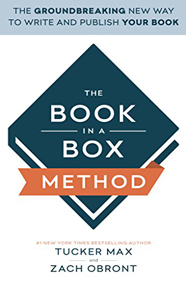
[0:41:39] Tucker Max: I think their audiences are different, if I remember. It depends who you’re trying to reach. We have a ton of clients who are in finance who are trying to reach clients. They want the book to get them clients and then we have other people who are trying to reach people in finance. So it’s different. If you are in money and you want clients to give you more money to invest basically, or protect or whatever, then the template is very, very simple. Ask yourself, what do you know? What problems are your potential clients facing and how can you help them solve them and then write the book that explains to them exactly how to do what you do? Which people are like, “What are you talking about? I can’t tell them how to do what I do then they won’t come to me,” and I’m like, “No that’s wrong.” We literally wrote a book called the Book in a Box Method that tells you exactly how to do our process. It’s so good, Charlie, that we actually — I had a ghostwriter, a guy that charges $40 grand for ghostwriting books email me the other day. He’s like, “Dude, thank you so much for writing this book. It has revolutionized my process. I can do twice as many books now,” and I was laughing.
[0:42:50] Charlie Hoehn: Oh, that’s amazing. Yeah.
[0:42:52] Tucker Max: I know, right? I’m like, “You’re not really our audience, buddy.” But the point is, we gave our process away too because what that does is when people are trying to evaluate us whether they want to work with us or not, if they are considering doing it themselves they’re not our customer. Our customers spends $25,000 with us, right? So the reason our customers read the book is they want to see if we’re legit. Do we actually know what we’re talking about? What it is, it’s a sales dock but instead of selling we are sharing knowledge. We’re showing you what we know how to do, and if it seems reputable and it seems great then you’re like, “Okay, I like these guys. They told me not only how it works but it seems like it would work really well and so I’m going to go with them because of that. That’s why you want to share your knowledge as a professional, just from a client acquisition standpoint alone.
[0:43:45] Charlie Hoehn: Yeah, I think back, chef’s used to be afraid to share their recipes and now all top restaurants have cookbooks.
[0:43:55] Tucker Max: Because the chefs that would share became celebrities and now no one knows what the restaurants are now.
[0:43:59] Charlie Hoehn: Exactly. So it has the opposite effect that I think people think it’s going to have, which is you gain more trust, more respect the more that you give.
[0:44:10] Tucker Max: Yep.
[0:44:11] Charlie Hoehn: Okay, so how about Hack Your Fitness by Jay Kim? If I am remembering it correctly, it’s trying to get more media attention basically and he’s in a very crowded space of all. Fitness is one of the most crowded genres in literature.
[0:44:30] Tucker Max: Yes, it is. So what you have to do in that space is there’s only two ways to attack it: either you say something totally new and different so you are very unique or you are very niched and Jay went the niche space. Jay basically had a full-time job, a high level full-time job in Hong Kong in Finance and he figured out how to get super ripped and in super good shape spending something ridiculous like 20 minutes a day or something working out. Like something insane, but it worked. You look at the dude, and you’re like, “That dude is ripped.” So you have to take a very specific niche or you have to be totally counter intuitive and new.
[0:45:13] Charlie Hoehn: Right and finally, or one quick note on Jay Kim, if you want to see the before and after because they really are pretty remarkable, go to the authorhour.co site and look up his episode, all his pictures are there and then for the final book, is Book in a Box’s CEO, JT McCormick's I Got There. Now this is a memoire and JT’s specific goals were initially and correct me if I’m wrong Tucker.
[0:45:39] Tucker Max: Family.
[0:45:39] Charlie Hoehn: Family, legacy piece right? Do you ever warn authors who say, “Look I just want a legacy piece.” “Look, hey, that’s going to be your only goal, you can’t start having grander visions of hitting the bestseller list and all of these stuff,” do you warn them against that or what do you tell them?
[0:45:59] Tucker Max: Yes because most people who are saying, “I don’t care if anyone reads this. This is about me, this is whatever,” then my first response is, “Well, then why are you writing a book, why publish it? Why not just put it in a drawer?” And they’re like, “Oh, well I do care about something,” and then they realized that what they were saying before was bullshit signaling. They’re just sounding good, you know? JT was actually not like that. JT really honestly did not care about selling copies. He really honestly cared about telling his story to his family in a very real way and because of that, because that really was his goal, we were able to get him to really open up and to really be honest. Because every time he didn’t want to talk about something I’d just like, “Well okay, you just want Ava to never know the truth or what?” And he goes, “All right,” and so that’s how you’ve got it and he opened up and he did an amazing book because of that. It’s perfectly fine to write a book for personal reasons and not business reasons but if you are going to spend $20, $30, $50 grand you just need to be very clear that’s what you are doing and be very clear that money is not coming back. It’s not money coming back, it’s going to be an emotional feeling, a connection with your family, things like that, you know?
[0:47:17] Charlie Hoehn: Right. Well, Tucker this was great. For people, for authors really who are really interested in getting help with their book and their marketing, where do you direct them to?
[0:47:30] Tucker Max: Website really is the best, bookinabox.com. It’s pretty simple.
[0:47:35] Charlie Hoehn: Cool, well thank you for taking the time sir. Many thanks to Tucker Max for being on the show. You can get Tucker’s book on Amazon.com or in basically any airport. Seriously, I have seen his books for sale in Thailand Airports and you can check out his company at bookinabox.com. We’ll see you next time. Thanks again for listening to Author Hour, enlightening conversations about book with the authors who wrote them. We’ll see you next time.
Want to Write Your Own Book?
Scribe has helped over 2,000 authors turn their expertise into published books.
Schedule a Free Consult