Nia Shanks: Lift Like a Girl
Read the full transcript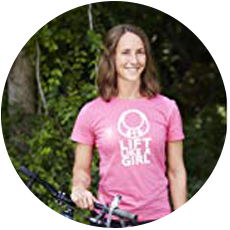
Nia Shanks
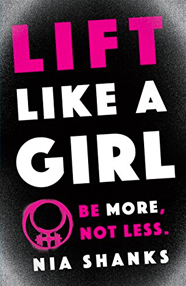
Nia Shanks is a coach, writer, and speaker who helps women build strength and a positive relationship with fitness. She holds a BS in exercise physiology from the University of Louisville and has spent more than a decade coaching women to look beyond quick weight loss through her popular blog and online programs. She is also the author of The 100-Day Reclaim. In her book, Lift Like a Girl: Be More, Not Less, she offers more than a workout program, encouraging women to discover a strength they never knew they had.
📚 Books by Nia Shanks
Transcript
[0:00:38] Charlie Hoehn: You’re listening to Author Hour, enlightening conversations about books with the authors who wrote them. I’m Charlie Hoehn. Today’s episode is with Nia Shanks, author of Lift Like a Girl. How do you define exercise? Is it a fun empowering activity that you love to make time for and that makes you feel great about yourself? Or is it an endless cycle of stress, guilt and exhaustion that rarely delivers the results you wanted and leaves you feeling drained and defeated. Either way, this episode is going to rock your world. Nia is a fitness coach who specializes in empowering women in health and fitness. In this conversation, she breaks through the clichés in weight loss and body image that keep so many women dissatisfied, depressed and constantly dieting. By the end of this episode, you’ll know how to scrap the less is better mentality. So that you can have a happier, healthier relationship with yourself. Now, here is our conversation with Nia Shanks.
[0:02:07] Nia Shanks: Kind of going back to the very beginning of when I became a personal trainer at 19. I got into the gym world very naturally thanks to my mom because she was the first woman personal trainer in our area and she actually introduced me to the weight room when I was about 14 or 15 and then once I turned 16 and could drive to the gym, I was hooked, was doing it consistently, have been doing it consistently since then. I had the privilege of growing up in a healthy household, eating well, which is something we did, I was always physically active and it wasn’t until I became a certified personal trainer, I was 19 and spending tons of time at the gym, obviously working and working out as well and I would hear other women I’d be on to high school with and was in college with. Having these conversations about, they ate, 1,928 calories that day. I mean, they knew it down to the point. They knew teller accounts from just tons of food. I mean, they would just say, you ate that, you had this many calories and they just knew this off the top of their head. It got me thinking, because I knew how to eat well. I knew how to eat well, I knew how to eat if I wanted to lose bad or to build muscle but actually, calculating what I ate on a daily basis was never something I had done, it had just been intuitive for me. Out of curiosity, I started counting calories and tracking my macro nutrients to know how many grams of protein and fat and carbohydrates that I ate each day. Through that experimentation, I became aware of what I was eating and it led to me experimenting with some other things because I thought, “Well, I’m a trainer, I’m a young trainer, I’m trying to learn, I want to experiment.” “I want to look as best as I can because it will help me get respect from other trainers and help me get new clients.” Slowly that progressed into obsessive, restrictive eating habits. I got to the point where I was counting every calorie I ate. I mean, I even calculated in a five calorie stick of gum. If I chewed a stick of gum with five calories, I added that in to my caloric intake for the day. You know, for a while, I was just super strict with what I would eat and I was religiously going to the gym. I would not miss a workout if the gym was closed for a holiday, I would make sure to sneak in an extra workout the day before or after, it had consumed me. I didn’t think there was anything wrong with it at the time until all of that turned into binge eating and I finally had just cracked from having deprived myself and I was trying to be super disciplined for so long. I wouldn’t eat junk food, I wouldn’t let myself have pizza or things I enjoyed because you know, I was really big into eating clean at that point.
[0:05:03] Charlie Hoehn: Yeah, how long had you been doing that?
[0:05:05] Nia Shanks: It really started early 19 and then the first binge eating episode I would say, happened about probably about a year later when I was about 20 and –
[0:05:15] Charlie Hoehn: Yeah, I was going to say, you can’t keep that up for years on end, it’s impossible. It’s impressive you got that far.
[0:05:21] Nia Shanks: It just accumulated and I remember my first binge. I just kind of blanked out, going into a trance is the best way that I can describe it. I let loose and I wasn’t thinking and I just ate a massive quantity of food.
[0:05:38] Charlie Hoehn: What did you eat during that binge?
[0:05:39] Nia Shanks: It was after we had gone out to dinner with my family. I came home, I was the only one home at that point, I just went in the pantry and just whatever I saw, I just started eating. I mean, it was just various things like pretzels and cookies and then I went to the fridge and just cheese, whatever was there.
[0:05:56] Charlie Hoehn: You were like the Tasmanian devil and you were consuming everything, you even grabbed the spice rack and started throwing those back.
[0:06:04] Nia Shanks: Not quite that bad but I mean, it was about a half hour feeding frenzy and I was just beyond stuffed, severely uncomfortably so afterwards and just shocked and dismayed at what had happened. I thought that it was a onetime thing, it was like well, that was scary and unpredictable, hopefully that’s it and it wasn’t it. That turned into a three and a half year experience with progressively worsening binge eating and frequency in quantity, I even developed some health issues from it.
[0:06:38] Charlie Hoehn: What kind of health issues?
[0:06:40] Nia Shanks: My stomach was constantly swollen and in pain and I got a – I went to my physician and the drastic catastrophic mistake I made was not disclosing to her the fact that I had a raging binge eating disorder and that’s something I like to tell people, don’t make that mistake. If you have a problem, that’s what your doctor is for, tell her or him what’s going on because you know, she couldn’t do her job since she didn’t know the whole truth. But she had me get a high scan and it just revealed that some – my gall bladder was leaking back into my stomach and that’s what was contributing to some of the swelling and pain. I took some medication for about a month and that actually helped quite a bit.
[0:07:21] Charlie Hoehn: I didn’t know this was an eating disorder by the way, Nia. That binge eating was qualified as an eating disorder, I’ve never heard that.
[0:07:30] Nia Shanks: I don’t know if it’s blanketed under that term for sure but it’s definitely a thing. I was actually in Health Monitor, the magazine a couple of years ago, sharing my experience with that and it was during that time when things just got worse, it wasn’t just a problem with the binge eating. It was the fact that my binge eating was so immense. I mean, it was a daily thing in massive quantities of food that I started gaining weight. I used to be really lean, I had muscle definition but my face started filling out, my muscle definition just started disappearing, my clothes weren’t fitting anymore. You know, during all of this time, I was still a personal trainer. I felt like the biggest fraud ever that I couldn’t control my eating habits. I couldn’t control the changes that were happening to my body and so I became incredibly ashamed of myself and I hated my body. I hated what it had become. I would stare in the mirror and look at the stretch marks on my thighs and the increasing cellulite and everything about my body. I would just stare at and just point out all of the things I hated and despised and because I couldn’t control my binge eating at that time, the only thing I could control was exercise. I would exercise a ton, multiple times a day. You know, strength training up until that point was something I did because I loved because it was fun, because it made me feel great to be strong and to get stronger, it was an enjoyable challenge but at that point, it was nothing but punishment. It was punishment for gaining fat, it was punishment for not being able to control what I ate. I would just get up extra early, I had my first client usually at six in the morning, I would get there at 5:30 to do 30 minutes of cardio and then I’d lift in between clients and then do extra cardio and then go home and run and just chronically just exercising. Trying to combat the massive amount of food that I was eating on a daily basis. It was really this experience with binge eating and throughout that time, experimenting with diets, hoping I could find the one that would help me break out of binge eating. Combined with a growing self-hatred and disdain for my body that I finally realized at one point that all of the things I was doing wasn’t working, that a rigid, restrictive diet wasn’t going to solve the problems that another rigid, restrictive diet created. I realized that something had to change and –
[0:10:09] Charlie Hoehn: How did you realize that?
[0:10:10] Nia Shanks: Because I kept trying so many things and I wasn’t getting anywhere. I kept trying all these different diets and I even tried some fat burners and weight loss teas and all of these things and I finally just realized that I kept – it’s that definition of insanity. Keep doing the same thing, expecting a different result and I finally realized that. I realized that restrictive habits to me, the second I restricted a food or a food group that just exacerbated everything and made everything so much worse. I realized that from my personality, I can’t have these rigid rules, this list of do’s and don’ts and unbreakable rules and all of that nonsense. I just stopped and asked myself, “What are the fewest, simplest things I need to do to move in the direction I want to go with nutrition and strength training?” That’s what led me to develop what is essentially today what I call the Lift Like a Girl methodology. It’s built upon a foundation of simplicity, flexibility, sustainability and enjoyment because I don’t want women to know what it’s like to revolve your life around food. I mean, from the moment, when I was in those binge eating years, you know, from the moment I woke up until literally the moment I fell asleep, food was on my mind. What I could or couldn’t eat, what I was going to eat next, what I needed to restrict more, anticipating another binge or thinking about how I could prevent it and you know, I really wanted to get back to the point where strength training was fun again and food was not something I viewed as an enemy or something that measured my morality, so to speak. And self-worth, you know? I just wanted food to be food again, I didn’t want to be something that was a metric system for measuring my worth as a human and so, that’s what led me to ask myself, you know, “What do I need to do to get away from this” and I realized, I needed to have this very basic, simple, flexible guidelines when it came to food. No strict do’s or don’ts. I also needed to find a way to make moving my body, something that I enjoyed again. Up until that point, you know, throughout the binge eating, exercise was just about burning calories and trying to melt the fat off my body that I absolutely hated and was disgusted by. I realized that you know, fighting my body in that way wasn’t helpful, that my mentality around how I approach my workouts was again making things worse and so I stripped down my strength training as well. I committed to making my workouts about improving my performance and nothing else. I would just do a few exercises each time I went in the gym and the only thing that mattered was beating my log book, just a little better than last time, even if it was just one extra rep than last time or a little bit more weight, that is the only thing I allowed myself to focus on. It was scary because I was working out a lot less than I used to. But what had happened throughout that was that I slowly began to enjoy working out again and by focusing not on how I looked or what body part I wanted to fix or enhance or anything of that nature. It really allowed me to appreciate my body for what it was able to do and to discover things about it and that I hadn’t noticed before. Because previously, you know, I’d always compared my body to other women and features I liked and wanted and thought would make me happy and again, that really doesn’t work because you can’t have somebody else’s body, the only thing you have to work with is the body that you have. I finally explored that and through focusing on my performance, I discovered the unique things my body can do based on how I was built, based on my anthropometry and you know, one thing I realized is that I’m naturally really good at dead lifting because I have long arms and just the way my body is proportioned. I’m naturally built for that lift. I decided to take something that I was good at and become great at it. That’s what I did, that’s how I rearranged my approach to health and fitness. I decided to simplify it to make it something that was enjoyable. To make sure it was something that didn’t dominate my life but that enhanced it. And that it allowed me to build a body that served me and allowed me to do other things I really wanted to do and it was through that experience that I have connected with other women at the gym and then once I started my website, it’s really terrible that so many women identify with my story and I hate that. Because it’s not a fun situation to find yourself in because you think you’re never going to get over it, you think it’s never going to get better, you think you have to deal with those thoughts and that approach, you think is just going to be something you have to fight for the rest of your life. I want women to realize that it doesn’t have to be that way. There is a simpler way to go about things, there is a way to actually make sure the way you eat and move your body is something you actually look forward to doing that it’s something that builds you up. Not just physically but even emotionally and mentally. It was through those experiences that really helped me to refine my approach to health and fitness and to use it as a tool to become the best version of myself and then through working with other women who have had a similar experience, through seeing it help them as well is what just gave me a drive to help as many women as I can who have traveled a similar path or hopefully to prevent women from going down that path, ever. That’s what really led to Lift Like a Girl and working with women over these years and seeing the effect that it has on them, that’s what ‘s really given me the desire and the passion to keep sharing my story and my knowledge through writing and training programs and of course the book.
[0:16:15] Charlie Hoehn: Thank you for sharing all that. I’ve got a bunch of questions, I guess the first one I had is was it just being around these other women who were OCD about calories, that permeated into your psyche I guess and kind of created this neurosis where you developed this unhealthy pattern or was there something else going on? Was it really that simple that this is an idea that I should experiment with and that idea, once you catch it, naturally tends to drive you kind of crazy because food shouldn’t be distilled down to a number that you obsessively worry about.
[0:17:00] Nia Shanks: Part of it I think is that I – over the years, I like to call myself a recovering perfectionist because back then, I think it was more drive to constantly improve myself. I was like, “I look pretty good, I can look better. This body part can be enhanced more.” You know, “I’ll really feel good once I reach that goal” and it was that constantly chasing a newer goal, I had achieved one goal but I wouldn’t be satisfied and be like, no, the next goal is really going to help me feel great and help me look even better. That’s what I think led me down a bad path and a lot of ways is that health and fitness is not necessarily a means to an end, it’s a mistake to just obsess over the later part or the someday result. You know, it needs to be something you do because it’s enjoyable in and of itself. You know, one workout is not going to help somebody get crazy strong or improve their health but the workout can be in itself a reward. Something you do because you’re improving yourself and to take care of yourself, to invest in your self-care. I think that was one of my mistakes, in that it’s something I see a lot of women make, they don’t take the time to appreciate all that they accomplish because they’re chasing this long term goal like getting their pre baby body back or chasing some ideal weight and thinking that that weight, once they reach it, then they’ll be happy and feel worthy and love their body. It just doesn’t work that way because you know, if you’re saying, you know, “I’ll be beautiful then, I’ll be happy then.” Well, by default, you’re saying you’re not beautiful or happy now and that’s a very negative place to be. It really comes down to finding a way to make sure the process itself is something that’s enjoyable and something that makes you feel good on a daily basis.
[0:18:59] Charlie Hoehn: Yeah. The workout is the reward. Same with eating as well, not a reward in terms of, let’s have a sugar spike or something but that it’s something to be enjoyed right now always and would you say that’s sort of the big idea in the book?
[0:19:20] Nia Shanks: It’s really just about making sure the approach to food and working out is – it’s something that’s empowering and something that builds women up. I have zero interest in helping somebody get bikini ready for summer, you know, I’m interested in making sure that yeah, I mean, that’s a fine goal. If you want to look better for summer, that’s cool but I want to make sure that come next summer, you still have those results. You know, I want people to realize that this is something that’s a fundamental lifestyle. I don’t want to help you get your body back, I want to help you get the results that you want and so that you can easily maintain them going forward. Again, that only comes from enjoying the process.
[0:20:01] Charlie Hoehn: Right. Nia, I’m seeing like from this conversation and the first time I heard about your book, I already knew women in particular have to deal with this really unhealthy culture, right? Of image and food and health and all these things. It’s not good, right? It’s really tough to go against the tidal wave of advertisements, pop culture. What would happen, what would be the effect if more women had this? Your mentality, the ideas in your book. What would happen if this started to permeate our culture? Do you think that’s realistic in terms of that happening over the course of the next decade or two?
[0:20:54] Nia Shanks: It’s absolutely realistic because it’s something I’ve seen a lot. Thankfully I’ve had the privilege of helping and watching a lot of women have that experience because it’s you know, it’s 2017 but women are still largely told that how they look is the most important thing. I have worked with phenomenal women who are mothers and doctors, business owners, farmers, and I have seen firsthand how them feeling like they haven’t attained these cultural standards holds them back and makes them feel less than what they truly are. Once they realize that they don’t have to accept those cultural labels, that they can choose for themselves a body that feels good to occupy, that they can define what that means. And that. They can choose to have goals other than just losing fat and eating for weight loss. That they can choose to work out because they want to get strong. They can choose to eat something that makes them feel great and that they enjoy. When they realize that there is a completely different way to do things and then they embrace it, I have seen firsthand and experienced it firsthand that it does drastically change their entire life. I know that does sound incredibly hyperbolic for somebody who hasn’t experienced it but I’ve seen it too many times to know. You know, it definitely works and there’s even stories in the book like one woman shared her story about how getting stronger in the gym increased her self-confidence and it led her to getting multiple raises at her job. It’s phenomenal what shattering either your self-imposed limitations can have or you know, even limitations maybe young girls grew up hearing, “You can’t ever do a chin up, you’ll never be able to do that. You have to do girl pushups, you can never do regular pushups,” but once they achieve those goals, they have this kind of “Holy crap, I’m awesome,” moment. They realized how strong they can be and it makes them want to go and do and be even more. It’s the most beautiful thing to see. There’s definitely a change of tide in the health and fitness industry because more and more women are choosing to embrace an empowering approach to fitness, to appreciate their bodies for what they can do. To take the time to discover what makes their body unique and to enhance those natural qualities. It’s happening, I strongly believe it’s something that’s only going to continue to get stronger and I’m hoping that it really affects the generation of younger women behind all of these women currently out there charging forward in this empowering awesome way. Yeah, I think it’s something that we’re going to see, it’s going to continue to change over time in a positive way I believe.
[0:23:54] Charlie Hoehn: Author Hour is sponsored by Book in a Box. For anyone who has a great idea for a book but doesn’t have the time or patience to sit down and type it out, Book in a Box has created a new way to help you painlessly publish your book. Instead of sitting at a computer and typing for a year, hoping everything works out, Book in a Box takes you through a structured interview process that gets your ideas out of your head and into a book in just a few months. To learn more, head over to Bookinabox.com and fill out the form at the bottom of the page. Don’t let another year go by where you put off writing your book. I agree. I think that movement is definitely happening. I think it hasn’t come even close to the crest of the wave. It’s slowly building but it’s coming for sure. I love the concept behind this book and I love what you’re teaching. Can we get into some of the specifics of what you recommend in the book? So we talked extensively about your story and your background and how you’ve helped other women with this stuff. So what are some of the recommendations that you make to women in the book?
[0:25:11] Nia Shanks: Well it starts out encouraging women to basically erase what they think they know about health and fitness. The term I like to use if people listening to this, remember the movie Men in Black, you know that little pin looking thing?
[0:25:29] Charlie Hoehn: The neurolizer, yeah.
[0:25:30] Nia Shanks: Yeah, he pushes it and it erases all of their minds. I always said I wish I could have my book come with one of those and do that in regards to what women have been told about diet and fitness and just start from a clean slate because it’s rebuilding that mental foundation. That’s the step that needs to come first because you need to understand why you view your body the way you do, why you view nutrition and exercise the way you do and then transform that into something that can actually help you and –
[0:25:57] Charlie Hoehn: Just before we continue with that, what I’m curious about Nia, is when you were going through this when you are very obsessive obviously it was playing a role on how you’ve viewed food, how you’ve viewed you’re working out. Did it have a ripple out effect into other areas of your life too, where you suddenly hyper perfectionist in your relationship who was shaming themselves or that sort of thing? Was it rippling out into every area of your life?
[0:26:24] Nia Shanks: Actually yes in a very drastic way. I don’t want to get into it too much because a lot of it is extremely personal but it did lead me at one point into doing something I wouldn’t have the courage to do prior. One of the things I ended up doing was within a week, quitting my job and moving to Louisville to continue my education, to pursue my bachelor in exercise physiology. It was just something I did on a whim because I realized “Hey, I’ve got to be strong.” “I’ve got to make tough decisions, I have to get out of my comfort zone. I know I can do this, I’m just going to do it and take charge.” So yeah, it really did and it still does to this day definitely.
[0:27:05] Charlie Hoehn: Interesting, so anyway not to cut you off so once they have the proper mindset shift and they have an understanding of how they are viewing their food, their body, what do you tell them next once they’ve made that first step?
[0:27:19] Nia Shanks: Yes and just to bring this to life with an example like one thing I tell people in the book is to understand the conversations you have with yourself. For one thing being if a woman has been dieting for a week and somebody shows up at work with cupcakes, she says, “I am not going to eat a cupcake I’m being good. I’m disciplined” but later in the day she eats the cupcake because “Hey, it’s a cupcake. It’s delicious” but then afterwards she feels guilty about it. Like, “Oh my god I screwed up, I suck, I failed. I know I couldn’t stick to it.” It’s really understanding that you need to stop those conversations from escalating so –
[0:27:54] Charlie Hoehn: Right, there’s a – I forget the line but it’s effectively like if your mind was like another person, a friend of yours, you wouldn’t be friends with them. So you need to be actually be friendly to yourself.
[0:28:09] Nia Shanks: Yeah and you can either be friendly and compassionate and say, “Hey I ate a cupcake. I screwed up” or you can just say, “I ate a cupcake, be gone”. You can just stop and you can just say, “Well okay” and then you could just choose to move on and continue because some women they’ll eat a cupcake when they said they weren’t going to and then they use that as an excuse to go and make poor food decisions for days and days and days. But it doesn’t have to be that way. And that’s what I want women to realize is that you can say, “Well I ate a cupcake, oh well” and then move the hell on and continue making choices that make you feel good with your food and your workouts and all of those things. So it’s really understanding what you say to yourself and making sure those things are things that help you rather than harm you and then beyond that it really goes more into explaining the simple guidelines that I encourage women to try when it comes to nutrition. Because most women know what it’s like to try these crazy diets or just really restrictive diets and to just try to simplify things as much as possible because like I tell my clients, if you could do something really simple and something that’s not stressful and actually get the results you want from it why would you first try something complicated and time consuming and stressful?
[0:29:26] Charlie Hoehn: Well yeah, I mean I can speak to this personally. I’ve gone down the rabbit hole myself and I know this is about women but I have definitely fallen into these traps of these crazy dieting routines that if I’d actually talked with some healthy people about them, they would have quickly dispelled any notions that I had about what I was doing. But because it was such a personal thing and I thought, “Well I am going to do things the right way” I ended up at one point loosing. Like dangerously unhealthy amount of weight something, like 25 pounds or something but I thought like, “Oh you know this is a part of the process,” with is crazy right? So that seems to be a part of the problem is sort of the isolating nature of “I am right about what I am doing right or I am so embarrassed that I am not going to talk about this stuff.” So giving them simple principles, what are those simple principles?
[0:30:30] Nia Shanks: Yeah and first, I want to say that it’s difficult for a lot of woman or a lot of people in general simply because of what is circulated on the news and on social media. A lot of the fear mongering type stuff gets headlines or things that sound absolutely bat crap crazy, that’s what gets attention because that’s what sells books and that’s what sells magazines and that’s what gets eyeballs on things.
[0:30:57] Charlie Hoehn: Or that’s what gets funding or that’s what – yeah, it’s any sort of thing. I remember seeing a headline recently that was like, “No, coconut oil is not healthy. It’s never been healthy” and it exploded obviously because every paleo, vegan, blah-blah-blah all of them use coconut oil and then found out the article was published by some organization that had a heavy financial incentive to sell something similar. So it’s really hard to get quality information online and so you’re right, you get all of these crazy ideas about food.
[0:31:41] Nia Shanks: Yeah because some people are saying these foods are super foods and these are amazing and coconut oil even still has – I know some people that they actually believe it can cure illnesses and stuff because they’ve read stuff on Facebook and some of it gets dangerously irresponsible. Some foods are really good for you like spinach and greens and berries. Those things are really good for you but the thing that the public still wants to believe we’re all waiting for the secrets to come out. And the things that will make things easier because we know there is something out there that is going to make everything so much easier and effortless and somebody knows that. They just start saying it but they’ll sell it. It’s human nature, all of us think that there is going to be a short cut and we want that. We want the path of least resistance so that’s why a lot of people when they first read my information they’re like, “Oh my god this is too easy. This is not going to work”. Because they are so used to the stuff they see circulating and basically those guidelines boil down to I encourage people to put health first. Being healthy is important, feeling good is important and the first thing people need to do is try to make it a priority to eat mostly real minimally processed foods because that is how you get your vitamins and nutrients and those foods help fight inflammation and they make you feel good an all of those things. Those are important and there is a vast array from lean meats and fish and nuts, seeds, fruits, vegetables obviously dairy, whole grains, all of these things. There is a vast array to choose from and those should make up the bulk of what you eat and I say minimally processed because dang near every food is processed. The only way it’s not processed is if you have an apple tree growing in your backyard, you walk out there and take if off the tree and eat it. Oatmeal is processed because oats just don’t fall from the sky. They have to get processed and all of that stuff but minimally processed is a good term because getting oats and making oatmeal is more of a real food compared to pop tarts or something. So that’s just kind of the distinction that I like to make beyond that I encourage women to try to revolve most of their meals and snacks around a good source of protein because protein helps you stay full. It helps you recover from strength training which is an integral part of the Lift Like a Girl program of course and so many women, a lot of diets they have done in the past they just don’t get enough protein and so they wonder why they are always just ravenous and so by including a good source of protein they feel fuller and they recover from their workouts and then beyond –
[0:34:23] Charlie Hoehn: Yeah, so I’d like to pause on this point because I think it’s important. So my wife and I just had a baby daughter four months ago and she was super healthy and what I noticed –we had a midwife who’s been doing it for 30 years, right? So she has seen I think over a thousand births which is a ton and she refused to accept clients that didn’t eat meat because she said, “I don’t mind what people choose to eat. If they want to be a vegetarian or vegan that’s totally fine”. “Do what you want to do, but I personally have seen too many births go wrong or whatever because the mom isn’t getting enough protein.” And it’s interesting right now because there is a lot of – I feel like a lot of literature and documentaries coming out that are having this argument between should it be a plant-based diet or is the more primal type paleo eating the better way of going about it. Do you have a dog in that fight or no?
[0:35:44] Nia Shanks: Yeah, I don’t think it’s one extreme or the other. I think eating a lot of plant based foods is a really good idea from beans and grains and all of that stuff. But you know I tell people you can tailor these guidelines for your eating preferences whether you are a full fledge carnivore or a vegetarian or a vegan because a lot of my friends that are vegans or vegetarians they know the science. You know the “I don’t believe the science that says a vegan diet is the healthiest thing ever”. I don’t believe that’s there. The people that I know that are vegetarian and vegans are for ethical reasons because they don’t want to harm animals. So that’s why they eat that way but they do so intelligently because I’ve now to say the other, I have seen people that are vegan or vegetarian but they poorly still eat extremely heavily processed foods that are –
[0:36:36] Charlie Hoehn: Like they’ll eat macaroni.
[0:36:36] Nia Shanks: Yeah, they don’t get nutrients. So if somebody is going to be a vegetarian or a vegan they have to be a little more cognizant of making sure they get all of the vitamins and minerals that they need but if they are pregnant, that is not something I’m – you talk to your doctor. I will not say anything to that nature. I just think the problem is there is again, a lot of fear-based mongering going out there right now like there was the documentary on Netflix. That was basically trying to terrify people into going vegan and the science was just not accurate. What they used was not accurate and there was actually a woman I believe, oh shoot, I want to say she’s a professor and she’s actually a vegan. I think she is a scientist or something and she actually refuted that documentary saying, “This is why it’s flawed people. You don’t need to be terrified into eating vegan” and she said she’s a vegan because ethical reasons for her. And it’s just important to understand that a lot of people will say, “This is science based and research based” and I have made those mistakes in the past because I didn’t completely understand how to read good research and to understand what was accurate and what was misleading but there is always going to be something out there that people are trying to scare you into something one way or the other. To me, if something just sounds really extreme, it’s probably not very accurate. I don’t think somebody needs to be eating nothing but meat. I don’t think somebody has to be vegan. I think a lot of individual preferences are important but beyond that, let’s say let’s look at science has shown to improve health and it is eating plenty of plant based foods but you can certainly still include meat and sea food and all of that stuff if you like those things. They are not mandatory but they are good for you.
[0:38:20] Charlie Hoehn: Yeah, so I mean this is really aligned with your philosophy about this should be something enjoyable. This shouldn’t be so stressful. This shouldn’t be a source of constant worry and focusing on the details and with certain dietary types, you do have to worry about the details. You have to constantly sweat what is going into your body. It affects your social interactions but minimally processed, that is something that anybody can follow and it’s not very difficult to wrap your head around.
[0:39:01] Nia Shanks: I like to tell people you know most of the time. I am not saying, “Do this hard core, that’s all you can eat ever” because it’s important to have flexibility and I give lose guidelines in the book. If you want an idea of what to shoot for, you know 85% of the time eating mostly real foods and then that way you can work in your favorite foods that don’t necessarily fit those guidelines, whether it’s things that aren’t really good for you like ice cream or fried chicken wings. Or whatever your favorite things are, you can still easily work those in without any negative effect to your body composition or even your health. It is just understanding how to be flexible and then to go ahead and get into that third guideline that I always encourage women to slow down when you eat and to aim to stop eating when you are satisfied but not overly full like you don’t want to be stuffed because that way you can just process your brink. And process that you feel good, you’ve had enough to eat, you are not hungry anymore because I like to tell women you can eat in a couple of hours if you actually get hungry again. There is no need to eat beyond capacity and that is important especially if somebody is trying to lose weight or just improve their health. So it really –
[0:40:12] Charlie Hoehn: Right so this is actually, sorry to interrupt but this is making me think of when you had those binge eating episodes, it probably and I would bet it was because your body was so deficient in nutrients, vitamins, minerals whatever that it was like you’d better start throwing stuff in right now to get what you need because do you think I am wrong in saying that or right?
[0:40:39] Nia Shanks: I would say that is not very accurate to me. It was just a mental thing. It was a mental thing because I was telling myself “You can’t eat ice cream, you can’t eat pizza, you have to eat clean.”
[0:40:49] Charlie Hoehn: So it was like fatigue basically of constantly having to make these hard decisions of denial.
[0:40:56] Nia Shanks: That and labelling, it was labelling foods as good and bad and I was really into the clean and dirty thing at the time and what you do is if I was saying I’m only going to eat clean, well when I failed and ate something dirty what does that make me? It makes me a failure because I am eating something bad. It is allowing food to affect your morality type of thing. Food wasn’t no longer food. It was either an enemy, you know I scrutinize everything. By whether or not it would help me lose fat or it was going to cause me to gain fat and that’s no way to obsess over food. So it was really just about the way I perceived it and the way I labelled it and the way I allowed it to affect me, that’s what really did me in and took me down that terrible road.
[0:41:38] Charlie Hoehn: Yeah, so let’s talk about the lifting portion. So for listeners who might be thinking “I don’t want to listen to lifting,” what are the most compelling ideas in the book or things that you really want people to take away from the lifting part?
[0:41:56] Nia Shanks: Yeah, so I want to simplify that as well and the best way to get somebody interested in an activity is to show them that they can be successful from the very beginning. To do that, they need to learn movements that they can learn very quickly, so they can start progressing them quickly because that builds confidence. If you see from day one that yeah, I learned this, I can do this. Then you feel good about yourself. It’s one of the reason I start out the phase one program, there are two phases in the book. The phase one program is built around basic movement patterns that can be learned very quickly because I want somebody to be able to have that feel good experience from the first time they go in the gym. Because it’s a lot easier to learn for example, a goblet squat which is using the phase one program compared to something like a barbell snatch which has a lot of movements, it’s very detailed because you know, if you try to learn something really complicated form day one and you can’t get it down, you’re going to feel frustrated. Nobody wants to suck at something from the get go because it’s not very motivating. The phase one program is about introducing them to some very basic movement patterns with the goal of getting stronger and doing a little better each time they repeat the workouts. There are two workouts and they alternate them, so they perform a total of three per week, Ideally on none consecutive days and so this just builds that strength foundation and then once they complete that anywhere from four to 12 weeks then they’ll move on to phase two which moves to variations of those movement patterns with barbells mostly. Simply because a barbell is more scalable and it allows for greater loading over a longer period of time, so it’s just helping them to get even stronger. That’s what the programs revolve around, very basic movement patterns that work a lot of muscle mass at once and they’re efficient because you know, that’s why all the exercises are free weight or bodyweight based. Because they work all these quality strength, stability, coordination. It’s just about being as efficient as possible and that’s why every workout, it’s just three exercises but they’re big compound exercises and if you make it a goal to get as strong as you can with those. I mean, it definitely transforms your body, you’re not going to have a problem noticing that after a while.
[0:44:22] Charlie Hoehn: Give our listeners a challenge Nia. What is one thing they can do from your book this week that can help them and improve their life?
[0:44:34] Nia Shanks: I would say, the first step which is usually the easiest, is when it comes to fitness and I would just say, make your workouts over the next week exclusively about your performance. Just make it a goal to do a little better than you did last time, don’t worry about burning calories or even getting as exhausted as you can because that’s not necessary, you don’t have to chase extreme fatigue and exhaustion. You just need to find a way to get a little – to do a little better than last time and ideally, I encourage women, you know, just focus on getting stronger. Set your sights on goals like being able to do an unassisted chin up for the first time. Maybe squatting your bodyweight for reps. Just have a positive focus with our workouts and when it comes to all other physical activity, just try to do things that make you feel good because exercise should not be a chore you feel like you have to do, it should definitely not be punishment. Focus on getting stronger in the gym and then try to move your body in other ways that just feel good to you.
[0:45:38] Charlie Hoehn: Great advice. How can our listeners connect with you and follow you, maybe they give you an update on their personal progress or that they gave your book to someone they cared about, that sort of –
[0:45:51] Nia Shanks: Yeah for sure. The best way to get in touch with me would be through my website niashanks.com and through there, you can also find all of my social media connections.
[0:46:02] Charlie Hoehn: Perfect, well this was really refreshing and it’s just a great reminder. Like we talked about, with the avalanche and the continual wave after wave of information about “This is the right way of eating this, this is the wrong way of eating” and it’s always seems to be a moving target. This really distilled this simple principles that anyone can remember, anybody can live with to live happier and healthier. Thank you for sharing this Nia.
[0:46:31] Nia Shanks: Hey, thank you, it was my pleasure.
[0:46:35] Charlie Hoehn: Many thanks to Nia Shanks for being on the show. You can buy her book, Lift Like a Girl on Amazon.com. Thanks again for listening to Author Hour, enlightening conversations about books with the authors who wrote them. We’ll see you next time.
Want to Write Your Own Book?
Scribe has helped over 2,000 authors turn their expertise into published books.
Schedule a Free Consult