Michael Zhuang: Physician Wealth Management Made Easy
Read the full transcript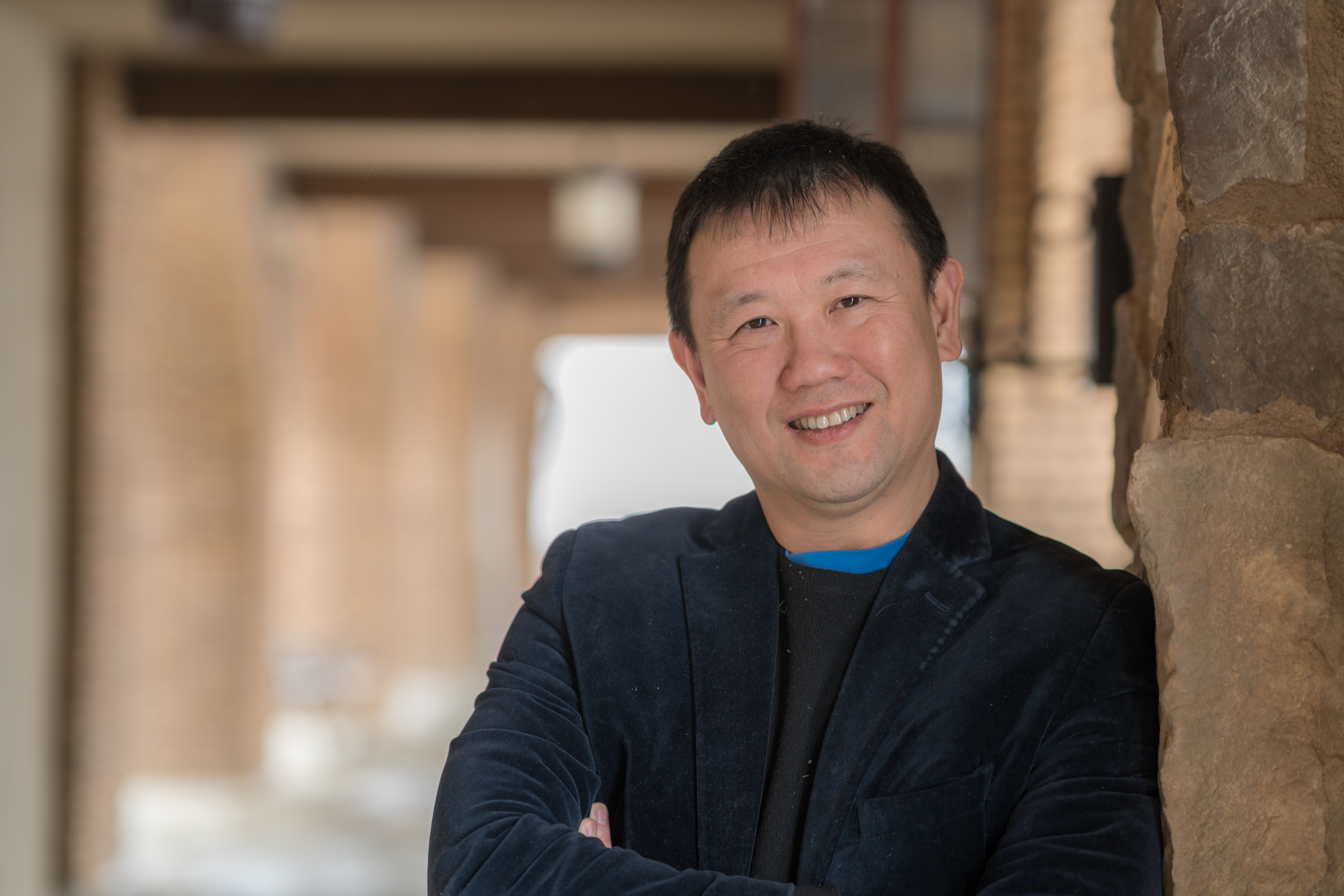
Michael Zhuang
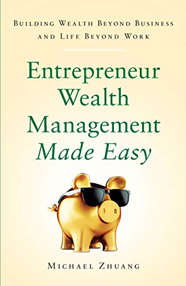
Michael Zhuang is the founder and principal of MZ Capital Management, a fee-only registered investment advisory firm in the greater Washington, D.C. area that he established in 2005. He holds dual master's degrees in mathematics and quantitative finance from Carnegie Mellon University, and his earlier career included roles with Société Générale and PG&E. He blogs as The Investment Scientist and has contributed to Morningstar, Investopedia, and KevinMD. He is the author of Entrepreneur Wealth Management Made Easy: Building Wealth Beyond Business and Life Beyond Work.
📚 Books by Michael Zhuang
Transcript
[0:00:25] Charlie Hoehn: You’re listening to Author Hour, enlightening conversations about books with the authors who wrote them. I’m Charlie Hoehn. Today’s episode is with Michael Zhuang, author of Physician Wealth Management Made Easy. If you’re a medical professional, you know how hard you worked to earn the privilege of practicing medicine. But eventually, you need to think about protecting and growing your wealth. In this conversation, Michael gives a crash course to help physicians to secure a healthy financial future. If you’re a busy doctor who’s struggling with student debt, malpractice litigation or just the ever-changing healthcare system. This is an episode you need to hear. And now, here is our conversation with Michael Zhuang.
[0:01:29] Michael Zhuang: I can’t forget the day when I got a phone call from my own family doctor. He say, “Michael, I can’t be your doctor anymore” and let me explain because at the time, I was actually running a hedge fund in Florida. I wasn’t a financial adviser. I was surprised at, that my doctor gave me the call to tell me he cannot be my doctor, I ask him, “What’s going on doc?” He explained to me that he was diagnosed with pancreatic cancer and he only have a few more months to live. Then he said to me, “Michael, you’re the only finance guy I know, can you help me and my family?” Like I said, I wasn’t a financial adviser but I just couldn’t say no to my doctor. I end up in his house with his family and just going through their personal finance and it was not in good shape and three months later he passed away. I stay onboard to help his surviving family, making the necessary adjustment to their new and reduced reality. They were very grateful to my health and in fact, that’s the reason I convert my hedge fund into a wealth management firm, specializing in helping doctors. Yes. Over the years, I’ve talked to many doctors and I found something quite common. You know, even though physicians are among the highest income group in this country, by and large, they are not very good at taking care of their personal finance.
[0:03:15] Charlie Hoehn: Yeah, that’s surprising to hear because I mean, like you said, they’re high income and so there’s sort of an assumption that all of them maybe aren’t wealthy but they’re doing okay. What are some of the reasons why more doctors aren’t wealthy?
[0:03:31] Michael Zhuang: Well, I guess it’s because first of all, medicine is so different from finance, it’s a totally different feel and many physicians get the impression that, or get the belief that things are good at one field, they’re also good at the other field. A few of them, very few of them actually trust outside advisers. This is one reason. The second reason has to do with usually started making money later than others because being a physician take long years of training, usually depend on what kind of specialty you are in, you may have to be trained for 10 to 16, 17 years and by the time you start working, by the time you start making good money, you’re now in your late 30’s. They have a lot shorter time to make up for the years that they missed. Also, the profession is very demanding, you know? After you’re seeing patients for eight hours, a lot of doctors just don’t have much mental energy left to take care of their personal finance. There is all kind of reasons I just mentioned three, there are other reasons as well that really make it difficult for them to be good at taking care of their personal finances.
[0:04:54] Charlie Hoehn: Let’s say I’m a doctor listening to this and I’m thinking, “Yeah, I’ve got that problem, I’ve got financial issues.” But I’m still a little skeptical, right? I don’t want to be taken advantage of or anything, what would you say to a doctor who might be skeptical but knows they have this problem?
[0:05:14] Michael Zhuang: Well, first I have to say this skepticism is there because the financial road as it stand now in our day is full of conflict so I think a lot of doctor have this gut feeling that many financial advisers as sales people, they’re not the sound level, at the same way even the way they perceive things or think things out different. They’re more or less right, you know? I would say, 95% of financial advisers out there are brokers. They’re by and large a salesman who don’t need to put their interest first. First of all, I like to affirm this skepticism is well-placed. What is your next question?
[0:05:59] Charlie Hoehn: That was really it, what do you say to a doctor who’s just skeptical?
[0:06:03] Michael Zhuang: Yes, well I will say yes. This is totally well-placed; the skepticism is very well-placed.
[0:06:08] Charlie Hoehn: Alright, fair enough. Let’s hear more about your book and what is contained in your book and really – if you had to pick a big idea or a distillation of the book that listeners could remember three months from now, what would you pick?
[0:06:27] Michael Zhuang: I really want doctors to understand the components of wealth management. What they need to pay attention to, to put their personal finance in good order. In the book, in the middle of the book, I talk about six components of wealth management. They may not be applicable to every doctor but usually, because for instance a doctor in private practice, and he may need to know all six, a doctor always employed by a hospital, he may need to know about three to four of the components but in any event, I want doctor to know that these are the components, they need to pay attention to take good care of themselves in terms of their personal finance. These components are number one, investment, they need to invest well so that they can preserve their wealth. Number two…
[0:07:26] Charlie Hoehn: Well, hold on, before we get in to number two, investing wealth. Can you talk a bit about that because I mean, on the surface of course, everybody knows that but what does that mean really?
[0:07:38] Michael Zhuang: Wow, that’s a long subject. I devote a whole chapter called the science of investment to debt. How can I sum it up? Basically, the investment world in our day is like medicine 200 years ago. 200 years ago, if you get sick, what do you do? You go to see a priest if you were in the western world. If you're in Africa, you’ll probably go to seek out a shaman, right? Or a witch and medicine was more or less superstitions, right? In our day, investment is very much like that as well. It’s like a superstition, gut feeling, gut reactions. But on the other hand, 200 years ago, there is a budging trend or there’s like the scientific, evidence-based medicine was beginning to emerge, right? There are people who are in university who are going to do rigorous research or testing experiment about medicine and over the course of the last 200 years, medicine become where it is today. It is an evidence based size. Everything that is prescribing has been based on rigorous research over and over. I will say, investment as the beginning journey, I would say investment is at the beginning place of that journey. Maybe in another 50 years, it’ll be like medicines. But nowadays, investment, there’s a lot of voodoo going on, there’s a lot of fake practice going on but on the other hand, there’s a sort of scientific approach to that as well that is being pioneered by top university’s, like the university of Chicago. But by and large, those scientific approaches to investing, the idea and the knowledge are not well disseminated.
[0:09:31] Charlie Hoehn: Yeah, let’s dig in to this a little bit because this is a good thing to dive into. The scientific based approach versus voodoo approach. I don’t even know entirely what you’re referring to there. Are you talking about just kind of investing when it feels right and –
[0:09:49] Michael Zhuang: Yeah, I would say, a good example of voodoo approach is Jim Kramer. If you watch his show, it’s a lot of sounding fairy but signifying nothing, right? Imagine 200 years ago, if you get sick, you’ll call out a shaman to your house and what does the shaman do? He will dance, he will shun, right? He would do all kinds of crazy things. Supposedly he can cure you but he cannot. Jim Kramer is doing exact the same thing on TV, dancing around, yeah, that’s right. This is the modern thing.
[0:10:23] Charlie Hoehn: Well, it’s entertainment.
[0:10:24] Michael Zhuang: That’s right. It creates some mystical power as well and people think because it’s entertaining, he seems to be knowledgeable because he spits out ideas left and right, right? Then he must know what he’s doing. Just like the shaman of the old, they did that to impress their clients. He was quite successful in that regard.
[0:10:45] Charlie Hoehn: That makes sense. So how can we take the scientific based approach? What could we do this week maybe that would be a smarter way of going about investment?
[0:10:55] Michael Zhuang: That’s a very good question. When it comes to scientific way of approach, I like to mention a few people as well, right? 2013, there were two guys, two professors who won Nobel prize. One who’s name is Eugene Farmer, the other is Gilbert Shiller, right? Pay attention to their work. Even though it’s hard because those people, well, Robert Shiller has published two books. Eugene Farmer has never written a book. He has written many research papers that are published in the likes of Journal Finance. His papers are very difficult to read. Also, this year, the Nobel prize winner is called Richard Thaller. He also did a lot of research in investing. Richard Thaller has a few books out as well. I guess if you want to firmly where you’re at, the rigorous scientific approach, you know, you can read their books. Robert Shiller’s book is out there and Richard Thaller’s books are out there as well, start by reading their books.
[0:11:58] Charlie Hoehn: Okay, let’s say I’m lazy which I am. What is, like, do you distill their principles into your book?
[0:12:06] Michael Zhuang: I do.
[0:12:08] Charlie Hoehn: Because I want to read one book, I don’t want to read three books.
[0:12:12] Michael Zhuang: I do, I have ae whole chapter called the science of investing, in my book that I devoted to distilling the idea into a few core principles that everybody can use.
[0:12:26] Charlie Hoehn: Okay, cool. What’s one of those principles just to give kind of an overview?
[0:12:33] Michael Zhuang: That’s a great question. If anything, I would like my readers to stop doing stock picking and market timing. When it comes to investment, you know? There are many things that they need to start doing but when it come to investing, they should stop picking individual stocks or try to time the market. Try to get in and get out at the right time because there’s no right times. This is really based on the research of Gene Farmer who actually coined a term, The Fish Market market hypothesis. Because his idea is basically the market is by and large, pretty efficient. Because the market is made up of millions of people try to outsmart each other, right? The reality is that, if you want to pick stock and make extra money, you have to be smarter than all the other people out there. It is very hard to be smarter than all millions of people out there. You need to be able to see things that they don’t see, right? You need to have a deeper insight that they don’t have, it is very hard to have that. Therefore, don’t waste time trying to beat the market, don’t you waste time trying to pick stock or time the market in order to beat the market. It’s much more effective trying to control yourself because it turns out most people lost money because of – they’re either too greedy at their own time or they’re too pessimistic at the wrong time.
[0:14:06] Charlie Hoehn: Yeah, that makes total sense. Do you recommend automating your investing, doing dollar cost average type thing, or doing a big index fund or what do you suggest generally?
[0:14:19] Michael Zhuang: I totally recommended all that he have said. Index fund low cost. It turns out that cost is the biggest determinant of your future returns. The lower cost, the highest money you get to keep, it’s that simple. Low cost is definitely to go, make it automatic. This is also a big thing, this is actually coming from the idea of Richard Thaller. Because we humans have a very strong status quo bias. Bias that was in action, right? If you tell us now, “I will make an investment every month,” you know what? You won’t, you will forget about it, right?
[0:14:56] Charlie Hoehn: Yup.
[0:14:57] Michael Zhuang: The way to overcome that status quo buy is to setup an automatic investment and forget about it, right? Yeah, these Nobel prize winners really have many good ideas that we can apply in our personal finance that would get us to a better place.
[0:15:16] Charlie Hoehn: Where do you recommend going to pick the index fund and setting – what tool do you use and do you have any recommendations for choosing the right index fund?
[0:15:27] Michael Zhuang: Very good question as well. There is only two mutual fund companies in this country that I can wholeheartedly support. One is a Vanguard, right? The other is that Dimensional Fund Advisers. Dimensional is a bit more advanced than vanguard but dimensional is not open to retail investor so if you read my book and want to do it yourself, you don’t have access to Dimensional Funds but you still have access to Vanguard Funds. And both fund families are very low cost. Low cost fund family like Vanguard pioneer, the concept of index investing. Dimensional pioneer the consult as a class investing and I go into a little bit detail in my books to explain why Dimensional is a bit more advanced than Vanguard but if you do it yourself, Vanguard is already good enough.
[0:16:31] Charlie Hoehn: Author Hour is sponsored by Book in a Box. For anyone who has a great idea for a book but doesn’t have the time or patience to sit down and type it out, Book in a Box has created a new way to help you painlessly publish your book. Instead of sitting at a computer and typing for a year, hoping everything works out, Book in a Box takes you through a structured interview process that gets your ideas out of your head and into a book in just a few months. To learn more, head over to Bookinabox.com and fill out the form at the bottom of the page. Don’t let another year go by where you put off writing your book. Is there anything else from your book that you really want people to take away from this conversation?
[0:17:19] Michael Zhuang: Yes, I would highly recommend any doctors or anybody who read my book to get a second opinion of their personal finance. There’s a survey of the billionaire family in this country. There is a survey of the I think more than 200 are billionaires in these countries and the survey found that this be in their family get a stress test of their finance and what the survey found that 93% of the billionaire’s family have stressed tested their personal finance their family’s finance in the last five years.
[0:17:57] Charlie Hoehn: Wow, what does that mean to stress test it?
[0:18:01] Michael Zhuang: They basically invite outside experts to look at their family’s finance, their investments, their trust arrangement, their tech strategy, everything that has to do with their money and then find if there is anything that need to be improved basically, or if there is anything that they have done wrong, if there’s anything that they should cover in there or not. So they do that yet, these billionaire family are very rigorous to watch their money. Every five years they bring someone from outside to look at their finance and make sure that everything is in good order. It turned out most other people don’t do that. The survey also researched the millionaires, the millionaire cost like people who have one million to 25 million. They surveyed about 400 people in this millionaire class. Only 13% of the millionaires do the same thing. Then when it came down to us, ordinary folks, we don’t even care. It’s proven, it’s at zero percent.
[0:19:05] Charlie Hoehn: Right, it’s zero percent. Yeah I’d imagine it’s because we’re embarrassed or the average person thinks, “Oh it’s not going to get much better than this. There’s nothing that can be done.”
[0:19:18] Michael Zhuang: Yeah, it could be that but for doctors, a lot of doctors are making between low ends like 200’s and the high ends could be a million dollar, right?
[0:19:29] Charlie Hoehn: Yeah, that’s true.
[0:19:31] Michael Zhuang: There is a lot that can be done with the doctor’s situations. There is a lot that you don’t know that a second opinion reveal. It can number one, can give you peace of mind if you do everything right. If you do everything right, a second opinion review can affirm what you are doing and give you peace of mind and if you are missing anything, if you are not doing your tax the best way, if you haven’t done asset protection right and you expose yourself to law suit. Or expose your assets to a potential law suit, you want to know it before it happens or if your asset planning is not done right then you might go and get hit by a truck and then you regret about it so –
[0:20:15] Charlie Hoehn: Yeah, I’d imagine just a quick point Michael that this should really be resonating with any doctors who listen to this because what do doctors think of individuals who are sick but tried to heal themselves by going on Web MD or not doing anything, you know? It’s the same dynamic, we all have domains of expertise. So it makes sense to seek out somebody who can stress test their personal finances and their wealth management and see where they can improve. I really like this piece of advice and I didn’t mean to cut you off. Did you have something else you wanted to add?
[0:20:53] Michael Zhuang: No, I guess I am not the most efficient in getting my idea across.
[0:20:57] Charlie Hoehn: No, that’s great.
[0:20:59] Michael Zhuang: You have summed it up very well. You summed it up perfectly.
[0:21:02] Charlie Hoehn: Yeah, what I am wondering now is if I am a doctor how do I go about finding a trusted financial adviser, what are the things that I need to look for and what are the things that I need to avoid?
[0:21:13] Michael Zhuang: Yes, I think in the book I talk about that as well. It is actually pretty hard to find a trusted financial adviser because the fact of the matter is the majority of financial advisers in these countries are registered brokers, who are not legally required to put the client’s interest firsts.
[0:21:35] Charlie Hoehn: Right and what is that called? That’s like fiduciary responsibility or something, I can’t remember.
[0:21:40] Michael Zhuang: That’s right. You should always find fiduciaries. You should always find a fiduciary that’s the right advice. And brokers are not fiduciaries and registered investment advisers, people register is that originally, registered investment adviser, they are required by law to act as a fiduciary. The problem is all of them call themselves financial advisers.
[0:22:06] Charlie Hoehn: Right, yeah. I mean there is no laws that prevent them from making up these terms and these acronyms and stuff that look professional but they actually aren’t, yeah.
[0:22:17] Michael Zhuang: They’re different. Like for instance Charlie you can call yourself a financial adviser. You are not breaking any law.
[0:22:21] Charlie Hoehn: I know. After I’ve had this call with you, I can call myself whatever I want.
[0:22:26] Michael Zhuang: Yeah, so your Grandma can call herself a financial adviser and she is not seriously breaking any law.
[0:22:31] Charlie Hoehn: And she is not even alive anymore.
[0:22:33] Michael Zhuang: Yeah, that’s right. That’s the thing, there is financial adviser that is a hat that anybody can use. There is no education requirement, there’s no equal requirement and that’s why the burden is on the physicians to pay out who are fiduciaries who are not and of course, I’m a fiduciary so you can always reach out to me.
[0:22:56] Charlie Hoehn: Good man and no joke Michael, I’ve had weirdly had many conversations with financial advisers at this point from doing these kinds of calls and the fiduciary is the number one thing that I have taken away, like that has to be the thing that you seek out because like you said, you’re legally required to act in your best interest. Where like 80% plus don’t have to do that at all. They can take the commission from you and say goodbye to your money and do whatever they want.
[0:23:27] Michael Zhuang: Actually Charlie you’ll be surprised. It’s way more than 80%.
[0:23:30] Charlie Hoehn: So like 95 would you say?
[0:23:32] Michael Zhuang: It’s 98.5%.
[0:23:34] Charlie Hoehn: Yeah, wow. It’s crazy.
[0:23:36] Michael Zhuang: It’s like only 1.5% of all financial advisers in this country are pure fiduciaries, right?
[0:23:44] Charlie Hoehn: Geez Louise, yeah.
[0:23:46] Michael Zhuang: It’s over 90% I’m not very sure at all and then there is like hybrid advisers who are fiduciaries sometimes and who are not the other time and then pure fiduciary who are fiduciary all the time, is only 1.5%. There is only 5,000 in the whole country among 310,000 financial advisers. Among 310,000 in this country, about only 5,000 are pure fiduciary.
[0:24:19] Charlie Hoehn: So how do we ensure their fiduciary?
[0:24:22] Michael Zhuang: Okay Charlie, I didn’t plan the base out.
[0:24:25] Charlie Hoehn: Or do you include that in the book?
[0:24:27] Michael Zhuang: I include it in the book.
[0:24:28] Charlie Hoehn: Okay, perfect.
[0:24:30] Michael Zhuang: Yeah I included it in the book and I don’t want to say is I am a fiduciary, I don’t want to be so self-serving.
[0:24:35] Charlie Hoehn: No, I mean this is the point. I mean I am with you a 100% that there is a shortage of people who can act in your best interest and it’s a parasitic industry for the rest of them who aren’t fiduciary. So it’s super important that is not self-serving at all. That’s serving the listener. What I’m curious about is how much does it cost to work with a fiduciary generally speaking to stress test your personal finances? Is that charged on an hourly rate or how does it work?
[0:25:11] Michael Zhuang: Very good question, so Charlie I haven’t answered your previous question about how to find out if a financial adviser is a fiduciary. So to answer that first, there is a very simple question to ask, “Do you have a series seven license?” If someone has a series seven license, he is definitely not a fiduciary because a series seven license is a broker license. So to answer your question there, a lot of people are so happy to jump on and answer and say, “Yes, I have a series seven license,” well then you have to walk away then.
[0:25:45] Charlie Hoehn: So it’s a trick question, that’s awesome.
[0:25:46] Michael Zhuang: It’s a trick question but you ask these questions. There are people that are hybrid right? They have a series 65 and they have two licenses, they have a series 65 and series seven that makes them a broker sometimes and a fiduciary on other times. You may not want to work with them as well because they’re not pure. You only want to work with pure fiduciary who only have a series 65 license and nothing else.
[0:26:15] Charlie Hoehn: Series 65 and nothing else.
[0:26:17] Michael Zhuang: Nothing else, if he has a series 65 and a series seven not good enough. If he has only a series seven license of course not good enough, he’s a pure broker. So I guess to make it very simple just ask this question, “Do you have a series seven license?”
[0:26:33] Charlie Hoehn: Awesome, super helpful. Now to the second question, how much does this tend to cost? Is it an hourly rate? Is it commission? How does it work?
[0:26:42] Michael Zhuang: It could be hourly, I think you can the hourly rate. For myself, I charge $200 only very little to do, yeah –
[0:26:51] Charlie Hoehn: Yeah that’s great.
[0:26:53] Michael Zhuang: And usually out of five to ten second opinion review, I get one client maybe one of them but for those who don’t become my clients, I still provide them tremendous clarity. I give them ideas what they do right, what they do wrong, what they can do to improve and they decide to do it themselves and that is totally fine with me. And there is a small percentage thing that they don’t have to time or energy or the knowledge to do as well as I do and they tell delegate the task to me. So for me I would call this like enlightened serve interest. I do this at a very low cost. I add value to whoever come to me and then if someone becomes my client and then I benefit from that as well.
[0:27:43] Charlie Hoehn: That’s phenomenal. Michael I really appreciate you sharing all of this. This is really, really valuable definitely to the listener and even to me even though I am not a doctor. So thank you for sharing this and could you give our listeners a challenge? The doctors that might be listening to this, people in the medical profession, what’s the one thing they can do from your book this week to change their life?
[0:28:08] Michael Zhuang: I would want them to write on their calendar, okay? Write on their calendar a day, I will get a second opinion, okay? Do that.
[0:28:19] Charlie Hoehn: Perfect, yeah. Awesome advice, I love that. I am actually taking notes during this call and I am going to be doing the same thing. I think it is such a smart idea. It is so simple and easy and it’s not super costly and it could change your life over the next several years.
[0:28:34] Michael Zhuang: Yeah, if they are not making the call right now, if they are not picking the phone and making a schedule, schedule to get a second opinion right now. Select a date where you’re free and then say, “Okay that day I will deal with this,” because otherwise if you think of, “Oh I would do that in the future” you will never do that. You will be so busy that you will never do that. You can pick up the phone right now or mark it on your calendar that you will take care of that. I think the benefit is tremendous. You know peace of mind that know everything is taken care of, even the peace of mind that knowing that something is missing, you need to deal with that. I think the peace of mind is money come by.
[0:29:16] Charlie Hoehn: Yeah, I love it this is great. So how can our listeners connect with you and maybe follow you, what’s the best way to do that?
[0:29:24] Michael Zhuang: I can give you my company’s email address and you can reach out to me if you are interested in having a second opinion with me. My company email is info@mzcap.com.
[0:29:54] Charlie Hoehn: Perfect, Michael thank you so much for providing so much value. This was great.
[0:29:59] Michael Zhuang: It’s my delight to share my ideas with you Charlie.
[0:30:05] Charlie Hoehn: Many thanks to Michael Zhuang for being on the show. You can buy his book, Physician Wealth Management Made Easy, on amazon.com. Thanks again for listening to Author Hour, enlightening conversations about books with the authors who wrote them. We’ll see you next time.
Want to Write Your Own Book?
Scribe has helped over 2,000 authors turn their expertise into published books.
Schedule a Free Consult