Karalynn Cromeens: Episode 759
Read the full transcript
Karalynn Cromeens
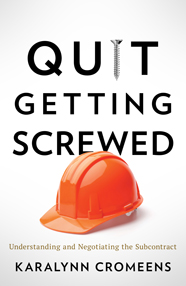
Karalynn Cromeens, author of Quit Getting Screwed: Understanding and Negotiating the Subcontract, and creator of The Subcontractor Institute, has been a licensed attorney for over sixteen years. She has spent her entire legal career in construction law, advising countless clients on how to avoid litigation.
Karalynn is on a mission to educate and inform subcontractors about the importance of understanding their lien and collections rights, sparking change and leveling the playing field in the construction industry.
📚 Books by Karalynn Cromeens
Transcript
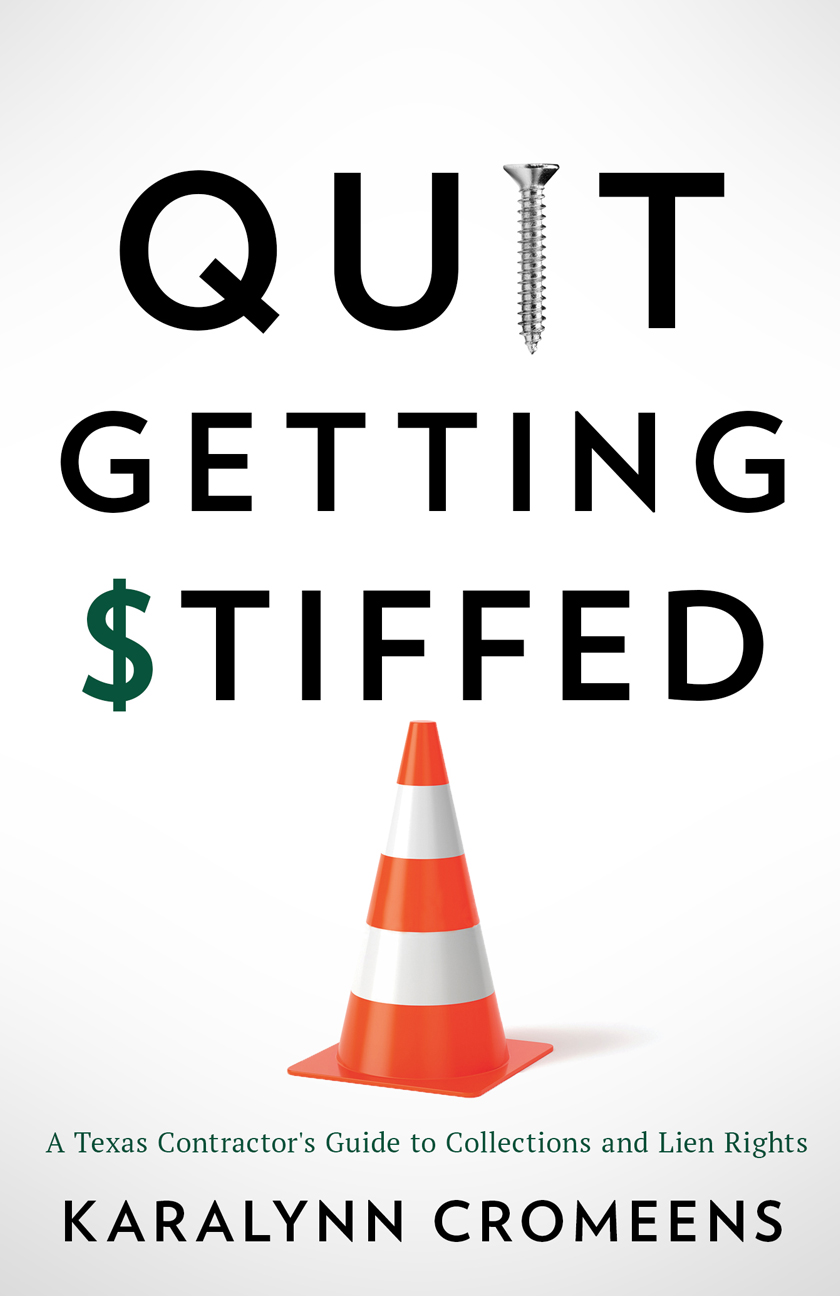
[0:00:19] BB: It’s time for contractors to quit getting stiffed. A lien is your golden ticket to securing the money that’s rightfully yours. Contractors and material suppliers encounter all kinds of lien related questions, deadlines, and paperwork when working on construction jobs. It’s critical to know what you’re responsible for when filing a lien. Attorney Karalynn Cromeens wrote Quit Getting Stiffed to walk Texas contractors step-by-step through the process of securing their right to payment on their construction projects. If you don’t take the measures outlined in this strategic guide, you could lose your lien rights under Texas law and never see a dime of that money. You have rights! Take action to protect those rights today, protect your hard-earned money, and quit getting stiffed. This is the Author Hour Podcast. I’m your host, Benjie Bach, and today, I’m joined by Karalynn Cromeens. Karalynn is the author of a brand-new book, Quit Getting Stiffed: A Texas Contractor’s Guide to Collections and Lien Rights. Karalynn, welcome into the show.
[0:01:20] Karalynn Cromeens: Hi, thanks so much for having me.
[0:01:21] BB: It’s an honor, yeah. For listeners who may be unfamiliar with you or your work. Give us a bit of your background and what you do and how you came into this line of work?
[0:01:32] Karalynn Cromeens: Well, I’m a licensed attorney and I’ve been so for 16 years and almost exclusively in the construction industry but that wasn’t my first start into the construction industry. When I was growing up, I grew up in a family of people that were in the construction industry that, what I like to call the, “Get shit done tribe” of people who build things like my grandfather owned an excavation company, my uncle, one of the first jobs I had was irrigation company. Having been in the construction industry early on really helped me with an understanding of when I got here later on after I had my law degree. One of my biggest pushes is that most of these contracting companies are small family business that are really good at what they do but they need the legal help that I learned in law school and that I’ve learned in my last 16 years of practice of being specifically in the construction industry. My goal here is to really help them get that in a plain English way.
[0:02:26] BB: Yeah, that’s great. This is a practical book that’s extremely helpful. What made now the right time to leap into getting this book into the world?
[0:02:37] Karalynn Cromeens: I think now is, there’s lots of change going on in the construction industry. They’re welcoming women more, there’s so much technology headed that way, it’s a really a revolutionary time. I think things have got to change right now about labor shortages. One of the big problems that why we can’t keep people in the construction industry is because sometimes we’re not treated fairly. People don’t want to stay in a job where you’re working as a contractor but you don’t get paid. This book specifically addresses how lien rights can help you as a contractor get paid for the work you’ve done and how you can secure those rights with the properties which is where the lien is.
[0:03:14] BB: That’s awesome. Yeah, obviously, the title kind of gives it away in the subtitle there but this is specifically for Texas contractors. For those who may not be aware, what are some of those maybe different state to state when it comes to the information you’re providing in this resource?
[0:03:28] Karalynn Cromeens: Yeah, here’s the thing, it’s that all 50 states have lien rights and so I think it’s a specific thing that we talk about, what is a lien, why is it important, just generally. This is the same for all 50 states, a lien is a security interest. In the world of credit, like when you extend people money, there’s two types of debt, they’re secured and unsecured. Well, in the construction industry, most people work, provide labor and material and then wait to get paid. They’re extending credit in the form of, they’ve already paid for that labor, they have already paid for that material and so basically, without a lien, they’re an unsecured debt and so how I like to compare it to is like, when you have a credit card and you charge it up, if you don’t pay it, the credit card company has to sue you, get a judgment and then try to collect. That is an unsecured debt and that’s what a contractor has without a lien. They have a right to go against the person that hired them, sue them in court and get a judgment and try to collect it. With a lien, it’s like, what you think of in the credit world as a secured interest. People are most familiar with in this type is like, when you go to buy a house, you can’t afford to pay cash, you get a mortgage or you get a loan and when you do that, you buy the house, they give you a deed but they take back a lien on the house or on the property that says, “If you don’t pay me, I’m going to foreclose this lien and sell the property to pay what I’m owed” and that’s a secured debt. When you’re in the construction industry and you're working on credit, basically you’re putting out labor and material and waiting to get paid, you can secure the amount you’re owed, the lien on property, just like a mortgage. Actually, the remedy for that is a foreclosure of your lien to sell the property to satisfy the amount that you're owed. Now, that doesn’t happen most of the times but that is the remedy and so, the one thing is that, all 50 states are different and although this book is specifically for Texas, I did, after I wrote the book, take the time to study all 50 states and see how they’re different and all of that, I’d actually put for free on Subcontractor Institute but some of the things that are the same is the lien is actually a piece of paper that gets filed in the county clerk for the county recorder where the property is located. What has to be in a lien is, it kind of depends on the state but just the basic information, how much you are owed, who you were hired by, what is the timeframe you were worked, what notices did you send, all have to be in the lien. There’s different timelines and one that has to be filed but all states require notice in advance upon a lien. Some states require, like in California and Florida, require notice with your first 20 days of working in order to have lien rights. Some states require pre-lien notice, some states aren’t like Texas if you are a subcontractor, you don’t’ have to send your notice to the 15th day, the third month after first work. It all is really very specific on the sate but the things that are the same, they have a lien right on all 50 states, you have to file it on time and you have to send notice beforehand. Now when that falls in the timeline is different for every state and Texas by far has the most complicated one, which is based on who you are on the construction food chain, are you an owner, contractor, subcontractor, material supplier and the type of project. It really a necessitated a whole book to describe exactly what you need to do to protect your lien rights and some other things like general collections strategies that are good in all 50 states.
[0:06:49] BB: What are some of the most common mistakes you see when someone files a lien?
[0:06:53] Karalynn Cromeens: It’s just filing a lien and not looking at the rules of what is required to do it right. When that happens, you can get in trouble and not only will you lose the amount that you’re owed, you’re going to have to pay somebody else as attorney’s fees or a penalty for filing an invalid lien because a lien is such an extreme remedy like I said, you can foreclose on somebody’s property and it’s not – Like in a mortgage situation, you sign the mortgage papers, that’s a voluntary thing. In this situation, we’re talking about a lien that is involuntary. There’s a whole bunch of steps that have to be taken for it to be valid. If you don’t take those steps, even if you file a lien, it won’t be valid and you can get in trouble. Just really paying attention to what’s required for your specific state and not waiting. Like I said, you don’t get in trouble for sending notice early or sending too much notice, you can only get in trouble for not sending enough notice and then sending it late or filing your lien late, so that’s really the big thing that I see.
[0:07:50] BB: Yeah, talk to us a little bit more about notices, why they’re so important for those that maybe just not be familiar with this. You talk of the importance of notices in the book quite a bit.
[0:08:00] Karalynn Cromeens: With all 50 states, notice is important and why. Okay, like I said, you’re somebody, you’re a contractor in a construction industry and you’re sending credit, right? The construction food chain goes, owner at the top, second step or placed to, as I like to call it, general contractor is the contractor is hired directly by the owner and then place three is subcontractors, these are the guys that are actually out there doing the work. These are the plumbers, the electricians, the landscapers, they’re removed from the owner, the owner doesn’t know exactly who they are. The owner hired the general contractor who manages the project and the subcontractors do the actual work and then below the subcontractors are material suppliers which or place three as what I call them. They’re even further removed from the owner but here’s the thing is that, the owner controls the funds for the project, they pay the general, the general was supposed to pay the sub, the subs supposed to pay material supplier and the owner does this in good faith that this is all going to happen and they don’t know unless you send them notice, the owner that it’s not happening. The whole point of notice here is to give the owner a chance to make sure that people they don’t know about that are further down the construction food chain, a chance to get paid from them directly before they have to pay twice, right? The same thing goes for, if the owner pays the general and the general doesn’t pay the subs or the subs don’t pay the people that place below them, if you send notice to the general contractor, they can make sure those subcontractors pay their material suppliers and people below them, before they issue paying it to them. Notice is the way that say, “Hey, there is a kink in the food chain, I’m not getting fed down here. We got to do something” and the sooner we do that, the better.
[0:09:34] BB: Yep, so take a minute and talk to us about creating a consistent collection strategy. What are some things to keep in mind, important structure to have in place there?
[0:09:44] Karalynn Cromeens: Some of these things are simple things but here’s the thing you got to be aware of that the collection strategy needs to start before you decide to extend credit. It doesn’t start when you’re owed money and haven’t been paid. You have to have a strategy and a system in place that if I am not paid, here’s what’s going to happen, here’s what’s going to happen and it’s consistent and it’s the same every time and so if something does happen, you’re not caught off guard. Hopefully, you won’t have to use it but if it happens, you have the strategy and so the first thing is and this kind of goes back to the first book I wrote, which is Quit Getting Screwed, is having a clear contract that says, “Here’s what my payment terms are” and following that contract. The first thing is that, “Okay, the contract says when I reach this milestone in the project I’m going to send you an invoice and then you have 10 days to pay it.” Well, if you don’t send them an invoice, it doesn’t trigger them paying you in 10 days, so being consistent with following the terms of the contract and when payment is expected so people know that’s the first thing, a lot of times is that sometimes it really just is a miscommunication that we didn’t follow the terms that were set out in the contract and that’s why we’re not getting paid. Let’s rule out the simple things, let us follow our own process in having invoicing when we’re owed money and being consistent on it. Then okay, so what happens if I don’t get paid in the 10-day time period? Does my contract allow me to stop working or should I at some point in time, what’s the next step? When do I need to send notice to make and preserve my lien rights and take the next step? Having that all planned out and so when you are invoicing and also getting the things on the front end of the project that could become in fort later on like a correct project address. The owner name and address if you are not working directly with the owner, the legal description of the property or at least the correct address so we could find that later on if that becomes an issue. If you are working on federal projects or state public projects, getting a bond before you sign the contract and start the work because you can’t lien federal and state projects, you have to file bond claim but you can only do that if you have a copy of the bonds. If those are the types of projects you are working on, having that set up on the front end so that if collection becomes an issue, you already have everything you need because it’s really hard to get information from somebody when they are not paying you and there is turbulence in the relationship and now you’re, “Hey, can I have a copy of your bond that I should have asked for in the beginning?” you’re a whole lot less likely to get it, so get everything when, you know, we’re hoping the relationship goes perfectly and there’s no issues but just in case, I have my security. Another great thing to do is if you’re ever paid with a check by anybody, make a copy of it, put it in your file because some of the posted remedies to collect the amount that you’re owed is based on where they bank out of so having that information is extremely important and then just paying attention to if things are out of the ordinary. This client always pays usually in 10 days and they’re not then we need to send notice and have that system in place to step forward to make sure we collect our money.
[0:12:40] BB: You’ve reviewed thousands and negotiated thousands of subcontracts, what keeps you consistently passionate about this work and when did you first realize how important this really is?
[0:12:53] Karalynn Cromeens: What keeps me passionate about it is because I’ve seen what happened. I’ve seen the businesses that went out of business because I didn’t understand what they were signing. They didn’t understand the ramifications of it and you know, at the heart what I am trying to do is help them run better businesses and realize that the things that you sign have effects later on especially on the subcontract and like I said, in the general world if you were to take a subcontract to a regular contract attorney, they would literally burn it because it is so one-sided and unfair. Nobody was saying anything, nobody is saying, “Hey, it shouldn’t be this way. It can be something different” and especially in a way like even if you went to read the contracts that are out there, I mean I have a hard time reading them and I’m a lawyer and so they’re definitely not in a plain English style so that you can understand what you’re signing. Here’s the thing, my job as a lawyer is I’m going to tell you where the risks are. I’m going to point them out. I’m going to say like, “This part of the contract means you’re not going to get paid unless the owner pays the general” and then you as the business owner can decide what’s worth negotiating, how much you want to push back. You don’t have to get a lawyer involved. What I would do with my clients, I go through here’s the risk, here’s what this means, go back and try to negotiate it on your own because I know that there’s a fine balance of taking risk and not getting the work if you push back too hard on some of these subcontracts. Right now, just the way they’re written, there is nothing. I think there is just a general sense that the salt of the earth, people who get shit done are out there building things just think that there is nothing in there that’s bad. There is nothing in there that can hurt them and the opposite is actually very true.
[0:14:25] BB: That’s ultimately the point of a lien, right? It’s to provide the sense of security but if you don’t know everything you need to know, it gets dicey pretty quick.
[0:14:33] Karalynn Cromeens: Correct and that’s the other thing is that I don’t think a lot of people know the value of a lien or what it is and how it can be used to secure the work that you do that you do have rights. Even if you sign this horrible contract, you can still file a lien and most states that I’ve looked at like 90% of them, you cannot pre-wave your lien rights, meaning that if you sign a subcontract that says you waved your lien rights before you start working that’s not enforceable. Now, don’t get me wrong and there is a chapter in the book about this and just generally in any state, if you sign an unconditional lien waiver when you haven’t been paid or when the project is ongoing, you will wave your lien rights and then there’s nothing – then the security is gone and so there are ways to get around that. The book has got specifically Texas forms but they’re good in all states, so use a conditional form. You shouldn’t really be asked for an unconditional lien waiver in exchange for a check or if you haven’t been paid. That’s where people can get into trouble is you know, releasing their lien rights and the promise for a check and then they don’t get paid and they’ve released their lien rights and even I as the best lawyer couldn’t help them.
[0:15:34] BB: Yeah, so obviously this is a very practical book but if readers can takeaway one to two main themes or things, what are you hoping they walk away with?
[0:15:43] Karalynn Cromeens: My hope is here’s the thing, is that I can remember and don’t get me wrong but me getting into construction law was actually started out as a necessity because I started a material supply company and so I had to figure out the lien rights and how to make sure our money was secured but I can remember the stress that non-payment caused being a business owner in the construction industry and it’s Wednesday afternoon, early Thursday and this check from this job absolutely has to come in or you’re not going to be able to make payroll. The stress that that puts on the family, the stress that it puts on the business and you’re just obsessed with getting this in because you don’t know what it is going to look like if you can’t make payroll but if we have this consistent collection strategy, we can get away from that and we can just have a process and it is always followed and we’ll get paid and we won’t have to have those butterflies in our stomach, you know, every Thursday afternoon when we’re calling desperately that we need the check so we can pay the people that worked for us. Trying to relieve that stress and really these contractors are really good at what they do and I think when they start, they don’t realize that there is so much more to running a business than just being good at what you do and these are the things that I can if where I sit from on the legal side that everyone in the contracting business needs to know about to make sure that all of their hard work and everything they’ve built will be protected.
[0:17:03] BB: Well, this book is clearly a great resource and you actually have a ton of great resources online as well for those that want to dive deeper into the content, where can people find you online? Talk about some of those ways that people can learn more and maybe if they want to reach out to you, how do they do that?
[0:17:19] Karalynn Cromeens: Absolutely, so when I launched the first book, Quit Getting Screwed, I also launched The Subcontractor Institute. What that is a great resource. I actually teach all 20 of the chapters in Quit Getting Screwed for free and there’s 80 free downloadable forms depending on the situation that you need. There is also a paid, if you want me to review your contract, we can do that for a flat fee so that’s all at subcontractorinstitute.com and the 50 states, all 50 states lien rules are there as well. You can buy the forms there, the Cromeens Law Firm also does all liens in all 50 states and could help write subcontracts and contracts in all 50 states, so the cromeenslawfirm.com. I’m Karalynn Cromeens on LinkedIn and Facebook and all the places. I am definitely here to help and I love to answer your questions and help you guys run better businesses.
[0:18:05] BB: Well, that’s awesome. Thanks, Karalynn, for taking time to chat with us today. Congratulations on the completion of this book, that’s a big undertaking, and thanks for taking time to chat about your book.
[0:18:15] Karalynn Cromeens: Thank you so much for having me.
[0:18:19] BB: Thanks for joining us for this episode of Author Hour. You can find, Quit Getting Stiffed: A Texas Contractor’s Guide to Collections and Lien Rights, on Amazon. A transcript of this episode as well as our previous episodes is available at authorhour.co. For more Author Hour, subscribe to this podcast on your favorite subscription service. Thanks for joining us, we’ll see you next time. Same place, different author.
Want to Write Your Own Book?
Scribe has helped over 2,000 authors turn their expertise into published books.
Schedule a Free Consult