Karrie Brady: Episode 783
Read the full transcript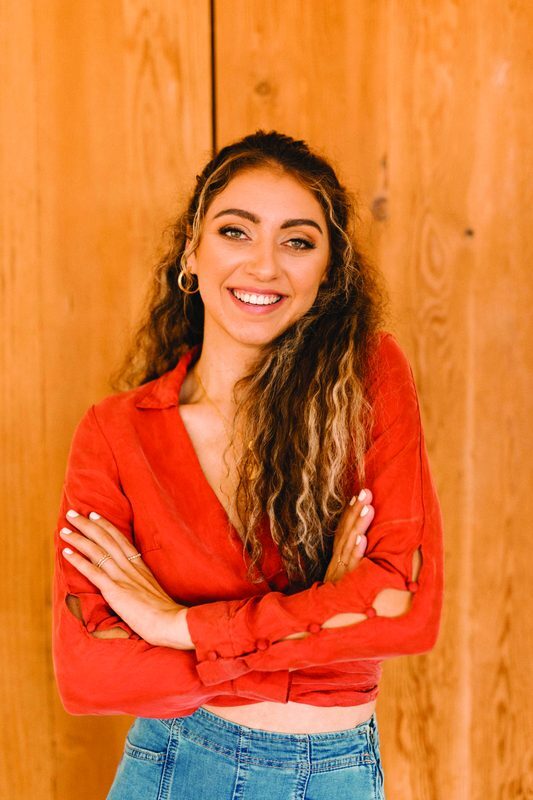
Karrie Brady
Karrie Brady is a seven-figure entrepreneur and an online educator passionate about putting more money in the hands of women everywhere. Dedicated to making the world of entrepreneurship more accessible to her clients, Karrie has helped thousands of women build an online business according to their own rules, personalities, and preferences. At just twenty-five, Karrie has appeared in Forbes, Authority Magazine, and Medium and been featured with Thrive Global and Create & Cultivate. She lives in Los Angeles with her husband, their two kids, and three rescue dogs. For more information, visit karriebrady.com.
📚 Books by Karrie Brady
Transcript
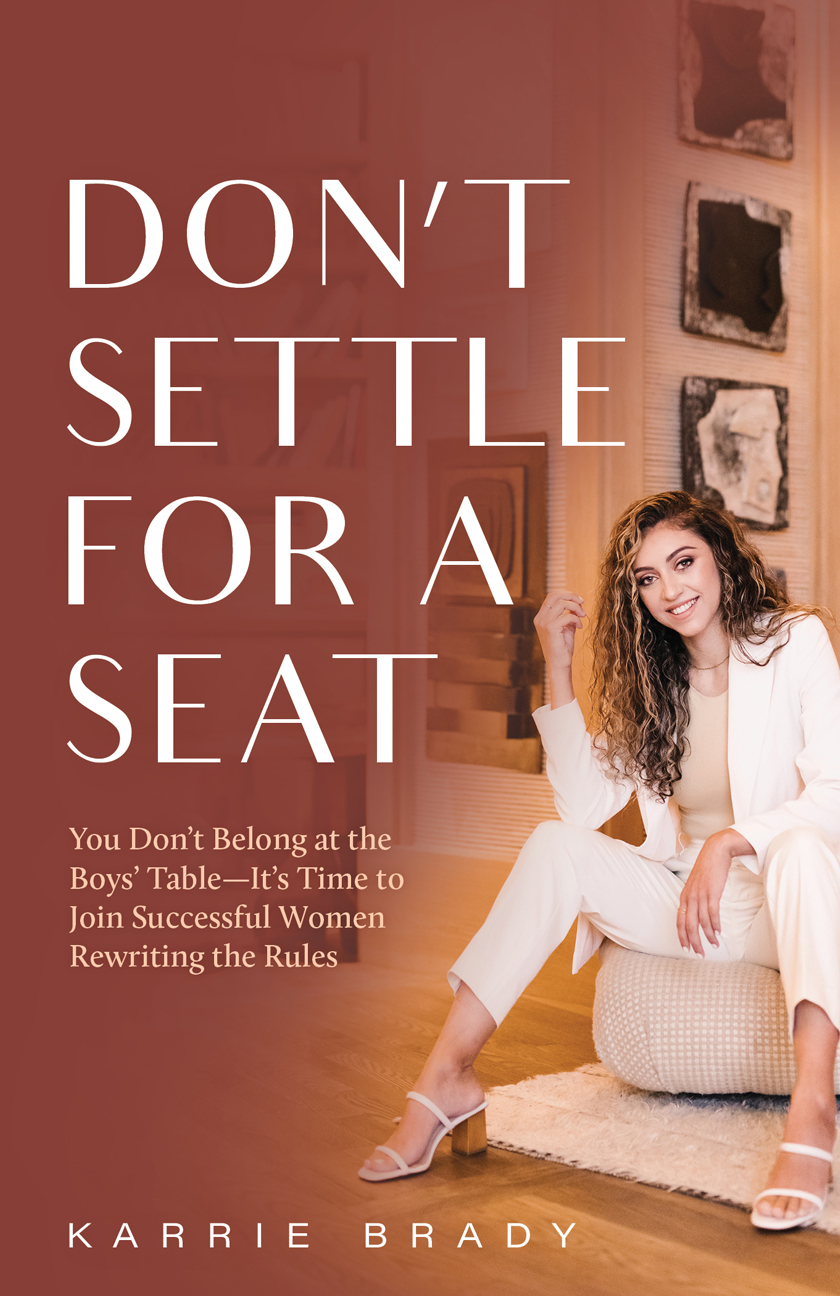
[0:00:27] BB: There’s a demographic with an overlooked business advantage. Women. Women have the emotional intelligence, consumer experience and marketing awareness to build the enterprise of their dreams. In Don’t Settle for a Seat, business coach and entrepreneur expert Karrie Brady, helps you break down your self-imposed barriers, overcome fear and create your own path in entrepreneurship. Business is about listening, connecting and empathizing. Skills that come naturally to many women. If you have the drive, this playbook will supply the rest. Learn how to leverage your instincts, recognize your potential and fulfill the role that was always meant for you. Welcome into the Author Hour podcast, I’m your host, Benji Block and today, I am so honored to be joined by Karrie Brady. She’s just authored a new book, titled Don’t Settle for a Seat. Karrie, thrilled to have you joining us here on the podcast today.
[0:01:22] Karrie Brady: Yeah, thank you so much for having me, I’m super excited to chat more.
[00:01:26] BB: Absolutely. Karrie, for listeners who might be brand new to you and your work, just give us a bit of your background and what you’re up to these days.
[0:01:36] Karrie Brady: Yeah, for sure, I can kind of SparkNotes it if you will. I started out, my first entrepreneurship journey was when I was 19. My dad got into a dirt bike accident and broke his neck and it was kind of like a forced sabbatical from college, if you will. I basically quit going to school, moved home to help take care of him. He needed somebody home with him full-time as he was relearning how to do a lot of things. Thankfully, he’s fine and it’s like .01% of people with that injury even survive so we’re really lucky just to —
[0:02:09] BB: That’s amazing.
[0:02:09] Karrie Brady: Yeah, it was like a crazy roller coaster journey but because of that, I was kind of moving home to help take care of him and I was like, I’m just a very independent person. Even though my parents offered to help pay my bills and stuff like that. I really just wanted to have something of my own. I was like, what can I do with a flexible schedule, that allows me to kind of create things on my terms and work when I want to. And a lot of those things I feel like come through most people’s heads at some point because a typical nine to five does not allow for a lot of flexibility. At that point, I was like, you know, online personal training and personal training in general is kind of picking up speed. I’d always been healthy and fit, and in the gym and I was like, “Okay, maybe this is something that I can kind of go after”. And then I did that for about two and a half years and was broke basically the whole time. I just did not have an understanding of business or how to sell, honestly. Because of my age, you know, starting out at 19 as — I just did not — I wasn’t confident. I wasn’t confident that this is what I was meant to do. I wasn’t confident or didn’t have this overarching desire my whole life to be an entrepreneur. So, there was a lot of things that I felt, maybe this wasn’t cut out for me, maybe this wasn’t right and it wasn’t really until I started surrounding myself with other entrepreneurs that were really successful and kind of doing it the right way that I realized, “Well, reel it in for a second, maybe it’s not that I’m not cut out for this, but maybe it’s just the way that I’m doing this isn’t cut out for me”, right? The way that I am going after entrepreneurship, maybe there’s other ways to do this that would better suit me. And once I kind of made that realization, I was able to kind of almost unlock all of this potential that just had been sitting inside because of the way I was forcing myself based on preconceived notions of what I thought business was supposed to be like. And then from there, I was really able to just kind of take it, learn. I decided to just kind of value my problems, enough to fix it. I value the fact that I was like, “Okay, I’m not good at sales, I need to get better at sales in order to have a thriving business in order to make money”. That needs to be something and that I value at this point. I think a lot of people, when they first get into entrepreneurship, they spend so much time just honing in on their skill and their craft and they’re like, “If I can just be the best of the best that this, my business will take care of the rest and everything will be fine for me” when it’s not actually that case. A lot of times, you have to be really good at your skill and also really good at sales. The two don’t work without each other so I took some time, really learned from people that I was surrounding myself with on how to be better at sales. And from there, things kind of just exploded. It was kind of opportunity meets hard work at that point and I was like, “Wow, look at everything that I see for myself” I ended up selling $150,000 of my friend’s offer — she was selling an online program. I sold it for her, sold $150,000 in six months and she was like, “You have mastered this, you are really, really good at it, you should start teaching other people how to do it too.” I went into one of her programs and started teaching other women how to be better at sales and then from there, the last three years, it’s just kind of escalated and that’s kind of what I found to be really true passion of mine.
[0:05:07] BB: Amazing. I’m so excited to get to ask you some follow-up questions on that. Let me ask you this, it sounds like you’re very busy. Why take on writing a book right now? What made this the right time?
[0:05:18] Karrie Brady: It’s actually really funny because I’m probably a little bit busier even than I let on. I just actually had my second daughter while writing the book.
[0:05:25] BB: Amazing, congratulations.
[0:05:27] Karrie Brady: Thank you. I was, you know, pregnant and I am not sure about any other women listening to this but I did not have easy pregnancies not anything like how it’s perceptualized to be. But the way that I like to put it is, almost as if it’s an arrow, you know, how you have to pull back to kind of spring forward. I view writing a book as a really long-term legacy building investment and I was like, okay, while I’m kind of preparing to give birth to this baby, I’m having to kind of pull back as it is so why not allow myself to take the time in space also to focus on one thing and one thing only, and that’s just getting this message out to as many women as possible. The best way to do that, what medium would that be? A book. I really just took the time to be like, okay, it takes me nine months to write a book and it also takes me nine months to birth baby. We’ll just do this consecutively and call it a day and it was a crazy process, a crazy ride, shout out to Scribe for making that happen. I’m really glad that I took the time to do it because I already, already before the book even releases, I’m already feeling like the overwhelming, just like gratitude and success and just, I’m so excited to get this out into the world and into people’s hands.
[0:06:36] BB: Yeah, we’re excited for you. I think that writing a book is a lot like having a baby. It’s funny because there’s just so much that comes with that process and different feelings and emotions and buildup to the release and all these things so it’s amazing. You have this great subtitle of the book “You don’t belong at the boy’s table, it’s time to join successful women rewriting the rules.” That paints a little bit of a picture of who you were imagining reading the book, right? Women. But talk to me about who the ideal reader was in your head as you’re working on this project?
[0:07:08] Karrie Brady: For sure. You know, men could benefit from the book of course too but my main target demographic with the book is women. Simply because when the business industry and world was kind of getting built, it was built by men. So, there’s a lot of things that have been put out there or society has made business to be, or appear to other people that women don’t necessarily feel aligned with nowadays. Especially as a lot more women are trying to join the workforce while balancing having a family, and different things like that. A lot of things don’t seem possible for them and that’s just because of these preconceived notions of what the boy’s table looks like and you’ll hear a lot like — I want a seat; I want a seat at the table. When in reality, pulling up a seat to a table, if the table doesn’t fit you, will not help you. It doesn’t matter, right? If that table was not made for you, you’re not meant to be there. We need to build our own table. My purpose with that subtitle is really just to invite women to not make themselves fit into something that they don’t belong. It’s trying to fit a square into a circle, right? If this wasn’t made for you, that’s okay. It’s time for us to kind of rewrite these rules and there are women out there, including myself that are doing it, there are other seven figure entrepreneurs that have kind of figured this out and I want you to join us. Does that make sense?
[0:08:22] BB: Absolutely. Yeah, I think that’s great and I think there are so many things in this book that you point out that I think the building of a new table is very necessary and there needs to be other ways that are shown that we can do business and I would say, more human way…
[0:08:39] Karrie Brady: I agree.
[0:08:39] BB: …that was one of my main takeaways, honestly, Karrie, from your book was there is — we’ll talk about emotional intelligence, that was probably my favorite chapter but there’s so many things that we can learn. And as women get more into business and do create tables, we’re going to see massive shifts that I think are really, really good for the market.
[0:08:59] Karrie Brady: Yeah, I agree. I think it’s just like you said, a more human way is a very — really great way to put it and just understanding that we want people to make empowered decisions. We want people to feel really good about the purchases that they’re making when they’re buying something. Previously, that wasn’t always the case, you know, sales had a very bad stigma, right? When you heard sales, you thought, “sleazy” or people were embarrassed to say that they were in sales previously. Now, it’s like no, I’m excited to say that I’m in sales, I’m in marketing and business because I love being able to give a service to somebody and to solve a problem and to fulfill a need. And yes, I get monetarily compensated for that because otherwise, how would I survive but at the same time, it’s a win-win. Previously, sales was almost kind of like, you were taking something away from someone. And I feel like that’s the energy a lot of women bring into the business space and that’s why it doesn’t align with them is because they feel like it’s such a negative thing when in reality, they just have to kind of rewrite that definition.
[0:09:53] BB: I want to talk about that actually a little bit more because I feel like that shift is happening. I think there’s a new wave of sales and marketing that does fill that but I do think also, we are a generation — I’m saying “we” as maybe under 30 where we were so bombarded with ads and I don’t know if it’s just a fatigue to advertising and sales in a sense that it does kind of feel a bit gross. How did you shift maybe your mindset and mentality and for those that may still be kind of stuck in that way of thinking, what would you say is a way to maybe change your approach or think about it differently?
[0:10:28] Karrie Brady: For sure. The way that I like to explain it to clients and such is you know, we have a limited amount of attention units if you will, per day, that we have available. Based on everything that’s going on in our lives. It’s kind of like when you go shopping at the mall, when you see all of these hard plastered signs everywhere that’s like “discount here”, and “five for me here”, you feel exhausted. I don’t know if anyone else feels this way but if I go to the mall or even if I go to the grocery store, I come home and I’m like, “I’m absolutely not cooking anything, I’m ordering pizza”, right? I just feel so exhausted and drained and that’s because there’s all of these subliminal messaging in the grocery store or at the mall for some reason that basically, sucking our attention units. It’s all of the stuff that’s fighting for our attention. The way that I like to promote sales, yes, hard pitch your stuff every once in a while, but that’s not actually the work that’s going to get you the sales, it’s all in what I’d like to call a soft sell. A soft sell is basically allowing someone to come to the idea that they need your offer or they might be interested in your offer, through intrinsic motivation versus extrinsic motivation. The extrinsic would be like, you calling to them and be like, “You need this, come here”, right? The intrinsic is them seeing something and then be like, “Wow, I might be interested in that”. Intrinsic motivation is so much more powerful than extrinsic. If we can get someone to almost self-identify their own need and gain their own interest in our offer, it’s a lot more powerful. Does that make sense?
[0:11:49] BB: Yeah, it does, can you maybe walk out an example for us?
[0:11:52] Karrie Brady: For sure. For example, I do online education, I talk about sales a lot and ways that we can soft sell is just by storytelling, right? Let’s say I’m using a client example. Let’s say I’m talking about a client testimonial, there doesn’t have to be a hard pitch. If I’m just talking through like, where someone was at when they started working with me and you know, what their feelings were and where they are now and how excited they are and I’m just celebrating them. That in and of itself is a soft sell because people can now envision themselves in that person, that client that’s worked with me, in their spot. They’re like, “Wow, I want that, I want that too.” It’s kind of like creating this me-too moment. That’s a really great way to soft sell through different factors that especially affect women like a personal review. A lot of times, women are naturally looking for someone who they either know or just another person to kind of back a product or an offer or a service before they buy it, just to add a certain level of trust. There’s different foundational layers that even just adding in storytelling through a test review can allow for someone to gain that like, know, trust factor. That allows it to be a soft sell. You’re selling without actually trying, if that makes sense.
[0:13:04] BB: Yeah, that is — I mean, if you think about it, those shinier and shinier that marketing gets, I think the more weary of it that we become. We always want that personal connection, that person that has tried the product, already has a story about how it worked so great for them and then that opens us up.
[0:13:22] Karrie Brady: For sure. I think a lot of people kind of get concerned with that so I just want to throw this out there, they get concerned when they’re just starting, right? They’re like, “Okay, I don’t have any testimonials, what am I supposed to do? It’s my first time getting started”. And I always like to say, you are your best testimonial, right? When we’re leaning in with a skill or a craft and you haven’t, you know, potentially worked with anyone before, you are your best testimonial. What can you do to show your knowledge, right? Through your own personal journey, your own story, your own actions. You are your best testimonial first and foremost; I think that’s important to just like hound in. Because a lot of people will be like, “I need to do things for free in order to get testimonials” and I don’t necessarily agree. I think it’s great to get experience but if you're looking for testimonials, it’s always important to remember that if someone doesn’t have any monetary investment, a lot of times they don’t take it as serious, or they don’t care as much which is unfortunate but that’s just kind of like the nature of humans. Just to remember to be your own best walking testimonial.
[0:14:20] BB: That’s a good follow-up. One thing I often hear is this fear. I don’t have the right skills, maybe I lack a certain temperament. And you say that women specifically already have some of these skills, right? That you’re trying to — allow them to see and kind of tap into. You say that they have the raw muscles, that those are there. It’s just about training them to build a business. What are these skills that you see that women posses that they can tap into?
[0:14:46] Karrie Brady: Yeah, I think that when it comes to this kind of new business shift where money is kind of made through basically just genuine connection and relatability and that emotional connection, women are really predisposed for this. I think that also just comes from being like kind of like wired for it like biologically and socially to value personal connection. We are naturally people who lead with empathy and emotional intelligence and we kind of naturally implement these, almost if you will throughout daily life if you think about it. I don’t know about any other parents here but I negotiate with my toddler all day long. All day, every day, that my whole existence revolves around negotiating with my toddler and a lot of women don’t see that negotiation skill as a business skill but it is. There’s a lot of skills that we use throughout the day that can be directly applied to business but how we’ve kind of categorized them if you will, within our toolbelt is not in that way. It’s all about taking these tools that we already have within us that we’re using all the time and then just applying them a little bit differently.
[0:15:54] BB: That’s great. Imposter syndrome, clearly going to come up as you start to address some of these things, right? Where you’re trying to overcome the mental hurdles. How have you seen imposter syndrome play out in your story, and then what are some of the tools that you’ve used to kind of overcome that?
[0:16:11] Karrie Brady: For sure. I think imposter syndrome, there’s a couple of different facets of this of course and I do want to just point out that part of imposter syndrome comes from not seeing a lot of people do what you want to be doing, right? There is not as many women that’s just a fact in the business space in CEO roles, doing what some women want to be doing and so that can hold us back, right? From just fear of not feeling like again, we have a seat, we have at able of our own or anything like that so I just want to acknowledge that to say, surround, surround yourself, number one, with people who are doing what you want to be doing. Search them out, find other women that are in a spot that you want to be in because that energy is so powerful but I also think imposter syndrome in my opinion is a shadow almost of perfectionism, and so there is a lot to say around — at least for me, I was like, “I have to be the best at my craft and the best of my skill” and I focused all my energy on perfecting what I was doing with personal training and knowing the most and again, because I was insecure about my age and I didn’t want people to question me or not having that much experience and so I was just really just going on my skill but I was actually just this fear around being exposed, around somebody being able to be like, “Oh you don’t know the most. I’m not going to pay you.” whatever that looks like and so that’s really hard. I saw it show up for me as far as the fear of being kind of exposed as a fraud really making me sit there and be like, “I’m just going to know as much as humanly possible and I need to be at this place with my knowledge before I am able to sell anything.” It was really just like this big long con of a perfectionism tactic and procrastination if you will of me just being like, “Oh, when this happens then I’ll do this.” “When this happens”, and then I just kept pushing back the date and pushing back the date and I’m sure a lot of people could relate to this, which is why they like, “Oh I felt like I’ve kind of wanted to do this forever but I have never gone in” and that is because a lot of women — and I’ve done this myself, we almost talked ourselves out of it before we even get the chance to prove that it could be something that works out in the long run.
[0:18:09] BB: How have you see this develop overtime? Because as I interview other authors, I’ve heard several times like they would get to some point where they imagined like, “Oh when I get there then imposter syndrome will disappear” but then actually — even just within the last couple of weeks, I was talking to someone. He interviewed a Nobel Prize winner and when he won the Nobel Prize, he said that he had this spike in his imposter syndrome. That was the moment in his life where he felt it the most. Have you experienced that as you’ve maybe hit certain levels of success where you’re like, “I thought the shadow would be gone by now?”
[0:18:45] Karrie Brady: For sure. I think this saying in the online space, I am not sure if other people heard of this is that, new level new devil. It’s like as you grow and see more success, I almost feel like there’s more. There is more imposter syndrome because there’s more pressure to keep it going, right? And to grow even farther and to learn even more and to be even more successful. It’s like once you get a taste, you can’t help but keep the chase. I find myself really consistently trying to — I call it grounding myself and being like “I’m so appreciative of where I am now and the success I have”. That doesn’t mean anything for where I’m going. That doesn’t dictate anything about how I want to live my life. And then I also think that imposter syndrome sometimes there’s two facets, right? One, there is a healthy level of imposter syndrome that keeps us grounded that reminds us that there is something at stake that we want to make sure that we have all of our ducks in a row, right? Then there’s the opposite side that can be very harmful as far as our own confidence level and our own perception of how people view us. I think at every level, you’re going to experience some. My best tip that I utilize is I really value fact over feeling. I will make a list and I will journal out all of the things that are popping in my head and then I almost categorize them. I’m like, “Where’s the proof?”. Is this a fact or is this just a feeling that I’m experiencing? Then I kind of journal them all out, some will be facts like I need to be able to deliver X, Y and Z and yes, that’s a little bit scary but that’s a fact. Or like I am feeling like I am going to get exposed, right? Obviously, that’s a feeling and then I sit there for the feelings and I say, “Thank you for the warning, I’m okay” right? It is okay to acknowledge that those feelings exist like, “Thank you for the warning, thank you for trying to keep me safe” because it really is almost like a fight or flight type thing going on in your head. I’m just like, “I’m going to keep going but I acknowledge that you’re there” and then I move forward, right? I think it is important to acknowledge the feelings and not also just disregard them because then it is almost like this looming cloud over your shoulders if you will.
[0:20:39] BB: Yep, that’s key and it kind of leads right into this next question on emotional intelligence because obviously the whole book I think is worth picking up and reading but this was the chapter that kind of did it for me. I loved hearing you talk about harnessing emotional intelligence. You say that “You’re so emotional” is a criticism women hear all too often but it’s actually a superpower and I 100% agree. Explain the superpower of emotional intelligence and how that can play out for women in business.
[0:21:10] Karrie Brady: Yeah, I just think it’s really important to understand that women just have a stronger drive almost than men — most men — to connect emotionally with other people and you know this is like biological and social roots. Do I agree with it necessarily? No, I wish men were primed for emotional and social connection just as much as women and that’s something I think generations now are starting to change and treat them similarly. When you think about the evolution of, it’s kind of like we’ve been trained all our lives to kind of connect emotionally. If you think about — we’re kind of like primed to be like caretakers and we are the kind of people that are like birthing the next generation. There is a lot of things that are like socially and societally built up to this but we have this ability almost to read, influence emotions and that comes with real economic value that I think most women don’t really tap into. If you think about like the old way of sales versus the new way, we kind of can use this new way harnessing emotional intelligence to perceive and then influence emotions, both other people’s and our own in a sales conversation to make sure that they’re feeling really good about their buying decision — whatever that looks like and getting their outcome of what they’re looking for, whatever problem it is that they want solved. I think it really just, I like to put emotional intelligence at the center of everything that I do and understanding that like my goal is to understand their needs, their problems, to listen to them in a way that allows me to understand, validate them, as well as provide the best possible solution. It is kind of like getting out of our head and getting in their head in order to really understand what is going on versus kind of this old way of sales, which just projects whatever I want to happen onto the customer. Does that make sense?
[0:22:55] BB: Yeah, I think that projection instead of working in a sales environment where you are just trying to figure out, you’re in the whole time. If you have a level of emotional intelligence where you can have a back and forth and ask great questions, you are a lot more sure on what you’re providing as a service that it’s actually going to be good for them, right? You’re not just trying to get through it and make sure you made a sale. Obviously, it’s important but you’re trying to make sure that what you’re providing is the best for that person and again, to go back to what we were saying at the very beginning of the conversation, it makes it far more human and so I think when — I mean none of us like being sold to, so just reversing that and saying like if I am on the opposite, if I am on the receiving end of this how would I want this go, I do think women are far better at that. I do think like you were saying, there is a lot of room for growth from men and that’s where I really register with that chapter is a feeling like men, there is a lot that we can learn here in our approach and so yeah, that definitely makes sense.
[0:24:02] Karrie Brady: Yeah, and I think it is very much how I like to approach it. I approach the sales the same way I approach money very neutrally. I’m just like this is a tool for me to provide a service because it is when people start to go into this, “Oh, I want to win. I need to get the sale. I need to do” you know what I mean? It is very much themselves-centric and if we can just make it a very neutral situation where I am like, “I want this to be the biggest win-win that I could possibly make of this.” I think there is a lot less pressure on us because people put so much pressure on themselves to perform that they are almost in their own heads and I tell my clients this a lot too. I’m like, “If you catch yourself putting so much pressure on you, you need to really reassess because that means all you’re thinking about is yourself and you’re not thinking about the other person.” It is really important to approach it very neutrally in a way that’s like “I am here to be kind of like the middle man between them and what they desire and my job is to just make sure that they can get to that point from A to B in the easiest simplest or best way possible”, does that makes sense?
[0:25:02] BB: Yeah, and you give two really helpful I would say tools or ways of thinking about this and you say it really changed the game for you in your sales conversation. We talk about fulfilling desires and alleviating pain. That does automatically make it a win-win so expand on that a little bit. Tell me what you’re talking about there.
[0:25:21] Karrie Brady: I think people naturally — and this is something from like this old way of doing sales if you will — I think people naturally hear, “Oh you need to hone in on the pain point. You need to remind them of why they need your offer and you need to remind them of what is going on” and I’m like, “You can do that but for women, do you want them crying into a tub of ice cream or do you want them to buy from you?” because if you are just hounding in this pain point, they are just going to feel like trash. They are not going to feel good and so I think it is really important to yes, remind them of their pain points so that way they understand why they need the offer but also remind them of what it’s going to do for them, right? Remind them of how it’s going to change their life or what it’s going to be able to provide and what their life is going to look like after the fact. I feel like that is so important. Too often these pain driving points is a very masculine way of doing business, which is very old school style versus a more feminine way, which is really leading with desire and fruitfulness. Again, making sure that they’re making a really empowered decision out of I like to say out of desire, making this empowered decision of I know what I want in the future so I feel really good about making this decision versus, “Oh my gosh, what if this happens” and sitting in fear and this pain point instead and then making a decision out of there because I think what I found is when people make decisions out of fear and not empowerment that can lead to regret or just a lot of other negative feelings around your whole entire sales process. That is definitely not what we want to bring into any sort of type of relationship with that person or the future, if that makes sense.
[0:26:49] BB: Are you using both simultaneously in a conversation and just kind of feeling out when you should be talking about fulfilling desires and when you should be talking about alleviating pain or does it matter? How are you kind of using those both in tandem?
[0:27:04] Karrie Brady: Yeah, I think that the thing is that yes, you do need to understand your pain points like if you are going to make a buying decision. You would have to understand what problems you want solved. It is important to remind people like, “Hey, the reason why you even wanted this was because of X, Y and Z” because you are struggling right now. A lot of times I like to do that in the beginning of any type of sales conversation or relationship building moment. Then as I am starting to get closer to presenting the actual offer and presenting the sales, I start to empower them. It doesn’t have to be this way forever. There are solutions out there that are ready for you, you know what I mean? In order to help you get to where you want to be so it kind of starts with pain but I like to use — I like to say leading with desire when it comes to the close is so important especially with women.
[0:27:49] BB: We’ll pivot one more time and then start to wrap up here but I loved your section talking about the importance of mentorship and a huge part of your story that people can read about is the difference between the first time you started your own business and the second time having people around you who had done it before, who kind of opened your eyes in a sense to all that was possible. Jim Rohn has that quote, “You’re the sum of the five people you spend the most time with.” Talk to me about your circle and how that really helped you and then if there’s those that are going, “You know I have great friends but some of the desires that I have to maybe start a business, be an entrepreneur, I don’t have that circle”. What would you encourage people to do — maybe step out and try?
[0:28:32] Karrie Brady: Yeah, I mean I feel really blessed that I had family — with my immediate family, my mom and my dad, they were really supportive of me taking this on and stuff but I think that the people you surround yourself with, with your friends can almost be more important because especially if you’re younger just getting started or kind of like, those are the people that you’re around the most like yes, it is nice to get like a pat on the back from mom and dad. In reality, we value our friends a lot. We value their opinions. I think for me by not surrounding myself with like-minded people — I think number one, women want connection. That is what we’ve talked about in this whole podcast and we value that very strongly and so a lot of times when people start to get into entrepreneurship, at least this happened for me is I felt very isolated. I didn’t feel like I was surrounding myself with people who are doing what I wanted to be doing. It almost made it harder because I didn’t have anyone to talk to about what was going on and so for me, I think that it is one of those things where like you said, you are who you surround yourself with and if those people are negative, if those people are not going to support you or they’re not going to hype you up or they’re not going to give you validation in what you’re doing and they’re always going to be questioning you, that’s not going to help your self-confidence. Your confidence and those beliefs is easy to take those beliefs on as your own if you will and so it is really important if you don’t have those people to just utilize the power of social media. I mean, it is so easy to find people to connect with nowadays as far as on certain even just hobbies. I mean you can go into Facebook and see just see all of that. You can go into Facebook groups and search and you can just search like you were literal location. Whatever city you live in or the biggest city around you if you are somewhere small and then whatever it is that you do if you’re creative, if you want to be a brick-and-mortar business owner and gosh, nine out of ten times I can promise you that there will be some sort of group formed already. But at the very least, you can use social media and just have an online kind of relationship. I always say that I don’t take advice or criticism from anyone who is not where I want to be, right? I think it is important to surround yourself with people who you can go to for advice or for criticism that are kind of on that same level with you and start establishing rapport and connections and just having people to talk to, I mean what I like to say, what I first did, what I first started is I found people who are doing what I wanted to be doing in the future like really big mentors of mine that I related to on multiple different levels and then I started looking at who was following them. Because at that point, I’ve kind of established the true connection with this person already. I’m like, “Okay, they value kind of the same things that I do or they’re in the same niche or they’re in the same area of what I want to be doing”. So hopefully then I could just start engaging with their stuff and checking them out and being like, “Wow, are the at the same level as me? What are they working on?” and then you just start a conversation. It does feel scary, sometimes I feel like it’s like asking somebody out on a date. I’m like, “Is this the entrepreneur dating pool at this point?” but it’s important to build those established connections because if you don’t, it will feel very isolating and very lonely. And the chances of you keeping it up and being able to maintain it completely by yourself is very slim. And honestly, you deserved to be surrounded by people number one who support you but also number two, get it, you know what I mean? There is nothing like that just true understanding of an issue or a pain point or something going on with you where someone is just like, “Dude, I get it and it’s okay”, you know?
[0:31:56] BB: Sometimes I think we underestimate the power of our phones in a weird way because it can be really easy if you haven’t been in a mode of creation to be so used to consuming that you kind of forget about the tools at your fingertips and so flipping that switch back on and going, “Oh yeah, I can DM somebody. I can reach out and try to grab coffee with somebody” and even if a bunch of people are say “no”, if only one or two say “yes”, that’s one or two more people that I now am connected with and friends with that can inspire me. I think there is a lot in that tool that you might hear someone say it but if you were to actually apply it, it could change your life in some way, so I think that is really good Karrie. As we wrap up, I typically ask authors one of two questions and it is usually like what’s one or two takeaways you hope people take from the book but because this has so much practical advice in it, I’ll ask you a slightly different way. If someone was to finish reading your book, they apply what they read, what do you believe they’re going to feel? What do you hope they feel once it’s applied?
[0:33:01] Karrie Brady: Yeah, I just hope they feel empowered. Empowered that they can turn what their own preconceived notions were about business into something that is actually attainable for them. I hope you feel empowered to start taking action, to start living out this dream that you have inside of you but you don’t just have it boxed away in a little side that’s like, “Maybe one day if all the stars align”, I hope you just are like “No, this is possible for me”. I am going to take my little box out from where I’ve put it, where I’ve stored it and I am going to start diving into it and I am going to start thinking about it a little bit more and I am going to start putting the effort in and the work in to start seeing this become reality for me because I deserve to and I am able and I am powerful and I am enough the way that I am in order to see success. That is really what I hope they take away from this book.
[0:33:48] BB: That’s great. Besides checking out the book, which obviously everyone should go do, how can people connect with you further?
[0:33:54] Karrie Brady: Yeah, I mean I am on social media. You can find me just @karriebrady. It’s Karrie Brady, so it is not spelled normally because my mom want me to be unique but it’s just Karrie with a K and then Brady like Tom Brady, so you can find me on social media platforms and my website is the same, karriebrady.com. You can find out more information about me or my programs, ways to work with me all there.
[0:34:14] BB: Well, it’s been an honor to discuss the book, great work. Thanks for taking time to chat with us today and everybody, you can go grab Don’t Settle for a Seat. It is on Amazon right now. Thanks Karrie.
[0:34:25] Karrie Brady: Thank you so much for having me.
[0:34:29] BB: Thanks for joining us for this episode of Author Hour. You can find, Don’t Settle for a Seat, on Amazon. A transcript of this episode as well as our previous episodes is available at authorhour.co. For more Author Hour, subscribe to this podcast on your favorite subscription service. Thanks for joining us, we’ll see you next time. Same place, different author.
Want to Write Your Own Book?
Scribe has helped over 2,000 authors turn their expertise into published books.
Schedule a Free Consult