Bryan Miles: Virtual Culture
Bryan Miles
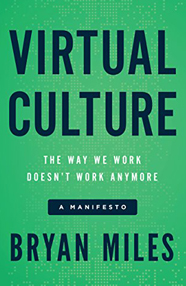
Bryan Miles is the CEO and co-founder of BELAY, a US-based virtual staffing company he started with his wife, Shannon, during the Great Recession. BELAY serves businesses across the United States with a team of hundreds of professionals who all work remotely from home. Before founding BELAY, he worked in the technology and construction industries, and he earned his BA in business from Mount Vernon Nazarene University. He is the author of Virtual Culture: The Way We Work Doesn't Work Anymore, which champions the benefits of remote work.
★ Scribe Case Study
Bryan Miles’ Manifesto on the Benefits of Remote Work Generated (at least) $1.1 Million in New Revenue for His Company
A book allowed Bryan Miles to share how organizations could be transformed through remote work. Read more about his story on Scribe.
📚 Books by Bryan Miles
Transcript
[0:00:27] Charlie Hoehn: You’re listening to Author Hour, enlightening conversations about books with the authors who wrote them. I’m Charlie Hoehn. Today’s episode is with Bryan Miles, author of Virtual Culture. If you’ve ever worked in a corporate environment, you’ve experienced the pain of sitting in a cubicle for eight hours a day. You know the pain of sitting in traffic on the drive to the office, working late hours and not having flexibility for personal time or doctor’s appointments. But what if you didn’t have to come in to the office anymore? How would that change your company’s culture? Bryan knows firsthand that it changes everything for the better. Bryan is the CEO and cofounder of BELAY. Alongside his wife Shannon. BELAY is a US based virtual solutions company so they provide virtual assistance, book keeping, copywriting and web master services. BELAY has more than 600 team members all working from home remotely. Even though they don’t have a central office, BELAY was awarded the number one spot in Entrepreneur Magazine’s rankings for best company culture. In this episode, you’ll learn why the current way of work could put your company out of business and how to successfully transition to a virtual culture. Now, here is our conversation with Bryan Miles.
[0:02:16] Bryan Miles: 2010 was an interesting year for me. At the time, I was working for a church construction company where it was a family owned, 40 year old company and I was actually on their leadership team. I managed a group of 10 guys that basically worked to sell construction for churches around the United States and my last name wasn’t the last name in the owner so I knew that I kind of capped out in my role at that time, I was 35. I also had two young kids with my wife, two and five at the time and I was traveling, I was easily traveling, I probably did six to eight flights a week somewhere in the United States and I was just exhausted.
[0:02:55] Charlie Hoehn: Six to eight?
[0:02:56] Bryan Miles: A lot.
[0:02:57] Charlie Hoehn: Wow.
[0:02:57] Bryan Miles: I was just gone a lot and I hated it and I just kind of knew I had capped out where I was and as much as I love what I did and the contribution I had made over 17 years working there, I just felt like I needed to make a change. I started reading a book, kind of a random book at the time but it really had an impact on me, Made in America by, it’s about Sam Walton’s story about how he created Walmart. It was a fascinating story but what kind of hit me is that, he started Walmart in his late 30’s. SO for me, I thought, man, if I just did something, you know, at least I could say I got it done and started before Sam Walton, you know, I didn’t have any illusions of having anything that behemoth that Walmart is but I just thought, I really want to try this thing as being entrepreneur. It had always been in my belly to do something like that. As I progressed through 2010 in the spring, my wife was working for a rather large company, it’s a Fortune 10’s called McKesson. She had been there for 10 years as a project manager and I think she started to see that her next move there as well was going to be lateral and as I kind of shared with her in my heart to go do something and maybe take a risk, surprisingly, she said, I want to do this with you.
[0:04:12] Charlie Hoehn: Surprisingly.
[0:04:12] Bryan Miles: Yeah. Because at the time, she really valued stability and I think it’s because we had young kids and the notion of risk connected to starting to something, that’s a big conversation in-house but when she said that, how I looked at it and how I still look at it today is like wow, that type of talent wants to come work with me? You know? Cool, maybe I just didn’t assume that she was going to jump ship with me. I felt like we also needed the income. So fast forward a couple of more months, in the summer time, we, we said, we got to figure this out, we need to do some due diligence, we need to ask some really smart people that we know are successful in business, have sold businesses and done well for themselves and just bring this idea up and the ones that were successful in business, keep in mind, this was 2010, this is on the end of the great recession. Unemployment’s, you know, in the high nine’s, this is not the time that people naturally would say, “Yeah, go leave your nice job and start something,” but are advisers that we talk to, they’re like yeah, this makes sense. One in particular, I was in a marina in Seattle and I flown to see him and within 15 minutes of sitting down, we had started a bottle line, he just said, you need to leave your company and start this company right now and that was the push I needed. We finished up our due diligence and on October first of 2010, my wife and I walked in to our very stable jobs, to our employers on the same day about with an hour of each other and gave our notices.
[0:05:45] Charlie Hoehn: Wow, how did that feel?
[0:05:48] Bryan Miles: Electrifying for me. You know, it was a mix of emotion because I really loved what I did and I know that Shannon really enjoyed the employer and we gave pretty big notices because we figured, if this thing didn’t work, we wanted to come back and get our job. It was bitter sweet. There’s a lot of emotion wrapped up into it but I also felt like it was the right time. We got to December first 2010, it was the first day on our payroll together and in that month, we signed our first four contracts and then we just started to build some crazy momentum, it was quite a ride, in 2011, we had a pretty high profile person, I call him – he’s our Oprah. But, Mike Hyatt, fantastic guy, Michael Hyatt basically tweeted that he was looking for a virtual assistant and I was on vacation with my family, one of our clients text me and said, you need to get on twitter right now and try and engage with Mike and so I did and he DM’d me and we basically about two hours later, I talked to him for about 20 minutes and he asked me for a contract.
[0:06:47] Charlie Hoehn: Boom.
[0:06:47] Bryan Miles: You know, for me, to secure a guy like that who I had great respect for and then for him to talk and be personal and would I make a go at this and then with hiring a virtual assistant at the time. For him to tweet the next morning that he was going with this company was cool but it ruined my vacation because –
[0:07:08] Charlie Hoehn: You got flooded.
[0:07:09] Bryan Miles: My inbox filled up with sales leads. I say that, you know, it was awesome. I sat there looking at the Tetons for a week straight on 30 minutes snail calls. Call after call after call thanks to Mike Hyatt. You know, those early days, they were very hard and I’m really proud of where our organizations come in those seven years but we paid a lot of stupid tax over the course of those years and we’ve done a lot of things really well too. We’re very fortunate to be in the position we are today and that’s why I felt like this book needed to happen because it’s not just the journey of our company but it’s the journey of what I’m seeing, now talking to business owners and leaders that are navigating what a virtual organization is becoming and how people are mandating more flexibility in their jobs.
[0:07:54] Charlie Hoehn: Right, it sounded like BELAY got off on to such a strong start. Did that surprise you when you signed four clients in the first month and then got Michael Hyatt on board. Were you expecting that based on the research that you had done on the market’s demand?
[0:08:15] Bryan Miles: I was surprised. I mean, I knew that there was a market, thank god for Tim Ferris and The Four Hour Work week. That book had come out just ahead of the season, the time that we started our business so what happened was a bunch of people tried to do –
[0:08:29] Charlie Hoehn: Yeah, that was in 2009?
[0:08:32] Bryan Miles: Everybody jumped on and tried to kind of go overseas and see what this virtual thing was and a lot of them were dissatisfied because –
[0:08:40] Charlie Hoehn: They’re terrible.
[0:08:40] Bryan Miles: Yeah.
[0:08:42] Charlie Hoehn: Yeah, they were horrible.
[0:08:43] Bryan Miles: Which was the best thing that ever happened to an organization that says, “Hey, we’re all US based.” When we talk to our prospects, you could kind of hear on the phone, man, I really hope what you’re saying is true. I hope you can deliver because I need this.
[0:08:57] Charlie Hoehn: Burned before, yeah.
[0:08:58] Bryan Miles: Yeah. We did, we proved ourselves and we’ve been pretty picky about the types of customers we want. Not everybody gets to be our customer, we’re pretty selective about that in the same way that they should qualify us. We could probably could have grown a lot quicker but we felt like the responsible way to manage relationships is make sure you’re picking the right clients and that you’re guiding them to success and that’s what we’ve been able to do and that kind of that same approach still happens today in our sales cycles.
[0:09:24] Charlie Hoehn: Yeah, what did your earliest days of your company actually look like? How many contractors did you have, was it just you and Shannon as the only two full time employees?
[0:09:36] Bryan Miles: We were the first full time employees for about the first year. However, how we figured out that this model made sense was based on the example that I had had before we started BELAY. I had worked with person named Tricia and Tricia was my virtual assistant and she lived in Charlotte and I lived in North Carolina and I worked with her for seven years and she helped me manage my sales team. Did it amazingly so. She helped me manage personal things and professional things and didn’t miss a beat and I saw her maybe six to eight times a year but for the most part was virtual. For me, I thought, if I have this, seems like pretty much any other leader that’s on the go could have a person like a Tricia on their team. That’s where kind of the model for us, the more obviously model kind of popped up, we knew that the virtual assistant thing was out there but I had practical experience and I could talk about it because I had already been doing it for seven years. It was just really easy for me to kind of create content even around it because I knew exactly what it meant to work with a virtual assistant. Tricia, she was basically our third team member if you will and all I could do was I could only afford her for five hours a week when we got first started. Because what I didn’t share with you earlier is that we had basically – my wife and I, rather than go out and raise cow, we ask people for money and we had friends with money. We just decided we were going to try and fund this on our own. We bankrupted our 401(k)s and we used all the money in our 401(k)s to basically start a company. We’re just trying to be prudent and bootstrap our business and so Tricia, she was awesome, she’s like, “I can help you.” She stayed at my old job while she helped us five hours on the side and then that grew to more, as the demand got bigger and bigger, Shannon was kind of the first relationship manager in our business, she was helping onboard clients and you know, do the book keeping and you know, we wearing 85 hats, I was the sales guy, you know, trying to close deals and hunt the business. Over the course of time, you know, Tricia came on as kind of our first official employee outside of myself and Shannon and then she just continued to grow and grow and it was awesome and today, she’s actually the COO of our business. She reports to Shannon and I and we’re co-CEO’s. But Tricia has had a fantastic rise and leads BELAY on the operation side of our business so well. I’m just proud to see kind of where she’s come and her journey with our business.
[0:12:05] Charlie Hoehn: I can imagine growing a company like BELAY, there’s a lot of challenges with working with virtual assistants and smoothing that out. At what point did you feel like “Okay, we’ve got this down, we can scale this up now?”
[0:12:24] Bryan Miles: I’ll let you know when I get there.
[0:12:26] Charlie Hoehn: That’s a good answer.
[0:12:29] Bryan Miles: It’s a daily fight. I mean, the truth is, we’re not a software company. There are days I wish I were but the truth is, people are the ones that execute on behalf of clients and people come with their own fair share of issues and problems and opportunities and scaling people is not easy. I think we’ve kind of got to a place where we just said, “Scale is a nice word, you know, appropriate levels of growth, working with people is the right way to approach this.” There are ways to kind of scale our business but we don’t look at it maybe necessarily the same way a SASS company would or a venture capital would look at us, you know, we look at scaling based on the relationships we can impact and how that ties back to our mission.
[0:13:16] Charlie Hoehn: All right, let’s talk about your book, Virtual Culture, subtitle is The Way We Work Doesn’t Work Anymore a Manifesto. Now, people have written, you mentioned Tim Ferris, people have written about virtual work and everything. What made you really want to write this? What were you trying to accomplish?
[0:13:38] Bryan Miles: You know, I think every single sales call, when someone calls in and wants to know more about our business. The first question they ask is literally this. “How does this thing work?” You know, everybody’s intrigued by it and people have kind of adopted it at certain stages that kind of the same time of maybe like a small business or a small organization, they’re looking at how they scale the administrative side of their business. We’re also seeing this – I’m having phone calls with large corporations that they’re wrestling through trying to attract leaders that don’t want to come into their office. You’ve got this dilemma that’s happening both at small business level and at enterprise level and organizations where they’re like, we can’t continue to sustain and have all these crazy office space for people that don’t want to come in and they want to work off their back deck. They also are demanding flexibility because what happened about a decade ago when you said I want more workplace flexibility, I want to work from home. Unfortunately, there’s this assumption, this dogma that said, “You’re lazy.” It’s not true, it’s just not. I just felt like there’s got to be a change here because we have great clients and great leaders doing some amazing things in this world and they want to have a virtual assistant or a virtual book keeper or a virtual web master, a virtual writer. They don’t want people in an office. Every day, I’m presented with all these people that want this virtual model because it makes sense for them to have more agility and more autonomy in their day to day. Coupled with this old school, let’s put everybody in an office, let’s throw a bunch of people in cubicles and it’s finally starting to collapse. I went back and I started, the reason for the book, is I wanted to go back and figure out why is it happening, what’s the change? What caused us to kind of get into this position where we built this huge office spaces with cubicles in them and why people drove and commute and would go into this places that they can’t stand going into and doing this. That’s kind of the reason for the book is I’ve just – it’s a culmination of experiences I’ve had over 17 years in this business where I see where workplace is headed and I wanted to just kind of bring that to everybody’s attention. You know, I think one of the things that really stood out to me as I kind of went through this is I got this since that the reason why a lot of people want people in an office is not because they don’t want results, it’s just that they want to have control.
[0:16:09] Charlie Hoehn: Or the perception that they have control.
[0:16:10] Bryan Miles: Exactly. That’s exactly right. It’s the perception of control. I don’t operate that way, I’ve never operated that way, I’ve always given trust to our employees and to their leaders and I just think that more people would thrive in a virtual or flexible workplace environment and you would see greater results if you kind of adopted more of a virtual kind of model. That was my attempt at the book to say “Hey, this is where I’m at.” It’s kind of a line in the sand and I think that you know, folks that own organizations, big and small should pay attention to this book because their employees want this, whether they’re telling you this or not.
[0:16:49] Charlie Hoehn: Yeah, it’s true. You’ve built up all this personal experience working this way and then you did a bunch of research as to why we’ve been working the way we do. What would you say is now the big idea in the book? Beyond the way we work doesn’t work anymore, what is it that you really want people to remember from this episode that they can take with them?
[0:17:17] Bryan Miles: I think that for me, it’s twofold. First is, owners of businesses or large organizations or really anybody that desires to kind of go build and be part and have an office, they need to acknowledge that the industrial age is over. It’s gone. It’s a thing of the past and the industrial age basically represented everything that was all about kind of control over your employee to produce or to have a very productive output. Here’s what I mean by that. If you go back and you look at the time of like Henry Ford or anybody kind of building something on assembly line, what you did was you put all your people on a line, but the more you could see them and then you wrapped your managers around them. If you think about today’s office space environment, what do you do? You put all your workers in the middle, you put them in cubicles and you wrap your managers around them and that’s while pretty much every single office space in the united states looks like in some way, shape or form.
[0:18:14] Charlie Hoehn: It’s crazy too because that’s just one model of work that happen to be very successful, like you said in the industrial age, and that trickled down into how our schools are designed.
[0:18:28] Bryan Miles: Yeah, it’s had a huge impact. I just – I think that there’s this acknowledgement that while we’re becoming more virtual than we realize, really want owners of businesses and leaders of large corporations to see that. That that’s happening, it breaking down. If grandma can FaceTime her grand kids and have a meaningful connection with them then there’s no reason why they can’t translate to the workplace. That’s the first kind of big idea like for people to consider is they read the book, the second one is, if you’re an employee and you hunger to have greater workplace flexibility, you’ve got to do some things, you’ve got to really start to state your why publicly for why you want this. It’s got to also have a meaningful result for the employer. It can’t just be because you want to have less commute or you want to have flexibility to help out with the kids at home or whatever. Those things are nice and they’re a benefit but you’ve also got to translate the why to the result for the employer too and there’s plenty of those to be given the book as well that it’s about the result, the business can experience when you trust people to execute on the job. Now, you know, I get it, there are some places where you actually have to go in to work somewhere, you can’t virtually serve food to people and you know, there’s plenty of applications where you kind of have to be on site to work but more and more virtual remote is very doable thanks to technology. The employee, the person I’m also talking to this because the employee. How do they win, what do they need asked, what plan are they going to build to help their employers be more comfortable with this? You look at our book, you know, and of BELAY and the story of virtual culture, it’s our attempt to basically give a playbook, not the playbook but a playbook on how we’ve operated as a business for seven years and all virtual capacity without an office. We’ve grown to where we are and without an office, I have zero interest in ever walking back in an office unless it’s to go meet somebody and sell them something.
[0:21:18] Charlie Hoehn: Before we get in to BELAY s culture, how you guys have done it so successfully, can you share some of the benefits for the employer in switching to this? Apart from “Hey, you’re going to save on the cost of owning a building,” and that sort of thing. What are some of the hidden benefits to the employer for switching over to this model?
[0:21:42] Bryan Miles: You can’t dismiss the real estate and the cost associated with it. That’s just a huge one. In fact, on virtualculturebook.com which is our landing page for this book, there’s a calculator. You can actually calculate the savings there from a real estate standpoint if you want.
[0:21:56] Charlie Hoehn: What’s the name of the site again?
[0:21:59] Bryan Miles: Virtualculturebook.com.
[0:22:01] Charlie Hoehn: Cool, all right.
[0:22:02] Bryan Miles: virtualculturebook.com. I think you have to one look the real estate, that’s an obvious. I think if you’re kind of a finance guy or you know, a person that oversees money from even from a for profit and nonprofit standpoint, you got to just acknowledge that there’s a cost savings there, a big one. I think there’s a few more benefits but one of them is that when you allow an employee who has been working in office to go home and you know, even if it’s one day a week to start, you’re signaling to them that you really do trust them. That you don’t have to be in the office to see them get something done on your behalf. It just signals something, you know, say you give up more days and they work from home more and more. As long as they’re producing the result and they’re an adult and you hire them to be an adult and to do the things that they promise they would do, you’re basically transferring trust to them and then what happens is when that employee has trust and they believe that they’re trusted and they’re connected to the why of an organization. That the return back in loyalty and productivity and effort is just amazing. I’ve witnessed it. I mean, I’ve got – I’ve basically have ruined 60 people in their next job, you know? That’s on purpose. We want people ruined when they come work here.
[0:23:22] Charlie Hoehn: Yeah, tell me a story about how you ruined somebody?
[0:23:25] Bryan Miles: Well, you know, when you give them the ability to work from home after they’ve had a commute, you know, maybe two hours a day.
[0:23:31] Charlie Hoehn: Or if they’ve had to travel six to eight days a week for their job.
[0:23:36] Bryan Miles: I know one guy. But you know, I’m thinking of a person that’s actually in the marketing team right now, their commute was one hour each way, every day, Monday to Friday, they went to a job, they sat in a cubicle of a large corporation and they did their job but at the end of the day, they’re just – you know, they kind of been that grind and then when they got home after 7:00 at night and they’re like, “Why am I doing this?” You know, “I have no flexibility in my day, I can’t do the things I need to do,” and then you couple that with benefits and a meaningful why for why you operate and you pour into them in terms of camaraderie and culture and you set yourself up, you set them up for failure anywhere else but they’re going to hate working anywhere else because they’ve been able to work from home, a place of meeting, they’re paid well, the benefits are great. You know, you’ve effectively ruined somebody from leaving you. That’s a great way to manage employee turn. You know, you’ve got to also be a great leader worth following too. That’s something that we really impress on our leadership team that you’ve got to be worth following in that you know, you’re responsible for the vision of this business as much as I am.
[0:24:43] Charlie Hoehn: Right, I want to just double down on what you’re saying Bryan, This isn’t like something that only smaller, medium sized companies, like not to call you that you are a company that you guys have 60 employees, 500 plus contractors, a good size company, but companies like Cisco for instance are leading the charge in the big corporate world. I have a friend who works for Cisco and what you’re describing is the way that they work now pretty much all of their employees and she said, “As soon as I transitioned to that working virtually not only did I save thousands on stuff like not just commute but also getting work clothes”. Professional clothes, she said the most surprising one was her cholesterol levels went down like 50 plus points because she no longer had to be commuting and running around basically and I think we’ve grown so accustomed to that old way of doing things that we think it’s normal to be disconnected from our families for a big chunk of the day and fortunately. I am able to do what you are describing and I can’t tell you how much more I prefer working at home than at the office. Even though I love my co-workers and being around them, the cost of time and stress and energy in driving to work and not being able to see my baby daughter throughout the day and my wife is huge. So I am fully with you that this is going to be the future of work. So let’s talk about how some of the specific things that BELAY does that warrants emulating from companies that are already doing this and really believe in what you’re doing, how can they get better and level up to where you guys are?
[0:26:29] Bryan Miles: Well I think that there’s some distinct differences where you’re in an office. There’s certain things, you have more visibility into that when you are not working from home or when you are in a virtual environment. One of the things we realized, I mentioned this in the book back in 2012, we were in an event in Tuscan, Arizona actually listen to Dave Ramsey talk about his HR policies and the things that he has inside of his business which is huge right now. I think he’s got 600 plus employees in Nashville, they’re growing leaps and bounds but back then, they were growing quick too and one of the things that he said that stood out to me is he said, “We don’t allow people to gossip in our company. They’re fired if they gossip.” And literary it was like a gong in my ears because I thought, “Oh my goodness, do you know how easy it would be to gossip in a virtually ran company if we don’t have an office?” I can’t see that happening and so we decided that we needed to create a new gossip policy inside our business and it’s kind of harsh but it protects against the people that want to take sideways energy and wreck everybody else’s life with it inside our company. And on two instances over the course of so many years we had to let go of two people because of it and the good people but you can’t gossip.
[0:28:16] Charlie Hoehn: I mean everybody knows what gossip is but I haven’t thought about it too much from a workplace standpoint. Can you break down what might be in a grey area of gossip when talking about your co-workers?
[0:28:34] Bryan Miles: Well what we do to educate our team at what gossip is we define it this way: “Gossip is taking your problem to somebody that can do nothing about it.” And so for us and how we train on that is, this is how you handle a problem you have in our company. You take it up, you don’t take it sideways or worse, you don’t take it down because you’re basically taking problems to people that can do nothing about it and then you poison their waters. Nothing frankly pisses me off more than when someone does that in our business because I am fine with saying “I’ve got a problem. We need to work through this as a team, let’s bring in everybody to solve the problem and let’s hear some solutions.” It’s a different thing when you are saying it to poison waters and I’ve been part of companies that pass for gossip that has just gone wild and I hated it. I didn’t want to be a part of it and so we just said, “Look we want to create a company that we want to be a part of, gossip has no place here,” and we have done our best to educate it. It’s in the employee handbook, they test out of it when they are reading the employee handbook. We just make it really clear, “You gossip you’re gone.” This is the only warning and here’s what happens on the other side of that, when you enforce it and you prove to people that you will live up to it, on the other side of it is a place where people don’t gossip. They actually take their problems up to their managers and if they can’t take it to their manager, they can take it to somebody else that’s up in the work chart. So we have made that clear too, if you are uncomfortable bringing this up to your manager, take it to somebody else or to our HR department which is our safe harbor. You can have a safe harbor conversation with our HR folks and that will be handled upmost confidence and concern and care. So we’ve definitely have taught our folks that if you have an issue there are plenty of ways to take it up.
[0:30:15] Charlie Hoehn: So what I’m hearing is if you have something in the workplace that’s maybe frustrating you, the temptation might be to vent to one of your co-workers but that is not constructive and like you said, it poisons their waters. So reserve that and take it up to somebody who can actually do something about it and help you.
[0:30:41] Bryan Miles: That’s right and I’ve heard stories inside our business where someone has been boarder line like, “Gosh I know what you are telling me. I really think you need to take this up,” you know? That’s the kind of culture that our company has been fortunate enough to create because we have been really clear about how gossip isn’t tolerated and so on the other side of that, you have people that come in from corporate America that join our company become our employees, and in the first couple of weeks they hear like, “What’s wrong with everybody? Everybody is so nice, everybody likes being here.” And they get into it and they realize, “Wow this company has been very intentional about creating a culture where people are respected and that conflict is handled in a good way about gossip.” Just being really clear on how you won’t tolerate it is very helpful in an organization and it’s one of those things that forced me - I just heard about it and I said, “We need to apply this in our business”. I’m not the genius that decided that gossip shouldn’t be part of this, it’s Dave Ramsey.
[0:31:39] Charlie Hoehn: And he probably heard it from somebody else too, yeah. The old good ideas, do you have any other ones that really jump out at readers that’s like, “Wow we’ve got to use that”?
[0:31:51] Bryan Miles: Well I think we have decided in our business too that conflict is going to happen whether you are in an office or in a virtual setting and so we’ve created some conflict norms that we have taught on to our employees and it permeates down our leadership team and throughout the organization and the conflict norms are just a couple, one we call it the TSA rule. So if you see something you’ve got to say something. If there’s something going on –
[0:32:16] Charlie Hoehn: TSA as in travel security?
[0:32:19] Bryan Miles: That’s right, so when you’re in –
[0:32:21] Charlie Hoehn: So my immediate reaction to hearing that before I even know what this rule is, is like, “Oh gosh am I getting frisked?” What’s going to happen?
[0:32:31] Bryan Miles: No there’s no frisking. That’s like the preface to HR violation but the TSA rule is real simple, when you see something you’ve got to say something. You have the responsibility to say something. If you’re in line or at an airport, you saw a strange looking package and no one around it, you have an obligation as a citizen of our country to say something and so that’s true in our business as well. If you see something and it’s obvious that nobody else but you. And you know there’s something that could be wrong with it even if it ends up being nothing you’ve got to say something and how you say something is you say something up and so we just – there are times when you’ve got to say that thing in a meeting. We have taught our team that it’s okay to appropriately do that. The next one is we hunt elephants.
[0:33:14] Charlie Hoehn: So yeah I want to pause you on that one Bryan, on the surface totally agree with you, if you see something you’ve got to say something. It’s harder to execute from an individual employee standpoint right? Especially if these different habits have been ingrained and it’s been years since they’ve been able to exercise that kind of thing. So you teach them how to do it, how do you actually like do you get them to practice it? Do you have to continually reinforce it on an ongoing basis? How do you get them to actually do it?
[0:33:53] Bryan Miles: It is important, we train them first off. They’re trained on it, we have an employee training program so we make them aware of it and then we have to reinforced it at times and then our leaders, we’ve got to encourage it as well that like, “Look, we’re the best business when we cover our blind spots.” We’re the best business when everybody raises a hand and says, “Hey I see an issue here, let’s fix it,” you know? So we’ve just done our best to reinforce it, to encourage it promote it and talk about it and so that people feel comfortable doing that because yeah, there are – I mean we have employees that come in they’re gun shy. They maybe have been part of that crappy work environment or maybe they didn’t like their last boss or their last job or whatever, we have that coached into people. So that’s the best way that we say to do is just to give people, give your employees permission to do it.
[0:34:42] Charlie Hoehn: So let’s talk about myth busting, you have a section in your book called Myth Busting, what are the big myths around virtual culture?
[0:34:52] Bryan Miles: I think one of the biggest for me that always has irritated me is that when you can’t be a real company if you don’t have an office and that’s just somebody that like to be in an office and control people that says that and so it drives me nuts and I am hearing that less and less because there’s other very large organizations out there that have been in traditional brick and mortar that are shedding that and knocking over the walls and sending people home. And that is happening more and more. I give a really great example in the book of an organization that is based in Nashville called Life Way. A very big organization that four years ago their CEO stood up in front of their employees and said, “Here’s the deal, within four years 75% of our workforce inside of our company of our 5600 employees will be working from home.” And they did it and we see other large corporations doing that and then I talk to startups all the time. And they’re like, “Man I am never going in an office. I don’t see the need. We could get so much done, we could be productive, we can have a good healthy work environment but we don’t need an office.” And we just encourage them with that. So that’s the first one, it’s you’re not a legitimate organization if you don’t have an office. That’s just crap.
[0:36:05] Charlie Hoehn: Yeah, I want to hammer in on this productivity point because we actually haven’t hit this and this is one of the biggest benefits of doing this is how much more work a person can get done when they can design their own office, when they can have their own work environment? So what have you personally witnessed in people you’ve worked with in their productivity levels? What have they told you?
[0:36:32] Bryan Miles: It’s the best sales pitch I have ever given but it’s the truth and we can factually back it up today but for example when we replaced somebody that’s in an admin or a project management capacity that’s been working on site for a corporation say 30 to 35 hours a week, we’ve replaced them with about a 15 hour a week virtual assistant and while that claim sounds impossible but I can factually back it up over and over again now because we’ve figured out companies just pay a lot for culture. Companies pay for a lot of people to come into an office and sit there and do nothing, surf the web, go to useless meetings, I don’t know what goes on and when a person that’s a great quality person that’s a result oriented person goes home and they’re focused, the productivity on what they can produce in a short period of time is amazing and so this notion that you’ve got to bring people into an office for them to be productive, basically what Yahoo implied back in 2012 is not true. It does not happen that way and I hear it from - my favorite is when you hear a leader, they’re like, “Yeah,” you know they said they’re the CEO or the owner of the business. They’ll go, “Yeah, you know I’ve got to get to the house so I can actually get some work done” you know? And then they don’t let their employees do it and it cracks me up and I’m just like, “Do you hear yourself talk right now? I mean you are literary saying that you do better working at home when there is no distractions.”
[0:37:57] Charlie Hoehn: And yet they’ve earned the privilege of doing it for some reason.
[0:38:01] Bryan Miles: That’s right. So that’s another big thing from a productivity standpoint, this assumption that you get more work done at the office is false. It’s false. It’s false.
[0:38:10] Charlie Hoehn: Agreed. And you have less disruptions just from a social standpoint when you are doing things where you want to do them. Do you have any other favorite success stories or transformations that you’ve seen that really just hammer this point home of virtual culture is here to stay?
[0:38:33] Bryan Miles: Yeah, you know there is one guy that he is based in St. Louise and he’s become a friend of mine but when I first met him a few years back he was just simply a prospect calling and asking questions about our business and at the time, he was, I would say a one man band. He was doing well, he had authored a book and he consults with business on how to and specific on sales teams to help cold calling and have a better relationship with sales people and so forth. And all these best practices around sales and basically he hasn’t shingle as a consultant and as we talked, he didn’t want to create a company. He didn’t want to have like employees and he just didn’t want to do that stuff. He needed help as most leaders do, they’ve hit the lid of their personal capacity and they need help if they are going to get past of what they are only able to do themselves and so gosh, it’s four or five years ago. I just said, “Look, there’s a way to do this where you don’t have to have an office, where you can have people that will come along side you and help you and care about what you’re doing but you don’t have to do it in the way that you’ve seen it in all of these big companies over the years.” And he trusted me and you know on the other side of that now where he is at today, he still has a virtual team, he still has no office and he’s tripled in revenue. And he’s way more influential and he’s been blessed with some really great opportunity all the while remaining virtual and you know that’s one story of one small business owner that’s done really well for himself just remaining virtual. I mean I can point to and I do in the book with Life Way, a very large organization, several decades old as a company, 5600 employees, a ton of money in revenue, and they just realized that they were sitting on 1.1 million square feet or real estate in downtown Nashville. Seriously, 1.1 million square feet and so they go, “Wow this real estate is worth something.” And so they basically sold off the lion share of it to developers and whatnot and then about two city blocks away, they’ve built a 250,000 square foot facility that is for employees that really did have to still come to the office but that meant that over the course of four years, 75% of their workforce was going to go work from home and their story and on the other side of that how they navigated that process. And I share about that in the book, I mean this is not like, “Let’s flip and switch, let’s do this.” I mean it was thoughtful, it was careful, it was dreamed about and designed and so that migration over a four year period has translated to an organization that’s ready for the next season ahead with people that are committed and agile and very happy with where they work and so there’s big and small that are making this transition. You know I am proud in both of those cases to have had a front row seat at the organizations with our company.
[0:41:27] Charlie Hoehn: We’re still in the so called like, “this is the future of work,” because everybody is migrating over but where do you see things ending up, I don’t know, 20 or 30 years from now? I mean do you think home office building is going to be a much bigger industry? Do you think people are going to be using virtual reality to go to an office? Where do you see things heading way down the line?
[0:41:59] Bryan Miles: I see technology having a huge role in this. I mean 15 years ago, we couldn’t have the company we have now. So I can only surmise that that is going to continue to have iterations that are going to impact the workplace for years to come. I would say that one of the most obvious ones to me is if it is true that people are shedding office space, then you’re going to have big old carcasses of buildings out there that need to be repurposed and I think that’s an opportunity for somebody that’s listening. To go out and recognize that and get ahead of that wave and say, “How could we repurpose this maybe for a greater good with all of these amazing office space that we have that really won’t be office space anymore because office space will be in someone’s home?” or off their back deck or in a co-work location like the rise of We Work or like in Atlanta where we use an organization called Roam. This awesome places where you can go into a place and collaborate or get behind a whiteboard. And then once your meeting is done, you’re out of there and those are popping up everywhere. So I think that real estate, the whole game of corporate office real estate is going to change. I also think that technology is going to have a huge impact on that and I think that the things that technology solves today are only going to get more enhanced and so those easy task of today, technology is going to solve that. So we’re going to be able to basically answer. And deal with bigger more complex problems as a society and especially in our jobs because we are going to hire people that are adapted to staying ahead of technology and not being replaced by a robot.
[0:43:32] Charlie Hoehn: So let’s wrap things up with a challenge. In your book I think the challenge sounds like make your landlord cry, that’s the title of one of the final chapters. What is your challenge to our listeners? What can they do this week from your book that can have a major impact on their life?
[0:43:56] Bryan Miles: I would hope that, let’s say you are an employee and you’re in a commute right now, maybe you are listening to this in your car, going to a job that you don’t really like and you’re going to sit in a cubicle for the next eight hours, ask yourself, “Why are you doing that?” and then if you’re compelled enough, if it’s well it’s a good paycheck, well there’s plenty of great companies out there with good paychecks that allow you to work from home and they are increasing all the more. They are out there, you just have to find them. I would say that, my encouragement would be if you want to stay in that job and you want to have an impact in that company that you are a part of and they mandate that you come into an office every day, start to build a plan for how you could talk to the leaders in your business about workplace flexibility and what that means and why it would be of benefit to them in terms of productivity and happier employees and employee engagement. You know start to just formulate a plan. Take a baby step in that direction of sharing the idea of what this means to the benefit of the business because at the end of the day, businesses need to produce results and profits and if you could show that, “Hey, if you didn’t have so much expensive real estate, hey if you had a more effective, more productive workforce, if you had more engaged employees, would that be the result you’re looking for?” And crack a door, you know? Just give them the opportunity to think on that and camp out on that as a leadership team and give them the opportunity to wrestle with this and I think on the other side of that, you’ll find that there are some employers are going to loosen their grip and say, “Okay cool, here’s your chance. Go work from home.” Maybe one day a week to start and maybe it goes from there but that would be my encouragement is build a plan. If you’re there and you’re stuck in that commute right now just try one thing, build a plan to talk to the leaders of your organization about workplace flexibility, about converting their business to being more virtual.
[0:45:40] Charlie Hoehn: I love it and you’ve got some great resources on your site to help them create that plan or at least show the employer the cost. Could you tell people where to get those resources and where they can connect with you and follow you?
[0:45:56] Bryan Miles: You bet, well there’s resources at virtualculturebook.com. Some resources that are there for you to kind of wrestle through really, as a leader or as an owner of a business but there’s also some very practical things there too that we’ve used as tools for the year, over the years for our business with our leadership team that kind of translate to a virtual company. I am on social media quite a bit, you can find me on Instagram @bryanmiles and on Twitter @bryanmiles. We’re on Facebook and then of course, our book is available on Amazon and we also have an audio book as well that I’ve recorded. So you can actually if you like my voice, you can hear me talk to you as I read the whole book to you. Yeah and bottom line, I’m grateful that you would consider our organization as a potential guide for what we’ve done over seven years to create a meaningful company that all gets it done without an office. I hope that that inspires folks and I hope it challenges leaders that there’s a way coming that they need to be prepared for.
[0:46:59] Charlie Hoehn: Well said, thank you so much for doing this Bryan.
[0:47:02] Bryan Miles: thank you for the opportunity. I’ve enjoyed this conversation.
[0:47:06] Charlie Hoehn: Many thanks to Bryan Miles for being on the show. You can buy his book, Virtual Culture, on amazon.com. Thanks again for listening to Author Hour, enlightening conversations about book with the authors who wrote them. We’ll see you next time.
Want to Write Your Own Book?
Scribe has helped over 2,000 authors turn their expertise into published books.
Schedule a Free Consult