Jason Wilson: Brick and Mortar Isn't Dead
Read the full transcript
Jason Wilson
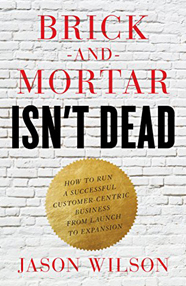
Jason Wilson is the author of Brick-and-Mortar Isn't Dead and the owner of Riverside Pawn, a chain of pawn stores. After dropping out of high school, he answered a classified ad for a job at the only pawn shop in town, climbed the ranks, and developed a better way to run the business before starting his own company. Over fifteen years he built his operation from a one-man shop into a multistore organization, and in the book he shares how he did it, walking small business owners through the start-up, growth, and expansion stages of building a customer-centric company.
📚 Books by Jason Wilson
Transcript
[0:00:29] Charlie Hoehn: You’re listening to Author Hour, enlightening conversations about books with the authors who wrote them. I’m Charlie Hoehn. Today’s episode is with Jason Wilson, author of Brick and Mortar Isn’t Dead. Amazon and online shopping have changed the nature of retail but Jason believes that brick and mortar stores can still thrive. He should know. Jason is the owner of Riverside Pawnshop. A chain of seven stores that does more than eight million dollars in revenue per year. In this episode, you’ll learn how to start your own local business that will outshine the digital competition. Now, here is our conversation with Jason Wilson.
[0:01:24] Jason Wilson: I was a high school drop out, I was bullied in school pretty badly. School wasn’t really my thing. Eventually got a job at a local pawnshop working for an hourly wage and really liked the job. I saw ways that I thought the business should be run that were different from the owner’s vision. He and I eventually – we had a falling out and decided not to work together anymore. The moment that I was faced with the issue that began me down the path of writing a book and opening a business was that night at my house that we had decided we weren’t going to work together anymore. I had a decision to make, it was, since I had no education and no background, it was either, go out and get a regular job or you know, I’ve been working at this pawnshop for five or six years, I really like it, I know a lot of the people that come in, I have my own ideas about how the business could be ran better and could succeed and help the customers. That night, I made the decision that you know, I’m going to open my own store, I’m going to implement my visions, do things the way that I think they should be done and see where that takes me, that’s ultimately how I began in this business and that started me down the path of opening more stores and being where we are today.
[0:02:43] Charlie Hoehn: Wow, you made the decision to open a store, how long between that decision and you opening a store?
[0:02:51] Jason Wilson: Probably about three months and we talk a little about that in the book, about the process of deciding and nailing down what you want to do and actually getting to work on doing it. Yeah, probably about three months between the day that I left that a job and the day that Riverside Pawnshop first opened its first location.
[0:03:08] Charlie Hoehn: Okay, tell us about that time where you were – you’d made the decision, tell us about those three months, what did that entail?
[0:03:18] Jason Wilson: It was a very uncertain time in my life. Like I said, no background, no educational background in business or anything like that. It was kind of playing it by ear and one of the reasons that I ended up writing this book was, I wish that back then, I had had something that I could read. I’m sure there was but back then, you know, you had to go to the local library and research and get books. There was no high speed internet or anything like that where it’s fingertips, you could find any book idea that you want. For me, it was all about learning on the fly, taking it step by step, you know, how we’re going to go about doing this, how we’re going to open a business? And all of the things that I learned along the way and further down the road are what led us to writing the book about opening a business.
[0:04:02] Charlie Hoehn: You were learning on the fly. What kind of lessons were you hit with?
[0:04:07] Jason Wilson: That’s going to depend on if you’re talking about the earlier stages of business or later on because –
[0:04:07] Charlie Hoehn: Yeah, early stages.
[0:04:13] Jason Wilson: Before we opened or after we first opened the first door?
[0:04:17] Charlie Hoehn: Either. I would say, let’s go with after.
[0:04:20] Jason Wilson: After, yes. The most important things to me were – you probably know this yourself Charlie, we’re in the pawn business. The pawn industry is has not always been painted in the best light, we fight stereotypes all the time, you know, if you think about any work of fiction, you see pawnshops in movies or books or on TV, they’re old looking stores in dingy back alleys where criminal activity takes place. The truth couldn’t be further from that. We run a business that’s very helpful to people. My focus and one of the things that I like to tell people is that if you want to open a business, you have to find a way to stand out. To us, standing out in the pawn industry was flipping those stereotypes and putting the focus on to helping people and customer service, developing relationships with people that would ultimately help our business grow down the road. That’s what we wanted to implement when we first opened and that’s what our focus was on customer service and helping people.
[0:05:21] Charlie Hoehn: How did you do that? I’d imagine a fair number of pawnshops think that as well where they’re like, “You know, we don’t want to be just like every other pawnshop. Let’s help people.” How did you really stand out with that as a differentiating factor?
[0:05:38] Jason Wilson: One of the main things to me is, it’s about developing and cultivating those relationships with customers. When a customer comes in to our store, we take time to get to know them, it’s not about the one transaction on the one day. This has to be, you have to put a focus on developing relationship that’s going to ultimately lead to business for years and years to come. We’re at a point now where we’re dealing with second generation customers because we’ve had relationships with the parents for so long that now we have people to come to us that – with their kids. It’s ultimately not trying to make as much money off of a single person that you can’t of a single transaction but trying to empathize with them and help them because ultimately, any business, not just ours but ultimately, every business is in the problem solving business. It’s not different for us. Everyone that comes in our door has a problem that needs to be solved. Most people that come in need a short term loan, they need help with making ends meet. We try to take care of that problem and help them with that, other people, they want to come in and they might need to buy a television, maybe their television broke so they need a new one. That’s a problem that we help them with. I tell all of our team members that ultimately, the bottom line for us is to be problem solvers. We need to be – our business, the focus is on what we can help the customer with and profits and money come as a byproduct of that.
[0:07:02] Charlie Hoehn: Tell me a story about solving a customer’s problem that led to the lifelong or second generation type of customer that you’re talking about.
[0:07:14] Jason Wilson: Sure, my favorite memory to tell people about this is very early on, when we opened our first door and I was the only person – you know, when I first opened, I was the only employee so I was there every day all day. A little lady comes in, she’s probably 70, 75 years old, she’s four foot eight, 80 pounds and she comes in and she had some jewelry that she wants to get a loan on. The way our business works is people bring in items for – to use as collateral for short term loans. I talked to her when she came in and she wants to get a loan against her jewelry collection to help her daughter open a vitamin store. You know, she said “I’ve dealt with pawnshops in the past, you know, I don’t really expect you to be able to help me with what I need but here’s what I’m trying to do.” I talked to her, loaned her the money she needed on the items, she was very grateful, she was happy with what we did for her and that led to her, the way that we treated her on the first day that she came in, like her coming in, not just to do more business in the future but for the next seven, eight years, she would come in two times a week just to see me. She would just stop in to talk to me, to see how things were, she became a friend and we have many stories of customers that just are – we’ve developed lifelong relationships with them. The relationship that I had with her, her name is Mrs. Willis, was beneficial to me in multiple ways and our business. Her kids ended up doing business with us and still do to this day, they come in to buy things from us, they come in to say hello and she became the best advertisement that any business could have. She became a brand advocate and gave us great word of mouth advertisement, she would come into the store, she would talk to customers, tell them how great she thought we were. When you do things like that and cultivate relationships with people, you’ll find that not only your business becomes successful but it’s really fulfilling in your life. Unfortunately, Mrs. Willis passed away a few years ago but when she did, her daughters remembered me, they came in, they gave me a laminated obituary of her’s that I still keep on my desk to this day. They invited me to the funeral, I went, hung out with them and I still see her daughter a couple of times a week. It makes me feel sorry for people who just want to open a business to make money because they’re missing out on so much more that they could do.
[0:09:35] Charlie Hoehn: That’s really touching. I appreciate you sharing that, it really seems like you care a lot about community and people. I’d imagine that’s why – that’s part of the bigger reason why you wrote Brick and Mortar Isn’t Dead, right? Is that this is really about being focused on the people.
[0:09:57] Jason Wilson: The people and the relationships. I mean, we live in an age now where you know, ecommerce is the big thing and you can buy something right now and have in your doorstep tomorrow. If people want to open a brick and mortar store, the focus needs to be on things that ecommerce can’t provide and that’s that one on one interaction and developing those relationships. You know, you can buy a book off amazon and have it tomorrow but if you want to meet people and talk to people, you need to go to the local book store. If people want to own brick and mortar businesses in the age of ecommerce, they have to focus on those strengths, those one on one interactions and developing those relationships because that’s the strength that strength that brick and mortar will always have over ecommerce.
[0:10:43] Charlie Hoehn: Right. You know, I think about, there’s occasionally, I’ll see podcasts that talk about “How to make five to six figures a month in revenue selling products on Amazon” and you’re right, the focus there is exclusively on how much money can you generate, rather than what relationships can you form that will last a lifetime and allow you to build a business that is really meaningful to the people in your community. What do you say to people that are drawn to “Hey, I want to just run a business, just to make money. I’m going to do an online business.” What do you say to them?
[0:11:31] Jason Wilson: What I would say to them and you know, online business is great and ecommerce can be very profitable for people and if that’s what they want to do, that’s great but they’re going to be missing out on a lot that a brick and mortar store could provide, they’re going to be missing out on those relationships and you know, a problem – one problem that I see with the younger generation, I have an 18 year old daughter, is they believe in get rich quick schemes and that’s not really how business works. They see people developing apps and things like that and selling them for a ton of money. I tell people they need to –
[0:12:01] Charlie Hoehn: Bitcoin.
[0:12:02] Jason Wilson: Yeah, or Bitcoin. I tell people that they really need to slow down and put the focus on working day to day and being patient and if you want to open a business that it’s going to take time, you’re not going to be making a ton of money the first month. You know, those stories that you hear are one in 10,000, that’s not really how the real world works, most people who are successful have put in years of work. It’s about putting blinders on and just working hard every single day trying to meet those goals. When people want to do this ecommerce things and develop apps, that’s great but your opportunity to succeed is very low.
[0:12:39] Charlie Hoehn: Now, Jason, what would you say ultimately is the core message of your book, that you really want people to take away. Beyond Brick and Mortar Isn’t Dead, there’s opportunity of course, still, in brick and mortar. What do you want people to remember six to 12 months from now from this interview?
[0:13:01] Jason Wilson: I’ll share a story with you that I talked to my daughter about recently, I told you that she’s 18 and she’s just out of high school, she didn’t go to college yet, she’s not sure what she wants to do. I told her that she needs to have a plan of action. If you have a dream or a goal that you want to achieve, you have to implement the goal and actually act on it. No one’s ever going to grab your hand and say “Hey, this is the time that you can do this,” right? You have to be the person that set your mind to it and actually starts on the path to reaching your goals, that’s all her – she told me her dream was, she wants to be a nurse and I said, you know, it’s great to have that dream. Unfortunately, you’re not going to wake up one morning and be a nurse, right? You have to implement the steps ahead of time that are going to lead you to that and actually take action to make that happen.
[0:13:54] Charlie Hoehn: Did you show her how to actually map that out for herself?
[0:13:58] Jason Wilson: Sure, we talked about different steps that she needed to take, that’s the same thing you need to do with anything, you know, set smaller goals that are going to lead you to a bigger goal, right? You’re not just going to reach your goal of being a nurse next month, right? You need to set out a map of “Okay, I need to do this and that will lead me to be able to do this and go on to school and do this class” and ultimately seeing the big picture which talks a lot about having patience, being patient with your journey and not just expecting it to happen right away.
[0:14:26] Charlie Hoehn: Let’s say I want to start on this journey. I want to have a brick and mortar business, what do I need to do right from the beginning once I’ve made that decision. I’m tired of the online lifestyle, I’m tired of dealing with faceless customers, I want to deal with the real world. What do I need to do to start? How do I know I have the right brick and mortar business to launch even?
[0:14:57] Jason Wilson: To know that you have the right business in mind is very crucial. For me, I love dealing with people, I love dealing with items but you have to play to your strengths right? LeBron James doesn’t sell ice cream, right? He knows what he’s good at, he knows what he loves to do so that’s what he does. The good thing about that is no matter what you love and no matter what you are good at, there’s a market for it, no matter where you are right now, if you look around the room, every item that you see, everything in the room began in the mind of someone that wanted to make it a reality. More often than not, if you see it there, they probably made a lot of money doing it. So to me, to make sure that you are on the right track, you need to chase your passion and not money, right? If you love cooking food, you don’t’ want to open a jewelry store because you think there’s more money selling gold than selling tacos, right? You want to make food, that’s your passion, when you chase the passion, the money comes as a byproduct. That’s how I told my daughter, chase the passion, don’t worry about the money. The money comes as a result of that.
[0:16:10] Charlie Hoehn: That’s really good advice. Now, let’s see. Let’s just say in theory, somebody that you’re consulting, do you do consulting by the way?
[0:16:19] Jason Wilson: Yes we do, we’ve started a website and we’re consulting people, we’re very passionate about getting people into our industry because we love the fact that we’re changing stereotypes to go along with the pawn industry but the philosophies that we teach and incorporate can be applied to any industry.
[0:16:36] Charlie Hoehn: Got it. Okay. Just thinking off the top of my head, I love to do videography work and I’m thinking, “Well, I don’t necessarily want to sell camera equipment.” Where do I go from there, where do I start exploring ideas, maybe within the video realm for a brick and mortar.
[0:16:59] Jason Wilson: If you love video, you can start a camera store, you can start a service where you make videos for people, they come in and maybe they want you to film commercials for them or maybe they want you to help with home movies or whatever, transferring those over to blue ray and DVD’s. No matter what you love, you can translate that into a business and in translating that into a business, you can put the focus on helping people, solve people’s problems, cultivating relationships with them and that’s what brick and mortar businesses should be all about in this age of ecommerce.
[0:17:36] Charlie Hoehn: Right. You have how many pawnshops do you own again?
[0:17:41] Jason Wilson: We’re currently at seven locations in two states, we have been opening one to two a year for the past three or four years.
[0:17:51] Charlie Hoehn: Wow, that’s pretty remarkable. I’d imagine you have some pretty amazing stories of helping people when they need it most.
[0:18:00] Jason Wilson: Yeah, absolutely. We listen to people, we empathize with them, we take time to listen to their stories, to hear what they need help with and that leads to great things down the road. Youu know, we have customers that just stop in to say hello when they don’t need anything. That is the most rewarding part of our businesses is the relationships that we develop with people.
[0:18:23] Charlie Hoehn: Yeah. Let’s talk more about your book, walk me through how the book is structured, what is it at the beginning and where do we end up?
[0:18:33] Jason Wilson: Sure. In my opinion and through my experience being in business. I have seen my business graduate through three levels and I call them the toddler, the teen and the adult phase of business. We start the book, talking about when you first opened a business, how it’s a toddler, they need your constant attention and you have to be there to hold its hand every day and relies on you for everything. Then gradually, when you stick to that and you work hard and a few years pass and you graduate to the teen phase. For me, the teen phase became when we were making a little money and we could hire people, we could set a team in place and I could delegate some of the task that were going on every day. Eventually, if you stick with it, your business grows into the adult phase where it doesn’t need you as much. It can kind of run on its own and you could focus on other things like expansion or being the CEO rather than the front line of the company, where you’re setting the vision and you’re setting the goals and protocols. The book follows that path from the first day that you open, all the way through possibly expanding into multiple locations.
[0:19:45] Charlie Hoehn: In the teen phase, are you also having to deal with your business, trying alcohol for the first time secretly and maybe dating the rebel in the class that your parents don’t approve of.
[0:19:57] Jason Wilson: Metaphorically, absolutely. You know, because you’re going to have problems that you haven’ had before like everything we do, every stage of business goes through and every new thing we try, there are new issues that we haven’t dealt with before. We’re learning on the fly and this book is about things that we’ve learned that people are going to encounter that they may not see coming. We share our experiences and we talk about things that – you know, problems that we ran into and how we solve them and you know, put out fires on a daily basis.
[0:20:35] Charlie Hoehn: Author Hour is sponsored by Book in a Box. For anyone who has a great idea for a book but doesn’t have the time or patience to sit down and type it out, Book in a Box has created a new way to help you painlessly publish your book. Instead of sitting at a computer and typing for a year, hoping everything works out, Book in a Box takes you through a structured interview process that gets your ideas out of your head and into a book in just a few months. To learn more, head over to Bookinabox.com and fill out the form at the bottom of the page. Don’t let another year go by where you put off writing your book. Jason, you’re a pro man, you rolled with my corny joke and turned it into a legit answer, that was good. Tell me a story about some of the problems you’ve had to face because, I’d imagine you seen some crazy stuff.
[0:21:37] Jason Wilson: Yeah, just like any business, it’s not just related to the pawn business but things are going to happen when you want to be in business for yourself that you don’t foresee coming. One of the biggest things for me was probably nine to 10 months after we opened our first store and you never think that this would happen but we had a break in and it really hurt us, we had almost all of our gold inventory stolen overnight. People that broke in were able to bypass our security system and it really is you know, I had been working for nine or 10 months like I said. I had started to see that momentum building and I was working on a daily basis, focusing on building relationships with customers and that I knew were going to pay off long term and all of a sudden, that momentum has stopped. Something like that is something that you never foresee coming and you know, we talk about how we dealt with that and how we moved forward and didn’t quit and didn’t give up and kept our eye on the long term goal and stuck with it.
[0:22:40] Charlie Hoehn: Yeah, okay, what happened immediately after that and how did you guys recover?
[0:22:44] Jason Wilson: For us, in our business, we talked about how people bring in items to use as collateral, so we have to hold them for them until they can come back and repay them. When this happened to us, we had probably over $150,000 worth of customer’s jewelry that was stolen, right? That we had to replace. This becomes a twofold problem for us. We have to come to a satisfactory agreement with the customer and replacing their items but the more important thing to me was, getting them to trust so they could still do business with us in the future, right? For weeks and weeks after that, every time a customer would come in that I knew had had their items stolen, I pulled them to side and had the uncomfortable conversation. You know, “This happened, here’s what we need to do and here’s why I need you to believe in me going forward that this won’t happen again, we’re going to have better security measures, we’re going to have better security system.” It could have ended the momentum and it could have, you know, at that point, I talk about in the book how it almost bankrupted our business like that night, I had to make a decision like, is this going to be it or am I going to keep going? Meeting with the customers over the next few weeks, we had already started developing relationships with them and since we were so upfront and honest about this is what happened and here’s how we’re going to make it right with you. You know, multiple people were like, you know, “This is fine, we believe in you, you’re going to take care of it” and almost all those people, I can tell you still do business with us to this day because of how we handled that problem.
[0:24:20] Charlie Hoehn: Yeah. That I think is very valuable, what you shared is when things go wrong, how do you communicate tough news?
[0:24:32] Jason Wilson: Yeah, honesty is huge part of our business and any business. You can try to sugar coat it all you want but to me, the easiest way to handle that problem was with direct, honest communication. Here’s what happened and here’s how we’re going to make it better and here’s why you should trust us going forward. Because like any business, any industry, everyone that comes through your door has an option, right? You’re not the only game in town that can go anywhere else. It’s very important to me to meet with each person individually and make sure that they were happy with what had happened, how we’re going to handle it and to be very honest and upfront with them.
[0:25:13] Charlie Hoehn: What type of person should definitely not own a brick and mortar business? Who should stay away from this?
[0:25:21] Jason Wilson: The person who should stay away from owning any business, probably is a person who thinks that they’re immediately going to be a successful and that they have the best idea in the world and they’re going to make a million dollars in the first year because it’s just not going to happen. To me, I used to have a friend, an older guy in his 80’s. He used to come see us at the pawnshop I worked at all the time and he would talk to us and he owned a little restaurant in town and the big thing for him, he didn’t even have seats in his restaurant, it was one of these old school, you walk up to the window, you place an order, you get your food and you leave, right? He had ran this business for like 40 years and he had made enough money and he retired comfortably. As I started thinking about wanting to open my business, I went to him and I said, “You’ve been successful, what’s the best piece of advice that you can give me?” He said, you know, “I don’t know why I was so successful in the restaurant business because all I did was focus on selling good food every day,” right?
[0:26:24] Charlie Hoehn: He just answered why.
[0:26:26] Jason Wilson: Yeah, that struck a chord with me about if you put your head down and handled the day to day business, win every day, don’t focus on what the end goal is then you’re winning without even knowing it and you’re going to ultimately lead yourself to success if you keep your eye on the big term picture and not think that you’re going to get rich in any business in six months. You know, not everybody’s Mark Cuban and is going to sell their website for six billion dollars or whatever.
[0:26:54] Charlie Hoehn: Yeah. I think that’s such an important point, a lot of the times we’re not even consciously aware that we’re doing it, that we’re walking around with that narrative that “Hey, if this isn’t a success right out of the gate, it’s a failure, I should move on to something else.” But what you're really seemed to be talking about is you need to have not only your expectations properly calibrated but also the reason why you’re doing this in mind of if it’s just money, it’s probably not going to work out and it’s definitely not going to be fulfilling.
[0:27:32] Jason Wilson: Yeah, that’s also another thing when I started my business. I wanted to help people. If I was helping people on a daily basis, I knew that that was going to pay off long term, you know? That’s one of the things I like to talk about with people is the Stanford marshmallow experiment, have you heard of the Stanford marshmallow?
[0:27:48] Charlie Hoehn: Yeah.
[0:27:50] Jason Wilson: Researchers from Stanford put kids in a room and they give the kid a marshmallow and say “Look, you can eat the marshmallow or I’m going to leave the room, you can wait, I’m going to bring another one in 10 minutes and you’ll have two marshmallows.” It’s a very – it’s about focusing on the long term, can you sacrifice short term to have success in the long term and in the follow up study, you know, of course, they found that the kids who could wait and have two marshmallows ended up being more successful in careers and in school and things like that. Because they could see the big picture and not just worry about what’s happening right now. It’s more of a delayed gratification thing, right?
[0:28:28] Charlie Hoehn: Yeah, exactly.
[0:28:29] Jason Wilson: The problem is, we live in such an instant gratification society, like everything is right there when you need it, whenever you need it, no matter what it is that younger generations, millennials maybe can’t see that. They want something right now and if it’s not right now then it’s not good enough, just going to throw in the towel.
[0:28:49] Charlie Hoehn: It’s rewiring how we think it’s conditioning us for this short term dopamine hits and what you’re talking about is building something that is a sustained ongoing but much lower level at the beginning.
[0:29:05] Jason Wilson: Yeah, which is hard. Which is the key to all successes, it’s got to be sustainable, it’s got to be long term. Unfortunately, the way people are wired now is “If I want it, it’s right now. If I want to watch this movie, it’s on Netflix right now, I don’t have to wait and go out and go to blockbuster and rent a movie. I can do it right now,” right? It’s an instant gratification society that we live in, unfortunately, that doesn’t translate over into business very well.
[0:29:31] Charlie Hoehn: How did you keep pushing through, I mean, what would you tell the younger generation that kind of has that largely – it’s built in to how they behave now, how can they condition themselves and train themselves to push through the hard times and stick with something like this?
[0:29:51] Jason Wilson: Just to focus on your long term goal and worry about – like for me, when I first opened the business, I knew I was the only employee, I knew how much I needed to make every day to pay the bills. Some days I made that much money and sometimes I didn’t but I put my blinders on and I focused on what was right in front of me and I handled that. You know, like in a horse race, there’s a reason they put blinders on the horses so they can only see what’s right in front of them, they’re not distracted by what’s going on the sides, they’re not distracted by all those outside interference, they are focused on what’s right in front of them, they’re handling the day to day like what’s right in front of them, instead of worrying about next year, next month or six months down the road, they’re focused on taking care of the here and now.
[0:30:32] Charlie Hoehn: Yeah. All right, Jason. I want to share with you, a brick and mortar business idea that my wife and I had and what I’m going to do is I want to share with you what my process was and just tell me what I did right, what I did wrong. To give people an idea of the kind of service that you can provide them for when they’re going down this journey themselves or when they’re starting out. I imagine you work exclusively with brick and mortar business owners, right? Not people are just starting out, right?
[0:31:07] Jason Wilson: Well, we can consult people who are starting out, we can do market studies but our strength is –
[0:31:12] Charlie Hoehn: Not as useful.
[0:31:13] Jason Wilson: Right. Our strength is helping people who have a business and maybe they’ve had a rough patch and they don’t know how to go through that and you know, helping them put the focus on where it needs to be, we can go into someone’s business and we can be there for days and we can say “Hey, here’s what we think you need to work on and we can give them solid advice based on our experiences.”
[0:31:33] Charlie Hoehn: Got it, okay. We’ll play this a little differently. We’ll say in theory that I own this business, okay? What I thought originally was I was frustrated in that a lot of the places – I’d worked in a number of co-working spaces, right? In these spaces, I found it frustrating because I noticed a lot of people kind of kept to themselves. They worked all day long sitting still on a chair and I had a desire to take breaks every now and then because I know the science and the research behind maximizing productivity is you need breaks. You need bursts where you’re away from your work and you definitely need to get up out of a chair but I didn’t notice that behavior was anywhere in these co-working spaces. My wife and I talked about, what if there was a co-working space that had a good mix of basically play. You could have work and play and it was easy to drop in to one or the other even partially enforce that you would take recess brakes. We thought, “Okay, we got to learn about the co-working space, why do people – what is the problem that they’re trying to solve when they pay for co-working spaces” and we quickly realize doing research that people don’t care about breaks, they care about having a space where they can get things done. That they can take clients to and not be embarrassed, that’s clean, you know, it was all these factors basically that everybody cared about and only I was focused on these other things. Let’s say in theory that I had started that business, right? I’m a brick and mortar, I got a co-working space and it’s doing okay but I want to own multiple properties like yourself in a couple of different states. I’m stuck at this one, I got my head – I’m so focused on running this one that I feel stuck. What do I need to do to get to the level you are where I can start scaling up?
[0:33:51] Jason Wilson: My best advice will probably be to be patient, if what you’re doing is not working right now, to focus on things that make it work, right? Focus on solving people’s problems and you said to yourself, maybe that’s not a problem that they’re having, maybe they’re having other problems and maybe they need other things from you that you’re not really providing. Maybe they’re happy with their co-working space, so they don’t need to change it. What I would do is put the focus on talking to the people that you’re trying to work with and finding out what exactly do you need from me in the one location that you’re in. You know, we had our first location for seven years before we ever opened a second one and that’s because we were trying to perfect what we were doing, we were trying to get it down to a science of this is how our business needs to be run, this is what we’re going to do. It took a long time for us to get to the point where we thought that we could expand and branch out. The biggest thing for me would be, be patient and focus on improving your business the best you can before you start worrying about expanding to other locales.
[0:34:54] Charlie Hoehn: When did you know for sure that you were ready to expand?
[0:34:58] Jason Wilson: For me, expansion came when I had a great team in place, I had started to – a big thing for me is a customer service of course in our company. When I started hiring a couple of people to work at our first location, you know, the best way and I had to transform of course from being the sole employee to being a leader, right? That was hard for me at a younger age to lead employees because I’ve never done it before. But a big thing for me was if I want my company to embody customer service, that needs to flow from me. The best way that I can show you what is important to me is to actually do it. They see me every day helping customers, helping people, developing relationships. For me, I could expand my business when they had realized that “Hey, this is what our company does,” right? We help people that come in, we develop relationships and when the people that we’re working at our store started to take on that personality, their own and could do it without me, that’s when I knew that I can branch out and the reason I wanted to branch off stores was because we were helping so many people that at our single store that I knew that if we branched out to other locations, that would increase our market and increase our ability to help people in other cities.
[0:36:18] Charlie Hoehn: What kind of challenges did you run in to with expansion that you didn’t expect?
[0:36:24] Jason Wilson: Some of the problems that you run into with expansion are, and this is a big thing for me, making sure you hire the right people, making sure you invest in developing relationships in a business is not just about developing relationships with customers, it’s about developing relationships with your team members, right? Investing in them, caring about them, making sure they’re invested in you and your company and the culture. Making sure that you have the right people working with you is extremely important in expansion because you can’t expand too quickly in any business and it can get out of hand and you can get in over your head. Most important thing is making sure you have good people on your team.
[0:37:08] Charlie Hoehn: What’s your test for making sure you have the right person who is invested in you for the right reasons? We don’t really have a test and when we hire people, I found that hiring is very – it’s not an exact science, right?
[0:37:21] Jason Wilson: Yeah, when we sat down to interview someone, you never know if that’s the right person that you’re going to get showing up to work on Monday, right? We’ve interviewed people and they’ve had great resumes and they’ve been very intelligent and seemed like they really want to work and then it doesn’t work out. They might last a week or whatever. For me, there’s the opposite of that too, you can’t judge a book by its cover, one of my first employees, I hired a 19 year old kid who has slight cerebral palsy, wasn’t very articulate, was kind of messy and immature but he’s become one of our most important assets in our company and he’s still with us and he’s in the managerial role because he’s dedicated to working hard every day and because he’s a super star at customer service. If I can’t help a customer and these days I can’t, I’m not on the front lines as much anymore, I rely on him to do it. Really, it’s just recognizing the key people that can help you expand once they start working for your company. Recognizing those traits that you need to look for that show you that the people really care and are invested. Then you can trust them to run a business in your stead while you’re trying to expand.
[0:38:38] Charlie Hoehn: Absolutely. Before we kind of wrap things up Jason, I’m a big fan of testing, of taking small little test in measuring the results before you make a major decision. And opening a brick and mortar is a major decision. What is a little test, what is a challenge that you can give to listeners this week to help them decide if brick and mortar might be right for them without them having to actually start looking at a space to lease and doing?
[0:39:20] Jason Wilson: Making a really big leap?
[0:39:21] Charlie Hoehn: Sure, obviously, starting your own business is a huge risk, it’s not easy, it’s one of the hardest things I’ve ever done. What I would recommend someone if they’re thinking about it and this is kind of what put me over the top and led me to decide to do it is pictured myself when I’m 70 years old and I’m just sitting around, thinking about what I’ve done in my life and if I hadn’t followed my passion to open a business. If I just went and got a regular job the day after that night, I sat in my house thinking about it when I’m 70 years old, maybe I would have thought, yeah, it was a successful car salesman or you know, I had good job and retired. But I would have regretted never following through on my dream to open a business and the fear of living with that regret down the road is what ultimately led me to say you know what? “I’m just going to go ahead, give this a shot and give it 100% towards opening a business and being successful because it will be a nightmare to look back and have to live with the regret of hey, I don’t know, maybe that would have worked out, maybe I should have tried that.” For me, that’s what I would tell people and that’s what was the thing that put me, that decided for me that I needed to open a business. You know, that might be my favorite challenge yet. That is an existential challenge so thank you for laying that out, that’s really good. For those listening, if you actually really give that some thought, I want you to reach out to Jason and let him know. Jason, what is the best way for them to do that?
[0:41:00] Jason Wilson: Sure, you can reach me, I have a personal website, it is Jasondeanwilson.com or you can reach us at our consulting website which is up now which is thepawnshopexperts.com and you can find the contact info for me on either of those.
[0:41:17] Charlie Hoehn: Fantastic. Well, this has been great, Jason, thanks so much.
[0:41:20] Jason Wilson: Thank you Charlie.
[0:41:23] Charlie Hoehn: Many thanks to Jason Wilson for being on the show. You can buy his book, Brick and Mortar Isn’t Dead on amazon.com. Thanks again for listening to Author Hour, enlightening conversations about book with the authors who wrote them. We’ll see you next time.
Want to Write Your Own Book?
Scribe has helped over 2,000 authors turn their expertise into published books.
Schedule a Free Consult