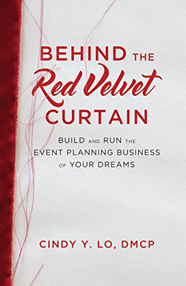
Cindy Lo: Behind the Red Velvet Curtain
Read the full transcript
Cindy Lo
Cindy Lo is the CEO of RED VELVET, a full-service experience and events agency she founded in 2002, and the owner of Strong Events, a specialty event rental company in the Texas Hill Country. Her book is used as required reading at the University of Texas and Austin Community College, and she has spoken at events across six continents on experiential marketing.
📚 Books by Cindy Lo
Transcript
[0:00:22] Charlie Hoehn: You’re listening to Author Hour, enlightening conversations about books with the authors who wrote them. I’m Charlie Hoehn. Today’s episode is with Cindy Lo, author of Behind the Red Velvet Curtain. Event planning can be an exciting, rewarding and incredibly fun career, but it takes more than just knowing how to throw a great party if you want to make it work. Cindy is the founder, owner and chief event strategist of Red Velvet Events, an international award-winning, full service creative events agency, and in this episode you’ll get her best advice for professional event planning greatness as well as some amazing stories about celebrities she’s worked with and high-end events that she’s planned. Now, here is our conversation with Cindy Lo.
[0:01:24] Cindy Lo: So I was in high-tech, and I started in high-tech coming right out of college, and I love the job. It treated me well, but something was missing and I didn’t quite know what. Well, unfortunately 9/11 happened and that kind of fast-forwarded my job track, because at that time I was working for a client, actually in New Jersey, New York and they said, “Don’t come back. We need to take a pause, because we’re trying to rebuild our city,” and I was basically faced what you would call furlough, essentially, and I was given an opportunity to take a time off and I was like, “Oh my gosh! I’ve never had this. What am I going to do?” When I came back to Austin, a lot of people were suggesting that I do events and I go, “What do you mean? Like go work at a hotel, or go volunteer, or — What do you mean?” And they go, “Did you know that you can actually go and plan events for people and actually get paid?” I go, “What?” I had no idea, because before then I volunteered. I was of every board, every committee you could think of, I did all the planning for free. So I had no idea that this world even existed. My natural tendency was to go and apply for jobs, and I apply for these jobs but no one wanted to touch me, because of the fact that I had zero, zero hotel experience, zero planning experience, but even though I showed them that I volunteered and I did all these stuff, they were like, “No. No. No. No. No. We don’t need volunteers. We need someone that has experience, someone that can come in and do the work.” I even offered to do it for free, because I didn’t need the money and I wanted to show them that I was a fast learner, but no one believed me, and I have a side story about that too, on another note of looking back why I think that’s the case. So my next natural tendency was, with my business degree, I will create, basically, the experience that they keep saying I’m missing, but I’m only going to do this for one year, because after all I did not want to be my own boss. My dad was his own boss. I grew up in that environment. I even told myself, “There’s just no way. It’s a lot of work. Why would anyone do this?” I did it for a year and at the end of the year, when I realized that I was having way too much fun, even though I wasn’t really making a lot of money, okay? I was having too much fun doing this and it just was natural. I didn’t dread waking up in the morning. I didn’t feel any of that. I just was like, “Wow! I am at my element,” and that’s when I knew that I had to continue on with Red Velvet Events.
[0:03:46] Charlie Hoehn: That’s awesome. Tell me, when did you first feel that, “Oh my gosh! This is so much fun. It doesn’t even feel like work.”
[0:03:54] Cindy Lo: Probably about 6 months in, but I was still like, “Oh my gosh! I got to make money. I got to figure this out.” Also, probably even at six months in, I was still also telling myself, “I need to make sure my resume looks good so that when I reapply for these jobs, they’ll hire me.” So I wasn’t even thinking about carrying on at that point. It didn’t really hit me until, really, it’s because I had set this mythical timeline in my head of that, “One year is up,” then you got to go reapply for the jobs, and when one year hit I go, “I don’t want to reapply for jobs. I want to keep doing this. I want to see what I can do with it next.”
[0:04:27] Charlie Hoehn: Yeah. Tell me — I totally get that you’re still feeling the worry, the stress and the practically of, “I’ve got to plan for my future, got to have a resume,” blah-blah-blah. But tell me about the first fun event that you really remember?
[0:04:42] Cindy Lo: It’s funny. The first one that I realized that this was me is actually a corporate event, and the way I got it was because they knew me from college. So the people hosting the event knew me from college and so they only knew me from college. Meaning, that they saw what I did for volunteer. They didn’t know me in the professional world. So when they gave me this opportunity, it was almost bigger than life and I probably underestimated how much work it was going to be. I mean, I definitely probably — Not probably. I definitely underestimate it. Of course, I went about the course and just trying to figure everything out, how to negotiating with the hotels, how to do registration, how to do all these things, and I would basically present myself as if I knew more and I had more clients than I really did to other people. But it was during those moments I realized, “Gosh! I really like this. I like the challenge. I like figuring things out. I like putting together a plan. I like checking things off my list.” All of that cumulated into one was really what I think kind of motivated me to keep going, even though I probably should have been scared — I mean, can I cuss? Scared as shit during that time, because if I had ruined their event — Oh my gosh! I think that would have ruined my career. My chances of ever getting high for anyone.
[0:06:01] Charlie Hoehn: Yeah, and the event went well, of course.
[0:06:03] Cindy Lo: It did. Now, looking back — Oh my gosh! I realized how elementary I was. I mean, you just never — You, of course, don’t realize that until you do bigger and better events. But looking back now — I mean, at that time I thought I was the bomb and this was like the best event there was in Austin, everything, but looking back now I realize how simplified I had made it just because, again, I was doing what was comfortable for me and what I knew and what was reasonable.
[0:06:29] Charlie Hoehn: Right. Now, how many years have you been doing this?
[0:06:32] Cindy Lo: We’re going into our 16th year.
[0:06:35] Charlie Hoehn: 16.
[0:06:35] Cindy Lo: Yeah.
[0:06:35] Charlie Hoehn: All right, and I know that a question that you get from a lot of people who are also in the event, thinking about getting into event planning is, “Did you make the right move? Do you still have fun doing it?
[0:06:46] Cindy Lo: A lot of people ask me that, especially because I pivoted my role since I’m more now on the business side, running the business versus actually planning, and I told them I have no regrets, whatsoever. It is definitely something you have to think about, because when you start the business and it’s just you, yourself — Me, myself and I — I mean, I control everything. I’m the only one that I have to worry about if I drop the ball, that kind of stuff. But then as we were growing our team, I realized that I had to think more about the business, not just about the events, and that is actually kind of been the fun part about this journey, is that being able to actually kind of — Going back and forth between both sides. I really enjoyed a lot. In fact I tell my team all the time when they have a brainstorm session, “Please allow me to come in too, because I do miss that world,” but at the same time I’m so excited and thrilled for them to be able to experience doing events and doing bigger events each time. So I get my thrill through them, now.
[0:07:44] Charlie Hoehn: Nice. So let’s talk about not only some of the bigger events that you’ve done at this point in your career, but then let’s also talk about why you wrote the book. So let’s actually start with these events. What have been some of the highlights that you’ve had in your career?
[0:08:03] Cindy Lo: If you’d told me 16 years ago that I was going to be doing events that involved President Obama or even the first lady, because I did two separate events. One was for President Obama and the other one was for former first lady, Michelle Obama. I would have told you, “No way,” or if you had told me, “Hey! You’re going to be planning a private concert with Lionel Richie,” I would have also said, “No way.” So things like that have definitely been amazing, because —
[0:08:26] Charlie Hoehn: Wait. Without leaping over the name drops — So what was the experience with the Obamas?
[0:08:33] Cindy Lo: With that, one, is that when you get brought in for basically a highly coveted event or secret event, you have to plan everything without revealing what’s going on, but you still got to think through all the logistics. Of course, you have to think through the safety measures, all that. Of course, our client, making sure that they were good.
[0:08:51] Charlie Hoehn: Yeah. What are some of the things that the average person wouldn’t even think of?
[0:08:55] Cindy Lo: So things that I actually also learned too myself, because, mind you, this was my first time doing it, was the fact that Secret Service takes their job very seriously and you got to think through everything. It’s not just about the party, like the location and the time and the set up. It really is down to, “Okay. How are you going to screen everyone that’s coming into the building? How are you going to make sure that you actually know who all is attending, because of the fact that it’s a very big venue?” Just even down to who’s speaking and how does that relate to his agenda? Because if it’s not appropriate, how do you kindly explain to the person that they’re not invited to the event? It’s like there was just all these things and it happened in such a fast — Or short, I should say, timeframe, that I didn’t really have time to react. I had to do. I had to execute.
[0:09:45] Charlie Hoehn: Yeah, and Lionel Richie?
[0:09:48] Cindy Lo: This is a fun story. So several years ago, ACL turned to two weekends. ACL stands for Austin City Limits Music Festival, and that was the first year it turned into a two weekend in a row concert, and Lionel Richie was the headline. Again, C3 creates and produces this event. That is completely theirs, and I go as a guest. Well, the second weekend, unfortunately, we had really bad torrential rain, so bad that C3 had to make the final decision to cancel day two. Basically they had to cancel all of the lineup, and that included Lionel Richie. Well, they made the announcement public that morning around, I want to say, 9 a.m., and then by 10:00 a.m. my client texts me, she’s like, “Hey, I assume you saw the news, I want Lionel Richie in my living room for a private concert tonight,” and I’m like, “Okay. First and foremost, you understand that he does not have to stay in Austin. He has a contract, but he can leave. He can go back to California. He doesn’t have to stay.” She goes, “Just make it happen.” I was like — Knowing how this works, I was like, “Don’t do anything. Don’t send out an invitation. Don’t do anything until I have it confirmed.” She goes, “I know you’ll get it done. Just get it done.” I’m like —
[0:11:01] Charlie Hoehn: No pressure.
[0:11:02] Cindy Lo: No pressure. Like I said, just like similar to earlier, it was like when you have something with that short of a timeline, you just execute, execute. You don’t have time to worry about things. You just think about everything that you need to get done and just execute. So that was pretty amazing, because at 4 p.m. we finally got him to say yes, and then he was performing live in our client’s living room at 9 p.m.
[0:11:25] Charlie Hoehn: With a client like that, money is not really an issue.
[0:11:28] Cindy Lo: Yeah, we don’t talk about it.
[0:11:30] Charlie Hoehn: Yeah. It’s just like, “Get it done.” That’s incredible.
[0:11:32] Cindy Lo: Yeah. This is obviously a very good client for us and it’s a client that trusts us and knows that we are doers, more than talkers.
[0:11:39] Charlie Hoehn: No kidding. How do you go about even — It’s like what is your thought process? I know you’re just trying to execute, but is the first order of business, “Okay. I need to find Lionel Richie’s agent.”
[0:11:50] Cindy Lo: Correct. First thing is we have to find out what also his contract obligation is to C3, because obviously he can’t break any of those rules. Once we found out that he is allowed to take a private concert, not a public. Like we couldn’t have him perform like at Emo’s and then charge ticket prices. Yeah. So the fact that this was a private, was still on the table.
[0:12:10] Charlie Hoehn: That’s pretty incredible. What’s an average corporate event that you handle?
[0:12:16] Cindy Lo: Average in the sense of size or average in the sense of like what it looks and feel?
[0:12:19] Charlie Hoehn: Yeah, just the scope of what does it look like, what does it feel like?
[0:12:23] Cindy Lo: Our favorite type of corporate event is usually multiple days. The client has engaged us as project managers so that we can help them not only with branding, but everything in between. From registration, the website that actually talks about the event, maybe even being their help desk so that if people have trouble registering, they’ll call us instead of them. Then when you move forward on to the actual day of the event, we’re actually doing everything from the stage set up, the production call sheet, entertainment, hotel or venue management, the party at night, transportation, if there needs to be some transportation between the venues and the hotels, hotel room block, gift bags, everything, the nuts and bolts.
[0:13:06] Charlie Hoehn: If it’s not clear to the listeners, that is a lot of stuff, which is why companies like yours are so valuable.
[0:13:15] Cindy Lo: I love it and I honestly can’t think — Like when I go into an event as an attendee, I really can’t get my eyes off the logistics side of things. Really, I break it down and I’m like, “Oh my gosh! How do they do that balloon installation?” or “Oh my gosh! How do they get that lighting to work?” So, to me, it’s just natural to think that way, but I know for some people it’s overwhelming and it’s stressful. So I always listen to your gut. If it’s stressful, don’t do it.
[0:13:40] Charlie Hoehn: Yeah, strength with your strengths, and that’s your strength. Yeah. Tell me why you wrote the book.
[0:13:47] Cindy Lo: It’s funny, because as I was meeting people, as I was growing the business, a lot of them were very surprised how I grew the business from knowing nothing to where I am today. So I wanted to share open and candidly with everyone, that I had my fair shares of struggles. In fact we still have a lot of ups and downs right now even though we’ve been doing it for 16 years, but what’s neat is that when I share it — I think, when I share the stories with people, I think they can relate to the fact that we were at a time where we weren’t making money. We were at a time when I was having a lot of turnover. We were at a time when I was pregnant and I was like, “Oh my gosh! What do I do?” Because, “Am I a bad mom for working?” That kind of stuff. All of these kind of thrown into here, kind of like my autobiography, kind of sharing what lessons learned we took away and hopefully someone else can use it and fast track themselves to success faster than we did.
[0:14:47] Charlie Hoehn: Author Hour is sponsored by Book in a Box. For anyone who has a great idea for a book but doesn’t have the time or patience to sit down and type it out, Book in a Box has created a new way to help you painlessly publish your book. Instead of sitting at a computer and typing for a year, hoping everything works out, Book in a Box takes you through a structured interview process that gets your ideas out of your head and into a book in just a few months. To learn more, head over to Bookinabox.com and fill out the form at the bottom of the page. Don’t let another year go by where you put off writing your book. Two things; one, I’ve done a little bit of event planning not quite at the scale that you’re talking about. I know how stressful it is too. I just had a bad daughter. I cannot imagine —
[0:15:41] Cindy Lo: Congratulations!
[0:15:42] Charlie Hoehn: Thank you. I cannot imagine, I cannot even fathom combining pregnancy with event planning. That is next level.
[0:15:52] Cindy Lo: Yes. I am very fortunate. I have two kids, both of them were born while we’re growing the business. I am very fortunate that not only were they healthy kids, but they really did go with the flow while we were growing the business. In fact, both kids were born right before South by Southwest, which is one of our biggest Austin City-wides, and literally for my first child, because I knew nothing. Again, I was a first-time mom. I even scheduled my induction so that it would land — So that I would have about a week and a half recover before I started to set up at South by. Again, how naïve was I to think that that was, “Okay. What happens if my daughter really did have issues?” There’s no way. Like I was not in that mindset.
[0:16:35] Charlie Hoehn: Is that a lesson in the book?
[0:16:36] Cindy Lo: Yes, that is a lesson, to not be as naïve as I was, because I literally — You can’t control what a baby is going to do or not do and I, just in my mind was like, “Well, I’m a planner. This is what we do.” My mom was so mad at me that she even came up and she goes, “No. You are going to just tell me what you needed done and you’re going to sit there with the baby and I will take care of this for you, because you literally just had the baby. You cannot be climbing up a ladder.” So my mom came up. Yes, she was not happy. She was like, “I cannot believe you did this. You should never have accepted that contract.”
[0:17:14] Charlie Hoehn: Dang! That’s next level hustling. You’re going to like our CEO, JT. He will totally vibe with that. He will respect that immensely. So tell me, what do you think is like the main takeaway, if you had to pick one? I know there’s a lot in the book. What do you want people to kind of remember and takeaway from the book?
[0:17:36] Cindy Lo: I hope the one big takeaway is if they are en event planner and they just started out and they’re thinking, “My gosh! This is all sucking. It’s not working out the way I thought it was.” I think they should give themselves a realistic, like whether it’d be a year-long, a six-month goal, and really try and focus on that goal before they call it quits, because this is a fun, fun industry, but it definitely takes a lot of hard work and a lot of focus and determination to make it work. Then the second — I know you only asked for one, but I have a second takeaway, which is charge what you’re worth. That’s actually probably the number one reason why most people leave this industry. A lot of them are self-entrepreneurs and what happens is that they don’t make enough to make a living, and so they leave the job altogether.
[0:18:19] Charlie Hoehn: How do you know what you’re worth?
[0:18:21] Cindy Lo: That is a great question. So you should buy the book, okay? But how simplify it, is that you need to first start off experimenting with the market, because it is all over the map. We have people that charge dirt cheap rates all the way up to the highest of the highest luxury rates, and you will find, again, what you’re worth, because based on how many repeat clients will come back and pay your rate, also based on the feedback too. Because it’s not to say we haven’t lost business when someone has told us we’re too expensive, but it also hasn’t said that we’ve won plenty of business too and have won them coming back over and over again as well. So we know we’re in a sweet spot right now for those that value a professional team at this rate. That’s how we know that this rate is reasonable. For the longest time, I was undercharging and I realized it was attracting also the wrong clients. So that’s why it’s important to charge the right —
[0:19:15] Charlie Hoehn: When did you realize it was the wrong —
[0:19:17] Cindy Lo: Way too long. Oh my gosh! Year 4 to 5.
[0:19:21] Charlie Hoehn: How did you realize?
[0:19:21] Cindy Lo: Because my husband basically said, “Look, Cindy. You’re never going to break out of this rut if you don’t charge a higher rate,” and I of course didn’t believe him. I was like, “You don’t know events. I know events.” He’s like, “I am just telling you. You’re going to continue in this cycle if you don’t change.” Finally, I was like, “Okay. You know what? I will change it for one year and see.” Kind of like that, “Hey, I’ll do this in one year and reapply for jobs.” I did the same thing with the pricing. I said, “Let me change the rates for one year and see,” and oh my gosh! It was a huge — Then it made me realize that we were undercharging rampantly prior.
[0:20:00] Charlie Hoehn: Right. I love that commitment, full year. Usually it’s like, “I’ll do it for the next two clients or something.” That’s really good.
[0:20:10] Cindy Lo: You have too, because you have to stick with it.
[0:20:12] Charlie Hoehn: Yeah. Tell me about — You don’t have to name names, but tell me about the worst client experience you had because you were charging too little.
[0:20:22] Cindy Lo: I do actually kind of talk about it in the book, but no names of course. It’s unfortunate, because what it is is that they then assumed we were very disposable.
[0:20:33] Charlie Hoehn: Yup.
[0:20:34] Cindy Lo: What came with that meant also it was a lot of disrespect. Again, you can be what I call affordable, but still treat someone with respect, but because he thought of us as really disposable partners, then he would kind of berate our team, yell at the team for little minor infractions, and we take feedback very well. We always tell people, “If you don’t like something we suggested, please share with us. We’re not going to get our feelings hurt. In fact we’ll be more upset if we did the event and then you told us later, you’re like, “I never really liked that theme. I thought it was lame.” Like, “Why didn’t you tell us at the beginning so that we could have redesigned it?” So that’s what we tended to see when people were abusing us. So the good news was is then we raised our prices, is that we were able to eliminate a lot of those kind of clients that were not treating us with respect.
[0:21:25] Charlie Hoehn: Right, and it allows you to do a better job.
[0:21:27] Cindy Lo: Absolutely. Because, again, you only have a limited amount of time in a day, so use it wisely, and that’s how I explain to everyone, “You’re going to figure out quickly what you’re worth, because what you have to take home and what your employees have to take home is what’s going to determine if you can do this.”
[0:21:45] Charlie Hoehn: Tell me about some of your favorite client experiences and who you love to work with. What type of client do you really love to work with?
[0:21:54] Cindy Lo: The types of clients that our teams loves to work with are definitely ones that allow us to be as creative as possible, especially the ones that have used us for multiple years. They understand and recognize that we don’t like to do the same thing twice. So if we did an event that was X, Y, Z theme this year, then next year we’re going to change it up and we’re going to even make it better. We’re not going to go backwards for them. We want to constantly improve upon it. So for the types of clients that trust us and allow us to design it and still stay on brand and on culture, we love. Our favorite client experience? I’ll be honest. For me personally, it is the ones that give me that challenge, kind of like the Lionel Richie one. Do those come about a lot? No. Those are very rare, because it’s not like it drops — But when the opportunity arises, I always tell people jump on it. So a lot of times, or at least lately, I’ve been hearing a lot from people that ask me about work-life balance and I try to explain to them that it is a personal choice of what you want to call as your work-life balance. But I gave them this exact example, as I said, “Guys, if I was as strict as y’all saying that I’m not going to answer my cellphone on weekends, this Lionel Richie thing would not have happened, because it happened on a Sunday morning.” Think about it. The times when you are probably going to be presented with this opportunity that’s once in a lifetime, it’s probably going to be outside the normal work hours. That’s why I think it’s because I have that eagerness and that hunger for that, that I’m always not willing to completely say, “I’m only working between 8 to 5, and don’t bother me after those hours.”
[0:23:29] Charlie Hoehn: I’m curious of what you think, Cindy. I think a lot of the people who buy in to work-life balance have to buy in to that notion, because work is not something they enjoy, and so life is time that they get to enjoy themselves.
[0:23:45] Cindy Lo: I think you’re exactly on the right track. So I told them, I go, “I really don’t think —” Like I know it sounds so cliché, but I do not think of my work as work. I think of it as like, “Oh my gosh! What exciting events are we going to design today or we’re going to sell today or that we’re going to meet people today?” and I love it. Like the times that are stressful are when we have no cash, okay? That’s always stressful, or when a client doesn’t want to pay.
[0:24:08] Charlie Hoehn: Yeah. Oh, yeah. That’s never fun. But that’s the exact type of event planner you want to hire, not somebody who’s grinding it out.
[0:24:18] Cindy Lo: Correct, because that’s not — This is a fun industry. You should be having a lot of fun.
[0:24:22] Charlie Hoehn: Yeah, absolutely. The Lionel Richie thing was fun. Was that your number in terms of best experience you’ve ever had as an event planner?
[0:24:33] Cindy Lo: There are actually quite a few now, but that one definitely sticks out my mind just because it was such a difficult challenge and, honestly, deep down I did not think we were going to pull it off, because, think about it, I was still trying and until 4:00 he finally confirmed.
[0:24:48] Charlie Hoehn: Yeah. What happens if you don’t pull it off?
[0:24:50] Cindy Lo: I was already playing in my head of like how I was going to let the client down. Honestly, I would have had let her down, but that was not an option. I mean, really it was not, that’s why I was like, “It’s about my negotiation skills and my network.”
[0:25:03] Charlie Hoehn: Yeah.
[0:25:06] Cindy Lo: So that was not an option [inaudible 0:25:08.2]. It’s not happening.
[0:25:11] Charlie Hoehn: I like that.
[0:25:12] Cindy Lo: Yes. But one recently, as an owner, is the fact that we did a really amazing event recently and I was not involved at all in it. To me, that was pretty incredible, because I never thought I would ever be looking, I guess, from outsider in and saying, “Oh my gosh! Our team did that, and I had nothing to do with it.” That was just a very humbling moment just as an owner, because of the fact that you always — you could picture or you always tell yourself you’re goaling yourself to do that, but I never pictured when it would happen. So the fact that it happened around the same time was just — Again, reminded me that this was the right time to write the book. It was the right time to just pull everything together, because the company has changed so much in the last couple of years and it was just all the right timing.
[0:26:02] Charlie Hoehn: I want to share a quick story from another author named Steve Sims, and he does something sort of similar. He’s a high-end concierge service for like premium wealthy clients. So they asked him to do of like wild things, like —
[0:26:19] Cindy Lo: Yeah, I could imagine.
[0:26:20] Charlie Hoehn: “I want to eat dinner, a private dinner in front of the Statue of David,” things like that. So he has all these wild stories, but he tears up and he tells his favorite story is a really wealthy client who’d spent close to a half million dollars on his wife’s birthday gifts over the course of a few years. He got to like the 5th year and it was a special anniversary. It was like their 20th anniversary or something like that. He said, “I want to do something really special.” Steve said, “Well, tell me how you met.” He told this whole story about how they had a picnic, they had music. When they were kids in college, they had champagne in like these cheap cups way back in the day, and Steve recreated the entire thing.
[0:27:18] Cindy Lo: Oh! That’s awesome.
[0:27:19] Charlie Hoehn: And the wife, as soon as she saw it —
[0:27:23] Cindy Lo: She knew exactly where it was. Yeah.
[0:27:22] Charlie Hoehn: She broke down in tears, and he said it was the most — The least we’d spent, but it was the most touching and thoughtful. Do you have something similar that comes to mind when you think of events that there’s one really thoughtful, fulfilling moment that was priceless?
[0:27:43] Cindy Lo: Oh my gosh! I’m sure there is, and I just don’t have an example right off the tip of my tongue.
[0:27:47] Charlie Hoehn: It’s a tough question, but you were on a roll.
[0:27:51] Cindy Lo: Yeah, I know. Well, you know what’s funny? This is actually — It’s a personal one, because being an owner of an events company you would think that my kids get birthday parties all the time, and they don’t, because they are born in February and that is actually one of our busier months. So they always oftentimes get neglected. Well, one time I just did something really small and my child was like, “Oh my gosh! That was the best birthday ever.” Again, it would have never, again, passed my, what I call my bar of best birthday ever. To them it meant a lot because of the fact that they finally got a birthday party. So I guess in my world, it’s more like that. It’s the touching moments of those kind of things. I will say this one, and this is not — It has nothing to do with price or anything, but I noticed a couple of years ago, we were always doing, again, everything for our clients, and we never did something for our own team. When we started doing something for our own team, that was very much welcomed. So we actually started — we started to plan a reward’s trip and a real holiday party instead of just going to a restaurant and buying the restaurant out, that kind of stuff, and the team really, really appreciated that, because of the fact that we always area planning for other people and we never planned for ourselves. So they got to attend as a guest.
[0:29:10] Charlie Hoehn: That goes a long, long way.
[0:29:12] Cindy Lo: Yeah. I know. It’s like probably not exactly quite as touching as that story, because I do like that a lot.
[0:29:17] Charlie Hoehn: That’s tough to top.
[0:29:18] Cindy Lo: Yeah, that is tough to top, but I think of one before end of our taping, I’ll let you know.
[0:29:23] Charlie Hoehn: Fair enough. What would you say, let’s say somebody is listening to this and they got an event coming up this year, what’s a challenge you can throw at them this week? Something to think about in terms of how to do it right?
[0:29:38] Cindy Lo: So how to do it right? Okay. I would challenge them to make sure they think about who their audience is. A lot of times people get so distracted by the who, what, when, where and also seeing all, what I call the pretty stuff that they forget who their audience is and the audience may not even — It may not even appeal to them. So picking things that work with your audience is so important, because I think a lot of times people see stuff on social media and they’re immediately like, “I’ve got to do that, because that got a lot of likes or that got a lot of comments,” but I go, “No. You have to know your audience best. If you don’t know your audience, it’s going to fail,” and that’s what’s so key. Also, you’re spending a lot of money, let’s spend it right too. That’s probably my biggest feedback.
[0:30:21] Charlie Hoehn: Yeah, that’s the other thing. What do you say to people who are like, “Oh! This is so expensive. I’m just going to do it myself to save.”
[0:30:30] Cindy Lo: So I always ask them, I go —
[0:30:31] Charlie Hoehn: Is that common?
[0:30:32] Cindy Lo: Oh! It’s very common. We got two this morning. I said, “Here’s the thing. I understand that. I respect budgets, and we’ll let you go about do it yourself,” but I always have to ask; what is the price that you’re going to pay if it does all go wrong?
[0:30:46] Charlie Hoehn: Boom! Exactly, and every single step is a chink in the armor, a potential chink in the armor.
[0:30:52] Cindy Lo: So if to them it was like, “Oh! Nothing.” Then great. Go for it. But if a promotion is on the line or if your sales numbers are on the line or if anything business related, I personally wouldn’t take that chance. I would rather you reduce your budget to be more reasonable instead of trying to throw everything in.
[0:31:11] Charlie Hoehn: Yeah. Working with an event planning company is not only assurance that things will go right. It’s assurance that things won’t go disastrously wrong.
[0:31:19] Cindy Lo: Correct, because as long as you did vet them out, they should have insurance, they should have years of experience and they should have also your trust, because I always tell our team, “That is actually number one thing we’re trying to earn, is their trust, because they need to trust that we are going to learn what their business is about so that we can produce this event as if we were an extension of their team in-house.” So that is the key. If you don’t have it, insurance — Like that’s literally — Yeah, that’s a checkmark. They have to have experience.
[0:31:53] Charlie Hoehn: How many years do you think they need?
[0:31:54] Cindy Lo: This is tricky, because it depends on what scale of an event it is, because obviously if they have been doing this and then they just started their business fresh, but they’ve been doing it for 10 years, I think that’s usually a pretty good amount of experience, because they’ve seen a lot. But I always also tell people, “Give someone new a chance,” but I probably wouldn’t give them the Emmy’s or the Grammy’s. I would probably give them like a smaller scale corporate events, so give them a chance, because there is always going to be someone out there that is really meant to do this job and they just didn’t know it, and you get it at a cheaper rate. Then the third one is trust. That should be number one.
[0:32:32] Charlie Hoehn: Yeah, how you feel about them. Yeah. Give me a bit of sticker shock here. What is the most expensive event you’ve worked on?
[0:32:40] Cindy Lo: Probably it was —
[0:32:42] Charlie Hoehn: What was their budget
[0:32:42] Cindy Lo: Three million.
[0:32:44] Charlie Hoehn: Three million. Yeah, that’s a big event.
[0:32:46] Cindy Lo: Yeah, and that was just our piece. So that doesn’t even include everything else. So the entire budget was probably much larger.
[0:32:53] Charlie Hoehn: Wow! That’s unreal. Can you say the industry?
[0:32:56] Cindy Lo: No. Corporate. Yeah.
[0:32:59] Charlie Hoehn: Fair enough. Do you have a ballpark range that you’re comfortable disclosing on the podcast?
[0:33:08] Cindy Lo: As in what? Like what we do?
[0:33:10] Charlie Hoehn: Yeah, like what you typically see.
[0:33:11] Cindy Lo: I think the problem there is the challenges that what does that include.
[0:33:15] Charlie Hoehn: It totally varies per — Yeah.
[0:33:16] Cindy Lo: Yeah, exactly, because I could easily say, “Hey! $100,000,” but then if someone told me —
[0:33:20] Charlie Hoehn: They’re like, “Great! I’m going to get all these stuff,” and it’s not true.
[0:33:23] Cindy Lo: You’re like, “Oh! No. No. No,” because that’s problem, is that a lot of times people get fixated on a number that — Like I read industry magazines all the time and I’m constantly like, “It’s probably better for them to quote you per head,” because the per head will be then broken down per day too. For example, if someone told you, “Hey, I can do a customer conference easily for a $500 a person.” I would ask them, “Is that a single day or half a day?” Because there is no way you can do that for multiple days.
[0:33:54] Charlie Hoehn: No.
[0:33:55] Cindy Lo: So the thing is that, but a lot of people are like, “Yes, I can. I can do it this way.” I’m like, “I’ll be honest. If you need the production and all these —”
[0:34:00] Charlie Hoehn: That’s a good question.
[0:34:02] Cindy Lo: It’s not possible.
[0:34:03] Charlie Hoehn: A good point.
[0:34:04] Cindy Lo: So really try to dig deep. When someone gives you a quote, that to really make sure that they know who your attendance count is, how long you expect them to be on site. Does it include food? What kind of food? That kind of stuff, just to make sure your budget is reasonable. It’s tricky. I can’t just pull out a number for you.
[0:34:20] Charlie Hoehn: Right. Yeah, totally. That’s good to know. Anything else you want people to maybe considering doing an event and they’re thinking, “Wow! It’d be great to work with Cindy.” What do they need to know before they reach out to you, and then how do they reach out?
[0:34:36] Cindy Lo: Oh, it’s a great question. I would say — If you had to ask me — Oh! One thing. Man! I would say is that — This could go both directions, because we actually have a very good social media presence, but you shouldn’t be fooled by someone that doesn’t have necessarily the best or the worst social media presence, because sometimes their events are confidential, so they can’t necessarily share it all. The better way to learn — I mean, what we’ve always said is that we like you to use it to figure out if we are a good fit culturally and we’re a good match, but definitely meat with us in person, face to face, because you’ll learn so much more about the team that way, and ask to meet who is going to be my program manager so that way you can actually get to know their personality and see if y’all are going to mesh, because it is like a marriage. You’re like dating for a while until the event is over. So it’s very important that your personalities match up. As far as contacting us, we are active on all the social media platforms. So Red Velvet Events is our handle everywhere, YouTube, Instagram, Facebook, Twitter. So it’s very, very easy to reach us, and our website is the same as well.
[0:35:40] Charlie Hoehn: Beautiful. Thank you so much, Cindy. This has been awesome.
[0:35:43] Cindy Lo: Thank you.
[0:35:46] Charlie Hoehn: Many thanks to Cindy Low for being on the show. You can buy her book, Behind the Red Velvet Curtain on Amazon.com. Thanks again for listening to Author Hour, enlightening conversations about book with the authors who wrote them. We’ll see you next time.
Want to Write Your Own Book?
Scribe has helped over 2,000 authors turn their expertise into published books.
Schedule a Free Consult