John Sardella: Grief, Purpose, and What a Book Does Over Decades
✨ Episode Summary
John Sardella’s Scribe-published memoir A Journey Without a Map, written after he lost his wife Margaret to a seven-year cancer battle, hit #1 on Amazon in multiple categories at launch, sold in 10+ countries, and earned coverage from Forbes and ABC News. Six years after publication the book is still compounding: John has published nine books total (six of them came after this one), built a school-visit speaking business off the back of it, and in April 2026 signed with a literary agent to turn A Journey Without a Map into a screenplay and feature film. As John puts it, "[The book] gave me a purpose. Gave me a drive, gave me a connection with people to make a difference."
⭐ Top Moments
- Six Years In, the Book Just Got a Literary Agent and a Screenplay Deal. "I just signed a literary agent contract yesterday, and we are going to make it a screenplay… I’ve already had some really good positive feedback from some high-level companies, production companies for a movie possibility. One of them in particular I’m working with has said, John, this has the unlimited potential." The clearest sign that a Scribe book’s long-tail compounds rather than fades.
- The Book Pulled Six More Books Out of Him. "When I started writing and I retired and I got back into writing, [the book] gave me a purpose… Now I’m up to nine books published. And out of all those books, the funniest thing is, six of those books actually were after this book." A Journey Without a Map turned John into a working author. He now does paid school-visit presentations and runs his own children’s book series.
- The Book Built a Community of Widows and Widowers Who Reach Out. "The biggest thing has been the connection with people who are widows and widowers. And those connections have really helped me to help them through a very difficult time. Many times I get an email or a correspondence that says, hey, I identify with every piece of that book." Six years after launch, readers are still finding the book on their own and reaching out for the conversation it opens.
John Sardella
After twenty-seven years of marriage, John R. Sardella lost his wife, Margaret, following a seven-year battle with cancer. Searching for a book that would give him space for his grief and help him move forward, he found only clinical works written by psychologists. That absence inspired him to write A Journey without a Map: Stories of Loss, Grief, and Moving Forward, in which he shares how he worked through the grieving process to remind others that they are not alone and that they will be okay. Sardella was a teacher for sixteen years and a school principal for fifteen. He is also the author of How to Start a Successful Youth Lacrosse Program and L is for Lacrosse: An ABC Book.
★ Scribe Case Study
By Sharing His Own Grief, John Sardella Helped Others Move Through Unspeakable Pain
John Sardella's Scribe Media-published memoir hit #1 Amazon bestseller, sold in 10+ countries, and 6 years later just landed a literary agent and screenplay deal.
📚 Books by John Sardella
John Sardella spent 31 years in education, coached lacrosse for over 50, and lost his wife to cancer after a seven-year battle. Then he wrote a book about it — and it changed everything.
What a book can do when you tell the full truth:
- Build an identity that outlasts any job title
- Connect you with thousands of people who needed exactly your story
- Sell for 26 years (and counting)
- Become a feature film
Transcript
Eric Jorgenson: It's an honor to have John Sardella here with us on Author Hour. Thank you, Eric. I'm looking forward to the conversation. Me too. I'm sort of always curious when the twinkle in the eye starts for people to sort of turn that corner into, I think I need to write a book. When did that happen for you?
John Sardella: Well, I actually, 26 years ago, I wrote a book. I was part of a lacrosse program, and I actually went in the direction of writing a children's book, Ellis for Lacrosse. And what it was was, you know, I always had the thought of writing. I was a teacher at the time. I was an elementary school teacher. We used to have authors come and visit our schools. And when they came and visited, you know, they captivated the child and they there were some just powerful books that were shared. But I also looked at and said, I could do that. So I did. And I had a, I had a venue, you know, I had an audience and it was audience of lacrosse because I coach lacrosse. I've actually been part of lacrosse ever since I was seven years old and I'm going to be 63. So it's been many years, you know, over 50 years of being part of lacrosse in every aspect as a coach, a player, an administrator, a public speaker, you know, nationally, locally. And what happened was. I thought, hey, you know, let's do an alphabet book. So I created this alphabet book, U.S. Lacrosse, was by publisher. They distributed it. I sold thousands of copies of it. And even today, that still sells weekly. And it's a pretty powerful book. But then I kind of put that away because life happened and, you know, married, having kids, becoming a principal, pretty much everything consumed me. But I always knew there was going to be another book. And I kind of sensed that it was going to be a book that was going to be different. And that's when, you know, Journey Without a Map came about because, you know, life circumstances with the diagnosis of my wife with cancer and Going through that journey for seven years and then the three years afterwards, I contacted you guys. I was searching for publishers and you guys fit the bill. It was excellent. From the first conversation with Ricky Lake all the way through to the final production of the book, to where we are now talking about it six years later, it's just been a great experience working with you guys. And what happened was originally I was submitting the book as more of a motivational book, perseverance, sharing some stories. You know, every chapter would be a different word about, you know, connections and relationships and all those important things, communication that you have to have when you deal with life. And the feedback was, well, John, it's actually your story. And it was story of, you know, the experience going through my, the journey with my wife, with the diagnosis of cancer and all the treatments that she had to go through and how we try to keep things pretty normal. But the people around us that helped and support us, you know, the experiences of my kids going through that journey. And what basically happened was, you know, it was a compilation of stories and it was a journey over a 10-year period of, you know, her diagnosis to her death to afterwards and persevering and trying to figure out and moving forward. The next steps, you know, the legacy you leave behind. And ultimately it became that book. And so the journey really was not just a year or two. It was over the last 30 years. And that journey that I experienced with writing really became a reality because I pursued it. And I said, I can do this. So I did.
Eric Jorgenson: Yeah. I imagine that was a really, really challenging book to write at times. That's an understatement.
John Sardella: Very, very emotional. When I'm working with the team and we're brainstorming and writing together and we're going back and forth with ideas and I would jot down ideas and then the person I worked with, Jessica Berg, who was absolutely fantastic, she's coming back with ideas and the collaboration just was fantastic, but very, very emotional because I had to relive a lot of experiences that bring you to tears and just break you down. You try to work through that, but you know you have to because I knew that ultimately what was being written was going to be able to not just help myself that was very cathartic for me, but also help others, and it has.
Eric Jorgenson: Are there any ways you'd express that, how you navigated that to an author who's maybe afraid to put the full truth on the page or really fully open up into the book emotionally?
John Sardella: Yeah. You know, in conversations that I've had, because I've had a lot of reach outs, you know, and John, how do I do this? How can I connect? How can I make this happen? The first thing I say to the people is, well, you have your idea, right? And you've been probably talking about writing a book for many years. And then I say, you need to do it. do it now, like start writing it down. If you haven't written it down, start putting it together and you have to write everything that's truthful and honest about what you want to write and you have to just do it. Just like the night commercial, just do it. A lot of people like to talk about it, but they love to talk about because they have an idea, they have an idea, but the reality is they have to just write it and do it. And I've actually had a conversation about six months ago with somebody who I had a conversation with probably five years ago. So I had two conversations with this individual and she asked me about it and I said, well, write your thoughts down and write your book. saw her about six months ago. And she's like, John, I'm almost done with my book. And so I'm like, fantastic. And that's what it's about. It's many different ideas. I had somebody, because I write a bunch of children's books now. My genre is really children's books related to sports or emotional distress. And this book was completely different for me. But I talked to a lot of authors about children book too. And same thing. I said, do you have your idea? Connect with somebody and write it down. And I go, don't worry about the grammatics of it. Don't worry about, you know, all the details. That will get taken care of at the end. You don't have to worry about it at the beginning. I said, you're going to have an editor. You're going to have people are going to work with you and collaborate with you and going to help you through the process. Get your ideas down. get your main thoughts down and then you mold it from there. As you mold the ideas, it's amazing what you could come out with. Then once you have your ideas down, the collaboration with others really helps guide you for the finished product.
Eric Jorgenson: Yeah. It's a really interesting process. How different generating and editing are, like the ability to separate those and not try to do them at the same time. I think that's where people get really stuck. Were there any big sort of creative crossroads for you, you know, with a journey without a map in particular that you were trying to figure out kind of what does or doesn't belong in this book?
John Sardella: Yeah. You know, specifically what I did was I tried to sequence and organize the stories and the ideas where I had an idea and I had a theme. Like there were the color yellow was Margaret's favorite color and that's chapter two. And it was trying to, did I have enough stories to be able to share within that chapter to make it powerful enough to make it an understanding? And I was able to, you know, when everybody wore yellow at one of her chemo treatments and everybody was sending pictures and the power of that. My struggle was probably chapter three, those left behind, where I had others really share throughout that chapter, my kids, her personal friends, her sister. her best friend Mary Alice, her good friend Robin. And yeah, I was like, you know, are these people going to be willing to do this? But they were more than willing to do it. But it was a personal struggle for me because I was asking people to release and share their emotional thoughts. So that became pretty emotional and it's probably the most emotional chapter in the book. But you know, when I asked people if they would share with me because a lot of those stories that I shared were connected with other people. everybody was very receptive and very willing to do it. And that really helped me to get some confidence in that. But at the same time, I also knew that it was revisiting something for them. But I also thought that, or I know it was kind of cathartic for them to be able to put word to paper and to be able to share about such a special woman.
Eric Jorgenson: Yeah. I mean, amazing that you could have gave them the, the vessel to do that and, and led by example by, you know, doing it first. And it's such kind of grand scale.
John Sardella: Yeah.
Eric Jorgenson: Yeah. So six years on now from publishing the book, a little more. I'm really curious what most of the authors we talk to here are kind of fresh off of writing their book or launching it, maybe even one year past. I think this is a unique perspective to see, as you mentioned about the first book you wrote that still sells weekly, you said 17 years later, 20 years later. Twenty-six years later. Twenty-six. Okay. Yeah. It's really hard, I feel like, for authors, especially when they're kind of in the trenches, to appreciate how long-lived books are and how big the impact on their lives is going to be for many, many years. It's a tough year or two as you go through the writing and publishing. but the payoff really is extremely long-term, and at least in my experience, really compounds on itself. I'm curious six years out how you think of both that time creating and what the book has done for you in the intervening time.
John Sardella: You know, it's amazing because it's, it's definitely given me an identity. You know, people find out I'm an author. All of a sudden they read the book and all of a sudden, you know, Hey, there's John Sardella, the author. It's not John Sardella, the teacher, the principal, or, or the coach. It's like John Sardella, the author and people kind of get captivated by that. But I also love the fact that they wrote, they read the book. They talked to me about the book. and they share the powerful impact it had on them because, you know, whether they lost a spouse or whether they lost a child or whether they lost somebody, you know, maybe a parent or something, they can identify in different ways with that book. Now, the biggest thing has been the connection with people who are widows and widowers. And those connections have really helped me to help them through a very difficult time. Many times I get an email or a correspondence that says, Hey, you know, I identify with every piece of that book. And then we talk about it or we correspond with it and stuff like that. You know, I got an email one time from a lady saying, you know, I fully understand it, you know, what you went through with this, what I'm going through, but I need some more advice. And I said, well, and she put a caveat in there and said, and don't tell me time will heal. Unfortunately, I had to respond and say, time will heal you and help you, you know, because that's the reality of it. Even though the person didn't want to hear it, the reality was that that is the truth. You know, time and space and distance from that experience to help you to manage it better. It doesn't go away, but you manage it better. You're able to understand it better. You know, I'm nine years out from her death and I definitely handle and handle it much better, but. I don't do it perfect. I've had my ups and downs. I've had my struggles. I've had where I need to check in with resources, with therapists and things like that to say, how do I work through this thing? And how do I do it? And sometimes it's just a conversation and some feedback to help me out. And that's what I provide for others. It's sort of like the mentee mentor type of relationship. And as much as the mentee benefits from it, the person who's mentoring others, It's pretty powerful for them because they know they're making a difference for somebody else.
Eric Jorgenson: Yeah, it's also a way to give meaning to some of the hardest experiences of our lives. I lost my father a few years back, which it was on the younger side of my friend cohort. And it really changed my relationship with life and with death and everything. But I've reframed that experience as now it's my privilege and responsibility to help my friends who are going through loss to share what I know. Because I've been through this experience and done my best to have written a book about it, but done a fair amount of writing. The right information at the right time can really change somebody's life and something that seems really far away. What do I need a book about grief for? All of a sudden can become the most important thing in your life and somebody who can really help you through that can become absolutely a life-changing figure.
John Sardella: Yeah. And what happens is I, I tell people, like if they are coming off of a loss and it's pretty recent, I say, don't read the book yet. I go hold off because you have to process, you know, you're going into, you know, especially with losing a spouse, your first year is just chaos in the, in your mind. You're numb. You're trying to figure out things. You're trying to be strong for others and you're falling apart inside and you're just going to, I can't believe this has happened and so on and so forth. And then what ends up happening is. When, when you get some time in between, you kind of process things a little differently and understand things a little differently. Then you go and you read the book and it revisits a lot of your own emotions and your own experiences, but you're able to identify it more on a cerebral level than just the emotional level. And I think that's very helpful. So, you know, I always try to tell people I don't, you know, it's been a month since they lost their spouse and don't read the book yet. They're still so emotional right now. They're crying every day and it's coming from the toes. It's so deep that give it time and then this person will be able to identify it. It's also when you go through these things like losing your father or losing somebody important in your life. you realize life goes on. When my father died, I walked out of the hospital, I was like, nobody driving by right now knows that I just lost my father because life just continues. And I had to share that with others and I shared it with my daughter and she specifically said, Dad, Dad, I thought life was going to stop and it didn't, it just kept going. And it's identifying that and understanding that. And it also, you talked about when your father passed away and how you looked at things a little differently. Well, what you do is you actually prioritize and your priorities get stronger. The most important things in your life get stronger, you know, your faith, your family, your friends, you know, your purpose. You don't sweat the little stuff as much. You know, and because you've been through such a big thing and you're handled that adversity that the little things shouldn't bother you as much anymore. And you just look at the big picture of life and the most, you know, the biggest things in life are, you know, my family. And, you know, now if they're affected, yeah, I'm going to, you know, how do I respond to that? How do I help them out? But if it's going to be some nonsense and gossip that other people are doing, I don't need that. I just walk away from that. So, you know, you're going through these life experiences that helps solidify who you are, your beliefs, your convictions, and how you move forward and help out and work with people and how you live. It's good stuff.
Eric Jorgenson: Yeah. I often talk about writing a book as sort of building a lighthouse to gather your people who share, you know, either the values of the experience and It's, at least in my life, been the catalyst for a bunch of really amazing relationships. And I'm curious what the unexplained good things are that happened for you once you put this book out into the world.
John Sardella: The good things that happened were that it gave me a purpose. I retired after my wife passed away and I was kind of a lost soul, like trying to figure out how to live by myself. I had the kids in and out a little bit because they were still, you know, in college or graduating from college and started their life and their careers. You know, I realized that I had to cook more meals. I had to do more things as an adult. And that was, you know, when my wife was going through her most difficult times. You know, I said, I got to rise up and be a man here and I have to take care of her in every way I possibly can and making meals and doing the laundry and, you know, just making sure that she was okay every day, each and every day. So what it did is it gave me a direction and gave me a drive to be able to do those type of things and to figure it out. But when I started writing and I retired and I got back into writing, it gave me a purpose. And, you know, when you're an educator and you live that world for 31 years between a teacher and a principal, you're affecting people all the time. So what I had to figure out too was, you know, what are those things that I'm going to be able to positively use in my life to make me feel better as I continue to grow as a person? And writing was one of them. It gave me a purpose, gave me a drive, gave me a connection with people to make a difference. Coaching lacrosse gave me that ability to do that too. And so as much as I was retired, I still had things to do and a purpose. And writing has really became that piece because now I'm up to nine books published. And yeah, out of all those books and, you know, the funniest thing is, you know, six of those books actually were after this book, Journey Without a Map. You know, I do a children's series with lacrosse. It's called quick stick Harry. And therefore I go to schools. I visit schools. I do presentations at schools for kids and mostly primary K three and, uh, share those books, you know, so what writing has done and publishing books have done is it's given me a nice purpose to reconnect, but on my terms and it's pretty powerful. So it's good stuff.
Eric Jorgenson: I love that. Tell me more about how you as an author approach schools. I'm sure it helps that you have a background as an educator and a principal, but is that a viable path for authors who want to connect with young readers, get their books out there, give to their community, and how should people go about doing that?
John Sardella: So it actually, if you have connections, it makes it a lot easier. You know, I'll do reach outs. I've gone to my old district. I've gone to a bunch of different districts, mostly in New York state. And it's been a lot of connections. However, it also has been pretty frustrating. Because I get some great positive feedback of, Oh yeah, John, we definitely want you to come to our schools. We'll have four elementary schools. I'll do four days, you know, and I charge a rate that I do up to six presentations and it could be small group, big group, whatever it is. and it's a matter of the people you connect with really coming back to you and connecting with you to be able to do that. I've done a number of schools, but it's primarily been me trying to coordinate all that and try to get out there. Authors have to be proactive and try to find their audience, and whatever that audience is, that's the direction that you go. Now, I think this is an important piece to this whole conversation. Some authors want to write books, but they don't know their audience. If you know your audience, then your writing will be able to get to that audience to make the biggest impact. So my books are geared towards children's books. Okay. I have, you know, seven children's books out and they are geared mostly towards the primary level of school, of kids, you know, so it's K one, two, and three. That's my audience. They respond to it and it's very positive. Now, some of my, many of my books are lacrosse books that are related to lacrosse. That's another audience. You know, I do camps and I do other conference presentations and things like that. Well, there's your audience journey without a map. people who have lost. That's my audience. So I think what it really comes down to is if you know your audience, it can be powerful as you start writing your book because now you know your purpose.
Eric Jorgenson: Is there anything that you're still doing to like promote journey on a map? Is there a like school visit equivalent or journey without a map? Sorry. Is there like school visit equivalent for that book or is it just out there and people who need to find it?
John Sardella: So here's where I'm at right now, and this is pretty exciting. So I just signed a literary agent contract yesterday, and we are going to make it a screenplay. And the screenplay is going to be, thank you, I appreciate that. And I've already had some really good positive feedback from some high-level companies, production companies for a movie possibility. One of them in particular I'm working with has said, John, this has the unlimited potential. We need more of a screenplay. It has to show that emotional arc and a screenplay is going to be able to bring out that emotional arc better than just the book. We're in the process of creating the screenplay. I figure that will be out by the end of 2027. We're going to be shopping it around to these production companies to try to get as a feature film. Right now, the feedback has been very, very positive and exciting. You're hit with a lot of You're hit with a lot of things that people send to you and say, we can promote your book and we can do this and we can do that. And, you know, you're like, yeah, right. You know, it's, it's, you know, you pay this, you pay that. This one's different. This one has the feel of, yeah, this could be a reality. So I'm hoping maybe, Hey, 2030, you and I are having a different conversation. It's a feature film and we're on the red carpet, you know, and there's journey without a map. Wouldn't that be pretty cool? Who do you want to play you? Oh, jeez. Somebody good looking, all right? Actually, Hugh Jackman, he would be great, man. I like that guy.
Eric Jorgenson: He's a great actor, so maybe Hugh Jackman, but he'll look like Wolverine, you know, all cut. Yeah, he's got to start bulking up again.
John Sardella: Yeah, just bulking up. Yeah, John Sertale, hey, both up. Yeah. Yeah. So you're maybe the rock, you know, because, you know, I, I don't have a lot of hair.
Eric Jorgenson: So yeah, he could be, he could bring back the goatee and yeah, I like to see, like to see the rock in a, in a more emotional role. I think he could, he could pull it off. Oh yeah. Oh yeah.
John Sardella: Yeah, who knows? You just never know. But what the screenplay will do is they'll make it more of a story and they'll be able to tie the characters together more using the outline of the book, but then expanding on that to really be able to create that emotional arc. that will be able to represent the introduction where my wife gets diagnosed and we realize, holy cow, we got a journey ahead of us and this is going to be something. Think about that and visualize that as an act in a movie and the characters playing that and the emotionality of that. I think that will be a hook that will immediately bring the audience in and they just want to see what's next.
Eric Jorgenson: Do you have, from your perch with all these books and a long career as an author across a variety of children's books, adult books, lots of different topics, what is your advice word of encouragement, word of caution, whatever form it takes for prospective authors, people that think they've got something going and are trying to decide whether to really dig in and take this seriously?
John Sardella: I think they have to get a product done. You know, like if, if they're able to write it and at least get a basic start to finish and with the content in between, I think they need to really bounce it off of people, but not, not your personal friends. Bounce it off of professionals. This is what my idea is. This is what I'm thinking about. What do you think? You know, and then, you know, like somebody like yourself, who's a published author. So, you know, Eric, you know, this is my idea. What do you think? And somebody needs to give honest feedback, whether that works or whether that doesn't work. And then what I, what I did, it's funny because when you, when you're writing a book or you're in the process, how many people say, Oh yeah, how about this as a twist or how about this in your book and stuff like that. Sometimes it's great advice. Other times you're like, okay, thanks for the advice, you know, and you just kind of go the other way, you know, but sometimes, you know, you're like, oh, okay.
Eric Jorgenson: Well, in this process, that's not a bad idea.
John Sardella: You know, this character could do this or it could be this way. So it's really just trying to, for prospective authors, get your information out there, get it down, and then talk it out with people a little bit. Don't do it in isolation, because I found Journey Without a Map, the most powerful part of that process, was the collaboration with you guys. My collaboration with all the people involved was amazing. And that helped to just drive that book to where it became the success that it's become. But, you know, I looked at the process of collaboration as the key to my success.
Eric Jorgenson: Can we do a little more detail on that? What form did that collaboration take? What kind of that feel like as you were going through?
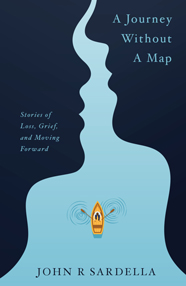
John Sardella: Well, all the way from the beginning. So here I'm sending in a script that's just basically, you know, I'm thinking a motivational book, okay? You know, do with David Goggins or something like that, you know, and which is pretty cool that he's one of our authors, you know, I like that. So I send it by initial manuscript, it comes back to me and says, John, your story is actually you. there's that collaboration and also I'm like, okay, so now we have to figure out what that looks like. Then all of a sudden I get connected to Jessica and I connected with her and we're collaborating together, we're writing together, we're working through the book together. That was powerful because I look forward to the weekly phone call. Every Wednesday at nine o'clock, we were meeting for at least an hour and we were going through things and working through things, bouncing off ideas and sharing the story. you know, writing, you know, how I needed to be prepared. So I wrote down the introduction. That introduction, you know, when I'm told to write it, it took me five minutes because I knew exactly what it was. And it literally hardly had to be tweaked because when I wrote it, it was from the heart and I had every detail in my brain and I needed to write it out. And then when it was shared, that's exactly what the feedback was. The collaboration with her was like, John, you nailed it. This is perfect, you know? And then as we continue going through that collaboration and writing the book, it was just constant and it was powerful. But I also felt it was very cathartic for myself. And then we went to the next step, okay? Now we had to get a cover, okay, of the book. And all these ideas came to me. And then what I did was I shared those ideas with friends. And I said, here's the covers they're looking at. I think there were about 10 of them. And I said, what do you think? Well, ultimately the cover that came out, you know, the silhouette of the two people with the yellow rowboat, you know, rowing in between the silhouette that looks like a river was the one everybody said, this is perfect. But the funniest thing about it was that even my kids didn't realize they were silhouettes of me and Margaret. And they just saw it was a river. And I said, well, do you see the faces? And they're like, oh my God, I see the face now. So the collaboration, I mean, that was pretty funny because a lot of people that happened to, but then when they really looked and said, Oh my God, this, it nailed it. And part of that collaboration, the person who was in charge of the cover, I can't remember her name offhand right now, but she grew up in the Syracuse area where I was writing this book and where I lived at the time. And so we talked about Syracuse, you know, we're like, Oh yeah. this area, this place, and all that stuff. All of a sudden, I'm making friends because of this collaboration and it was just such a positive experience, so it was very powerful for me. I tell people that it took almost a year from start to finish, that it was one of the best experiences I ever had. The connection with the people were the right people at the right time for me to be able to write that book. It's powerful.
Eric Jorgenson: It's amazing. It is an incredible cover. It's a wonderful book. I'm honored that our team got to play a role in your career as an author and in this book and helped get these important ideas out into the world that you had the courage to put down and share. I love hearing about the community that's building around it and the lives that you've changed and the people that reach out. I tell people all the time that's the most rewarding aspect of being an author is the personal messages that you receive about people that change your life. And I think they change their lives as a result of what you put on a page. And it's a really amazing feeling. Thank you, John, so much for being here, working with us. doing the work that you do, going to schools, sharing lacrosse. You're carrying a lot of flags and I'm grateful for all of them.
John Sardella: Well, it's flags and in the timing of my life, it's the right time. I think I have the wisdom. You know, I'm like I said, I'm going to be 63 years old next month and you know, I've taken life experiences. And I'm able to share them, but I'm able to share them in a very practical and simple way. And you know, it's tough to challenge somebody who's gone through a death of a spouse and say, I don't know what I'm talking about. And the reality is I think when I talk, people listen and people respond in a favorable manner. And that's what life is all about. You know, that's the legacy I'm leaving behind. I talked about that at the very end of the book. You know, what is the legacy you leave behind? And I feel like. You know what, I think when I go away from this earth, you know, and I pass, I think the legacy and what people will say about me, I think will be positive. And we'll say he made a difference. And that's important to me because I think that's what people should do when they're on this earth, make a difference for others.
Eric Jorgenson: Yeah. We live in safety and abundance because of the effort and sacrifice of all of our ancestors. And I think we owe it to the next generations to do our best with the time that we have to steward the civilization and leave behind some knowledge. And books are an amazing way to do that. My books are certainly going to be around longer than my Twitter account. So I try to make sure to appropriate effort. across them.
John Sardella: Well, it's funny you say that because people have said to me, you know, John, this is actually a nice book for the future generations. You know, my grandkids and my great grandkids. And I think they'll be able to identify and understand who their grandmother was. And I think that's very important. And who their grandfather is. Yeah, absolutely.
Eric Jorgenson: And, you know, showing your family a real gift with this, let alone anybody else that's affected.
John Sardella: Well, I think when you read about it, you can read that the love and the connection that we had as a family and the friends around us and the important things that were, what were the important things in life? You know, I always refer to the five balls and it's faith, family, friends, integrity, and the fifth ball is work. You know, you could always drop work. You could drop that ball because there's always going to be a job out there. You can't drop those other things.
Eric Jorgenson: And I think that message is very important because
John Sardella: With all the distractions of life today, with social media and everything else, you know, if you look at those basic components of life and you keep those as a priority, you're going to be fine.
Eric Jorgenson: Yeah. Love it. That's an amazing place to leave it, John. Thank you so much for taking the time here today and all the work that you've put out into the world before. Appreciate you very much for being here.
John Sardella: And I appreciate you, Eric. Thank you very much and continue making a difference. Okay. You're doing a great job. I really appreciate everything.
Want to Write Your Own Book?
Scribe has helped over 2,000 authors turn their expertise into published books.
Schedule a Free Consult