← Author Hour

Kyle Thiermann

Kyle Thiermann: Everyone Should Interview Their Parents

January 07, 2026 · 01:22:28

Join Eric Jorgenson on Author Hour as he sits down with Kyle Thiermann, author of One Last Question Before You Go. In this interview, Kyle shares the inspiring origin story of his book—how interviewing his parents and exploring family relationships became the heart of his memoir and guide for others. Discover: How Kyle turned a simple conversation with his father into a book idea that "wouldn't go away" Why interviewing your parents can act like an "empathy

Jump to full transcript ↓

Transcript

Eric Jorgenson: Kyle, at long last, we are on the other side of your book launch and we get to talk about your book existing instead of being on its way to existing.

Kyle Thiermann: Indeed. Indeed. The baby has been born. Thanks for helping make it happen, man. I had a great experience with Scribe. You're not paying me to say that.

Eric Jorgenson: No, you paid us.

Kyle Thiermann: I paid you to say that. It's crazy. Oh my God.

Eric Jorgenson: I'm delighted to get to shine a spotlight on both you and your book for independent and equally important reasons. I think your journey is going to be a cool one to share with a bunch of other authors and prospective authors that listen to this. I'm sure I'll learn more about you and your book that is one that certainly hits close to home for me.

Kyle Thiermann: Yeah. Happy to have the conversation.

Eric Jorgenson: I generally treat these as the hero's journey of the book. Because every book has its own story, has its own journey. I'd love to hear from your perspective where this book began.

Kyle Thiermann: The book began on a Tuesday afternoon. in the year 2019 when a a virus in China that very few people knew about was starting to make headlines. And all of us thought, holy shit, are our parents going to die right now? Panic was was sweeping the streets. And it's such a such a an interesting moment in in world history before people had actually made up their minds about COVID. It was not politicized. At the very beginning, people didn't have conspiracy theories. It was just like, holy shit, what is this? And I had been doing a podcast for a long time. We're up to 400 plus episodes now. And I had never interviewed my dad. My dad is this charismatic old documentary filmmaker who has lived in Santa Cruz, California for the last 40 years. His passion is going to the flea market every weekend and haggling with sellers to the bitter end. You know, he's someone who very much chose, like many writers do, a career in media to see the world. So he was always the guy who'd say, like, don't go for the project because it's going to be a big budget, go for it because it's going to be a great story. And because of that, I think he's maintained a really optimistic outlook on life. And that's something that can be very inspiring to young people to hear from someone who's 75, who still has creative energy, the world has not beaten him. So I had him on and he talked story, you know, he told about his life flying around the world, making docs, he had just finished his latest on the cultural significance of bells around the world. He traveled to Transylvania to video the the bell in Dracula's castle, you know, the the small bells of India. And he just he just does that shit. So he told these stories and that podcast led to someone with, you know, you would have thought I interviewed someone very famous by the numbers that it got. You know, it was like, wow, this is people are sharing this podcast way more than I would have thought. And not only that, but I think that when you looking for signal boost, which is something that all creators really should be doing at all times, just keeping that antenna up, what is a subject that you talk about? What's a line that you say that gets people to change their mood like whether it's a laugh you know we all have those funny stories that we tell again and again at parties because we know it's a consistent earner right or it's a book idea and it causes people to lean in and Ask questions and maybe even tell a story of their own. I think that you all you know you have a good book idea when you say the idea and then someone spits out a story of their own because what they're basically saying is I relate to this in my own way. What you don't want is for them to be like, cool, right? If people are saying that, you know you might need to redirect your idea. But that was the first signal boost that I got. A lot of listeners emailed me and said that was awesome. I want to interview my parents. How do you do this? So I had been podcasting for the last seven years. I grew up as a surfer slash journalist. I watched a lot of Vice growing up and my dream was I want to travel around the world, surf and tell stories about environmental injustices happening in coastal communities around the world. You know, surfing for me was always like it was a vehicle to see the world. And right around that time, you know, YouTube was coming up and I started making these short documentaries about plastic pollution or working conditions in some far off country. And it was really fun. You know, I was able to spend a lot of my 20s traveling the world.

Eric Jorgenson: I'll just add the context that you were a professional surfer for anybody who's not aware. This is not just like a casual level of surfing. This is a world class.

Kyle Thiermann: Yeah, so I was able to work with Patagonia to travel around the world and learn how to ask questions, right? Like asking questions, getting people to open up is a skill that over time you learn. And then when I started focusing on podcasting, like, man, you really learn a few techniques that can make conversations go better. So I first I wrote an article actually during COVID for my sponsor, Patagonia, went up on their blog called how to interview your dad and why you should do it now. Simple how to got another big response signal boost. Oh, interesting. People are people want to do this. And then I got a full-time job as an advertiser, copywriter, creative director at a company called Mudwater and did not think about the book or that idea for the next three years. Thought it was just an article. Cool. That was fun. And then it was an idea that just kept kind of nagging at me. I think that a lot of times the ideas that you know you should invest in are the ones that won't go away. You know, it's really easy to get excited about an idea right at the beginning and tell everyone about it. So cool. Awesome. And that's how a lot of projects don't get finished because you jump into them really quickly and then you lose enthusiasm after a while. And, you know, book books, as you know, are marathons. So it was an idea that that just wouldn't go away. And then when I left that job, being full time there, I still do work with them through a creative agency that I co founded, I had more time, basically just more mornings to myself. And I thought, you know what, like, I should do this book. And it was originally called how to interview your parents and why you should do it now.

Eric Jorgenson: So then this is, this is when the idea sort of like converted from, Hey, maybe there's a there there. I'm just sort of observing this idea as something that resonates to people with people as being like, Oh, this is a, this is a book and it's a project that I'm actively working on. Right. And then you had not written a book before, despite like all your different writing and creative efforts. Right.

Kyle Thiermann: Yeah. I had never written anything longer than 3000 words.

Eric Jorgenson: Did you go into this? I have so many conversations with people that are like, I got this. I write emails all the time or I write blog posts all the time. Don't tell me I don't know how to write a book. What was the learning curve? You are a great writer, but having only ever worked on short form and copywriting and stuff like that, how did that translate for you into setting off on this book project?

Kyle Thiermann: Great question. I think that advertising and working as a copywriter really served me in some senses with this first book project, and it hindered me in others. And I think that working as a journalist, which I did also, it served me in many ways and can hinder people also. And I'll tell you why. So For people who don't know, a copywriter is the words guy when it comes to any brand. So if you go to the website and there's text, copywriter wrote that. They're also responsible for bigger concepts, you know, just do it. Nike slogan, an idea for a commercial. Copywriters are tasked with coming up with a lot of ideas and then Pairing those ideas down usually to their most essential form because writing and advertising is writing for people who do not want to read. They're not they're not choosing to see your ad. Very likely they're skipping past it, right? We pay monthly subscriptions to not have to look at or read what copywriters have to say. So you need to be really damn good at getting people's attention quickly. And it's very much similar to the job of stand-up comedians, which is to take a really big idea, pare it down to an essential form, and change someone's mood state really quickly. I've done that for a number of years. You're pretty fast at it. I love it. A lot of laughing. Very collaborative. You know, that's one of my favorite things about working in advertising is I'm I'm working with a creative director. I'm working with the editor like it's a team sport to create a mood shift in culture. What can hinder you about being a copywriter is that many ad people who try to write long form books write in in a very glib way. Same thing with comedians when they try and write books. A lot of times they're afraid that if you're not getting a laugh every second line, people are going to they're going to tune out, you know. And it's true to some extent, you know, you want to make people laugh. But often what that does is it forgoes emotional resonance and deep honesty and vulnerability that I think is very much required when you are going into, especially the memoir space. Like I think people need to really feel like you are putting, you're writing post-hominously. You're writing as if you are dead. That's I think what's required if you're gonna get into memoir. In the journalism sense, I was very lucky that I had some strong editors through my 20s who took an interest in me and eviscerated a lot of my work with red lines. And I was also very lucky that I got into it to get good, not to look good. So from a really early age, you know, through my 20s, I got that like, OK, if they send it back with a bunch of red lines through it, that's helping me get stronger. And I had very good habits about, for example, not just accepting track changes. When a piece that I wrote came back, I would actually physically rewrite it back out. So I wouldn't make that same bad habit again. The thing that I see a lot of journalists maybe miss out on or a lesson that they could take from advertisers or copywriters is the importance of that immediate mood shift. Like people do not have fucking time for you to do the throat clearing paragraphs, for you to explain what the book is about. like you really do need to entertain and create a mood shift immediately. And I think one thing that hinders, you know, journalists also is that they tend to be very literate readers, like, you know, really way above average when compared to most readers. And copywriters like you're constantly trying to take long words and turn them into short words because you realize most people are you know, not great readers. So so I came into this project that, you know, it's a long answer, but I came into it with with that kind of training, you know, like I knew jujitsu and karate. And then I and then I would say that writing the book was an MMA fight, right? Yeah. I think everything you can do and you're in the ring now.

Eric Jorgenson: Yeah. You got it. You got to improvise a little bit, but you definitely got some got some good fundamentals.

Kyle Thiermann: Yeah.

Eric Jorgenson: Yeah. So what was the, you started this, I lost the timeline, but 2023, maybe you started this in earnest.

Kyle Thiermann: I started it in, I want to say 2023. Yeah. Beginning of 2023, late 2022, I wrote a couple chapters, and they were just really loose, free-righty, like, hey, this is how you interview your parents. Really early on, I had dinner with a hospice nurse that I was friends with. And she had told me at dinner that one thing she notices is that when people are dying, their relationship with their parents really comes out. Kids who have dealt with and healed their relationships with their parents as best as they can have a much easier time when that parent is finally in their last few days. Like it really comes out during that time. And I thought, wow, that is such an interesting perspective. This hospice nurse who is with the dying all the time can can say like, yes, you are on to something like have the children interview their parents because it can help. it can help you get over resentment. You know, the interview process, you know, on one hand, it seems like, oh, that's a really, that's a fun thing to do. You get this like memento and audio heirloom. And on the surface of it, I think that's why a lot of people do it. But ultimately, the promise of the book and what interviewing your parents can do is be a kind of empathy drug because somewhere along that way, you see your parent as a person and you see them as a child and you see what culture was like when they grew up. You see all of the things they had to dealt with. And all of a sudden you realize like, whoa, this is just a person and I'm just a person. And if I can move forward in this relationship with a little more grace and be a little less bothered by them, and understand that our time here is limited. That is that's as big as it gets, man. If you can do that, that is that is a human project that is worthy. And that was when the book, you know, really for the first time, I got to feel like, wow, this could be a this could be big for a lot of people. You know, and it is, you know, it's proving to be. But like I didn't I didn't actually come to the project with that kind of holy shit. This is a This is a really deep and hard and intense thing to do. For some people, I came at it more as like, oh, this is going to be a fun thing. And then the more I got into it, the more I realized like, OK, well, I'm going to have to go on my own journey here, too, you know, which is the next step in the book.

Eric Jorgenson: Yeah, it's an easily forgotten fact that we all have parents. This is an archetypal thing that people go through, either losing a parent or transforming their relationship with their parent that every human either does or doesn't do. Either one is a defining piece of their personality and their journey.

Kyle Thiermann: Right. If you have no relationship with your parent, that is a relationship with your parent.

Eric Jorgenson: Yes, yeah. Yeah, you were sort of getting there, but I think, you know, it's always interesting to ask what the goals and expectations were sort of going in and how they transformed. Yeah, it sounds like this got a lot richer, deeper, as you sort of understood like the full breadth of people that might be affected and all the different outcomes that might be expressed through much wider array than, you know, of just the relationship that you have with your parents.

Kyle Thiermann: Yeah, and just to also let anyone who's listening know a bit more about what the book is about, the spine of it is a story about having a mom, losing her to conspiracy theories, and then using the interview process to reestablish a better relationship with her. So, you know, I started this as a how to it was called, how do you have your parents and why should do it now. And it was that first draft that I wrote was pretty glib. It was pretty like, do this, don't do this, but but but but I had, you know, all this. unresolved shit with my own mom of you know she she's someone who I love dearly and see as a really intelligent and dynamic woman who also then got sucked into a myriad conspiracy theories, one called free energy, where it's this idea that we have infinite perpetual motion machines around the world and inventors have created this technology, but the Illuminati are suppressing it and say, okay, you can believe that. But then she and her husband ended up investing a bunch of their savings and retirement into this shit. And like as a kid, I mean, you're just watching It's just it's so complex to parse who this person is that I care about really deeply. And what is it that would make her be so credulous? And how can I maintain love and kind of sort it out for myself? So ultimately, You know, the place that the book really got writing was when I was sorting out my relationship with my mom, you know, because any writer will know that like you, we write to find out, right? You write to figure out what it is that you think about this. And then the interview process was sort of cobbled onto that story. So it became this memoir with. how to interwoven into that book. But that was when it started to become very scary for me, you know, when all of a sudden you you realize that like, well, I got to I got to write some things that are very uncomfortable and could be very hurtful. And that was both the hardest part of. of this process, but also the most rewarding. And it's also the number one comment I've received since the book has come out, which is, wow, it's a lot deeper than I expected it to be. I thought it was going to be a how-to, and yeah, you do learn how to interview your parents, but you take us into an unexpected place, which is, that's the part that I'm most proud of also.

Eric Jorgenson: Yeah, I really like the moniker. Write the book that only you can write. There's a lot of people that could pick up a mic and interview their parents, and it's a good idea for a lot of people that interview their parents, and they could speculate about what that emotional journey might be like, or just have a relatively vanilla version of it. But for you as an author to go on a really difficult emotional and logistical journey to tackle that and then externalize it and have the courage to share it and be raw and take some of those risks of what it takes to put something so personal in a book, Nobody else can write that. Then it is absolutely unimpeachable authority for you as an expert in this journey that you went on to then inspire, not just lead others through it, but inspire others who have thorny journeys to go on through this, that they can do it too.

Kyle Thiermann: Yeah. I would say my two biggest fears while writing this book was A, I was going to Really mess up my relationship with my family and and the second fear was that the book would come across as saccharine Like I hate that writing that just oh like we we had the problem But then the you know, it's the Disney ending and then we I interviewed her and now it's all healed and it's like it's just dishonest, you know, and you're it's like this you're like cause playing vulnerability. But it's just not how life like really, really works, you know, and, and so for me, you know, the the task was, how can I be honest about What happened as a result of the over the year of the project was was me interviewing my mom, my dad and my stepdad, a series of three times each. And each interview goes into a different part of their life. And in each one of those chapters, you're also learning a skill. But the biggest change with my relationship with my mom is that. I just feel way more mature about it. I can just be nicer to her. I don't feel that petulant anger of like, oh, why did you do that? I'm just like, you know what? Our time here is limited. I'm going to choose to be as kind as possible. Same with my stepdad, too. And whatever they want to talk about, I'm open to it. Like, hey, you know what? I got to write my book. I'm just going to try and meet you with love. We are absolutely not going to see eye to eye on what is happening in the world today like that. And I'm not going to try and hope that that's going to change. And I don't think that it's that's the most important thing. I don't think that world affairs should dictate a family relationship. And there's a chapter with my stepdad where I just say, we talk about sports. I engage with him. We both love sports. And I try to veer the conversations in that direction. And to find that one thing that you can connect with your parent on, man, that's real. And that's going to make the holidays go better. And that's a much different reality than ending Thanksgiving dinner screaming at each other.

Eric Jorgenson: Yeah, I don't know if it's the algorithms or the like, whatever it is that gets people tending to focus on the things that they disagree with. And their definition of fixing a relationship becomes getting this person to agree with me, rather than just putting aside what you might disagree on that might be resolvable or unresolvable. And either one of you may be right or wrong, or there may not be a correct answer. And instead focusing the energy on where you agree or where you have a shared interest or where you like at least a light disagreement, a casual fun social disagreement.

Kyle Thiermann: Totally, totally. And I'll tell you one thing. I mean, this is how to win friends and influence people. Right. If that book could be summed up into one into two words, ask questions.

Eric Jorgenson: Yeah.

Kyle Thiermann: Right. Like if you want people to like you, if you want to have good interactions, like get good at the skill of asking questions. And most people I had never learned how to do that. We are rewarded for having the right answer, not the right question. We're told that to be in a position of authority, to be seen as smart, that's the person on the Zoom call who speaks most, who makes statements. They don't ask silly questions, stupid questions. But ultimately, it's a very valuable skill that both does increase your intelligence, smart people will actually think that you're smart if you're asking good questions, and it gets other people to like you.

Eric Jorgenson: I want to go back to the fear that you addressed, your two big fears in writing this book, because I think it's something that many authors or at least every author tackling something personally sensitive to them or that has any sort of memoir characteristic to it. How did you overcome that fear of the personal implications of authenticity in your writing and what it meant to put that out into the world?

Kyle Thiermann: Yeah, yeah, I I'll answer the question. I'll also tell you a story that I'm reminded of. I won't say this person's name, but they had a near death. They're a very high level athlete and they had a near death experience and they wrote in a journal, a private journal about all that they were thinking of after this near-death experience. It was thoughts of depression. It was thoughts of very dark, messy, personal thoughts. and they kept this journal for a year and then they flushed it down the toilet because they were afraid that someone was going to find this journal. And I was like, oh, wow. Like, that's the good shit. That's crazy. People are afraid to even journal their true feelings. They're terrified that someone might find out this, you know, their curated version might crumple. you know, if someone finds the journal. And I think that one of the real gifts that writing can give, you know, and what Scribe encourages authors to do is to just to be real. Like you just need to say the hard thing because ultimately that's on some level what readers are paying you to do because they can't do it themselves and you're articulating an experience for them that is relatable. So on one level, that's just kind of your job. Like I think that that's that's part of the job description if you want to be a real writer. And the second thing I would say in the way that I was able to get through it, and it wasn't easy at first, but to go into those sessions knowing that I didn't need to share that work with anyone. Like that's what you're writing in that first draft is not going out to anyone. So you can say horrible things. And then in future drafts, you can figure out how to lighten it up, how to make a joke out of it, how to show more love. And you know, it's one thing that's been really interesting and surprising for me since since the book came out is my mom loves it. Like my mom loves it. My stepdad loves it. A lot of people in the conspiracy theory world have been buying it and liking it. Because it's totally done with humor and with enough whiteness. Like I can say, I fucking think you guys are crazy. And like, I love you. And this is funny. And like, I'm wrong about shit, too. And it allows us to all kind of in some weird way be in the same camp of like human folly right and and i think that a really powerful and maybe one reason why it's working is like i think that making fun of yourself is a superpower like learning to take the bullets out of the gun as a writer gives you permission to then go at and critique others while keeping a reader on your side. You know, if you think that you're right all the time, you're positioning yourself at the top of the mountain, that's a very fragile place to get knocked off. So, I mean, I think that some of the more fun stuff to write about is your own mistakes. And that gives you permission to be more honest about other people. So that was my approach and the tone is also found through drafts of the writing. Like a lot of times, the funniest chapters were the hardest emotionally to write in those first drafts. And then the jokes get peppered in later. You find a line that, okay, this is really hard. This is really hard. Now we're going to bring it back out. And that was what I hope to achieve. And it's one reason why I'm quite proud of it.

Eric Jorgenson: Yeah, that's one of the rules of thumb. I think of what makes a great wedding speech, which is just one that everybody can hear. Like you alternate like an awe and a joke. Like if you can get both in and ideally if you could alternate them, like that's a home run wedding speech. It's a, but it's also a home run book or blog post or whatever else. And it does. Yeah. The peanut butter helps the pill go down.

Kyle Thiermann: Right. And going back to what we were saying about copywriters and comedians often having a hard time with books is that it's because they're afraid to take it down into that hard emotional muck zone. Like they just want to keep it on the level of like joke, joke, joke, joke, joke. And if you if you read a book that is trying too hard to be funny, it becomes unreadable. So a lot of my work through the drafts was actually like, I can write fucking jokes all day long, like boom, boom, boom, but it's, you're not getting the laugh out loud guttural laugh when, but if you can hold back a little, and if you can be just honest and vulnerable, okay, I'm giving you information and then like, bam, I'm going to hit you in this very unexpected place. I think that's how you get a reader to laugh out loud.

Eric Jorgenson: It's funny that actually converges from the comedy side too, because I think the greatest comedians of all time, like Chappelle, his most recent specials, he'll go five or 10 minutes without a punchline. He'll just tell you this beautiful soul-striking story and then drop a completely unexpected super crass punchline at the end of it that you totally forgot he was setting up from minutes ago. It's very interesting how those converge.

Kyle Thiermann: Totally. Yeah, and it's scary. The scariest thing for someone who considers himself funny is to hear silence. For a comedian, that's the signature of failure. But that tension that you're building up, you need to build up the tension. I think that's where it is when some writers are just glib and it's like beep, beep, beep, beep. You're not building any tension for a big laugh to be able to occur at the right place. So, I mean, that was a lot of my work. And I freaking I grew so much as a writer through this process.

Eric Jorgenson: This is a good segue into another thing that I think is really unique about this book that I want to have you talk about too, because it's a very unique book. A lot of people out there, even great books, follow formulas and usually follow them to a T and fit very neatly in a box of like, it's romantically or it's sci-fi and it has these arcs and hits these points. Most non-fiction books do the same and most memoirs do the same. interestingly have been unabashedly combining a how-to interview your parents book and a very personal memoir that does strengthen both, and it's also funny, but that had to have been very hard potion to mix to get all those components together and reasonably convey. No, this book really is all of these things, and they support each other, and they have to coexist, and I don't want to separate them. Don't put me in a box. Let me do this original cool thing. I can do it.

Kyle Thiermann: Yeah. A lot of how to books could be a one page PDF. And I refuse to do that. I could tell you how to interview your parents in a one page PDF.

Eric Jorgenson: is the post you wrote, you know, five years ago.

Kyle Thiermann: Yeah, it's the post. And it's like, so to, to just try and drag that out with like, statistics and different store, like, I don't know that people want to read that. I mean, it's a book that maybe people will get as an impulse purchase to to virtue signal in some way. You know, a lot of people buy books just to virtue signal. They don't actually plan on reading it or want to be surprised. But I felt like, you know, the story is it's there's a narrative thrust here that's important for me to tell that that you can't get into a PDF. And ultimately, what that narrative thrust is is what you will get out of this project. If you're going to write a book about how to interview your parents, you can't write that without showing what it did for you. Yeah, like that's talk about being a little bitch like I'm going to tell you to go do this scary thing. And I'm not going to be honest about how scary it was for me and what and what I got out of it and the the interviews that failed like all that. I mean, that's the good stuff. I think that that's what is allowing a reader to trust you is for you to go through that process and show on the other end what what happened and I also knew you know and that like if you just want to write if I were to just write a memoir about I mean maybe I'm wrong about this but I think that if I were just write my first book as a memoir about growing up in this small surf town wanting to be a pro surfer, you know, having this really close relationship, my mom having her fall to conspiracy theories, me getting mad, you know, and then growing up and having it be a story of growing up and learning more about what she went through when she was a kid and how that maybe informed her beliefs. Now, like, you probably write that book, but I don't know that it would be as as relatable to as many people. And and I enjoy, you know, on some level, the helpfulness of this, this book, I enjoy the helpfulness of it. And and I, you know, one thing that we did that was a last minute decision. And it was it was a last minute decision. And it was not even my idea. I mean, it was it was an idea from a friend of mine who's been a very successful author, Neil Strauss, who has written a number of best sellers. He said you should write the chapters as questions. so that people can just use the questions as chapter headings. Like, how can you create unexpected value where normally a chapter is just like, you know, you can skip over the name of it, right? Like, what if you make that into like a big part of it? And I took his advice wisely. And that is another area that people are really enjoying. Like, they're not actually interviewing their parents necessarily. They're just bringing the book to open up and then ask questions around the dinner table. In terms of this thing being an odd duck, figuring out ways to create unexpected value for a reader is something that you should be thinking about. And just because the industry does it one way, maybe that's a signal that you shouldn't be doing it that way. In branding, for example, the best advertisers I know will see an industry standard. They'll see you know, wellness, for example, what is wellness? If you're going to start a wellness brand, close your eyes and tell me what would that look like? Well, it'd be like kind of soft, maybe feminine, like pretty sanctimonious, Zen, like, okay, what's mud water, right? Like that, that dude does jujitsu, and it's funny, and it's a reverend. And like, so you're taking this healthy thing, but we're going to move it over into almost like, comedy, masculine area. And that's what's going to get attention, you know, and I think that for authors, if you're going to write a book, like a self help book, like go the opposite direction. Otherwise, how do you expect to get any attention, it's just going to get lost in a sea of sameness. So yeah, I mean, there were a few things that I did that I'm, I'm happy I did, because they were able to create unexpected value for the reader.

Eric Jorgenson: Yeah, I think doing something unique, it's almost impossible by definition to do a high value thing that is the average of what already exists. The example that came to mind when you gave that framework was David Goggins. He's just 80% memoir, 20% actionable self-help with exercises. He shows you the transformation he went through and advises you on how you could do the same. It spoke to I don't know that there's that many books with that many swear words that have spoken to men and in particular young men and people that were struggling to lose weight or had come out of the service or aspiring athletes or people who came from really, really tough childhood backgrounds. There's just all kinds of things in that that were unconventional mix of genres and value propositions that exactly to your point created really unprecedented level of excitement and awareness and thinking about how recommendable a book is, the viral coefficient of a book. For every reader, how many people does it get recommended to? Getting a book brought to a dinner table and having it foster this beautiful evening of conversation is like, well, now 10 people know about this book or six people know about this book and somebody is going to take it or buy a copy or send their friend a copy or hear that a friend's parent got sick. And you want to send it to this hospice nurse friend of yours is probably like, this is part of the hospice entry package is like, welcome to the program. Here's a book that you should read.

Kyle Thiermann: Yeah. One last question before you go. It's perfect for those.

Eric Jorgenson: Yeah. Well, I wanted to ask you about that title too. Cause you said it was a very different title than when you first started. You're a copywriter. You know, the headline is, you know, 80, 90% of the work. I'm sure you put hours into that, into that title.

Kyle Thiermann: I did. Oh yeah. We had a lot of titles and yes, if you start a brand, 90% of your advertising is the package. And it's amazing how many founders, usually first time founders, will start a company and the package will almost be like a second thought. And they're like, No, but we got to talk about Instagram ads. Like, that's really where we get that's where it's like, It's where it's what people see the moment they see your product and the emotional shift that it's going to give to them. And it's the little bit of copy that you put on that package that will be 90 percent of your advertising, at least for the few years before you get huge ad budgets. And even then, like, man, it's it's so important. I have a friend who's a who's a great copywriter named Thomas Kemeny. He wrote a book called Junior, writing your way ahead in advertising. I highly recommend it for anyone who wants to get into copywriting. But I was talking to him recently. about, you know, Justin's peanut butter? You ever seen Justin's peanut butter? If you look on the side of Justin's peanut butter, there's this short story about how he's a founder. And the reason he named it Justin's is because he doesn't have any time to think of clever names, which is why he named his son Justin and his daughter Justin. And it's a great joke that makes you laugh when you look at this package and like you can't put a value amount on like how many how many jars of peanut butter did that did those 40 words sell? I would be willing to bet it's in the millions of dollars now because what you're trying to do immediately when you when you get a product is to create a mood shift in someone. And usually it's how do I make your mood just 2% better? When you see this thing a lot of times the name to like what's the what's a name that's that's funny that makes people kind of giggle that can take a brand a really long way. And similarly with books, you know, the subtle art of not giving a fuck. Wonderful title, you know that that sold Mark Manson's first million copies.

Eric Jorgenson: Even in the end state, orders of magnitude more people are going to hear the title of a book than ever buy it, let alone than ever read it. Your title is by far the most impactful part of your book, the farthest reaching.

Kyle Thiermann: Yes. I would say the title is the first most impactful and then the the description on Amazon, or the back of your book is the second most important 40 words that you're going to write. So yeah, so I thought quite a lot about it. And for a long time, the book was how to interview your parents and why you should do it now. Okay, just put the value right up there. Don't try and be too clever about it. And there was a good argument to call it that. And the further I got down, I thought, man, That's not actually the book. The book is about this relationship with my mom. You're going to learn how to interview your parents, but also how can I give a title that makes you feel some emotional shift? One last question before you go. I mean, it's still really early in in my books. I could have made the wrong decision. Like I say all this as confidently as I can. But I also I could have fucked up, you know, still like it's selling. People are loving it. But but I I'll tell you the reason that I did one last question before you go. And that is that I would tell some people the title and they would be like, Oh, yeah. Wow. Wow. Like it gets that immediacy across. And it's obviously the double entendre. And not everyone would would say it when I would say when I would say one last question before you go, but enough people would react that I got the signal boost like, OK, I it's not everyone, but it's enough people that it creates some mood shift in them that will.

Eric Jorgenson: And it's the right people like the the resonance is corresponding with how acute you're like or how fearful you are of, you know, the waning time you have in that relationship.

Kyle Thiermann: Right. Exactly. Yeah. Not a lot of 19 year olds were like, right. One last question before you go, because they still think that their time with their parent is infinite. Usually people over 35 that would be like, oh, yeah, and then you get to 50 and then just like, oh, yeah, I really got to do this because time is running out. And then the subtitle of it is why you should interview your parents. So you still get that across. And yeah, that was the decision I made because, you know, for for that reason. But I pitched titles to people every day for months. Say, what do you think about this? What do you think about this? And really try and look like don't don't go for the title that you fell in love with because you think it's so clever. Go with the one that you're getting signal boost from and be willing to redirect day by day so that it can be the best outcome.

Eric Jorgenson: Yeah, that is great advice. For context, we're recording this maybe a month after the book has come out, actually a month to the day after the release. So I'm curious how the first month has been. I know you've been all over doing events, having a very exciting launch. I'm curious how it's been going and what the experience has been.

Kyle Thiermann: Sure. Let's talk about it. I'll tailor these answers for I think they'll be useful for anyone who's either a writer or even an entrepreneur because when you're usually getting interviewed, you're being interviewed about the content of the book. You're not being interviewed about your marketing strategy. But the only reason people are learning about the content of the book is because of your marketing strategy. Yeah. So it's really important to be thinking about these things. And I would love to open up anything that I've learned to to anyone who's listening. So a few things. I was quite diligent about the writing the book when it was time to write the book and marketing the book when it was time to market the book. I actually was driving, I was driving to a party last night and this is gonna get into the marketing strategy. And I was in the car with my fiance and we were talking about the last year, 2025. And so what are you most proud of having done over the last year? You know, she gave her answer and then she asked me, what are you most proud of? And I said I'm. The easy answer is, well, I wrote my first book, but the the. Real answer was that I I focused on writing the best book that I could at that time, and I really did not let marketing creep into my mind during that process. And then when the. When it was locked, when that final draft was locked, my mind shifted almost like a robot into you are no longer a writer, you are a marketer selling a product. And your job now is to have this product reach as many people as possible. And it's hard to do, man. I mean, the marketing creeps in. Marketing is fun. It's fun to think about getting on those podcasts and showing it up and those one liners you're going to say, how famous you're going to be and how many people are going to love you. And oh, my God, you get calls from all your favorite writers. And it's just going to be, you know, riding the horse into the sunset. But as you're doing that, you're you're no longer in the muck of like, OK, this is I need to be as honest as possible. Like this is a book where this is I need to make this story as good as possible and just stay insanely focused on the writing process. I mean, the amount of drafts that I went through, the amount of changes that I made to that book is like making a cross side. But I was very militant about being in that zone when it was that time. And then when the gear shifted, I barely wrote for four months. And it was weird for me to go from the state of having my mornings be taken up with two hours of writing to two hours of sending emails to podcast hosts and influencers, DMing influencers. I created a huge Google Sheets list of everyone who might be interested in my book from podcast hosts. influencers, book clubs, and would send the messages. And the message that I sent was, hey, I just wrote this book about how to interview your parents. Here's a quote from Rich Roll, who was nice enough to read an early draft of the book. He's a well-known podcaster. And he's like, this is a great book. And then I said, I'd love to send you a copy. No expectations or ask. Because if you are a podcast host with any audience, you're getting hit up all day, every day with requests like, hey, can I use you as a free advertising vehicle? And I sent a few of those emails, didn't get one response. And if I can sum my marketing strategy up into one phrase, it's givers are getters. Look at your marketing strategy with your book as an offering. Look at it as a willingness to be generous with the world. If you can afford it, send some copies out to people. Write personalized notes. You wrote this thing. The world should know about it. Be generous. Have your mindset be that marketing is an act of consideration and generosity. So what I did was I would DM influencers, I DM podcast, hey, I'd love to send you my book. Probably sent off. 150 personalized signed books to different people. Many of them didn't respond. Go for it.

Eric Jorgenson: Just for a sense of volume, how many outreaches probably did you do? Did I hear 50 copies? 150.

Kyle Thiermann: 150, okay. Yeah.

Eric Jorgenson: I mailed 150 copies of my book.

Kyle Thiermann: I probably reached out to 300. I think 300 was my goal, emails and DMs. People who do respond, you're corresponding with them. It starts to take up your day. and but you but you do it and mail the book out and then there were also people who I did know I had relationships with and that's then like a ham calling in a favor right now you have a big Instagram following my book comes out on November 18th will you please do a post about it I had a number of friends who were podcasters where I could say like hey I'm not gonna I'm not going to do this little dance with you where I send you a book and kind of hope you invite me on your podcast. Like let me on your fucking podcast. Like those are my relationships. Like just now is the time to call in all the favors, which I did. And I was able to get a number of friends who had, you know, small to midsize podcasts to do interviews with me and got them to all say that they would release it the week of November 18th. In addition to that, one area that I found a lot of value that I think most people overlook are local newspapers. We tend to think of like, oh, we want to go, I'm going to go get on Tim Ferriss and Joe Rogan. And we try and go too big and it becomes an unrealistic tap. It's like the chances that those guys are going to have you on is pretty small considering how many people are trying to get on their shows. But local newspapers still reach really a lot of people. And if you email one of those journalists, They might respond and a number of local emails responded to me just because I was a guy from Santa Cruz and they're hey this guy's out writing a book that's super cool. And then those people there were a lot of people that wrote book or that read books and came to my events because they saw it in the newspapers. But I think what I was able to do fairly well from, you know, being someone who, you know, I'm not super famous. I have, you know, a podcast that a few thousand people listen to every episode, Instagram followings. I have like 15,000 Instagram followers. It's like, it's not nothing, but it's also not like legit fame where you can just say something and sell 100,000 copies. Like I had to work as well as I could to have it be coordinated and call on favors. But what ended up happening then was the week of the launch. There were probably a dozen podcasts and newspapers that all came out, articles that all came out that week. And it made it feel like it was a bigger thing because you're like, oh, I saw this here. I saw that, which is ultimately what you're trying to get with a book launch. You want it all to come out at the exact same time because What happens then is people might not buy your book then, but they'll know it exists. Like the goal of a launch is not actually I think it's not actually to get people to buy the book right then. It's for everyone who's ever heard of you and more to know that you did that thing.

Eric Jorgenson: so many people over-index on the outcome of the launch and the number of copies either pre-sold or sold in that first week. If you think about your own behavior as a reader, how many times do you buy a book the first time you hear about it? Almost never. You need reps. It's just like any other market. You need to be hit four or five times. You need to hear strong recommendations. Some people need to wait for reviews or personal recommendations. But yeah, I think you're totally right. Just get that dent in somebody's head so that you can start logging those tally marks and the awareness can snowball.

Kyle Thiermann: Totally. In branding, generally marketing, companies talk about taking up physical space and mental space. Coca-Cola takes up physical space. They're so big that they can just plaster their logo everywhere. You can't go a day without seeing a Coca-Cola logo. And they're taken up. It's everywhere. I can so easily get this. Liquid death takes up mental space. They come up with an idea that's such a mood shifter for you immediately. You can't possibly look away. And now you're thinking about that thing for the next day. You're like, oh, that's so funny. Like they I can't believe they again did an enema kit with Blink 182. And it was water like that's fucking hilarious because their whole goal is like, oh, well, you just need to be at the top of the Internet and have people talking about it. You know, I didn't buy a liquid death for a year or two, you know, since I had heard about them, but what they did worked where I just, okay, I see it again and again. I hear about it again and again. So yeah, I mean, again, like my book is selling, but I think that what I did. quite well is everyone who's ever heard of me knows that I wrote a book now and now it's just it's a ground game of continuing to consistently put things out so that the second and third time that they hear about it then maybe they'll buy it right in in marketing like as you say people don't necessarily buy it the first time they see it and I I can tell you man now I'm in a really a strange spot as an author, because all I want to do is move on to the next book. Like I wanted to be cool. I did it. I'm done. It's out. But luckily, like I have a marketing background. It's like, wait. Imagine if you were a founder and you took three years to come up with your first product and then you released it into market and you did ads for one month. And then you stop doing ads and just, okay, well, we're going to spend another three years working on our next SKU. That's actually how most writers are thinking about it. But I'm like, what are you saying? That's crazy. I have a product now. Every time I talk about this, someone now can buy it. That's amazing. I should be talking about this for the next year.

Eric Jorgenson: There's so many things. There's a perfect analogy. I think one, it's because there's this mutual delusion between the author and the publisher that the publisher is going to go do all the marketing, which they just don't do. The author is the one pulling the plow, and the author is the one who has to do that marketing and keep that awareness. The other is that your book in particular is a perfect long tale. This book, it's evergreen. It'll be relevant for 100 years. There are people graduating into this need, into this use case, into this chapter of their lives every single day. You can run the exact same playbook, tell the exact same stories and market to the exact same archetype, but a new set of people for 50 years and sell the exact same product for 50 years. Some of the great canonical books are like that. You talked about how to win friends and influence people earlier. same exact file, same exact value proposition. It's just been going forever, but it's because it has that mind space. People know that that's the book for this thing. The question is actually, can you get enough copies into enough hands over the first, not week or month, but year or three years or five years so that this book becomes the book for that particular need or problem. It's just thinking at a different time scale than most authors even bother to. As you point out, they mostly over-index on their launch, get a stomach ache because they feel shame because the launch underperformed their expectations and then never talk about it again and move on to something else.

Kyle Thiermann: Yeah. Marketing a book is a lot like investing where You need to set up a system that is unemotional. The people who find financial freedom just set up an automatic investment into a Vanguard. And no matter what the market is doing month over month, they're investing that same amount of money month over month. They just go at it regardless of the response of the market generally. that what a lot of writers do is they invest a huge amount right at launch and then nothing else in the end. So the way that I've done it is I have created a... I mean, here's a super simple low budget thing for writers that don't have a marketing budget after launch. you get a canva account canva is a super easy way to design like statics for instagram you find good lines from your book like a simple like a quote or something like that you put it into the canva design, download it, upload it to Instagram. This is James Clear's whole strategy. This guy has millions of followers, huge news. He's basically just taking bits and pieces of Atomic Habits. throwing them out like breadcrumbs over years and years and years. And then he's also getting like a few new ideas, like with habits, but it's still on the habit track, and just continuing to throw breadcrumbs out. So it gives people this on ramp into eventually buying his book. But like any I think any author can do that, right, just find these little bits from your book, and release them, you know, three days a week for the next year. That doesn't take any money, but you're continuing to then market your book and it increases your chances of it finding new people.

Eric Jorgenson: Yeah, just reminders and reminders and reminders that this thing exists and people will convert eventually. The beautiful thing about this book and this problem is that literally everybody has it. At some point in their life, it's just a matter of timing. This is going to come to the forefront of your life.

Kyle Thiermann: I had a friend who wrote an Amazon review that said, a book for everyone whose parents are mortal.

Eric Jorgenson: Yes.

Kyle Thiermann: Yeah. I wanted to say one thing about launch. to because we're human and the psychological component of feeling like you won is deeply important, both for the first book, but also if you're ever going to write a second book. I mean, I have a background as an athlete, and there are quite a lot of parallels between really hard athletic achievements and writing a book. And one of them is if you do a workout or you go on a long run, you need to make it feel like that was a success. Like you need, and most people do, right? You do a workout, you leave, you think, oh, I'm really happy I did that. I felt good. I'll consciously end a workout and spend five minutes meditating on what a good like that was a really good workout. I feel stronger as a result of that, like training my my mind to think that was a really good thing to do. Same with writing sessions, right? Like, oh, wow, that was a really good thing. I did that. Even if it's a shit writing session and you got 10 words down, I spent the time to do that on on a larger level. I pushed really hard to have the first two weeks of my launch be filled with live events. People will say, like, oh, live events. Why acquire it? The amount of people that were like, dude, live events are a waste of time. Like, it's expensive. You'll sell 40 copies with that. And I was like, no, no, no, this isn't about selling copies. This is about making me feel like I'm a fucking winner.

Eric Jorgenson: Yeah.

Kyle Thiermann: This is about me reading my book to a room of people and feeling awesome. Like I need this was so hard to do. I need to feel like that was a success. Even if I sell no books, even if it's it's a total loss leader in this campaign. And I did it. And people laughed at the right parts in the right chapters. And I got to sign books. I got to feel like a real author. I got to take photos of the fucking blast. Like, like this is and I like and people like, how's the book selling? I'm like, I don't know. I think it's selling pretty well, but that's such a distant second right now to the fact that it really resonated with people. People cried in the audience. People laughed. That's what I wanted to have happen. And I think that if I would have not done those live events, I would have been way more obsessed with how the book was selling over those first two weeks, which is inevitably, you know, if you're a first time author, it's probably not going to be that much over the first month.

Eric Jorgenson: Even good outcomes tend not to feel like a lot for authors. The median is in the hundreds. These are not huge numbers that blow people's brains off when they're thinking about big podcast numbers or big download numbers or views on TikTok or whatever.

Kyle Thiermann: So and the second thing I'll say is that I would highly recommend that anyone who does a book do a launch, because in addition to having it feel really good, what a launch really is, is a media event for other people to pull their phones out and take photos of your book. So if you do the launch, make sure there's some really easy places for people to take photos. Could be you signed in the book, could be you on like, but all you can't really I mean, you'd have to pay a lot of money to get a number that many people to show up and all post to Instagram on the same day. And if you do that right around your launch, it's going to make the whole thing feel bigger.

Eric Jorgenson: I love that it's a very well-designed thing for a human too. It's a really good observation that if you record a podcast, this is weird disconnect we have. If you record a podcast and 50 people listen to it, you're like, oh, what a waste of time. That's a small podcast and most people would be like, I'm not even going on that podcast. But if you get 50 people in a room, as just like a human that feels amazing. To be in front of 50 people, people fly all over the world to speak to 50 people in person, let alone take photos and have it be part of the launch. Our mutual friend set a photo of you on your launch day that looked amazing. A bunch of your reviews on Amazon have those photos now and I see them on Instagram. It all goes back to making it feel really big and feel really good to you as an author. I think that's super, super insightful.

Kyle Thiermann: Yeah, live events, live events are great.

Eric Jorgenson: And also- How did you set those up out of curiosity?

Kyle Thiermann: Sure, yeah, yeah, one of these- Are those bookstores or- No, so the first event was at Mudwater in LA, so I had a connection there. And the second or the next four were all Patagonia stores. Patagonia does do events for non-athletes. I had the in because I'm an athlete, but you can reach out to stores in addition to bookstores. And most of them are psyched. Like, you know, if I'm getting, you know, we had like 200 people in the Santa Cruz showing and like those are all potential customers now. That's awesome. Right. So, yeah, we were able to set up events at stores and I would recommend, you know, if you're not having much luck at bookstores, think about like, What's your book all about? Are there brands that are kind of connected to that world? And could you convince them, hey, I would love to come, like all I need is a microphone, a table, and we can set up events? I will say this. If you make a request to anyone, but but a bookstore in particular, it's a really interesting kind of like mental strategy. If you make a request with a far out enough timeline, like, hey, in five months, can we do this event? There's like no reason for them to say no, because it seems so far away. And then like a month before you're like, hey, cool. So we agreed to doing this, right. But if you asked them a month before the event, they're going to be like, I'm too busy, can't make it happen. So, you know, there were a few things that I was doing marketing, you know, while I was still actually writing the book. And one of them was, I probably set these events up like seven months ago.

Eric Jorgenson: It was very interesting.

Kyle Thiermann: You know, and it's one of those things for making the requests to a few of those, like, get the agreement because psychologically people, it's like when your friend invites you on the, like, the Grand Canyon trip 13 months from now, you're like, sick, right on. And then like 12 months in, you're like, oh my God, like, why did I agree to that? But I guess I got to go now. So make the requests really far in advance and you'll get more yeses.

Eric Jorgenson: That's very, very clever. When you were sitting there with, you know, late 2023, 2024 version, you know, five, six, seven of this manuscript, how did you navigate the, like the road to publishing? Like, there's a lot of options, you know, especially given your, you know, your audience and your background. Like, there's a lot of ways to like, go about getting a book out into the world. Like, what was that decision process for it like for you?

Kyle Thiermann: Yeah. Well, I, I was given the advice very early. I think Adam Skolnick gave me this this advice. Shout out, Adam. That dude, man. Everyone go buy his book, American Tiger. It's his new novel. It's so fucking good. And that guy is he's equally as sharp a writer as he is cool a dude, which you don't often get like the mix of both. I once told him, I'm like, dude, you should you should be so much less cool. You're so good. So much like, how are you just so humble and chill and like, it's just an amazing human who's he's been so helpful to me. But I believe he gave me the advice, which was if you're a first time author, write the book, like don't don't even think about like publishing until you write the story. Because if you go out to traditional publishers too early before you've written the book, A, you can't sell it as well because you don't actually know what the book's about. You just, you know, you've written the pitch and maybe a couple of chapters, but the rest of it's just like, well, I'm guessing this is what the story is really going to be. So if you write the book first, you have a better pitch like, look, it's really it's a story about my mom and me. And this is all that happens. And then in Chapter 26, this is what happens. So you can pitch better in the room once you once you've written the book. And the second is if you just write a pitch and then you go out to traditional publishers and get rejected, it's going to be really hard to follow through on the project. So I knew that I knew that if I just wrote a pitch and got rejected, I probably would throw the book away and just be, yeah, well, it's clear signal that I shouldn't keep going with this. So I wrote the whole book, a draft of the whole book. before making any any decisions and scribe was recommended to me really early in the publishing process our mutual friend scott adam had done can't hurt me with you guys and like you know there's a certain level of of needing good recommendations from other people because it's such an important and trusting process. And you see self-published books that look like dog shit. And you're like, dude, I don't care what is written in this book. Not scribe books, but people who just go straight through, oh, I published it with Amazon. And I'm like, dude, I'm not going to read this book. I don't care how good it is. It just doesn't look that good.

Eric Jorgenson: People judge a book by its cover.

Kyle Thiermann: It really turns out they really do. So I had known about scribe. I had had a good recommendations about you guys. And then I was I thought, well, I'm going to go. I really try and get an agent and see how this goes. So I went on to Publishers Marketplace, which is a website where you can find agents. You pay like a monthly subscription. It's like 20 bucks a month. And it's the names of all these agents. I wrote to an agent at DeFiori and he took me on. He's a really awesome agent and he still represents me. John, who's just a super cool dude. We had a really good relationship. He was really excited about the book. So I thought like, well, I'm going to I'm going to go try this out. And we we put together the pitch. That was a really good process for me to at least like, just see how that whole thing works. You know, like I'm for I'm a first timer in this whole industry. So I think was a really healthy exercise to go through with that pitch process with him. You know, thankfully we were able to pitch it all pretty quickly. So there wasn't like a year lost in the pitch process. You know, you hear horror stories of people who have like written the book and then they're just in limbo for like two years. We were able to like get it out over the process of two or three months, you know, pitched it to the big five, basically got really similar answers from all of them, which is. This guy's a super sharp writer, like I'm clearly I'm engaged in the story from the get go. The writing's clean. Like I had done a lot of the work early to me. And that was what big selling pointers were like, look, the book is really close to being done. You don't need to invest a ton in reworking this thing. And It's a it's a memoir and it's a how to, you know, it's and it's like we don't we don't really know where to place this. So, you know, love to hear from you in the future. But and and, you know, my agent said, like, you know, I think that. the strongest parts of this book are between you and your mom. And like, I don't want to see you Frankenstein this thing into a how to after having put your heart on the line here. And that was an incredibly cool thing of him to say, you know, knowing that he's not going to financially benefit from it. If I go, you know, ended up going with Scribe. And I thought, yeah, I mean, this I once heard Jerry Seinfeld say, win or lose, you need to do it your way. Like if you, if you succumb to the pressures of industry or collaborators and you know in your heart that it's not the way to do it, like, and it doesn't work. That's how people become homicidal, right? Like if they're like, wow, I spent five years on this project. I knew it should have gone this way. It ended up going that way. And now I'm. I feel too old or broken to do another one, right? Like I knew in my heart that this was the way this book had to go. And I feel so fucking proud of it. I'm psyched on the result of it. I loved reading it the way that I read it. I loved, you know, and I was, and I was just like, I know that this is you can do this book works like this. And people are reading it and they're telling me it works. So just because logically, it's like we don't know where to place you. I was like, that's not a good enough excuse for me to think that I should do away with the story. Because going back to like what I said at the beginning, the logic was people need to know what happened for me. Like, I needed to show how hard it was if I'm asking people to do this hard thing. And without the story with me and my mom or some, you know, flattened version of it, I'm just not going to feel very, very proud. So, you know, Scribe very gracefully took me back, you know. We don't mind being shopped.

Eric Jorgenson: We don't mind being shopped. However you want to do it, we'll be here.

Kyle Thiermann: I appreciate that. No, it's amazing. I don't have the experience going through a traditional publisher, so I can't compare this experience to that. But Adam said, and I agree that it is every bit as professional as having gone through a Penguin Random House. The editing that I received from the global feedback all the way down to the sentence-by-sentence feedback to just feeling like, okay, I know where we are to really meeting deadlines and doing a huge amount. It's a part-time job the whole time working with Scribe. you're expecting a lot of the author, right? You can't keep pushing a book forward if the author is just going to phone it in and expect you guys to do everything. So it's a real collaborative and working relationship over that year-long period. And yeah, I mean, it works. We stayed ahead of schedule. And I'm really happy with the outcome. And I was able to get books, you know, way in advance. And, you know, I didn't finish the loop of when I was driving last night in the car to go to this party. But the party that we're going we were going to was the comedian Bert Kreischer's holiday party.

Eric Jorgenson: Love Bert Kreischer, dude.

Kyle Thiermann: And I had I mailed Bert's wife, Leanne, who does a podcast called Wife of the Party, a copy of my book. Didn't expect anything to hear from it. And then she hit me up last week and said, hey, we have a spot on the podcast for you if you want to come on. So I was on her podcast last week. I think it's going to come out like tomorrow. And they like invited me to the holiday party. And I'm like, well, hey, Bert and all these comedians. I'm like, dude, you just never know who's going to call you back, which is why those 150 books that I sent out, they are prayer lanterns that you send out to the sea, but all it takes is one, right? All it takes is one, and then you're like, holy shit, wow, that was potentially life-changing.

Eric Jorgenson: Hell yeah. I got to go send 154 books. That's what you learned from that exercise. Well, my normal closing question here is going to be like, what's the most interesting or unexpected, exciting thing that happened as a result of your book? But I feel like Bert Kreischer's Holiday Party is going to be pretty tough to top.

Kyle Thiermann: That was fun. I think that the unexpected element is interesting here. One is how I think that books are you know, the NGOs that will distribute malaria nets to villages in sub-Saharan Africa, and then the villagers just turn around and use them as fishing nets.

Eric Jorgenson: And that wasn't what we expected, right?

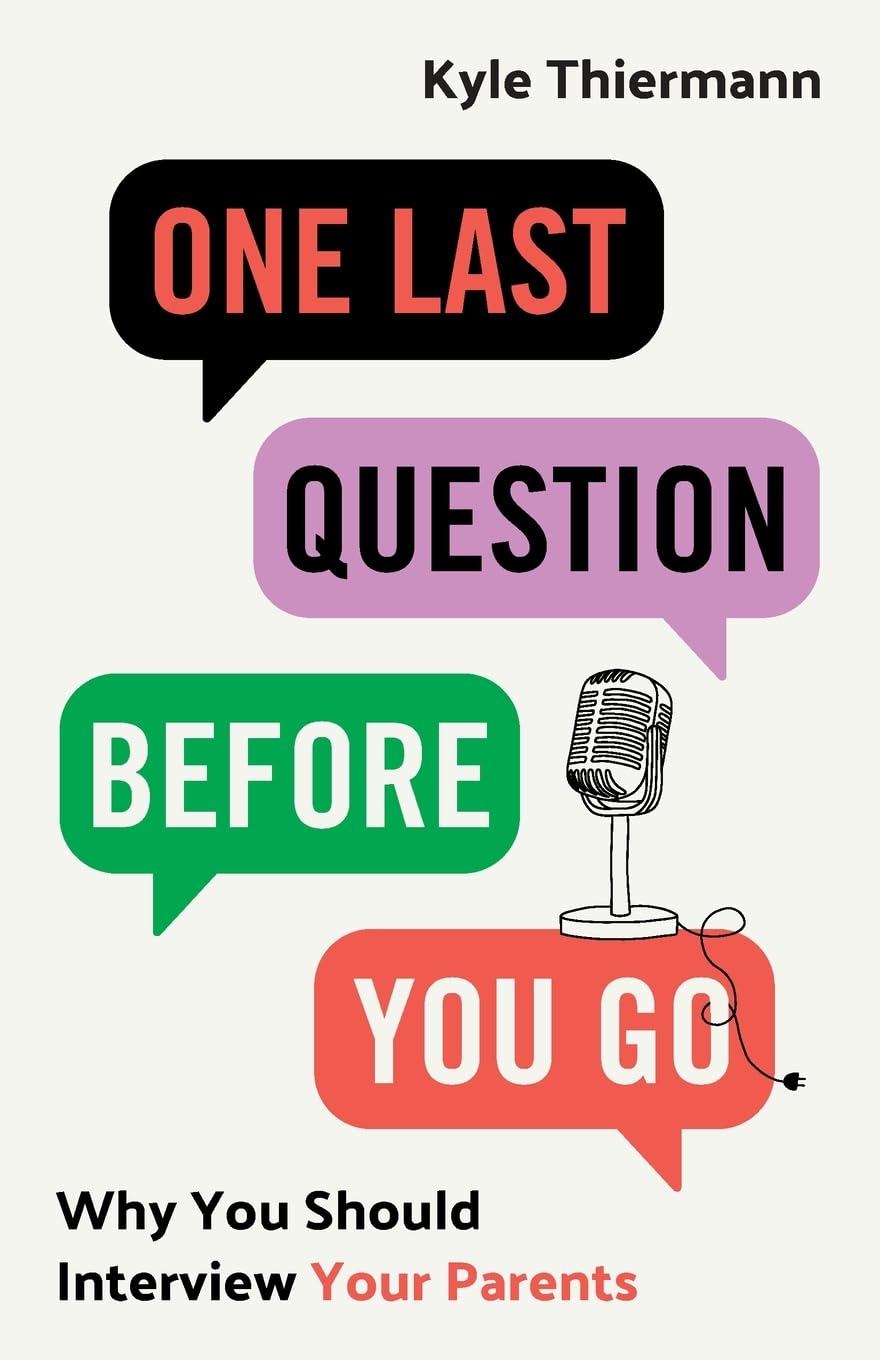
Kyle Thiermann: Like, it's kind of like a book, you know, you expect people to use it in one way and think this certain way. And then they just like turn around, like, okay, we're going to use this for fishing. And one thing that I I don't know that I expected it but it's been really interesting is how many people are not actually, there's two things. A lot of people are not actually using it as a tool to interview their parents. They're using it as an excuse to ask. the questions that I put in the book because they would maybe feel too awkward about doing it themselves without the book and like the book it almost feels like it's this magic like shield like it's like I'm not being weird like the weird authors asking you these questions you know that I actually really want to know about but like permission permission you know it's like almost like you we have the book it's keeping me away from the the feeling of being too weird and I don't know that I expected just how much You know, the physical nature of the book can feel a bit like that, like shield as you're heading into, you know, the war of emotions with your parents and just having them see it. Right. And that was also, you know, an element if people haven't seen the cover of the book, like, It's a bright, fun color, right? So one last question before you go is written through text bubbles. And Anna Dorfman, who designed the cover was just amazing, had really good instincts from the beginning. And the instincts of that she had were, okay, it's a it's kind of a sad title. We need to counterbalance that with brightness and it needs to seem fun. So that going back to that mood shift, you look at the title and you think, oh, that's kind of fun. And ultimately, that fun thing is like the shield for you to go into those conversations with your parents. And the second thing that's unexpected is how many parents are buying it to interview their kids.

Eric Jorgenson: Love it. Absolutely love it. What a cool work of art, both personally and to offer people to bring them all closer together. There's a great Jerry Seinfeld quote, I'm so glad you did it your way all the way through, Rick Rubin style. You follow your heart and you trust your gut and world will respond and you put out something really unique and really excellent. As I said, it hits close to home for me. There's a lot of people I'm going to gift this book to. I'll be singing your praises far and wide, and I hope that we see ripple effects from this thing for decades.

Kyle Thiermann: Thank you. Thank you. No, I really appreciate that. I think that the last thing I just want to say about you guys and about Scribe is that I think that It's really easy for people to see writing a book as a means to an end. And it's easy for a lot of people to write a book so that it can improve their career in some way. And now I get to give speaking engagements. I get to see the expert and the authority. And you guys understand that game. You get it. But I think that you also really encourage people to be as honest as possible. And I felt that with the feedback that I got in the book. It was very thoughtful human feedback. And you have the awareness that it's ultimately humans reading the thoughts of other humans. And you can smell the bullshit. And you just you need to be as honest as you can be to write a book. And like when you when you do that, when you go through the process of saying just fucking uncomfortable shit like what are you? You know, I once heard a comedian once told me, don't try and be funny. Talk about what you're afraid of, what you're ashamed of, who you're pretending to be and who you really are. Like that's what you need to do with a book. And the benefit of doing that and having you guys encourage me to do that is that the outcome almost doesn't matter anymore because you just deepen so much on a soul level, which is what I think books can do for writers and it's what I think they can do for readers.

Eric Jorgenson: It's one of those paradoxes where if you truly serve yourself as a writer and go through that journey and are unflinchingly honest about it, almost ignoring the fact that anybody, maybe even best off ignoring the fact that anybody else is ever going to read it, paradoxically, that makes it more unique, more resonant, more powerful, more authentic, and more people end up reading it. Yeah. It's a classic indirection. Well, thank you again for coming here, being so open with everything that you've learned and everything you've done. I think there's a lot to learn from your story, from your launch. What a service to all the other authors to come. Thank you.

Kyle Thiermann: Thank you, Eric.

Want to Write Your Own Book?

Scribe has helped over 2,000 authors turn their expertise into published books.

Schedule a Free Consult