Brian Lauer: CUSOs
Read the full transcript
Brian Lauer
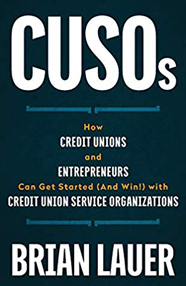
Brian G. Lauer is a partner at the law firm Messick Lauer & Smith P.C. and general counsel to NACUSO, where he concentrates on helping credit unions work collaboratively with other credit unions and third-party service providers, primarily through credit union service organizations. He has helped credit unions and innovators form hundreds of CUSOs, and he received his Juris Doctor from Temple University's Beasley School of Law. He is the author of CUSOs: How Credit Unions and Entrepreneurs Can Get Started (And Win!) with Credit Union Service Organizations.
📚 Books by Brian Lauer
Transcript
[0:00:18] CH: Author hour is about answering one question. How can you get the best ideas from great books without spending so much time reading? Every week, we take you behind the scenes with a new author, about the most important points in their book. If you love to learn while you're on the go, you’re in the right place. All of our book summaries are 100% free and we do more than a hundred episodes every year. Please subscribe to and review Author Hour on iTunes. Today’s episode is with Brian Lauer, author of CUSOs. More and more people are turning to credit unions for their banking needs, but most credit unions can’t provide the wide range of services offered by large global institutions. They lack the resources to keep up with evolving technologies. Credit unions need to become more flexible in order to remain vital and Brian believes that credit union service organizations or CUSOs can make that happen. In this episode, Brian explains the rules, risks and rewards of forming or joining a CUSO, which is a working partnership that combines the individual strengths of multiple credit unions and financial technology entrepreneurs. Brian is a partner at Mesic Lauer & Smith and a thought leader in the creation of forward thinking strategies that link credit unions with private sector entrepreneurs. If you work in the industry of credit unions, this is the episode for you. Brian is going to offer a bold vision to maximize your efficiency and encourage innovation, so that you can provide your members with more options in a higher level of service. Now, here is our conversation with Brian Lauer.
[0:02:39] Brian Lauer: I was really interested in copyright when I went to law school because I don’t think anybody goes to law school to become a credit union or CUSO attorney, it’s just, you know, it’s not a track when you enter law school to be a CUSO attorney. You know, I went to law school for my love of books and interesting copyright and those sorts of things. I also always had this sort of tingle of business and small businesses and how they worked and operated and in fact, when I was in college, I actually started a record company and put out records for small bands in the local market where I lived and sort of got this taste of yeah, sort of how business worked and what you were trying to accomplish.
[0:03:22] CH: Where did you go to law school by the way?
[0:03:24] Brian Lauer: I went to Temple University right here in Philadelphia.
[0:03:28] CH: Cool.
[0:03:28] Brian Lauer: Yeah, I went to undergrad at the University of Pittsburgh and that’s where actually I was running this record label, I was referring to and you know, even then I was thinking about these things of like, how at the time, bands were getting taken advantage of by the record labels and how could we try and you know, combat that and support the local community, so I was only going to put out records for local bands that were from that area in Pittsburgh and I did. I put out three or four different records and the deal I would make is that you know, all the costs would come off the top and then all profits would be split 50/50 between the band and myself. That was an ability for me and you know, 100% of what I did, what I received from it went right back into trying to put out another record. It wasn’t like I was getting rich off it but it sort of introduced me to this idea you know, that people helping people and community, you know, was really important. Back then, it was this idea of well, we need to support the local scene and the local bands and the only way you can do that is to do it yourself. When I came out of law school, I needed a job and I got that job, you know? I was hired by actually my mentor Guy Masek here at the firm and what he had built was a business that helped credit unions and their subsidiaries called CUSOs and that introduced me to actually a world that was very similar to what I was really interested in. First of all, it’s business oriented, you know, there’s no denying that, everybody’s interested in doing good business and making good business transactions and so forth. But the founding of a credit union is really an industry and a culture that is people helping people and building community and not out to make you know, money on the backs of workers or anything like that. It’s really the business of trying to help people like workers and employees of you know, companies to be able to find credit and help themselves and so, you know, I really sort of saw that as a really interesting tie in to what my interests were, you know, this idea of supporting the local music scene and then small business sort of business oriented so you know, not making bad decisions but you know, really doing it for the sake of the people, not just to make a profit. That’s sort of what tied me into here and what I’m doing now.
[0:05:56] CH: I always have to reestablish this every time I talk to somebody who works with credit unions, just to refresh my memory and listener’s memory which is it’s a simple way of thinking of credit unions as basically a nonprofit bank, or is that too simplistic?
[0:06:17] Brian Lauer: No, I think that’s really sort of the barebones of it for sure. A credit union is a nonprofit cooperative that provides financial services. You know, traditionally, that was making loans and taking deposits just like a bank. You know, the bank, to differentiate is for profit and you know, is really out to make money for a small group of shareholders that own the bank.
[0:06:51] CH: There are some obvious reasons to go with a credit union. Say, you don’t have to deal with the fees that a bank might take because the bank is for profit. What are some other benefits of going with a credit union who should use a credit union and who should not?
[0:07:08] Brian Lauer: Yeah, I mean, credit union is really – they’re looking to be the trusted financial adviser, that’s the goal, right? When I said before, people helping people. The idea here is not to just make a loan for the sake of making a loan but it’s to make a loan that’s right for the member, the credit union member. In addition to the idea that credit unions aren’t focused on charging fees, to their members and you know, these outlandish fees or interest rates to their members. In addition to that sort of straight financial economic aspect of it. They’re also out to really be a part of that member’s family in a sense that, you know, you’re supposed to go to the credit union like you would your uncle to say look, “I want to buy a house, what should I do?” You know, the credit union’s going to help you to walk through that process, help you get into the right loan and hopefully buy that house that you want to buy. Instead of you know, taking it from a strict wealth, you know, you’ll get a better rate if you go to this bank down the street, it’s not just the economics of it.
[0:08:18] CH: That brings us to CUSOs, right? What is a CUSO?
[0:08:23] Brian Lauer: A CUSO stands for credit union service organization and it’s a company that is owned by a credit union. A credit union has an equity investment or interest in the company and as soon as it does, that company is considered a CUSO or a credit union service organization.
[0:08:47] CH: Maybe I’m just post lunch and I have some brain fog but give me an example of that?
[0:08:53] Brian Lauer: Sure, a very simple example would be a credit union wants to provide homeowner’s insurance and auto insurance to its members. You could do that through an insurance agency down the street so you would – you know, pass hem down the street to Bob or Martha down the street and I could provide them with that auto insurance they need. But credit unions could also form the sole owner of a separate company and that company could be an insurance agency, providing that same insurance to its members. Again, giving this sort of full service approach to the member’s financial needs. But technically, that agency would be a subsidiary, it would be a credit union service organization, another company owned by the credit union.
[0:09:45] CH: Is this a plan to make credit unions into conglomerates that own all of the businesses?
[0:09:54] Brian Lauer: Well, it’s not, no.
[0:09:55] CH: I don’t expect you to honestly address that but –
[0:09:58] Brian Lauer: No, it’s not. But to be honest, it is an opportunity for credit unions to be more involved in the financial lives of their members as apposed to just making loans and taking deposits.
[0:10:12] CH: Okay, that seems to really be in the DNA of credit unions is to really truly serve their members as deeply and humanly as possible. Is that fair to say?
[0:10:24] Brian Lauer: Yes, absolutely.
[0:10:24] CH: Yeah. Let’s talk about some of the benefits of CUSOs. What are some of the big reasons why credit unions should align themselves with CUSOs?
[0:10:36] Brian Lauer: Well, I think you have to start by thinking about the pressures that credit unions are under right now, sort of in a way, set the problem that credit unions are dealing with the problems that credit unions are dealing with today. Then we can show you how CUSOs can help to solve those problems. Credit unions, as we talked about a moment ago, you know, credit unions are for people helping people, are nonprofits, they’re not about lots of fees, they’re about doing the right thing for their members. But the market has changed vastly since the formation of credit unions about a hundred years ago. The biggest pressures or changes on that market are that credit unions are dealing with a lot more competition. Some of that competition is known, we’ve already referenced banks. I mean, banks competing with credit unions, there’s a known quantity and often times, banks are larger and have the ability to give better rates and fun loans and deposits which will again you know, be potentially enticing to a credit union member to take their business elsewhere. But there’s unknown as well. Pressures from online and financial technology companies that are coming along and trying to in a way, you’ve probably heard this a zillion times in the last few years but disrupt the financial institution industry by trying to steal away that business as well but from a technology perspective. You know, I’m thinking of like the PayPal’s and Venmo’s of the world.
[0:12:11] CH: And block chain.
[0:12:12] Brian Lauer: And block chain, exactly. Absolutely. There’s all this competition that’s coming to play in the last I’d say, 15, 20 years, it’s gotten more and more heightened recently and then in addition to that, credit unions have a really, this is financial institutions in general but credit unions in this context have a considerable amount of operating expenses that just continue to go up. You have high compliance costs, that credit unions have to deal with as the regulators, you know, rightfully so in some instances issue regulations, issue more regulations, credit unions have to comply with that in compliance costs money. In addition, the technology just to run a financial institution has just gone up exponentially. What you need in order to do it. I mean, you can’t run a credit union without online banking, you have to pay for online banking. Your technology needs on the back end as far as core processing just continues to go up as well. Then in addition, you need greater expertise, you need employees that can do the compliance, run the technology and compete with these competitors we just mentioned. The operating expenses just continue to go up. Then interest rates, again are low as well. You know, they may go up as the market start to change in the next few years, interest rates have already started to rise a little bit. Interest rates have been considerably low which in the credit union industry, and financial institution industry for that matter. That means that the revenue margins are really low. You take in deposits at 1% and you’re making loans at three and a half percent. You might think, “Well, that’s two and a half percent,” in a very fake example by the way. You know, that’s two and a half percent. Well, you have to now use that two and a half percent margin to be able to cover all of those expenses that I just described. It’s just not enough margin.
[0:14:14] CH: It’s not possible. Yeah, so CUSOs is a way of offsetting a lot of these issues, it increases innovation, you get more expertise, more income and more savings.
[0:14:30] Brian Lauer: That’s absolutely right. CUSOs are a tool in the credit union’s arsenal to use to try and mitigate some of this competition, some of the lack of loans, some of the lack of growth and also reduce operating expenses, absolutely.
[0:14:51] CH: Yeah, how widely known is this in the credit union industry? Are the benefits of CUSOs well understood, well established, well-known or is this a concept that just hasn’t permeated the industry?
[0:15:08] Brian Lauer: Well, since I’ve been doing this for the last 13 or so years, I think it’s grown, which is great. That’s a great thing, right? We think, you know, we here at Mystic Lauer and Smith think that CUSOs are really important, it’s what we’ve been talking about and the investment and use of CUSOs has really grown in the last 10 to 15 years for sure. But that said, during the financial crisis, the latest data that I have but during the financial crisis, there were some question about the exposure of investments and CUSOs by credit unions and the data I saw was that only .22% of credit union assets were exposed to CUSOs.
[0:15:54] CH: What? That’s so low.
[0:15:57] Brian Lauer: Which is really low, right? .22% is the data I heard I believe.
[0:16:03] CH: 22 out of what is that? 10,000?
[0:16:06] Brian Lauer: Yeah.
[0:16:07] CH: 22 out of 10,000. .22%?
[0:16:11] Brian Lauer: That’s a surprising way of saying that while growth in CUSO investment is certainly happening, there are a lot of credit unions that are not using CUSOs today.
[0:16:23] CH: Right, let’s talk about how to begin this process, how do we collaborate with CUSOs if we’re a credit union?
[0:16:32] Brian Lauer: I think you need to start by having conversations. I mean, collaborations start with conversation, I mean, you can’t learn what your colleagues down the street stress points are without talking to them. Credit unions are actually very collegial. You know, you go to luncheons and dinners and so forth, conferences with credit union folks and everybody is generally more than happy to discuss what they’re doing, what their problems are, what they’re doing to try and solve them and share that with their colleagues. That’s where it starts. You find likeminded individuals that have similar or the same problems and you come together to try and solve those problems. I mean, I’m thinking of open technology solutions which is a CUSO that was formed by actually three really large credit unions. You know, large in the context of credit unions. I believe they have assets combined of about 15 billion which is big, but they came together with the common problem of rising operating expenses with no end in sight to those expenses going up. One of the solutions they saw to that was scale. If we can get more scale, we can you know, present ourselves as bigger and bigger to the technology market place for instance, we can negotiate better pricing for our services. In addition to that, one of the things they realized was, all three of us are spending the same or similar amounts of money on back office technology expenses like you know, running your IT essentially. Why do all three of us need to do that? It has no basis, or it has no effect on serving our members per se, it’s not front facing, it’s not member facing. Why would we need to duplicate that three times and pay three times the amount for those expenses? They saw the problem and they came together, like minded individuals, they got along, they knew they got along because doing something like what they did is not easy to do if you don’t get a long and have a lot of trust in each other. But they came together and they said, “We’re going to form a company, open technology solutions and we’re going to combine our IT” and they did it. They succeeded and the numbers I heard, I mean, I’ve never see any official numbers but the numbers I heard was they were saving over a million dollars each in the first year that they did.
[0:19:15] CH: Not bad.
[0:19:15] Brian Lauer: Yeah.
[0:19:16] CH: I mean, relative to 15 billion, it’s dropped but that’s a lot. You know, what strikes me about this is it really seems to be well aligned with – I said this in other words, but it seems to be well aligned with what credit unions are all about, which is not only serving their members but serving their communities and this move to collaborate with CUSOs seems like you’re changing the model from competition to collaboration. You’re opening new oceans for these credit unions and these businesses to – it’s not a zero sum gain, right? Everybody can win and these collaborations are possible for all of these credit unions and businesses to improve everyone’s lot.
[0:20:08] Brian Lauer: That’s exactly right. You know, it’s funny – well, first of all, it’s people helping people I said a couple of times about credit unions. This is just credit unions helping credit unions now. It’s a cooperative, a CUSO is essentially a cooperative among cooperatives. You’re absolutely right. They’re joining together to make everybody better which is exactly what workers did when they formed credit unions. They came together to make everybody better.
[0:20:36] CH: You know, ironically, like the DNA of credit unions in the culture of credit unions maybe the thing that ends up allowing them to thrive over the long run, right? Because these financial institutions, these banks that are for profit are very competitive and cutthroat and that does not tend to do well in an age of disruption and innovation and opening things up for everybody to win.
[0:21:05] Brian Lauer: That’s absolutely right. You know, as I mentioned before credit unions are often very willing to share what their problems are and how they’re trying to solve them, banks are very unlikely to do that. In fact, you’ll find in the credit union space that you have a lot of reformed bankers, folks that were bankers and then came over to a credit union and they almost sigh this sort of big sigh of relief, you know? “My goodness, it’s so great over here, everybody’s nice and wants to help.” To your point about disruption, it’s absolutely imperative that credit unions work together to solve their problems and their member’s problems because if they try and do it alone, they either aren’t going to even see the problem for instance and the advantages of the solution or they’ll see it and you know, try and invent the wheel themselves and be left behind.
[0:22:04] CH: You know, your book gets into how to form a CUSO, some of the regulatory issues to be aware of. I don’t want to get too much into those details because anyone listening to this who is still listening is going to probably want to read the book. I’d like to talk about where you see the future going. What are the opportunities that you think could happen in the coming decades?
[0:22:29] Brian Lauer: You know, we’ve talked about technology quite a bit and I do see technology having a great effect for credit unions. Credit unions are becoming more and more innovative as we talk about CUSOs are an opportunity for them to express that innovation. I think the future is really working with the financial technology innovators as I mentioned before within the context of the credit union space. I think it really helps too because a lot of the folks that are innovating and coming into the market place to try and innovate in the financial technology space – When they find out, if they don’t already know what credit unions are, they really do fall in love with this idea that it’s community based, it’s people helping people and they want to work with credit unions to be able to make that happen. Credit unions as I mentioned, sort of off the cuff before, you know, the banker sighing in relief but everybody’s nice, certainly, that’s a very big generalization but what that means is that you have access to people. You know, I mentioned that this three companies came together in their 15 billion in total assets in the aggregate but yet, you know, you can go and get a meeting with the management team of many of those credit unions, to talk to them about something that you think is interesting and it would be innovative and often times, those management teams are looking for that. They’re accessible and just want to keep working to make credit unions better. I think, to your question, I think innovation is the future of the CUSO marketplace for sure and innovation is what is going to allow credit unions to continue to survive as we move forward.
[0:24:13] CH: I want to sort of wrap up with a couple of questions, Brian, that I like to ask every author who comes on to the show. The first one is how can our listeners connect with you, maybe either follow you on your journey or chat with you, especially if they’re in your industry?
[0:24:31] Brian Lauer: Sure, the thing to remember there is CUSO law. That is our domain, www.cusolaw.com but that’s my email which is blauer@cusolaw.com and my Twitter handle is @cusolaw, how surprising, right?
[0:24:52] CH: Nice. Yeah, you got all of those handles, good for you. The final question is, give our listeners a challenge, maybe what’s one thing from your book they can use in their life this week?
[0:25:05] Brian Lauer: I would challenge you to think about where your low hanging fruit is and what I mean by that is, do you have a problem that you're sure every other credit union has? Or maybe you have a core competency that you know many of your credit union colleagues don’t have. I would challenge you to think about and take action on trying to either use that core competency to help support your credit union colleagues by providing them that service, or partnering with them to provide them that service. Or, think about your problems, those that the other credit unions would also have or the same problem and think about how you could work with some of your colleagues to solve that problem. Whether it be joining together in order to minimize the expense of you know, an operating expense. Or joining together to get better scale in a market where scale really matters and I think that these are, you know, nothing’s easy but I do think it’s easy to think about where the pressure points are. I would challenge you to think about those pressure points and then talk with your colleagues about them.
[0:26:15] CH: The book is, CUSOs: How Credit Unions And Entrepreneurs Can Get Started and Win With Credit Union Service Organizations. Brian, thank you so much for being on the show.
[0:26:28] Brian Lauer: Yeah, absolutely, thank you.
[0:26:30] CH: Many thanks to Brian Lauer for being on the show. You can buy his book, CUSOs on amazon.com. Thanks for tuning in to today’s show. If you liked what you heard, here is what I want you to do next. Open up the podcast app on your phone or iTunes on your computer and search for “Author Hour with Charlie Hoehn” and then click “ratings and reviews.” Take 10 seconds to rate this show or leave a review. It is a small favor but it’s really the best way to show your support and give me feedback and if you know someone else who’d love Author Hour, take another three seconds to text them a link to this episode. We’ll see you next time.
Want to Write Your Own Book?
Scribe has helped over 2,000 authors turn their expertise into published books.
Schedule a Free Consult