Mark Organ: The Messenger is the Message
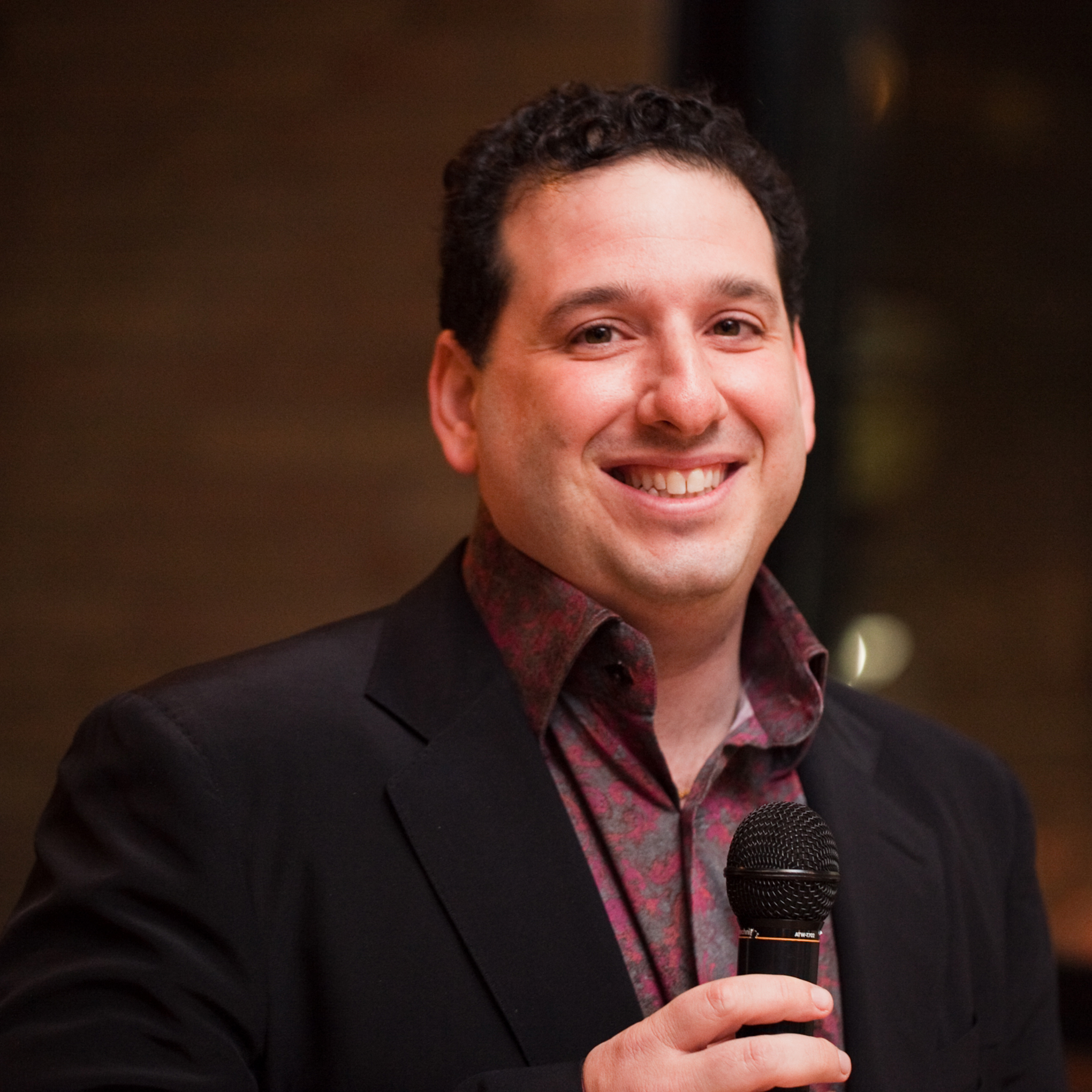
Mark Organ
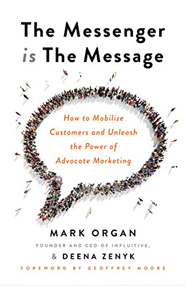
Mark Organ is the founder and chief executive of Influitive, a company that helps businesses discover, nurture, and mobilize their advocates. He was previously the founding chief executive of the marketing automation pioneer Eloqua and has advised software-as-a-service companies across North America and Asia on their go-to-market strategy. With coauthor Deena Zenyk he wrote The Messenger is the Message, drawing on their experience with organizations ranging from small startups to global multinationals to show how to mobilize a company's most enthusiastic advocates.
★ Scribe Case Study
Mark Organ Used His Book to Share the Power of Customer Advocacy and Change How Companies Go to Market
Scribe helped Mark Organ write the book on advocacy marketing. Read more about Mark's quest to help define the industry on Scribe.
📚 Books by Mark Organ
Transcript
[0:00:18] CH: Author Hour is about answering one question: How can you get the best ideas from great books without spending so much time reading? Every week, we take you behind the scenes with a new author, about the most important points in their book. So if you love to learn while you're on the go, you’re in the right place. All of our book summaries are 100% free and we do more than a hundred episodes every year. So please subscribe to and review Author Hour on iTunes. Today’s episode is with Mark Organ, the co-author of The Messenger is the Message. Think about your last big purchase? What influenced your decision? Was it a paid advertisement or a polished press release or a celebrity Twitter endorsement? Probably not. More than likely, you listened to someone that you know and trust. An authentic voice with relevant experience is the most convincing proponent when you’re considering a new product or a company. That is the power of an advocate and that is what today’s episode is all about. Mark is the founder and CEO of Influitive, which is a provider of solutions that help companies discover, nurture and mobilize their advocates. With a background in neuroscience and a passion for psychology. Mark has a unique vision for a more human approach to marketing. In this conversation, we talk about the reasons why buyers are no longer swayed by the normal marketing tactics. And the secret to getting amazing word of mouth marketing. By the end of this episode, you’ll have a blueprint for building a powerful community of authentic advocates and what you need to truly grow in today’s web era. Now, here is our conversation with Mark Organ.
[0:02:37] Mark Organ: But there was a time when we were really struggling and this is a company that had not raised money so we were you know, trying to grow out of cash flow which is very difficult. One of the things that we noticed is that there were some customers that we were able to win really quickly and that’s really important, right? If you do not raise money, you’re going out a cash flow, winning new sources of revenue quickly is super important, right? Probably one of the most important things you can do and so, we ask question like, “Why are these,” and they’re wonderful new customers, “Why are we able to win them so fast?” Literally, 90% less time than our typical customer. What we learned is that these types of customers have lots of advocacy or what we now call advocacy that surrounded - they often would have multiple referrals, they got them to want to call in and then we had all the right kind of customer stories for them to relate to. Then, when they wanted to talk to a couple of other relevant customers, we’re able to do that quickly and they really resonate with those people. You know, these folks would have the sense that every day that I’m not working with this companies, I’m using money, right? I need to get out there and I need to work with this company and to sign a contract and get going. That was a big epiphany, let’s go and get more of that. How do we get more of this advocacy? That was really difficult, it’s a lot more difficult than we would have ever guessed to get consistent levels of advocacy. You do a referral campaign and you have a brief blip and then we go back down to baseline again. Or a voice of the customer campaign or reference program, you wouldn’t get sustained benefit as a result. Then, almost by accident, we decided to create these like Academy Awards for marketing. What came as a result just floored us, it was not expected. We had this really tidal wave of advocacy as a result. You know, all these people coming and saying, “I love what you're doing Mark, I love this movement, how do I help,” right? Generated referrals and stories and all kinds of great stuff. That’s really where the lightbulb went off for me. This Academy Awards we gave people trophies and champagne and high end hors d'oeuvres or what not. We made people feel really amazing about themselves and made people look good to other folks, we gave them recognition and social capital and the way they responded is by giving us this super powerful advocacy that was so important to our business. From that point on, actually, the company grew at a faster rate, ended up going public and had a big acquisition for almost a billion dollars, by a large public company so it did really well. And I think advocacy, you know, systematic advocacies, a big part of the result. That was one big experience, you know, I had others at a personal level like one was that, I had used an amazing service which is still going called ChinesePod, to learn how to speak Mandarin. This is one of the first podcast ever in the world. It started, really, 2004 when I was starting to get into it. It got to a point where you know, just after a few months of using this service, I was able to have business meetings in China without an interpreter. It was an incredible story. I took four years of university Italian and I still can’t even like order spaghetti at a restaurant. Meanwhile, you know, six months of Chinese which is considerably more challenging, I think for the Western mind and Italian is, here, after six months, I’m having amazing conversations with people in Chinese. I was super excited about it and I would advocate for this service like even if no one, and no interest in learning Chinese at all I would still say, got to check this out, this is the most amazing thing. But what I found was at over time, my advocacy waned a lot and that’s because I wasn’t being recognized by it. There’s no one tracking it, there’s nobody thanking me for it, I was getting no feedback, I wasn’t feeling like I was part of a bigger movement, right? I wasn’t getting social capital. After a while, I wasn’t doing it. You know, these experiences kind of came together for me with a simple idea which is give these people, give advocates the feelings that they want and they will return the favor by doing a lot more advocacy. I know, it sounds like rocket science. Really big profound insight, but that was my insight and so I just said, this is what I want to study, I want to study this trend and I built a company around it and my background as I mentioned, first couple of questions was actually in research, you know, medical research and neuroscience. I still am doing the same thing today, I’m trying to understand this phenomenon of advocacy, what motivates people to do it, have generate a lot more of it. Some of what I have learned is both a theoretical level and a practical level as in The Messenger is the Message, you know, today. Anyway, that’s what inspired me to write the book was to capture as much of this knowledge, understanding as I could and provide it to - write its people, I mean, not just practitioners but you know, even people who are still in college or trying to figure out what to do for a living. I think that advocate marketing or this, art and science of how to get your customers and other important people like that, how to get them to lend you their time and reputation to help you build your company and promote your products and services and whatnot. I think that’s the future, that’s where things are going in. In marketing, it’s going to be a great career.
[0:07:38] CH: Yeah, let’s talk about that aspect. That’s’ going to be the future. I mean, your title, The Messenger is the Message, is a play on Marshall McLuhan, The Medium is the Message. But what you're talking about here is really just systematic word of mouth, right? Being able to turn your best customers into people who can promote your company without being employees or being in the marketing department. Hasn’t that always kind of been the case in commerce and supporting business? Isn’t it the past as well as the future?
[0:08:13] Mark Organ: I think yes and no. I do think the power of word of mouth we’ve always understood and I think the reason why is, what people are looking for, when they need to make a risky decision and buying something that is, you know, material is a risky decision, right? There are consequences for making a mistake and so, people have always wanted to trust the folks who are doing business with. They’ve always wanted transparency and authenticity. That hasn’t changed and because that hasn’t changed, there has always been an interesting getting trusted and authentic people to help do the selling of marketing. That’s always been true. The problem is that is very difficult to do, right? You know, wind back the tape 30 years ago or something, like how as a company, how or even 10 years ago, how do you systematically get your best customers to do the selling and marketing for you? That is hard to do, but with modern technology, that is becoming not just possible but it’s becoming essential because this is the experience that buyers want. I think what’s changing now is that now you’ve got really everybody who is wired into the internet. You’ve got everybody who is connected into social media, the expectation is now there for buyers that they are going to be able to interact with peers, relevant peers, people just like themselves that have the same needs that they have and be able to understand how they saw the particular problem. That requirement is now there. Companies do need to figure out how to systematically get their customers to do the selling of marketing for them and I think now the technology is there. The technology both in terms of the sort of hardware and software but also just the methodology, right? The understanding of human motivation and how to get people fired up to be part of the group. Yes, in some ways, this is very old form of marketing, in fact, maybe it’s the oldest form, in some ways, you know, word of mouth but the art of systematically doing it is tricky. If you think about the way most marketers are wired today, I think, “Hey marketer, what are you trying to call up today?” “We’re trying to win this market or we’re trying to you know, we’re trying to sell more of this product.” “How are you going to do that?” “Well, I guess we’re going to send some emails out or run some ads and we’re going to send people to go look at a website and then we’re going to get a form on there,” and you know, something like that. You know, for most people although not a lot of the companies we work with, a lot of the companies focus with their profiled in the book, we have a very different way of doing it. “You want to go win a market?” “Well first, we’re going to look at who in their customers are already in that market or know that market and then we’re going to put together this program so that they are going to go and get this message out or they’re going to tell us what the right message is and then we’re going to help them get that message out.” It’s a very different way of thinking as supposed to being kind of more like what we call the drill sergeant which you know, a lot of marketers today or even sales people, like they’re going to tell the customer what to think. We’re going to run some ads and we’re going to tell the market what to think. You know, that is not working as well as it used to. It might have worked in the age of Marshall McLuhan who is really big into television, that was the whole idea, the medium is necessary.
[0:11:28] CH: Yeah, it was brand new, yeah. Now.
[0:11:32] Mark Organ: Right, television you could program your audience, right?
[0:11:34] CH: Yeah, I mean now, it only works on the level of being able to hit people so many times with a message. But it’s billion dollar brands that are playing that game for the rest of the companies that maybe aren’t household names like what you’re talking about here, seems like the most sustainable long term strategy. Before we dive a little bit more into The Messenger is the Message and how to implement it and what the science and the practice of it looks like. Let’s talk about the problem a bit more, what is it now, it seems - you talk about it in the book, how there’s an endless soundtrack of self-serving messages going on right now. Talk to me about that?
[0:12:18] Mark Organ: Sure, yeah. Well, you drive around Austin and spend some time in some stores, you’ll experience this feeling, right? There are ads everywhere on the street, I mean, even you go to the restrooms these days, you know, there are like little televisions over top of the year and those playing ads. You can’t get away from this stuff whether your online, offline – you’re bombarded with this sort of thing. If you’re in a company and buy things as part of your job, like for example, if you’re in marketing or if you’re on the IT side, you are bombarded every single day with – dozens of sales reps that are calling in, emailing, begging for some slice of your attention. This noise is just really ratcheted up in the last 10 years, there are now technologies out there that have become ubiquitous in our world which is the B to B technology area where sales reps now have the ability to massively amplify their ability to go and systematically annoy people. You know, this is just causing an intolerable amount of noise and the way that people deal with that is pretty rational right? They shut their ears to that noise. They try to find a filter, a trusted and repeatable filter, so they can just block all that out and they can just say, you know, “Hey, here’s my problem. Here’s the pain that I have. How have you solved it?” That they can find somebody who is quite relevant for them that has solved that problem. That’s a sort of endless soundtrack of self-serving messages, right? These sales reps that are calling or the marketing material that’s getting sent electronically to people is self-serving, it’s not honest, it’s not trustworthy, it’s a company talking about themselves. As opposed to a trusted authentic person saying you can trust this company and products, these are good products and I had the same problem you had and I’ve solved it. That’s why what we said is The messenger is the message of our time. Like the message of our time which is very different from the Marshall McLuhan age of television, you need to program your audience, you can’t program your audience anymore. The messenger right now is the message. That is the time that we’re in, the nature of our society right now is one where there’s a lot of distrust. People distrust a lot of institutions now at a level that would have been unthinkable 20 years ago. They don’t trust government, they don’t trust businesses, they definitely don’t trust sales reps or lawyers or marketers, they trust people like – or even experts, this is the amazing thing, this just came out in the last Edelman Trust Barometer. For the first time ever, people trust their peers more than experts. That’s because experts have done a lot of untrustworthy things. There have been a number of people who held themselves out to be experts and then you find out that they’re actually self-serving because they’re getting money on the side that they didn’t disclose. People are not trusting these self-appointed experts and influencers and celebrities and whatever, like they used to. They trust peers and the also reason why they’re able to do that is that now you’re able to get such a much more broad sample of peers, right? If you go to family dinner and uncle Bob really suggests you go see a movie. Well, you have to look, does uncle Bob really know my taste for one? Is that really relevant. But you can now go to a circle of your friends and say, you know, “Hey, what do you think about this movie?” Or you can go to Rotten Tomatoes as you did very early in our conversation, maybe before the tapes are rolling and you recommended a movie to me. I can go to Rotten Tomatoes and I can see not just what experts thought of the movie, experts being I guess film critics. But I can see, from my friends that I’m connected to who of those people liked the movie. You’re able to get a sense of relevant peers very rapidly, literally within eight seconds, you’re able to get this information by going online. That’s the world that we live in now and that’s why this is a world of messengers and why I titled the book that way.
[0:16:14] CH: I want to ask you why do people become advocates, why do messengers decide to promote the message and in your book you had an interesting point form psychologist Jonathan Haidt. He wrote about hive psychology and he said, “The most effective moral communities, from a wellbeing perspective are those that offer occasional experiences in which self-consciousness is greatly reduced and one feels merged with part of something greater than the self.” Then the second point you said is this is Jonathan continued. “The self can be an obstacle to happiness so people need to lose their selves occasionally by becoming part of an emergent social organism in order to reach the highest level of human flourishing.” I thought this was really fascinating that this is part of why humans become advocates.
[0:17:16] Mark Organ: Yeah, I love that quote. Thank you for surfacing that. That’s actually the most important part I think of being an advocate is that people do long for a sense of identity. You know, you ask a number of people and say, well tell me about yourself and they often will talk about – you know, they’ll talk about their work or maybe talk about their hobbies but what they’re talking about is that sense of identity and I think it’s something just innately part of being human. Humans are incredibly social creatures, right? We go back to our caveman days, it was this social group that dictated our ability to survive. A lot of our incredible facility for language really comes out of our need to be able to influence a group of people, which is critical for us to survive and thrive. Being part of a group that’s larger than yourself, is something that all human beings long for and you know, all you have to do is go to your local sports stadium and you can see that in action. People painting their faces, you know, to feel like they’re a bigger part of this team, right? Who doesn’t want to be on a great team? On a winning team? It’s just part of being human being. That’s what I found when I did my research on advocates and why they do what they do. They do long to be part of something that’s bigger than themselves. I think that’s especially true in this age where, again, a lot of institutions are declining. Think about religion people are in general, a lot less religious than they were 20 years ago. Not as true in the United States actually but a lot of other places around the world. Even in the United States, you know, religion is declining. People go to church less than they used to. You know, faith in government is a little different. There are less people who say, well tell me what your identity is because less people could say, I’m an American, I’m a Canadian or whatnot. It’s becoming a little bit less relevant but people still hunger for that.
[0:19:06] CH: Even in the work realm, like you said, less companies are hiring and keeping people for more than a few years, they’re downsizing and everything. So people are really having these old things that they depended on for their identity, sort of either stripped away or they’ve just culturally dissolved a bit.
[0:19:25] Mark Organ: That’s exactly right. That’s one of the things we’ve seen from some of the strongest advocates is they actually feel like they’re more a part of the company they advocate for than they are of part of their own company. In their own company, again, they might feel like I don’t have a lot of influence or power here, I don’t have a lot of job security here but when I advocate for this product that I use to make my life easier, I’m a hero, I get recognition, I get rewards. I feel good about myself and so that I think is one of the most important trends and if you’re trying to build and design that to the community. I think that is what the goal actually is. The goal is make those people feel that they are more part of your company than their own company and it is this need, this need to belong to something that’s bigger than yourself. Now that is not the only thing. I mean there are a lot of times where you feel you’re a part of a movement but you are not getting the kind of recognition and the feedback that you want that reinforces this feeling. So it’s not just about feeling like you’re part of a movement, you’re getting regular feedback and if you think about some of the great movements of history they do a great job of that. Again, whether it’s religion or government or being part of the military or whatnot, you know there is this idea of continually reinforcing that this activity that you do is a good thing for your life. It is a good thing for your career and in fact, the more of it that you do, the better off you are going to be. So you regularly feel like you are making a real impact on yourself and a real impact on the world.
[0:20:56] CH: Can you break down more? Let’s get into the actual practice of this because how do religions and organizations who are really good at this stuff, how do they reinforce that this activity is a great thing that hey, you’re a hero. You are a part of this, you are a part of something bigger. What does that actually look like?
[0:21:18] Mark Organ: Well I think that it starts really and fundamentally with feedback, right? So people expressing, “Hey this is the impact that you’ve made on me or the impact you’ve made on our organization.” I think the power of recognition is really becoming well, recognized, these days. It is why at our company, people get recognized literary every day in the company. It is just so important for healthy human psychology to feel like you are making an impact. But, you know, healthy organizations are constantly providing feedback to people about why what they’re doing is important and the kind of impact that it’s made and so for example an advocate program, we are going to do that. If somebody writes a guest blog post for you then you want to tell them, “Well great you’ve got 50 hits on that blog post. You’ve got five thumbs up and a number of comments,” right? “You are making a real impact here with that.” And that may not have to be a human being making that statement, you can have that being automatic. You automatically tell them that. If somebody has generated referral for you and I know that’s part of your business is referrals are a really important part of your business, it is valuable to let that person know that, “Hey that was a good referral,” or even not a good referral but “That was a good referral, we actually have a meeting with that person and things are progressing along.” If that person becomes a customer, you should let the person who referred know, “Hey that person became a customer. Thank you for that.” Then the person who the advocated feels really good. They feel like they really made a positive impact on the world. So those are some of the things that are practical about it but I think every good organization understands this that you need to give people regular feedback on how they are doing in which case they do a lot more of it. So that second aspect and I think the third aspect we talk about is social capital and so the idea here is that the more – if people are doing more of an activity like if they advocate more, they experience benefits in their life and their career, they are also going to do a lot more of it. So maybe the idea of making an impact is a little more of the micro level. I have done this activity and now I am getting recognition for it. This is a little more in the long term and I feel like this is a healthy activity for me to do for the long term in my career. So that’s where giving people awards for example. In our system we have badges, where people give virtual badges for being a rainmaker or being a connector or something like that and if those are visible for other people, so for example you could put a badge in someone’s LinkedIn to show that you know this person is a great connector, like they connected us to the five great customers or they are persuasive author, you know they have written a couple of guests blog posts that got a lot of tension. And that is something that helps them out in their life and career. They might even be able to get promotions or raises or be able to get another great job that otherwise would not have because you’ve helped them increase their stature for example. So that’s what we call social path wall and if you put these things together, we call that being a member of an exclusive tribe and having meaningful impact and social capital, you put those together in a program that is fun and rewarding and it is unbelievable the kind of results that you were able to have, you know, I profile a lot of these companies in the book are building truly amazing companies by having this army of advocacy that are doing the sales and marketing for them.
[0:24:32] CH: So I love that you include in the book, like you said you background is in neuroscience. I love that you include the science behind this and what I am wondering is, I’d imagine there are some listeners who might be business owners who are thinking I’ve tried some of these stuff and it didn’t come across as profound for some reason to my employees and maybe there is a missing piece for them where they’re like, “I tried to recognize my employees and they still weren’t engaged. They still weren’t messengers,” in the sense that you are talking about. What are some of the areas that businesses tend to overlook or get wrong when they are trying to employ this type of marketing?
[0:25:14] Mark Organ: Let me think about that for a little bit. Yeah, so we are talking about companies that maybe are trying out some of these techniques that are not getting great results. Well, I mean we could talk a little bit about where we see that results are not happening and what tends to be the cause of it. I mean for one, if there is not a good mandate and metrics and tracking with an activity that’s one area where we often fall short. So if this is an advocate marketing or you talk about employer recognition which is in some ways you’re right it is a form of advocate marketing. I agree, if you don’t have somebody who is responsible and accountable for that and you are not tracking the results of it, you do tend to not get good results. You tend to say, you can’t manage what we don’t measure whatnot. So often times, this is something that a business owner might say, “You know we really need more referrals, referrals are great things, you know someone go do that.” But they haven’t actually empowered somebody to go and build the program. They haven’t given them time in the day to do it. They say, “Well why don’t you do this on nights and weekends and we are not going to track the results,” and so the person saying, “I am not sure this is a really good use of my time,” and so the project tends to fall off. So I mean the companies that we profile have taken this incredibly seriously. They say, “It is critical to our future that we are not going to survive as a company unless we get our customers way more involved in our business. We are going to make this a big part of our strategy for this next year and I am going to appoint so and so director or vice president to go and run that and they are going to have metrics associated with that. I am going to track it and I am going to celebrate their successes and when they are not succeeding they’re going to check in on them.” I mean that is just good management but there is a shocking shortage of good management out there. So I think that that is a big one.
[0:27:00] CH: Just to pause you there, sorry to interrupt Mark. I just want to hammer that point home. I’m so glad you said that. The reason I asked that question is because when I was doing a lot of marketing and helping a lot of clients I found that a lot of them didn’t fully comprehend that marketing was about long term strategy and not tactics. And what I found is whenever a good marketing idea comes up like this, people tend to treat it as a shiny new object or a lot of people do. And then they find themselves in tactical hell where it is just a surface level band aid that they think is going to solve the problem without fully investing themselves in it. Like you said, making it a part of their culture, really investing the time to get it right and measure it and build it into the fabric of the organization rather than just, “Hey this is a thing we are going to try and here are some badges for employees that did some good stuff.”
[0:28:01] Mark Organ: Yeah, that is so true and this is why we have to like this book, right? Why I had to write The Messenger is the Message because we have seen what makes success and that is all the way from the top down to the people who do the work, how these organizations should be set up, what the right metrics should be, the profile of the people who do a great job of building this sorts of communities and we really wanted more companies to get it right. Whether we work with them or not and that is one of the things that I am super excited about is I am hearing literarally every week from people who are using the ideas from the book and they are doing great things in their business and it is because there is a real practical element to this book. There is a real, “Here is exactly how you do it. Here is how we set it up.” You know we have done well over 300 advocate programs as well as profiling some great ones that we have not been a part of. But have done really well on their own and I again, I think that is really important. So thank you for that and that’s a big reason I wrote the book. The second thing I bring up other than just really great management and having things aligned from the top all the way down and having resources allocated and so on is the importance of authenticity and the advocate experience. I mean if there is one area where these things do tend to go sideways is when as oppose to focusing on the magical geese that lay the golden eggs, people are just focused on the golden eggs. That’s from the fable and sure, we all want those golden eggs and those golden eggs are amazing referrals that generate new business. They are evocative customer stories that inspire people. They are referrals that close deals. People who come in to help build great products and services, I mean there is these amazing golden eggs. But there are these special people who lay those golden eggs and those people are the advocates and by taking care of them and managing those relationships and giving them an amazing experience and giving them incredible value that’s how you get more golden eggs and where things always go wrong is that they maybe a use and abuse those advocates too much. You know they ask for referrals all the time without asking them about their day, without asking them about what are the challenges that they are trying to solve. Who are they trying to be as human beings? How can you as a company get your best customers to where they want to go? And if you can help them get to where they want to go, they are going to give you a lot more of those golden eggs and give those golden eggs for a long period of time. So that is another area where we have seen it go wrong and you’ll see this 10 times a day. Just look up at billboards and look at websites at yet another health club that’s saying, “Hey please refer your friends.” Some courtesy to send you an email which is like, “Hey go refer your friends and oh if you do, we’ll give you 10 bucks off,” or something. But that is not why you do it, right? You don’t refer people for 10 bucks off or even a thousand dollars off. You do it because you really like the company that you work with and you think that this person that you might refer them to will really benefit from their service. You want to help two people out and feel really good about yourself because you connected two worthy people together or a company and a worthy person together and so that is such an important principle. And one that we really is what the book is all about. The book is all about how to design an amazing experience for these folks so that they go and return the favor 10 times, 10 fold.
[0:31:16] CH: Well I hope everybody is listening to this as intrigued as I am and picks up a copy of the book so that they can actually really absorb this and dedicate the time and energy it requires to do it right and I want to talk a bit about some of the transformation that you have seen in organizations who have implemented this. We don’t have a ton of time to cover a lot but maybe you could pick your favorite one that you’ve seen that’s implemented this and the transformation you’ve witnessed.
[0:31:45] Mark Organ: Yeah, for sure. Probably the number one thing and this is across lots of companies that we work with so it is hard to pick one but probably the one biggest transformation that happens is just a change in their reflex, when they have a big problem to solve. Which of course every company has every day. We have lots of problems we want to solve. We need to figure out who to serve and how to serve them and what to build and so on and so forth. And after we work with them for a while or after they work with the techniques and the messengers, the message, their reflex changes as opposed to having people around the boardroom table banging their fists and say, “I think we should call the new product X.” and someone else is like, “I think we should call it Y,” and someone goes and brings out a little tiny bit of data that they have reinforcing why they should call it Y. The companies that we are seeing are saying, “Hey let’s just ask the customers of what we think we should call it.” Or, “Let’s ask the customers which mark we should go after and what product we should lead with and how we should price it and who the light house customers we should go after first and so on.” I mean it’s big pretty weighty things that customers and other advocates are getting involved with and that is a big cultural change and shift in companies to do that and a very powerful one and before - if you don’t employ this kind of techniques, it really is too difficult to do that, right? It is so difficult to go and poll 25 customers about some name with some feature in your product. You know it really is quite a bother but if you have an engaged advocate community they are happy to help. In fact it is way more fun to name that new feature than anything else that could be doing at the time. That is super fun because if they name that feature, that is something that is going to be in there forever. That is something that they can do to put their stamp on the world. So if you have this engaged advocate base, there are a lot of things that you use to use your employees to do that they are not actually that good at doing, right? Your employees are not experts in naming things and a lot of other things they’re going to do. They may not be the expert at it but your market, those people are because they are going to name it the way that they would want to hear it - the way that they want to hear it the thing that is going to inspire them. So that is a big change in reflex and some of the examples I give you along that note that sort of trend, we have this one company Carbon Black. It is a security software company which is especially interesting because a lot of security software companies have a real problem with advocacy. First of all, their customers tend to be extreme introverts. They are chief security officers and other folks that care a lot about privacy and security and they don’t really want to raise their hand and say, “Oh please hack me,” and so it is going to be hard to get them to talk but they have a thriving advocate program. They actually get their advocates to come to headquarters every quarter to work with them on their product roadmap and will actually build features together. So they actually have something that is extraordinary amount of commitment and investment from the customer advocates but you know they are also having a really good time. They are really actually enjoying it quite a lot and again, it’s a way, they feel like they are a part of the team, they are a part of the Carbon Black team. They are getting feedback on their insights that they have and are getting a lot of social capital because they are able to say, “Yeah, you know that amazing new feature? Well I built that. I built that together with the chief design officer at Carbon Black. It is pretty awesome.” So it is a completely different way of thinking about how you’re going to build products. You are going to build it now, together with your customer advocates. I am purposely giving examples here that are not just referrals and reviews and whatnot. I mean those are very common use cases. That’s what everybody does, lots of referrals and reviews but my point is you can get very strategic things done. We have one customer that uses their advocate community to figure out which companies they should buy and not buy. So corporate development which you think of as one of the most strategic of all corporate functions like which companies are we going to acquire. They’ll actually go to their advocate base and say, “What’s really important to you? What are we not doing that we need to be doing? That frankly you don’t have confidence in us to deliver on our own because we don’t have the capabilities in your view and who else do you like out there?” So literarally they are creating their list of target companies to go after which blew my mind when we saw. I never would have thought this is something that you would use your customers to do but there are companies that are now doing that. It is mind blowing.
[0:36:10] CH: That’s awesome. So there is just so many possibilities for ways that companies can integrate this and have it ripple out into their marketing, into their customers their employees. So really powerful stuff. I want to have - two more questions for you Mark. The first one is how can our listeners follow you and your journey and potentially connect with you if that is something you are up for?
[0:36:37] Mark Organ: I am absolutely up for that and in fact we created a community at themessengeristhemessage.com. So if you go to there, themessengeristhemessage.com, you connect with me and my co-author, Deena Zenyk, we have a community there. It is a chance for you to interact not just to me but actually with a number of your peers who are excited about these ideas and so please do come and check that out. I am also quite active on social media. So on Twitter I’m @markorgan. I am also on LinkedIn where I post a lot of things, as well as Facebook but I think that Twitter and LinkedIn are a great place to follow me. I post almost everything on LinkedIn first these days. So those are a couple of places. I really do want to hear from you. I am really excited to hear about how you are employing these ideas in your business, in your work or even in your personal life if you are actually using these techniques, I really can’t wait to hear from you.
[0:37:28] CH: Awesome and the final question is and keep this very brief, what is the one thing that listeners can do to implement and try from your book this week that would have a positive impact?
[0:37:41] Mark Organ: So briefly, host a dinner, invite three of your customers, invite a handful of your perspective customers and get them together. It’s inexpensive, it can cost less than a thousand dollars and I guarantee you, you will have a return on investment.
[0:37:54] CH: Beautifully said. The book is The Messenger is the Message: How to Mobilize Customers and Unleash the Power of Advocate Marketing. Mark, thank you so much for being on the show.
[0:38:06] Mark Organ: Thank you, it was delightful.
[0:38:09] CH: Many thanks to Mark Organ for being on the show. You can buy his book, The Messenger is the Message, on amazon.com. Thanks for tuning in on today’s show. If you liked what you heard, here is what I want you to do next. Open up the podcast app on your phone or iTunes on your computer and search for “Author Hour with Charlie Hoehn” and then click “ratings and reviews”. Take 10 seconds to rate this show or leave a review. It is a small favor but it’s really the best way to show your support and give me feedback and if you know someone else who’d love Author Hour, take another three seconds to text them a link to this episode. We’ll see you next time.
Want to Write Your Own Book?
Scribe has helped over 2,000 authors turn their expertise into published books.
Schedule a Free Consult