David Kashmer: Volume to Value
Read the full transcript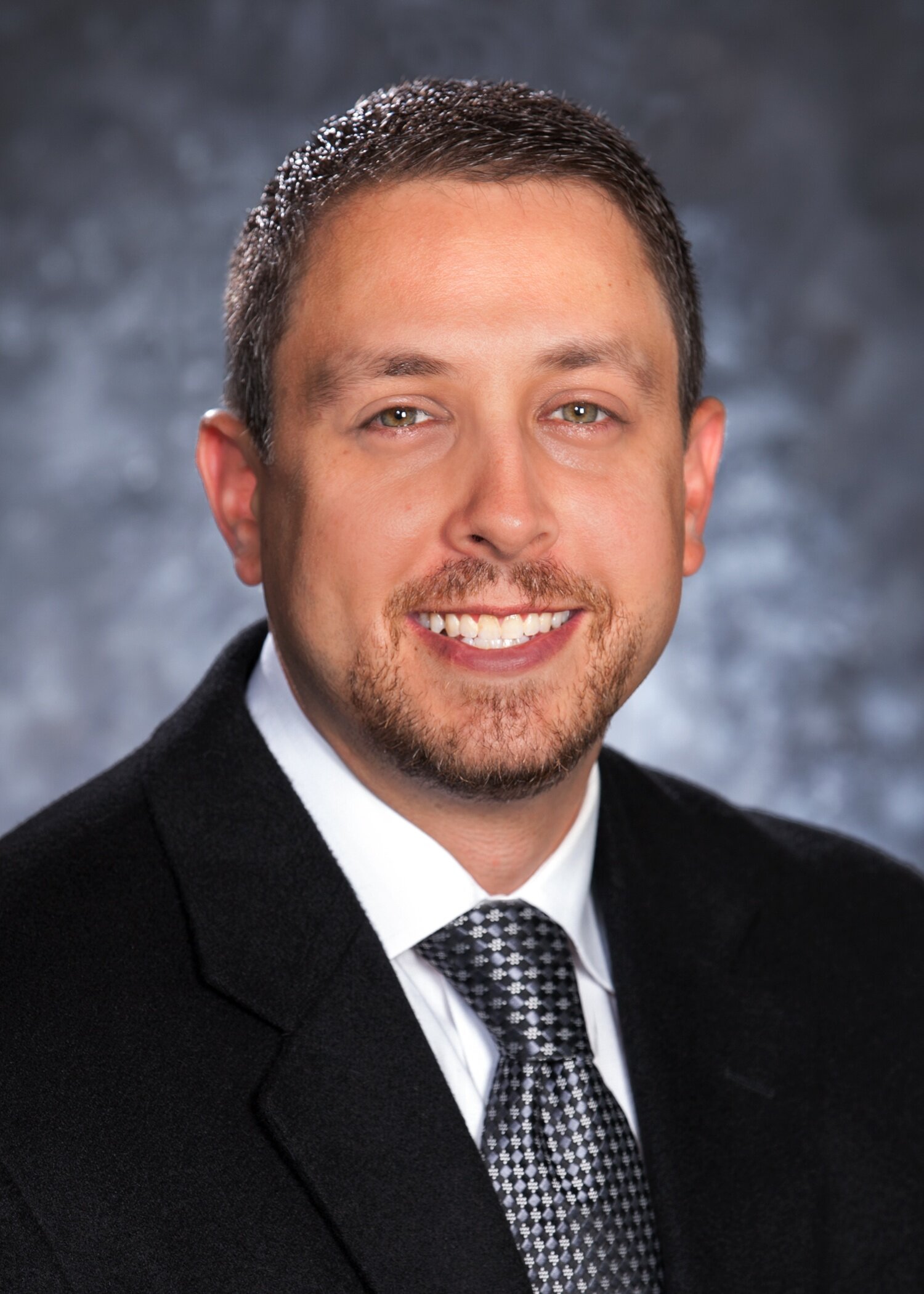
David Kashmer
Dr. David Kashmer is a trauma and acute-care surgeon and a healthcare quality-improvement expert. He holds a Lean Six Sigma master black belt and an MBA in healthcare administration from George Washington University, and he has served as a section chief, chief of surgery, and chief medical officer, as well as on the Board of Examiners for the Malcolm Baldrige National Quality Award.
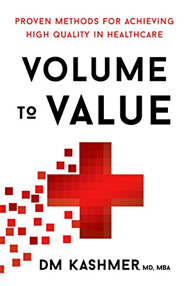
He is the author of Volume to Value: Proven Methods for Achieving High Quality in Healthcare, which introduces physicians and administrators to the standard tools of quality improvement, and The Hidden Curriculum, a guide to the unwritten rules of building a career in medicine, from contracts to salary negotiations.
📚 Books by David Kashmer

Transcript
[0:00:37] Charlie Hoehn: You’re listening to Author Hour, enlightening conversations about books with the authors who wrote them. I’m Charlie Hoehn. Today’s episode is with Dr. David Kashmer, author of Volume to Value. If you work in healthcare, you know that some of the statistics are pretty staggering, each year, thousands of patients in hospitals die or are seriously injured through errors, whether it’s through faulty systems, out of date surgical approaches or medical process failures. But David believes that there is a better way, that there are proven methods and tools that can make our patients safer, our healing procedures more effective, and our costs lower. For anyone who is passionate about improving our hospitals, this episode is for you. And now, here is our conversation with David Kashmer. All right, well David, I want to get in to your personal story and to your journey. What was the problem or the obstacle that you are faced with in healthcare that ultimately laid down the foundation for your work?
[0:02:04] David Kashmer: Charlie, in healthcare, we’re really in our infancy in a lot of ways when it comes to our approach to how to improve things. When I was training in surgery, in general surgery and then later in trauma and acute care surgery, we really focus with trainees a lot on what we could personally influence. It’s very useful to do that because it lets us maximize what we do with our time and learn the most we can. But, you know, that’s not really the way the defects make it to the patient, it’s not just a product of one person or one thing usually; there are multiple causes. We didn’t always do well with that robust view of how things, how defects get to patients. Just experiencing that over my career and sort of seeing healthcare start to develop more and more robust views on how defects get to patients and how to prevent defects, I guess the best way to say it then is that once we acknowledge that, we in healthcare have not used routinely a lot of the tools that help take us to the next level of quality. They exist, they’re out there, they’re using other industries, but whether we have NIH syndrome or “not invented here” syndrome in healthcare or something similar, we don’t take advantage of a lot of the work that’s already been done by the experts. When I trained in lean and sick sigma, I realized, “Oh my gosh, there is this incredible toolset out there. How do we get it to the very busy people in healthcare who are at the tip of the spear helping patients? How do we get those tools in their hands? Because that would be a really powerful combination.” That’s where a lot of my work came from, kind of solving that challenge.
[0:03:59] Charlie Hoehn: That’s a pretty good macro level look at where you were. Can you tell a specific story about patient defects and seeing the problem and having it be right in your face?
[0:04:16] David Kashmer: Well, I can tell a story about excellence actually, which is sort of the flip side. Things that lined up to produce an unexpectedly excellent result and I’ll tell you, I remember distinctly when I was training in transplant surgery, we did a liver transplant on a patient in what is typically considered a very brief amount of time for a liver transplant. We didn’t rush, we did everything the way we normally did it and when we looked up at the clock at the end of the case, we said, “Oh my gosh, how long did that take? Wow, that was really, for a liver transplant, unusually quick.” What it made me do, Charlie, is think back on not what lined up to produce a defect, but what lined up to produce excellence and how is it that we can capture that lightning in a bottle every time to make each event go the best way it can? It's useful, these tools are useful not just to produce defects, which is often how we think of it, but how to make excellence routine and I’ll never forget that case and I’ll never forget how well the patient did afterward and I’ll never forget how it prompted me to look for how to capture lightning in a bottle and generalize that excellence.
[0:05:31] Charlie Hoehn: In that particular case, how much faster are we talking about your services were? And did you pause and think, “Wow, did we just rush through that? Did we miss anything?”
[0:05:45] David Kashmer: Yeah, that’s a great question. First, I want to be really clear that I’m not chalking this up to incredible ability on my part. I was fortunate to be part of an excellent team with an excellent lead surgeon. I was not the lead surgeon and the excellent lead surgeon who is incredibly talented was a large portion of why this case went so well and so rapidly but there were many other things that had to line up. Of course, the patient was very ill to need a liver transplant but in the set of patients who need a liver transplant, this one was nowhere near the most ill. Part of it were patient factors, part of it were the donor factors, the way the liver was, what it was, how we set it up, these scrub nurse who had done so many of this with us and was right on top of anything and everything instead of a fill in scrub nurse, which happens sometimes. So I remember very distinctly and when you ask how much faster, liver transplants depending on the technique and everything, take a median of probably right about four hours, three hours, 50 minutes. This was much faster, more than an hour faster than what we typically see and yes, we had done all the connections, all the anastomosis, we’ve done everything we needed to do but it was really, and again, we hadn’t rushed but it was markedly faster. I’ll never forget that story.
[0:07:15] Charlie Hoehn: Let’s say I am listening to this podcast now and I’m like, “I don’t know anything about healthcare, I’m not in the healthcare field.” Why does this matter to me, personally? Let’s say I get a transplant someday and I’m like, “I don’t care if it takes them four hours, I’m going to be unconscious.”
[0:07:34] David Kashmer: Yeah. Well sometimes, Charlie, we’re all patients and, you know, myself included, when I’m a patient, I want to know not only that the team is avoiding defects for me and doing all the things that they can do to lessen the probability of something not going right, I want to know that they’ve done what they can to make everything go as right as possible. Like we said before Charlie, we don’t rush and didn’t rush doing the case for this patient but typically, less time being under anesthesia, having a case that is more brief, that often means that we’re doing well or that the case went easily and easy is good, you want your surgeons to have an easy time of it. That’s not true for everything; faster doesn’t always mean better. It can be that a case is difficult for one reason or another, how we’re built or something like that. It takes longer. I’m not here to say Charlie that having a case that’s shorter causes everything to go better, I’m not. I’m saying that it may be associated with things going better because it was an easier case. The bottom line is, the reason we care is because as patients, when we’re all patients in the system, we want to know that the healthcare system is being aligned in a way that it helps us get the best outcome we can from what’s about to happen to us. That’s why these tools are important.
[0:09:02] Charlie Hoehn: Let’s talk about your book, Volume to Value. If you had to pick the number one idea or the best story from your book that listeners can take away from this episode, what would it be?
[0:09:17] David Kashmer: Healthcare is a transition, Charlie, and that transition means it needs to be better than ever and we in healthcare need to be better than ever at promoting quality and value. Value for our patients and when we’re patients and quality in the outcomes we see. Because there’s less margined for waste. Hospitals at the macro level and healthcare systems are now being reimbursed, paid for the work they do differently. I’d say the number one take home point is, it’s time to use these advanced quality tools that already exist because waste is less tolerated than ever with the system that is here already and what’s coming down the pike and just as importantly, even if reimbursement weren’t going that way, more importantly, it’s the right thing to do as patients, when we’re patients, to try to make things go the best they can for each one of us, every time we’re up to bat in the healthcare system. I’d say that’s the main idea and the stories in the book really point to that.
[0:10:28] Charlie Hoehn: Just to kind of summarize, the main take away from the book is healthcare is in a transition and now is the time to use the tools available to us to improve the system?
[0:10:40] David Kashmer: That’s right. The book gives specific examples about what those tools are, how we’ve applied them before in different systems I’ve worked in and kind of what we’ve seen in doing that.
[0:10:51] Charlie Hoehn: Can you break down some of the tools, I know you mentioned sigma six, is that right?
[0:10:56] David Kashmer: Yes, six sigma is just a main – yeah. It’s just a name for a toolset that Motorola and other companies brought together. Basically, they’re well-known statistical tools that are strung together in a certain way, to help us get a deeper and more rich understanding of what we need to do to improve a system and to let us know when we’re doing better after we’ve made changes. It takes it from the realm of, you know, very focused on individuals and very rudimentary understanding of what makes a defect to a much more valuable and larger understanding of how to align things so that they go right, so the system goes right. That set of tools is called Six Sigma. There are other toolsets though too. There’s a set called Lean, and Lean is a term for some other tools that are used to also reduce defects and to promote flow and to reduce waste and to do many of the other things that we’re talking about. So those two sets, Charlie, overlap. They’re sometimes taught as Lean Six Sigma, which is kind of putting them together and the book actually goes through and references specific tools used by that system and how they’ve been applied to hospitals before, so that people understand that these do work, we can use them and they work to great effect for healthcare systems.
[0:12:26] Charlie Hoehn: Yeah, tell me a few stories about hospitals that have used them and what their results were before and after.
[0:12:34] David Kashmer: Yeah, in my career so far, I’ve taken roles that are often turnarounds or startups and I’ve done that because it let me learn as an individual to use all the different kind of tools that I have and to kind of explore how they work best. I’ve done that throughout my career and I’ve been very fortunate that some of the turnarounds and startups and difficult situations have gone really well. The reason, the ones that have done well have done so well, there are many reasons but one of them is this tools. That reason is for example, we had a center that was a trauma center, Charlie, and it had a hard time having enough patients come to it, it had quality problems also, lots of different things and one of the interesting things that started to happen as it improved and got busier is it got so busy so fast that we weren’t able to help all the patients we wanted to. We had to say, “We can’t accept those patients because we’re filled up.” So we started to look Charlie at a very complex problem that many hospitals have which involves what’s called throughput, outpatients come in the front door until how they eventually exit the hospital doing better and they’re ready to go home or to their next destination. These are super complex, because everybody has an opinion on what’s doing it and there are lots of different measures that actually don’t work really well typically and don’t capture the problem and then, if you can’t sort of measure it, it’s really hard to fix it. We got a group together to look at how we could improve this to allow us to take care of more patients when they came in the front door. What we used, one of the tools we used is called a fish bone diagram. It looks like a fish and it has categories that contribute to the head of the fish and the head of the fish is the problem you have. In our case, the problem we had was called “time on diversion”, when we had to divert patients away. We all sat around and we thought about as a group with different members, some from the emergency department, some from the hospital floors. All different, what are called stakeholders. We had opinions about what and each of this categories was making us have this diversion time? And this difficulty getting patients through the hospital. We felt pretty good about that but you know, Charlie, the thing is, those are all our opinions and we each saw just one small part of this picture but the first tool at least, this fishbone diagram helped to see kind of what we all thought. Then next, we collected data on each of these things. On each element of our opinion. We used one of the tools called a multiple regression to figure out Charlie, which thing did impact significantly this amount of time we had in the hospital, this time on diversion where we couldn’t take new patients. We got out of just the realm of our opinion and really using these tools said, Oh it’s that thing and it’s that element and it’s that element.” It turns out, some of the elements we thought were important like which ED doctor was on that day. That did not predict at all. Whether we were going to be on diversion. It was great because it took some of our colleagues out of the very personal focus like we talked about earlier. It showed us that that didn’t really predict how long we were going to be on diversion but what did in our case was how many beds we had staffed in our intensive care unit. Meaning, how many were open and how many had nurses to take care of patients for those beds. We discovered that that was very correlated, that was very associated with how long and whether we were on diversion. We fixed that. We opened more ICU beds, we added staffs so that we could cover the beds we had and suddenly, Charlie, we did not have diversion anymore for until the time that I left the hospital which was more than a year later. That’s just one story about how a team got together, used, the tools and how it showed us something we really wouldn’t have expected and how adjusting it made things much better.
[0:17:00] Charlie Hoehn: Author Hour is sponsored by Book in a Box. For anyone who has a great idea for a book but doesn’t have the time or patience to sit down and type it out, book in a box has created a new way to help you painlessly publish your book. Instead of sitting at a computer and typing for a year, hoping everything works out, book in a box takes you through a structured interview process that gets your ideas out of your head and into a book in just a few months. To learn more, head over to bookinabox.com and fill out the form at the bottom of the page. Don’t let another year go by where you put off writing your book. That’s pretty remarkable. I’m curious, what do you think would happen if more healthcare professionals implemented these systems? There’s this transition you said going on in healthcare right now, what are the effects when they start using this tools? How does it affect the patients on the other end?
[0:18:04] David Kashmer: Charlie, the patients do better. We get higher quality care for patients and we get more valuable care because it turns out that when you don’t have as many problems or defects, you don’t spend as much waste, you don’t waste as many resources and sometimes that’s money but sometimes it’s other resources like equipment and other things. We don’t see as much waste and we see better outcomes and it turns out that repeat throughout quality improvement projects done with lean and six sigma, you find out after a while that the least expensive care is the highest quality care. It really works for everybody involved. Providing better quality, really decreases waste and expenditure. It’s great for everybody.
[0:18:52] Charlie Hoehn: David, I’m curious, why do you care so much about this versus an average doctor who might just be fine with the status quo?
[0:19:01] David Kashmer: Well I’m not sure, it’s hard for me to speak to the average doctor, I’ve really found physicians care a lot.
[0:19:06] Charlie Hoehn: Well let me phrase it differently then. A doctor who feels that the way things are currently done is good enough.
[0:19:14] David Kashmer: I think the only difference really, Charlie, is knowledge of the tools which is why it’s so important to me to spread these and talk about them. I think it’s just an education thing, I think many physicians now feel there’s something better and what I found really interesting is that throughout healthcare, we’re often rebuilding the wheel and when I say the wheel, I mean these quality tools that already exist. We see papers published in our journals that evolve a new tool specific to healthcare to focus on quality and you look at it and you say, “Well that already exists, that’s already a well-known tool in quality improvement, I’ve seen it several times.”
[0:19:55] Charlie Hoehn: Can you give an example?
[0:19:57] David Kashmer: Yeah, there was recently a really interesting article in the journal of the American Medical Association that talked about joint replacements. It broke up by each physician, orthopedic surgeon ABCD, how much their average joint replacement cost. It broke it down along several categories. Time in the operating room, different elements, equipment used, et cetera. But it looks very similar to some of the tools used in statistical process control. Except it suffered from weaknesses that the more advanced tool didn’t have and the weaknesses were, it broke it up by physician instead of keeping the whole group together and that’s very challenging because one physician makes sicker patients who need more work done on their joints. So breaking it up by physician or any person in the system, something we typically try not to do but this tool did it and it also played to just the averages, the average times and average – which ignored the true full house of variation, the robustness, the distribution, the width of how long it took one surgeon. It would ignore let’s say surgeon A had both the fastest cases and the longest. But surgeon B had cases that were – he had less of the very fast cases and less of the very long cases and on average was just a little faster than surgeon A for example or use less equipment or whatever you want and, Charlie, the problem is, this tool looked similar to what we teach about in quality improvement for some different quality end points but it suffered from a lot of weaknesses that we typically teach people not to do. It’s kind of like healthcare casting around in the dark for something to represent. Meaningful differences between surgeons instead of using tools that already exist to focus on system. So we see that a lot and to get back to your question from before, I think as physicians and people in healthcare who are non-physician care givers or nursing colleagues or respiratory, knowledge of these tools brings people together and gives us a common playbook that already exists instead of healthcare trying to reinvent its own playbook. It’s a long winded answer but I think that’s why it is so important to focus on what’s already done.
[0:22:32] Charlie Hoehn: Right, so tell us about the people who you’ve used your playbook. What have been some of their results either successes or missteps in using some of the things that are taught in Volume to Value?
[0:22:49] David Kashmer: Well I’m proud to say that I know of at least one colleague who uses the tools listed in volume to value and has gone beyond that to get extra training in lean and six sigma to the level of black belt, which is one of the degrees that you are able to obtain in that process and I’ve just been so happy to hear that in her practice at her hospital and even on her approach on a day to day basis using some of the tools listed in the book like the failure mode effects analysis, capturing data. Both discrete and continuous data, two data types during rounds just in doing those straight forward things, she’s been able to make meaningful improvements in her practice and for her patients. She’s seen really great results by what she describes and that’s very fulfilling, because the point of this to me is I’m very fortunate and proud to help the patient, Charlie, who comes in and who’s injured and we get to operate on them or fix them up otherwise and they feel better and that’s very fulfilling. It’s also very fulfilling to be able to help patients who I’ll never see and who I’ll never shake their hand but by getting this information out there to help improve care for them to me is incredibly fulfilling and so when I hear a story like that, it’s just great.
[0:24:16] Charlie Hoehn: And when you say meaningful results, do you have some specifics from her?
[0:24:22] David Kashmer: Yes, so there are so many things that we do as physicians. We have a lot of our time spent charting, writing things down, and less with patients. She’s been able to decrease the amount of time that she spends charting on patients, writing everything up with no change in the quality of what she records. So that’s freed her up to spend more time with patients, which is awesome. It’s helped her when she reviews cases for her subspecialty. Because it brings a different way of looking at the cases beyond just the people involved to the system elements, the things that line up to make a defect along these sort of six known categories. So in terms of tangible results, yeah basically she’s been able to improve the time spent with patients and adding value for the patient and decrease wasted time and motion on her rounds and that’s been great.
[0:25:28] Charlie Hoehn: That is great, very nice. So what does the rest of the year look like for you David? What are you going to be doing with this book? Are you doing speaking, being on panels, that sort of thing?
[0:25:39] David Kashmer: I’m an invited speaker for a couple of quality conferences throughout the country. I usually will go to speak at Minitab, although I am not sponsored by them or anything like that. But they’re a really well-known company that does the program that a lot of us use for the tools to actually crunch the number and they connected to me more than two years ago now and usually invite me to come out and speak. So that’s on the calendar. There is another quality conference on the calendar around the same time and those are the ones that come to the top of my head Charlie for the next month or two. So I think there are two on calendar there, the rest of the year I am not so sure about it. I’d have to look at the calendar.
[0:26:23] Charlie Hoehn: Fair enough, if you are going to write a follow up book, what would that book be?
[0:26:28] David Kashmer: Charlie right now, we have been in a lot of uncertainty for healthcare for a while but we had the sense that we knew the direction of the Department of Health and Human Services was going in because we knew how they were changing reimbursement, etcetera. But now after the presidential election and with Tom Price heading up Health and Human Services and we’re kind of in a holding pattern. Everyone still thinks everyone is still going in the value based reimbursement direction and honestly like we said, Charlie, even if they are not going in that direction it’s still the right thing to do for patients. To try and provide the highest quality and most valuable care we can but to answer your question, if I were going to write a follow up book about how quality and reimbursement are tied and what tools we can use, I’d wait and see until after the Trump and Tom Price bill gets through the senate. But I’ll tell you what, Charlie, one of the other sides I have seen in healthcare is how culture impacts everything we do. You and I have talked today about the hard core tools to improve quality but believe it or not, even though we know these exists and we know they work well sometimes the culture of the hospital, really they’re not palatable for different reasons. They’re just not palatable, they’re not used, they are not believed in, lots of different things. So I would write a follow on book about techniques to align culture.
[0:28:09] Charlie Hoehn: Many thanks to David Kashmer for being on the show. You can buy his book, Volume to Value, on Amazon.com. What did you learn in this episode? Let us know by leaving a review on iTunes. You can follow us at Facebook.com/authorhour or on Twitter @authorhourpod. Thanks again for listening to Author Hour, enlightening conversations about book with the authors who wrote them. We’ll see you next time.
Want to Write Your Own Book?
Scribe has helped over 2,000 authors turn their expertise into published books.
Schedule a Free Consult