David Smith: How Successful Teams Work
Read the full transcript
David Smith
David is a fearless entrepreneur, attorney, and real estate agent. At thirty-five, he became a developer, co-owner, and manager of The Gatesworth, McKnight Place, and Parc Provence, senior living communities nationally recognized for innovation and quality services. David spent decades studying the senior housing sales process at his own properties as well as dozens of third-party consulting sites. In 2014, he co-founded Sherpa, a SaaS-based CRM and sales enablement platform that brings empathy and the science of Prospect-Centered Selling® to life.
David is passionate about teaching, training, and mentoring colleagues, including hands-on sessions in the sales office to ensure his approach stays fresh, effective, and compassionate.
📚 Books by David Smith
Transcript
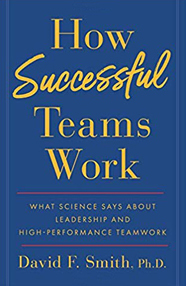
[0:00:28] CH: What’s up everybody? It’s Charlie Hoehn, the host of Author Hour where I interview authors about their new books. Today’s episode is with Dr. David Smith. He’s the author of How Successful Teams Work. David earned his PhD in organizational leadership and he even developed his own leadership program and in this episode, we talk about how in a lot of business settings, many managers and their employees sort of ignore the fact that one on one is where leadership magic really happens. David breaks down the science of leadership, effective leadership in this episode and how to build these great relationships that produce incredible results for your team. Whether you’re a team leader looking for better results, or you’re a team member who is hoping to improve your work life, this is the episode for you. Now, here is our conversation with David Smith.
[0:01:43] David Smith: I’m 61 years old, got my PhD three years ago, started my PhD studies about eight years ago which leads to the question that you asked, was, what happened about eight years ago, well, we had a financial crisis and the financial crisis affected my career because the company, a large insurance company I was working for had major problems and management shifts all over the place and I started thinking about my managers over my career because I had like three within six months and all three were very different. My position in the company is very low on the totem pole, highly compensated but in sales, you get highly compensated but you have no managerial authority whatsoever and that kind of thing. I started looking at my bosses and also, with the financial crisis, it turns out I had a little more time on my hands and so I started taking my PhD classes for the heck of it. Really, the answer to your question is what started me is as I started thinking about why are my bosses different? I looked back 32 years previously and they were all different. That difference is how did it affect me and it had actually make me think about leaving my company and so forth. That’s really the essence of it is curiosity about the – as my book title is, the science behind that leadership, what was the difference, why were people different and I didn’t have the academic background to understand it. I certainly is smart enough to figure out they were different and how they were different but why, what was the difference in them that affected the difference in me and affected – actually, my job performance.
[0:03:22] CH: What did you find? What was the secret to their successful team work creating abilities?
[0:03:28] David Smith: That is a great question. It actually took about probably four years into my studies and this was graduate school where you don’t have – as a distance learning, North Central University out of San Diego, which is not distance to me but still, I didn’t meet in classes and didn’t have professors, we had mentors that were PhD’s. I just basically do a lot of reading, you read all the curvy books, the academic books, the text books, papers and you write papers so you read and write and so, it was about four years of just this back and forth of reading information, learning information, distilling it that I finally came across this academic theory called leader, member exchange. Spent around a long time and it’s been studied by social scientist quite a lot. What I read about leader member exchange, it just said, “here is what you’ve been looking for. Now, you need to study it in depth and understand it.” That’s where I got to after about four years of my studies.
[0:04:38] CH: Tell me about leader member exchange. I feel like I might be able to guess the definition but then again, I’ve never heard this phrase so break it down for me.
[0:04:47] David Smith: That’s the challenge. Actually, it’s an incredibly important point to understand that it is called leader member exchange because there’s so many self-help leadership books or management books that touch on the subject but never call it what it is and if you don’t call it what it is, you can’t get to the essence of how to use it. Leader, member exchange, let’s break it down, it’s an exchange which is an exchange between two people. It’s what’s called a social exchange which means, if I’m the leader and you’re my team member, we come to an agreement by exchanging what I will – as a leader, want from you and what I will do for you if you, as the team member agree to do what needs to get done. You would think it’s almost like an employment contract and it is, except an employment contract, it’s just piece of paper. The leader member exchange is when a team leader and a team member actually create an agreement, whether it’s explicit, a lot of talking or implicit, a lot of understanding or a combination. A brand new team member and a team leader, we’ll have a very – what’s called, low quality. Now, that’s not necessarily negative. Just means that’s how social scientist measure it. Quality being like zero, up to five being great. When you and a team member and the team leader get together, as they become – As they come to understand each other better, about the job, not necessarily about being best buddies. That exchange relationship becomes higher and higher quality which leads to many things especially getting the job done that the leader needs getting done. We start with the word, exchange. It’s an agreement and then you had leader and member and that’s the important thing is it’s between one person, the leader and one person, the team member. Not a group of team members and not a bunch of leaders but it’s an exchange between two specific individuals. When you understand that that is what we’re talking about, you then do not start talking about group meetings, you don’t start talking about how organizations are run. You talk about how a team leader and a team member work together to get whatever needs getting done, done. That is so key that when I put on seminars and workshops and I’m seeing the glaze in people’s eyes, they don’t quite get it. I say, “okay, tell me about your boss” or if it’s a bunch of leaders, “tell me about how you get your group to do things.” When they start talking, they start talking about well, “we have meetings,” I said wait. When you have a group meeting, you’re trying to – say, there’s 10 people in your group. Are you trying to get 10 people to do the same thing? Well, sort of, what you’re really – What you’re really trying to do, I’ll just cut to the chase. You know, trying to pull out teeth. What you’re really doing is trying to get 10 individuals to do individual things that add up to a group activity. That’s what leader member exchange is, when I read about that and understood the real definition, I said, that’s exactly it, I had all these bosses and they each treated me differently. Me, David. Differently than each other than the other bosses and it’s how they treated me and I reacted to them and how we did the job together that made the difference in how I felt about my job and I how I actually accomplished my job, given external environment as well.
[0:08:34] CH: Yeah. That makes perfect sense and I’ve got a couple of questions off of that, not to back track us a little bit but I am curious, you’ve touched upon how leadership is discussed generally how other books might cover it. You got to start talking about how meetings are operated now and so forth. What really makes your book different? Because there are a lot of leadership books out there. What makes your unique?
[0:09:03] David Smith: Well, I know it’s unique because my dissertation work was scientifically based to show the relationship between how a leader acts in five specific ways, how that affects the leader/member exchange and how that affects outcomes. Outcomes being, you know, did the job get done, did people quit, did whatever an outcome is and since my dissertation is the first to take the various elements and scientifically prove the relationship versus, “hey, that makes sense but no, here is the science that says it makes sense.” It has to be unique. No one else has done that.
[0:09:45] CH: Got it, excellent. Let’s dive into the behaviors for a team leader, you mentioned the five behaviors. Let’s dig in to those.
[0:09:57] David Smith: Similar to several books, Covey’s 7 Habits of Successful People or The One Minute Manager or Daniel Pink’s Drive. The important thing is, how do you act. Not how you think or you know, how smart you are or whatever. It’s really how, you as a team leader behave. What are your actions towards your team member in five specific areas? Just like the 7 Habits of Successful People. If you, as a leader, make it a habit and this is a habit forming exercise. If you make it a habit to work in these five ways, you will affect positively, your leader member exchange quality which then affects positively the things you want to get done. Those five are inclusion, respect, rewarding, improvement and modeling and in my book, I go through in general, how they all fit but then I go into specifics of all five and how you, as a leader can create habits that include those five behaviors consistently in a way that will make your team leadership of that individual team member and thus, if you do it with everyone, all of them, Your whole group, how it makes that quality better for you having better results for your team.
[0:11:26] CH: Excellent, got it. All right. Do we want to dive deeper into any of these specific behaviors. Which are the five do you really see as maybe, either the most heavily weighted or the one that leaders tend to lack?
[0:11:44] David Smith: Excellent question. The real answer of course is by the book. It’s a good read I hope.
[0:11:52] CH: We could rename the podcast to buy the book, yeah.
[0:11:56] David Smith: I always start with inclusion, when I start talking and I could have put this in any order. By the way, when you get into the science of literature, those five behaviors are named differently but my own research has changed the names to be more descriptive of the actual behavior. What inclusion is, it’s best if I just gave you an example. Let’s say the big boss hands down your leader, a five million dollar goal, sales goal. As background, I’ve been in sales for 40 years, that’s how I relate. I think this book is probably best for sales management, sales leadership but it applies across the board but certainly the personal experience is in sales. Your leader has five team members and he’s got a five million dollar goal. Your leader could say, “okay, I can do the math, a five million divided by five, hey, that’s a million dollars each.” Well, if your leader just announced that at a meeting. There’s sort of two possible or even three possible reactions of each individual team member. One reaction is “hey, a million, easy man. I did two million last year, I’m cool and I’m going to Vegas for the conference.” Let’s go to the opposite. Brand new person, had struggles over the last six months. “A million? Man, I don’t even know if I could do 600,000. I’m not going to Vegas and have fun at the conference," you know? Or in between, which is well, “I think I can make it, I’m not too sure,” that kind of thing. That was non-inclusive, that was a leader being non-inclusive. Inclusive would have looked like this. Okay, I got a five million dollar goal. I think what I’m going to do is call each team member in one at a time and tell them this. “I have a five million dollar goal as a group. What do you think you could do of that five million?” Then stop and listen. I think that’s really enough as an example to say, can you think about how each team member now will feel differently about the five million dollar goal instead of just being handed a million of it, we now have the one that was really happy. "Hey, I think I could do two million” and then when we get into the rewarding behavior, the leader might say “hey, if you do two million, I will give you an extra 10%.” Now we really got something going on. Then let’s take the person that says, man, I don’t’ think I could do – I can only do 600,000. Well, that little thing called meeting one on one and saying, “here’s the five million, what do you think you can do, I would like to include you in my thought process because it affects your job. It affects how you feel about me, it affects how you feel about the company, it affects how you feel about drinking heavily.” I’m serious about the drinking heavily because that’s one of the negative outcomes of bad – of low quality LMX is if you have low quality, people sometimes like, “I don’t care, I just go have a drink,” whatever. You know, I’m not making fun of this at all. Stealing and showing up light and all these things that are negative behaviors. Here now. Now the leader says, “I could have just given you a million but how would you have felt about that?” “Man, I would have felt like quitting.” “Well, okay, that’s not good. Because we just hired you and we think you’re really good. How about this? Why don’t we make your 600,000, I’ll get Charlie over there to pickup the slack because I know he could do it, he’s been around a long time. That way, between the two of you, I’ll be okay.” “You think you could do 600,000? Yeah.” “Boy, do I feel a whole lot better than if you just told me I had to do a million." Now, this sounds like a simple example. Okay, in 40 years, never had that conversation. Before it was announced, with the team goal was, what my manager, not leader, my manager felt my goal should be. Then, we had a discussion. Yeah, he’d already created – he or she. Actually, it was always been a he and his financial services unfortunately, there’s not a lot of women leaders, there should be a whole lot more.
[0:16:08] CH: Yeah, not in the United States.
[0:16:11] David Smith: That’s one of the things that got me about leader member exchange and about the behaviors is like, if it were the last 40 years, I’d had leaders that had read my book. If we could do a way back machine then my career probably had been a whole lot happier and I had happy career, very successful but geez, every once in a while, I had team leaders that were more inclusive, more respectful, understood those kinds of things. Never was I included in ahead of time. What’s my sales goal.
[0:16:46] CH: That’s pretty staggering to think about, that there’s not a lot of listening or caring about the inputs of the really smart people around these leaders.
[0:16:57] David Smith: They’re actually – I had to come up with this example because I wanted to prove a point. There are actually on other areas in my work, a lot of autonomy, I had one leader who is great. He said, “David, okay. I agree,” he did say, “here’s your goal.” Then, foreshadow, use the improvement behavior to say, “is there anything you need, you to improve, our organization to improve, to be better at whatever that will help you get to that goal?” When we talk about the math of here’s your goal, that’s strictly MBA management style stuff and not leadership. My book says, everything is about leadership. Everything you do, you should be thinking about how does it affect my relationship between me as the team leader and my team members each specifically, individually. If you don’t think that way, if you don’t make it a habit, you make them a stake of reverting to none leadership behavior in certain circumstances which does not have necessarily a positive outcome.
[0:18:08] CH: Let’s shift gears to the team members now. You talk about in your book, the themes for team members. Bring me through those, let’s start with understanding what your leader needs.
[0:18:22] David Smith: Again, a little context. So many leadership books are about how a leader is, what they do, how they act, how they look, do they have good hair, are they tall? Whatever it is. It’s about the leader and I guess if you say it’s a leadership book, it’s about the leader but when you get down to what excited me, leader, member exchange. Leadership isn’t a one on one sport. It’s two people, you know, tangoing. It’s not just one person, you can have a charismatic leader in front of a large group, getting the group to act or whatever but that’s not the kind of leadership I’m talking about. There’s certainly a place for that. In my book, actually, when we were starting out this whole process of riding, when I was starting out the whole process of writing the book, of thinking, what about – I started with all the chapters on leadership and I said, “I’m missing something here. I have got to talk about the follower, the supervisee. The worker bee, the whatever. Team member.” Because they are part of the die ad, we call it. The two, the leader and member because leader member exchange. We talk about the themes, the reason I had to call them themes is there’s been so little study on it which is actually what I’m studying now in my research role. What is the scientific basis of how a team member should act and behave? One of the big ones is, understanding why your team leader is asking you to do something. Because I’ve had so many meetings where you know, we’re sales people, right? Independent and we can sell refrigerators to eskimo’s and that kind of thing, whatever it is. We’re independent and so many of my roles have been like, just go out and do it and office out of your home and travel, your territory and call who you want to call. Then you get your team leader saying something like, “you got to get your expense reports in. You got to get your travel approved ahead of time. You got to this, you got to.” We, as a group would look at each other like, why? That’s the important thing is why. If it’s important to your team leader, don’t you think it should be important to you? If you’ve got what’s called a high quality leader, member exchange relationship with your leader? Then that means, you should care why it’s important to them. An example, we said why, why do we need to get our expense reports in within 90 days, we’re putting it all on our own credit cards, it’s our money, I mean, whatever. You know, if we’re going to do the float, that’s our problem. This, I finally got – our group finally got a real answer which is we are a public company, we report every 90 days, we have 5,000 people on expense reports. If all 5,000 were 95 days late and then put them all in, it would really screw up our finances for the next quarter. It shifts expenses from one quarter to the other. That can affect all of our reporting to our shareholders. Because of that, my boss was told by his boss who was told by her boss to get the expense reports in within 90 days. That’s why it is important to me. Enough said? Okay, I get it. The, I get it is really the answer. I get it why it’s important to you, okay, I’ll do it. I could list many more things but the expense you part one is the one that’s biggest on my mind because sales people hate doing expense reports.
[0:22:04] CH: So let me push back a little bit because a lot of leaders I would imagine might object and say, “I’ve already got so much on my plate as it is to have these conversations with my team members. It would take forever” or not everybody needs to know the little details, what would you say back to them?
[0:22:26] David Smith: Oh I like the way you ordered the question. Not everyone needs to know all the details. Well, what about the one person who does need to know all the details? Because they are so analytical and so sensitive and so whatever but they are still a heck of a team member otherwise you would have fired them a long time ago. They need it, you don’t necessarily know right off the bat which team members need what but if you are a good leader you will start to understand who hangs out after a conference meeting and after a meeting, a group meeting and asks the questions. Many times it’s the introverted employee which is a whole another area of study that is getting a lot of attention now and so the way you worded it is not everyone needs to. Okay, good. Fine, don’t. Spend like four seconds with a person who doesn’t need it but spend as much time as necessary to maintain that relationship you’ve got with that team member because they need it.
[0:23:24] CH: One of the chapters that stood out to me in the team member section is on avoiding negative behaviors. Talk to me about this, how do you avoid negative behaviors?
[0:23:35] David Smith: That’s the one I had a lot of fun with because I have so many memories. You could call it pet peeves of a team leader. It could may not even be a pet peeve, it maybe just something really, really important to them. Avoiding a negative behavior is a little bit different than doing the positive behaviors. A positive behavior is getting your expense reports in time and negative behaviors, not getting them in time but it is really, there is many, many other things. And the important thing is to understand what those many things are that you might think are okay but your team leader either explicitly like why do you do that or implicitly, you get a memo that goes or beat around the bush about something and so an example there in my career was at one point, I actually lived in Hawaii and I know a lot of financial advisers in Hawaii and my new job that I just changed to was did not include Hawaii as a territory. It was California and I asked my bosses and I later said, “Who is going to handle Hawaii? I see no one assigned there” and they said, “Well we’ve got to assign it to somebody because we’ve got to show coverage” and so and so, “Let me go ask my boss” and he went to go ask his boss and the boss came back, it went on for a couple of weeks and we’re having a celebration. A group celebration and my boss comes over to me and says, “David I just got you assigned to Hawaii”. And I said, “All right! This is great!” because I know everybody there and I like Hawaii and believe me, sales people going to Hawaii is generally not a vacation. You are working but still I like it there and I have friends and you are in Hawaii but I live in San Diego.
[0:25:19] CH: You’re in Hawaii, yeah.
[0:25:21] David Smith: You know like I am going to Hawaii in February mostly because my aunt wants to go so like okay, anyway so then he says, “But my boss doesn’t want you to going there and so don’t go there” I said, “Why?” he said, “Listen…” and so I of course being the independent little cuss that I am went there used points so that I didn’t have to do expenses because even if I use my own money I was supposed to report and things like that and my boss was furious. I wonder why and you know that didn’t help our relationship than to beat the dead horse. It did not help our leader member exchange relationship quality. It went down. He said, “Why did you do that for?” and I said, “Hey it is my own money” he said, “Yeah but now my boss is mad at me” and actually if he finds out he will be mad at me we don’t know if we ever found out and so I did not – this is going to be a triple negative maybe, I did not avoid a negative behavior. Which was the independent decision to go to Hawaii, it was the behavior I should have said and that was negative and I should have told myself, “Well that is stupid. I am just going to make him mad” and I actually probably didn’t even think of that it’s just that I want to do it and there is many things when all you’ve got to do was listen to your boss. You’ve got to listen to your leader say things like you know I don’t want it. Here is a good example. Our sales strategy is moving from this shotgun approach to the riffle approach. I always love that like okay and the shotgun approach is seeing lots of people and seeing what works, all right? And the riffle approach is identify your 10 top people and spend most of your time with them. Now the behavior, the positive behavior is to identify 10 people and just see them. So dutifully, you write down 10 people and you put down a report and then your boss takes a look at your actual activity which we got this wonderful sales force reports that show where you have been. And if you have told the truth he knows where you have been and negative behavior is also lying on sales force anyway and then he says, “David you know here’s your ten, you saw them 30% of your time. You saw a bunch of people 70% of the time. You did not do what you are supposed to do, why not?” okay our relationship quality just went down and I’ve got all my own reasons but that is not the point. The point isn’t that you’re right, you might be right. The point is if you can avoid the negative behavior and still be right that’s a win. So find a way to avoid the negative, accentuate the positive and circling back to the behavior called inclusion, if me and my boss had sat down and he said, “Here is why we are doing the riffle approach, what do you think?” and we had this discussion ahead of time we might have avoided the blow up at the end because the reasons were still the same but now my boss is a little bit upset with me. And isn’t going to listen to reason, I might have if ahead of time we had this discussion since I did have a very good reason according to me.
[0:28:38] CH: David is your book primarily for leaders or is it for both leaders and members to help them be better at their roles?
[0:28:46] David Smith: There is a couple of answers to that. It is for both and it is for both for a couple of reasons. One is most people in their roles are both a leader and a member. So my boss has a boss so he is a leader of me and a member of his leader’s group right? That is hierarchy so all hierarchies will let you formally. Are you in a leader-member role both, depending and then informally and an informal example is as I said my job was generally at the bottom of the totem pole. And I was talking about hierarchy, in a hierarchical way, I was at the bottom of the totem pole but I still had informal leadership roles with several people. For example, I am out there running around we are called the external wholesaler and back in Nashville, we might have an internal wholesaler at the home office who sits on the phone all day and that kind of stuff and their job is to support me and informally, I need to lead that my now team member. My internal wholesaler in a way that accomplishes my goals and so I need to be inclusive with my internal wholesaler. You know, “Jackie I need you to make 14 calls this week to this group of people” you know how is that going to affect your job?” “Oh my god, you’re asking me how it’s going to affect my job? Well I’m going to tell you how that’s going to affect my job, we’re only 70% staffing right now because staffing are either sick, on vacation or at home with a sick kid and so I don’t think I can do this 14 calls.” “Okay, I got it. I understand that” see now we are working on a relationship. So Jackie and I, we’re having this conversation and I need 14 calls but now I am thinking, “Okay maybe I can’t get 14 calls. What should be the goals be?” and so on. Alternatively Jackie might say, “Yeah okay, I got it. You really needed this 14 calls. I understand why, I’ll figure it out” or I might say, “Let me call your boss and say what’s going on, it is the first time I heard that you are only at 70% staffing”. And this is actually a true story which I then told this story unfortunately in front of a very, very big boss. He said, “Tell me more about that” and I think I think I threw somebody under the boss but that’s all right. I answer questions when asked. So that’s why for those two reasons the book is for both almost consistently that you are in a position of being a team member and a team leader, either formally or informally and people who want to become team leaders I think can benefit from this book. By seeing what I am saying about leadership and I think team leaders can benefit by what I am saying about team members and get the idea. I think we started this thing on this, get this idea about one on one, you and your team member and so you’ve got to understand what their thinking and they need to understand what you’re thinking and so this is not a leadership book for leaders. It is a leadership book for teams, successful teams. How Successful Teams Work and because I have a – you do the Myers-Brigg thing where we know what’s your personality, I am both introverted and extroverted which means once I understand something, I will talk about it or sometimes I will talk about it without understanding but that is a whole other thing but the book appeals to the person. It needs to understand why and that was really one of the main purposes of me wanting to write the book. This isn’t a book about how to act only it’s why I act that way and then if you get the why, it’s like dieting. I am trying to lose weight not necessarily dieting but trying to lose weight, you know you can get a list of the – you can get it every day on your iPhone. The five things you need to do to lose weight but they don’t tell you why and I will give you a very personal example. If you edit it out that’s fine but that is personal is that I need to lose weight. And I went to my doctor and I said, “I need to lose weight” and he says, “I know you need to lose weight” and I said, “But I lost weight, you can see that in the plateaued office” he says, “Well you know at our clinic we’ve got a specialist in medically supervised weight loss” I said, “Okay it sounds interesting” and so I went and saw a wonderful lady. A nurse practitioner and we have a wonderful discussion and she said, “Tell me what you eat, how often do you eat, how much do you eat, how much exercise?” I went through this whole thing and she said, “Well you’re doing a great job for maintaining blood sugar”. She says, “All of the carbohydrates you eat are complex carbohydrates except for the occasional piece of candy but it is only occasional” and she said, “However you are not eating right to lose weight because all carbohydrates turn into sugar, where there’s a complex carbohydrate which takes a long time to turn into sugar, nonetheless it turns into sugar and it’s the sugar in your blood stream that is keeping your body’s metabolism from eating up your fact”. And I said, “Okay now I get it. I now understand the science behind losing weight in this aspect” and of course we talked about exercising more and so on and what I did is I cut my cold cereal in the morning which is almost pure carbohydrate that is Raisin Bran or Cheerios which are complex carbohydrates, good for blood sugar and so on and I’ve got to tell you, I just had eggs and bacon, eggs and sausage or eggs and cheese for breakfast for two weeks and I lost six pounds doing nothing else different. But I now have just lost six pounds that’s it so I’ve got to work on other things too. So my example here is once I understood the science behind it I can change my behavior and I am saying in this book, if you understand the science behind it and you hadn’t changed your behavior before, now maybe you will especially if you are the kind of person that needs to understand why.
[0:35:05] CH: That’s awesome, congratulations by the way. That’s always great to hear. I am a big believer of that breakfast as well, I have that. You have so much other great stuff in your book. You have chapters on the outcomes of great leader-member exchange quality, how to have high quality leader-member exchange relationships and a whole lot more. We don’t have time to cover everything in the book but I do want to cover how this has affected either yourself. Or how the principles in the book have affected the people that you have worked with at seminars and so forth. Do any really remarkable case study stand out to you?
[0:35:52] David Smith: That is interesting. Let us talk about me first since one of favorite subjects, I am not a good leader in terms of how I define it in the book and I think the effect of me writing the book, so first doing all the academic research, dissertation, all that stuff and then to having write the book and really think about it, at first I hadn’t realize that it is about habits that it is behavioral and so I was writing the book I did more research and more reading. The research was survey based and things like that and it proved to me and again, this might be commonsense, you know? Actually most social science is commonsense, it’s about us and we know ourselves pretty well usually but the commonsense thing that came to me that I now scientifically saw was that in order for me to be a better leader, I now knew what I needed to do. I knew how to act, now I needed to implement that in my own life in various ways by creating habits. Be a habitual leader I guess and where that changed with me is a great example, it is one at the volunteer boards I am on. I started I am not officially a leader but informally, all of our board members are leaders in one way or the other and I try to make it a habit at those meetings to do the various behaviors that fit the situation and it changed how I worked on that board and it changed in this way. You had mentioned outcomes and what it did was I got more of what I wanted from that group after I tried to make after I started implementing habitually these habits than before. And so I know in that case it works, in terms of other individuals one seminar I gave I get feedback from seminars and this was just a one hour one. It was for a non-profit group. It was actually 70 minutes, it kind of screwed me up because I had an extra 10 minutes. So what do you do with that? And it’s like, “70 minutes? That’s a 60 minute workshop”.
[0:38:03] CH: Yep, as a fellow speaker I know the pain of having time fluctuate from the event planner. You’re like, “Nope that’s not going to work for me” yeah.
[0:38:16] David Smith: And so I got a feedback and this was on introverts, how to work with an introvert with those behaviors and one of the biggest ones with an introvert is inclusion and respect. Put those two together, respect the fact that they are not going to speak up at a meeting, respect the fact that they are smart still just because they are not talking up and inclusion means that you’ve got to go listen to them and so, this workshop was about: “Okay, here is what an introvert is. You may know this, you may not but here’s what it is. Let’s get through that. Here are some of their behaviors that are introverted and here’s how it can affect them in your team and then in their career and why it’s important to understand that and here are the behaviors to use some very quick ones to include an introvert in a way that makes them feel respected which then should lead to mister and miss’s leader, the outcomes you want from that introverted team member”. And I got a feedback from that like immediate from one person, I think there were about 12 of them and I think definitely a couple more but I remember one specifically and says, “Well it didn’t necessarily help me as a team leader but as a team member it made a huge difference because I started making suggestion about how to better include me” and da-da-da-da “And I feel so much better about my job” and so that’s why this seminar was for leaders. It’s title was “Using leadership behaviors to keep your most important people” but it really flipped on it and I said to myself I am right. That’s why my book has to be that I was well into it by then, I am glad it is about both.
[0:39:56] CH: That’s awesome. That’s got to be really fulfilling to do those seminars as well to be able to make that impact.
[0:40:03] David Smith: Well if you are a speaker you know that but when you’re done, you wonder what you said.
[0:40:09] CH: I also feel when people give me positive feedback I’m like, “I don’t trust that” I never know.
[0:40:20] David Smith: Well there is the behavior called the five-star behavior which means everybody gives you five stars no matter what.
[0:40:25] CH: Right, exactly. Yeah, well this has been great. Let’s start to wrap up a couple more questions. The first question I have is how can our listeners connect with you, follow you or potentially get in touch with you?
[0:40:38] David Smith: Let’s see, six letters followed by dot com which is LMX Pro, so leader, member, exchange, lmxpro.com is my website devoted to leadership. My research is funded by a group called Five Star Leadership which is funded by a group called Oahu Adventures Foundation. I am the director of research and LMX Pro is all about research we’ve done and the kinds of seminars we put on and so under our five star leadership registered trademark brand.
[0:41:11] CH: Excellent and the final question I have for you is to give our listeners a challenge. What is the one thing they can do from your book this week that will have a positive impact? You’ve got 15 seconds or so, go.
[0:41:28] David Smith: Get a piece of paper, keep in front of you all day long and every time you meet with one of your team members one on one, give yourself a point. At the end of the day, see how many points you have. If you’ve got a very low number it means you are not developing the one on one relationship necessary for good leader-member exchange quality.
[0:41:49] CH: The book is How Successful Teams Work. David, thank you so much for being on the show.
[0:41:56] David Smith: Well thank you so much for having me. It was a lot of fun. You are a great interviewer.
[0:42:01] CH: Thank you sir and I will say what I think to myself after every speech. I don’t trust that.
[0:42:11] David Smith: Enough said, here’s your five stars so everybody wins.
[0:42:15] CH: Right, awesome. Thank you so much, David.
[0:42:17] David Smith: Thanks a lot.
[0:42:19] CH: Thanks again to David Smith for being on the show. You can buy his book, How Successful Teams Work, on amazon.com. Thanks for tuning in on today’s show. If you liked what you heard, here is what I want you to do next. Open up the podcast app on your phone or iTunes on your computer and search for “Author Hour with Charlie Hoehn” and then click “ratings and reviews”. Take 10 seconds to rate this show or leave a review. It is a small favor but it’s really the best way to show your support and give me feedback and if you know someone else who’d love Author Hour, take another three seconds to text them a link to this episode. We’ll see you next time.
Want to Write Your Own Book?
Scribe has helped over 2,000 authors turn their expertise into published books.
Schedule a Free Consult