Robin Farmanfarmaian: The Thought Leader Formula
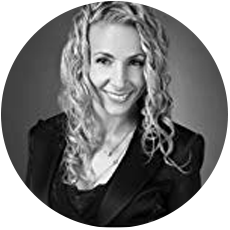
Robin Farmanfarmaian
Robin Farmanfarmaian is an author, professional speaker, and entrepreneur working at the intersection of technology and medicine, with a focus on how emerging tools empower patients to take control of their own healthcare. Her own experience being misdiagnosed as a teenager and enduring multiple surgeries set her on that path, and she has since helped launch and build more than ten early-stage companies.
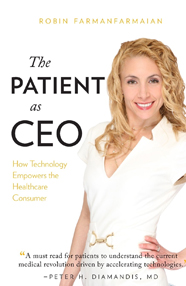
Her leadership roles include co-founder and executive director of the Organ Preservation Alliance, president of i4j, chief operating officer for Arc Fusion, and vice president of business development for Invicta Medical. She has served on advisory boards for organizations including SXSW V2Ventures, AARP, and the Kairos Society, taught as adjunct faculty at Singularity University, and written for Wired, Forbes, and Huffington Post. She is the author of The Patient as CEO, on how new medical technologies put patients in charge of their own care, and The Thought Leader Formula.
★ Scribe Case Study
How Robin Farmanfarmaian Became “Robin Inc” and Broke Through the Glass Ceiling
Robin Farmanfarmaian was tired of being overlooked in her field. She wrote a book that propelled her brand to the next level and put her in front of hundreds of thousands…
📚 Books by Robin Farmanfarmaian

Transcript
[0:00:16] CH: What’s up everybody? It’s Charlie Hoehn, the host of Author Hour where I interview authors about their new books. Today’s episode is with Robin Farmanfarmaian. She’s the author of The Thought Leader Formula. Robin is an entrepreneur, she’s an angel investor, she does really amazing stuff. I mean, she drives business development for cutting edge medical and bio tech companies that are poised to impact 100 million patients. Pretty amazing. But that’s actually not what this episode is about. Robin is a professional speaker and she has over 100 speaking engagements in 12 countries and she’s learned a lot of really valuable lessons along the way, as she’s become a professional thought leader. That’s what this episode is really about, is the lessons that Robin’s learned going from zero to professional thought leader. And this stuff really works, I mean, she’s helped other thought leaders build new careers or take their business or their careers to the next level. One of the mindset shifts I took away from this conversation was, there’s no difference between branding a company and branding a person. It’s just a shift in your mindset that you are the company, you are the business. If you want to become a professional thought leader who has a business around your ideas, this is the episode for you. Now, here’s our conversation with Robin.
[0:02:03] Robin Farmanfarmaian: I actually sat down and very specifically decided to become a professional speaker. I created a five year project plan around making that happen, which is what ended up turning into the book. But my whys for actually doing that, there’s actually three major why’s. The first reason I wanted to become a professional speaker and by default, of course, a thought leader because if someone’s paying you 10 to $20,000 for a 20 to 60 minute keynote, you’re a thought leader. But my first why was to drive business development for the companies I’m working with, because I understood that – I come from the event space. I understood if I was on stage, my funnel would come to me and then I could do high level deals or get products placed or do the high level business development for whatever I was working on at the moment. My second major reason was, because I wanted to build out more than one revenue stream in my life. I mean, a lot of us have just one revenue stream in our life, right? Our salary. I realized with the future of work, because I have a lot of experience running conferences around that specific subject is that we really need multiple revenue streams in our life in order to survive what’s going on over the next 10 years in the world of work. I wanted to add that additional revenue stream of key note speeches. My third reason was because this was years before the me too movement started. I’m was in Silicon Valley and I was just being sabotaged and crushed by some of the men. Not a lot of them, this was a very small number but I mean, sexual harassment, abuse, bullying, being deleted off websites. Some men just touching me all over, it was crazy. In front of other men. I mean, there was one that I almost went into shock over that it was so blatantly horrible and it was an attorney that was doing it to me, I was like, “Are you kidding me?” I realized, I needed, I tried to fight against it, the normal channels. Which you see some women trying to fight this through normal channels and it does not work. Even in the pieces of gross abuse, men will look the other way and let it happen. I said, “Okay, well how do I protect myself? Because fighting this through normal channels doesn’t work.” I want to become a thought leader and a celebrity for my brain and then maybe that will help. Let me tell you, it worked 10 times better than I have ever imagined.
[0:04:18] CH: Really? What do you mean by it worked 10 times better?
[0:04:22] Robin Farmanfarmaian: I thought that it would allow me to get a seat at the table and talk and people would hear me and people would stop putting their hands on me and calling me an executive assistant even though I was raising millions of dollars for companies and things like that, just because I’m a small, petit, very outgoing personable blonde. I got a lot of this. But the day my book published, The Patient As CEO, my first book, it was like turning off a light switch, the sexual abuse and harassment stopped completely, overnight.
[0:04:53] CH: That’s incredible.
[0:04:54] Robin Farmanfarmaian: I know, right? It’s just because now I’m known for my brain and I command people’s attention. If you do something to me, you’re going to get caught. Versus if you do something to even say a vice president who other men are calling in executive assistant, you’re not going to get caught, they’re all going to laugh. Now, I command, I stand there in front of audiences to 3,000 people giving 60 minute keynotes.
[0:05:19] CH: Wow, I’m so happy for you. This is like the greatest success story of becoming a thought leader that I’ve heard in a long time, that’s incredible.
[0:05:28] Robin Farmanfarmaian: Thank you. I want to teach other women how to do this, not just women, I want to teach anyone who has faced any type of bias or bullying or sabotage or anything negative happening to them in the workplace. I wanted to drive career goals, I want to help those people.
[0:05:44] CH: Wow, okay, man. Thank you for sharing that. I appreciate you going there and let’s dive into it. I mean, I’ll tell you Robin, on a personal level, and a professional I guess. I do some speaking myself and I’ve been on the thought leader trajectory, I published a few books and I kind of actually went the other way where I was like, “I don’t know if I want to do this because there’s pieces of this puzzle that I feel like I’m not figuring out.” It felt hard. Even still, I know it’s exactly what you described, it is a great additional revenue stream and it’s important. I mean, I did two speeches last year, I’ll share some details so I’ll be your student and you can be the guru in this episode of it. But I did two speeches last year that together, brought in $17,000 additional to our family. One for 10,000, one for 7, which is great. It took me a long time to get here but I still almost look at it like yeah, I just don’t quite know how to get there and be full time and doing it at the level that you’re describing doing it. Is that all making sense?
[0:07:00] Robin Farmanfarmaian: Absolutely.
[0:07:01] CH: Yeah. I’d imagine, I’m the type of person actually that this book is perfect for. Let’s dive into it. Where do you want to start? You want to start with chapter one, defining your goals or multiple revenue streams, this is a business, where’s a good place to dive in?
[0:07:18] Robin Farmanfarmaian: Why don’t we tell, start diving in by who this actually will benefit? Because I thought long and hard about exactly who this particular system would benefit because it is different than say, if you want ed to be an Instagram influencer. If you want to be that, I don’t know how to do that, this is not the book for you. I’m not going to teach you to be an influencer, which is a – what we call a cash transaction essentially, right? They are selling something specific and they are getting paid to sell that and market it. Thought leader is very different, you are famous for your brain, right? Your specific ideas. It’s fantastic formula if you are an entrepreneur, if you are a corporate executive or an employee, it’s fantastic, you are healthcare professional of any kind, whether you’re a physician or a chiropractor or a nurse, anyone who touches a patient in any way, therapy, any of that kind of stuff. Fantastic for attorneys, consultants, accountants. Anyone who charges an hourly or a fixed rate fee for a project. Because, let me tell you why, if you are a thought leader and you are a physician or an attorney or a consultant, you can charge significantly more money for your services. Imagine if you were sick and you had two doctors or two surgeons to choose from and you googled them and one surgeon has gone around the world and given talks on his experiences and written a bunch of books and is much higher exclusivity because if that. You will end up probably paying like two or three times more for that particular surgeon and a patient may want to do that. Same thing with an accountant, same thing with a consultant of any kind, right? If you’re an entrepreneur, it’s huge because most entrepreneurs, they may not have a name for themselves and their company is unknown and they’re doing something new, that’s three major strikes against them in terms of getting marketing sales and getting in front of investors. It doesn’t matter if you have the best idea and the best company and you know you can turn it into a multibillion dollar company, it’s getting in front of the people who will fund it, that’s the hard part. By being a thought leader, it’s really easy to get in front of the VC’s. I mean, almost everybody now takes my call. Complete strangers.
[0:09:29] CH: Do you have an example that comes, you don’t necessarily have to name exactly who they are but an example of that playing out where you’re like, I can’t believe I just got on the phone with that person, that never would have happened.
[0:09:40] Robin Farmanfarmaian: Yes, I have so many. I mean, 30, 40 examples to this, two of my favorites — wasn’t funding specifically but it was getting an early stage company that had only got a series day, which is single digit and millions. I got them in front of the CTO of the VHA system, which is the largest healthcare system in the United States and then I got them – we’re talking in their office. And, I got them an hour long call with the CMO of Walmart.
[0:10:09] CH: Wow.
[0:10:10] Robin Farmanfarmaian: This is a company that still doesn’t have a product, they were three years to market but I was able to get into the doors of two of the biggest entities here in the United States.
[0:10:21] CH: Man, you became even more valuable as well as an advisor and yeah, any type of investor who works with the company. Those people could benefit from having those books, yeah, that’s great.
[0:10:37] Robin Farmanfarmaian: Exactly. If you are an executive, say you are working for one company with a salary, the way this benefits you dramatically, in addition to adding those revenue streams like we talked about keynote and speaking and things like that, it can help you drive your own career goals, it can get you promoted, it can give you much more negotiating power so that when you go in and you talk to the CEO, whoever negotiates your contract, you say, “I want to only work in the office four days a week, I want to travel one day a week, I want to do my own external keynotes and I want to work on a couple of projects.” Once you are a thought leader, they will say yes to that kind of thing.
[0:11:14] CH: Yes. Man, yeah, that’s so true. It makes your work better in so many ways, not just financially but flexibility and ways that you can add more value to your company. Yeah, that’s huge.
[0:11:27] Robin Farmanfarmaian: Exactly. Because you can drive marketing and sales and companies, especially large companies, want to have thought leaders because you’re not only driving marketing and sales, even if you don’t work in that particular department, you can work in any departments. But you also are helping drive more people to apply for positions at that company.
[0:11:44] CH: Yes.
[0:11:46] Robin Farmanfarmaian: Famous person number X that I saw at this conference, they’re working for you know, startup Y or you know, even large GE or Google or whatever it is, I want to work at a place, which would employ this person.
[0:11:57] CH: Yes, I can speak to that, that that’s happened, absolutely. I’ve seen that happen for sure. Wow, all right, I’m super excited, I would love for you to lead this actually, I know I usually guide but you do a good job at this type of thing. I’m in your hands, where do you want to dive in for your book?
[0:12:19] Robin Farmanfarmaian: Sure, I’ll just take a little bit through the system but really focus on chapter nine, chapter nine is by far the longest chapter and it’s the one that everybody is going to want to read. Because it talks about how to get on stage and who pays for what. One of the biggest questions. Before you get to that point of trying to get yourself on different stages, you really need to have a very solid platform, right? A thought leader platform and that’s the steps that I take you through in the beginning. By defining your goal, is your goal like my life goal is to impact a hundred million patients, right? Everything I do kind of revolves around that in the world of medicine. Now, your goal could be to get you know, funding for your startup company or to drive business goals or to drive career goals but you need to understand what that goal is because that is the foundation of what we’re going to build. Off of your goal, I take you through examples in the book so don’t worry about my gosh, I don’t have a goal yet. I take a few examples and then we start to add on the revenue streams, I have you identify all the revenue streams in your life and I have you start brain storming other revenue streams you would love to add to your life. Including things like keynote speaking. You really understand in your own business model. I like to kind off refrain people’s brains to think of themselves as a company. Because as a thought leader, you’re now kind of bridging both worlds, you’re a private citizen but you’re also a public celebrity figure for your ideas and brains, which is very different from being a public celebrity for say being a singer or an actor.
[0:13:54] CH: Right.
[0:13:56] Robin Farmanfarmaian: You know, you’re really blurring those lines. I teach you to think about yourself — like I call myself Robin Inc. Robin Inc. right now is working with four different companies to help me build up this thought leader platform. Charlie Inc., probably, not only has your – where you work but you might have other companies you can hire to bring on to help you build out your platform. I take you through that, whether it is a script writer or a designer for your slides or speaker coach or improve coach or I mean, any small thing that you need done in The Thought Leader Formula.
[0:14:29] CH: I’m curious Robin, before we get too swept away, are there any downsides to being a thought leader?
[0:14:36] Robin Farmanfarmaian: Yes. For certain types of personalities, first of all, you have to get over the stage fright, 100% of us feel stage fright, it is a terrifying thing. That is very hard. The other thing is that you really open yourself up to a lot of rejection. That is true with anything that you’re going to do in the public eye. Really, you have to get used to hearing the word no. I think I talk about this in the conclusion and really tightly, framing what no means in the world of business. No isn’t personal, it just means the two businesses are not aligned in their goals at that moment in time.
[0:15:14] CH: Right.
[0:15:16] Robin Farmanfarmaian: Right? I spell that out for you but the rejection is going to be big. There might be some audiences that don’t like you or you know, I’ve been insulted, not insulted, actually, because I’m a [inaudible] chronic disease patient so I’m thinking that might protect me a little bit from some of the haters but I remember there was an article in Medscape Germany that went out on my first book, the patient’s a CEO. A physician actually wrote at the bottom, in German. “When this happens, patient’s taking control of their health, I’m quitting medicine.”
[0:15:47] CH: Yeah.
[0:15:47] Robin Farmanfarmaian: I’m like, you know what? If you don’t have a bunch of haters, you’re not taking your big enough stand on something. In the book, I call this your fundamental truth. What is your fundamental truth? That thing that you believe that you know that you are working towards, that other people don’t necessarily know about or don’t believe.
[0:16:08] CH: Yes, I agree whole heartedly, nothing has ever spread that didn’t have some haters attached to it.
[0:16:16] Robin Farmanfarmaian: Exactly.
[0:16:16] CH: You’re not saying anything interesting or new or novel, if there are no haters attached. You’re making blanket statements like the sky is blue or — no one’s going to remark on that. I totally agree. Yeah, the thought leadership maybe is not for everyone of course but the people that you mentioned at the beginning, I think is exactly on point with who this book is really for. I can tell you just looking through this book, I desperately wish I’d had this 10 years ago when I first started. Because it was just feeling my way through and I had some good role models that I was working with who had kind of nailed the thought leader thing. But it was a lot of guess work still at the same time. I don’t know if I’ve seen an exact book on this particular topic of how to construct a thought leader. I’ll tell you how far this has gone, Robin. I’m being totally serious, I don’t usually say this to authors I interview because a lot of the problems they talk about aren’t personal to me but this was such an ordeal for me, trying to figure out how to be a more successful speaker. That I offered for free to create a course for a friend of mine who made six figures every year, speaking for the last 10 years. I made that course with them just to be able to learn his process for doing things and yeah, I mean –
[0:17:56] Robin Farmanfarmaian: That is awesome.
[0:17:58] CH: It’s important, I’m amazed that you put all this stuff in here. Let’s talk about, let’s see — I want to cover them all but I probably can’t. We’ll talk about on stage but I want to talk about networking ninja. Networking is a word that off course turns a lot of people off, what do you mean by networking ninja?
[0:18:19] Robin Farmanfarmaian: Well, because that is chapter seven. By now, you understand your basics of your platform. You understand your goals, we’ve gone through and we’ve written out your revenue streams, we’ve gone through and figured out not only your fundamental truth but your tagline and your catch phrases and some signature catch phrase is that you can start to pepper things in. By the time you get to networking, you understand who you need to meet. I think it’s either in this chapter or in the previous chapter, I actually take you through a spreadsheet, which I give to you with the book, it’s a 10 tab spreadsheet that outlines all these different action items for you. Where you have gone through and you identify conferences that you want to speak at and you also have gone through this spreadsheet and you’ve identified other thought leaders and speakers who are in your space, right? Basically, it’s marketing 101, you just map out your ecosystem and I take you through that earlier in the book. By the time you get to network and you’re going to go back to that spreadsheet and you’re going to look at the conferences events and speakers that you have already identified and then you re going to go to those places and you’re going to go to those events with – you know, you can have it in a piece of paper, electronic, whatever. You got a list of three or five or seven people that you need to meet at that event and you know why you need to meet them. You’re not going to ever just go to an event and just show up and then just, let’s just serendipity, you know, I’m just going to bump in people who will dramatically help me achieve my goals, the world rarely works like that. There is some serendipity only because you’ve gotten yourself to the right places for that to actually happen.
[0:19:58] CH: Right, yeah.
[0:19:59] Robin Farmanfarmaian: So make it happen, be intentional with the people that you need to meet. I do not go to an event unless I understand who is in the room and I have my goals of who I want to talk to, what do I want to talk to them about.
[0:20:11] CH: Wow.
[0:20:11] Robin Farmanfarmaian: Or else I don’t leave my house, it is a waste of time.
[0:20:14] CH: Yeah, totally. I love how intentional you are. Are you typically how do you meet them? Do you meet them for coffee? Do you go on a walk together? Do you do an activity together?
[0:20:26] Robin Farmanfarmaian: So it totally depends on my goal. That’s why before I even actually go to the event I have written out, “Okay I want to meet Jeff, Carrie and Ann.” And the reason I want to meet these ones is Jeff I want him to be a mentor, Carrie I want her to fund my company, Ann I think she would be a fantastic partner for one of my startups. So I know exactly how they’re going to fit into my life and my business model of Robin Inc. but first you want to just start building the relationship. So it is not necessarily the next step is going to be a cookie cutter template. It’s going to be based on what you want to do with them. With the mentor maybe it is a coffee but with someone like Carrie who would be potentially funding a company then my next step would just be to setup a meeting with the CEO.
[0:21:16] CH: Yeah, awesome. I mean there is so much stuff in here. Branding, content, gaining credibility and confidence. Anybody who is an aspiring thought leader or who is a thought leader I know is going to benefit from this book with that particular segment of the population this book is going to be so valuable. Preparing for your first presentation. You know it wouldn’t be my first presentation but I have a feeling you have some good preparation notes that any speaker can apply.
[0:21:49] Robin Farmanfarmaian: Absolutely, so I want to remind people that what they are they’re experts in their content but no one is probably taught them all the rest of the stuff that goes along with having to be a thought leader, right? Which includes potentially presenting on stage. So if you have never been on stage before and first of all, all us get stage fright even sociopaths. I have watched it happened to them, you need to understand how to give a performance and how to deal with that kind of stuff. And so if you have never done any of that kind of thing, I recommend hiring an acting coach just for maybe one or two sessions or joining an intro to acting class for one or two sessions. Improv, improv is incredibly valuable especially for things like the Q&A and the podcast that you will be doing and I also –
[0:22:37] CH: I just have to interject here real quickly and say improv literally destroyed my fear of messing up on stage. I no longer have to take like a beta blocker before giving a huge presentation because I have died enough times on stage through improv and I couldn’t agree more with doing it. It’s amazing.
[0:22:59] Robin Farmanfarmaian: Exactly and that’s a safe space because everyone is screwing up and you are just going there to have fun and a lot of the time of the class, you don’t even have to worry about an audience, right? But it is really getting comfortable with interacting at that level. I also tell people to hire a voice coach if they have any type of an accent or if English is a second language for them so that they are universally understood when they get on stage. They could revert back to their accent off stage but once you are on stage, no one can say, “Wait, I didn’t understand you,” right? And then also speaker coaches. I recommend this for a 100% of people, those three other ones I talked about you may or may not need but everybody who wants to be a speaker must hire a speaker coach at least once or twice. They are going to give you a massive feedback on your body posture or how you come across to audiences. They are going to tweak the way you phrase a few things, use the word as I instead of you or something like that just very, very few things but they will show you positioning. Like with mine, mine told me to open up my arms wider and take up more space on stage because I am this five foot tall 90 pound tiny little thing.
[0:24:04] CH: Yeah, mine told me to smile more because men in particular if they are not smiling come across as like this guy’s scary and so yeah, I totally agree. It changes how audiences receive you and they are things that you would not notice on your own necessarily even if you filmed yourself and watched it back. So I couldn’t agree more, a great recommendations. Now do you have any other recommendations for prepping?
[0:24:34] Robin Farmanfarmaian: Yes, so I say hire a designer. I’ll do some of my slides based on some previous design work but my slides are professional. And you can see the difference between professionally done slides and slides that were done by someone who knows the content but has not been through design school of any kind. And so, that first slide deck I did, I brought on a script writer to help me because I was putting my personal story with my very first keynote. I had never done this so I brought on a scriptwriter and a very high end designer for that very first one. Now I use a regular designer. I think he’s 60 dollars an hour. I found him on Upwork and now he is my go-to guy and he refreshes my decks for me and he just did I think 17 new slides for me or maybe it was 16 new slides for about $300.
[0:25:21] CH: That’s great, well worth the investment. I mean like you said, you are a company. You are a brand and so your slides need to reflect your brand.
[0:25:33] Robin Farmanfarmaian: Exactly and you cannot do this alone. Once you understand that it is now Charlie Inc., you need departments. Just like any corporation, you need your marketing and sales department, you need your design department, you need your finance department, you need your legal department. You can’t be an expert in all of those things. You’ve got hire them, you’re a business now if you are a thought leader.
[0:25:54] CH: Yeah, wow. Yeah, I am seeing where I went wrong Robin. I suffer from “I can do everything.” Only kind of well and yes, swallowing that pride and hiring it out is big. Now let’s not linger on my problems too long and go to chapter nine, which is on stage. I don’t want you to give away all the gold in this but this chapter alone I’d imagine is worth the cost of admission for the book.
[0:26:24] Robin Farmanfarmaian: Oh yeah that everyone is going to be flipping to that chapter. So what you can’t tell from my LinkedIn is that I am actually an events expert. I’ve run hundreds of events in my life and conferences and so I understand the backend of how they work and why people throw events and why companies spend money. So I take you through exactly the kind of events that are going to pay you, the type of events who are going to cover your cost of travel. Who is going to cover your hotel and then who is going to make you pay for a ticket. For you to even grace the stage, so I take you through all of those for basically any kind of event you can think of.
[0:27:01] CH: So a question on this, are there any surprises there? I mean what might be the reader be surprised by when they read that section?
[0:27:11] Robin Farmanfarmaian: I think a lot of people who see videos, anytime you see a video on YouTube, most of the time that is a free talk. People don’t realize that. They don’t realize – I’ve got a hundred talks probably on video that has never been released because they were private clients.
[0:27:27] CH: Right and you got paid by getting that professionally done video and the marketing and distribution for that video. I mean that’s in a way your payment, right?
[0:27:41] Robin Farmanfarmaian: Yeah, exactly and that is for if I am doing a free event say at TedX, those are fantastic for that. They are going to give you a high end video and that is essentially your payment but the ones who are charging – I mean who spend 10 to $20,000 for a keynote speaker, those are typically only in the world of corporations and the associations, the giant association conferences. The SXSW, CES, all these big deal conferences that people want to go to that you hear about none of them pays for speakers. It’s the conferences that you don’t hear about that are specifically inside of a conference for corporations they are the ones who pay.
[0:28:19] CH: Yeah, corporations and associations are the only ones with the big budgets and maybe not as sexy or attention grabbing as some of the other famous conferences but man, you’re a business, who cares?
[0:28:33] Robin Farmanfarmaian: Exactly.
[0:28:34] CH: Yeah, what else in this chapter on stage do you want to share?
[0:28:40] Robin Farmanfarmaian: So one of the easiest ways to get on stage for those first early ones is just to apply. Literally just go to conference websites and a lot of the time it says apply to speak. Those will always be free but it gets you on stage.
[0:28:55] CH: Yeah, it definitely does and your hit rate assuming you write a good email that’s well worded and everything, your hit rate can actually be surprisingly high.
[0:29:09] Robin Farmanfarmaian: Oh yeah, exactly and if it is an academic conference of any kind, oh yeah. Unless your thesis and your thesis is just your synopses of your talk, unless it doesn’t fit in with the academic conference at all then of course not. But if it fits in even a little bit with the academic conference figure, they are probably going to give you a space on stage.
[0:29:28] CH: Yeah so what about if you are a bit further along, you’re established, you’ve got some books under your belt, you have spoken on some big stages, I am not talking about myself at all Robin. What, at that point, what are the systems to put in place to get on stages?
[0:29:47] Robin Farmanfarmaian: Well you are looking specifically for paid gigs at that point, is that what you are saying?
[0:29:51] CH: Primarily, not any kind. No, I mean at this point, I’ve got a daughter. I don’t like to travel a ton but I am open to once a month. So you have to be looking almost exclusively at paid ones, yeah.
[0:30:09] Robin Farmanfarmaian: Okay, yeah it goes back to your business model. I’ll do free talks if it benefits one of the companies I am working with. So that is how I differentiate it and I take you through that checklist but in your case, I mean maybe a speaker bureau might be a good route.
[0:30:25] CH: I have heard mixed things about speaker bureaus.
[0:30:29] Robin Farmanfarmaian: Oh, well I mean they lead jump for you and then they close the contract and they manage it. So to me it is just free money.
[0:30:35] CH: Yeah, I’d imagine there are plenty of speaker bureaus out there but only a few are worth working with and I remember applying to one and I couldn’t get in at the time because they were like, “Yeah you have to show us two speeches that you’ve done that paid 10 grand each.” Like they have to know you’re a worthy person to take on.
[0:30:58] Robin Farmanfarmaian: Well yeah, they are not going to sign – well traditional ones, we are talking about traditional speaker bureaus that charge 20 to 30% of your fee commission based. They are not going to take anyone who isn’t charging 10,000. That is like their entry point.
[0:31:14] CH: Got it, okay. Cool, all right.
[0:31:18] Robin Farmanfarmaian: Yeah because it doesn’t pay for them to negotiate $500 talks for you or $5,000 talks for you. 20% of $5,000, that thousand dollar to run a company and the math doesn’t work out. They’ve got to go for the higher end stuff.
[0:31:30] CH: Yeah, so if you are working with a good speaker bureau, how successful are they at bringing in opportunities typically for you?
[0:31:38] Robin Farmanfarmaian: Well I am working with five speaker bureaus right now. I don’t do exclusive contracts with anyone. So I am working with five different speaker bureaus and this year, I mean between the five of them I already have six different keynotes booked.
[0:31:52] CH: Amazing that’s awesome.
[0:31:53] Robin Farmanfarmaian: But this is the first year that I have had that many paid, booked talks at my full fee.
[0:31:59] CH: Right, well congratulations on how far you’ve come and when did you technically start this journey? How long has this taken quite reach?
[0:32:07] Robin Farmanfarmaian: My very first keynote was in 2013, November of 2013. So it’s been a little over five years.
[0:32:16] CH: At what point did you feel like, “Okay now I’ve got this figured out”?
[0:32:22] Robin Farmanfarmaian: I had it figured out before I started. I just knew it was going to take time, like I have been following my own project plan.
[0:32:29] CH: Wow and that’s what this book is, it is the plan that actually worked yeah.
[0:32:33] Robin Farmanfarmaian: It is my plan, yep it’s my plan and I am still following it and I would say I hit 100 speaking engagements I want to say about a year and a half ago.
[0:32:41] CH: Whoa that is a lot, yeah.
[0:32:44] Robin Farmanfarmaian: Yeah that is a lot, in 12 countries.
[0:32:47] CH: Holy cow, were you just exhausted after that year?
[0:32:50] Robin Farmanfarmaian: Yes. There was the end of 2017, I went from Greece and Austria to New Zealand, back to Europe and Sweden then back over to Japan. It was back and forth and I’d stop in San Francisco on the way usually do a couple of things, it was crazy. By the time December rolled around and that was my last talk in Japan and it was in December of 2017, I think I needed to sleep for a month.
[0:33:21] CH: Man that is incredible. Well I know people have been down that path for sure and I am glad — I’ll say I’m glad you are charging as much as you do now because you don’t have to punish yourself with that many speeches again, right?
[0:33:35] Robin Farmanfarmaian: Yeah, well some of them I will take because they are amazing. So there was one I took in Athens and it wasn’t that particular one. It was for TedX Academy and TedX never pay. They did cover my business class travel to Greece but I went and did that because the experience was one of the best experiences that I’ve ever had. They put me in this really high end resort like outside of Athens. I had an escort the whole time. They showed me the most amazing experience.
[0:34:04] CH: I love that, yeah. TedXs if you can do them, I had a similar experience for TedX in the Dominican Republic and it was one of the best experiences in my life, very similar. And so this book is absolutely for anybody who wants to be a thought leader. It’s The Thought Leader Formula. It is on Amazon. Robin, I have a couple more questions for you to wrap this up and then you’re good to go. This has been phenomenal. So the first question I have is tell me about somebody you’ve helped with The Thought Leader Formula, where did they start and where did they get to because of the information basically in this book that they applied to their life?
[0:34:47] Robin Farmanfarmaian: Oh my gosh, I have a huge success story. So my friend, Monika Proffitt, and I have been coaching her around this. We are friends, we met actually in Mykonos, when I was giving a talk in Mykonos for A-Fest and she’s American, she lives in New York and she was coming from the art industry, which is very far from mine and she suddenly decided to jump into the world of blockchain and became an expert and wanted to make it really big in that world. So I gave her one of my hints, which is in the book, which I told her to go ahead and write a PDF. Now what that means is instead of writing a book, write a 20 or 30 page Word document, turn it into a PDF, have someone design the cover, upload it to Amazon and sell it for $4.99 and bam, you are a published author. It is that easy to do now and so we took a step further because anybody can write pretty much 20 page Word doc on the 101 of their industry, right? Because they have been doing it for 10 years or they have been studying it for a year or two. So you can write Podcasting 101. That will take you 20 minutes or a couple of days to write. It took Monika less than a week to write 80 pages on Blockchain 101, called it Blockchain 101, she launched it right after Christmas or right before Christmas. I mean we’re talking it’s been months. Today or yesterday, she was speaking at MIT.
[0:36:05] CH: Wow.
[0:36:07] Robin Farmanfarmaian: Last year she was an artist, this year she’s speaking on MIT on blockchain.
[0:36:12] CH: That is so cool, man.
[0:36:13] Robin Farmanfarmaian: Right? Yeah.
[0:36:16] CH: Good for her.
[0:36:17] Robin Farmanfarmaian: I know, isn’t that amazing?
[0:36:19] CH: Yeah, that’s phenomenal. I love it, yeah. I am seeing Monika Proffitt, Blockchain, Fundamentals of a New Economy. Look at her, good for her.
[0:36:28] Robin Farmanfarmaian: Yep that took her no time and then she took The Patient As CEO, the book cover replaced my picture with hers, replaced the words with mine and you’ve got the same exact design and just launched it instead of hiring a designer because she wanted to do it fast, cheap, easy and she could alter something as simple as the book cover because she was an art before. So yeah, that is why the book covers look so similar.
[0:36:50] CH: Yeah that is amazing. That’s funny. Wow, so I mean anybody listening that could happen to you if you read this book and now, the final two questions that I have for you Robin are what’s the best way for our listeners to follow your work and potentially connect with you?
[0:37:11] Robin Farmanfarmaian: Oh so go ahead and go to my website, robinff.com. I am the only Robin Farmanfarmaian in the entire universe. You will find it right away.
[0:37:19] CH: Robinff.
[0:37:20] Robin Farmanfarmaian: Yep, Robinff and go ahead and sign up for my newsletter. But then you can find me on all social media. I am on everything. I am more active on things like Facebook and Linkedin but I am also on Twitter and Instagram and so yeah, go find me.
[0:37:35] CH: Excellent, Robin the final question I have for you is give our listeners a challenge. What I the one thing they can do from your book this week that will have a positive impact?
[0:37:46] Robin Farmanfarmaian: Figure out what your fundamental truth is. What is that thing that you believe that may not be aware of yet or don’t believe yet.
[0:37:55] CH: I love that, that’s wonderful.
[0:37:56] Robin Farmanfarmaian: Yeah.
[0:37:57] CH: The book is The Thought Leader Formula. It’s on Amazon now, Robin thank you so much for being on the show.
[0:38:04] Robin Farmanfarmaian: Thank you so much for having me.
[0:38:07] CH: Many thanks to Robin Farmanfarmaian for being on the show. You can buy her book, The Thought Leader Formula, on amazon.com. You can also check out show notes and a transcript of this episode on authorhour.co. Thanks so much for listening, we’ll see you next time. Thanks for tuning in to today’s show. If you liked what you heard, here is what I want you to do next: open up the podcast app on your phone or iTunes on your computer and search for “Author Hour with Charlie Hoehn” and then click “ratings and reviews”. Take 10 seconds to rate this show or leave a review. It is a small favor but it’s really the best way to show your support and give me feedback and if you know someone else who’d love Author Hour, take another three seconds to text them a link to this episode. We’ll see you next time.
Want to Write Your Own Book?
Scribe has helped over 2,000 authors turn their expertise into published books.
Schedule a Free Consult