Mark Cawley: Song Journey
Read the full transcript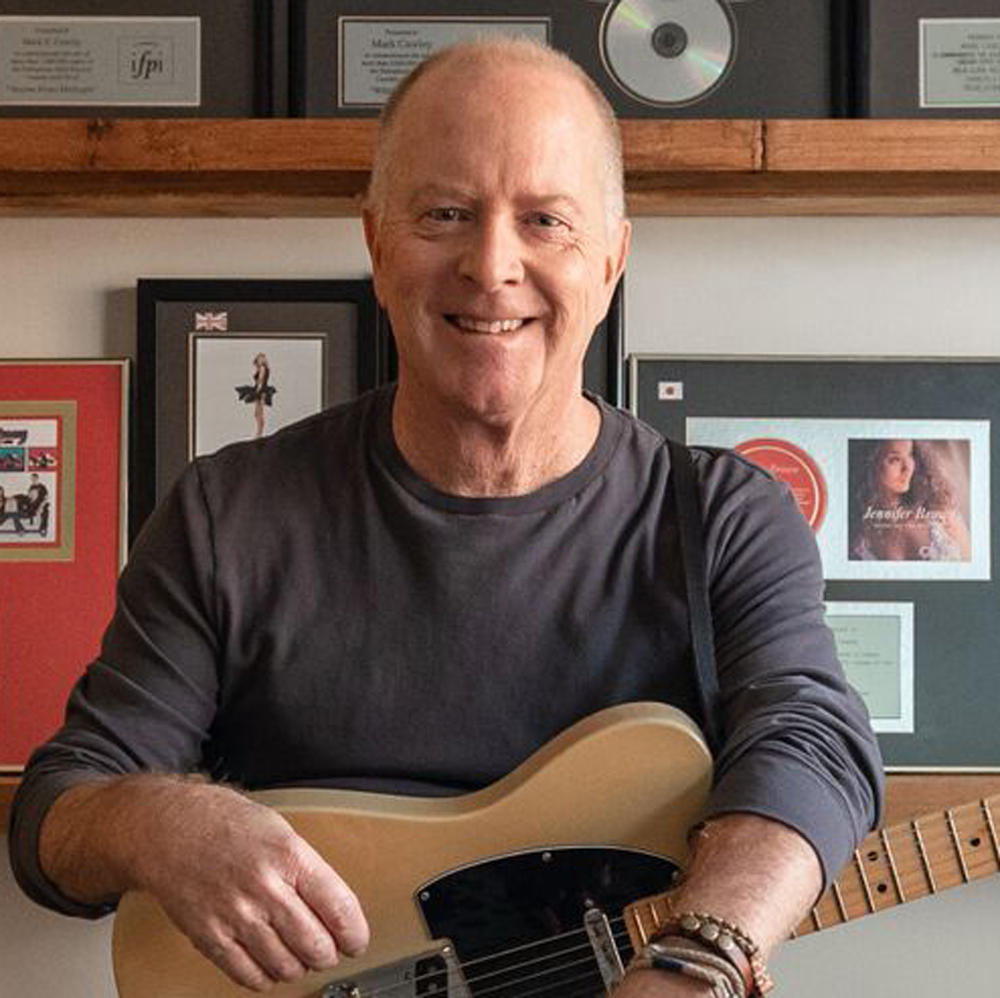
Mark Cawley
Mark Cawley is a hit songwriter, author, and musician whose songs have appeared on more than 16 million records. He has written songs recorded by artists including Tina Turner, Joe Cocker, Chaka Khan, Diana Ross, Wynonna Judd, Kathy Mattea, Paul Carrack, and the Spice Girls, spanning pop, country, R&B, and jazz. Born and raised in Syracuse, New York, he has lived in Nashville, Tennessee for roughly three decades, where he also coaches songwriters around the world through his service iDoCoach. He is the author of Song Journey: A Hit Songwriter's Guide Through the Process, the Perils, and the Payoff of Writing Songs for a Living.
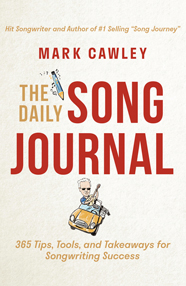
📚 Books by Mark Cawley

Transcript
[0:00:24] RW: Hi, guys. It’s Rae Williams, host of Author Hour, where I interview authors about their new books. Chances are, at some point in your life, you’ve heard a song written by today’s guest. He is Mark Cawley, song writer extraordinaire and the author of Song Journey. A well written song gives you the power to touch, teach and reach deep into a person’s soul. Mark has worked with a legendary artists and coached thousands of songwriters in person online, over the phone and in workshops all over the world. Today, he’s giving us a firsthand look inside the songwriting industry. Here’s our conversation with our guest Mark Cawley.
[0:01:08] Mark Cawley: Songwriting for me, it started, the funny part about it, I was talking to another songwriter of my kind of community here, same age sort of. We were talking about the fact that the music in the 60s especially, the Beatles and the Stones and Motown and all that era, sometimes those songs were kind of hard to play, sophisticated. Chord changes maybe or lyrically and a lot of us just as an alternative began to make up our own songs. I know I did. I thought, “well you know, if I can’t quite nail this, I’m just going to make something up.” So, I really started making something up. And then one thing would lead to another, I was in bands, literally garage bands when I was a kid, you know, working out of your garage. You kind of hone the craft. In that era, there were no songwriting coaches, I didn’t know any song writers, certainly I grew up in upstate New York. Whatever I could gleam was coming from records.
[0:02:01] RW: Why did you decide to actually write this book? What was the pain that you think that was out there that people were feeling that you said “hey, I want to make sure to put this out there so everyone else can share?”
[0:02:14] Mark Cawley: Yeah, that’s great. I mean, have a heart for it that I didn’t know I had to be honest. Because when you’re younger, you’re just trying to survive in this business and get breaks and get leads and get songs recorded by artist. Then there really wasn’t any time to look back or to reach down and help somebody, I don’t feel. But got to a certain age where I thought, well, I’ve kind of done an awful lot of what I want to do and I got more and more questions from younger writers, especially. Older ones too, but younger ones asking about how you did something. And it became important to me to kind of give them the best information I could because I made a lot of mistakes, you know, as far as signing contracts and things like that or even the etiquette of handling meetings in this world or co-writing or working with other songwriters. There was a lot to impart I thought and I didn’t, I still really don’t feel there is a book out there that’s written by someone in the trenches basically. That’s been doing this and doing it in all different genres. And so, I realized pretty early on, I had something to give here and it felt like a natural progression from what I’d always done.
[0:03:29] RW: What do you feel is the biggest takeaway from your book that a young songwriter for example can learn? I know you talk a lot about the perils of the business, you talk a lot about the process and you have a section called the payoff as well, but what do you think is the biggest key idea that if you could say hey, if you take one thing from my book, it’s this, what would that be?
[0:03:50] Mark Cawley: I think it’s a method, you know? I don’t believe in song writing, there are rules. but I think there are a lot of tools and tools are what I had to really earn the hard way and many of the tools I got were from working with really good writers, co-writing. Once you moved into that circle, it was a tremendous amount to learn and that became tools, not tricks really but totals, things I’d pull out, that’s what I really wanted to impart in the book. There’s an awful lot of anecdotal teaching stories about how I came to do something or came to do something I shouldn’t have done or whatever it was, but what I really wanted as the take away was just kind of priceless experience lessons that are hard to find in music in a song writing path. Because again it’s not really a – how do I put it, it’s not a rules thing. I mean, there has to be some inherent talent, but there’s so many tools that can help you in this and I realized, certainly in my age with writing and experience, how many off those I could compile and pass on and how it might make this journey easier for someone else.
[0:04:58] RW: What would you say is either your favorite or most used tool that you kind of have in your back pocket?
[0:05:04] Mark Cawley: That’s a good question. Well, I would probably say titles. I’m a title writer. I know a lot of writers would call themselves title writers and all that means is, rather than sit down and go okay, I’m just going to play guitar, play keyboards or try to write a lyric. I do really a lot on sort of field work I’ve done to find things to write about. That could be going to a book store and walking up and down aisles and writing down titles, watching TV and movies, really intentionally, looking for things that might become something interesting to write about. Because another thing I talked quite a bit about in the book is that one of the differences between a writer who is getting heard, especially a new writer because there’s so many, especially in Nashville where I am is what you’re writing about. I don’t mean gimmicky, but I mean, if you write about something with a different slant or a different, you know, different tittle, different words, maybe even a second concept, which is a popular term here which means, you think beyond the initial concept when you look at a title. But the one big thing to me would be title writing. I really preach that when I coach people.
[0:06:15] RW: All right, you talked about some of the anecdotes that you have in your book, is there one in particular that you could share with us that kind of gives us an essence of the songwriting business and some of the things that you’ve gone through?
[0:06:27] Mark Cawley: Yeah, there is a lot of them in there. My favorite one are the ones kind of dearest to me is when I started the book with, which was I started as an artist and I was in a band, in all different bands. But I was in a band called Faith band at one point who had a hit out called dancing shoes. I’m for upstate New York, but this band was based in Indiana. I joined the band to write songs for them, ended up staying a long time. Band got a couple of record deals and in one of them, we began to get some popularity, especially in the mid-west where they were located and began opening up for acts like Hauling Oats and the Doobie Brothers and all these fantastic bands, which is a great learning experience. But I was probably on the hub of going, “is this my thing, is this – do I want to be a star?” Basically, which is why you go and do it. I think in part. Along with the music but – or do I want to be a songwriter and I didn’t know I had to be one or the other, but in this particular instance, it was around 1979. My band opens up for Peter Frampton, who is at the height of absolute height of Frampton Mania, he had an album out that was the biggest live album of all time. Pretty amazing crowd. Probably 18, 20,000 that night. He was traveling as he would travel; you know? In this Silver Eagle Busses, I don’t know how many, but Frampton comes alive in however many plus made him come alive. There were a lot of them. My little band pulled up in the equivalent of a Winnebago and we pulled up to this particular place in Fort Wayne. The Fort Wayne Colosseum in Indiana. We had to go around the back and there was a big hill, the colosseum sat on a hill. We pulled up at the bottom of the hill, parked behind all of the Frampton Silver Eagles and made our way out of the bus. I was the last one, I don’t know why, but the other guys had kind of gone around and you had to walk up this hill to get into the back of the arena to do your sound check. I’m the last guy out and I’m carrying my base guitar in a case and I closed the door behind me and I start to amble up after everybody. Preface it by saying that this time I looked a lot like Frampton. Not on purpose, but it was a small, thin, a lot of blond hair, all that kind of thing. Probably a lot of comparison, I never really think about that. So, I start my route out of the Winnebago and I hear this roar coming from the top of the hill. I look up at the hill and it is all these, mainly girls, waiting to see Peter Frampton of course. But they’re outside and they’re at the top of the hill, looking straight down at me and I start to hear just a rumble that gets bigger and bigger and finally I heard somebody go, “that’s him.” I froze. I couldn’t get through them. I couldn’t get around them. Just looked at this mob and it dawned on me, they were going to come down the hill and they did. They start down the hill, hundreds of them. Just a pile of young girls, Frampton lovers. They’re flying down the hill, I look back at the door, it’s locked, I can’t get back in; I can’t beat them to the arena. I put my guitar down and just held on for dear life and watch this mob come at me. Right before they reached the bottom of the hill, I swear, they all put the brakes on because somebody – “that’s not him, that’s nobody.” I just stopped and I thought, “wow, okay, I guess nobody is alright.” And I’m going to live, I’m not going to get torn apart, but they were grumbling, they ambled back up the hill and everybody was complaining. I felt terrible and I had to pick my guitar back up and walk the walk of shame up around to the back of this place. But what it started in me that continued through a lot of this touring time for me was thinking, “do I want that?” Am I prepared for that kind of thing because that’s what you’re shooting for as an artist? What do I love? That was the beginning in me separating song writing from an artist, you don’t have to. But in my case, I thought, I really like writing a lot of diverse things, which is hard to do when you’re an artist, because you get an identity and you kid of stick to your thing. I started weighing what I really loved to do, what did I love the most? And it was becoming apparent in that story that era and that time to me, that songwriting was what really moved me. I would have been happy in the back of the Winnebago, with the door shut writing a song. Way happier than being chased by a mob or you know, playing those kind of gigs. That was the beginning.
[0:11:05] RW: Do you have any specific advice in terms of you know, someone who is trying to choose and say okay, well, I can do the artist route and do the famous thing or you know, kind of follow my heart or do you think doing both is possible?
[0:11:20] Mark Cawley: Yeah, certainly you can do both. I think what’s a little harder is, what was harder for me is again, I liked writing over my career, I ended up writing R&B and country and pop and that’s kind of hard to do from the artist standpoint because usually you’re doing an album of your material and your style. To be a chameleon as kind of tough as an artist, but also, I think beyond that, the advice I would give is decide what you really enjoy. I mean, a lot of artist are fantastic writers as well, someone like Ed Sheeran right now is a great song writer and a great artist and I think it’s all working together for him just fine. But if you find yourself not loving part of it, especially the artist part because I think you know, again, from opening up for Fleetwood Mac and all these kind of acts. I would look at them and think, these guys really want it. They live it, breathe it, want it, they do it to exist. If you don’t feel that way as an artist, you’re probably in trouble, I think. Maybe the same for songwriting in a way, I mean, you really got to have to want to do it, you’re almost – the phrase is you have to not want to not write I think is how it goes. You have to live to write. But they are different. I would say the advice would be if you’re one or the other, make sure that’s how driven you are to do what you do. If they go hand in hand, great but a lot of times they don’t, for me they didn’t.
[0:12:45] RW: Moving a little bit into the business of it. Do you think that there’s a lot of overlap between kind of when you were younger and coming up in the industry on the business side of songwriting and doing just music in general as from today?
[0:13:00] Mark Cawley: How would you define overlap, sorry?
[0:13:02] RW: Overlap in terms of just things that are just standard throughout the years. Things that just never changed, that are always going to be the same no matter what stage of your career you’re in, no matter what year it is, 20 years from now, we’ll still have that principle, is there a lot of overlap there or do you think that there are distinct changes in the industry that people are going to have to deal with?
[0:13:24] Mark Cawley: That’s a great question because there are a couple of answers to me, but there are ae lot of changes, sure. In this era of iTunes and Spotify, and streaming especially, has created quite a difference in the way I grew up as a songwriter and got started as a songwriter. In the days when I started, if you had a lot of promise, the golden thing was to get to a publisher which still is great, it still is the main thing for a songwriter. But they were more open to giving you a living wage or just to do an advance for you that could allow you to write. Because you could make a lot of money from even being on an album cut as a songwriter. That one has really changed, that’s called mechanical royalties and that’s from the sale of product. Now, unless you’re Beyoncé or Ed Sheeran or just Adele or somebody, you’re probably not selling a lot of physical product. You’re hoping to get hits on the radio, that’s how you make your money. The business effectively shrunk quite a bit when these changes happen, ranging from iTunes where you could cherry pick songs, rather than buy a whole album, that changed the world for an awful lot of song writers and awful lot of writers had to quit being writers, professional writers because it’s the people writing the hit singles that had the better shot at making a really good living, anyway. Again, I coach a lot of writers and I coach them, I really hope they don’t only focus on this, that they’re writing from the heart and again, writing because they just cannot do what they have to do, they love to write. Great things happen that way, but part of the reason I wrote the book too is to talk about these expectations as a writer. A lot of times, I’ll coach somebody and I’ll say, “tell me how your opinion of the business, how do you understand it, what are you shooting for, what’s your expectation?” A lot of times they’re not very educated about it which is not a knock, I mean, I wasn’t either, I started. But you need to be, if this is your choice for a living and to be a pro at it and we’re talking about two different things when we’re talking about songwriting and pro song writing. Part of it is, there’s songwriting and there’s the songwriting business, there’s a music business and they’re different and again, they’re very different than when I started to do things, like innovations like iTunes and streaming and how you’re paid and right down to how you can expect someone to help you on this route. as I started with publishers would in the beginning, probably pay you a beginning wage and see how it goes. They might sign you to a four year contract with one year options and see if you start to get songs, cut, and again, you can get one cut on an album and you might make $80,000 or something on a platinum album and that’s a wage, that attracts publisher, but that is pretty much gone, you’re looking at singles. That has changed. The things that are probably the same area I do think talent will win out; I do think there’s a lot of etiquette involved. Your kind of have to be a good hang and a good person I think still. That is the same. The people who are sort of jerks have a weird motive for doing, this seem to be – they fall by the wayside quickly.
[0:16:25] RW: What are one of two of your kind of biggest rules of etiquette in this business?
[0:16:33] Mark Cawley: There’s one that came to mind., but I can’t say that exactly the way, being cut out. I mean, don’t be a dick, which is one of the best things –
[0:16:41] RW: I think that’s a very fair rule.
[0:16:43] Mark Cawley: okay, it’s a great piece of advice however you word it but yeah, I mean, be a decent person because again, part of what I try to impart is it is a marathon career, it’s not a sprint, it’s not a run up the charts and it’s all great, it’s like a living, it’s a job. It’s a wonderful job, when it’s working. But it is a marathon. To do that, you make contacts, you make friends. You network however you choose to network and I wrote a chapter about that because there are many ways to choose to network right now. All that stuff plays a huge part and I think that has always been that way. Especially networking, who you know and who you can connect to and how you work when you do connect with them. To me the etiquette is a really big part of coaching for me because that is one that I’ve done wrong and I’ve done right and I’ve seen so much of it go on and see how it works when it works well and how it can sabotage something. Those are things that are fun to teach because if you didn’t teach them, someone’s going to learn them the hard way probably. Which is what I did and most writers I know, they did something wrong and then went, I wish I had known better, you know?
[0:17:56] RW: As you mentioned networking, I feel like that’s something that today, the generation of today kind of gets wrong, if you will. Especially because of technology, all the things we have available and social media and that kind of thing, there’s so many different ways to do it. What would you say especially in your industry is not necessarily the best, but you find to be the most effective and efficient way of networking?
[0:18:18] Mark Cawley: Let’s take Nashville which is, I’ll even back up from there. I would say, networking in a place where music is made, is pretty big. If you live in a little town in Kansas for instance, you may be doing your best through social media, through Facebook, to connect with writers and Instagram and however you can find people. That works to a popping but there is no substitute for coming to a place like Nashville and starting to meet people. It may be a slow grind, but there’s no substitute for it. You start to build a network of friends, you go out and play or you go meet other writers or whatever you do, those are the people that are doing what you want to do and you can’t beat being in the same environment with them. If nothing else, to kind of judge yourself, how are you doing? How do you measure up? Let’s do it that way. I’d call it old school networking really to get out in front of your peers and in front of the people doing what you want to do. I would preach social media, as well. I mean, there are lots of things you can do without a publisher and without a record label to get your music heard. And all those things are fantastic. But I would still say at the end of the day, you probably need to end up in New York or LA or Atlanta or London wherever this industry’s being done, the kind of music you want to do.
[0:19:31] RW: Hey, you have a chapter called Best and Worst advice which I love, what do you think is the worst advice that you actually received throughout your career?
[0:19:42] Mark Cawley: That is an easy one and that would be to, how do I put it? I mean, I have a really practical side which a lot of my writer friends will admit they don’t have. Within that, it would fall in the same, well, I don’t want to learn the business end. The business end is yuck, I don’t want to be a business man, I want to be an artist, I want to be a creative and someone else can do that. I’ll get somebody to do that. Well, yeah, you do eventually get somebody great to do those things, but you need to know about those things even if it’s just basics. How money is made, how money is split up, who should be doing what in their job description, those are things that are important to me to teach especially because I didn’t do it as a kid. You know, this still goes on too. Somebody as so excited to get offered something that they just will sign it and it can really derail you, it derailed me as an artist and a writer, a couple of different times and by derail, I mean, three or four years of trying to get out of a bad deal, so those things are so big. Kind of learn your – learn this business you’re in, to some degree.
[0:20:53] RW: Yeah, I think we’ve seen a lot of examples of that just over the years, the music industry of artist trying to get out of contracts and just kind of just follow their own direction because it is so early in their career, things were decided for them or they just signed because they had something to sign, you know?
[0:21:07] Mark Cawley: It is so wonderful when you are doing this and somebody that you know their names says, “hey, I love you and here sign this.” And we’ll all be stars, you know? I did two huge deals like that one being back in the late 70s with Terry Knight, who at the time managed Grand Funk Railroad probably was the biggest manager on earth and took a band that I was in and changed the name of the band, changed the name of the songs, decided at the last minute that the band should be faceless. And I tell the story in the book, but he got Richard Avedon, a fantastic photographer to do a cover where it was just our backs without shirts and the whole idea was let the music stand on its own. This will be revolutionary. We signed and we did one of the real no-no’s of signing to him as a manager and a publisher, which is a whole other story. But the short version was this came out with Billboards on the Sunset strip, double page ads and Rolling Stone all over the world. Soon, somebody looked at this and said, “this must be a band made up of superstars as who else could do this?” And it was not. It was made up of a band of newbies and this kid from New York State now moved to Indiana and the band and it got found out, which we didn’t think was a problem. But the way it was presented was almost as if he was trying to fool somebody. So, the next series of articles came out everywhere like this is Eric Clapton, Stevie Winwood. These are all these superstars who are going to let the music stand on their own and then probably two weeks later come the articles of this is who this is. These are these guys in Indiana, here is who they are and I feel like I have been fooled. That just feel apart so awful and we could not get out of the contract. We went from these huge dreams to right back to playing clubs and starting over, but this time stuck in a bad contract.
[0:23:02] RW: I think that is definitely great advice. We ought to read what we are doing before we actually.
[0:23:06] Mark Cawley: Yes, I mean get a lawyer probably. Any songwriter I talk to with the talks of contract and please, get an entertainment lawyer.
[0:23:15] RW: Yeah and I think being conscious too as again tapering that – not tapering necessarily, but just even through that excitement, just being aware of the things to come. I think that is great advice.
[0:23:28] Mark Cawley: Yeah, songwriters and musicians are really famous for and me included, for thinking – not thinking enough of themselves. Not betting on themselves enough because it is such an uncertain business. You know that there’s some great examples of people who did bet, like Tom Petty always comes to mind. Tom got in a lot of legal problems, but he believed in himself and he took a beating for a few years before he came up on top. But believing in yourself and believing that you have something worth somebody working with is big and a lot of artists, a lot of songwriters don’t feel that way at least in the beginning. They are just glad to get someone to like them and want to help them, but they are not always great folks. Sometimes they are, sometimes they’re wonderful.
[0:24:12] RW: So, who would you say is your favorite artist that you’ve worked with throughout your career?
[0:24:18] Mark Cawley: That I have written songs for would be the easiest one, probably some of the people that I grew with like Tina Turner, Joe Cocker, Chaka Khan, Diana Ross. I have written songs for those people and to me that was always the biggest thrill.
[0:24:33] RW: You just named quite a few of my favorites.
[0:24:35] Mark Cawley: I still have hits in others too. Yeah, I think I have hits with younger artists and stuff which is also is huge. But when you hear somebody that you grew up listening to and you hear your words come out of their mouth, you are in tears. And I would honestly say I’ve been in tears a time or two. You hear that and say, “wow, you know?” There it is, there is something that I made up coming out of that person. So, if I had to pick one it would certainly be Tina Turner. Because a lot of songwriters when they write they hear a voice in their head even though I couldn’t in saying like some of the people I love like Aretha. I would hear that voice in my head when I am writing and it would help direct what I am writing and then when you actually hear it come back at you it’s just beyond relief.
[0:25:20] RW: What song would you say you’re most proud of?
[0:25:23] Mark Cawley: Can I pick two? Because they are so good.
[0:25:24] RW: Yes.
[0:25:26] Mark Cawley: Okay, I will start with Tina again because it is a song called Dancing in my Dreams off an album called The Widest Dreams. It sold about six million and it was written with two of my favorite co-writers, Kye Fleming and Brenda Russell. And the whole experience was out of this world. I mean we had success all of us, especially Kye who is huge, she’s a hall of fame writer and Brenda’s written Color Purple music and she is something else too. But this time we’d been shooting four different artists including Tina and we all wrote to briefs like you do, sometime publisher will talk to a labeler or someone involved and go this is what they’re looking for. So, we have been trying to do that and it never quite got there and there’s a story in the book of mine about a song called Dance with a Stranger that was illustrated this, but anyway, we have been trying to get there and this particular time, we all met in Nashville. I wasn’t living here at the time, Kai was, Brenda lived in LA. We met up for two days and said, “you know what? Let us not try to please anybody. Let’s forget the business, let us forget who’s looking for whatever, let us just try to knock each other out. We’ll spend two days whatever you want to write.” And we wrote this song, which has a Celtic beat, a pretty deep lyric, very unusual. The whole thing is unusual and so after two days we are hugging, crying and laughing. We thought if it never gets picked up by an artist, we’re okay, which is also a feeling that I would recommend if you can get there. So, we loved it, we kept playing and playing and Brenda and I ran to the nearest studio that we knew in Nashville and recorded it, just to have it almost and then we are all calling each other going, “we can’t quit playing it at the car. Isn’t this the best thing ever?” Then reality set in and it was like, “uh-oh who is going to do this because it doesn’t sound like any brief we’ve heard,” especially didn’t even think Tina Turner at all. It didn’t resemble her to me or any of us and low and behold, Brenda’s publisher in LA decided Tina would like this song. So, against the brief they were asking for she sent the song to everyone in the powers at be who came back and said, “you people are out of your minds. What are you doing? This is not what we asked for. You are wasting our time here.” So, we thought that was that and we thought, of course, well it is an odd song. I mean I don’t know who is going to love it, but we love it, the writers. The same person at the publishing company actually got it to Tina herself, which doesn’t always happen. A lot of times the label picks it and the artists hears it later, but she’s a strong artist. She heard it and the next thing we know, she is on Oprah and I said, “I found this song that I am building my record around. This is exactly where I want to go. This is how I feel at the moment. This is me.” And was thankful for the song. And the song ends up on a record that sells six million. The lesson there for us was write something that you absolutely love and someone else will love it and that was a biggie. The other song for me that was very different was our number one in England called Day and Night by artist called Billie Piper, who is in America probably the equivalent of Britney Spears at the time. She was very big, a young pop star and I was working with Eliot Kennedy in Sheffield, England who is Elliot’s force of nature, he is amazing, a great writer and signed his company and working in England quite a bit. But I was back in Franklin, Tennessee and they needed one more song for her album knowing it would probably be pretty big when it came out especially in Europe and the UK, in particular. So long, long story short, I worked on something just to come up with an idea and got it to them, them meaning Elliot. So, the same day, they start working on the song. The following day they finished it. It becomes the single and a debut at number one in England, which was just beyond belief because number one, I love England. I go a lot to work and The Beatles meant so much to me and so just to have a number one and have it happen like that was spectacular. It was just fun all the way around and then bam, just entered the charts at one. So those two songs, pretty diverse, but probably my favorites.
[0:29:31] RW: And just awesome stories to have and awesome feeling to relive I feel like.
[0:29:35] Mark Cawley: Yes, thanks. They are and there’s a lot of other ones. We haven’t gotten into the other kinds of ones. I have some incredible disappointment ones too. As big as you can get in the stories that we told or as high as you fly, I got the other equivalent too, which again –
[0:29:53] RW: I am curious to know one of those.
[0:29:55] Mark Cawley: I can give you the one that really broke my heart was Roy Orbison was making a comeback with an album called Mystery Girl. It ended up being his last record and I loved him as a kid and as a songwriter, very unique. I mean that voice was something else. So, I had an opportunity to write for that Mystery Girl album. I was in LA, I had some songs signed to the same publisher and label as Roy was doing the record with and I did it with Jeff Lynn, ended up being a great record. Anyway, I wrote a song that I thought was perfect for him and they got it to him and I got word that he loved it and that he was carrying it around in a briefcase and I am beside myself. I am thinking this is again, one of the songwriter things you should never think is that this is easy. This is the way it should go; this is perfect you know? But I thought that and there is always the songwriter saying it’s not final until it’s final. So that was certainly counting my chickens big time. And I woke up one morning and turned the Today Show on I think and there was this picture with the dates underneath it and I thought, “oh lord he’s passed away,” which he did and after a certain amount of time, I remember talking to the publisher and going, “well, you know where does the song lie, did they do it?” And the publisher said, “let me check for you” and held my breath for probably days and they came back and said they did cut a track and no vocal. So, you know, nothing you can do. So, I never got the Roy song that was right there and had the same exact experience with Luther Vandross. I wrote a song with Eliot Kennedy again and Burt Bacharach, same experience. Luther had it, was going to cut it and passed away. So those are heart breaking for writers.
[0:31:34] RW: All right, so what I would love for you to do is to give our readers and our listeners too, a challenge. So, I feel like you know, obviously your book is very specific and I am speaking to people in the songwriting industry, but I do feel like a lot of it also reflects in your just general life like anything you do and a good example of that is just believing in the work that you do and not selling yourself short. So, what is a challenge from your book and from your experience that you would give our readers and listeners that can change their life?
[0:32:06] Mark Cawley: Well that is another good question. If I had to look at my own, I think I would have answered that question by making big moves and I mean jumping off the cliff, going somewhere else. Remember David Bowie quote that I can’t do verbatim, but he talked about walking out into the water until he was almost submerged and that is where he felt he needed to be as an artist kind of, just a little scared. I think for any artist, you got to be brave. You got to be fearless to some point sooner than later and whether that means if you grew up in a little town in Idaho and you need to move to LA then you need to do it or Nashville or London or whatever and I have made those moves and a lot of times it had been scary. But I think they are necessary for your creative spirit and probably your business as well, back to the networking idea we talked about, but I would say if I had to impart one thing it would be to jump when you need to jump. Just trust that you have done what you are doing the best you can do it and there is going to be a time when you got to step out and it’s not easy to do. There’s a lot of fear that can go along with creativity sometimes. Will somebody love it? Will it get me the result I want? Am I good? Those are all real questions and occasionally insecurities we get, you know? I am sure everybody does, but as an artist, you love it, you love it, you love it and then you put it in front of somebody and hold your breath, but that’s what you have to do.
[0:33:33] RW: And you are actually doing that with this book too, so I love that.
[0:33:37] Mark Cawley: That is just came to mind. It is also wonderful right now; I mean it is exciting. I have never done one and I put my heart in it and I am really happy with everything involved including everybody that helped and it is such a rush.
[0:33:49] RW: Yeah. Well it shows. It really does show in the book.
[0:33:52] Mark Cawley: But what the scary part is, the other night, I think last night even I was talking to my wife and said, “you know what? It’s starting to set in a little bit as what if it doesn’t translate? What if somebody buys this book and goes ‘what a bunch of BS, you know?’ From a guy I don’t want to read.” Again, that is your nightmare.
[0:34:13] RW: Yeah. I think that’s the fear that most people have but that fear stops them from just beginning in general.
[0:34:19] Mark Cawley: That’s for sure. Yeah that is a great way to put what I was trying to say. I didn’t put it as well but yep, it will stop you and you can’t let it stop you. You got to try you know?
[0:34:27] RW: Yeah in fact of the fear at the end at the tail and when it is already done is the perfect place to have it because it is already done. It’s also going out there, so.
[0:34:34] Mark Cawley: I guess so. It is like going out of the house and going, “well I am wearing this outfit and I can’t go back. So, I hope I look all right.”
[0:34:40] RW: Right, people have already seen me and it is out there so.
[0:34:43] Mark Cawley: But yeah, you are right. Getting it out there is what you got to do and I do know a lot of artists and a lot of writers who freeze at a point and go, “I don’t think I can put up with the pressure or the possible rejection.” And boy, if I had to impart something else, if you do this long enough, you are going to deal with more rejection than you are acceptance. That’s just part of the job. If you write 100 songs, you are going to get geez, I don’t know 80 or 90 of them that someone is going to go, “eh,” and you got to write another one. You got to write more.
[0:35:15] RW: All right, well thank you so, so much Mark. I really appreciate your time.
[0:35:18] Mark Cawley: Oh, my pleasure this is great. Thank you.
[0:35:20] RW: It was really fun. It is just interesting because we are in the middle of South by Southwest. I am in Austin. I just moved here about a month ago. So, we are in the middle of South by Southwest. So, there is so many music things happening and just all of these conversations happening and I am wondering why you are not leading one, but maybe have you done South by Southwest before?
[0:35:36] Mark Cawley: You know I did the very first one, I didn’t do it. I went to it, but hopefully next year, you know it is amazing event.
[0:35:44] RW: It is. I am sitting here wondering like, “why is he not hosting? Why am I not doing this podcast on a stage somewhere in South by Southwest so they can all hear?” This because it is interesting my sister is even here. She is in the music business program in Syracuse and they sent the entire school down here with music passes, just so they can do exactly what you said, to just network and just meet people and just do things, you know? I was like, “so you don’t have to turn in an assignment or a paper or anything like that?” And she’s like, “nope.”
[0:36:09] Mark Cawley: And you are from Syracuse, too right?
[0:36:11] RW: I am not. I am actually from Kingston, Jamaica.
[0:36:13] Mark Cawley: Okay, wow I am way off. Somebody described as from Syracuse, I thought it was you.
[0:36:19] RW: There is somebody. I am trying to think of who it is and where it is from, oh man I cannot recall who.
[0:36:25] Mark Cawley: It might be Cindy, but somebody that I talked to because I am from there.
[0:36:28] RW: Yes, it is Cindy. It is definitely Cindy.
[0:36:29] Mark Cawley: Yeah, we are both from there so it is funny.
[0:36:32] RW: Yeah and she is now in Mexico, yeah so it is Cindy.
[0:36:34] Mark Cawley: Well hopefully next year because you are right, that would be a great place. If the book had been ready by then or out, I think I would try hard to go do something there this year.
[0:36:42] RW: And you wouldn’t even had to try that hard because actually a cofounder is Zach, is pretty well connected and he has gotten a couple of our authors in there. So, I think about five or six of our authors are doing stuff and it is really funny because they are doing topics like branding and marketing and stuff like that, but I don’t think we had anyone specifically doing music, which is strange because it is so big here. So definitely next year, I’ll definitely keep it in mind to connect to Zach to see what the possibilities are.
[0:37:08] Mark Cawley: Oh, thank you. I would love that. I love Austin and I have only been there a few times, but you know cool city.
[0:37:12] RW: It’s a great place. I just moved here, but I have only been here about three weeks but I am enjoying it.
[0:37:18] Mark Cawley: Yeah, have you been to Nashville ever?
[0:37:20] RW: I have not. So, my mother actually went to the University of Tennessee but in Knoxville. So, I have been to Knoxville but not Nashville.
[0:37:27] Mark Cawley: Well you need to come; it is a fantastic city these days. It is just amazing.
[0:37:30] RW: I would love to. I am actually really upset because I have a friend that is a huge county music fan and she had her bachelorette party out there, but I had a conference for work so I didn’t get to go. And I saw this as such an interesting concept because a bachelorette party in Nashville is not something you would think of. You are doing Cancun and like Dominican Republic.
[0:37:47] Mark Cawley: You know what? I thought I read something or I definitely have heard something that’s become likely the bachelorette party capital of America.
[0:37:55] RW: Oh wow, I didn’t know that. I thought it was a strange, but a fun place to go but.
[0:38:00] Mark Cawley: Oh, because you can go to all the bars and everything on foot. You really could get dropped off on Broadway and have an amazing few days without driving you know?
[0:38:08] RW: Yeah, I do believe I saw some horse carriage pictures. So, I think that was a thing.
[0:38:12] Mark Cawley: There are the horse carriages and there are the, what are they, they drunken buses or whatever, where everybody pedals you know? And a lot of times you’ll see that it is a bachelorette party. Tons of them.
[0:38:22] RW: Yeah, well if I get a chance, hopefully someday we’ll have a conference out there or something or someone else will get married and we’ll go there.
[0:38:29] Mark Cawley: It would be great to see you here, definitely.
[0:38:31] RW: All right, well if ever you are in Austin then, of course, please look us up. We are redesigning our brand-new office. So, you’ll have double the space and all of these cool meeting rooms and things which is kind of unfortunate that we are doing it after your guided author because it would have been cool to be in the new space, but if you are in town check us out please.
[0:38:47] Mark Cawley: You know what I will be. I don’t do a lot of writing because I am doing so much coaching and workshops planned for this year. But Brenda Russell who I have written with for years has moved from LA to Austin. So, actually the people I mentioned in the Tina Turner story, Kai Fleming living here, the three of us want to write together again and it would involve probably going to Brenda and a week in Austin. So, we are talking about this year even maybe later in the year.
[0:39:11] RW: Oh awesome, well definitely come by and usually what we do is once your book is out, we keep copies of it in the office and we display them because we always like to – I am sure you’ve seen it. You came to our office for guided authors. You saw that we always have our author’s books out, so it would be really cool to just come by and see your book there and you know?
[0:39:28] Mark Cawley: I without a doubt will.
[0:39:30] RW: All right, well thank you so much Mark.
[0:39:32] Mark Cawley: Thank you, it was great.
[0:39:33] RW: And when is your publishing date?
[0:39:34] Mark Cawley: April 2nd.
[0:39:35] RW: Okay, so you are right around that. We are in March, yes you are right around the corner so this usually comes out the week that your book launches. So usually a couple of days after the actual launch date, which is usually a Tuesday and your book actually comes through me for publishing as well. So, I will be the one getting it up on Amazon and making sure all of those kind of final teaser, crossed and dotted. So, I am excited.
[0:39:58] Mark Cawley: Me too. Thank you so much for everything. I appreciate it.
[0:40:01] RW: All right, well you have a great day and have a great rest of your week.
[0:40:03] Mark Cawley: You too. All right.
[0:40:05] RW: All right, bye Mark.
[0:40:06] Mark Cawley: Thank you Rae, bye-bye.
[0:40:07] RW: Thank you Mark for being here and sharing your expertise and journey and words of wisdom. Check out Song Journey on amazon.com and join us next time for another edition of Author Hour.
Want to Write Your Own Book?
Scribe has helped over 2,000 authors turn their expertise into published books.
Schedule a Free Consult