Quan Huynh: Episode 502
Read the full transcriptQuan Huynh
Quan Huynh is the author of Sparrow in the Razor Wire: Finding Freedom from Within While Serving a Life Sentence. In 1999, he shot and killed another man in a gang-related incident in Hollywood, California, and received a sentence of fifteen years to life at a time when California did not parole prisoners serving life sentences. After spending twenty-two years in and out of correctional institutions, he was paroled in 2015 and started his first company six months later. He now serves as executive director of Defy Ventures in Southern California, a nonprofit that helps men and women with criminal histories change their lives through entrepreneurship.
★ Scribe Case Study
How Quan Huynh Used His Book to Show Other Incarcerated People They Can Transform Their Lives
From a young age, Quan Huynh spent time in and out of prison. Now, he's sharing his story to give people hope. Read more on the Scribe blog.
📚 Books by Quan Huynh
Transcript
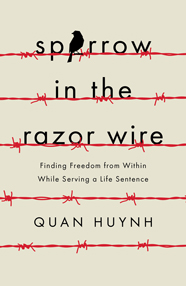
[0:00:32] EG: in 1999, author Quan Huynh shot and killed another man in a gang related shootout in Hollywood, California. He was sentenced to 15 years to life in prison and the circumstances made it unclear that he would ever get out. After a decade inside, Quan reached a turning point where he realized prison could be an opportunity to heal himself and reconcile with his past. This is the story he tells in his memoir, Sparrow in the Razor Wire: Finding Freedom from Within While Serving a Life Sentence. I got so much out of our conversation and I know Quan’s insights on redemption and self-reflection can be transformative for you too. Today, I’m sitting down with Quan Huynh who has written the book, Sparrow in the Razor Wire. Before I actually launch into a summary, I would love for you to give a little run down of what the story is that’s contained in your book?
[0:01:28] Quan Huynh: The story is just my process of spiraling down into darkness and how I found my way back out of it.
[0:01:39] EG: Yeah, it’s an incredibly powerful story. You do such a great job throughout the writing of really pinpointing all of the emotions that you go through at each stage of that journey. And right from the beginning, it’s really amazing how much empathy you’re able to really tap into between you and the reader. You and me specifically, what I’m thinking of as I was reading your book. Thank you, it’s really powerful.
[0:02:10] Quan Huynh: Thank you.
[0:02:11] EG: Let’s begin by giving listeners a little bit of your personal background and feel free to be as broad strokes or as detailed as you like with that.
[0:02:19] Quan Huynh: Sure. Let me see, I’m a Vietnamese American, I came to the United States when I was several months old after we lost our country. And my family settled in Provo Utah. We had sponsors over there and that’s where I grew up and yeah, I grew up around 99.9% caucasians. And I remember as a little boy growing up, I just felt like I didn’t fit in, I wished me and my family looked normal — like the people around us. I would have to say that’s where a lot of my struggles later on in life about not feeling accepted or not, feeling like I fit in. My father got diagnosed with leukemia and he actually created the Vietnamese Refugee Association out there in Utah and was basically giving back and helping other Vietnamese refugees adjust to their new homeland. So as a little boy, I would go with him to neighboring states like Wyoming and Colorado and I just remember these drives where my father said he’s just helping people go to the DMV or fill out their social security. Do a bunch of things like that which, as a boy, I didn’t understand why we were driving all this way. Especially when he told me he wasn’t getting paid for it. Then he gets diagnosed with leukemia, his condition gets worse and we move out here to California where some of his family lived. And that was my first time going to school with Vietnamese kids and Hispanic kids and black kids. I remember even then, I didn’t fit in with the Vietnamese kids because this was during the time when a lot of the boat people were coming over. And a lot of these immigrants, these refugees did not speak English well. A lot of their parents had changed their birth dates. Let’s say they’re 14 or 15 but their parents would say they’re like 11 or 12 just so that their kids could go back a couple of grades and learn the English language. I remember these kids teased me, said I was white-washed. And I just never felt like I fit in on either side, with any culture just growing up. Yeah, that’s basically my childhood. My father’s condition gets worse and he passes away from leukemia when I was 13, our family was in poverty at the time. And I — me and my brother by that time, we’re already started to get in trouble or hanging around with the kids that were getting in trouble.
[0:04:55] EG: And then of course, you know, the events of your book happened later in life when you were 24 and you’re in college. You’re in a job with GALLUP and to just put it simply, you shot and killed a man in gang activity. The book is really — it’s about the story that goes on from there and how you found redemption. Or how you found self-forgiveness in prison. Is that an accurate way to describe it?
[0:05:26] Quan Huynh: Yeah, I would have to say that. I mean, by the age of 17, I was already arrested my first time and it just began a spiral where I got more steeped into the gang life, I became more engrossed in criminality. And then yeah, ended up shooting and killing another human being in 1999. You know, I look back, even during the writing process, and even during my soul searching inside prison and I was like, “What made me capable of murder, how did this happen?” I just kept on thinking about, “Okay, what was going on in my life?” And a lot of it had to do with just an inability to express emotions or express it in a healthy manner. Yeah, I got turned down for a management position at Gallup which I had placed all my hopes and dreams in. Basically I just hope my life will go right for once in my life. But this is before the fame of their Strengths Finder Studies and all that. The Gallup interview, when it came back to us, it’s all personality based. And I just remembered when it came back and they just told me the common office, they say “Quan, you are not fit” — those were the exact words and I think that just went back to that same issues of myself. Of, “I don’t fit in, there’s something wrong,” and you know, I had no self-awareness at the time to realize this job does not define me. But that’s what I had placed all my hopes into, thinking, “Maybe, for once in my life, things will go right. Maybe I can do something with my life.” And so when they told me that, it was, “Okay, I’ll just go down to the bar, get drunk.” Didn’t even talk to my girlfriend about it, about a week and a half or two later, went up to the club in Hollywood and I found out some of my homeboys from the same gang got in a fight with another group. I wasn’t even involved with the fight and — but yet, I wanted to be the one to pull the trigger. I mean, the parole board asked me over and over until I heard it and it’s like, “Why did you have to be the triggerman? you weren’t even involved in the fight.” I just realized, you know, in this part of my life here, I failed, I may not be a fit. But in this part of my life, in the gang part of my life, I know how I won’t fail and I know how I can be, in a warped sense, recognized and where I could fit in. I would have to say that’s a lot of the motivation for why I thought it was okay to shoot and kill another human being.
[0:07:57] EG: The way that you describe that motivation in chapter one, the way you described your emotions around that is just like — I sat there reading it and thought, yeah, I have felt those emotions, I have felt like that. I have wanted to be powerful in some way and kind of take my fate into my own hands in some way and a lot of different points of my life. I’m curious, was it ever difficult to pinpoint what those emotions were at the time and what you felt as these events were unfolding?
[0:08:35] Quan Huynh: Yes, I would say it was very difficult, I don’t think I had any type of — I had not developed any type of emotional intelligence at that time in my life. It was basically, this is what’s just going on. I just don’t feel good inside, let’s say, I argue with my girlfriend or argue with somebody or somebody looks at me wrong and even just a sense that I never viewed myself as someone angry. Because I thought, someone as angry as someone that screams and yells and that was my definition of an angry person. And because I never screamed or yelled or showed emotions that I don’t have anger problems. It wasn’t until later on during my life sentence when I started understanding. And, you know, just even looking into books and reading stuff on emotional literacy and just — I had major anger issues but I didn’t recognize it at the time, I did not know. I was just so unaware of it.
[0:09:31] EG: I know in my experience and I’m curious if this is what you're describing as well, is like sometimes those emotions that we’re not aware of, they just kind of go into this soupy mass of discontent. And that’s all we feel, it’s like just this Amorphous kind of dissatisfaction and gloom.
[0:09:49] Quan Huynh: Yeah, that’s exactly what it is, but then, of course, in the gang lifestyle, I had an outlet for it where I could stuff my emotions down into some dark corner. But then call up one of my friends and “Okay, I’m upset with my mom or I’m upset with my girlfriend or I’m not satisfied with what, something that happens today. Someone cut me off in traffic,” whatever. Something builds up and I stuff it into a corner, call my friend up, bring a gun with me and “Hey, let’s just go to the pool hall,” or “Let’s go out there.” And everything at the back of my mind is like, “Okay and now I have a gun, now I can look around, who is looking at me wrong.” And now here’s my opportunity to take out everything that’s going on inside myself at this time and here’s an excuse for me to unleash this onto somebody. And it will make me feel better and it will, you know, give me this greatest high.” And that was basically my ammo, that was basically when I look back, most of us in the gang and most of us in that — my home boys knew what we were doing. And the fact that every single one of us had major issues but we never talked about it. It wasn’t like — “This is what’s going on in my life, let me tell you about it.” It’s more like, “Okay, let’s go out.” And then I don’t know what’s going on, suddenly my friend says, he ends up fighting with somebody or whatever and it’s because of just this inability to understand and process and feel emotions.
[0:11:15] EG: Yeah. What you say about it in terms of seeking that feeling of feeling high, in terms of trying to create this emotional response or trying to vent out this emotional response. That resonates so well with me and it resonates with things I’ve read too about like, drama being an addiction, really. That we seek out these unconsciously of course, we seek out these high-impact, high-adrenaline inducing events as a way to vent all of that stuff that’s underneath that we can’t name.
[0:11:49] Quan Huynh: Yeah, that’s exactly where it was.
[0:11:52] EG: You say that in prison, you started asking this question of, like, “Why did I do that, how could I have done that?” Do you remember the first moment when you started asking that question and what that felt like?
[0:12:06] Quan Huynh: I would have to say, the moment it didn’t come until at least 10, 12 years into my prison sentence. Like that first in 12 years, I did not even approach it at all. It was more a script I had continued to tell myself over the years was, or just the narrative in my head — it was my life or theirs. They were gang members, so was I. They had it coming. I guess that just fulfilled that narrative in my head also is that, because of that, I’m not that bad of a person. But then, you know, it was just around the time that, when I think — there were several things that had happened, like my grandfather had passed away, my niece was born and I saw the first pictures of her, and she was so adorable. She looked just like a spitting image of my brother and it just took me back to our childhood and you know, I’ve always been a bookworm. And I was reading different types of books but during that time, I happened to be reading these books on the saints. And those resonated with me because each of the saints, they would leave such amazing legacies. But yet, every single one of them were very flawed human beings at one time or another in their lives. That’s what I started searching like — and then it just began this question. “Okay, look at what my father did in his 36, 37 years on Earth and the impact he made on people. And how come I — and look at the destruction that I did during my time.” Because I think I was around 36, 37 at that time. And I just started asking myself, like, “Why — how did I get down this path? Am I meant to die, is this it for me?” But those books at that time on the saints gave me solace and it gave me a small ember of hope — and I mean, it was just one day on the yard, I remember specifically early morning. I was standing there, my head filled up with these readings. I had, by that time, been meditating pretty regularly and it was just a thought like, “Why does prison have to be punishment?” And I realized, it doesn’t. This is a place where I could make myself a better person, it doesn’t have to be punishment. That understanding right there made all the difference in the world. I remember the sun was coming up over the hills and I could feel the warmth of it and on the individual blades of grass, I got to see the drops of dew, and up above me in the razor wire, I heard a sparrow chirping. And I tell you, it probably had been chirping my whole prison term but I never once heard it. But that day, I heard it. And that day, prison no longer became, no longer was this cold, harsh, ugly place. It was like a place where I connected with other human beings, it became a place of, like, tranquil beauty. We were all just stuck on our journeys and this is a place for us to really discover ourselves. I don’t know, I just felt I can make myself a better person even if I can die. I mean, even if I am to die, I can leave a legacy in here. And that’s just how I started to approach life while still incarcerated. “What can I do to make an impact in my little piece of the world, right here, that’s been totally discarded from the rest of society?” But in this little corner of my world, I can make an impact and that’s what I started trying to do.
[0:15:50] EG: I gather that part of making an impact also meant feeling agency to make an impact, even despite, or because of or you know, reconciling with the past that put you in that place. Tell me how that went?
[0:16:08] Quan Huynh: Well, I think the first stumbling block that I had to get over was my father’s death. I would have to say, what, 25 years later is when I first began to properly grieve him. And then understanding the process of grief and loss and the stages, like, do. And then just going through therapy and being fascinated then with that process around me and recognizing it in other men. Even though they didn’t recognize it themselves like whether — even if they had never lost a loved one but they could be experiencing loss by getting transferred in prisons, they could experience loss by growing old or being denied multiple times at the parole board and it just — — They had no way of healing themselves, or even beginning to grieve these losses. I remember, I had crafted a syllabus, put it together, and submitted it to a psychologist on the prison yard and he was blown away by what I put together. And I said, “I want to create a group for men here.” He was all for it and we created the first grief and loss group in the prison. I just saw, like, the things like that. I was able to make an impact and understanding my own journey but then also, using my understanding to go back and help others out there. That was where I suddenly felt alive inside the prison.
[0:17:36] EG: That’s amazing. It sounds like you created a space in which to really feel this grief and go through that process. Before you created the group, what was it like trying to grieve while in prison?
[0:17:51] Quan Huynh: Impossible. I mean, you know, I grew up thinking men do not cry. And I think it was absolutely reinforced in juvenile hall, the California Youth Authority and then, ultimately, prison. I was never able to cry, actually, never showed anybody when I did. The first time that — any time I spoke something about my father, it always brought me close to tears so I would stop. But I remember when I began this process, I decided one day to write a letter to my father and just say to him all the things I never got to tell him and tell him sorry for where I’d live my life and writing it was one thing but then, I felt moved to share with the therapist, and I read it out loud, and just hearing those words and coming from my mouth, I had not cried that much in my whole life. Like, there was snot coming out and I was bawling but it was very healing for me. And that was — I realized, from that stumbling block and then, my sense of identity and all of this tied into it like me as a gang member. Me as a hustler in prison, me as this and like all of these roles and identities. And this narrative that I told myself, I realized, every single one of these things was created in my head to make me feel better. Or make me feel like I could impress people around me. Or make me want to build some type of reputation and realizing that all of that was fake. It was very terrifying for me at one point because I realized any sense of identity, no matter how fake, was better than no sense of identity and that was the part where I was at. But you know it was during that time I just found solace also and like a lot of spiritual readings and I liked the theme of just remaking yourself. And that is where I began my process of remaking myself, like, taking myself back to the little boy and embracing the little boy that I once was. And from there, trying to rebuild myself as a person.
[0:20:02] EG: A therapist that I worked with once said that trauma happens in community and it also gets healed in community and I love that. You know that being vulnerable in front of other people is really the thing that starts to unlock our sense of safety around who we are.
[0:20:24] Quan Huynh: Yes, I fully agree with that. I mean, later on, when I got involved with other groups on the yard like facilitating the victim’s awareness groups, like, being part of building out that curriculum and getting them to understand and take ownership of their crimes. And then getting involved with other groups, like the Alternatives to Violence, like, I noticed that when I shared of my failures and I shared of my faults, and was absolutely vulnerable, men would come up to me after the workshops. And they’d tell me, “Oh I learned this from you” or “Wow, what you told me is going to make me really think.” So I saw firsthand the impact and how effective it was to share of my own, I guess, just all of my failures. Instead of contrasting that with other men that were also facilitating with me. When they would get up there and use this as an opportunity to teach and say, “Oh you need to do this and this and this.” And it was never effective from my experience. It was not as effective as sharing of my own failure. So that is actually the same way I approach writing that book. I realized guys learn best when I just share my journey and if there is something for them to get out of it then they can get some lessons out of it. If there is nothing then they could just discard it and walk away but I was like of my whole time when I was writing my book, I felt I’m thinking, “Okay if I don’t want to share this is because most likely it means I should be sharing this.” And I would just dig into myself and put it together and put it out there.
[0:22:02] EG: That’s so inspiring. I remember too, of course because this is — it is such an impactful mental frame. I remember it as you were writing that you talked about having a table, a mental table of truth. Do you want to describe that?
[0:22:22] Quan Huynh: Sure, yeah, we did this exercise in prison of who you’re going to have at your table for whatever you wanted to do. Just like your imaginary table in your head and your motivations behind it. So I had imagined on my table, when I am struggling with my writing, on days where I don’t want to sit down and write. Or I don’t want to share or I am confused. I don’t want to go with my story. I had some people starting to sit at my table and then I just imagined what they would say. So the people that I had sitting at my table were, of course, my father. I had my victim, the man that I shot and killed, he was sitting at the table. I had my younger self, the little boy, the eight year old boy, he sat at the table. And then I had the avatar, that they talk a lot about and teach us in Scribe, is who the book is written for. So my avatar was a prisoner and his name is David and he was a splitting image of one of my old bunkies because it was a guy that never wanted to examine or even touch on his crime and his own journey into darkness. So those are the people that kept me on point and kept me, I would like to say accountable to my writing process.
[0:23:42] EG: Yeah, that’s incredible and what was that like? Was that you kind of just think of them whenever you need motivation, do you have conversations with them?
[0:23:51] Quan Huynh: I do. Sometimes like I remember one of the most difficult times during the writing process was when I put myself back into juvenile hall in the county jail, just the beginnings of my times of being locked up. And during the writing process, I sat here at the table and I told myself that every single fiber of my body wanted out of prison, wanted to get out of there like, “Why am I putting myself back in there for? I don’t want to do this, I shouldn’t do this.” But it was remembering who is at the table with me and what they would say and you know they all tell me they have to do this.
[0:24:35] EG: Was it easy to follow those directives or were there ever times where you were just like, “F you!”
[0:24:42] Quan Huynh: You know oh my God, some days, like I don’t want to do this but then you know it is just the words that I have to remember. Like, this is not about me or what I want. This is about serving a bigger purpose and if, I mean, like during my time in there, like the last few years before I went home, I sat down and prepared men for the board. We call it a board prep, it is basically coaching them to understand and become their best selves. So after, when I first started doing it, people thought I was crazy and people thought whoever was sitting with me was crazy because nobody really shared hearing transcripts. And here I was sitting with somebody and they said, “How is Quan going to help you when he has never even been to the parole board?” but inside the parole board, they fish you a transcript of the hearing but for some reason, it is a cultural thing of men in there, they do not share their transcripts. Nobody asks about this, so you don’t share the transcripts. But I somehow got my hands on some transcripts of some men and when I read it, I just go, “Oh I think I can help. I think I know why he is getting denied at the board.” And I think I know what the parole board is looking for. It is this — they are looking for the same exact thing as, on this path that I am looking for, on this journey of like how do you make amends. What is remorse? Like, what is personal responsibility and what is choice? It just felt so in alignment with where I was at with my life and I sat down and started coaching guys before they went to the board and people thought I was crazy until the first guy came back from the parole board and was found suitable. And suddenly men wanted to sit down with me to help them prepare for the board. So I knew their motivation was to go home, which is fine. But I also knew my motivation was to be able to share with them this sense of liberation and freedom I had already discovered while I am sitting here. And it was almost like I had this secret and I am trying to tell them all around me and nobody was hearing me. So then, I am thinking, I am crazy but so during those last few years, I was able to help like, what? Maybe 10, 12 guys go home. Which is not an insignificant amount but I mean I think I hope my — but that was just 10 to 12 guys in that prison in that yard. So that has always been this motivation in this book like this book is for those men I left behind. And when I go back into the prisons now and men find out I’m a lifer, they usually say, “How did you get out?” Like, “Oh this is what the parole board told me” and I listen to them. I go, “I can help this guy but I don’t have the time.” I am not in the prison, I am not there but I want to help them. And so I am hoping book in some way can help them like for them to understand this is the path that you have to go and that’s the way I approach trying to write it.
[0:27:47] EG: Wow and so many pieces are clicking in place too because I was curious about how you had included transcripts of your own parole hearings, I believe, right? That are starting at the beginning of each chapter. That is even more incredible now, knowing that so many men who are on the inside really need visibility into those conversations.
[0:28:10] Quan Huynh: Yeah, because they don’t share it. So I mean, it is a form of the truth. And those are my actual hearing transcripts. I did not edit them. I did not alter them in any way. But I just looked at writing it and plus it became a great framing device for me to keep my story moving along but just giving enough backdrop where I don’t have to tell everything else and I just jump right into what I wanted to say on that lesson, right there. And that is the way I put it together.
[0:28:38] EG: Yeah, it does such a good job of exactly that of moving the story along. Of mile-posting it. And I am curious, what was it like, going through those transcripts, as you were writing?
[0:28:52] Quan Huynh: Oh, so there was one part when, so my very first hearing, there was a commissioner. She was, in denying me, she was very vicious in her feedback, saying that I lacked any sense of humility. That I exuded arrogance, you know, there are things about that. I was full of ego and pride and I remember sitting there and they had denied me five years at the time. This is 2013. It was my very first board hearing, I get denied five years. And I go back to the yard and people said, “See? Quan didn’t know what he was doing. If he was able to he wouldn’t have gotten a five year denial.” And all of those things hurt but I think the thing that hurt me more was her words, like, telling me that. And I remember thinking, like, “Am I still that ugly of a person and still unaware of it?” And I kept on going back to that and just holding onto that. Going back to the transcripts out here, after I am home, during the writing process and getting back to those things and reading her words again still hurt me. It made me really think, “Crap, I wonder if she saw something I still have right now?” Like I remember that one while I was going through my transcripts out here and this is what, three, four years even after I had seen her. So that was like, what, 2013? Basically my — it is in my book. My aunt wrote a letter, basically it felt to me telling me just to resolve myself to dying in prison. And I think my family thought I was crazy for telling them that I felt that I need to go home but then I felt free. And that I was doing these studying about ownership and taking responsibility. And that was when I was struggling with the words from the parole commissioner and then my aunt writes me a letter and basically just says, “You know we are concerned for your mental health. Don’t put your eggs all in one basket.” In reading I go, “Oh they think I’m crazy. My family thinks I’m crazy. Everybody thinks I’m crazy.” But I realized that if I don’t believe in myself, nobody does. So that’s what gave me resolve to go, “You know what? I am not crazy. I know what I am feeling here.” “I know that I am making a difference in this world right here and I am just going to move forward with wherever this path leads. I am just going to live my best life right now.” About a year and a half later, I filed some paperwork and I told my aunt that, “You know I am not crazy. It is 2013, the board gave me a five year denial. I guarantee you, I will be home before 2018. I am not crazy.” A year and a half later, I put in the paperwork to go to the parole board and everybody on the yard said, “Oh they only granted it because they are going to bring you back in and deny you.” You know in prison I see this mentality of conspiracies and this grand scheme of people always looking to screw you over. I mean I see it on the news now as well as, like, it just reminds me of how it was inside prison. Yeah, so I go back into the parole board in 2015. I saw the same commissioner. She is now the head commissioner inside my hearing again. And she is even more vicious at the second hearing. Somehow like they found me suitable and I got out in 2015.
[0:32:10] EG: What do you think was the difference between the first hearing and the second?
[0:32:14] Quan Huynh: I don’t know. I mean I look at the transcripts, I am not sure. I mean I look back now, even like, reading those transcripts, I was still the same. I was still trying to give my message and I think the first hearing, like even now, when I read it out here like I told, like I shared with you I struggled with her words. They still hurt me. And then when I got back to my first round of edits from the editor, some of her notes really gave me clarity on — she had even said like, you know, maybe she understood now why the commissioner was saying. It was because the commissioner did not have context on my own journey up to that point. So I think by the second hearing, the commissioner already kind of knew some context about me. And I think she read further because I had submitted by that time, quite a bit of writings. About just things I thought about and I submitted all of it like my records like I don’t know, 70, 80 pages worth of my writings about my thoughts on certain topics it became a part of the record.
[0:33:13] EG: Is that standard?
[0:33:14] Quan Huynh: No. No, I think I went about it — and just I did it, like, part of my book report. I wish I had some of that stuff that I submitted to her. But then I also have this habit of, if I read a book, and I like it, then I write like a three paragraph, one-pager book report for myself. But the first paragraph is what the book is about. The second paragraph is something I want to practice out of the book and the third paragraph is how I want to use that in my life moving forward. And I dated each of them. So I have those now and when I go back. I could see where the development of my mind and my soul began to start to build up. I could see like, “Oh this is about… oh it’s this book” and I began to practice this habit. And I totally forgot, oh it is this one where I got this first seed of hope regarding this topic. And I had submitted those too. So those are pretty big records, like, my attorney was very impressed with the stuff I did about. It just gave me healing. Just the whole writing process gave me so much healing while I was inside. Like when I was eight, I was first recognized for writing. They sent me to the young author’s conference when I still lived in Utah because I grew up just reading fantasy books. And I just love writing creatively. Then at 12 they also sent — when I came out here to California. They recognized me for writing and sent me to UCI’s creative writing school but my father passed away when I was 13. And it wasn’t until prison when I joined a creative writing group and I was writing and then one of the guys said, “Oh have you always written?” I go, “You know what? I haven’t written in forever.” And then I realize, “Crap, the last time I wrote creatively was at the creative writing school before my father died.” I had not written since and that was like 25, 26 years later before I had even begun to write again.
[0:35:07] EG: Wow and I am so glad now that you have a book to give to the world.
[0:35:12] Quan Huynh: Yeah, me too. Me too, especially to give to the men in there.
[0:35:17] EG: Well Quan, thank you so, so much for this interview. It’s always incredible to hear your story and hear really like your journey and how you have made sense of things. I know that the vulnerability that you share helps a lot of people move steps further along on their own journeys too. So thank you so much.
[0:35:39] Quan Huynh: Yes, it is my pleasure Emily. Thank you so much.
[0:35:42] EG: If you wanted people and maybe even especially the men inside to take one or two things away from your book, what would it be?
[0:35:49] Quan Huynh: That I believe in each one of them. That I hope that they can also find their freedom one day regardless if they go home or not that they could find some sense of freedom in them.
[0:36:04] EG: That’s beautiful. Thank you and besides checking out your book, where can people find you?
[0:36:09] Quan Huynh: They can find me on Instagram, Facebook, LinkedIn, Twitter, it is all the same name @quanxhuynh that is the same as my website, @quanxhuynh.
[0:36:30] EG: Beautiful. Thank you Quan.
[0:36:32] Quan Huynh: Thank you Emily.
[0:36:35] EG: Thanks for joining us for another episode of Author Hour. You can find Sparrow in the Razor Wire, on Amazon. A transcript of this episode as well as all of our other previous episodes is available at authorhour.co. For more Author Hour, subscribe to this podcast on your favorite subscription service. Thanks for listening, we’ll see you next time, same place, different author.
Want to Write Your Own Book?
Scribe has helped over 2,000 authors turn their expertise into published books.
Schedule a Free Consult