Jonathan Goldhill: Disruptive Successor
Read the full transcriptJonathan Goldhill
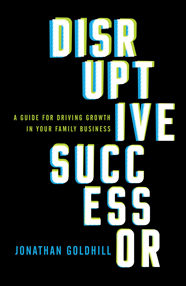
Jonathan Goldhill is a business coach and personal growth strategist who guides next-generation leaders and entrepreneurs in family businesses. He grew up in a family whose privately held men's apparel manufacturing company, started by his great-grandfather, was sold to a conglomerate in its third generation of ownership. Goldhill left New York for California at age twenty and went on to spend more than thirty years coaching, consulting, training, and financing entrepreneurial and family businesses. Through The Goldhill Group, he helps founders and successors communicate, scale their companies, and plan their transitions. He is the author of Disruptive Successor: A Guide for Driving Growth in Your Family Business.
📚 Books by Jonathan Goldhill
Transcript
[0:00:27] DA: The next generation of family business leaders intend to make big changes when they take over their family business, they want to change their leadership style, innovate, update the company strategy and oftentimes, take more risk compared to the previous generation. Yet, despite the fact that most family business owners want to pass their business on to the next generation, research suggests that only 3% will operate beyond the fourth generation. The minuscule changes of long-term success are largely due to the issues unique to the family business, which are often wrapped up in a tightly woven knot of unspoken plans. In his new book, Disruptive Successor., Business coach Jonathan Goldhill offers a proven framework and playbook for unwinding this knot, scaling up your family business, and planning your exit. Hey listeners, my name is Drew Applebaum and I’m excited to be here today with Jonathan Goldhill, author of Disruptive Successor. Johnathan, thank you for joining, welcome to the Author Hour podcast. Thanks a lot, Drew, thanks for having me.
[0:01:24] Jonathan Goldhill: Let’s kick this off and can you give us a rundown of your professional background?
[0:01:30] DA: Sure.
[0:01:30] Jonathan Goldhill: It took me a little while to get started actually, I don’t tell that many people that part of the story but finally, I went to business school after having a couple of probably failed business experiences and I will tell you that you do learn more from your failures than you do your successes I think. If you fail fast, you learn fast. I got a little bit of a late start, I got an MBA from the University of Southern California’s entrepreneur program with an emphasis on consulting and I put my head down from that point on and I’ve been consulting, coaching, training, financing, and advising small and medium businesses ever since. At this point, it’s 30 plus years but like I said, it was a late start so I’m probably some explanation, we can go into that if you like in detail.
[0:02:19] DA: Was there an inspiration behind the book, an aha moment, and why was now the time to write it?
[0:02:25] Jonathan Goldhill: I’ve been working with this client and I’ve been working with him for about six years and I’ve watched him go through some incredible transformation, metamorphosis or maybe we just call it a growth path. It’s been such an enjoyable experience that it made me reflect and think, there’s a lot of other clients that I’ve been working with that are next-generation leaders and they’re taking over dad or mom and dad’s business and they have aspirations to maybe make it bigger and do it better. I thought you know what? I need to put out something that will reach out and connect to these people and writing is a good form of communication for me, so is speaking, so with things like podcasts. But getting the word out to find those people and say, “Hey, there’s someone out there that can support you in your growth path to being a disruptor in the family business.” Drew, most people, by the way, most families, the business falls apart in the second, the third, certainly by the fourth generation, the statistics are in the book and you can find them online but it’s single-digit success when you get to the third generation. It’s largely because there’s maybe a sense of entitlement, there’s a loss of interest, there’s a lack of adaptation and updating the business. I wanted to reach out to that next generation, like the second-gen leaders who really wanted to take the business to a whole new level.
[0:03:59] DA: Yeah, can you tell us in your definition what is a disruptive successor?
[0:04:04] Jonathan Goldhill: A disruptive successor in my definition is someone who is looking at the status quo of the existing business and saying what got us here was good but I want to take it there and we’re going to need a different growth plan, a different road map and we’re going to need to disrupt the status quo and so we’re going to need to either improve a product or service, make it better, faster, cheaper, different. We’re going to need to change or upgrade our processes and that’s largely why people come to me because a company is missing systems and processes – it’s too dependent upon the people that do it. Or they’re going to innovate in the business model. They’re really wanting to disrupt the status quo and the status quo is, this is a mom and pop business and we’re going to change it now to more of a – I hate to say corporate type of business – but one that’s got more professional managers and is led the way successful corporations are run.
[0:05:09] DA: Now, who is this book for? Is it only for people who are in a family-owned business?
[0:05:16] Jonathan Goldhill: I wrote it for people who are in a family-owned business. But, this playbook that I put in my book, this framework is good for anyone who wants to scale up or grow a business. Anyone who is an entrepreneurial leader and I’ve been working with entrepreneurs for the last 30 years and not all of them have been family businesses and many of them have not been second-generation leaders. It’s really written for anyone but like I did write this for that 25 to 40-year-old millennial who is really looking for someone to guide and mentor them in the growth and expansion of their business.
[0:05:54] DA: Some of your stats in the book were really staggering, can you tell us about the family-owned businesses in the United States and the size and scale of it?
[0:06:03] Jonathan Goldhill: Without looking at the data right in front of me, I can’t cite the statistics but I can tell you that about two-thirds of the gross domestic product in this country is generated by family-owned businesses. That’s a staggering percentage and that means that likewise, a similar percentage of employment is created by family-owned businesses. There were studies years back about publicly traded companies and I don’t want to quote the statistics because they’re a bit dated but the number of publicly traded companies that are still family-owned and controlled is a staggering double-digit number. It’s huge. Also, if you consider that, it’s reported that 96% of all businesses in the United States are under a million dollars in revenue. What does that mean? It means that most businesses are mom and pop, are maybe locally needed goods and services like the dry cleaner, the butcher, the pizza place, those are all family businesses, Drew. It’s not surprising that more than two-thirds of all the employment in this country is family-run businesses.
[0:07:18] DA: Something I really loved is that you have your own disruptor story. Although, it wasn’t in a family-owned business. Can you tell us about your story?
[0:07:26] Jonathan Goldhill: Yeah, my family built a very successful business and it was heading into the fourth generation but there really was no fourth-generation leaders and that would have been my father’s generation. It was started by or that would have been my generation, sorry. My father was in the business, he was a third-generation person but unfortunately, he didn’t live very long, he passed of a massive coronary at the age of 35. My grandfather and his brothers who started the business with their dad, they decided to sell it and they sold it back actually in the 1960s and then they maintained lifetime employment contracts with the company and ran the business until they closed its doors in 1986, it was a clothing men’s suit manufacturing business and all that business was going overseas to Italy, Asia, Canada. They didn’t want to continue it and so, my business, when I got out of college, I didn’t really know what I wanted to do, there wasn’t a family business at that point that I could have joined and so I just started making my path as what turned out to be a consultant to entrepreneurial companies. I started off in nonprofits, work for the number one person who was either starting a particular campaign or a grassroots cause or something. I was very much about trying to make the world a better place and it bounced around in nonprofits for a number of years. And then, I got the bug for business and started – got into a few of my own businesses, one was a clothing business that involved artistic line of clothing based in Venice California, and I learned a lot from that business, I would say, a failed experience but I mean, a great experience but a failed business. That was probably due to the nature of the partner that I had gotten involved with. But it sent me back to business school where I then focused on entrepreneurship and consulting and have been consulting ever since and I just developed this affinity for family businesses because I saw that they wanted to have the same thing that my family was able to develop, which was, a really thriving business that gave them the freedom to do what they wanted to do because it made them a lot of money.
[0:10:02] DA: Now, how difficult is the conversation with the founder, just letting them know that the world has changed a lot since they started and grew their business and how do you convince them that now is the time for change?
[0:10:14] Jonathan Goldhill: I think it’s probably directly proportional to their age. No offense to us older people, but we tend to get a little set in our ways and so I think it’s an easier conversation, the younger the founder is. It’s also an easier conversation if the next generation person is young enough and hungry enough, that they want to take the business to the next level and that the founder is confident that their son or daughter can do it. Oftentimes, I’m working with a client right now that the father founder has brought the daughter into the business and she comes in sort of to save him and rescue him. He wants to still hold on to control. I haven’t had a chance to have that conversation with him yet but it’s not always that easy to answer your question. When they’re older, they’re kind of set in their ways and they’re happy with the way things are and don’t want that change.
[0:11:18] DA: Yeah, are there questions you ask your clients, or maybe business owners out there should be asking themselves to know if they’re prepared for change?
[0:11:27] Jonathan Goldhill: I think that first I spend a lot of time working with this next generation leader to see how hungry they are and how coachable they are. Those are really important things and are they a good team player, do they have leadership capabilities? I think honestly, it comes down to desire. If someone has the desire and the humility to know that they don’t know it all. Then I think anything can be learned in this sphere that is. Leadership can be learned, selling can be learned, the business can be learned and so are they open, are they coachable, are they trustworthy, are they honest, do they share the family values that will be important. And then, the founders if you know, are you willing to let go? Do you trust your son or daughter, do you think they have the capability, do you have the confidence in them? Are you willing to pass the torch? These are conversations that take place over a long time sometimes.
[0:12:33] DA: Have you turned down clients because of some of the answers to these questions?
[0:12:37] Jonathan Goldhill: I’ve definitely turned down clients who are not coachable, there are people who seem to know it all, they come to me maybe just looking for something – someone comes to me and they’re looking for me to fix the situation in their company. I’m willing to do that but if I quickly see that they are the problem, then I can’t really continue to work with them. The first thing we have to do as leaders and businesses is to take stock of who we are and how we show up and if we’re not leading and coming from a place of learning, then it’s really difficult to change people.
[0:13:18] DA: Now, a lot of the book is about the seven P’s playbook, you put together for managing your business. If you implement the P’s as suggested, what can folks expect?
[0:13:30] Jonathan Goldhill: Well, I have written this book rather. So that if you wanted to 10x your business, you could do it following this playbook. What you should expect is a reinvigorated purpose about why you’re doing this business, the results of a reinvigorated purpose which is communicated widely across the company. Is that you are now building an entirely new culture in the business. A strong culture, a culture that is beyond just a family but it is based in something much richer and you also will develop the discipline of planning and knowing what your strategic plan is, what your three year, one year, 90-day goals are and of course, you’ll have taken a fresh look at your products and services to make sure they’re upgraded. You’ll probably develop a much better team of what I call A players because you’ll be upgrading, top grading, high grading. Whatever you want to call it your people and you’ll also be doing the same thing with your processes. You’ll make sure that they’re better so that the business could be run in the absence of you at the owner being there and that it is not dependent upon the people so much but it is more dependent upon the systems. So I mean those are the things that you’ll expect and if you put in all of those things together then the performance of the company is going to be staggering. Fantastic, I mean we’re talking about growth and profitability, growth in the value of the business, growth in the size of the business, and growth in what would be the longevity of the business. So I think those are the outcomes.
[0:15:19] DA: Those are pretty good outcomes. Let’s dig into the first P, which is purpose, and tell me how hard is it and how many layers are there to really dig into a company for them to figure out why they exist?
[0:15:33] Jonathan Goldhill: This is a subject that some people have written entire books about and they – it is getting clear on what your why is and I think this is really a deep, deep thing. That doesn’t happen overnight and one of the methodologies that we use to get to the purpose is we use the five why methodology, which is widely known as the Toyota way but I think of it as what is your five-year-old ask you, why do we do this and why do we do that, and why does that matter, why is that important? And that’s the kind of digging that we do. It is like peeling layers of an onion back and I don’t find that it is easy to get to the purpose within a year or less. I think it is something that it could happen in a moment. It could take a couple of years. It just depends on when that epiphany strikes but I think it is so important because I think that it is sort of like the North Star. It is something that we continually move towards. I mean let me liken it to a person. A young adult, maybe any age actually, but someone who is coming out of school trying to figure out what they’re going to do in the world and a purpose is the same as a calling. It is really just getting clear on that and some people never find their calling. Some people never hear it, never have it I guess but I think others find it earlier. I think I was fortunate I found my purpose and calling early in life and so I think it’s continuously guided my efforts and my activities. Super important and it is what gets leaders to get people to follow them is an excited and invigorated purpose and it is beyond just making money or beyond just creating jobs. I mean it is something that is transformative. It has maybe an “aha effect” on people. It is a game-changer. So perhaps what I could share is that a purpose should meet eight different points. It should be stated in just a few words like three to seven words. It is written in simple language. It is big and bold and has an “aha effect” on people. It comes from the heart. It involves everyone. It is not about the money and it is bigger than a goal. I think it is something that is best tested when it resonates with the A-players on your team that says, “This is it and they start feeling more fired up and charged up because they align with that purpose as well.”
[0:18:21] DA: Can you recall any big breakthroughs or surprises when clients have started to look at their own business for purpose and through that lens?
[0:18:30] Jonathan Goldhill: I talk a lot in the book about a particular company. I kind of weave the story and quite frankly the person I write about was the muse that I thought about when I wrote the book and I watched their purpose infuse the company and I am not sure I can speak to specifics but it was a game-changer. So the story is I am talking about a landscape company that employs a lot of field laborers where we – initially we thought the purpose might be to help new immigrants. Or people who are not yet legal citizens become legal and give them a path towards citizenship and upgrading them and then we realize that was too small – that was just about the employees – it wasn’t about other stakeholders. It wasn’t about the community, their clients, their customers. I don’t recall how we hit upon the purpose of raising the bar but that seemed to resonate with everyone and we went through this five whys exercise and I know I recall where we were when we did the exercise. And when we came upon that thing and we thought, “Look, this sounds pretty good. Let’s see if this one sticks,” and it did. You know we tested it over the next three months and what I just observed was that people became much more engaged and it was a defining moment in terms of changes and activities. So raising the bar meant they’re going to not only upgrade their people and their processes and their performance but they were also going to do things in the community that raise the bar. So they do a monthly donation of a day doing landscaping out in the community. They were also going to raise the bar in the industry by giving back, by being a go-giver and a contributor and participating in leadership roles in the statewide association and speaking publicly about raising the bar and writing articles or being written about in national magazines in the industry. So everything was about raising the bar and really if someone comes to this company. And people are attracted to this company now because people who want to be a part of a great exciting growing company that want to be part of raising the bar, they show up to work and show up to want to join this company but if you are not part of that, if you don’t resonate with that then you are no longer probably a really good fit with the company. So it sort of had the effect of, let’s put the right people on the ship and throw the wrong people overboard. And it’s been a game-changer, everything is better and I am talking about from profit to performance to processes to people to their planning to their products, the whole experience.
[0:21:35] DA: Now after digging into the purpose and something you just mentioned was you move on to planning. Is this the hardest step? Because I think a lot of folks will be really, really motivated by this book but making a plan makes it real and now you are accountable. So how hard is it to really put the pen to paper and get started?
[0:21:55] Jonathan Goldhill: You know that is a good question Drew. I think we can put the pen to paper and we can put the fingers to the keyboard and type up a plan but it is about accountability and it will snuff out people who don’t want to be accountable and look, it starts with the top. If the founder of the leader, the next-gen leader, or the leaders of the company don’t want to be accountable then it all just dies from there and I wouldn’t say that I have fired a lot of clients. But they have disappeared when they couldn’t be accountable to the plan when they couldn’t basically work on the business and they spent just too much time being head down working in the business. A classic phrase, the working on versus working in the business, planning is all about working on. It is all about setting the expectations and then creating an accountability culture that people live up to that and this is where the rubber meets the road to be cliché. And you’re right, a lot of people fail at that point, and then the rest of the seven P’s fail as a result and they’re not in any particular order by the way. I mean I’ve put them in this order because they made sense to me but it is circular. You can jump in at any point in time and the truth is that all of these were like legs of a stool that hold each other up and if you fail in one leg it is going to hurt. It is a tough one.
[0:23:33] DA: You mentioned there are a lot of methods and techniques in the book that we can get into but I really want to ask you this question, why is now the time for the younger generation to share their vision and to lead?
[0:23:46] Jonathan Goldhill: So that’s a really good question. It is something that I have been pondering and I am not sure I’ve got the best answer at this moment but here are some of my thoughts on it. We are living in a world today that increasingly is encouraging of entrepreneurialism or entrepreneurship and there is a lot of support and a lot of resources for people who want to start and grow businesses. We live in an economy and a society that really supports and promotes people starting and growing businesses. So okay that is one point, the next thing is we’re also living in a generation where millennials if we can define them as a group really want to be to their own drum and they want to be part of companies who have a social purpose, who have a calling and are doing something bigger and better and they’re very often prone, I think, to creating their own businesses. I don’t have the statistics on it but I would argue that people are starting entrepreneurial companies at a faster rate of formation today than in any other time in history. And so that I think is the reason why it is so important. People want independence and they want the freedom to be their own boss. It is a time in history when it just is right.
[0:25:22] DA: Can you share more on the resources you offer with the book on the book’s website?
[0:25:28] Jonathan Goldhill: Sure. So there is a website called Disruptive Successor Show that is going to be having the first chapter of the book. It will be available as a free download. In addition, the tools that I reference in the different chapters of the book where there is action steps, they’ll be available for download. Just simply plug in your name and email and you’ll be able to download those tools and those are just a sampling of some of the tools in my toolbox. Some of the ones that I go to and use most often. So I also have probably a deeper toolset for clients that want to come and work with me directly and then I make those available to them. Look, there is enough here for you to get started and make some really serious progress in your business and I know people who are really committed and want to take it to the next level will probably reach out to me.
[0:26:27] DA: Jonathan, writing a book especially one like this one, which is going to help a lot of people is no small feat. So congratulations.
[0:26:33] Jonathan Goldhill: Thank you.
[0:26:34] DA: If readers can take away one thing from your book, what would you like it to be?
[0:26:39] Jonathan Goldhill: The one key takeaway would be that if you want, there is a way to do things better. If you want to be the change maker, then this book will give you a road map for how to improve your family’s business, how to disrupt any industry and drive more success and have a more fulfilled life.
[0:27:06] DA: Jonathan, this has been a pleasure and I am so excited for people to check out this book. Everyone, the book is called, Disruptive Successor, and you could find it on Amazon. Besides checking out the book Jonathan, where can people find you?
[0:27:15] Jonathan Goldhill: You can reach me on the web at thegoldhillgroup.com. You could email me, jon@thegoldhillgroup.com. That is probably the best way and also disruptivesuccessor.com and I will be launching a podcast at the same time the book goes live called The Disruptive Successor Show. So check that out as well you will be able to find that link through the Disruptive Successor website.
[0:27:42] DA: Awesome, Jonathan thank you so much for coming on the show today. Thanks for joining us for this episode of Author Hour. You can get Jonathan Goldhill’s new book, Disruptive Successor, on Amazon. Also, you can also find a transcript of this episode and all of our other episodes on our website at authorhour.co. For more Author Hour, subscribe to this podcast on your favorite subscription service. Thank you for joining us, we’ll see you next time. Same place, different author.
Want to Write Your Own Book?
Scribe has helped over 2,000 authors turn their expertise into published books.
Schedule a Free Consult